

“Oh God, please make it so that my prophecies won’t come to life!”
“I’m sorry Cassandra, that’s what I made Man for. Now, it’s Their job to heed to your warnings!”

“Oh God, please make it so that my prophecies won’t come to life!”
“I’m sorry Cassandra, that’s what I made Man for. Now, it’s Their job to heed to your warnings!”

The larger your ‘skull’ is, the more ideas – sometimes conflicting ones, you are able to ‘harbor’.
This guy, a 31 years old father of two, is looking forward for a heart transplant.
Meaning that he, and his family, trust the doctors who are going to perform the surgery.
Who are going to open up his chest, take his failing heart out, sew the ‘re-cycled’ one in and patch him up again.
Doctors who need to hook him up to various machines and to pump him full of chemicals in order to maintain him alive – but unconscious, during the procedure. And who are going to closely monitor him – and, again, administer him a lot of vital drugs, during the rest of his life.
Meanwhile he, and his family, don’t trust the doctors who tell him he needs to get a Covid jab first.
David Ferguson, D.J. father, “said the Covid vaccine goes against his son’s “basic principles, he doesn’t believe in it”.”
Hospital patient without COVID shot denied heart transplant.
Unvaccinated man denied heart transplant by Boston hospital.
I came across this over the internet. I couldn’t have said it better myself, hence I ‘borrowed’ it.
Click on it and read the whole post, it’s very interesting on its own.
Below is the comment I left on the FB wall where it all happened.
Don’t see any need to change anything.
“The key words here being “are recognized for”.
Real mastery involves knowing your limits.
Being recognized as a master by somebody else – the more ‘recognizers’, the worse, tends to annihilate any ‘master’s’ ability to own the very existence of their limits.
The intellectual limits are the hardest to notice/accept.
‘Accrued’ age brings about crystal clear evidence about our physical limitations.
Accrued knowledge enlarges one’s vision. Puts distance between the observers themselves and the limits of their ability to ‘observe themselves in the act of observing‘.
And if/when the above mentioned accrued knowledge becomes recognized/admired by the (naive) ‘general public’…
You don’t have to trust me on this because of my white beard.
I have a better argument.
I’m an engineer!”

‘OK, and the point of this post is …?’
The fact that there’s no such thing as ‘personal improvement’.
Any ‘improvement’ which we might ‘inflict’ upon ourselves derives from our intercourse with the others. Through ‘learning’.
All change which happens to us, actually, comes from our ultimately aleatory intercourse with the environment in which we happen to live. From being taught to being ‘influenced’ by the passage of time.
All that is ‘personal’ in ‘personal improvement’ is that we do it ‘willfully’.
Much of the change which happens to us goes either unnoticed – up to a point, or is merely accepted by us.
‘Personal improvement’ is chosen by us. And imposed by us upon our own selves.
To do it – ‘improve’ ourselves, that is, we follow ‘suggestions‘.
We should keep in the back of our mind that it’s our call to follow – or not, those suggestions.
Disclaimer.
I have no idea who the ‘suggested’ guy is. Just googled ‘personal improvement books’ and chosen the most visually appealing – for me, obviously, link.
Just wanted to illustrate the deluge of suggestions which is constantly directed at us.

True enough.
Good people don’t need laws to tell them how to behave while the ‘cunningly willful’ amongst us will indeed, time and time again, try to circumvent the consequences of bypassing the law.
Then why?
Two and a half millennia after Plato had dispensed this piece of wisdom we still have laws.
Is there a possible explanation for this apparent aberration?
Are we that thick-headed or there’s something else?
To settle this question – to start attempting to settle it, actually, we must first agree upon the difference between good and bad.
Ooops!
‘Everybody knows what good and bad is’ doesn’t really work, right?
In principle… maybe, but when it comes to putting principles into practice… we need guidelines!
Just as ‘good fences make good neighbors‘, a clear understanding among the good about where the realm of the bad starts in earnest makes life a lot simpler. For all of us. And the more visible that line is, the simpler our life becomes.
Only this is but half of the actual explanation.
Laws do make our life simpler, indeed. Unfortunately, ‘simpler’ doesn’t necessarily mean ‘better’.
As some of you already know, I’ve spent half my life under communist rule.
Does ‘Ceausescu’ ring any bells with you?
Under communism, life was a lot simpler than it is now.
Presumably, life was a lot simpler under any of the many flavors of authoritarian rules experienced by humanity during its history. This being the reason for no matter how horrible a dictatorial regime had been, there were always some who had regretted when that regime had fallen.
‘OK, so what’s your point?
That laws, in general, might be good but the laws which impose an authoritarian regime are bad?
You know that you’ve just opened a fresh can of worms, right?’
How do you determine the difference between a good law and a bad one?
There’s no such thing. No law is above good and bad. For the simple reason that we call laws are made by us.
We are fallible human beings and everything we make, including our laws, is, and should continue to be, constantly improved.
‘Then you’re nothing more than a ‘closet progressive‘!
I knew it!
‘Constant improvement’… yuck!
Not to mention the fact that the most important Law comes from God, not from Man!’
I’ve already disclosed that I’m an agnostic.
That I have no idea whether a(ny) god had anything to do with what’s happening around/with us.
All I know is that all laws, including the Bible – and all other Holy Books, had been written by people.
By Humans, that is.
And I also know that there are two kinds of law.
‘Natural’ – as in noticed by us, and ‘synthetic’.
While all laws are ‘artificial’ – ‘written’ by us, the natural ones had been first noticed and only then put on paper.
While all laws had been written on purpose – each ‘writer’ had their own reason for doing it, the ‘synthetic’ ones had been put together with a specific goal.
While observing – and when necessary improving, the natural laws benefits all, the ‘synthetic’ ones serve only those who make it their business to impose those laws upon the rest of the community.
While observing – and, when necessary, imposing them upon SOME, improves the prospects of the entire community, designing and imposing ‘synthetic’ laws upon a community will always bring a huge amount of disturbance.
Sometimes fatal for that community.
Always fatal for the regime attempting it!
‘How about some examples?’
I’ll give you two natural laws and a ‘synthetic’ one.
The law of gravity. Also known as Newton’s Law of Universal Gravitation.
This law didn’t need Newton to notice it. The Earth had already been orbiting the Sun for a while before Newton told us why.
‘Do not kill’. A subset of the Golden Rule, ‘Do no harm, if you can help it’.
Also ‘natural’ but a lot more ‘fluid’.
And, strangely enough, noticed and ‘put on paper’ way before the law of the falling objects…
Just think of it!
The ‘law makers’ have noticed long, long ago that the communities which follow the Golden Rule fare much better than those whose members treat each-other like dirt. Yet only a few short centuries ago somebody ‘noticed’ that things fall according to a constant rule… and bothered to make it into a law.
Was ‘gravity’ too obvious? Inescapable, so why bother?
While the Golden Rule worked better when enforced? When the formal rule mandated that even the rulers themselves had to obey the rule?
It’s easy to notice that the first two, the ‘natural’ ones, produce consequences regardless of people observing them or not.
Meanwhile, ‘synthetic’ laws are, entirely, the figment of somebody’s imagination. And produce consequences only when/if enough people are ‘seduced’ by the perspectives of those laws being put into practice.
Communist rule, for instance, could be put into practice only when enough people had been seduced by Marx’s ideal that all property should belong to the state and be managed by a ‘select’ few. Only then, after those ‘select’ few had, somehow, convinced enough followers, could Marx’s ideas be transformed into laws. And put in practice. With the already obvious consequences…
‘OK, but I still don’t get it!
Is there a way to tell whether a law is good or bad before-hand? Before its consequences had become manifest?’
That’s a tall order. And you know that!
Actually, no!
There’s no fire-proof method of ascertaining anything before-hand, let alone something made by us.
But there is a next best thing.
The ‘natural’ laws are natural because they had been first observed. Only then written into law. And because of things proceeding in this order, whenever something changed those who had noticed the change had adapted the wording of the law to the new reality. Simply because those who had to make do with the consequences of the law being put into practice could not wait too long whenever they had noticed that there was a better way.
People have dreamed of flying since god only knows when but they had learned how to do it only after they had been told that everything is pulled to the center of the Earth.
‘An eye for an eye and a tooth for a tooth’ had been very useful. For a while… Now we use the same principle – do no harm, but we implement it in a more nuanced manner.
People have also dreamed of a fair society.
And, frankly, ours is a lot fairer than that of our grand-parents. Because we have constantly improved our ‘manners’.
We have not only observed ourselves while living but we’ve also done something when anything went wrong.
The problem is – and it’s only one problem here, that not all things can be reversed. Some mistakes can be fully redressed, other compensated … but we’ll have to take with us the consequences of those mistakes. And the longer a mistake is allowed to happen, the more important the consequences.
So. ‘Synthetic’ rules are bad not because they have been dreamed up by us. They are bad because those who promote them cannot accept the idea they might have been wrong.
The really bad ‘synthetic’ rules were those who could not be changed from within!
Whenever a law maintains that things cannot happen, ever, but in the manner prescribed by that very law, that text is no longer a law. It’s a dictate!
It’s dictates that we can do without, not laws.
And it’s our job to make out the difference. One way or another.
Disclosure.
You haven’t ‘heard’ this from me.
I’ve only ’embellished’ some ideas I’ve stolen from Popper, inasmuch as I’ve understood anything from them.

He’s right, right?
A freshly minted golden coin feels differently between your fingers – teeth? – than a ‘note’, no matter how ‘crisp’.
Yes, but…
No buts. He’s right!
Yeah?!?
Then how about this guy?
Is he right too?

Well, from the rational point of view, yes!
But they cannot be both right! Not at the same time, anyway… Not in the same world!
OK. I gather you have heard about Solomon?
The wise king of Israel? Yes, I have.
And about the ‘split baby‘?
Yes, of course! What do you think I am? A savage?
What I think of you and what you are in reality are two different things.
But this is another kettle of fish.
A ‘different’ kettle of fish, you mean.
Have it your way. But you have to take into consideration that the kettle itself remains the same. Only the fish inside are different, one catch at a time. Even when the fish belong to the same species, are of the same size and you take the pain to add the same number of fish to the kettle.
Let’s go back to Solomon splitting babies.
The ‘official’ story, the one presently belonging to the “Hebrew lore” and “recorded at 1 Kings 3:16-18“, had been redacted. From what had actually happened:
As we all know, Solomon had many wives. An a few concubines. 700 and 300, respectively. In these circumstances, he rarely had a full night’s sleep. No wonder that whenever he had to make a judgment, specially early in the morning, he used to send for his trusted personal advisor.
When the two women, both pretending to be the mother of the disputed child, had come to seek justice before king Solomon, he was rather sleepy. But the faithful – and very discreet, ‘coach’ was there. As always.
The first woman was asked to tell her side of the story.
Solomon, at some point, waived his hand. ‘Enough, you seem convincing enough. Take your baby and scram’.
‘But sir, shouldn’t you also listen what the other woman has to say? Before deciding the fate of the poor baby?’ whispered the adviser in Solomon’s ear?
‘Wait. Come back, both of you! Now, the other one, what’s your story?’
‘….’
‘You’re also very convincing… you have the child…’
‘But sir, they cannot both be right! At the same time… There’s only one child…’
Solomon, suddenly awaken, turns back to face the counselor: ‘You are absolutely right too!’
And only then, after realizing that sometimes – when there’s only one child to be had, for example – two people cannot entertain two different opinions and be right at the same time, Solomon did put his mind to work. In earnest. And came up with his famous solution.
“Split the child!”
Same thing here. Both J.P. Morgan and Friedrich Nietzsche had been partially right.
There is a difference between ‘real’ – a.k.a. ‘golden’, and fiat money but the difference is made by us!
See, no need to split the child. Not this time, anyway.
But we have to keep in mind that, no matter what any of us thinks, for money to retain their value – no matter whether those money are ‘real’ or ‘fiat’, we need to be able to make good use of those money.
A heap of gold and a suitcase of dollars are equally useless if there’s nothing to be bought!

Getting out of a relationship before entering the next one makes sense, right?
But why would anyone marry his/her own self in the first place?
To send a signal? ‘I have removed myself from the (singles) market’?
As a publicity stunt? Proving – unintentionally, that marriage continues to be an important institution, at least at the symbolical level….
On the other hand, why bother? At all…
Specially now, after the advent of the ‘prenuptial arrangement‘….
So, marriage is, in reality, only about ‘property’? Who gets what after the couple separates? ‘Naturally’ or otherwise?
But, again, why make it a special thing? Property had been formally ‘coded’ about the same time as marriage was… why introduce another set of regulations, on top of those pertaining to the ‘mere’ individual property?
There must be something else…
And that something must be in our heads!
‘Property’ has more or less the same meaning all over the world.
Culturally, there are many forms of property ‘out there’ but the most ‘advanced’ cultures ‘use’ the same three main types of property, each in it’s own ‘mix’. Private property, state property, communal property…
Meanwhile, each culture/civilization has it’s own type of marriage. Or used to have, until very recently. Which types of marriage differ widely and in many ways.
From who can enter a marriage – number of people, ethnicity, religion, caste, etc., to how a marriage ends.
From the conditions which must be met before the marriage to the consequences of the act. And to the consequences of the marriage being ended ‘before time’, if possible.
Not to mention the wide gamut of rights and duties each member of a marriage might have, according to local rules and (by)laws.
If you think of it, ‘property’ is almost ‘natural’. It makes a lot of sense, ‘functionally’ speaking, to be precise about which is which. And about which is whose.
Life is a lot simpler when each member of a community knows what/how much can be had/used/eaten without anybody else having any say about the matter, what must be left alone and whose ‘permission’ you must ‘acquire’ before ‘trespassing’.
Meanwhile, ‘marriage’ is a lot more artificial than ‘property’. Leave alone the fact that the rules are far more complicated – and far more diverse.
In practice, marriage has been really important only for the ‘top’ members of any given society…
And the ‘fun’ fact is that the higher the rank of the individuals concerned, the more ‘leeway’ they used to have…
Henry the VIII had ‘invented’ a ‘new religion’ in his attempt to bend ‘the rules’ according to his wishes, the French monarchs had been famous for their mistresses… and a ‘modern’ financier had been recently convicted for ‘lending’ underage members of his ‘harem’ to some of his buddies…
That ‘something’ is, definitely, in our heads!
NB!
I’m not implying that that ‘something’ is good or bad!
We are the ones who attach ‘values’ to things/concepts.
We are the ones who ‘notice’ things and relationships, use them – properly, for a while, and then experiment in ‘abusing’ them.
A (beautiful) woman marrying – and divorcing, her own self is perceived as being a ‘fun thing to read about’ while gay couples becoming able to establish a formal family is perceived, by so many, as being ‘a threat’.
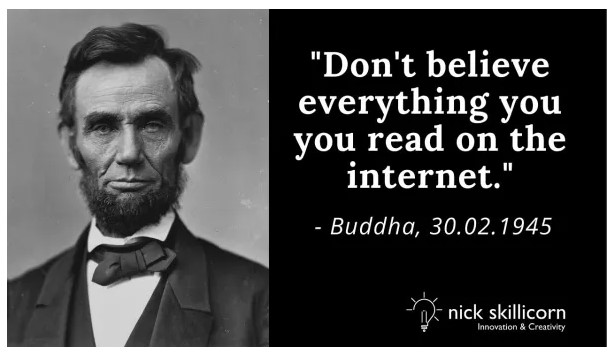
When will the internet make up its mind?!?


Let’s face it!
Santa is a lie.
A white one, indeed, but still a lie.
Then why do we continue to ‘confuse’ our children?
Because for as long as they will remain convinced that it was Santa who brought their presents, they will not pester us with their demands?
It’s easier for us to tell them ‘Santa didn’t consider you worthy enough’ than ‘we didn’t have enough dough’?
It’s a ‘subtle’ manner for them to learn that deception is acceptable? If driven by ‘noble goal’? And who gets to determine how low the benchmark for ‘noble’ must be set for a deception to become acceptable?
But the strangest thing pertaining to this habit of ours is the number of fake Santas hanging in the most peculiar places.
The one above, for instance…
Why would a sensible person – me, drill a hole in the middle of an otherwise pristine wooden door just because his wife loves to hang bearded figurines?
Meanwhile, this guy has become a permanent fixture. He’s been there for years …


There are two ways in which we may acquire information.
The hard way and the reasonable way.
By ‘immersion’ or by learning.
By ‘getting stronger if lucky enough to survive’ or by making sense of what had happened to others.



 nicichiarasa