There is no such thing as a soul? OK, then how do you explain what happened the last time you encountered a soul-less person? You didn’t? Good for you only I have my doubts.
Either a divine gift or an emanation of the human mind, soul is what separates us from the animal realm.
Or this is how we see things…
After all, we are the ones who believe it is normal for us to eat animals and who consider it a tragedy for one of us, humans, to ‘return to nature’. In any circumstances…
Anyway, things are complicated… Until recently – historically speaking, some of us were comfortable with the notion that skin colour determines the ‘quality’ of one’s soul. Caucasian plantation owners used black slaves to work their land and Arabian rulers used ‘white flesh’ to adorn their harems…
Further complications spring up when we consider the fate of the soul. Is it going anywhere after it’s ‘host’ passes away? To some other place? Does it come back to fulfill its Karma? Or it literally goes to meet its Maker? As in ‘for dust thou art, and unto dust shalt thou return. (Genesis 3:18)’?
And when does this soul appears in earnest? The moment when we leave the womb? A few years later, during the process through which we become conscious human beings? Or, as some people choose to believe, in the very moment when each of us has been conceived by their parents?
As an aside, what about those conceived in a lab? Do they have a soul?
What about sexes? Are feminine souls equivalent with the masculine ones? What happens to a transgender soul?
Are we a natural occurrence? A product of evolution? In a constant process of ‘improvement’? Obviously imperfect but, generally speaking, striving to ‘fail better’?
Or are we an imperfect ‘artifact’?
Cause this is the only issue on which there is a consensus… Everybody is convinced we’re ‘defective’. From the staunchest believer to the most rabid atheist…
I really have to stop. And go comfort my soul with something nice.
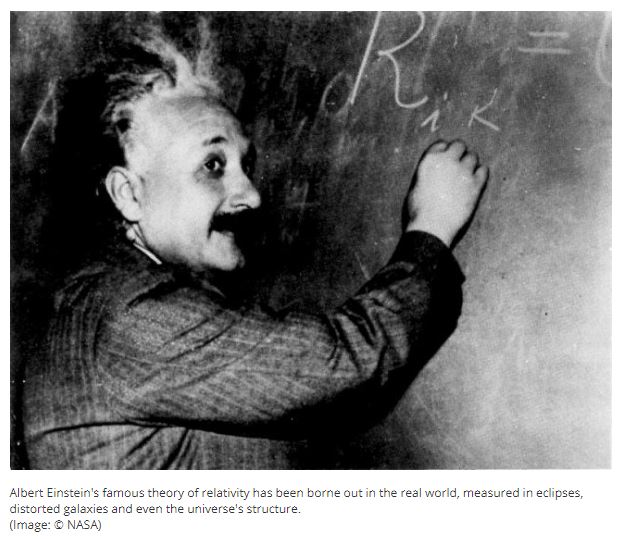
Albert Einstein, a physicist, had noticed that observations are relative to the “frame of reference” where the observer happens to make his observations.
Humberto Maturana, a biologist, has reached the conclusion that consciousness – or ‘self awareness’, as he prefers to call it, is a personal trait which is developed by individuals living in concert.
Blending Einstein’s and Maturana’s ideas, it is easy to ‘see’ that observations made by human individuals depend, simultaneously, on two referential systems. Or frames of reference, in Einstein’s terms.
On the actual, ‘geographic’, ‘place’ where the individual makes their observations. And on the ‘cultural place’ where the conscience – inner referential system, of the observing individual had been ‘shaped’.
Otherwise put, nobody can see things which are not there. Nor ‘see’ – a.k.a. understand, things which are too ‘distant’ from what that person already ‘knows’. Accepts as being ‘normal’. Feels like being ‘right’.
To make things just a tad ‘clearer’ – ‘nature versus nurture’, we must consider the vagaries of individual ‘biology’. Some people see/hear/smell/feel differently than others. And even ‘think’ differently.
And my point is?
Maturana made it before me. The ‘other’ – the more different, the better, is a source of richness. IF we treat each-other the right way. If we help each-other by ‘concerting’ our observations about what we have in common. The ‘place’ we observe. Einstein’s referential frame. Where we ‘happen to stand’. Together.
What if our self awareness, otherwise known as conscience, has evolved in order to understand, accept and mitigate randomness?
There’s no evolution – hence no life, without randomness. Yet life, anyway you look at it, is about maintaining a certain degree of order.
Whenever there’s so much randomness that life can no longer adapt to it… evolution stops. Whenever structures become so big/rigid that they find it harder and harder to evolve, they eventually succumb to an otherwise survivable amount of randomness. Dinosaurs and too big to fail corporations versus mice and flexible operators.
And to avoid the deepest pitfall we’ll encounter during this never ending journey – randomness will always be wider than our individual ability to encompass it, we must keep remembering that conscience is selfish. Untrained, it is more about protecting itself than about helping the entire ‘individual’ to survive.
‘What?!?’
Yes, it’s hard to believe! But what other explanation is there for so many of us continuing to smoke after finding out, the hard way, that this habit might actually kill us? I use this example simply because I still remember the cigarette I smoked when I last visited the grave where rests a woman I loved dearly. And who is no longer with us because of lung cancer.
Too often our conscience will prefer to rationalize away new information than accept that past choices could have been better.
I’m certain all of you are already too familiar with ‘confirmation bias‘.
This being the most convincing argument that we really need to quit ‘smoking’.
Just think of it. Inhale, exhale. Inhale, exhale. Inhale, exhale…
I know you can do this, breathe, without thinking. You’ve actually done it since your birth. And you’ll continue doing it after you’ll have reached the end of this post. But right now you should be fully aware that your lungs have only one opening.
What has to come out – what doesn’t belong in there, needs to exit from where it came in in the first place. Which is rather hard for anything which isn’t air. That’s why dust, tar, or even microbes, should not go in there at all.
Quit smoking. And quit belching smoke into the atmosphere.
Let’s get to the second part of the post. Presumably, the more interesting one. Click on the image and read the whole thing. Now tell me why would somebody attempt to ‘debunk’ such a lie in the first place? Is smoking something worth arguing for?
Oops… so the whole thing revolves, again, around money… And, if I understand correctly the point proposed by the author quoted above, a certain Fredrik Eich, there isn’t much of a difference between being duped into giving up and starting/continuing to smoke.
No, I don’t like being duped myself. That’s why I’m telling it straight. Lungs have only one opening. Don’t let yourselves be duped into believing that smoking isn’t that bad for you. That some smog is inevitable for a thriving economy. After all, this is how ‘they’ make ‘their’ money.
Now, after proof-reading this, I wonder. What do the dupers breathe? Do they have their, private, atmosphere? Have they duped themselves into believing everything is as pink as a pair of healthy lungs?
Then what? Stop talking? Or assume personal responsibility for everything that leaves your lips?
As soon as a person achieves a certain level of self-awareness, they realize there’s more in life than mere survival. As soon as their consciences bloom – in concert with the accrued influence exercised by the ‘environment’, individuals set goals for themselves. Which goals become integral part of the ‘ongoing project’. Of the self-actualizing conscience. Achieving, or failing, each of those goals leaves an indelible mark on the conscience itself. On the manner in which each individual relates to their environment. Since achieving is far more ‘satisfying’ than failing, conscience is naturally biased towards ‘achieving’. If the ‘environment’ ‘allows’ it, the bias becomes more and more ‘slanted’. The messages used by the individuals – by their conscience, to be more precise, will increasingly serve the purpose of achieving goals rather than the purpose of ‘honest communication’.
As soon as a person achieves a certain level of self-awareness, that conscience wants to survive. Mind you, not the person but the conscience.
‘?!? Conscience cannot exist without the mind/body which supports it….’
OK, tell that to people who believe their souls are going places after their mortal bodies expire. Then try to demonstrate to yourself, honestly, that those people are wrong. That there’s no chance for their belief to be ‘true’.
But metaphysics are hard. Let me give you a far lighter example. Smoking. Or drinking. Driving fast. Eating that extra piece of chocolate… Don’t tell me you never did anything ‘foolish’. That you never lied to yourself: ‘This cannot happen to me. Chances are so small that … Only this time….’
‘But otherwise nobody would ever be able to ‘leave their houses’. We’d be all completely paralyzed with fear…’
Yeap! That’s exactly what I mean. Conscience needs to lie to herself in order to remain functional. Otherwise she would not allow the physical body who sustains her to assume any risk. They would both suffocate.
So. Let me present you with a sociologically fictitious scenario.
We have an intelligent observer and and a trans-galactic vehicle.
There are no details available about the observer except for the fact that it has access to a comprehensive real time stream of data about what is going on inside – or, more exactly, on the surface, of the trans-galactic vehicle.
And here’s what the observer had recorded.
The vehicle is being continuously transformed by its passengers. In fact, there are two manners in which the passengers change their vehicle. By interacting directly with it. And as unintended consequences of the interactions which take place between the passengers themselves.
The passengers are evolving. During the observation period, some of them had become dominant. But no matter whether they had become dominant or not, most of the passengers had disappeared. Both as individuals and as species.
The current dominant species is the most intriguing ever.
It displays a strange mix of intelligent behaviors and suicidal tendencies.
It is composed of rather autonomous individuals who are adept at finding ingenious solutions to almost intractable problems. But, strangely enough, they haven’t yet been able to figure out two basic things: The limited nature of the vehicle on which they live. In both time and space. Nor how to balance their individual functional autonomy with their need to cooperate towards their natural goal. The survival of their own species.
If the whole ‘project’ were a SF movie, the text above would have been the opening. Followed by:
Currently, the dominant passengers are being taught a lesson by the apparently most insignificant amongst those transported by the vehicle. By a virus, as the dominants refer to it. The virus – like all of its kind, is able to hijack other organisms and somehow convince them to work for him. At a very high cost for the hijacked organisms. In this case, the hijacked organisms belong to the dominant species.
And what have the individuals belonging to the dominant species chosen to do? Inform each-other promptly and cooperate earnestly towards the common goal?
Not exactly. Not yet, anyway.
Homework: What would the intelligent outside observer think about the whole situation? Would He consider to lend a helping hand?
We’re in the middle of a crises. Some people believe the crises has been only triggered by the virus. And that it has been mainly caused by ‘globalization’.
I beg to differ. In part.
The crises was indeed triggered by the virus. But the fact that we are so fragile isn’t the consequence of globalization. Only by what we have done in the given circumstances.
It wasn’t globalization itself which had made us fragile. Globalization only extended the opportunity field we had at our disposal. It was our way of developing those opportunities which had made us fragile. We had chosen ‘financial efficiency’ over ‘resilience’. We had chosen to increase profit instead of making it ‘more and more sure’ that we’ll be able to survive. In a sense, we have been acting as if we’d lost touch with reality. With the hard reality….
There is nothing to suggest that we knew what we were doing. Then. But we won’t have any excuses left once that we will have reached the other side.
I’m sure you’ve already learned everything worth knowing about how to flatten the curve…
My post is about something else. About the need to think with our own heads. Individually. Each on their own.
More damages are caused by the manner in which we have chosen to react than by the pathogen itself.
‘Then what should we do?’
I don’t know. And I just told you to stop taking cues, blindly.
There is something I do know. Nobody can get out of something like this on its own. Alone. And another thing. If we get out of it as a herd, we’ll very soon end up in another trap.
‘Damned if you do, damned if you don’t… I really can’t figure out what you want to say….’
OK. We, humans, are social animals. We not only raise our young – all mammals do that, we raise them in a social context. We live in groups and we raise our children to belong there.
Living in a social context has consequences. From being prone to infestation to having adopted specific behaviors. Humberto Maturana is actually convinced that our very conscience – ‘our ability to observe ourselves while observing‘, a paraphrase, is a product of us leading our lives in close community.
One of these specific behaviors is the herd instinct. Whenever in a dire strait, the members of a group pay a lot more attention to the rest of the group than in the ‘peaceful moments’. This has two bright sides and one huge drawback.
All members of a group paying close attention to the others makes it easier for those who need it to get attention. And help. All members of a group paying close attention to the others makes it easier for the group to follow when one of them finds a way out. All members of a group paying too close attention to the others makes it very likely that the entire group will dash out at the first opportunity. Without checking first where they’re going to land. Nor whether there are any other opportunities.
Another specific behavior is ‘opportunism’. Some of us have figured out that by keeping their chill in a crises they are more likely to identify whatever opportunities might exist in that moment. And the deeper the crises, the bigger the opportunities.
Theoretically, these two should work like a charm. The opportunists keep their chill, look around, identify the best way out and the rest of the herd follows them to safety. A win-win situation.
Yeah… but!
Wouldn’t it be a way lot better whether all (or, at least, ‘more’) of us would keep their chill? Wouldn’t we be able to identify even more ways out? It would take a lot more time? We’d need to discuss things over, to negotiate… we’d have to exert a lot of discretion… True enough. Hence we’d need to evaluate two things. First, how urgent the dangerous situation is and, then, whether a better alternative would be worth searching.
And something else. In a ‘follow me blindly’ situation there’s no going back. The consequences for a hasty choice might be tremendous.
We might end up with more people being hurt by our blunder-some reaction than by the cause which had spooked us.
Yet another specific behavior is responsibility. Living in a social context means that, sooner rather than later, individuals are censored for their actions. By the rest of the community or, sometimes, by the stark reality. Unfortunately, sometimes entire communities are censored, by the stark reality, for not behaving responsibly. For not imposing responsibility upon their members.
For not taking enough time before choosing between flight and fight.
Let me put things into perspective. How many of you have chosen to continue smoking despite having been warned? How many of you have emptied the shelves despite being told there’s enough for everybody? Or that there will be soon enough? How many of you do not smoke in the presence of your children? Because you know it will hurt them? How many of you have taken active measures to protect the elderly? For the very same reason…
As for the economy being the main casualty of the present scourge… I’m afraid ‘the economy’, as we know it, has been dying for quite a while now. That’s why it is so susceptible to SARS CoV-2.
The Ancient Greeks had come up with the concept of ‘oeconomia’ as the art of making the ends meet. Adam Smith had described the free market as the place/environment where competing agents made it so that people – solvent demand, could satisfy their needs. Nowadays, too many of us understand/accept ‘economy’ as the art of getting rich. ‘Free’ in ‘free market’ is understood as ‘free’ to do anything you want. Because very few are asked to answer for the long term consequences of their actions.
The economy, as the manner in which we cooperate towards fulfilling our needs, has fallen prey to our gluttony. And to our nearsightedness. Greed is not good. And SARS CoV-2 is only an eye opener, not the cause for the current implosion.
Given that sexes are, nowadays, considered to be equal… the advent of gender seems to be somewhat unwarranted.
I’m afraid things are not so simple.
First of all, sexes are only declared to be equal. Nobody – or, more exactly, very few, actually consider them to be absolutely equal.
Secondly, they are only of equal importance. Not at all ‘equal’.
First things first. We, all, have been raised seeped in ‘culture’. And almost all contemporary cultures consider women to be ‘second’ to men. Hence both men and women – both raised by the same ‘mother’, have an ingrained bias towards men being ‘somewhat’ more important than women.
Last, but not at all least, sexes play different roles. Biologically, socially… any way you look at it, men and women do different things in order to fulfill their jobs. OK, those roles have been ‘blurred’ during the last decades but their are still discernibly different. But of equal importance, mind you!
Just think of yin and yang. Would you say they are equal? Could you say which is more important?
Hence gender! ‘Genders’ do exactly that. They underline the functional differences between sexes while demonstrating the equal importance shared by both sexes.
And, last but, again, not least, genders teach us that only the biological roles are different AND fixed. Social roles are also different but they can be fulfilled by either sexes. Men acting as secretaries for women bosses, women leading households – both income-wise and/or as ‘the pillar’, fathers using their maternity leaves, women flying fighting jets, men happily working as nurses. You name it!
You get accustomed to it. Study genders. It will come easier.
The Earth is covered by atmosphere. Some of the gases might have belonged to the original ‘cloud’ which had given birth to the solar system. Others have originated from the Earth itself. And still others are a ‘consequence’ of ‘life’. Oxygen, for instance. And some of the CO2.
The land crust has rocky cliffs and fertile plains. While the rocky cliffs are a consequence of geology, the fertile topsoil is the consequence of the elements having eroded the cliffs, the debris being transported by flowing water, plant life taking hold and slowly transforming some of the minerals into organic matter, animals eating some of the plants and transforming them into feces, micro-organisms digesting/recycling those feces together with the dead plants and animal carcasses… And so on.
Making a parallel between a humble unicellular organism, let’s say an amoeba, and a proud ape we’ll notice that the role played by the amoeba’s membrane is fulfilled by a host of the ape’s organs. Skin, lungs, digestive system and kidneys are the first to jump up for attention. On a closer examination – amoeba’s membrane keeps the organism together and acts as a locomotion device besides performing the respiratory, digestive and excretory tasks, the ape’s bones and muscles start to beg for attention
But what about the brain? What role does it play? What is it? An ‘internal organ’ or just another descendant of the membrane? I’ll let you make that call. I’ll only mention that the brain ingests information, digests it and then ‘excretes’ decisions. Which coalesce into ‘fate’/’destiny’, are remembered as ‘history’ and eventually end up as ‘tradition’.





 nicichiarasa