“Weaver pointed out that the word “information”
in communication theory is not related to what you do say, but to what you could say.
That is, information is a measure of one’s freedom of choice when one selects a message”

Space is where ‘evolution’ happens.
Where interaction shapes whatever is.

For space to exist, something must be there. Space needs ‘limits’. Which define it.
‘There’s a gap between these two bricks’.
‘This pile of bricks blocks the way’

‘Space’ is, simultaneously, a place, a concept and a word.
We, writing and reading about it, exist. Somewhere. Somewhere in ‘space’…
We’ve realized that. That we exist. Hence we came up with the concept.
We needed to share that knowledge. To discuss it. We needed the word!

A wise man, using tools crafted by his predecessors, has calculated that whatever exists in space shapes its form. The heavier the object, the deeper the dent.
Which depth of the dent influences the flow of time…

Time… the metric we use to measure ‘evolution’. The order and speed of happening…
Time… Another ‘thing’ which exists, simultaneously, as a ‘reality’, a concept and a word.

Einstein, the wise man with the calculus, did his thing trying to understand. To put together an explanation for everything.
Reading his findings, the results of his calculating, we can push our imagination.
How about switching time for space?

How about considering ‘time’ as being the place where events exist? Interact, producing the ‘space’ needed for that process?
Where the ‘weight’ of events, their ‘importance’, shapes the form of time. Which form of time influences the space ‘becoming’ as a consequence of those events existing/interacting in the place called time…

My point being …
You see, Einstein’s predecessors had developed what we call ‘mathematics’.
Our predecessors, also called ‘ancestors’, had developed a thing called language. Used it to communicate.
Among themselves, as individuals, and among themselves – as a cultural species – and the surrounding reality.
Language as the tool we use to digest and reshape the reality… Before we ‘do’ anything, we think about it. Using language to parse pertinent information stored in memory. Using language to consult with others. Using language to coordinate with others…

One of the languages we’ve developed is mathematics.
Einstein, using this language, reached a ‘conclusion’. Wrote a story. Others call it a theory.
Convincing enough for interested people to try. To try to prove it, to try to disprove it. To attempt to implement it into practice…

We exist.
In space, using whatever resources we can identify and building time as a consequence of our actions. We do this using language. To explore, think and coordinate.
That’s how we’re calling things. Space is where things happen and time is the ‘conclusion’ of whatever we do. Mathematics suggest that time and space are interchangeable.

So what?!?

Have we already solved all our immediate problems?

After all, we’re the only adults in the room. In the limited space called planet Earth.
Or, at least and for all that it might matter, we’re the only adults in the room who care. Who should care about our own fate…
Time’s running out, faster on the route we’re currently using!
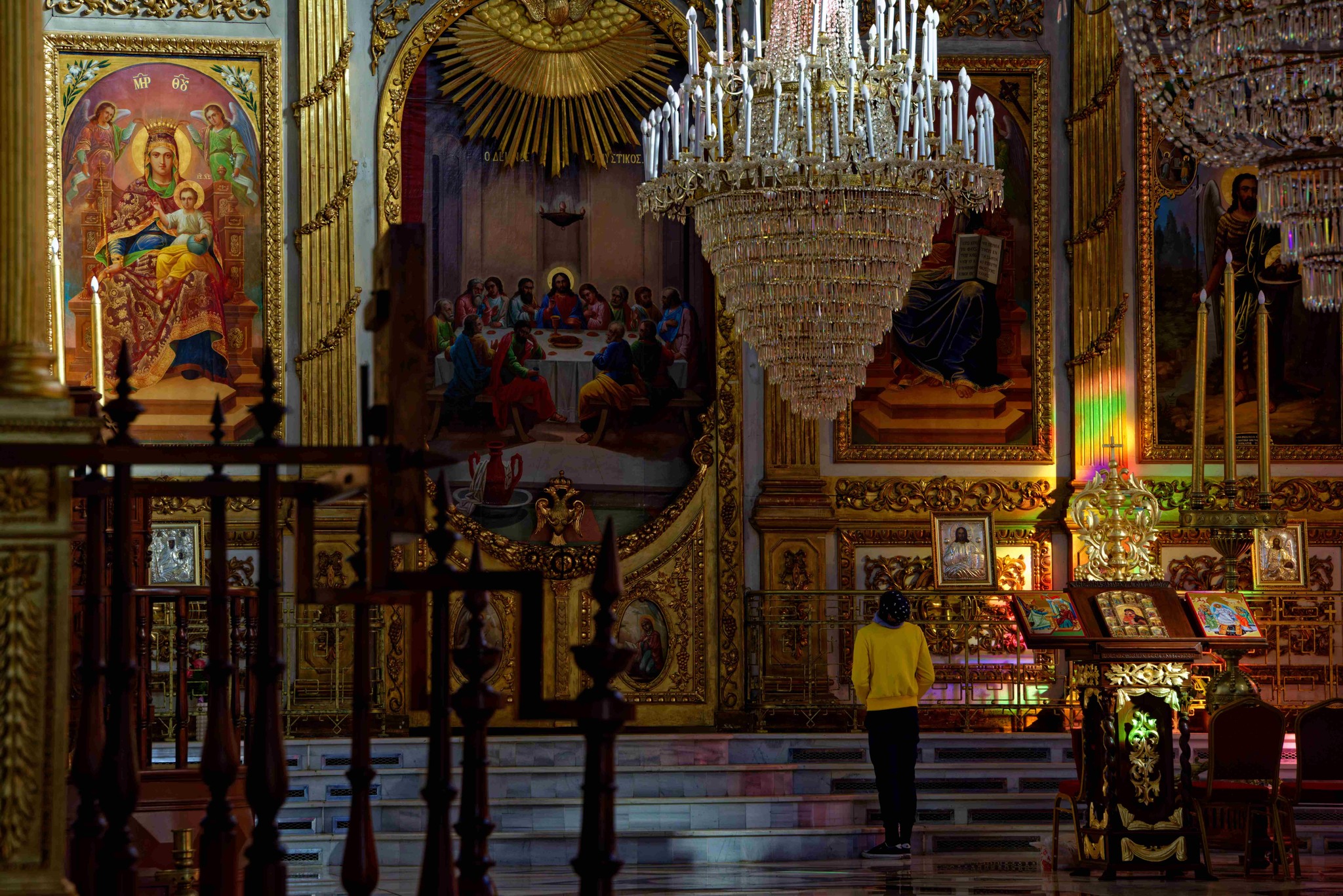
The Ancient Greeks made the difference between Nomos and Phusis.
Phusis was Nature and Nomos was what they made of it. And as long as the story ‘held water’… that was it.

By figuring out that they were the link between Phusis and Nomos, the Ancient Greeks were capable of integrating the miraculous into their daily lives. As long as they kept believing ‘the story’…
For as long as ‘faith’ was doing its magic, things were OK.
They, individually speaking, didn’t feel the need for much additional explanation. They kept figuring out what they could and accepted the rest. As belonging to the ‘other’ half of the realm they were inhabiting. People and gods sharing the same (cultural) space….

Phusis was what there was and Nomos was the words they used to describe what they saw.
The words they used to make sense of what they were living. The words they used to spin ‘the story’ which kept them at ease with everything they couldn’t figure out.

Phusis and Nomos, together, was what made us possible. What we call ‘the Western Way of life’.

At some point, we’ve started to study physics.
Newton figured out gravity. Not why things fell down, only the rate at which they did it. 9.81 m/second squared at sea level.
Using far more advanced mathematical gimmicks, Einstein was able to calculate a lot more. But we still don’t know why mass tends to pull together. But we stopped worrying about it… now that we’ve been able to measure G. “Big G”, the gravitational constant, different from the “small g” measured by… Galileo Galilei. Forget it.
The point being that we still don’t know why mass tends to pull together, to coagulate, as opposed to attempting to dissipate. As gases do… as long as there’s enough heat available!

To cut the long story short, we’ve cut out the miraculous from what we consider to be normal. Acceptabil in nominal terms.
We attempt to measure everything. And to calculate what we cannot measure.

After all this time, we haven’t yet been able to accept our limits.
Which is good.
We keep pushing them.

Only sometimes we push them too hard.
We keep pushing those limits where they have given up previously. And we don’t always notice what’s really going on.

Trying to understand physics, we’ve learned to fly. Hot air balloons, fixed wing air-crafts, rotary wing air-crafts, Lunar landing modules, nuclear-tipped cruise missiles…
Trying to understand chemistry, we’ve learned to transform matter. The food we eat, the clothes we wear, the materials we use, prescription drugs, life-saving vaccines, poison gasses….
Trying to understand biology, we’ve learned to influence evolution. Cross-bred plants and animals, decoded – and then coded back – genetic information…
Trying to understand economics, we’ve built the world as we currently have it. And put together the Efficient Market Hypothesis which keeps failing us…
Trying to understand consciousness we’re messing up everything. Fake-news, post-truth, “artificial intelligence”…

And we still don’t know why mass tends to coagulate, how life came up to be, how consciousness grew up on top of everything…

Pentru România, și pentru restul Europei, ideal ar fi ca Rusia să fie în interiorul Europei. Și nu în afara ei, uitându-se cu jind la bunătățile din vitrină. Cel mai bine ar fi să intre republică cu republică și nu ca un întreg. Bine, după ce se va mai fi prăbușit odată, tot sub povara propriei greutăți, probabil că n-o să mai rămână în forma/componența actuală.

Problema noastră, atât a Europei cât și a Rusiei, este că nu am înțeles nimic din primele două războaie mondiale.

Cel de al doilea a fost o consecință a primului. A modului în care învingătorii i-au tratat pe învinși. I-au jefuit. Sub pretextul despăgubirilor de război. Criza existențială din Germania postbelică a facilitat ascensiunea nazismului, care nazism – precum toate dictaturile – a avut nevoie să se proiecteze în exterior.

WWIII a fost la fel de idiot precum WWI.

WWI a fost o consecință a faptului că părțile implicate n-au fost în stare să vadă mai departe de lungul nasului. Să înțeleagă ce urma să se întâmple. Dacă/atunci când fiecare dintre ele respecta, cu ochii închiși, toate angajamentele asumate.
WWIII – cunoscut și sub numele de Războiul Rece – a fost o consecință a faptului că fiecare dintre părțile implicate au respectat, în literă și în spirit, angajamentele deja luate. Angajamentele luate de fiecare dintre părți în fața populațiilor respective… Europa de Vest promisese libertate și prosperitate, lagărul comunist promisese o egalitate forțată ce urma să fie implementată în condițiile în care populația era forțată să asculte și să pună în practică, cu capul plecat, aberațiile ideologice proferate de către ‘cei mai avansați fii ai clasei muncitoare’. Conform Manifestului Comunist pus la cale de Karl Marx…

După WWII, învingătorii au avut grijă, fiecare în felul său, să-i integreze pe învinși. După ce ambele părți au convenit să scoată nazismul și fascismul în afara legii. Și să-i judece pe criminalii care aduseseră pe capul lumii întregi toate nenorocirile acelor ani. Ambele porțiuni ale Germaniei, Italia și Japonia au fost integrate, fiecare dintre ele și după o purificare aproape ritualică, acolo unde le-a fost norocul să ajungă. Germania de Vest, Italia și Japonia în lumea liberă, Germania de Est împreună cu ‘despăgubirile de război’ pretinse de Rusia – adică aproape întreaga Europă de Est – au fost integrate în lagărul socialist.

După WWIII, în mare parte similar cu ce s-a întâmplat după WWI, Marele Învins a fost lăsat să se descurce de unul singur. Comunismul nu a fost judecat, și cu atât mai puțin, scos în afara legii. Mă refer aici la comunismul dictatorial aplicat, cu forța terorii, în ‘democrațiile populare’. Iar singurul dictator comunist care a simțit pe pielea lui consecințele faptelor sale a fost împușcat ca un câine. În loc să fi fost judecat pentru faptele sale!

‘De unul singur’ nu se poate. Am lăsat Rusia post-sovietică să ‘se descurce’. Suferim consecințele. Precum în Germania post WWI, spațiul politic a fost ocupat, și în Rusia aflată în criza economică inevitabilă după o astfel de reașezare, tot de o guvernare dictatorială. Care, și ea, are nevoie să se proiecteze în afara spațiului pe care îl controlează deja.
Pentru că nu știe/poate să supraviețuiască altfel!

You’re handed a pot.
So heavy, you need to hold it with both hands.
So hot, you want to let go of it.
On your feet?!?

I’ve argued sometime ago that all living organisms act as if they were ‘aware’.
All of them are adept at keeping their insides in, most of the outside out and, most importantly, they are the ones deciding what from the outside goes in and what from their inside goes out. And when!
I call this awareness 1.0. Or life…

We congratulate ourselves over being the only creature wielding ‘self-awareness’. The ‘full fledged’ variety… according to our way of understanding it, of course. “Consciousness”, we call it.
How about ‘awareness 2.0’?

Some of us are involved, heavily, into ‘faking’ things. From building something called ‘artificial intelligence’ to using ‘technology’ to mess up other people’s minds.
They are ‘delving’ in the ‘next’ level. Knowingly but unwittingly playing god.

Life is driven by ‘natural selection’. Or ‘evolution’… as Darwin called them.
‘Happenstance’, if you look at it from another angle.
The process of life/natural selection/evolution depends on it taking place ‘individually’. While evolution is a matter regarding ‘species’ – as Darwin itself had put it – the whole process depends on the fact that each individual organism which belongs to each species is distinct/different from all other members of the same species.

‘Self-awareness’ depends on the existence of other self-aware individuals. Willing to cooperate with the ones developing it. Just as no living organism has been observed, yet, while putting itself together starting from innanimate matter, no individual has ever been observed developing self-awareness with no outside help.
Mind you, while the process involves ‘mature’ individuals helping ‘fledglings’ to ‘fly’, the process isn’t entirely ‘voluntary’. The outcome, the emerging individual consciousness, depends on the actions performed by those helping it but only inasmuch as the result of the natural evolution depends on the actions performed by the previous generation. Achieving ‘self-awareness’ is a ‘natural’ process, not a ‘deus ex machina’ machination!

Awareness 3.0, on the other hand… the ‘artificial’ kind…
In this context, I wish to remind you of what happened when we, willingly but unwittingly, have reduced the natural bio-diversity in certain areas. According to our needs and understandings…

The Green Revolution’s success also brought serious costs: intensive farming drained groundwater, degraded soil and contaminated fields with pesticides, while wheat and rice monocultures eroded biodiversity and heightened climate vulnerability, especially in Punjab and Haryana.
Swaminathan acknowledged these risks and, in the 1990s, called for an “Evergreen Revolution” – high productivity without ecological harm. He warned that future progress would rely not on fertiliser, but on conserving water, soil, and seeds.
A rare public figure, he paired data with empathy – donating much of his 1971 Ramon Magsaysay Award amount to rural scholarships and later promoting gender equality and digital literacy for farmers long before “agri-tech” was a buzzword.
Reflecting on his impact, Naveen Patnaik, former chief minister of Odisha, says: “His legacy reminds us that freedom from hunger is the greatest freedom of all.”
In Swaminathan’s life, science and compassion combined to give millions that very freedom. He died in 2023, aged 98, leaving a lasting legacy in sustainable, farmer-focused agriculture.

https://www.bbc.com/news/articles/cn7eln1pm4ro


God blessed them and said to them:
“Be fruitful and increase in number; fill the earth and subdue it.
Rule over the fish in the sea and the birds in the sky
and over every living creature that moves on the ground.”
Genesis 1:28

Engineers are trained to think first. And ‘shoot’ only after they have figured out what was going on. What was going to happen as a consequence of their enacted decision…
Handymen, the hard working people who actually prevent the ‘wheels’ from halting screechingly, are trained – self trained, mostly – to repeat what has worked in the past.

Both engineers and handymen are convinced that they know better. That each of their Weltanschauungs are more appropriate.
Both are right.
The distance between them can be construed as (one of) the depths we need to fathom. If we wish to understand ‘reality’…

An engineer myself, MSc level, I had my midlife crises rather early. Went back to school. BA in Sociology. Trying to understand ‘decision making’. Figure out what reality really is…
How to make a wise decision if you don’t know what’s going on?!?

Almost 20 years later – and a few entries in my blog – I found out that I was not alone. That more than a century ago, another guy – a former mathematician, had already broken the ‘glass-ceiling’.
While ‘process philosophy‘ is as old as philosophy itself – traceable back to Heraclitus, Panta Rhei – it was Alfred N. Whitehead who had introduced enough epistemological order into the matter to make it a ‘real’ issue.

What’s the meaning of all this?
Why haven’t we changed tack since Whitehead gave us such a powerful heads-up?
Why most of us continue as ‘handymen’?!?

Process philosophy, as I understand it – with my engineering mind, is mostly about responsibility.
Marx’s was about ‘taking charge’. Shoot first, ask questions later – if ever, was how communism had been translated into reality. Like all other dictatorial processes…
Whitehead’s – if I read him correctly – is about understanding responsibility. Not about ‘merely’ assuming it but about accepting it. About accepting the fact that it will be us – or our children – at the receiving end of the processes we initiate.

‘Uncomfortable position’ is a very lame expression for feeling alone. When trying to decide ‘what next’…
‘Maybe we should just proceed as we used to?’

The Sapir-Whorf hypothesis, following ideas put forward by Wilhelm von Humboldt, posits that the kind of language used by various categories of people have a meaningful impact upon the ways each of those categories of people think. And see the world.
The last iteration of the above hypothesis being the advent of AI. We train it using various languages. Those trained using precise languages – chess, go, ‘mathematics’ – work more or less as intended – aka ‘perfectly’ – while those trained using everyday English end up hallucinating…

https://www.jstor.org/stable/43102168: Sapir-Whorf
https://www.ibm.com/think/topics/ai-hallucinations
Moloch’s Bargain: Emergent Misalignment When LLMs Compete for Audiences:
https://arxiv.org/abs/2510.06105

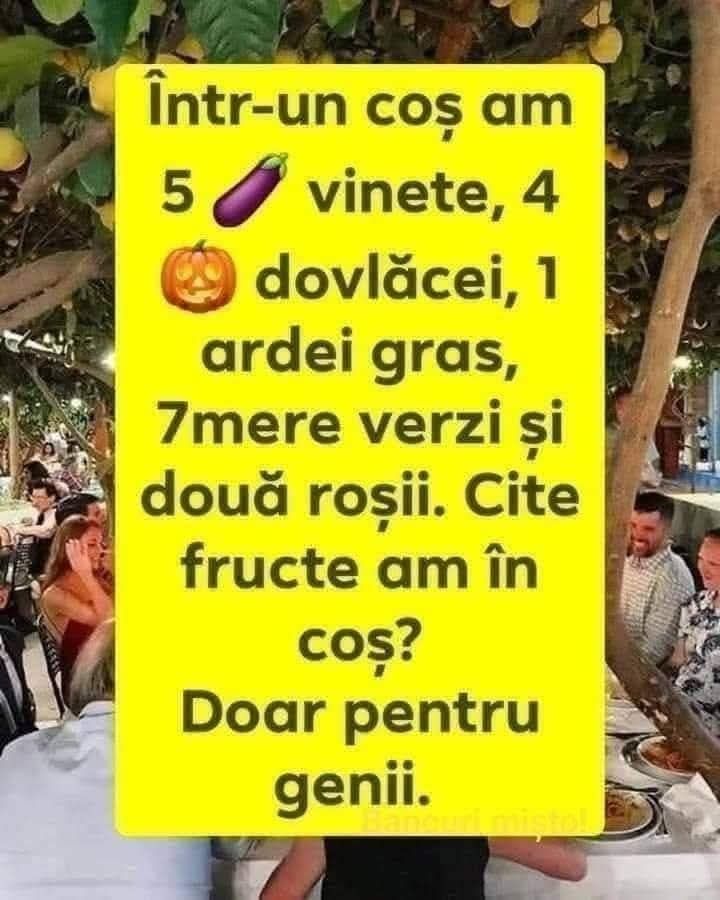
A făcut cineva un banc pe net.
Care banc deschide oportunități cât se poate de interesante.

Care este ‘lățimea de bandă’ a limbajului?
Cât de mult înțeles poate fi înghesuit într-un număr limitat de cuvinte? Și, mai ales, cât de mult din acest înțeles poate fi recunoscut ca atare și ‘recuperat’ de către cei care intră în contact? Cu acele cuvinte…

Cel care a pus la cale gluma nici măcar nu le-a menționat. Jumătate dintre comentarii fac referire la ele… la legume!
Din punct de vedere ‘logic’, are sens. Pentru a număra fructele, trebuie mai întăi să le alegem. Să vedem dacă nu cumva sunt amestecate cu alte chestii. Cu legume…

Ce sunt fructele?
Mere, pere, căpșuni, cireșe… chestii dulci, pe care le mănânci, de obicei, după masă. Ca atare, sub formă de desert sau chiar de dulceață.
Sau chestiile alea pline de semințe pe care le fac plantele după ce se scutură petalele florilor…
Ce sunt legumele?
Chestiile alea pe care ni le îndesau mamele noastre pe gât, în numele alimentației sănătoase. Bucăți din plante, proaspete sau gătite, care trebuie mestecate mult înainte de a putea fi înghițite. Și care țin, la o adică, de foame.
Sau niște plante care au o anumită particularitate. Rădăcinile lor adăpostesc niște bacterii fixatoare de azot. Și ca urmare a acestei simbioze, plantele respective – legumele – îmbogățesc pământul în care cresc. În loc să-l sărăcească.
Vechii locuitori ai Mexicului cultivau porumb amestecat cu dovleac si fasole. Dovleacul și fasolea – amandouă legume – ajutau porumbul să crească. Porumbul, la rândul lui, oferea sprijin și umbră legumelor. Toate trei îi hrăneau pe strămoșii mexicanilor.
Bunicii noștrii roteau culturile. Din când în când puneau trifoi. Care e tot o legumă. Din punct de vedere botanic…

Toate informațiile astea sunt înghesuite în doar două cuvinte. Fructe și legume.
Și acum, că toată lumea are tot felul de dispozitive conectabile la internet, informațiile astea sunt cât se poate de disponibile. Nu mai e nevoie să le fi învățat dinainte.

Ar trebui totuși să ținem minte ceva.
Să verificăm ce se ascunde în spatele cuvintelor. Care sunt, de cele mai multe ori, mai largi decât par la prima vedere!

Doar că pentru asta avem nevoie de exercițiu!
Adică avem nevoie să ne învățăm singuri…

Să nu mai punem botul!
Să ținem cont de faptul că nu toți cei care ne vorbesc au cele mai bune intenții. Cu privire la noi…
Poate ar fi bine să verificăm și ce au făcut la viața lor înainte de a le crede promisiunile!

Și ca să nu termin brusc, ‘legumă’ mai înseamnă ceva. O persoană aflată în stare ‘vegetativă’. Care trăiește dar care nu prea e ‘de față’. Din cauze obiective – a suferit un atac cerebral, de exemplu – sau subiective.
‘Nu mai sta ca o legumă!’… Nu-i mai lăsa pe alții să te păcălească!

M-am împiedicat pe internet de chestia asta.
Unii ar sesiza contribuția inteligenței artificiale care a fost însărcinată cu ‘ortografia’.
Alții ar admira abilitatea cu care a fost strecurată șopârla. 7 mere verzi și două (mere) roșii. Sau 7 mere (verzi) și două tomate roșii?!?
Horticultorii ar sări de cur în sus. Toate sunt fructe! Chiar dacă sunt fructele unor plante din categoria legumelor, vinetele, dovleceii, ardeii și roșiile sunt tot fructe. Au semințe, sunt fructe!

Pe mine mă interesează altceva.
Comentariile. Pe care le găsiți aici. Din care rezultă foarte clar cât de puțini ‘s-au prins’. Și cât de mulți se consideră suficient de ‘geniali’. Suficient de ‘geniali’ pentru a răspunde…

Se tot face vorbire, în spațiul public și pe toate canalele, despre nevoia de educație. Despre ‘analfabetism funcțional‘…
Avem aici cel mai bun exemplu de alfabetism disfuncțional. De oameni care au știut să citească dar care nu s-au prins. Lasă că n-au ținut minte de la botanică despre cum stă treaba cu fructele. Care n-au ‘reținut’ că și legumele fac fructe! Care n-au știut să ia în serios avertismentul „doar pentru genii”. Care nu s-au obosit, având la îndemână un dispozitiv conectat la internet, să caute scurt „vânata fruct sau legumă”.

De unde și diferența dintre „analfabetismul funcțional”, termen oficial folosit de cei care se vaită cu privire la cât de needucată este nația, și alfabetismul disfuncțional. Realitatea cruntă!

Analfabetul funcțional funcționează. Cel puțin conform logicii după care funcționeză limba română.
Analfabetul funcțional este un om care se descurcă, „funcționează”!!!, chiar dacă nu știe să citească!
Abia alfabetul disfuncțional este persoana care nu înțelege suficient din ce este în stare să buchisească!

Și nu e vina lui!
Alfabeții disfuncționali au ajuns așa ca urmare a procesului educațional prin care au trecut.
Proces educațional început la școală și ‘desăvârșit’ prin expunerea constantă la texte care conțin expresii precum „analfabetism funcțional”. Și alte chestii asemenea….

Că tot veni vorba.
De azi dimineață tot anunță la radio „extinderea codului roșu de ploi”.
Dacă te iei după logica exprimării, urmează să plouă pentru că au emis meteorologii codul corespunzător.
Dacă te iei după ce spun comentatorii, trebuie să dezafectăm centralele pe cărbune pentru că așa ne spune Comisia Europeană…
Băăă! Meteorologii au emis codul ala ca să ne avertizeze! Aparatele lor le spun că este o probabilitate foarte mare, aproape o certitudine, că urmează să plouă! Mult!
Tot așa și cu centralele alea. ‘Oamenii de știință’, „specialiștii”, au ajuns la concluzia că dacă mai pompăm mult bioxid de carbon în atmosferă meteorologii vor fi nevoiți să emită din ce în ce mai multe coduri din ce în ce mai roșii. De caniculă, de furtună… Așa că Uniunea Europeană ne dă șpagă să închidem centralele alea odată! Și noi nu suntem în stare să le luăm banii…

Despre asta e vorba. Aici e deosebirea dintre analfabetismul funcțional și alfabetismul disfuncțional.
Unii vorbesc fără să știe – sau fără să realizeze consecințele minciunilor pe care le înșiră – iar alții citesc și nu mai înțeleg nimic.
Realitatea fiind că n-a prea mai rămas mare lucru … neînțeles! Sau de înțeles…


Remus Ștefureac explică foarte bine de ce diasporenii români au votat diferit față de cei moldoveni.

Unii, adică românii, au plecat mai ales de la țară. Statistic vorbind. Și muncesc, în mare parte, cu cârca.
Ceilalți, adică basarabenii din Republica Moldova, au plecat mai ales din ‘oraș’. Tot statistic vorbind.

Drept pentru care românii și-au exprimat mai ales frustrarea iar basarabenii mai ales aspirațiile.
Românii sunt scârbiți de porcăriile făcute de politicieni. Iar în localitățile mai mici oamenii ‘de rând’ ‘se trag de șireturi’ cu politicienii locali. I-au tot votat, pe cei perindați la putere, pentru că nu aveau pe altcineva. Știau ce le poate pielea dar nu aveau alternativă.
Basarabenii știu. Știu că trebuie, neapărat, să intre în UE!

Cuvintele lui Remus Ștefureac pun degetul pe rană. Explică foarte clar ce este de făcut. De către politicieni.

Ai noștrii să-și facă curățenie în ogradă.
Ai lor să împingă lucrurile mai departe.

Aceleași cuvinte se constituie și într-un avertisment.
Românii, deja la adăpostul Uniunii Europene și sub umbrela NATO, au pretenții. Nu mai acceptă mizeriile pe care le-au suportat până acum.
Moldovenii se lasă încă mobilizați. Către idealul din zare.
Românii, deja ‘înăuntru’, merg cu capetele în pământ. Îi apasă grijile. Văd toate crapăturile din trotuar. Știu foarte bine cine a furat asfaltul. Cine a pus bordurile…

Putin le-a promis basarabenilor o himeră. Cuvinte goale și o mână de arginți.
AUR a instrumentalizat nemulțumirea perfect justificată a oamenilor de rând.

Putin a pierdut vremea. Pentru că a incercat să întoarcă istoria înapoi.
AUR încearcă să ‘dați-vă voi jos ca să mă urc eu’. Faptul că AUR face jocul lui Putin este important doar la nivel macro.

Pentru moldoveni era esențial să voteze așa cum au făcut-o. Țelul lor este cât se poate de clar. Pentru toată lumea.
Pentru români… Românii, care se cred la adăpost, au țeluri. Fiecare pe al său. Fiecare votant are obiectivul lui. Unii să-i dea odată jos pe ‘ăștia’, alții să…

We live in the world of our own making.
Literally!

This is a picture.
A man-made picture.
God is depicted, by Michelangelo, as being very intent while ‘man’ seems to be casual about the whole thing. Disinterested. Somewhat absent.
Let me remind you, in this context, that Michelangelo’s painting was named “The Creation of Adam”.

The world we live in, very much like Michelangelo’s painting, has been made by us.

Unlike his predecessors – those who had painted the walls of Lascaux – Michelangelo had adorned a man made structure. A ceiling.
Unlike his predecessors – who had, most likely, painted on their own volition – Michelangelo was hired, ‘commissioned’ is the PC word to be used in these circumstances, by the pope, to interpret the Genesis Creation Narrative.
Very much like his ancestors, Michelangelo was also made of flesh and bones. Had to breathe, eat, drink and painted using substances ‘borrowed’ from the ‘nature’.

The point I’m trying to make here is both simple. And very hard to swallow.

We live inside ‘something’.
We use ‘reality’, the word, to describe a portion of that ‘something’. The portion we ‘control’. We think we know about and are able to interact with.
Very few of us accept the fact that what we call ‘reality’ is ‘tainted’ by us. That we have a growing contribution in the process of ‘reality’ becoming what it is. And what it’s going to be. To become…

The ‘something’ we inhabit is far wider that what we call ‘reality’.
It’s full of everything we do not know about.
And choke full of everything we have invented and does not fit in what we call ‘reality’. Choke full of gods, spirits, ghosts, ideologies, theories, explanations, narratives and so on and so forth. ‘Metaphysics’, if you know what I mean.

‘Another atheist. I should have known better…’

“It’s full of everything we do not know about”….
I never said there is no God. It might very well be. Or not… All I have to say about this is that what we consider to be ‘our god’ exists nowhere but in our imagination. Beyond the ‘physical’ world.

‘According to what your saying, we’re involved not only in ‘reality’. We’ve also ‘constructed’ a sizeable portion of the ‘netherworld’…’

As a matter of fact, yes. We’ve not only ‘created’ what we call ‘reality’, we’ve also created the ‘netherworld’ itself. Both inside the ‘something’ which encompasses everything.

‘ “Created…” how did we ‘create’ anything?!? Least of all ‘reality’…’

Language is a very powerful tool. And naming is a very powerful feature of that tool!
By naming something, anything, we separate that something. From the rest. We actually establish a barrier, in our collective mind, between that something and the rest of whatever there might exist.
And I leave aside the fact that our language coordinated efforts have drastically altered our portion of ‘something’, our ‘reality’, since the days when Michelangelo’s ancestors, ours, used to paint the walls of the Lascaux cave.

‘Reality’ itself is a very interesting word/concept.
Until not so long ago, Gods were real. And still are, for some of us.
But even in those times, people felt the need to make the difference between the real, hands on, reality and the rest of the things they believed into existence. ‘Metaphysics‘, the word itself, was coined by Aristotle’s editor. A certain Andronicus of Rhodes, sometimes in the first century BC.
As a consequence, everything was real, in those times, but some portion of what was real existed only in people’s minds. “ta metá ta phusiká“…
1500 years later, when science was budding – again, in our Medieval forefathers minds, the ‘tables had been turned’. The scientific state of mind demands that only the factual/physical things can be deemed as belonging to ‘reality’ while all the rest, including the metaphysical realm, belongs someplace else…

Nowadays… things have become rather complicated.
Science tells us we don’t know everything. Worse still, that we’ll never know everything.
On the other hand, everyday life proves, beyond any doubt, that things which exist only in our heads/minds do shape, dramatically, our daily lives.
I’ll give you but two examples.

The church and the traffic light.

People go to the church because they believe. Most of them. Very few people visit churches, ordinary churches, out of touristic curiosity.
People ‘obey’ the traffic light because they actually believe life has been made simpler, and safer, since the traffic lights have been invented/installed. Like churches, we don’t ‘obey’ them because they are there! We install them because we’ve understood our lives have improved since their inception.