Archives for category: Choices we make

What do we have an economy for?

To make ends meet? To make it easier for our needs to be met?

What do we have a banking/financial system for? To mobilize capital for the economy? To make it possible for our needs to be met easier? More efficiently?

Or just for profit to be made?

“It really is possible to do two good things at once: address the abuse of the working poor by payday-loan and check-cashing outfits while expanding the range of services provided by the USPS. Media outlets have called Warren’s proposal “radical.” That’s ludicrous. She’s simply using her position and prominence to highlight the findings of a new study by the Postal Service’s Office of the Inspector General, which notes that roughly 68 million Americans are underserved by the private banking system. “With post offices and postal workers already on the ground,” says Warren, “USPS could partner with banks to make a critical difference for millions of Americans who don’t have basic banking services because there are almost no banks or bank branches in their neighborhoods.”

This is not a new idea. From 1911 to 1967, the Postal Service maintained its own banking system, allowing citizens to open small savings accounts at local post offices—actually a better approach than “partnering” with banks. The system was so successful that after World War II, it had a balance of $3 billion, roughly $30 billion in today’s dollars. Congress did away with postal banking in the 1960s, but post offices in other countries—including Japan, Germany, China and South Korea—provide banking services. Japan Post Bank is consistently ranked as one of the world’s largest financial institutions based on assets.”

Or, to put it the other way around,
‘what profit is?’

The well deserved ‘consequence’ – considered as such by the vast majority of the stakeholders, of a well-done job?
Or a self serving benchmark to be reached at all costs? Which costs are to be ‘shouldered’ by anybody else but the profiteer himself… till reality slaps us, all of us, over our faces…

Well, you don’t.

You just don’t do such a thing.

For the very simple reason that by attempting it you validate the concept.

Let me start it anew.

Both the communists and the nazis had attempted to ‘bring about’ people’s minds. To create a ‘new’ man. One who was meant to behave as their creators saw fit.

We all know the consequences.

“Do unto others as you would have them do unto you”.

Isn’t this a better way than ‘making’ somebody do as you think they should?

‘But won’t we end up like Bishop Myriel? Doing good deeds and hoping that all villains will ‘turn around’ like Jean Valjean did? After all, how many Jean Valjean-s have you met in your life?’

First of all, Myriel was a fictional character. Victor Hugo might had been inspired by a real bishop when he had created Myriel but this doesn’t alter its fictional nature.
Secondly, wouldn’t this world be a far better place if those who have the chance to encounter the likes of Jean Valjean would be wise enough to act like Bishop Myriel?

‘You still don’t make much sense. And what if the guy I meet isn’t Jean Valjean? Or if I’m not wise enough to recognize his Jean Valjean-ness, whatever that might be… What should I do then? Treat him like I’d like to be treated if I was in his place? Allow him to rob me?!?’

I guess you just answered your own question. No thief would allow another to steal from him, would he? Why would you?

But all people appreciate when treated respectfully!
So why don’t we do it, on a regular basis?

Why are so many of us who consider they know better how others should behave? What others should do?
And who consider themselves above the fray…
Remember the doctor who told you to quit smoking? While having a pack of cigarettes in the breast pocket of his white coat?
The journalist who writes for ratings rather than to inform you?
The politician who…

The voter who allows himself to be fooled? Knowing very well he had voted a conman? Only because he had made all the right noises?

There are facts which need to be checked.
And facts which are ‘somewhat’ obvious.

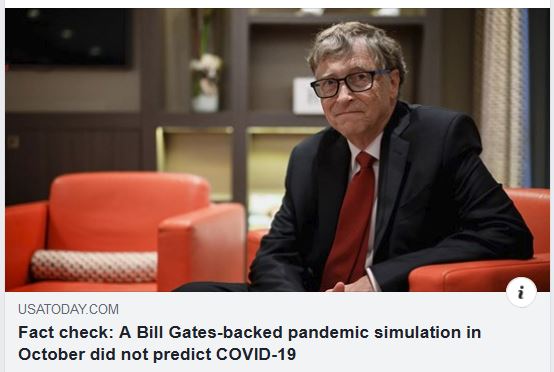
USAToday felt the need to fact check whether Bill Gates sponsoring a ‘pandemic simulation’ didn’t predict COVID-19…

What next?
Fact checking whether a fire crew exercising fire fighting didn’t predict the next … fire?!?

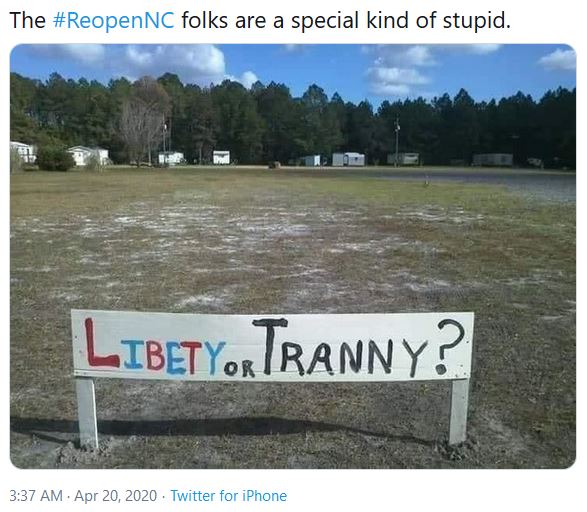
Let’s face it, in the present circumstances the picture above might mean a lot of things.

It can be a prank – somebody might have made the whole thing up just for the fun of it.
It can also express the frustration of somebody who isn’t such a good speller. Or of somebody who suffers from dyslexia?

What really interests me is how we, the ‘intellectual’ public, react to things like these.
Do we understand the frustration which lies at the bottom of this?
Do we even try to?

Or we just dismiss it as being a manifestation of stupid?

No, I don’t consider the economy as being more important than life preservation. Some very sound arguments can be found here.

But I’m absolutely convinced that treating the ‘others’ with disdain is what brought us here in the first place.

You don’t like the manner in which the likes of Trump treat those who don’t agree with them?
Then why are you doing the very same thing?

You consider yourself to be better than Trump?

Prove it.
Be nicer than him, not worse.

Humberto Maturana teaches us that human consciousness can be understood as our ability to ‘observe ourselves observing‘.
In other words, consciousness might be reduced to self-awareness.

I’m afraid it’s not enough.
While no individual can be described as conscious if not commanding a certain degree of self-awareness, being able to observe their own observations doesn’t elevate an observer to fully conscious status.

How many of us have ‘enjoyed’ messing up ants or other insects just for the fun of it? When we were teenagers, of course.
OK, we continue to squish the cockroaches we happen to see and to spray our gardens against mosquitoes and other pests.
Only we no longer do it for fun. We employ a ‘healthy’ rationale to justify our actions – cockroaches/mosquitoes are ‘bad for us’.
And we try to do it in a reasonable manner. We don’t soak the entire garden with the most potent insecticide available. Simply because we’ve understood, the hard way, that bees are also important for us.

Otherwise put, it’s not enough for us to be able to keep tabs on what we do, we must also take responsibility for our actions.

After all, we’ve been able to notice that bison ‘engineer’ their own environment.

“Herds of bison milling through Yellowstone National Park may seem aimless to the average visitor, but a new study reveals the animals are hard at work engineering their ecosystem. By rigorously mowing and fertilizing their own patches of grassland, the big herbivores essentially delay spring until late summer.”

Maybe the time is ripe for us to understand that we, humans, have done the very same thing for quite a while now.
The world we live in is, to a certain – but rapidly growing – extent, the consequence of our own decision making.

The faster we learn to accept that, the higher the chances we won’t repeat past mistakes.

Covid-19 is a good eye opener.

While socially distancing to save our asses, we have the opportunity to use our brains.
And understand how many people contribute, ‘under the radar’, to our well being. To us leading a civilized life.
As civilized as we, as a community, have been able to put together.

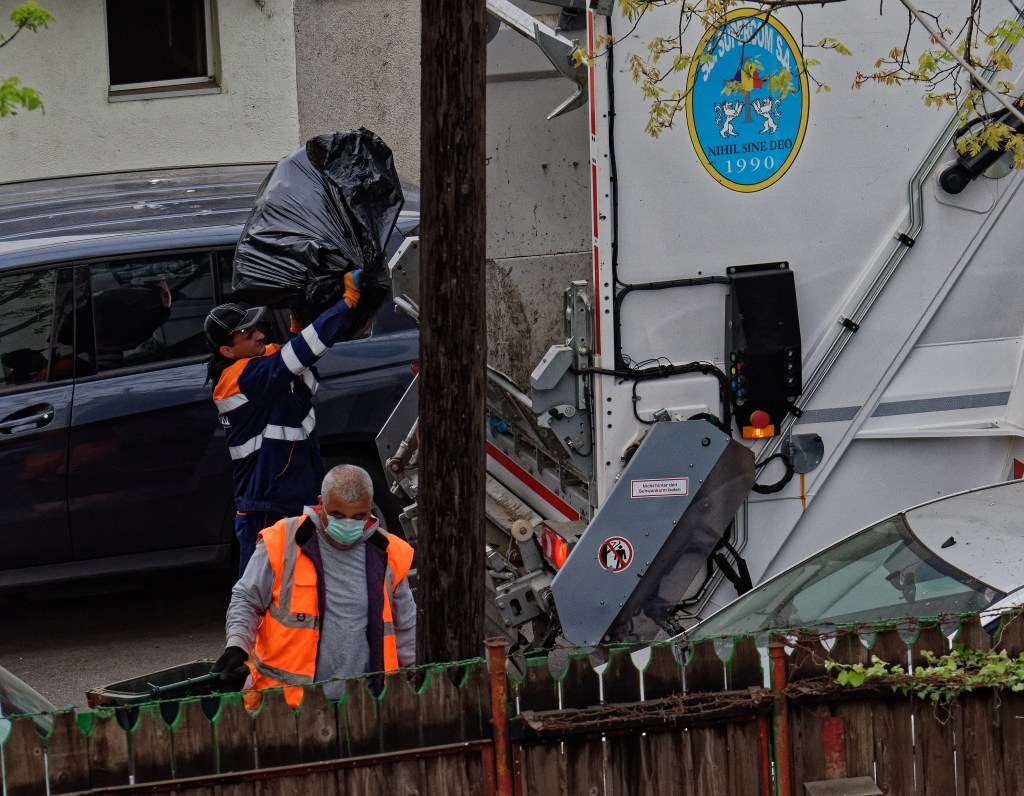
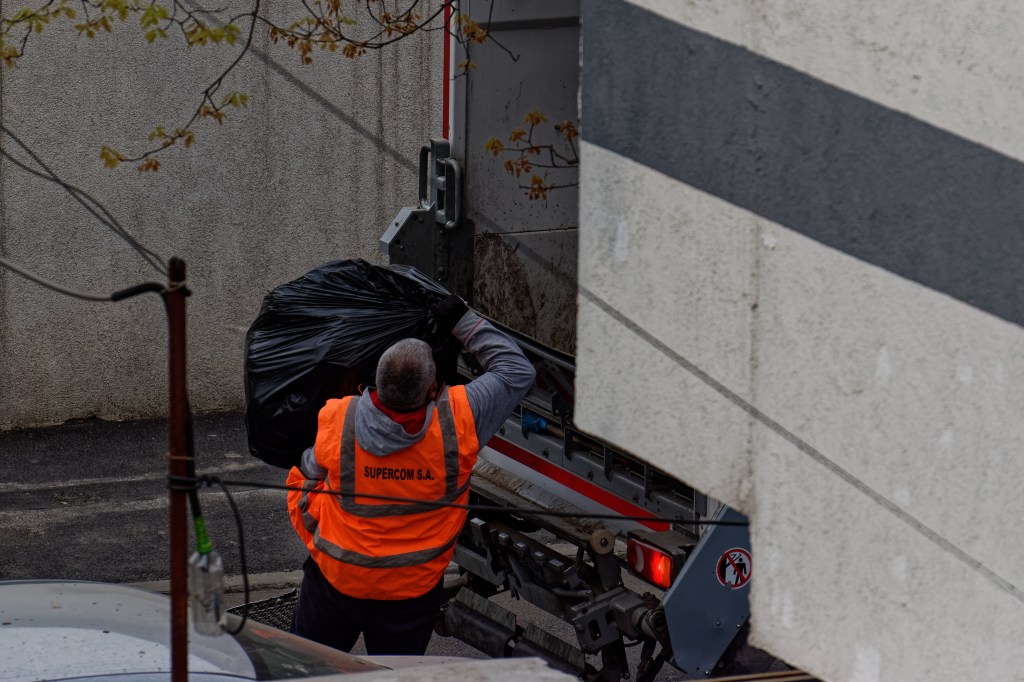
This morning I realized how much we owe to the garbage collectors.
To those who clean up our cities.
To the people who make it so that we, the socially distanced, may continue to entertain the illusion of leading a normal life.

When I was admitted to the Bucharest Polytechnic, I learned that engineers and dogs have a few things in common. An intelligent gaze and the inability to use words when trying to express themselves.
When I started daubing in photography I discovered ‘there’s more than meets the eye’.
When studying to become a mediator I learned, as if it was still necessary, that ‘truth is somewhere in the middle’.

Nowadays, we all expect Science to come forward.
To find the answer.
To break, once again, the barrier which separates us from of the unknown. To take us by the hand and deliver us from evil.

But wasn’t Art the one supposed to provide for our metaphysical needs?!?
Even though it had been Archimedes who was the first to advertise his ‘physical’ breakthrough by shouting ‘Eureka’? While running naked up and down the streets of ancient Syracuse …
It had been the artists who used to trample their boots in the sludge at the bottom of our ordinary lives in order to open our windows towards new horizons…
The ones we expect to transform mud into statues.
To morph suffering into hope!

But is there such a great difference between science and art?

‘The man in the street’ might indeed entertain the notion that art is based on inspiration while science is defined by discipline.
Only this is nothing but yet another proof that it’s high time for us to learn how much inspiration one needs when trying to find a new cure.
And how much discipline must be observed by anybody who attempts to turn their inspiration into something to be traded with another soul.

Addressing the issue from another angle, “can spring be furloughed”?

A friend of mine answered ‘yes’. ‘If there’s no one to notice it …’
Another friend said ‘no’. ‘Spring coming no matter what is the only thing which keeps my mind, and soul, whole.’
Let’s enjoy spring. Together, as it unfolds us.

Let’s not allow it to shed its petals in vain.

Când am intrat la Politehnică, am aflat că inginerii și câinii au câteva lucruri în comun. Privirea inteligentă și incapacitatea de a se exprima în cuvinte.
Când m-am apucat de fotografie am aflat că întotdeauna ‘there’s more than meets the eye’.
La școala de mediatori am aflat, dacă mai era nevoie, că ‘adevărul este undeva la mijloc’.

Așteptăm acum, cu toții, ca știința să-și spună cuvântul.
Să găsească răspunsul.
Să spargă, încă o dată, bariera necunoscutului. Să ne ia de mână și să ne ducă, din nou, la lumină.

Dar parcă treaba asta cu ‘străfulgerarea’ ținea de domeniul artei!
Chiar dacă savantul Arhimede a fost primul care a strigat ‘Evrika’. În timp ce alerga, gol pușcă, pe străzile Siracuzei…
Artiștii erau cei care intrau cu bocancii în banalul vieții de zi cu zi ca să ne deschidă ferestrele unor noi orizonturi.
Cei pe care îi așteptam să topească noroiul în opere de artă.
Suferința în speranță.

Și, oare, este chiar atât de mare diferența dintre știință și artă?

E adevarat că ‘omul de pe strada’ este convins că arta se bazează pe inspirație în timp ce știința e definită de rigoare.
Poate că trebuie să ne spună cineva de câtă inspirație ai nevoie atunci încerci să descoperi un tratament.
Și de câtă rigoare este nevoie atunci când încerci să-ți transformi inspirația în ceva pe care să-l poți propune unui alt suflet.

Abordând problema dintr-un alt unghi, „poate fi anulată primavara”?

Un prieten mi-a spus ca da. Dacă nu e nimeni care să se bucure de ea…
O prietenă mi-a spus ca nu. Și că ăsta e singurul lucru care îi ține mintea, și sufletul, laolaltă.
Să ne bucurăm împreună de primavara care ne înconjoară.

Să n-o lăsăm să înflorească degeaba.

Given my experience of living under communist rule, I can tell you that too much consistency is bad. Having to toe the line is dangerous. For individuals and for societies, as a whole. Communism did fall, you know.

On the other hand… some consistency is needed.

Let me give you an example.

The whole world is asking China to do ‘the right thing’ about its wet markets. In Bill Maher’s terms “eating bats is bat-shit crazy“.

Why?!?

Because of what science tells us. That bats are full of corona-viruses, which are bad for us.

That’s what we say, anyway. Those of us who side with ‘science’… And who ask the Chinese to give up their traditions.

Let’s examine the problem from the other side.

‘We’ve been eating bats for ages. And nothing happened to us. Now you say that this flu like disease is produced by viruses who live in bats. Why would we believe you – and give up eating bats, if you don’t believe your own scientists? And balk when they tell you to quit smoking. To stop piling plastic into landfills. To stop heating up the planet.

To vaccinate your children, for God’s sake…’

“Yes you can! No people to feel/live/see it, no spring.”

Remember Protagoras? “Man is the measure of all things”?

Without man, there’s no meaning?

Yes, our world becomes meaningless.
The moment we no longer care enough about it.
The moment we stop paying attention.

The other day I had a riveting conversation with my son.
With my 21 years old son.

I asked him to comment on my previous post.
The one about too many people allowing sentiment to cloud their judgement.
The one about even reputable news agencies using click-bait titles to entice readers. Hence reinforcing the habit of sentiment being allowed to cloud reason.

‘Life was never better for so many of us’, explained my son. ‘Since WWII most of us had enjoyed peace. Since the Spanish Flu, we hadn’t experienced a pandemic. Since Salk, we’ve led ourselves to believe we were safe from disease. Since the fall of communism, even the ideological divides have paled down. And now we have enough technology to feed the entire planet, comfortably. The point being that we have no idea how to deal in this situation. What to do. How to behave.
Simply because we have no relevant prior experience.
Until recently, historically speaking, we have successfully dealt with wars, famines and pestilence.
But it’s the first time that we experience such abundance.
We need to adapt to the new reality.
To transform it into an opportunity. Into an opportunity to go forward.
We have to avoid, at all costs, the pitfall of allowing this abundance to bog us down.’

Heartening, isn’t it?
That a person so young can find such deep meaning.
If I may say such things about my own son…