In 1995, University of Colorado Boulder physicists observed BEC, a fifth state of matter that only exists within a sliver of absolute zero. At such a low temperature, individual atoms overlap so much that they collapse into a single quantum state where they collectively act as a single entity.
Positing that ‘space is where things happen’ is nothing short of stating the obvious. It does have some merit, though. It leads to the real subject of today’s post.
When no temperature is present – 0 degrees Kelvin – there’s no interaction between the things which happen to be there.
So whose temperature are we measuring?
The temperature of the space? Of the place harboring whatever happens there? Or not… The temperature of the things happening to be there? Or the amount of interaction between the things populating that place?
Language is the tool we use to convey information. To speak our minds…
The consequences of tool use – messages, in this case – depend on the yielder. The consequences of shooting a gun depend mainly on the person aiming the gun. The consequences of using language … depend on those who are at the both ends of the ‘barrel’.
Messages – consequences of language being used to put together batches of information with the intent of transmitting them to an audience – are interpreted as soon as they reach their ‘target’. Meaning – what the receptor makes of a message, using the same languaging tools as those put to work by the emitter – depends mainly on the receptor. In fact, most of the times, there’s more information to be gleaned from a message than that intended to be conveyed by the person initiating the exchange.
If interested in who said what and what Orwell thought about the subject… just click on the link above. I’ll only add the reasons for which I know it to be a misleading affirmation.
The factual truth is that only dictators need to be guarded by rough men during their sleep. And during the rest of their lives… We, the rest of ‘the people’, go to sleep at night knowing there’s only a very slim chance to be targeted by thieves. Yes, we know that the police will likely come to investigate after the fact. After the fact… But we also know that we are less likely to fall prey to violence than those living in other countries because our societies work better than those which are more violent than ours.
Because our society works better, not because we employ more ‘rough men’ to guard us… On the contrary! The more violent a country, the more ‘popular’ the ‘rough men’ are. On both ‘sides of the isle’!
And the more violent a country, the less peacefully people sleep in that country…
I have to start by confessing that until yesterday evening I’ve never seriously considered this possibility. Why would anyone bother?
Then somebody – thank you, Jeffrey Mercer – introduced a whole new twist into this conundrum. ‘What if this whole (computer) simulation thing is nothing but yet another attempt to make sense of the Universe? To attribute sense to the Universe? Which whole thing, if anything, is the epitome of anthropomorphism…’ I took the liberty to rephrase Jeffrey Mercer’s words. To make them more ‘suitable’. To fit better my preexisting answer. Yet another ‘anthropomorphic’ thing….
My immediate answer was ‘our world is indeed a simulation. Or maybe not as much a simulation as an artifact.’
Before delving into the matter, I’m going to formulate two questions. Hence ‘the furcula’. If we live in a simulation, what kind of world does the simulator live in? Why would anyone bother? To study us responding to its simulating our senses/minds? Why doesn’t it study itself? Its own self/persona?
Coming back to my initial answer, I have to point out that the key word here is ‘our’. We’re speaking here about ‘our world’. The world we live in. Our reality!
We, the ones trying to make sense of this world/reality, have a few characteristics. We’re made of matter and we have, each of us, a conscience. Having a material nature introduces certain limitations and being conscious widens those limitations. Us being conscious widens those limitations, by introducing a ‘new dimension’, but this doesn’t mean those limitations disappear. A bucket is ‘wider’ than the circle at its base – the bucket has height, hence volume, while the circle is ‘flat’ – but the bucket itself continues to have limits.
Let’s examine the consequences of us being conscious agents of a material nature. Limited conscious agents of a material nature…
Us being conscious means us being aware of our material nature. Of our limits. Having a material nature means the most powerful instinct we have is our ‘need to survive’. Both as a biological organism – a.k.a. animal – and as a conscious agent.
Our consciences – I’m speaking about the individual ones here – are very crafty ‘devils’. They can accept our individual material fate – death – but have a problem accepting their own dependency on the ‘bodies/brains’ they need to inhabit. Hence ‘the soul’.
Which ‘soul’ has been invented – by our conscious selves – as the first step towards building a sense for this world. For the reality we inhabit. Which soul is the building block for all religion. For all religion known/built to/by man.
Are you still here? I have to make a pause here. And to mention the fact that I’ve already cut a few corners… A lot of corners… What I say is probably rather hard to follow. Mostly because I don’t have time/space to explain myself. Not now but certainly in due time.
And yes, what we call ‘religion’ is of our own doing. The Bible itself has been written by us, regardless of the origin of the ideas mentioned there. It doesn’t matter whether we have been the interface between (a) God and ‘the world’, we are the ones who have written the Bible. And all other sacred texts. We have written them, we have believed in them and we have shaped the reality we live in.
We have done all that according to how we have interpreted the teachings we have inherited from our forefathers. And we continue to. Even those of us who consider themselves to be ‘free of religion’. We might not believe but we continue to act as if. Believers and nonbelievers alike hold the same things as being valid. Don’t kill, don’t steal, respect the values which keep society together…
What about where we started from? What about the ‘original’ simulation?
One moment please, I haven’t yet finished with ‘God’. If (a) God made us who/what we are, then who made God?
If someone took the trouble to build the simulation we consider to be ‘home’, what about the ‘real’ world? What about the reality harboring the simulating agent?
There’s no need for an outside agent? The world we live in, our world, is the world we have built for ourselves? Using the things which were at our disposal and the information we have gleaned about how things work? Maybe not always fully aware of what we were doing?
You got it! That’s exactly what I was trying to say!
Socialism implies a lot more centralization than capitalism. The answer is, like always, included in the question. While socialism is to be ‘implemented’ – by a ‘central figure’, capitalism is an environment. A place where the deciding agents – the entrepreneurs, ‘make it happen’.
Hence socialism – which is a ‘thing’, to be implemented, not an environment for entrepreneurs to roam ‘free’ – will eventually fail. No matter how well intended the implementor, nor how hard it tries to make it happen.
In capitalism, only the entrepreneurs might fail. When the market is no longer free – oligo or mono poly, the situation closely resembles a socialist one. Things go south. Because the decision making agents are too few and far apart – no longer able to cover all corners, just as their socialist counterparts.
Comparing socialism with capitalism is like pitting an apple against agriculture.
An apple, all apples, will eventually become rotten. No matter how hard one might try to preserve it. Agriculture, on the other hand, will yield according to the available resources and the effort put in by those involved in it.
‘Join them’ as in: ‘What you were doing was worthless. That being the reason for which you were not able to beat them. Hence you must turn coats and join them. In what they were doing’? Or ‘join them’ as in: ‘Regardless of who’s right or wrong, they are more powerful than you. In order to preserve yourself, you must cave in. And join them. In what they were doing and in how they were doing it!’?
There’s a third manner of putting it. ‘This is the democratic thing to do. If there are more of them than you, you must join them. There is wisdom in numbers, you know!’
I’m afraid all three ‘as in-s’ are wrong!
If you live in a democracy, you had already joined them. The very essence of a democratic arrangement is that you may keep your convictions even if the majority has made up its mind to proceed in another direction. You sometimes must follow – because you have already joined them, but you always may bring along your ‘luggage’. Provided that your luggage doesn’t endanger the community, of course. What if the community considers your luggage to be dangerous and you disagree? Then maybe the bond between you and the rest of the community isn’t that strong after all… In this case, you may have to weigh the pros and cons… Also, you must seriously consider the possibility that the relation between you and the community may not be based on ‘true love’ … it more likely belongs to the ‘friends with benefits’ category…
Do you tend to side with the powerful? Are you comfortable with delegating your ‘feel good’ to an outside agent? Are you aware that no matter what those outside agents promise, what they have in mind is their own interests? Not yours, theirs! Are you aware that ‘they’ are not your ‘servants’? That unless you live in a democracy, there’s no way to keep them accountable? ‘Stockholm syndrome’ means anything for you? How about ‘postponing the inevitable’? ‘Sweeping under the rug’?
Are you that afraid to change your mind? Under your own steam? Why ask for other incentives but those provided by mere reason? What else do you need besides arguments in order to make up your mind??
And where did this notion of ‘beating’ came from?
What are we fighting for?!?
One last thing. ‘Why me?’ is a very good question. Because there’s no one else!
No man is an island, Entire of itself. Each is a piece of the continent, A part of the main. If a clod be washed away by the sea, Europe is the less. As well as if a promontory were. As well as if a manor of thine own Or of thine friend’s were. Each man’s death diminishes me, For I am involved in mankind. Therefore, send not to know For whom the bell tolls, It tolls for thee.
Destination first. If you know where you’re going, getting there will be a lot simpler.
According to Daniel Moynihan – “you are not entitled to your own facts”, facts are obvious. So obvious that doubting their existence, their factuality, would push us beyond the realm of the reasonable. Appropriating facts – transforming them into ‘private property’, banishes the perpetrator from the community….
Hm…
Let me put it differently. Moynihan had said something. What was it? A fact? Or an opinion?
Currently, we – well, most of us – believe that freedom of opinion is the cornerstone of our Weltanschauung. When it comes to facts… We’re OK with the definition – we do use the word/concept, quite extensively – but we seem to have some problems when dealing with the actual reality. Remember the still famous ‘alternative facts’?
Let me add something personal to all this. My opinion about ‘facts’.
The current definition is somewhat incomplete. We take something for granted. To the tune of no longer mentioning it. We assume all of us see the elephant in the room and no longer talk about it.
For something to become a ‘fact’ we have to notice it. First. And then we have to agree among ourselves about its meaning!
Things used to fall down since …. We’ve been discussing the matter since… we’ve learned how to speak! But gravity had become a fact only after Newton had noticed the famous apple, wrote about it and we agreed. Gravity had become a fact, and continues to be one, only because his contemporaries had agreed with Newton on this matter. And we continue to believe Newton was right!
In this sense, alternative facts have been with us since day one. Well, something like that… God had told something to Adam and Eve, the serpent had said something else… and the rest is history! For some…
Newton had said something to us. And most of us had chosen to believe him. Or ignore his words… Darwin had said something to us. Many of us have chosen to believe him. To accept his arguments about the matter. While some others have chosen to dispute Darwin’s findings. To actively negate Darwin’s explanations about how we’ve got here.
Gravity is a fact while Evolution is still a theory. Statistically speaking, of course.
In this sense, Moynihan was wrong. For his words to ‘hold water’, we must to agree on how to separate facts from opinions. Until we agree among ourselves about how to determine ‘factualness’, we’ll keep having to deal with ‘alternative facts’.
I actually cannot wrap this up before ‘unveiling’ my litmus test for factualness. Consequences.
Does it have consequences?
Yes? It’s a fact! No? Then it’s not – not yet, at least – a ‘fact’. It did happen – otherwise we wouldn’t be speaking about it. It even does have consequences – we do speak about it, but that occurrence doesn’t yet have meaningful consequences. It is not a ‘factual’ fact.
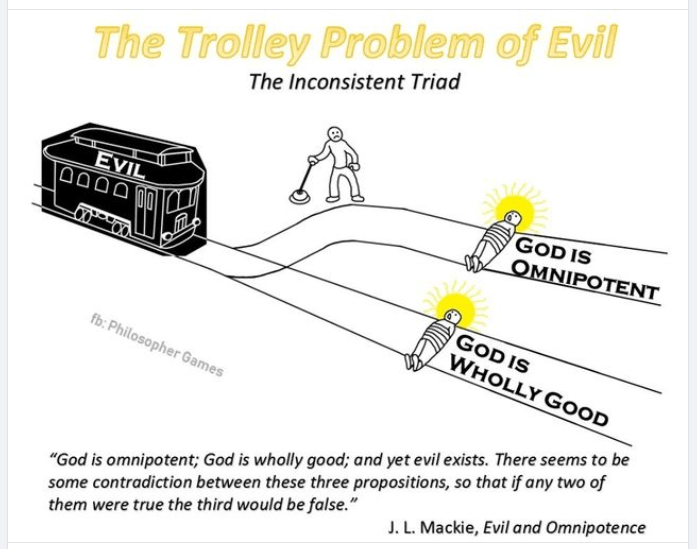
Who wrote the Bible? Who considers God to be both omnipotent and wholly good? Who had become human by learning ‘to tell good from evil’? Does evil even exist outside our minds? Is anything actually evil unless considered so by one of us?
And no, I’m not hair-splitting when speaking about the huge difference between bad and evil! An earthquake, for example, is bad for those affected. Yet no evil is involved here but for those who ‘question God’s actions’. An individual who tortures animals for fun is also bad. Arguably less so than a major earthquake… but for everybody in their right mind that person is undoubtedly evil!
‘What?!? “Ignorant of most things” yet still “knowing good and evil”?!?’
Yep!
A more relaxed reader of the Bible may notice that what’s written there recounts, symbolically, the becoming of Man. The foremost apes notice the difference between night and day. And name both. The difference between ocean and dry land. And name them both. Notice the stars above and the living things, plants and animals, with whom they share the place. And name them all. “Apes”, not ape, because nobody can learn to speak by oneself. Nor become self aware. As in ‘able to observe oneself while observing other things’. (Maturana, 2005)
That same relaxed reader may also notice that the very ‘fallen nature’ of Man stems from the ‘inconsistency’ noticed above.
We’re basically ignorant yet still able to call out evil!
Oops…
Humberto Maturana, “The origin and conservation of self consciousness…”, 2005, https://cepa.info/702
Going back is not an option. If back were good enough, we wouldn’t have left it in the first place.
Many people believe we’re reliving the fall of Rome. Contemporary with that fall was the advent of Christ’s teachings. The fact that, eventually, Christianity has altered his teachings to fit the needs of the christian hierarchy doesn’t demean any of what he taught us.
That people who treat each-other respectfully fare a lot better than those who allow the exploitation of the weak.
That people who live ‘together’ fare a lot better than those who keep forgetting that ‘strong’ and ‘weak’ are both relative and temporary.
That people who are convinced that ‘survival belongs to the fittest’ will eventually make place for those who understand that evolution is solely about the demise of the unfit.
“And Jesus knew their thoughts, and said unto them, Every kingdom divided against itself is brought to desolation; and every city or house divided against itself shall not stand: And if Satan cast out Satan, he is divided against himself; how shall then his kingdom stand? And if I by Beelzebub cast out devils, by whom do your children cast them out? therefore they shall be your judges. But if I cast out devils by the Spirit of God, then the kingdom of God is come unto you. Or else how can one enter into a strong man’s house, and spoil his goods, except he first bind the strong man? and then he will spoil his house. He that is not with me is against me; and he that gathereth not with me scattereth abroad.”
How many times have these words been invoked? By people who use them to divide? To carve a follow-ship? A follow-ship for them to lead…
How many times have these words been invoked? By individuals cocky enough to pretend they are speaking for Christ? Cocky enough to pretend they are able to fill Christ’s shoes…
In physics, ‘temperature’ measures the intensity of the interaction between the elements which ‘inhabit’ a certain place. The more energy exists in a certain place, the more intense the interaction. If the place is inhabited by a gas, each molecule is able to ‘travel’ a short distance before actually hitting one, or more, of its neighbors. If the place is occupied by a liquid, the molecules glide against each-other and if we speak about a solid, the components just shimmy together. The more energy exists inside a place – the higher the temperature, the more intense the interaction between the individual components. And if, for whatever reason, ‘too much’ energy accumulates into a given space the interaction becomes intense enough for ‘change’ to happen. As temperature raises, solids melt, liquids boil and evaporate while gases become plasma.
Adding energy isn’t enough to determine change. Temperature might rise without anything noticeable to happen. Specially when we speak about liquids and solids. If enough outside pressure is applied, the liquid cannot start to boil and the solid stays in place.
Same thing when it comes to a society. High output societies need a very intense social interaction to make things happen. To make so many things happen at once… that being the reason for which those societies need to be democratic. Autocracies are too rigid, they cannot accommodate the continuous adjustments needed to ‘absorb’ the huge amount of ‘social change’ warranted by the amount of energy ebbing through the system.
One way to measure ‘social temperature’ – other than the ‘output’ of that society, is to gouge how vulnerable a society is when confronted with a highly infectious disease which is transmitted through direct contact. Cholera will sweep through an entire community which drinks from the same well, regardless of how much contact individual people have with each-other. Covid, and Ebola, need people to ‘touch’ each-other in order to jump from one to another.
But don’t forget to factor in ‘pressure’. And other things specific to each individual ‘place’. Otherwise the analysis might produce less relevant results.
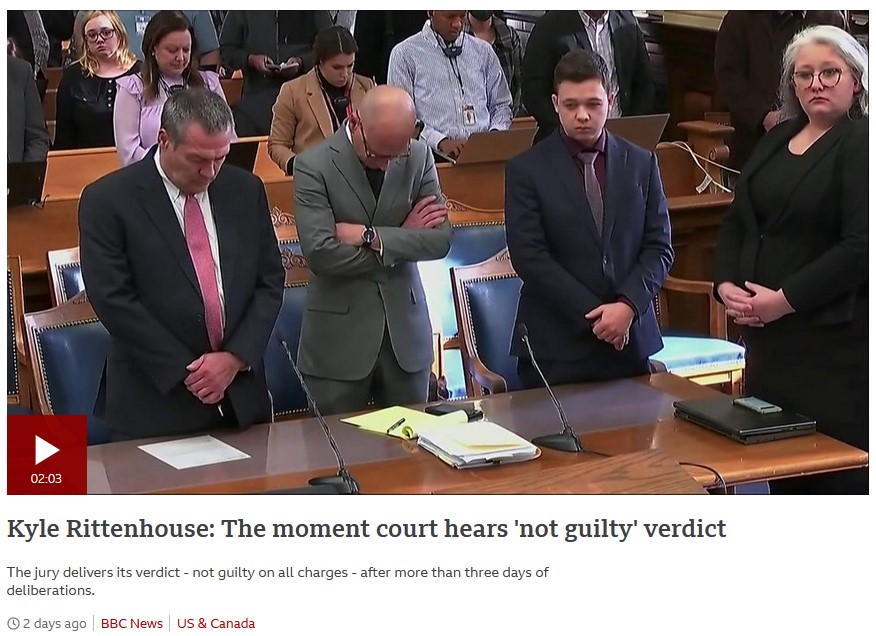
In the context of Kyle Rittenhouse’s trial, a friend asked me ‘which right takes precedence?’
A ‘right’ can be understood in two ways.
As something granted to somebody by somebody else. Or as a consequence of modus vivendi. A consequence of how people interact among themselves.
People who see it in the first way, will ‘fight’ to establish that ‘precedence’.
Those who understand rights as being a consequence of social evolution will negotiate among themselves about the order in which rights should be exerted.
Hence my assertion. No guns should be present at a ‘peaceful’ manifestation. Where people come to manifest their grievances. Where a car or two might get torched. Where a window or two might get smashed. But where – if things go as ‘planed’, nobody will loose more than a couple of teeth. No matter what!
But as soon as guns are brought along, the ‘atmosphere’ is changed. People start loosing their lives. And while a car, or a window, can be replaced… lost life cannot be brought back!
And for me, life takes precedence over property. I would aim a gun – If I had one, at somebody trespassing through my bedroom but I would not shoot at them unless my – or others, life was in danger.
So yes, Rittenhouse was right to defend himself but he shouldn’t have brought that rifle to a manifestation. No matter how riotous. It wasn’t his job to police the town. A town which wasn’t his home, where he owned no property… but where he eventually had taken two lives while ‘protecting property’. While asserting “his right to bear arms“.






 nicichiarasa