Archives for category: evolution

Holidays are very good opportunities to reconsider,
And to learn new things.

These days I learned that while having nothing makes you feel ‘uncomfortable’, having too much can be very limiting.

If you have just enough, you can go forward. Explore new venues. Learn new things.
Enjoy life!

If you have too much, you spend too much time and energy protecting what you already have. Trying to get more…
The venues open for you to explore are suddenly reduced to one! Only one… You become the guardian of your fortune!
Can you enjoy such a life?
Are you sure? Have you examined the alternatives? In earnest?

‘Are you implying that all wealthy people are unhappy?
Unable to enjoy their lives?!?’

On the contrary, my dear Watson!
I’m only saying that being wealthy is complicated.
“Just enough” is a matter of individual ability to cope.
That enjoying wealth needs a lot of skill.
And that being wealthy comes with a lot of responsibility!
Towards yourself in the first place!

And towards your kids, family and the rest of the gang…

The vaunted human capacity for reason may have more to do with winning arguments
than with thinking straight
“.
Elizabeth Kolbert, Why Facts Don’t Change Our Minds

I love that. Just love it.
“The … human capacity to reason”!

Other thinkers hail reason as the thing which sets us apart from the rest of the animals…

The way I see it, reason is nothing but just another tool.

The thing which sets us apart from the rest of the animals being our ability to observe ourselves while interacting with the rest of the universe. Otherwise known as consciousness.

Basically, reasoning is nothing more than a ‘dialogue with myself’.
When I ‘consider a thing’ in my mind, consciously, I practically put my brain to work.
I order my memory to summon up all the data it has on the subject and I ask my frontal lobe to process that data and to reach a conclusion. In theory…
In the real world, my amygdala – the piece of the brain where emotions are processed – already has an opinion about everything which crosses my mind. The more familiar the thing, the stronger the opinion. The more often my mind – meaning I, had expressed itself regarding a subject, and the more recently, the stronger the opinion my amygdala already has about the matter.
If the matter is considered for the first time, and has no connection with anything else I had already ‘conclusioned’ about, only then my amygdala might keep its opinion for itself. The key word here being ‘might’…

Since this is nothing more than a blog post, I’m not going to prove my opinion. To discuss the importance of the fight-flight mechanism and to mention that this mechanism had done more – evolutionary wise, than reason for our survival. For us having the opportunity to develop this vaunted capacity for reason…

I’ll just end it abruptly.
Mentioning that our individual consciousnesses use reason as a tool. To arrange facts in such a manner as to confirm the already reached conclusionary opinions put forward by our amydalae. “To win arguments”, if you will, including when debating with ourselves.
Only when the facts – the harsh reality, contradict in a flagrant manner the already held convictions we might change our minds.
The more immediate the danger we put ourselves into by sticking to our convictions, the more likely we are to cave in to the facts.

To the facts as we perceive them… Which is yet another story!

Tough times create tough men. Tough men create easy times.
Easy times create weak men. Weak men create tough times.

American proverb
Wealth lasts only for three generations: one to make it, one to keep it, one to squander it
Chinese proverb
If you raise your children, you get to spoil your grandchildren.
If you spoil your children, you get to raise your grandchildren.

Popular word of mouth

There’s no denying that, on average, each generation fares better than its predecessor.

Then why some people end up worse than their parents?
Is it a social thing?
Is it in their upbringing?
Is it the consequence of bad personal choices?

The easy way out would be to consider that legislation, material status, the culture one was born into and even the upbringing offered by the parents are nothing but circumstances. And, ultimately, it’s the individual who makes the call. And bears the consequences…
But the above mentioned individual doesn’t rise from and into a complete void… so I need to go deeper!

An equally true but somewhat more useful observation would be that we’re dealing here with something more important than mere wealth.

‘There’s no such thing! Nothing is more important than Wealth!’

Yeah, right… Individual people keep squandering the personal wealth accumulated by their forefathers, the humankind keeps going forward and you tell me personal wealth is the most important thing here…

But you do make a good point. Your insistence, obsessive even, about wealth being the crux of everything is very relevant.
Since I agree with you that wealth is important, indeed, then maybe it’s the ‘insistence’ which is causing the problem…

First of all, allow me to make a simple distinction.

There is wealth – structured opportunity, I’ll discuss this notion in another post, and there is personal wealth. Opportunity which belongs to somebody.
When an individual squanders the wealth inherited from their parents – or even that which they had managed to put together themselves, the wealth itself – the accrued opportunity – doesn’t disappear from the face of the earth. It just passes from one hand to another. Most of it, anyway. For the simple reason that most of today’s wealth is expressed in money. Which is fungible.

‘OK. So individual people squandering their inherited wealth do not represent such a big problem. The total wealth already present ‘on the face of the Earth’ remains (more or less) the same, no matter who owns it. And since new wealth is created everyday, the humankind, on aggregate, goes forward.’

That’s how things used to be. That’s how things had evolved for the last ten millennia or so. Ever since our forefathers had invented agriculture. Agriculture and money… Land and money cannot be destroyed. Buildings and almost everything else which carries value can. Be destroyed. Land and money also, actually, but it’s a lot harder to do it.

But there’s a catch here.

For wealth to do its trick – to function as an opportunity, people have to have access to it.
That’s why, for example, people do not keep their money under the mattress. When deposited in a bank, money will end up being used. The bank will lend them to somebody who needs it and that somebody will put that money to work, In no matter what shape or form. Kept under a mattress, money becomes mostly useless. At least for the time being…
And this is where ‘insistence’ – our obsessive insistence – that money is the only worthwhile goal for any respectable person becomes counterproductive.

‘Are you a communist?!?’

On the contrary, my dear Watson!

In fact, Marx had been just as infatuated with money as Milton Friedman was going to be a century later. With more or less similar results…
Friedman taught us that greed is good. Profit uber alles. That getting money trumps everything else. That getting money is not only good for the individual itself but also commendable. That everybody should make it their goal to become rich!
Marx, on the other hand – please remember that the ‘other’ hand is nothing but similar to its twin – advocated for all wealth to be stripped from its rightful owners.
See what I mean? Both Marx and Friedman had been thinking only about ownership. Who owns that wealth!

On average, we deal with the same situation.
According to Friedman – pushing his advice to the very limit, there’s no problem if someone owns all the money in the world. If it so happened, so be it.
According to Marx, nobody should own anything.
On average, the wealth corresponding to each living human in both situations would be the same.

We already know the consequences of Marx’s teachings. When all the wealth present in one country is managed by a very small number of people, the whole situation goes south. Fast. Very fast!
We also know what happens when the market is cornered. Becomes suffocated by a monopoly. The whole situation goes south. That’s why we cherish the freedom of the market!

Doesn’t make much sense?
To insist that the market must be free and simultaneously maintain that ‘greed is good’?

Yep! My point exactly…

The vaunted human capacity for reason may have more to do with winning arguments than with thinking straight.
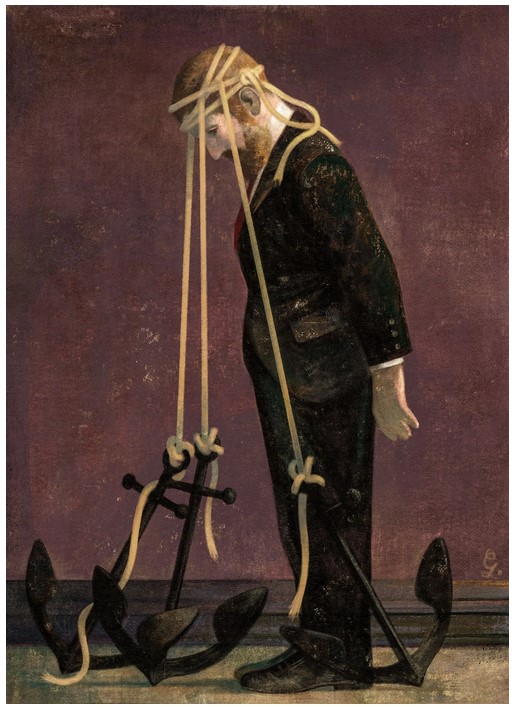
Illustration by Gérard DuBois
Why Facts Don’t Change Our Minds
New discoveries about the human mind show the limitations of reason.
By Elizabeth Kolbert February 19, 2017
https://www.newyorker.com/contributors/elizabeth-kolbert

For some reason, there still exists a considerable number of people not yet convinced that what had been experienced in the Soviet Union was “a true socialist/communist form of government”

The sad reality is that the Russian Revolution did establish a true socialist form of government!
As per Marx’s teachings.
The communists had been in charge of things, and the things failed to become better.
In fact, they had become worse.
Eventually, the Soviet Union – along with all other socialist attempts, had crumbled under their own weight.

Those who want to find better alternatives to democratic capitalism – good luck with that – need to find another word but socialism to describe their goal.
Or wait a few generations before attempting to give it a new meaning. The current one had been wasted by the likes of Marx, Lenin, Stalin, Mao, Kim, Ceausescu…

Happiness is an illusion. A figment of our own imagination.
Hence we shouldn’t waste our time thinking about it.

Various sources all over the internet.

Here’s my take on this subject.
The more imaginary a thing is, the easier it is to make it happen.
IF you do it your own way! According to your needs and wishes…

Now that I’ve put behind the easy part…
Like many other natural things, happiness is a gift.
You get a healthy dose of endorphins after a workout, an orgasm after having sex and a moment of happiness after doing something right.
IF you put your heart in it!
In any of the above…

But there’s more to it.
While you can work-out anytime you wish, you need a partner in order to build an orgasm.
Did I hear a chuckle? Thinking about working out a single handed orgasm?
Can you do it without using your imagination? Really?!?
Not only that you need a partner – at least an imaginary one, the intensity and quality of the orgasm vastly depend on the interaction between you and your partner. And on your mind set before, during and after the ‘close encounter’.
Happiness, whatever moments of happiness we’re blessed with from time to time, is the result of a far more complex interaction.
To experience it, you have to be in sync with the universe. Not with yourself or with your partner. With as much of your patch of the universe as possible.

When working, out or in any other way, you’re basically alone.
The quality of your involvement depends basically on you. Irrespective of you working alone or you being part of a team, you ‘come first’.
When making love, you and your partner become one. For a while, your two me-s get close enough to experience synchronicity.
Getting in sync with the universe – doing the right thing, is like making love ‘on steroids’.

There are a couple of catches though.

You need to conserve your me. Your inner self. Not your identity. That, your I, is only the exterior shape of yourself. Constantly rebuilt to match your exterior. What you need to preserve is the inner spectator. The entity constantly watching over your identity. The entity which maintains the coherence of your identity during its constant reshaping. Your inner spine, if you will.
And you must refrain from hunting it. From hunting happiness.

You can build up muscles through training. Hard. If you do it right, you get endorphins.
Because you’ve done it right, not hard. If you do it only hard, you get torn muscles, not endorphins.
Or you could build up muscles by swallowing chemicals. And end up with a ruined liver. While experiencing absolutely no endorphin rush. Because you fucked up. You chased ‘muscles’ and forgot about yourself. About the self ‘inside’ yourself.

You can get ‘relief’ by wanking. But that’s no orgasm…
You’d prefer ‘masturbate’ instead? Would that make any real difference?
Bring the experience any nearer to an orgasm?!?

Same thing with happiness.
If your goal is to be happy, you’re too focused. On your ‘identity’.

Your inner self bestows too much attention on its ‘skin’. On your identity.
And not enough on what’s happening farther away.
That being the reason for you not being able to get in sync with the rest of the world around you. Not being able to do the right thing.

‘Six packs’, orgasms and happiness must come naturally.
As a consequence of things well done.
Otherwise neither are genuine.

Getting old…

Some people become milder. Because they realize how dependent they’ve become.
Others get feistier. They’ve had to eat so much of it that they’ve had enough. Bull shit.
Many somehow manage both of the above…

Most experience a strange condition.
Their hands grow longer. And longer… Until they make up their minds and start sporting spectacles.

Many become deaf.
What? Speak up and no mumbling this time!

And do you know that saying?
After your 50-th birthday, if you wake up in the morning and nothing hurts… then you’re dead, my friend!

But there is a benchmark far more precise than any of the above. And any other you might think of!
As you grow older, you become more efficient. You learn how to accomplish things with far less movement. For obvious reasons…
Yet you don’t realize how efficient you have become. And you start getting fatter. Because you still love to eat!

Socialism implies a lot more centralization than capitalism.
The answer is, like always, included in the question.
While socialism is to be ‘implemented’ – by a ‘central figure’, capitalism is an environment. A place where the deciding agents – the entrepreneurs, ‘make it happen’.

Hence socialism – which is a ‘thing’, to be implemented, not an environment for entrepreneurs to roam ‘free’ – will eventually fail. No matter how well intended the implementor, nor how hard it tries to make it happen.

In capitalism, only the entrepreneurs might fail. When the market is no longer free – oligo or mono poly, the situation closely resembles a socialist one. Things go south. Because the decision making agents are too few and far apart – no longer able to cover all corners, just as their socialist counterparts.

Comparing socialism with capitalism is like pitting an apple against agriculture.

An apple, all apples, will eventually become rotten. No matter how hard one might try to preserve it.
Agriculture, on the other hand, will yield according to the available resources and the effort put in by those involved in it.

https://www.quora.com/If-Socialism-has-always-been-poorly-implemented-why-wasnt-Capitalism


Consciousness is a work in process.
Each of us becomes conscious in relation with those around them. In a medium created by those before them.
Becoming conscious means figuring out about things. Not merely acknowledging their presence – dogs also do it, they don’t bang into close doors but once. Becoming conscious means attaching meaning to things. Figuring out their relative importance, how they work, ‘what’s in it for us’, etc, etc., etc. …
How is this done?
I don’t remember how I did it and I never really understood how my son had done it.
What I know is that it was a gradual process. He was able to communicate with us, his parents, way before he had learned to speak. He may not have had the concept of hunger but he was able to tell us he wanted to eat. What toy he wished to play with. And so on.
I grew up in a communist country. Born into a secular family. My relatives went to church, very rarely, because other people did it. On very specific occasions. God wasn’t present in our house.
At some point during my early adolescence I came across a bible. I had already learned, at school, about religion being bad for the people. I had also learned, from my family, that some people do believe in God. I decided to learn for myself. By myself. And started to read the book. I stooped when I reached the Book of Numbers. Too boring. But Genesis had fascinated me. Not that different from the Greek myths I had already read by that time.
I few years later, for whatever reason, I started again. Reading the bible. This time I finished it. Somewhere in the middle, I was wondering. What if this book tells not the story about how the world had been made by somebody? But the story about us discovering the world around us. At first, we had learned to speak. To use words. Logos. To speak about the difference between light and dark. Water and dry land. Heaven and Earth. Man and Woman. And so on.
At some point, one of us -one of our ancestors more exactly – had had an intuition. Discussed it with their peers. Discarded it. Or not. Somebody else, or maybe the same person, had another intuition. Discussed it with their peers. And so on.
In time, those discussions had built a specific understanding of the world. Of their world. The world of those people. Their weltanschauung. The paradigm they were living in.
As life went on, generations and generations of people living in that paradigm had slowly changed the world they were living in. Some changes had been meant to happen, others just happened. In time, that world was no longer the same with that in which the ancestors, the ‘Founding Fathers’, had developed the ‘original Weltanschauung’.
Somebody had an intuition. Discussed it with their peers. Discarded it. Or not. Somebody else, or maybe the same person, had another intuition. Discussed it with their peers. And so on.
Another weltanschauung was born. The world was very much the same as that of ‘last year’ but for them, for our new ancestors, it had changed dramatically.
Jupiter Tonans had been replaced by God. Or Thor… But the lightning had remained the same!
Now, that I’m preparing to wrap up, I must explain – for those of you who do not speak German, the ‘Entwicklung’ thing.
I first came across this word while learning to develop B/W film. That was how we made pictures 50 years ago. We put film into cameras, shot it, developed it, enlarged the image, projected it on photographic paper and, again, developed the image. In Romania, we used East German film, paper, chemicals. And the German word for developing something – from image to a lot of other things, is … “Entwicklung”.
Same thing here. The world is here. Laid out in front of us. All that’s left for us to do is to make sense of it. With our limited consciousness.


Basically, there are two meta-rules.

According to the first, if you follow the precepts – to the letter – you get ‘there’.
According to the second, avoiding the forbidden sets the stage for things going your way.

Unfortunately, things are not as simple as they look at first sight.
The first meta-rule deals with individuals. Getting ‘there’ is each individual’s job. They have to do what they are supposed to and failing to fulfill any item banishes the unworthy from the cherished ‘prize’.
The second one is even ‘trickier’. While its precepts must be followed, again, by the individual followers, the ‘spoils’ belong more to the community rather than to the individual. On top of that, they are not ‘certain’! Following the rule only ‘sets the stage’. Disobeying the rule makes it certain that the goal will never be reached while following it only ‘opens the door’. Makes it possible for each of the community members to search for their individual paths towards their particular goals.

Do I need to remember you that both these rules exist only in our heads?
As figments of our imaginations?
And that the difference between the two can be observed at the practical level?

The first rule can never be fulfilled. Nobody can follow it to its ultimate consequence. No matter how hard any of us might try. It would be like measuring with infinite precision. Something will always happen. Go wrong. Throw us back to where we have started.
The second one also leads to disappointment. Some members of the community will inevitably attempt to cut corners. Take the easy way out … Hence the rule needs policing. You’ve certainly witnessed at least on occasion when ‘bad (money) has driven out good’… at least temporarily! Furthermore, some members of the community – while faithfully sticking to the rule, will still fail to get ‘there’. Set their aims too high, didn’t have what it takes… or simply had lots and lots of bad luck! But regardless of the why’s, not getting there still generates disappointment. Usually directed at the rule… and creates a lot of doubt towards the weltanschauung based on the rule…

Which way out?
How to choose?

Would it be helpful to notice that, historically speaking, the communities which have followed the second rule, primum non nocere, have fared decently while those who had attempted to prescribe, and impose, a ‘recipe for happiness’ have invariably failed?
‘Don’t do anything, upon another, which you wouldn’t welcome when done upon you’ versus ‘treat all the others exactly as you would like to be treated yourself’?

Yesterday you’ve been babbling about painting an elephant. One which was already present in the room. Doesn’t make that much sense, does it?

In my childhood there was a certain emperor. Who had been duped by a couple of crooks to wear a suit of clothes so special that they were in fact invisible. Hence the emperor walked around naked, convinced he was wearing the coolest set of rags available on this Earth. Pun intended, of course. I forgot to mention the price. Not only hefty but also recurrent. Each set of clothes, of in-existent clothes, could be worn only once. They were too fragile for ‘second helpings’. The courtiers kept congratulating the emperor for his beautiful attire so the scam went on for quite a while. Until he took to the streets of his capital city to show off his clothes to the ordinary people. And a child exclaimed: “Look. the emperor is naked”. And those present started to laugh.

Same thing here. Everybody senses that something’s amiss. Except for those who should know better. Who, for various reasons – I’ll get there, soon enough, don’t believe what they see. Or, more exactly, refuse to ‘go to the bottom of it’.

Back in the ‘good old days’, emperors had jesters. Courtiers who were allowed to speak the uncomfortable truth. Cloaked under a thick layer of funny words, true, but well worth saying.
This is what I mean when I ‘babble’ about ‘painting the elephant’.

I’ve already mentioned the story about the naked emperor. Now it’s time for that about the four blind men being led to learn about the elephant. One got to feel the hind legs, one the huge belly, the third got acquainted with the ears and the last with the tip of the elephant’s trunk. When later asked to share what they had learned, the first said the elephant was a pair of tall columns, the second said the elephant was a huge barrel, the third contradicted the first two maintaining that the elephant was a leathery curtain of sorts while the last was convinced that the elephant was a thick snake ending with a finger.

As I said before, ‘same thing here’. For ideological reasons, we consider some things and disconsider others. Furthermore, for psychological reasons, we tend to coalesce into ‘bubbles’. Those who consider the same things tend to stick together. And to disconsider those who consider other things.

I’m afraid this is too hard for me to follow. You first want to paint an elephant, then come up with a naked emperor and end up with parts of an elephant. Is there any elephant at all? Or all we have is a collection of disparate impressions? Man made illusions, vaguely resembling parts of an elephant and involving nakedness?

Well, you got the gist of it but you’re afraid to say it out loud.
The elephant is indeed of our own making.
An image. Not an illusion, mind you! Just an incomplete image of what’s going on around us.
Let me try to spell it differently.

The world was complicated to start with. Both wide and deep. Too wide and too deep for any of us to be able to comprehend it in earnest. But for most of our history, we didn’t have to. We used to live ‘locally’. Both geographically and ‘spiritually’. Each of us, individual human beings, belonged to a place. To a village and to a tradition. When one of us happened to move to another village, they, more or less naturally, translated their ‘spirit’ into the local tradition.
Nowadays, the world has become even more complicated. We made it even more complicated than it was at the beginning. We uncovered many of the previously unknown nooks and crannies. Building the illusion of knowledge in the process. Then we assumed tradition. Called it culture and made it our own. Took it with us where ever we went. Shared it with others and, sometimes, even imposed it – or parts of it, upon others.

The world itself is no longer straightforward. For us…
Our ancestors didn’t make any distinction between the physical world and the tradition which made sense of it. The world – ‘Cosmos’, as they used to call it, was whole. ‘Reality’ was made of ‘objects’, the names of those objects and the rules between them. The point being that our ancestors did not make any difference between an object, its name and its place in the order of things. Between the physical reality and tradition. Between the objects per se and the meaning – name and connecting ties, we’ve attached to each object.
Only after the Ancient Greeks had come up with the concept of “phusis” things were separated into natural and man-made. Into real and illusory…

That being the moment when the elephant had been born.
When we have started to steer our fate. Not to determine it – we’ll probably never be able to do this in a comprehensive manner, but to influence it.
Which influence has two dimensions. Size and … there’s no words for what I have to say right now. ‘Awareness of what’s going on’?!? Our ancestors did what they used to do because they had to do it and they did it as things were done at that time. We, on the other hand, get to choose among the many things which should be done and the manner in which we see fit to do it. Meanwhile, we entertain the illusion of doing all these things in a fully conscious manner.

A part of the elephant I have in mind consists of the fact that our consciousness is limited. But our illusion about our consciousness is bigger than the reality of the matter.
Another part of the elephant consists of the fact that more and more of us no longer consider advice. From those who entertain different opinions (illusions?!?) than us.

And why should I accept advice from somebody who promotes illusions?

I didn’t say you should accept advice from a peddler of illusions. From a con artist or from a snake-oil distributor.
What I said was ‘be careful, your own convictions are nothing but, ultimately, illusions. Man made illusions. Some of them, maybe, closer to reality than those entertained by other people. Meanwhile, others of your illusory convictions – most of them, probably, are more distanced from reality than those entertained by those who ‘control’/master each particular realm of ‘knowledge’.
This being the reason for which we go first to the doctor instead of raiding a pharmacy when our child gets sick.

I didn’t say you should accept advice from any peddler of illusions.
All I said was that we should pay more attention to what other people have to say. More considerate attention to what other people say, bearing in mind that our own convictions – about anything, are nothing but ultimately illusory.