Archives for category: evolution

“Only in silence the word,
Only in dark the light,
Only in dying life:
Bright the hawk’s flight
On the empty sky.”

Ursula K. Le Guin

4,000 years ago.
An alien probe examines the Earth and determines there are two ‘species of interest’ on the planet.
‘Interesting’ in the sense that both had already discovered ‘exploitation’.
Ants farming aphids and humans farming sheep.

4.0 seconds ago.
The same alien probe checks back and determines that both ants and humans continue their respective farming activities. The only difference between now and then being the scale of the respective operations.
And the consequences to the environment…

The probe is a robot. Which robot has no feelings. Doesn’t care. Does what it has been instructed to do and that’s it.
The data is being transmitted to those who had commissioned the robot.

‘The ants are practically the same. Individuals transported through time would fit perfectly in either situation.
The humans have evolved in a certain manner. They live longer – on average. They have thoroughly transformed much of their environment. But they have maintained the ability to survive in either situation. To thrive, even, if the individuals are transported through time very soon after birth – and if they are well taken care off at the receiving end of the journey’.

The received data is deemed ‘baffling’ by the agents whose job is to make sense of it. To analyze it.
To determine whether each planet checked by the probe was inhabited by a potentially autonomous species. In which case the planet was deemed ‘off limits’.
Or not, hence open for colonization.

The procedure to determine the outcome is simple.
Is there at least a species which evolves faster than the rest? Is there at least a species concerned with the well being of the environment it depends upon?
If only the first condition is met, the planet is scheduled to be checked again later.
If both conditions are met, the planet is considered off limits.
If none are met, the planet is considered ‘open for business’.

The present situation is unprecedented.
During their entire recorded history, this is the first time the analyzing agents have come across such an occurrence. An intelligent species who has achieved so much yet still remain driven by desire. By emotion.

A species perfectly capable of thinking yet still prone to judging.
A species comprised of individuals who consider perfectly acceptable to rationalize their own wishes while entertaining a low opinion on others who do the very same thing. Find excuses for indulging.

This find generates an ontological storm among the analyzing agents.
Being the first time when they no longer have a complete grasp on what’s going on, this whole thing compels them to reconsider.

To reconsider everything.
Segue

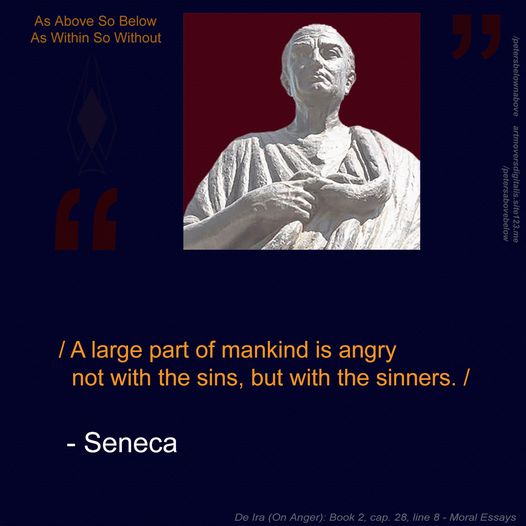
The key word here is ‘anger’.

Had we been less angry, maybe our reaction would have been more ‘efficient’.

Instead of being angry with the sinners, we could try to convince them. Those of them who can be convinced…

After all, a sin is but a possibility. An ‘opportunity’, not a fatality.

“When we talk about birthing people, we’re being inclusive.
It’s that simple.
We use gender neutral language when talking about pregnancy,
because it’s not just cis-gender women that can get pregnant and give birth.
Reproductive freedom is for *every* body.”
@reproforall

– What’s wrong with these people?

– What do you mean?

– They consider themselves to be reasonable.
Their ability to ‘reason’ is mentioned, by their thinkers, as the single thing which separates them from the rest of the animals. Sets them apart from the rest of those who inhabit this planet.
To me, reasoning is how their consciousness operates. How their consciousness manifests itself.
The real difference between them and the rest of the animals being the fact that their consciousness is far more capable than that of the ‘mere’ animals.

– ?!?

– Just look at them!
Is there any difference, any real difference, between a 3 days old human infant and a chimpanzee of the same age? Or even between a 3 days old baby and a 3 days old foal? Except for the foal being able to run?

– The baby will eventually learn to speak. Will develop consciousness and the ability to think. You said it yourself…

– WILL!!!
Will eventually… if everything goes right!
If that baby is raised by responsible people. Who speak to the future human being. And teach them to be human. Help them develop a functional consciousness.
Children who have no significant interaction with other human beings and fail to learn to speak – or other form of language, until they reach puberty will never be able to ‘recover’. To accede to consciousness.

– OK. But I still don’t understand what has flabbergasted you!

– Not you too!
What drove you to copy them? To misuse language so horribly… “what has flabbergasted you”…

– But it’s so funny!

– Until it no longer is!
Look at them. Just look at them.
20 years ago, they made a movie about a man getting pregnant. A comedy. Everybody laughed.
Nowadays they take sides on ‘pregnant people’…
OK, language can be used ‘artistically’. ‘Stretched’ to obtain something. To explore new meanings, to express emotion, to make fun.
But does it make any sense to use language in order to seed confusion? To cause people to fight each other?
Rather self-defeating, isn’t it?
How much sense does this make? To misuse the medium which made you possible in the first place?

How sensible is it to weaponize language?
Who has anything to gain from this?
Other than a few, very short-term, perks?

“The times when it might be appropriate to use “pregnant people” is when you were talking about the universe of people who can get pregnant, some of whom are actually men, trans men like me, and some of whom are non-binary people who don’t identify as men or women.” (Evan Urquhart, Slate, 2022)

“If the only tool you have is a hammer,
you tend to see every problem as a nail.”
Abraham Maslow

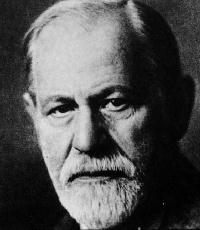
Did you recognize him?
Yes, Sigmund Freud. Dr. Sigmund Freud, as depicted on http://www.marxists.org.

“While the different religions wrangle with one another as to which of them is in possession of the truth, in our view the truth of religion may be altogether disregarded.
Religion is an attempt to get control over the sensory world, in which we are placed, by means of the wish-world, which we have developed inside us as a result of biological and psychological necessities.
But it cannot achieve its end.
Its doctrines carry with them the stamp of the times in which they originated, the ignorant childhood days of the human race. Its consolations deserve no trust. Experience teaches us that the world is not a nursery.
The ethical commands, to which religion seeks to lend its weight, require some other foundations instead, for human society cannot do without them, and it is dangerous to link up obedience to them with religious belief.
If one attempts to assign to religion its place in man’s evolution, it seems not so much to be a lasting acquisition, as a parallel to the neurosis which the civilized individual must pass through on his way from childhood to maturity.”
[Sigmund Freud, “Moses and Monotheism”, 1932]

No, I’m not going to argue with Freud.
I’m not going to compare his opinion on religion with that of Durkheim. Which makes more sense to me. You may find them here, at #e., and compare them yourself. If you wish, of course.

What I’m trying to point out in this post is that reason is over-rated.
That reason is an extremely powerful tool but, like all other tools, the consequences of yielding it depend on the yielder.
On the person using reason in order to get somewhere.
To find the intended meaning…

Which is?

You cannot learn
what you think you know.

Epictetus

How many times have you been hit by something you didn’t see coming?

Not very often… for the simple reason that these encounters use to end up badly!
Bent fenders, broken bones…
Hence we pay attention. Or get killed… end of story!

But how many times have you experienced bad consequences, really bad consequences, after misjudging a situation?
After a ‘doesn’t matter’ uttered nonchalantly?

“It is not from the benevolence of the butcher,
the brewer, or the baker, that we expect our dinner,
but from their regard to their own interest.
We address ourselves, not to their humanity
but to their self-love,
and never talk to them of our own necessities
but of their advantages.“
Adam Smith, The Wealth of NATIONS, 1776

I’m sure you already know that Adam Smith didn’t invent capitalism. As Marx invented communism and Lenin invented bolshevism.

Adam Smith had done nothing more and nothing less but described what was going on around him. How a bunch of people acting according to their ‘moral sentiment’ took care of business. How individual needs – for meat, beer and bread – were met and how the wealth of nations was built in the process.

“To some people, Gen Z may seem salary ‘obsessed’. In some cases, say experts, it may be hard for older generations to understand why young workers have such an intense focus on pay. “At Gen Z’s age, older people worked 40 hours a week, and made enough money to buy a house and have barbecues on the weekend,” says Corey Seemiller, an educator, researcher and TEDx speaker on Gen Z. “Gen Z works 50 hours a week at their jobs, and another 20 hours a week side hustling, yet still make barely enough to cover rent.””

Do you notice any need being fulfilled, in earnest, in this, new, situation?
OK, things were not that rosy in Smith’s times either. Most people had to work hard, a lot harder than today, to make ends meet. But since Smith and until some 40 years ago things went better. Year after year.
When Smith was writing his books, Regular Joe-s used to live in crowded shacks, usually rented out from their employers. Nowadays, most of those in their 50-ies and 60-ies own the house they live in. Which house has nothing in common with the afore mentioned shack.

So, is this the new kind of progress?
A looking back in anger kind of progress?
Are you even aware of the huge number of people pondering whether capitalism is not as good as advertised – by those who have already enjoyed its spoils? For the simple reason that in the current (no longer) free (enough) market so many people can no longer enjoy the kind of economic well being their grand parents took for granted…

As someone who had experienced both communism and capitalism, the situation is clear.

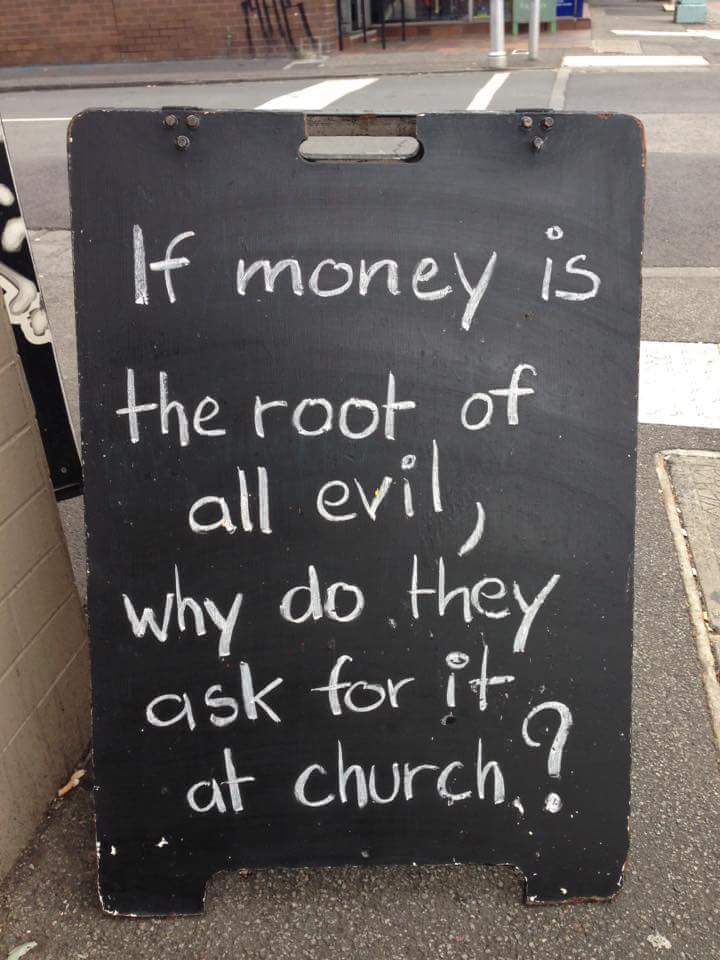
Then Jesus entered the temple and drove out all who were selling and buying in the temple, and he overturned the tables of the money changers and the seats of those who sold doves. He said to them,

“It is written,

‘My house shall be called a house of prayer’,

but you are making it a den of robbers. ”

‘Evolution is not about “the survival of the fittest”.
Evolution is about the demise of the unfit!’

What Evolution Is, Ernst Mayr

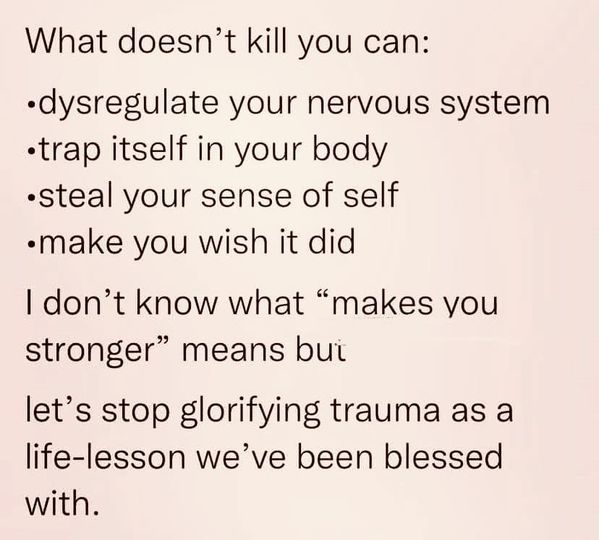
It’s not ‘what doesn’t kill you’ which may make you stronger.
You are! That guy….

But only if you learn enough from the experience!

The first ‘virtual’ tool invented by Man, language made it possible for humans to become conscious.
By sharing information among them, individual human beings learned to speak to themselves. To think. To evaluate their activity. To evaluate themselves. Their own selves.
Speaking to each-other, people have developed self-awareness.

The process is a work in progress.

Words are ‘stamps’.
Images.
‘Commodified snapshots’ of the thing we call reality.

Which reality is simultaneously a word and the place we live in.

A word/concept into which – like in all other words – we’ve crammed everything we know about the thing itself. Which everything is nowhere near enough to actually cover the entire thing.

Reality, the word, covers everything we know about the thing but the thing itself, the thing we call reality, is far wider/deeper than that.

Hence the problem we’re stuck with.

We instinctively consider that words are apt representations for the things we attempt to describe using those words. Which, most of the time, isn’t exactly true.
We – most of us, most of the time – consider that those of us we talk to understand the words we share in the same way we understand them. Which is never the case!

“Living organisms, in order to live,
need to ingest portions of where they they live
.”

I’m not going to discuss the veracity of the above. Which is true, in the sense that this is how we determine whether an organism is alive or not.
My point being that in order to perform this, the organisms – each and every one of them – need to act as if they are able to make the difference between ‘in’ and ‘out’. Besides the fact that they need to discern between ‘food’ – which is to be ‘imported’ and everything else. Which everything else must be kept on the outside.

See what I mean when I speak about the difference between ‘in’ and ‘out’?

In this sense, organisms – from the very beginning – have a certain ‘dimensional awareness’ of the world.
Of their environment, more exactly.
And, as things have become more and more ‘complicated’, the dimensional awareness has become more and more sophisticated.
Plants act as if they know the difference between up and down, animals are indeed able to find their way when foraging.

The advent of consciousness has added a new layer to that awareness. Now we speak about ‘self-awareness’. We, conscious beings, are not only aware of the difference between our own ‘inside’ and the rest of the world but we’re also aware of our consciousness. We are aware of our selves. Our selves are aware about themselves. Our selves are able to think. To consider things.

Previous organisms have been able to react – according to ‘ingrained procedures’ which have been, in variable degrees, honed by ‘learning’ – while we are able, on top of our own reactivity, of careful consideration. Of making the difference between ‘fight’ and ‘flight’. Not only to choose one on occasion – all other ‘competitive’ animals do that on a regular basis – but also able to actively consider the difference between the two concepts.
Previous organisms have been able to choose between when to fight and when to flee in an ‘instinctive’ manner. For some, granted, those instincts have been honed by ‘learning’, but their decision making process has continued to remain ‘procedural’. Very little, if any, ‘active consideration’. Very little, if any, ‘originality’.

Consciousness – our ability to actively observe and then examine/discuss our own observations – has opened a vast field of opportunity. Being able to actively observe a situation and to actively consider the circumstances/consequences before making a decision adds a fourth dimension to the already ‘three dimensional space’.

Life, per se, has no direction. Evolution only helps life to survive. To adapt itself to adaptable changes in the environment. Life, per se, has no direction. No direction and no meaning.
Life, simple life, takes place in a space with three dimensions.
Three parameters. In/out, abundance/scarcity, food/poison.
An organism, any organism, continues to live for as long as there is ‘enough’ ‘food’ ‘inside’ it. And not enough ‘poison’ to kill it.
But ‘simple’ organisms have no plans. No ‘future’. The more sophisticated among them display a behaviour we associate with ‘feelings’ – which apparently help them, evolution wise – but still no ‘future’.

Biological time is as bland as physical time. It flows according to rules ingrained in the already-existent.
A star will ‘function’ according to pre-existent rules, a microbe will live according to the information inscribed in its DNA, in the context of all other ‘natural laws’, while an orangutan will be able to add very little to the above. If you consider things dispassionately, there is a continuous chain of events from the shiny stars in the sky to the orangutans roaming the Indonesian jungle. And no individual agent was needed in order to successively latch causes into the chain which led to the present set of circumstances. According to what we presently know, anyway…

Until a short hundred of years ago… When Man ‘invented’ the palm oil. When Man had purposely invented the industrial process through which palm is transformed into edible oil.
When Man had used his agency to ‘improve’ his lot. And carelessly destroyed the habitat of the orangutan.

In this sense we may consider that the orangutan continue to live along a linear time – individually and/or collectively the orangutan remain unable to pro-actively determine their fate – but time itself is no longer linear.
Since the advent of Man, time no longer flows according to ‘objective’ rules. According to rules contained into the very fabric of things. Currently, and ‘locally’, the flow of time is increasingly influenced by the agency of Man.

Self-conscious organisms,
in order to satisfy their need for meaning,
attempt to make sense of what they are living.
To lead a meaningful life,
they need to ingest not only portions of where they live
but also as much information as possible about where they live.
As much information as humanly possible…