
Imagine having a festering boil. On your ass, for good measure.
You may take to the doctor, for treatment.
Or you may wait, hoping your organism will be strong enough to heal itself.
This being your call.
Nobody else but you has anything to say about this situation.
Let’s say you have chosen to go to the hospital.
Once there, the matter has gotten somewhat ‘out of your hands’. You still have the last word but the doctor calls the more important shots. Pun indended, of course.
He can simply open up the boil, put you on a course of antibiotics and send you home.
He might decide to check you up and see whether the boil is a symptom of something deeper.
He might attempt to rip you off by ordering, all at once, a host of complex tests and of fancy treatments.
Or all at once.
Cut up your boil, set you on a course of antibiotics, order a decent set of tests and still rip you off.
‘Is there a point to all these?’
Yep!
How the ‘good’ doctor will choose to treat you is the consequence of how you have chosen him. And of how the community you belong to had chosen to organise its health system.
But the more consequential decision, whether to go to the doctor in the first place, is yours.
I’m not going to analyse the factors you have to balance – we’d go back to how the community you belong to had chosen to organise its health system.
I’m only going to parade the possible outcomes.
A nice scar on your butt and a decent tab for you – or for your insurer, to pick up on your way out.
Acompanied, hopefully, by an otherwise clean bill of health.
A nice scar, and a clean bill of health, accompanied by an outrageous invoice.
These being the ‘good’ outcomes.
The doctor might find out, after reading the test results, that you also have, say, a blood disease. One perfectly treatable by modern medicine. But which would have easily killed you if you had waited much longer.
The doctor might also find out, after reading the test results, that the boil is the symptom of an incurable disease. One which will kill you for sure. Only now you’ll die in the relative comfort of the available paliative treatment you can afford.
Or you might choose to nurse your boil at home.
Get out fine. And a lot cheaper!
Die of an apparently unrelated disease six months later.
Or pass out because of a sepsis which had eventually became untreatable. Due to your own prevarications….
‘And what has the boil on my ass to do with Covid?!?’
Covid is a boil on our collective ass.
We might decide to treat it ‘on the go’, hoping that on the ‘other side’ our lives will return to normal.
Or we might decide to use it as an opportunity!
An opportunity to clean up our act….
Covid
After ‘firing’ Trump, the President, America’s most important stake-holders, “we, the People”, are scrambling to adapt to what Trump had laid bare.
Books are being written.
Many blame Trump. And explain, in detail, what he had done while manning the Oval Office.
The G.O.P. is somewhat fractured. Some want to get over Trump, others to hide behind his still towering presence.
The Dems act like he was a mere accident. One which can, and they are hard at work attempting to do it, be ‘band-aided’ with some money. Government money, of course.
A few years ago, I had read an interesting article claiming that Trump had been made possible by the media.
Googling to find it, I stumbled upon another. Which summarizes what Trump had done to the media…
I still have to find, only I’ve lost patience, an explanation for what had ‘fed’ Trump.
Trump as social phenomenon…
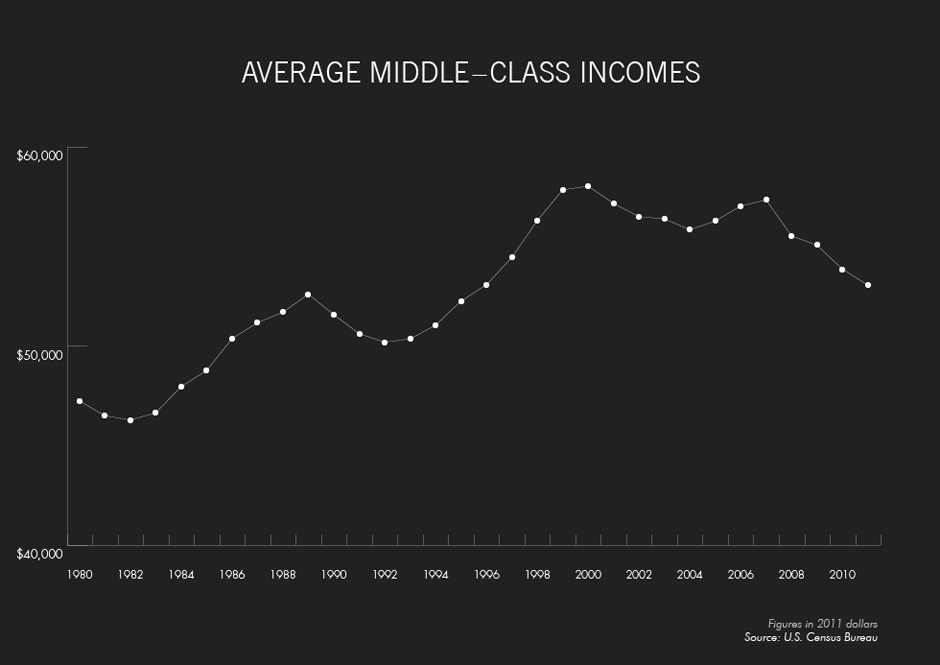
Washington flourished but the people did not share in its wealth.
Politicians prospered but the jobs left and the factories closed.
Trump has made himself famous. Among others, for imparting new meaning to the concept of ‘fake-news’. And for using “alternative facts” to introduce us to an ‘alternative reality’. His…
Only his reality did have something in common with that faced by many of his fellow Americans.
Oops!
Suddenly, Trump’s ‘alternative’ reality – part of it, at least, has become one with that experienced by “we, the People”. By a majority of them, anyway.
What made so many people – dispirited, undoubtedly, believe that a self professed pussy grabber and proud member of the Washington establishment would solve their real-life problems… by ‘draining’ the very ‘swamp’ in which he had grown to his present stature … that’s something for other people to explain.
My point being that Trump’s behavior had very closely followed that of Goethe’s Apprentice Sorcerer. He had used his uncanny knack of playing hide-and-seek with reality to climb into the Oval Office only to be fired after one mandate.
To be the first American President who had survived two impeachments.
And the second one who had witnessed – more or less unmoved, the untimely demise of half a million Americans due to disease
But the first who had done that during a mostly peaceful mandate. Pandemic, true enough, but otherwise peaceful.
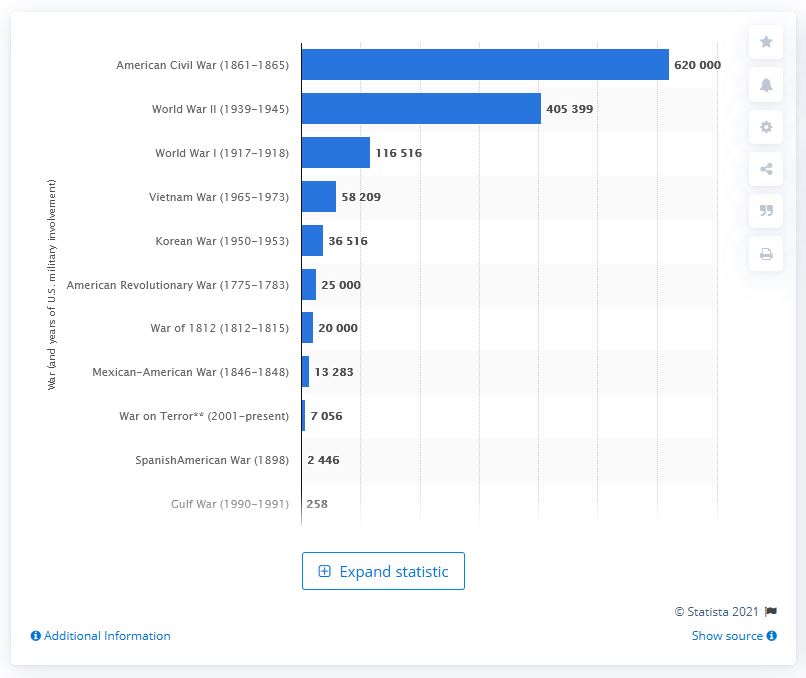
NB. The ‘Spanish Flu’ pandemic, which had happened during Woodrow Wilson’s mandate, had caused the death of 675 000 Americans. Only that had occurred just after a world war, when viruses hadn’t yet been discovered and man hadn’t yet walked on the Moon.
What will happen next?
Who knows… Goethe’s poem had a relatively happy ending because a master sorcerer was at hand. Who had solved the problem with a swift gesture of his powerful wand.
No such easy solution is available now.
But one thing has become clear.
Again…
Two things, actually.
Too many dispirited people eventually become a powerful – and highly unstable, ‘Petri dish’. Where all kinds of ‘social experiments’ might ‘spontaneously’ explode.
And playing with people’s passions might take you places. But will, almost always, end up badly.

I’ve been an avid reader all my life.
Libraries, book shops – new and second hand, used to be my home away from home.
Communism crumbling under it’s own weight in my home country, Romania, widened even more my already special relationship with the written word.
Books nobody would even had dared to dream about got translated into Romanian.
Or even got imported in original.
As borders became more and more open, I’ve also ‘imported’ some myself.
The honeymoon lasted for a while.
Only at some point I was no longer ‘comfortable’ in most bookshops. If anything, there was ‘too much of it’. Too much of the good stuff, to much ‘noise’… Not enough time to read everything I would have liked to… so I gave up.
I gave up compulsively visiting book shops, not reading…
Then, in 2007, something happened.
“Anthony Frost English Bookshop” happened.
“A real place hosting literature, arts, non-fiction and comic books from all around the world.“
The really special thing about it?
There was no ‘noise’ in there!
None of the books I’d found on its shelves ever seemed ‘out of place’. Most of them, of course, were of little – if any at all, interest for me. Yet they seemed worthwhile, if you understand what I mean.
The good thing lasted for almost 10 years.
At some point I found a ‘closing soon’ placard hanging on the door.
I didn’t even enter that day. Too sad.
I can’t say I’d given up visiting book shops.
Only that I had stopped doing it with gusto.
And, certainly, that I had given up perusing book store shelves.
I’d started to rely of friends ‘telling’ me what to read.
Real life friends, Facebook friends… you name it.
And I continued to do it.
Only my scope had become nearer and nearer.
Without even realizing what was going on….
Until a good friend of mine – a real life friend, told me – on Facebook, that Anthony Frost was alive and kicking!
Hiding behind a different name, a few hundreds meters from the old place, but the very same thing.
A rather small location full to the brink with the good stuff!
Visiting it, and perusing its shelves, I realized – with a shudder, that my intellectual bubble had shrunk.
Became ‘deeper’ – debatable, but certainly narrower!
Go find your own books!
Anthony Frost, in Bucharest, is a good place to start!
Or to rekindle your love affair with the printed word.

“The Texas educational system inundates the children with the almost mythical stories of Sam Houston, Stephen F. Austin, and other Texan heroes. This perpetuates the feeling that Texans are superior to others. Social Identity Theory claims that in-group biases are a direct need to feel superior to another group. By reinforcing such ideals of Texas history at an early age, they are indirectly making Texans feel superior to other states.”
Don’t mess with Texas, Justin R.Erenkranz, retrieved on February 18, 2021
In fact, Texans are so proud of their state, and so confident in themselves, that their power grid, run by ERCOT – Electric Reliability Council of Texas, has no connections linking it to the outside world.
Yes, your eyes are OK. Texas – most of it, anyway, cannot import electric energy. No matter what!
For those who know anything about power management, this is insane.
For the rest of the people, this sounds like gibberish.
Who cares where the power comes from?!?
Until it stops coming… exactly when you need it most!
‘OK. But surely, there are also other systems which are independent. And isolated. What about Hawai’i? It’s too far away to connect itself with anybody else and it’s doing just fine.’
True enough. And I can name a few more, easily. Only most of them are independent because they are isolated, not by design.
And, exactly because they are isolated, they are run with utmost care. More precautions are taken than in ‘normal’ situations.
‘Precaution’ meaning, in this case, spare capacity.
The responsible people running those systems make sure that, when push comes to shove, somebody is there to deliver the goods. The megawatts of power.
NERC stands for North American Electric Reliability Corporation. Which corporation, in December 2020, had released “a long term reliability study” maintaining that “ERCOT’s market and system operations have been successful over the last several years even as demand has continued to rise in Texas“. It was the same study which had mentioned that the grid was becoming “less flexible“….
Oops…
Reality is an Acquired Taste.
Past performance is not… John Brown, Forbes, 2016
Maybe we need to reconsider our infatuation with ‘just in time management’.
While ‘just in time management’ maximizes profits by streamlining inventory, it works its magic only when everything goes according to plan. And the stricter the streamlining, the harsher the consequences of anything not going according to plan!
As people in Texas have just learned.
And there’s something else which bothers me ever since I’ve started writing this post.
How much sense does it make to be able to pipe oil all the way down from Canada to the refineries lining the Gulf of Texas when you end up freezing to death because you don’t have enough electricity to operate those refineries?!?
And no, I’m not making fun of the ordinary people who suffer the consequences!
This being the moment when I feel the need to remind you that the author of this blog – that’s me, tries to asses the consequences of our limited consciousness. Of the fact that none of us knows much. And, furthermore, that very few of us admit that!
Which consequences might be – as too often are, tragic.
Specially when those who are not aware that their knowledge is limited happen to be invested with critical decision power.
‘Handicap’ has become a dirty word…
Somewhat strange, given the breadth of its meaning. Horses get handicapped in order to even their chances to win a race. Yachts get handicapped so that different makes might participate in the same race… In these situations, its an ‘honor’ to be handicapped…
Then why has this concept, ‘political correctness’, become so ‘popular’?
You might already be familiar with the ‘upfront’ explanation.
“political correctness has reset the standards for civility and respect in people’s day-to-day interactions.”
Rethinking Political Correctness, Robin J. Ely et all, HBR Magazine, 2006
I’m convinced there was something more.
Civility and respect haven’t been invented yesterday. We’ve been polite for quite a while now.
Yeah, only politeness had been invented, and polished, when society was way more hierarchical than in is now.
In those times, when a ‘superior’ told somebody ‘you idiot’ that somebody paused to think. The ‘idiot’ could not dismiss what the ‘superior’ had just told him. The ‘idiot’ really had to make amends. He was so busy trying to correct himself that he couldn’t allow himself to feel offended. If anything, he was grateful. The ‘superior’ had made the effort to help the ‘idiot’ improve himself instead of dispatching him altogether.
In modern times, even before PC had become fashionable, calling someone’s attention about how idiotic he was behaving only made him angry. Hence dismissive and unresponsive. In an era when all people had become peers, a new ‘manner of speaking’ had to be invented in order for ‘information’ to be made ‘palatable’.
The process had been successful.
So successful that the same approach had been used when dealing with other ‘hot’ subjects. Race, gender… ‘inclusion’ in general…
In fact, the process had become too successful for its own good!
Some of the ‘enthusiasts’ have reached the conclusion that ‘everything’ is open for reconsideration.
That ‘everything’ should be closely reexamined.
According to the ideological lenses worn by the examiners, of course…
Unfortunately, the end result is rather messy.
Instead of facilitating the dialog, the stiffer and stiffer set of ‘appropriate’ ‘rules of engagement’ has almost stifled any transfer of meaningful information.
“Despite this obvious progress, the authors’ research has shown that political correctness is a double-edged sword. While it has helped many employees feel unlimited by their race, gender, or religion, the PC rule book can hinder people’s ability to develop effective relationships across race, gender, and religious lines.”
Ibid.
Not only that people find it harder and harder to understand each-other, ‘things’ themselves become blurry.
Let me give you a recent example.
In the US, many of the ex-confederated States have started to reconsider the statues commemorating ‘famous Southern figures’.
The vast majority of which had been built between 1890 and 1950, during the Jim Crow era.
Simultaneously, like minded activists have recently toppled Edward Colton’s statue in Bristol, England.
Are these two ‘developments’ similar, as PC would mandate us to understand?
Jefferson Davies – a very ‘familiar statue’ in the US, had been the President of the Confederate States of America. A slave owner himself, he was a “champion of the unrestricted expansion of slavery into the territories.” And the statues glorifying him had been erected, during the Jim Crow era, as a reminder to the fact that the Confederation may had lost the war but things hadn’t change that much.
Edward Colston, on the other side of the Atlantic, had not been a slave owner per se. In the sense that he didn’t put slaves to work for him. He was ‘only’ a purveyor of slaves. He had ‘only’ kidnapped African people and then sold them, as slaves, on the other side of the Atlantic. 10 to 20% of which had died, in horrible conditions, during the voyage. As a consequence of his ‘efforts’, Colston had become a very rich man. He had ended his involvement in the slave trading business some 30 years before his death – 1721, and used much of his wealth for charity. His statue had been built in 1895 and many of the buildings which had been raised with the money bequeathed by him bear his name. Some of those buildings are used to house schools, others as almshouses.
Now, do the statues of these two people stand for the same thing?
And no, I’m not trying to discern between two villains!
Each of them had done an immense amount of harm and had produced endless suffering. People are still smarting to this day because of what both of them had done.
Only there are some differences between them. One had also done some good in his life. While the other had been used, after his death and without his consent, as a symbol. After he had, directly, kept people in slavery he had also been used to further the sufferings of black people.
Are we capable of seeing any of these differences?
Or are we too angry to differentiate?
Do you remember why we had invented political correctness in the first place?
“The popularity of authors like Deutsch, Sandbrook and Foote – men of very different calibre in many different ways, but all wordsmiths who form history into desirably unchallenging packages for certain kinds of audience – is undeniable. It points to a conclusion that the wider historical profession, from schoolteachers to internationally renowned critical scholars, struggles to overcome. People, and specially people from priviledged groups, do not want historians to tell them bad things about their tresured identities. They will, indeed, forcefully react against such challenges, when given the political rallying-calls that allow them to do so. In that sense, it must be said, they do not want history. They want what they are increasingly getting: a cosy blanket of half remembering and convenient forgetting that is cushioning their slide down the slope to full-blown cultural dementia.”
Cultural Dementia, David Andress, 2018
If you have the stomach for the whole of it…
Is it enough for something to exist in order for that something to become real?
Existence = “The fact or state of living or having objective reality.”
Real = “Actually existing as a thing or occurring in fact; not imagined or supposed.”
Ooops!
Do I sense a conundrum haunting these premises?
Which came first? Reality or ‘mere’ existence?
Descartes was the first who had introduced a ‘pecking order’ into this mess.
Dubito ergo cogito.
Cogito ergo sum.
You’re free to translate this any way you want.
Mine goes like this:
My existence is certified only by my doubts.
My existence as a human being, of course.
As a conscious human!
The ‘pecking order’ being, as far as I figure it out:
I need to exist, as an animal, in order to become conscious.
And I need to gain consciousness in order to learn about my existence.
Complicated?
Let me elaborate.
Our understanding of the world is incomplete.
First of all, there are so many things we don’t know about.
For example, we have no idea what goes on between Mars and Jupiter.
We think we know that there’s no major planet hidden in between those two orbits. No object with an important enough mass to disturb either Mars or Jupiter and no object with an albedo big enough to be noticed. To be noticed by us…
Other than that… we have no clue about what’s going on there.
In fact, we don’t know much about what’s going on in the middle of our own planet… or on the floor of ‘our’ oceans…
But the fact that we don’t know about their existence doesn’t preclude the actual existence of whatever ‘objects’ and/or organisms might happen to be there.
Secondly, there are so many things we don’t fully understand. Not yet, anyway. We are aware of their existence – because we’ve been confronted with some ‘consequences’ of the aforementioned things, but we haven’t yet figured out, exactly, how those consequences have been produced.
For example, we’re still learning about viruses. About their ability to bypass our defenses. About how they infect us. About how we might improve our chances of avoiding/surviving infection.
But the fact that we don’t fully understand them doesn’t preclude us – well, some of us, from believing those viruses to be real.
My point being that ‘existence’ is far wider than ‘reality’.
There’s no need for us to know about it for something to exist.
But for something to be considered ‘real’, by us, that something needs to exist first.
‘But aren’t you contradicting yourself?
In a previous post, you argued that ‘the Flat Earth’ was real?!?’
Confusing, isn’t it?
I’m sorry if I misled you.
All I was trying to say was that ‘the Flat Earth’, as a concept, is ‘real’. In the sense that so many people discussing it – either for or against, make it real. Those very discussions, a direct consequence of the concept’s very existence – albeit only in the virtual space, give consistency to its reality.
Don’t get me wrong. The Earth – as I ‘know’ it, continues to be round. The Earth – that we live on, is not ‘Flat’. The Earth doesn’t exist as a flat object.
We are confronted with two facts here.
1. All that we’ve so far learned about it leads us to the conclusion that the Earth is, more or less, round.
2. There still are people who believe – or pretend to, that the Earth is flat.
The second fact exists.
The belief which made it possible is false. As far as we know. As far as the scientific community is convinced.
Yet the fact still remains.
Those people believing in it provide it with ‘existence’.
Those people believing in it make it ‘real’.
Sort of, anyway.
You have to give this to the guy.
You really have to give it to him.
He was absolutelly right about his supporters being loyal.
‘No matter what’ kinda loyal…



As for the fact finding mission… I wonder!
Given the amount of loyalty extended to Trump by Kevin McCarthy, how many years might pass before the facts will be ‘found’?
5?!? And who would be fingered for ‘starting the whole thing’?
Where there’s a will there’s a way
According to the internet, this proverb is way older than the American Constitution.
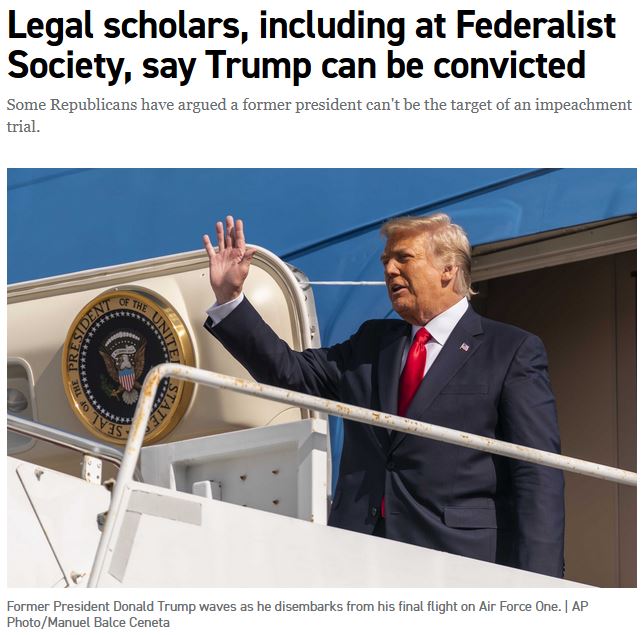
Now, will ‘they’ find a constitutional way to set a precedent?
That a guy who had so horribly – and tragically, misused the sacred notion of “freedom of expression” has no place in such a powerful position?
Or, by failing to do so – for whatever reasons, will ‘they’ leave open the ‘opportunity’ for an even more callous ‘political animal’ to climb into the Oval Office?
Abraham Lincoln, 1838

 nicichiarasa