Archives for category: collective identity

Simple high-school physics teaches us about radio-active elements.
And about the fact that some of them can start a so called ‘nuclear chain-reaction‘.
For said chain reaction to start, a certain ‘critical mass‘ must exist before-hand.

As soon as that ‘critical mass’ is achieved, the reaction starts by itself. No ‘trigger’ is required since it actually triggers itself.

But there’s one more thing which has a certain relevance here.

“Concentration”.

It’s not enough for the critical mass to exist, it also needs to be concentrated enough.

If the radio-active nuclei are positioned far enough one relative to the other, the decay of each of them goes ‘unnoticed’ by the rest. None of the individual ‘explosions’ can trigger the chain reaction.
But if the nuclei are crammed together – as in an A-bomb, a split second after detonation, the reaction accelerates itself until the whole shebang goes bang.

And there’s the ‘cherished’ middle of the road. When the ‘environment’ moderates the reaction. Slows it down to ‘self-sustaining’… as it happens in the (well managed) nuclear power-stations.

And, but very rarely, in the good old nature

‘Yeah… very interesting… but… what on Earth has any of this to do with your professed interest?
“Exploring the consequences of our limited conscience”…’

Trolling.

Very few individual humans are naturally ‘radio-active’.
And, in normal settings, they are ‘well taken care of’.

Before going forward, I’m going to return, briefly, to the ‘nuclear’ chapter of physics.
I’m sure the word ‘plutonium‘ does ring a bell with most of you.

Plutonium is a mostly ‘artificial’ – as in man-made, chemical element. A few scattered atoms can be found in nature – plutonium occurs when uranium atoms absorb ‘extra neutrons’, but the vast majority of the plutonium which exists on Earth has been produced in our nuclear reactors.

Said plutonium can be used to fuel reactors. And to make bombs.
Actually, it is far easier to concentrate plutonium for a bomb – if you have enough spent nuclear fuel, than to achieve the same result – a nuclear explosive device, starting from uranium ore.

Let me wrap this up.

Playing God can be dangerous.
We’ve been tinkering with Nature for a while now.

At one time or another, we’ve turned various naturally occurring ‘things’ into weapons.
From sticks to rocks, then metals… now chemical elements!

At first, we just picked them up and used them as they were.
Then we’ve shaped them to better fit our purpose.
And ended up changing the sub-atomic composition of Mendeleev’s elements…

Now, that we’ve reached “MAD“, we’re looking for something new.

The latest piece of technology, the Internet, is the latest addition to our Arsenal. To our weapons making factory.

Forgetting that the by-products of our previous ‘explorations’ have already proven themselves to be extremely dangerous.
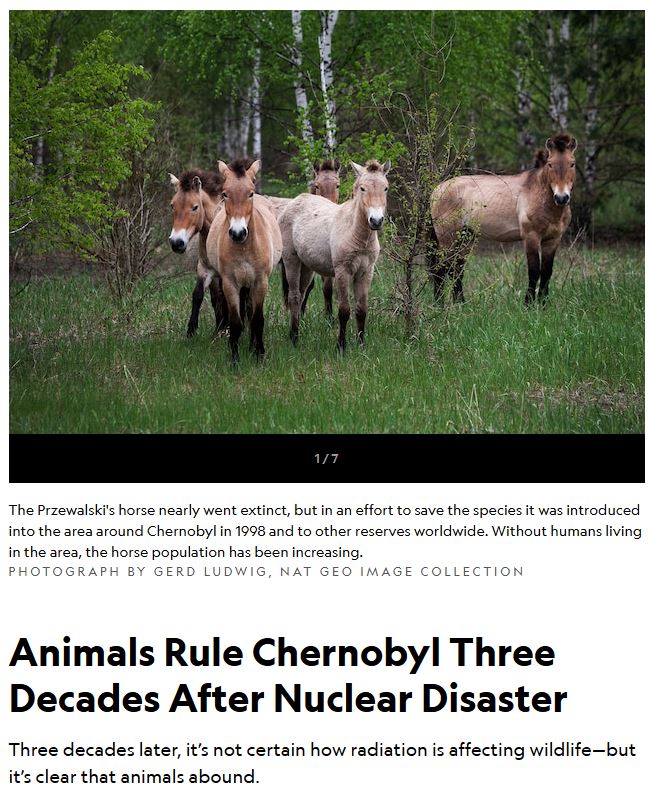
The Three Mile Island, Chernobyl, Fukushima, the huge stockpile of ‘residual’ plutonium we need to somehow dispose off…

Yep. The Internet is being used to distribute – sometimes very exactly targeted, weaponized information.
Which information actually transforms the susceptible individuals into time-bombs.

Tell a guy that his freedom is constantly challenged by the government.
Then tell him the ‘Covid’ mask isn’t 100% effective.
And end up by asking him ‘why does the government demands you to wear something which is not foolproof’?

Each of those three are legitimate.

Put together, they become explosive.
They actually blow up people’s minds.
Derail people’s ability to think straight. Statistically speaking… Which is enough, of course!

What will happen when the number of ‘deranged people’ will be enough to reach ‘critical mass’?

Only God knows.
But it will certainly be far worse than whatever the ‘troll farmers’ have in mind!

Matthew Horwood/Getty Images

Get a vaccine, wear a mask…

“You can’t deprive others of their liberty without forfeiting your own. Liberty is lost with every person seeking to control others for their comfort and sentiment.”

Getting a vaccine and wearing a mask are sensible things to do, right?

Establishing a free environment, where all individuals might enjoy their liberties, is also a sensible thing!

For the simple reason that even a casual examination of history provides ample proof that freer societies fare far better than those which curtail individual freedoms.

Simpler said than done…
Mention the mandatory mask and the imperative advice to get vaccinated to those passionate about individual liberty and you have a hornets’ nest on your hands.

Or maybe this is an excellent occasion to discuss the ‘gap’ we constantly need to bridge between individual freedoms and a free society?

Can you have a free society composed of slaves?

The answer depends on who gives it to you.
I’d spent the first 30 years of my life under communist rule.
My country, Romania, was declared, by those who were ruling it at that time, as being free. Both domestically and internationally.
The only free individual was the ruler. Nicolae Ceausescu. He was the only guy who could do as he pleased. And only for a while… Until 25 December 1989…
In the end, the regime had crumbled and the only ‘free’ individual had met with the consequences of how he had chosen to use his freedom.

So no, you cannot have a free society when one individual, or a group of individuals, impose their will on everybody else.

‘Your liberty to swing your fist ends where my nose begins’

Otherwise put, if you refuse to get vaccinated/wear a mask you might be instrumental in getting me sick. Or dead.

‘Might’! It’s the ‘might’ part which troubles you!
Why should you shoulder a minimal risk/discomfort for my safety? Specially when you’re not convinced that my safety is in danger… Or, maybe, you’re thinking ‘let him take whatever precautionary measures he considers to be necessary!’

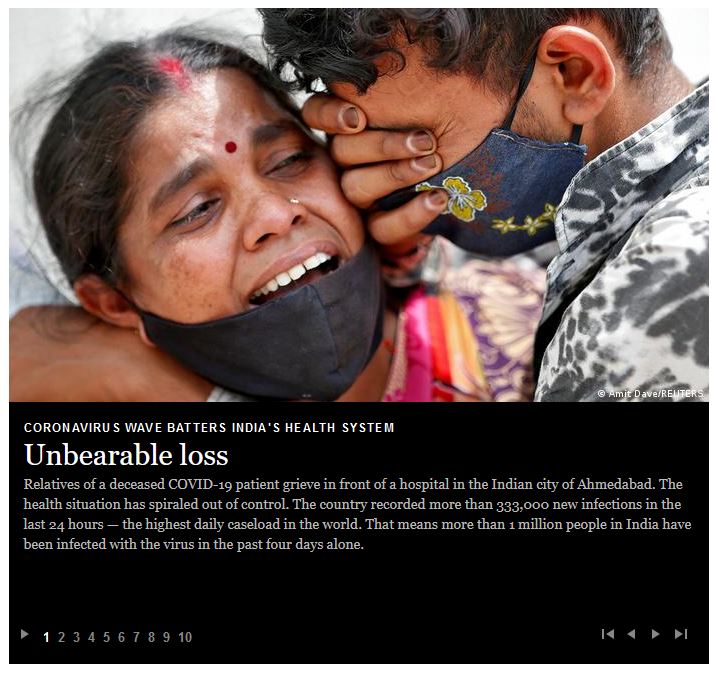
Because of India, that’s why!

Do you consider present day India to be a free society?
Do you consider that people currently living in India are truly enjoying their freedom? Today?!?

And no, I’m not going to contrast what’s going on in India with what the Chinese government had done.
First pretend nothing had happened then lock up the entire population.

No!
I’m going to contrast what’s going on in India with how the ‘other’ China had reacted to the Covid pandemic. Or with the South Korean response.

Different economic realities… Different cultures…
Maybe!
But also different levels of economic and social disruption!

Don’t tell me that what’s going on in today’s India won’t have repercussions!

For a while, after WWII, many in the Eastern part of Europe were convinced that, soon, ‘the Americans will come’.
And save them from communism.

At the end of the Korean war, most of those hopes were dying away.
Whichever were still alive had been buried at the end of 1956. When the Soviets had occupied Budapest. And nobody lifted a finger…

The erstwhile hopeful had adapted to the new reality. Changed tack …
Instead of hoping that America will eventually deliver them from communism, they saved themselves. One way or another, they left their countries and pursued the American Dream in America proper.

They somehow reached those shores – welcoming shores, in those times, set to work and made it.
You see, in those times the American Dream was not as much about becoming rich as it was about becoming ‘your own man’. Being rich was considered useful, indeed, only it wasn’t seen as a goal in itself.

As to how to do it, things were crystal clear. Luck was optional while hard work was deemed essential. And, often enough for people to become convinced, things went on as expected!

‘Find what you’re good at, work hard and, sooner rather than later, your dream will come true’.

And it did. For many enough so that achieving the American Dream was considered to be the norm rather than an exception.
Maybe not for everybody. But for many enough so that Regular Joe was convinced that hard work and determination will take you places.

Is this assumption still valid today?

When so many of the well paying jobs have been exported?
When it’s far easier to make money by investing already owned capital than it is to work your way up the socio-economic ladder?

A lot of people point their finger at those who prefer to take hand-outs instead of accepting minimum wage jobs.
On the face of it, it doesn’t make much sense, does it?
No matter how generous, hand-outs will never be large enough for a comfortable life. While hard work will, eventually, take you there.
Are you sure about that? About hard work eventually taking you ‘there’? In the present conditions?

Furthermore, the former American Dream was about about giving your best before expecting Fate to reward your efforts.
Today’s mantra, ‘greed is good’, had completely altered the premises.
‘Get as much as you can, give as little as possible’ has become the new modus operandi.

What?!?

Maybe put in this way it will be easier to recognize.

Buy low, sell high.

‘Profit maximization’.

You see, using fancier words, those who prefer hand-outs to hard work do nothing but obey, intuitively, the law of the diminishing returns.

Then hand-outs should be drastically reduced!

That’s, indeed, one way of solving the problem…

Except for another ‘rule’.

You catch more flies with honey than vinegar!

But this is about ‘flies’, not ‘people’!

Yeah, right… as if people were less intelligent than flies…

You see, Henry Ford had found a way out. By dramatically increasing the ‘benefits’ extended to his workers he had managed to retain a stable work force. And, an unforeseen consequence, he had set in motion the wheels of the consumer society. The very economic set up which had made possible the fulfillment of the American Dream.

Currently, solvent demand is drying up.
Unnoticeably, for now.
For as long as credit will take up the slack, the evidence will remain under the radar.

But ‘evidence’ has the bad habit of hitting the fan.
Exactly at the worst possible moment…

It’s not necessarily a coincidence that this group of Goldman Sachs analysts chose the current moment in which to speak up, bucking the grin-and-bear-it culture.
There are a mix of factors at play: the ubiquity of social media, where the survey initially appeared; the rise of a generation more conscious of workplace toxicity and mental health; and a general sentiment of activism for equity.
The pandemic may have become a factor, too. Keenan notes that, from his experience, office camaraderie was one of the things that buoyed him through the worst days. In isolation during forced remote work, many of these tough experiences may be made even tougher, exacerbating their effects
.”

Meredith Turits, Is extreme working culture worth the big rewards?
BBC Worklife, 27th April 2021

‘Japanese’ logic:
If somebody can do it, I can too.
If nobody could do it, I will.

‘Romanian’ logic:
If somebody can do it, let them do it!
If nobody could do it, why should I?

These two capture rather accurately the respective Weltanschauungs.

There are two things which bother me, though.

Once a Romanian determines that something must be done, they will find a way. No matter how unconventional…
It’s not any lack of individual self-confidence which keeps Romania back…

Secondly – but, to me, far more important,
who gets to determine whether ‘it’ is worth doing?
The doers themselves or somebody else?
And what governs the relationship between the two?
Is any mutual respect involved there?

For some reason, this whole thing made me remember Oscar Hoffman’s words.

‘Logical correctness isn’t enough. For a sentence to be actually true, it also has to make epistemological sense’.

Nature is made of atoms.

Same thing is valid for viruses. And for people.

Both viruses and people are atoms put together according to specific sets of rules.
Further more, the same sets of specific rules determine how each of them interact with the places where each of them happen to live.

I need to make a pause here.
And mention the fact that life alters, profoundly – if given enough time, the space where it ‘unfolds’.
For instance, the blue-green algae have transformed the Earth atmosphere into what it is today.

We balk at it today but blue-algae, also known as Cyanobacteria, is responsible for the Earth atmosphere having so much free oxygen.

Same thing is valid for viruses. And for people.

Viruses which kill too much of what they get in contact with do not survive for long.
They either peter out, like Ebola usually does, or have been wiped out. Like small pox was. And polio is close to be.

People who destroy too much around them… soon find out they no longer have a viable home.

And this is valid both for individuals and for the entire species.

Nature, on the other hand, doesn’t care.
It simply goes on.

The freer some people allow themselves to feel about expressing their opinions, the more others might understand.

OK, Obama, Clinton and Biden should hone their communication skills.

The media was uncharacteristically spot on.

Trump would be happier and happier if more and more Americans would adopt this ‘way of life’.

And those who are OK with this are happy to use a skull as their defining symbol.

What clearer message do you want?

I’m old enough to remember how things looked like when watched on a black and white TV set…

Still think this is funny?

I feel the need to disagree vehemently!

The malicious has made an option. Had chosen. Willingly! And, supposedly – according to the hypothesis being discussed here, knowingly.

The ‘stupid’ just stays put. Until the relevant information penetrates his ‘thick skull’.
It’s not his fault that those who attempt to convince him are not skillful enough.

And if the ‘stupid’ happens to be in a ‘powerful’ position… (hence his inability to understand fast enough is liable to produce considerable damage) who needs to be chastised?

The ‘stupid’ himself? Who presumably ‘doesn’t have a clue’ about what’s going on?
The malicious who had made the whole situation possible?
The ‘lazy bystandards’? Who had allowed this to happen? Out of carelessness?

Or those who are liable to suffer the consequences? Who had understood what was going on but…

On the other hand… Could Dietrich Bonhoefer – a renowned pastor and theologian, utter such ‘simplistic’ words? So callous?

“Upon closer observation, it becomes apparent that every strong upsurge of power in the public sphere, be it of a political or a religious nature, infects a large part of humankind with stupidity. … The power of the one needs the stupidity of the other. The process at work here is not that particular human capacities, for instance, the intellect, suddenly atrophy or fail. Instead, it seems that under the overwhelming impact of rising power, humans are deprived of their inner independence and, more or less consciously, give up establishing an autonomous position toward the emerging circumstances. The fact that the stupid person is often stubborn must not blind us to the fact that he is not independent. In conversation with him, one virtually feels that one is dealing not at all with him as a person, but with slogans, catchwords, and the like that have taken possession of him. He is under a spell, blinded, misused, and abused in his very being. Having thus become a mindless tool, the stupid person will also be capable of any evil and at the same time incapable of seeing that it is evil. This is where the danger of diabolical misuse lurks, for it is this that can once and for all destroy human beings.”

“The Enablers fail to grasp that, by enabling, they marginalize themselves. That every time they kowtow to their subordinates in a ploy to remain relevant they advertise their creeping irrelevance. The gap between their superficial and actual power, between their status and the waning value of that status, is widening. Soon, they will be like the president of Germany, whoever he is.”

I’m not exactly old.
Only old enough to continue to check my email. From time to time…

For reasons outside my knowledge, this morning I’d found – in the ‘promotions’ section’ a link to a ‘common sense with Bari Weiss’ article. The title was apealing, the name rang a bell – even though I had no idea about who the person was, so I read it.

My reaction was intense enough to start writing.
Not before looking her up…

The point being that she is basically right. Enabling is a powerful phenomenon.
But she is also basically wrong.

Powerfull it might be, only enabling is not necessarily malignant. As she implies.

Enabling is done by people with means. Powerfull and or resourcefull enough for their actions to be effective.
What the enablers choose to enable… is something else.

And the consequences of enabling depend on the enablers’ choices!

Things might come up right. Or wrong.

The kind of enabling curently predominant in America has been detrimental to the society at large. Leading to the enablers becoming irrelevant.
Just as Weiss advertised. Trump has been supplanted by those who had occupied the Capitol – after being enabled by him, while on the other side of the political divide things aren’t going any better. Cultural cancellation isn’t going to end up well.

But enabling can lead to different outcomes. Depending, of course, on what is being enabled.

Take Germany, for instance.
Yes, nobody knows who its President is. Only the country, as a whole, functions far better than many of those whose Presidents are on everybody’s lips. Simply because the German enablers had chosen to enable the ‘right’ kind of behaviors.

PS
Frank Walter Steinmeier

“First day of class.
The law school teacher entered the room and asked a student sitting in the first row:
‘What’s your name?’
‘Nelson.’
‘Get out of my class and never come back!’
Everyone was scared and outraged but no one dared to speak up.
‘Very well!’ said the professor after Nelson had left. ‘Let’s start!’
‘What do we have laws for?’
The students were scared but they tentatively answered the questions.
‘So that order may be maintained?’
‘No!’
‘For us to fulfill?’
‘No!’
‘So that trespassers might be punished?’
‘No!’
‘For justice to be made?’
‘Finally! And what is justice?’
The students were already pissed off but they continued.
‘When human rights are upheld?’
‘Not bad. Elaborate!’
‘To differentiate good from bad?’
‘Then was I right to throw Nelson out?’
Silence.
‘I want an answer!’
‘No…’
‘You might say and injustice had been committed?’
‘Yes…’
‘Then why nobody did anything about it?’
‘What do we want laws for if we don’t have the will to uphold them? Each and everyone of you needs to speak up whenever you witness injustice being done! All of you! Always!’
‘Go bring Nelson back! After all, he’s the real teacher. I’m nothing but a student here!’
‘We should all learn that whenever we don’t defend our rights, our dignity vanishes.’
‘That dignity is not negotiable’!”

I’ve just read this on somebody’s FB wall.
And a couple of comments.
‘But why did you have to throw Nelson out?!? Couldn’t you have simply explained your point? Lousy teacher… you just enjoyed playing God!’
‘There is a small difference between explaining ‘something’ to somebody and making the same somebody actually feel that ‘something’. The same difference which exists between a lump of clay and the same lump of clay after God had breathed soul into it’.

This book represents Djuvara’s thesis for his 1974 Doctorat d’Etat.

There are two main ideas which are to be pointed out here.
A first one hidden under the distinction he identifies between ‘culture’ and ‘civilization’.
The second being the bread and butter of his thesis. That civilizations are initiated in one place, diffused/exported for a while and then replaced – or led further, depending on how one chooses to interpret the facts, by people until then living somewhere on the fringes of the civilization they are replacing/refurbishing.

Nothing really new, right?
‘Cyclical History’ wasn’t invented yesterday. And certainly not by Neagu Djuvara.

Well, Djuvara’s ideas – like everybody else’s, are nothing but ‘overgrowth’. Things which sprung in people’s minds ‘on top’ of what those people had already learned. Found out. Or, of course, both.

In a sense, what I’ve said in the previous sentence is the very condensed abstract of Djuvara’s second ‘main idea’.
The first, the ‘hidden’ one, – again, in an extremely abridged version, being that ‘history, as a narrative, is nothing more and nothing less than what historians choose to make of the facts they had learned about’.

Too blunt?
Well, first and foremost, I’m an engineer. Not a fancy pen-pusher…

OK. Let’s go further.
I’m going to illustrate, briefly, Djuvara’s main thesis by presenting his version of what had happened in Europe. What had started as an European phenomenon, more precisely.

The Roman civilization had grown at the periphery of the Ancient Greece. And, eventually, took over more ‘space’ than the Ancient Greeks.
The Russian civilization had grown at the periphery of the Byzantine/Orthodox one and eventually took over. Or, at least, attempted to…
The Holy Roman Empire of German Nation ‘recycled’ – or, at least, attempted to, the ‘ancient’ values and traditions.
Great Britain had grown at the periphery of Europe until it took over the whole world. At least for a while…
The US, which had started as a British colony, had grown into the most powerful nation known to man.

‘OK, I understand what you meant by trailers and trailblazers. Some of those who trail might end up trailblazing.
Do you want to add anything?
Is there an actual point to your post?’

Yep.
As they say about the market, ‘past performance is no guarantee about the future’.
The fact that things have happened as they did is no guarantee that they’ll keep unfolding in the same manner.

In a sense, Fukuyama was right, after all…
Even if not in the sense he thought it!

According to “The end of history” people – all over the World, had realized the relative merits of ‘liberal democracy’ and ‘capitalism’. Which were going to be put in practice, effectively marking ‘the end of history’.
Thirty years past that moment, it seems that things aren’t going in that direction.

I’m I contradicting myself? Who’s right, after all?
Djuvara? Since history doesn’t seem to have stopped?
Or Fukuyama, but for some other reason? Than the one advertised by him?

‘History, as a narrative, is nothing more and nothing less than what historians choose to make of the facts they had learned about’

Then, if history is ‘man made’, what about the future?

Can we really make it? Predict it?

‘Make it’, for sure!
If not us, then who?!?

‘Predict it’… that’s something totally different!

There are signs, though.

First of all, Djuvara had described something which can be compared with fire burning in a savannah. It starts in one place, burns for a while… and then starts up some place else. Until now, no fire – no fire known to man, had burned any savannah so thoroughly that nothing was left for a ‘second’ fire.

Secondly, Fukuyama said that history will end when all humankind will sync. When all ‘civilizations’ will be run according to the same paradigm. According to the liberal democratic and capitalist paradigm, in Fukuyama’s vision.
We’re still far from that.
Only there is one paradigm which is willing to play that role! To fill those shoes…

The ‘greed is good’ paradigm!
Or, if you don’t like to think in ‘monetary’ terms, the ‘my version is the only right one’ paradigm.

The problem being that these two work in concert.
They are two facets of something called ‘intellectual arrogance’.

I’ll come back to this notion sometime in the future.
Now I’ll end up telling that there’s not much left of the ‘savannah’.

When things were unfolding as Djuvara described them, the planet itself was more or less ‘virgin’. Unexploited. Unoccupied.
Human culture used to be diverse. Ideas were developing. Traded. From one place to the other. From one culture to the other.

Nowadays, much of the planet – our home, is occupied by the, more or less, same civilization. And by an increasingly similar culture.

Nothing inherently good nor bad here, mind you!

If we still have no definitive history, then the future hasn’t been written yet.
It’s up to us to choose the right trail.
For no other reason than the fact that there are very few trails left for us to burn!