Archives for category: awareness

“A district judge has ordered the Bernalillo County Sheriff’s Office to release property that deputies took during a child abuse investigation and kept after the charges were dropped.

In October, the District Attorney’s Office dismissed sexual assault charges against a nuclear weapons expert who formerly worked at Kirtland Air Force Base. But the Bernalillo County Sheriff’s Office didn’t release the man’s property, which included thousands of dollars of electronics and a draft of a book.”


They kept the kids in cages. And Excel spreadsheets. And more than 60 other government files and databases that made it nearly impossible to track the thousands of children who have been separated from their parents by the Trump administration while trying to enter the United States.

This is according to a new report released Thursday by the Department of Health and Human Service’s Office of Inspector General, which finds that, since 2017, the Trump administration has separated thousands more children from their parents than it previously disclosed and that it tracked these kids in ad hoc, disparate databases, including Excel spreadsheets and Microsoft Sharepoint accounts, further complicating the already tortured process of figuring out where those children are today.”

I have no first hand knowledge about any of these two separate ‘incidents’.
The first one might have been caused by a series of ‘misunderstandings’ while the second is only a portion of a hugely complex matter.

What really bothers me is what they have in common.

Both have been initiated by people belonging to/working for institutions put in place to protect the greater good of children. Children who are nothing but our future. Our only future.
Each of these ‘actions’ have been botched. By those who initiated them.
The institutions themselves had failed. To control the ‘runaway operators’ and to perform adequate ‘damage control’.

“Why are we doing things like these to our fellow human beings?”

Because we don’t consider them, in earnest, ‘our fellow human beings’?
For whatever reason?

“Profit is a natural by-product of voluntary commerce, exchanging value for value. Increasing profits come from better exchanges of value over time. Accepting a lower value of trade in order to benefit someone else believed to need the benefit is a myth. Self interest has always been a key component of human commerce.”

Paul Garner

The barons who had forced King John to sign the Magna Charta were interested in preserving their privileges, not in the deepening of their fellow citizens’ freedom… yet this was the ultimate consequence of their actions.

“No free man shall be seized or imprisoned, or stripped of his rights or possessions, or outlawed or exiled, or deprived of his standing in any other way, nor will we proceed with force against him, or send others to do so, except by the lawful judgement of his equals or by the law of the land. To no one will we sell, to no one deny or delay right or justice.

This clause gave all free men the right to justice and a fair trial. However, ‘free men’ comprised only a small proportion of the population in medieval England. The majority of the people were unfree peasants known as ‘villeins’, who could seek justice only through the courts of their own lords.”

The heirs of those barons had evicted their Scottish tenants in search of the higher profits yielded by raising sheep, not because they wished to improve the local food market. Yet exactly those ‘clearances’ had constituted the stepping stone for the economic blooming of Scotland. And for the advent of the ‘Scottish Economic Thought’, epitomized by Adam Smith.

Are we to understand that ‘self interest’ will, sooner or later, somehow morph into ‘the greater good’? By its own, according to a yet unknown ‘natural law’?

I’m afraid this is nothing but wishful thinking.

The barons who had rebelled against King John were following an already established tradition.
Being the nephews of the Norman – read Viking, invaders, they were familiar with the Scandinavian things. Their uprising against the king was nothing more than a defense of their fore-fathers’ way of life.

Of their fore-fathers’ free way of life!

The landlords who had evicted their tenants to make way for the more profitable sheep may have created the conditions for the development of a thriving free market… only it was exactly this free market which had represented the doom of the ‘landed aristocracy’…

So. Is freedom the most important aspect of the free market?

I’m afraid that would be an oversimplification.

The markets are free, period.
If anything impedes their (transversal) freedom in ‘space’ – a ruler, a dictator or even a natural set of events, markets will find their (longitudinal) freedom in ‘time’. All dictatorships have been toppled by ‘history’ and all ‘natural’ sets of events have been overcome. As yet, at least.

The most important ‘things’ in the market are the people who animate it.
Any market would be nothing but an empty intersection of roads if not for the people who gather there to trade their wares. To better solve their existential problems by exchanging the ‘fruits of their respective skills’.
And the freer those people are to hone their skills and to take the fruits of those skills to whatever intersection they choose, the better the solutions developed, by them, for their existential problems.

And what about the profit? Is it good?

Of course it’s good. But for only as long as it remains free!
For only as long as it doesn’t depend on external forces and for only as long as it doesn’t become an obsession.
Since most of you understand the perils of monopolistic ‘external forces’ being exerted to limit the freedom of the market, I’ll delve directly into my obsession about the hidden dangers of pursuing profit as an existential goal.

We describe ourselves as being conscious.

In Humberto Maturana’s terms, ‘we are able to catch ourselves red handed’.

As a human being I do what we human beings do, I operate as an observer observing. The observer is not a condition of being, it is not a transcendental entity that exists by itself, it is not a material entity, it is our experience of being aware of ourselves doing what we do as we human beings operating as observers observing. And what do we do as human beings operating as observers in observing? We make distinctions. We make distinctions of objects, of notions, of ideas, of concepts, …,of entities that we bring forth with our operations of distinction together with the domains of existence in which they arise.

When hungry, we not only feed ourselves. We also notice that we feel good once our bellies are full. And we strive to make provisions for the next meal. Thus increasing our chances to survive.

Some of us end up eating too much. They are so keen to reproduce ‘that’ good feeling that they end up morbidly fat. Thus diminishing their life span.

Still others try to make sure they’ll enjoy their next meal by appointing themselves ‘gatekeepers’ to ‘food’.
And, sooner rather than later, every time they succeed, this ‘arrangement’ ends up in abject failure. The most publicized recent example being the failure of the centrally planned ‘popular democracies’. Unfortunately, there had been countless other examples. In fact, in all instances where power had been concentrated in a too small number of hands, the societies which had allowed this to happen have eventually collapsed.

Another example is our addiction to drugs.
All of us enjoy feeling good. Which is an evolutionary device meant to show us we are on the right track. To prod us in the right direction.
Some of us have discovered ‘the short cut’. Instead of doing ‘the right thing’ first and expect the reward afterwards, they just imbibe the ‘right’ substance. Alcohol, sugar, nicotine, heroine, coke, THC

Now, can any of us pretend that a drug addict or a morbidly fat individual is a free person?

Returning to the freedom of the market, we can only say that a market is functionally free for only as long as a functional majority of the trading agents behave in a free manner. Do as they individually see fit.
Compare this to the situation when, for whatever reason, the majority of the trading agents feel compelled to follow a fad.
The Tulip Mania is the first example which springs into my mind every time I discuss this subject. Followed by all other bubbles which had ‘punctured’ our economic history ever since.

The current fad being ‘profit’.
Which profit is essential for the long term well being – read ‘survival’, of any economic enterprise.
Only we need to remember that economic enterprises are meant to solve problems. To be of service to people. So useful to the consumer side of the market that the consumers are willing, on their own accord, to part with enough money to make those enterprises profitable.

If the market is warped so far that things go the other way – enterprises are managed to maximize profits at the expense of the services rendered to the clients and the ‘beneficiaries’ are not aware of what’s going on, or have no say in the process, the whole thing starts to resemble what used to happen inside an opium den.

We somehow managed to weather all economic crises that we, ourselves, have brought upon our heads. And to outgrow our obsession with opium.

I’m sure we’ll manage to free ourselves from our current obsession with profit.

Nota bene!
Under no circumstances we may allow capitalism itself to be left behind in our quest for liberty from the tyranny of ‘profit’.
Capitalism is something else than the unending and callous adoration of the ‘golden god’, just as profit is a very useful indicator but a horrible master.


The theory that each person imposes the moral law on himself. It is opposed to heteronomous morality, which holds that the moral law is imposed from outside of man by another, and ultimately by the divine Other, who is God, which makes the moral law theonomous.

I argued in my previous post that in a perfect world the simple fact that we consider ourselves to have been created, in his likeness, by the God we believe in, would have been enough to make us behave in a certain manner.

We don’t. Behave in that manner.

The world exists. And will continue to exist, regardless of whatever we might do in the foreseeable future. Maybe not the Earth as we know it but it’s rather unlikely that we’ll ever be able to destroy the entire world.
Here, on our home-planet, we’ve more or less soiled everything we’d come in contact with. Willingly or unwittingly.
Which suggests that the world might not be perfect but is more or less OK. And that it is us who haven’t yet risen to the occasion.

We may not have fully risen to the occasion, indeed, but we’ve managed to somehow survive. Until now, that is.
How was that possible, given our imperfect nature?

Was our behaviour shaped from outside as the heteronomous morality theory suggests? By (a) God, as the theonomous morality theory pretends?

“Now the serpent was more crafty than any of the wild animals the Lord God had made. He said to the woman, “Did God really say, ‘You must not eat from any tree in the garden’?”

The woman said to the serpent, “We may eat fruit from the trees in the garden, but God did say, ‘You must not eat fruit from the tree that is in the middle of the garden, and you must not touch it, or you will die.’”

“You will not certainly die,” the serpent said to the woman. “For God knows that when you eat from it your eyes will be opened, and you will be like God, knowing good and evil.”

When the woman saw that the fruit of the tree was good for food and pleasing to the eye, and also desirable for gaining wisdom, she took some and ate it. She also gave some to her husband, who was with her, and he ate it. Then the eyes of both of them were opened, and they realized they were naked; so they sewed fig leaves together and made coverings for themselves.”

What do we have here?
A couple of people, who are already able to speak, who cannot yet make the difference between good and evil but who can see that ‘the fruit of the tree is good for food’ and ‘desirable for gaining wisdom’.
Furthermore, the couple is not only able to communicate between the two of them, they – or, at least, one of them, are also capable to negotiate with ‘outside agents’.
And, in fact, it was a consequence of a ‘negotiation’ that they had learned to differentiate between good and evil.
Moving even closer to Godhood in the process: “The man has now become like one of us, knowing good and evil. He must not be allowed to reach out his hand and take also from the tree of life and eat, and live forever.”

“So the Lord God banished him (them, actually) from the Garden of Eden to work the ground from which he had been taken.”

I must confess that things become more and more complicated instead of becoming clearer.
‘Moral law is imposed’…
Adam and Eve have learned the difference between good and evil as a consequence of ‘freely’ interacting with someone from ‘outside’ their ‘immediate community’.
And got punished for it. On a ‘technicality’!

What is moral in all this?
What are they to learn from this experience?
Since all that God had imposed on them was ‘punishment’, are they (we?!?) to understand that ‘moral law’ is equivalent with ‘gallows’?

In this setting, moral law is supposed to be learned exclusively through ‘trial and error’?
No ‘explanation’? No ‘prep school’?
Is this nothing but a form of ‘radical training’? Like that advertised by B.F. Skinner?
Not to mention that for some ‘sins’, the punishment is to be served ‘later’…

“God created mankind in his own image, in the image of God he created them; male and female he created them.”

Hence all people, male and female, have been created equal. Simply because all of them have been cast in the same mould.
And all of them, male and female, harbor a spark of divinity. Simply because the mould into which all of them have been cast had been made “in the image of God”.

Simple logic would tell us that all people who believe mankind had been made in the image of God would behave in a certain manner.
Because of the reasons I mentioned above.
That kind of behavior had been called ‘ethical’ by well established thinkers. Plato, for instance.

“Then God said, “I give you every seed-bearing plant on the face of the whole earth and every tree that has fruit with seed in it. They will be yours for food.” “

.
.
.

“This is the account of the heavens and the earth when they were created, when the Lord God made the earth and the heavens.
Now no shrub had yet appeared on the earth and no plant had yet sprung up, for the Lord God had not sent rain on the earth and there was no one to work the ground”

Same simple logic I’ve invoked earlier tells me that God had created ‘the heavens and earth’ in two different stages. More or less like we do things.
First we think about the things we are going to do – ‘design them’ would be a more modern term, and then we put our thoughts into practice. ‘Execute’ our designs, according to the practical aspects which always limit our actions.

“Then the Lord God formed a man from the dust of the ground and breathed into his nostrils the breath of life, and the man became a living being.”

The Bible itself seems to agree with me. When God finally decided to put into practice his idea of a man, he started with something he already had at his disposal. Just like we have to do whenever we attempt to accomplish anything.
“Dust from the ground”.
Man, ‘made in the image of God’, was fashioned from already available material, not from ‘thin air’.

Could this be the origin of man’s limitations?
His ‘earthly’ nature, no matter his divine likeliness?
Could this be the reason for God going back on his words?

“The Lord God took the man and put him in the Garden of Eden to work it and take care of it. And the Lord God commanded the man, “You are free to eat from any tree in the garden; but you must not eat from the tree of the knowledge of good and evil, for when you eat from it you will certainly die.” “

What made God change his mind?
In Genesis 1 – the R&D phase?, he had planned a world where man was allowed to feed on everything under the sun while in Genesis 2 he had established rules about what Adam was allowed to eat and what not.
Furthermore, why make a ‘tree of the knowledge of good and evil’ in the first place? If you were going to forbid your favorite pet from eating its fruit, under the most drastic penalty…

No!
This is not yet another half backed attempt to deny the existence of God under the pretext that the only source describing its existence is full of inconsistencies.
Pretending that God does not exist simply because those who tried to describe him had not been able – or willing ?, to present a more coherent image of him is equivalent to pretending that God exists simply because we haven’t found, yet, an exhaustive explanation for everything.

You ‘see’, the Bible, no matter how holly we might consider it to be, is nothing but an image of God. A Man made image of God.
A Man written image of God, to be more precise.

The fact that the Bible is chock-full of wisdom can not be denied.
Which fact remains true regardless of whether it had been written ‘under guidance’ or ‘on their own’ by a group of ‘free agents’. Or, even, by a combination of both.
Unfortunately, there is another fact which seemingly contradicts the first. The Bible had been used as pretext for horrible crimes. Committed by ‘over-zealous’ believers, by ruthless ‘self serving’ operators or by a strange combination of both.

In order to encompass the simultaneous existence of both aforementioned facts each of us must take a step back-wards.
Extract ourselves from the fry.

Each of us must start thinking for ourselves.

How to do that – become ‘independent’, and yet preserve our chances to survive? As in remain connected with the day to day, hard-core reality?

Stay tuned. That will be my next subject.

It’s not unusual for a Christian ‘zealot’ to accuse an atheist of ‘cherry picking’.
When the latter uses a quote from the Bible to argue something which ‘displeases’ the former, of course.


“If God does not exist, everything is permitted.”

I found this quote, which belongs to Dostoevsky, in an article published by http://www.thecatholicthing.org in 2016.
That is to say, the nonexistence of God means that we live in a world of perfect moral freedom; we may do anything we like, up to and including mass murder.

Well, if I remember correctly – more than three decades have passed since I had read The Brothers Karamazov, which didn’t impress me much, the book is an intricate, but very compelling, demonstration of the exact contrary.

Raskolnikov is unable to live with himself after the assassination of the usurer. It is fundamentally unable to clear his sense of right and wrong, to silence his conscience. Initially, he tries to continue living, enjoying his cunning, concluding that it is a superman. Yet the humble Sonya reminds him of his act, reminds him of his guilt and therefore needs forgiveness. Dostoevsky destroyed the theory of the Superman condemning the characters involved in the mental suffering until they recognize the truth.

Time has come for me to admit of having myself committed the sin.
The quote I used above ends with ” and the light of Christianity.

Cherry picking had grabbed my attention while researching for a future post. ‘Moral identity‘. Which implies ‘autonomous morality’:

The theory that each person imposes the moral law on himself. It is opposed to heteronomous morality, which holds that the moral law is imposed from outside of man by another, and ultimately by the divine Other, who is God, which makes the moral law theonomous.

So.
Those engaged in cherry picking do it because the selection serves their purposes or because their actions are “imposed from outside”?

There’s a seemingly unending debate about what “my liberty ends where yours begins” really means.

The initial saying was a little longer, Your right to swing your arm leaves off where my right not to have my nose struck begins.”, and had been coined during the disputes between those who tried to impose the Prohibition and those who opposed it.

In that context, it made sense.
‘How close to my house – a teetotaler, should you be allowed to open a bar and why should I be able to tell you what to drink/serve in your house.’

In a wider setting – individual rights, for instance … not so much!

‘Your right to swing your arm leaves off where my right not to have my nose struck begins’ only if at least one of the following is true:
– My arms are as long as yours AND I’m willing/able to defend my nose.
– You are a civilized person.
– We, the entire community, have reached the conclusion that we are better off, together, if we observe – and enforce, this rule.

The first sentence describes a situation of generalized conflict. Not necessarily ‘hot’ but, nevertheless, always ‘waiting to happen’.
In the second situation, ‘one side’ depends, decisively, on the ‘other side’ behaving ‘properly’. Nice and commendable but what happens when one of them goes berserk?
The third describes the de facto functioning of any civilized nation. Which nation, any nation, is composed of individual people. ‘Endowed’ with ‘free will’ and not always ‘well behaved’.

Hence the danger of narrowly defining freedom as a collection of individual spaces where each of us might do as they please – as long as the consequences of their actions remain inside that space.
Which spaces would have to be constantly defended.
Or could be extended, whenever any of the neighbors wasn’t on the lookout.

How about ‘our mutually respected individual liberty is the well deserved consequence of our collective effort to enlarge OUR freedom’?

Classical economy sees the market as the place where demand meets supply and prices are born.

‘Relative’ economics, which hasn’t been written yet, sees the market as the place where people meet to offer their wares and to fulfill their needs. In order to meet this goal, people negotiate prices and adapt their behavior/attitude.

Classical economics sees the market as being either free or ‘non market’ – a.k.a. ” “planned” economy“: the one which “is heavily regulated or controlled by the government, most notably in socialist or communist countries.
As an aside, while I fully agree with the notion that communist countries – ‘popular democracies’, as their rulers used to describe them, had organized their economies around strictly centralized decision mechanisms, I cannot but wonder how would a classical economist describe Hitler’s economy? Or ‘crony capitalism’?

‘Relative’ economics, which – I repeat, hasn’t been written yet, sees the market as being either ‘free’, ‘un-free’ – a.k.a. ‘captured’ or ‘cornered’, or ‘obsessed’.
Of course, there never was such a thing as a completely free market, only functionally free ones. And I’m sure most of you fully understand what I mean.
Also, it is clear what ‘un-free’ means. Any situation where a small number of people call all the shots for an entire market. It doesn’t matter a bit whether those few people are directly involved in the market – over which they ‘enjoy’ monopolistic power, or they are involved with – read ‘control the’, government. The determining factor here is the scarcity of decision makers and the chock-hold they have over the entire decision making process.
The ‘obsessed’ market is the most interesting of all. For me, at least.


Remember “Tulip Mania”?

As with many interesting stories, there are at least two sides attached to this one also.
One version describes the whole thing as a generalized folly which had ended only after the government stepped in while the other paints a considerably duller picture.
Only nobody denies the fact.

That for whatever reasons, tulip bulbs had been – admittedly for a relatively short while, on a par with houses. Value-wise.

Did it make any sense? Then?
For those involved, yes! Otherwise…
Could they afford it? Had they been affected when the bubble burst?
That depends on whom you ask… and whom you believe…

Does it make any sense now? Can we make anything out of it?

We can certainly explain what had happened.
Holland’s was the most affluent economy of the continent and the wealth was sort of spread around.
A lot of money was ‘sloshing’, a lot of people were looking for a way to ‘show of’ and tulips were the ‘thing of the day’.
Does it make any sense now? Retrospectively, no. Not for me, anyway.
Do we have an explanation for what had happened? You’ve just read a very condensed one. If you need a more elaborate version, try Veblen’s ‘The Theory of the Leisure Class‘.

Anyway, that’s the perfect example of an ‘obsessed’ market.
Where the agents are free to do what they please but are obsessed enough to act in sync. As opposed to ‘in concert’.

‘Obsessed’ means that all present look in the same direction and react in the same way.
Which might be a good thing – when a group tries to escape a fire.
Or a bad one, when the same group is trying to gather food from a forest. If all of them are looking, exclusively, for a single type of mushroom, many other sources of food are neglected.

In a really – as in ‘functional’, free market, people display a variety of behaviors.
Some suppliers are greedier than others, some are diligent, some are sloppy and others are dedicated craftsmen.
Some buyers are more ‘relaxed’, others ‘stingier’. Some know their way around the market, others are ignorant.
On the whole, a dynamic equilibrium is constantly negotiated among all these ‘free’ agents. Simply because there is a variety of opinion.
When the market is ‘un-free’, the whole notion of negotiation and equilibrium disappears. The parameters are set by the ‘rulers’. And things go on only as long as the ‘rulers’ manage to maintain a modicum of normality.
When the market is ‘obsessed’, things become really interesting. The agents maintain their apparent liberty – at least for a while. Only they don’t actually use it. All of them act as if pre-programmed.

And somebody sooner or later notices what’s going on. And turns the whole thing to fit their own goal. Which is, almost always, not so different from the ‘general’ one.

Tulip Mania was relatively benign.
Nothing really bad had happened.

We’ve somehow managed to weather the recent financial melt down.
Which had been the consequence with our obsession with money as the ultimate goal.
Which obsession continues unabated.

The Earth is covered by atmosphere.
Some of the gases might have belonged to the original ‘cloud’ which had given birth to the solar system. Others have originated from the Earth itself. And still others are a ‘consequence’ of ‘life’. Oxygen, for instance. And some of the CO2.

The land crust has rocky cliffs and fertile plains.
While the rocky cliffs are a consequence of geology, the fertile topsoil is the consequence of the elements having eroded the cliffs, the debris being transported by flowing water, plant life taking hold and slowly transforming some of the minerals into organic matter, animals eating some of the plants and transforming them into feces, micro-organisms digesting/recycling those feces together with the dead plants and animal carcasses… And so on.

Primitive life forms, Bacteria and Archea, “are organisms whose cells lack a membrane-bound nucleus, mitochondria and other membrane-bound organelles…. All the intracellular water-soluble components (proteins, DNA and metabolites) are located together in the same volume enclosed by the cell membrane, rather than in separate cellular compartments.

More ‘sophisticated’ life forms are organisms which have “a nucleus and organelles bounded by internal phospholipid membrane systems. In contrast to bacteria and archaea, eukaryotes may be multicellular. Animals, plants, fungi…. “
So, in this case, living cells have internal divisions, each surrounded by ‘secondary’ membranes. Furthermore, this type of organisms may consist of more than one cell. Many of them – including us, humans, actually comprise many layers of cells. Skin, muscle, bones, ‘internal’ organs, brain… Each of them carefully constructed using building blocks taken, with the help of the digestive system, from the environment.

Making a parallel between a humble unicellular organism, let’s say an amoeba, and a proud ape we’ll notice that the role played by the amoeba’s membrane is fulfilled by a host of the ape’s organs. Skin, lungs, digestive system and kidneys are the first to jump up for attention. On a closer examination – amoeba’s membrane keeps the organism together and acts as a locomotion device besides performing the respiratory, digestive and excretory tasks, the ape’s bones and muscles start to beg for attention

But what about the brain? What role does it play? What is it? An ‘internal organ’ or just another descendant of the membrane?
I’ll let you make that call.
I’ll only mention that the brain ingests information, digests it and then ‘excretes’ decisions. Which coalesce into ‘fate’/’destiny’, are remembered as ‘history’ and eventually end up as ‘tradition’.

I was arguing yesterday that life, as a biological phenomenon, depends on membranes doing their jobs.
Keeping the inside in, the outside out and managing the transit of substances. Nutrients in and excretions out. For some organisms, their ‘membranes’ also act as a thermo-regulators.

‘Watching’ a membrane in action, one might get the impression that it has been endowed with a certain ‘awareness’. The membrane acts as if it were aware of the differences between its inside and its outside. It recognizes what belongs where and keeps them there. It also recognizes nutrients for what they are – and lets them in, and excretions for what they are – and where they should be.
OK, the membrane does what it does simply because it was ‘pre-programmed’ in a specific way, according to the genetic information each organism has received from its predecessors. There’s nothing supernatural involved here. For what we currently know, anyway…

Watching, as a dispassionate outside observer, the evolutionary process unfolding one might get the impression that life itself has a certain awareness.
‘Rules of life’, read genetic information passed along from one generation to another, are diligently updated to fit the changes in the environment. Nevermind that the whole process is ‘impersonal’, ‘goal-less’ and is fueled by haphazard trial and error, the end result is what we currently consider to be ‘learning’!
That’s what we try to code into our artificially intelligent machines, don’t we?

Further more, recent research points out that individual organisms share information with their brethren.
Bacteria can share antibiotic resistance genes through lateral transfer.
Physarum polycephalum, a unicellular organism, seems to be able to share information already learned when it comes in contact with other members of the species.
Plants “can “talk” in several different ways: via airborne chemicals, soluble compounds exchanged by roots and networks of threadlike fungi“.

Since communication itself is a process which implies the ability to differentiate between a ‘run of the mill’ situation and one special enough to warrant the effort to ‘talk’ about it, I find all these to be compelling arguments for life itself to be considered as implying certain forms of awareness.

Yet another misleading title

OK, I fully understand the editors’ need to grab readers’ attention… I also understand the fact that the readers themselves have become somewhat forgiving… in the sense that most don’t even notice that the title which convinced them to read an article is only vaguely connected to the rest… but how far down this road do we need to go before understanding how dangerous it is?

Most people do not trust the media anymore… could it be that this had been helped by the continuously widening distance between the titillating titles and the actual content of the articles?

How about ‘Men are attracted by smart women but not enough for them to overcome a certain weariness’?

Now, that I’ve hopefully grabbed your attention, let me delve into the matter.

“…more and more research reveals that though the thought of a smart woman is appealing to men, a real, live smart woman standing in front of them is actually a turnoff.”

“Researchers at the University of Buffalo, California Lutheran University, and the University of Texas at Austin” developed a two tiered study to test their hypothesis.
During the first step 105 men where read a “hypothetical scenario in which a woman either outperformed or underperformed them in a math or English course, and then (they were) instructed … to imagine this woman as a romantic partner”. During this step the men who were outperformed tended to describe a more favorable impression about the woman they were compared to than the one offered by the others. And this finding seems to validate another claim made earlier this year: “Men value intelligence in women far above large breasts and long legs.”
During the second step each of the same men were asked to complete something that looked like an intelligence test and then offered the opportunity to meet a woman that had either out or under performed them. Surprisingly (or not?) the men who were going to meet a woman that was smarter than them “distanced themselves more from her, tended to rate her as less attractive, and showed less desire to exchange contact information or plan a date with her,”

This being somewhat inline with the conclusion of another study which finds that: “men’s avoidance of more intelligent or ambitious women could be due to fear of rejection by these higher quality women.”

Can we even try to draw a conclusion? Given so much contradictory information?

Let’s start from here:

“This study also did not take into account men who are already in a relationship with a more intelligent woman.”

Wow! It wasn’t that hard, after all…
Until now we were considering ‘thoughts’ and ‘impressions’ provided by individuals confronted with ‘hypothetical scenarios’ but who had no first hand experience about the real deal…

But do not despair. You haven’t lost precious time reading all this.

Here’s some ‘homework’ you might find challenging:

Why are some men – those who haven’t yet discovered that this situation could be comfortable – avoiding a romantic relationship with a more intelligent/ambitious woman? While so many same sex friendships bond people who display different levels of intelligence/ambition?

Are we that stuck in our old ‘gender roles’? Do males’ egos still tend to be threatened if they are not the alpha member of their household?

Or could it be that some of the males tend to associate female smartness with a variety of rather aggressive feminisms and it’s this that puts them off, not the the intelligence itself?

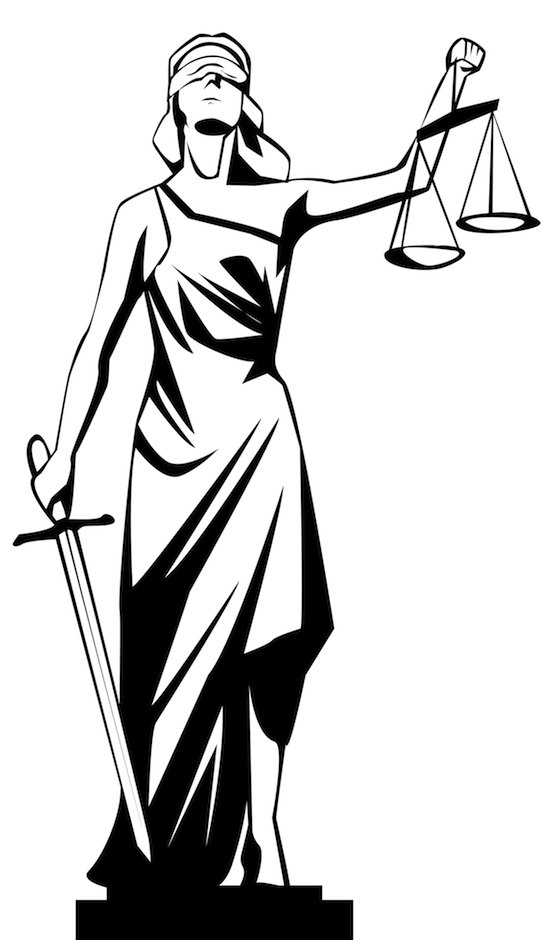
And why is it that justice is usually depicted as a blindfolded woman instead of an overbearing male?

One-Time
Monthly
Yearly

Make a one-time donation

Make a monthly donation

Make a yearly donation

Choose an amount

$5.00
$15.00
$100.00
$5.00
$15.00
$100.00
$5.00
$15.00
$100.00

Or enter a custom amount

$

As much as I love writing, I do have to eat.
And to provide for my family.
Earning money takes time.
If you’d like me to write more, and on a more regular basis, hit the button.
Your contribution will be appreciated!
Another very efficient way to help would be to share my posts.

As much as I love writing, I do have to eat.
And to provide for my family.
Earning money takes time.
If you’d like me to write more, and on a more regular basis, hit the button.
Your contribution will be appreciated!

As much as I love writing, I do have to eat.
And to provide for my family.
Earning money takes time.
If you’d like me to write more, and on a more regular basis, hit the button.
Your contribution will be appreciated!

DonateDonate monthlyDonate yearly