Archives for category: awareness

Liberty is freedom from being constricted, in any way, shape or form. Period.

Liberty is more of an adjective rather than a verb. A situation more than an action.

Liberty can be attached to a space, to an agent or to both.

A free space would be a space where no constriction may occur, whatsoever.
A free agent would be an individual entity outside any constriction, whatsoever.

Mathematically, both definitions are possible.
Philosophically, both definitions are imaginable. By philosophers, of course.

Oscar Hoffman, a Teacher, kept telling us, his students, “For a proposition to be true it is not enough for it to be logically correct. It also has to make ontological sense. For those of you who don’t remember what ontological means, a true proposition must describe something which has to be at least possible”

In the real world, where there is no such thing as absolute freedom, liberty has to be first noticed/invented. And then constantly negotiated.

‘No such thing as absolute freedom?!? But liberty is a (God given) (human) right!!!’

Do you remember what Hoffman had (just) said about things which can exist in practice and things which can exist only in our minds?
Liberty might be a right – for those who enjoy it, but that doesn’t mean that everybody has it. And, even more important, that there is – or ever will be, something even close to absolute liberty.
If you don’t believe me, try to fly off a balcony without any ‘mechanical’ help. Or stop eating for a day or two. The Earth will surely ‘constrict’ you back towards its center and your stomach will certainly constrict itself for lack of food. And both Earth and stomach will constrict you back to reality.

‘OK, so no absolute freedom for individuals. How about ‘free spaces’?’
‘As in spaces where no constriction, whatsoever, may be exercised?’
‘Yes.’
‘Well, that would be possible. If a space is completely empty… no constriction might be exercised in there, right? On the other hand, as soon as something, anything, populates that space, constrictions start to appear. For instance, since no two things can simultaneously exist in the very same place, the mere existence of a speck of dust in a whole stadium induces the restriction that no other speck of dust may exist in the very same spot. Sounds trivial, true, but this is it… No absolute freedom. Not for individual agents and nor for spaces.’

‘Then why are writing a post about ‘Free market’? Doesn’t make much sense, isn’t it?’

Let me finish with liberty before going any further.
I mentioned earlier that liberty must be first noticed and then negotiated.
You see, right or no right, liberty is, above all, a concept.
We’d first observed that a flying bird is freer that a crawling worm and bam!!! We realized that some of us were freer than the others. Then that freer groups/societies fared better than the more ‘stifled’ ones.
But only where liberty was more or less spread around, not concentrated in one hand. Dictatorships – where all liberty is concentrated at the top, are way more fragile than any democracy. I’ll come back to this.
Now, for the negotiation part.
‘Your freedom to swing your fist ends where my nose begins’. And vice-versa. Only this is rather incomplete.
Let me examine the situation where you are a person who likes to swing your fist. In the air, not with any aggressive intent, of course. So you were swinging your fist, after you had determined, in good faith, that there was no nose close enough to hurt. But what if I am a ‘nosy’ guy? ‘Nosy’ enough to bring my actual nose inside your reach? You having to restrict your swings – or to go somewhere else, isn’t a limitation of your freedom? An absolutely unnatural limitation of your freedom?
Has it become a little clearer? What I mean by negotiation when it comes to individual freedom?

OK, time has come for me to go to market. To the free market!

A market is a place. Obviously, right?
A place where people trade their wares. Because they have noticed that it is easier for each of them to do what each of them do better and then trade the results of their work instead of each of them providing everything for themselves. As in everything each of them needs. Or fancy.

Initially, markets were far from being free. First of all, supply was sorely limited. Transportation means were practically nonexistent so supply varied seasonally and was severely influenced by weather, soil and other similar factors. And, maybe even more importantly, supply was influenced by the sheer will of the most powerful ‘free agent’ who happened to be around. Or, more exactly, supply was heavily influenced by the whims of the most powerful free-agent who happened to be around.
Don’t believe me? Then consider the extreme famine experienced by the Bengalis in 1943. Or by the Romanians during the last years of Ceausescu’s reign.
Slowly, people have learned that freer markets tend to be a lot more stable than the less free. ‘Freer’ markets meaning freer from both exterior and interior limitations. For a market to become free(ish) the participants need to have a big enough pool of resources at their disposal and to be wise enough to organize themselves in a ‘free’ manner.

And what happens when at least one of the two conditions remains unfulfilled?
Time has taught us that while markets tend to be limited in space and that some of the participants tent to impose themselves over the rest there is one dimension where the liberty of the market is very hard to be limited. ‘Liberty’ here meaning that things tend to evolve more in their own terms rather than ‘according to plan’. Or according to anybody’s wishes.

Whenever the available resources dry up, the participants to the market move someplace else. Or die of starvation.
Whenever a market looses too much of its freedom – as in some agent controls too much of what is going on there, the market itself no longer functions properly. Whenever too many of the participants loose their ability to determine their fate/future they slowly become ‘sitting ducks’. Not as much easy to hunt down but actually unable to feed themselves.
And since hunger is the best teacher, they either learn to fight for their freedom or… die of starvation. Pol Pot’s Cambodia would be a good example, even if somewhat extreme. The fall of most communist regimes also makes a compelling case for what I have in mind.
Even more interesting, though, is what had happened to the American Automobile Industry. General Motors and Chrysler Corporation, once the dominant stars of the market – along with Ford, had to be rescued by the government. Quasi monopolistic positions tend to be bad for the monopolists also, not only for the rest of the market. Given enough time, true enough…
For a (free) market to function, at all, it needs active economic agents.
Which economic agents need, in their turn, certain amounts of concentrated resources at their disposal. A certain amount of ‘capital’. Regardless of who owns it. Or disposes of it.

In this sense, no matter where each of them finds itself on the individual to socialist spectrum, all societies are ‘capitalist’.

On the other hand, individual capitalists – economic agents, do not need a free market to thrive. The do indeed need a market to sell their products/services, only that market does not have to be free. On the contrary, even.

OK, no monopolistic market has survived for long. And all monopolies have eventually failed. Even those who had grown ‘too big to fail’!

But go and tell this to any of those who happen to be at the helm of a monopoly… be it of economic or political nature …

As the only defendant at the Nuremberg Trials to admit to his share of guilt in the crimes of the Third Reich, Speer had been sentenced to twenty years in Berlin’s Spandau jail. He was released in 1966. Some ten years later, the Canadian high school in Lahr, West Germany, which looked after the education of our children, invited Speer to speak to the student body. I was invited to the dinner that concluded the evening. I found it more than a little humorous when Speer was asked bya very confident grade eleven student: “Mr Speer, how could a group of talented people like yourself be convinced to follow a madman like Hitler?”
Speer was quiet for a few seconds, giving the impression he had never been asked the question before. Then he responded, “young lady, probably because we were all trained as engineers!. We were pragmatic to the extreme, and we thought every problem could be solved by an equation or by adjusting the numbers. Not one of us had any education in the humanities – even Hitler fancied himself an architect, in spite of his lack of formal training.

Louis MacKenzie, Soldiers Made Me Look Good.

Well, there’s a small problem here.
While I agree with Speer about the importance of ‘humanities’ I also must notice that Marx had been another example of an individual convinced that the world can be ‘tweaked’ by following a ‘blue print’. He used the term ‘ideology’ instead but… And we cannot say that Marx was stranger to ‘humanities’.

But there’s another observation made by Speer. “We were pragmatic to the extreme”. While their ‘deficient’ education might have made Hitler’s job easier, I’m afraid it was their ‘nearsightedness’ which had been the catalyst.

It was their obsession with their immediate goal – transform the reality according to their own wishes, which had made them blind towards the future consequences of their actions.

It was not ‘humanities’ they lacked but ‘religion’.

“Thou shalt not make unto thee any graven image” is not really about what you pray to as about what you convince yourself about. That the ‘image’ you have developed about your surrounding reality is good enough to be ‘graven’. For ‘future reference’ and for it to be imposed upon others. By force if necessary.

People had walked the Earth ever since they had climbed down the tree. Or had been created, whatever scenario each of us prefers. And their walking had resulted in the existence of trails.
After a while, some of them had became more powerful than others. They called themselves ‘kings’, assumed the property of everything in their grasp and built roads. They actually needed them to administer their property… Their private property….
Hence all roads had started as being private. Since everything belonged to the king…
In time, kings learned it was far easier to hire somebody to do their work. To administer their property. From that moment on, the roads had no longer been built by the kings but by their governments. But continued to remain private!
Flash forward to modern times. People have realized – some of them, anyway, that democracies work far better than any authoritarian arrangement. Regardless of the state being organized as a republic or as a constitutional monarchy. But most roads were still being built by the government. ‘His majesty’s government’ – as they still call it in Great Britain or a government “of the people, by the people, for the people”.
In the last half century or so, private roads have made fresh inroads into our lives. Some people have started to build them and others to accept them as the new normal.
Are we headed back to the old normal? Where people had to defend themselves because there was no government to do it? Or didn’t care about the private citizens?

https://www.youtube.com/watch?v=CyfMYq8j6_s

Because of their very nature, centralized systems open up vast areas of opportunity.
For those who bother to identify them, of course.

The internet.
Huge amounts of information only a few clicks away.
Students find it easier to compile their term papers. Or to just click and paste them.
Powerful individuals/organizations have found yet another way to further their interests:

A long-running Papuan separatist movement has flared in recent months, sparking fresh calls for self-rule.
But with access to the region heavily restricted, social media has become a key source for the foreign press.
One expert told the BBC the apparently co-ordinated campaigns were seeking to skew international views of Papua.


The government.
A mechanism put in place by nations to manage the day to day survival of the social mechanism.
The more centralized, the more efficient. At least apparently…
Centralized China is decades away from the more ‘lax’ India. According to certain benchmarks, of course…

Corporations.
Individuals, no matter how smart and or powerful, can achieve only so much when acting alone. That being the reason for people coalescing in nations.
Also for economic ventures. People working in concert are more efficient than individuals toiling on their own. When led by a somebody who is simultaneously smart, charismatic and ‘organizationally skilled’ the results can be utterly fantastic.
A corporation might even become powerful enough to resist government.

The FBI Wanted a Backdoor to the iPhone. Tim Cook Said No.

Only some governments are more determined than others.

Apple drops Hong Kong police-tracking app used by protesters.

How else to explain what’s going on but by remembering that all centralized systems are simultaneously manned and surrounded/watched/accessed by individual people?
Who identify the various opportunities presented by the increasingly centralized structures which bloom around us.
Who use them to further their goals, whichever those might be. Who choose which goals are worth pursuing and which are better abandoned.
Who determine, individually, what decision must be made in each situation.
Who use whatever the power they have at their disposal in such or such manner.
Who allow others to use them in a centralized manner. Or not….

Explainer: How Trump used the U.S. government to chase conspiracy theories

NB. The last example I used can be substituted by countless others. Trump just happens to be ‘on top’ the still most powerful, and looked up to, government on Earth. Furthermore, he had been democratically elected into that position. Hence his actions – and his government’s reactions, illustrate perfectly the situation we find ourselves in.

When was it the last time that a craftsman has ever told you “This is not the proper way to do this!”?

OK, no matter what we ask them to do, most artisans won’t, yet, do obviously idiotic things. Like outright and evidently dangerous.
But most of them are increasingly willing to cut corners in order to please us, their customers.

What’s going on here?

The customer is king?!?
Even the drug addict?

And how about the ‘boss rules’?
1. The boss is always right.
2. Whenever the boss is not exactly right, refer to rule #1.

Now please take into consideration the fact that decisions are taken according to ‘the chain of command’. Which tends to be unidirectional. From top to bottom.
While information circulates on other grapevines. Usually only ‘on demand’. Whenever the boss asks, he gets whatever information those bellow him dare to share…
Of course, there are also the ’emergency cases’. When the hard reality slaps us in the face. Bosses and foot soldiers alike. But only too late…

No wonder then that too many of those who actually do something give up to the whims of the paying customers/’narrow minded’ bosses.

Or give up altogether.
And demote themselves to the rank of the unthinking robots.

Do/shoot first and damage control/ask questions later….

https://www.improgrammer.net/wp-content/uploads/2014/01/BOSS-is-always-RIGHT.jpg

And you’re still wondering ‘were did all these rules and regulations came from?’ Why is ‘the government’ so adamant that we need ‘guidance’?

Because we no longer pay any attention?
Hence nobody speaks up anymore….
Neither bothers to learn in earnest!

Somebody asked, on his wall, ‘what do you like/dislike most about how people behave on Facebook?

Here’s my answer.

“Facebook presents us with huge opportunities.
For getting in touch with great ideas/very interesting people.
For con-artists to bamboozle other people’s minds.
What I like most? When people contribute. Ideas, feelings, whatever.
What I dislike? When people allow themselves to be taken advantage of.
You see, I could have said ‘I dislike people taking advantage of other people’. That goes without saying. Only telling a con-artist to clean up their act would be akin to asking a lion to stop feeding itself. That’s not gonna happen.
But we could train our minds to avoid being fooled so easily…”

Most commentators treat Maslow’s as if it were a pyramid. A succession of five receding floors constituting a structure in the three dimensional space.

Something which can exist, and function, on its own.

I see it as a mere triangle. Drawn on a two dimensional surface by Maslow’s imagination and imperfectly reproduced – according to our individual manner of seeing things, on the surface of our consciences.

My point being that each of those levels are nothing more than a set of opportunities.

The first two, which are described as ‘basic needs’ are the stages where we have the opportunity to learn how to drink, eat, manage our immediate environment and our own strength.

And so on.

Basically, it’s what we choose to do in each of those stages which determines whether we graduate to the next one.

OK, sometimes we are dealt with an ’empty set’ situation. There is no food available. Or no water. Use your own imagination.
But since in that situation there is nothing to be done except waiting for something to change – death is a form of change, that situation is of no interest for me. There’s noting to be decided so…

What we choose to do…

All that Maslow is trying to teach us is that our freedom of will might be free but will always be influenced by the situation in which we find ourselves.

When hungry, our attention – hence freedom of thought, will be necessarily drawn to finding food. We will still be relatively free to choose our individual manner of gathering/cooking it but much of our ‘bandwidth’ will be spent trying to fulfill that task.

And so on.

The really interesting stage/floor being, of course, the last one.
Where we’ll continue to feel hungry – from time to time, at least, were we’ll continue to be vulnerable to various potential aggressors, where we’ll continue to depend on friends and associates, were we’ll continue to pay attention to what other people say about us.
But where all those needs will be modulated by our manner of relating to them.
Ascending through the first four floors meant that our understanding of things was modulated by our needs. Reaching the top means that our conscience has finally learned to ‘turn the tables’. To peek on the other side. To trans-cede.

To whatever stage our precedent choices have set for us.
For us to play our freedom.

Theory has it that visiting foreign people might make us wiser.
By seeing how each of them cope in their own environment we might learn the beauty of each culture.
By taking in all the differences between us we might learn how ultimately alike we all are.

Or not.
The key word here being ‘might’.
Whenever subjected to a learning experience we only might become wiser.
Being confronted by new information is only an opportunity. Not a all a fatality.
Integrating that new information into our personal library of ideas has to be preceded by a ‘digestion process’. We need to understand and accept each of them first.
Depending on various factors, some of us might remain indifferent to at least a part of what is going on around us.
Depending on various factors, some of us might reach a different conclusion starting from the same set of raw data.

The fact that each of us has a determinant contribution to the learning process explains the differences between our perceptions.

Whenever visiting a foreign country, each of us comes home with a different opinion about those places.
The fact that none of us remains indifferent represents our shared humanity while the differences illustrate the individual nature of the human species.

What better way to treat depression than visiting some of the great achievements of humankind?

Stonehenge, the Great Pyramids, Machu Pichu, a selection of Europe’s Medieval Castles and Cathedrals, the Taj Mahal, Beijing’s Forbidden City, the Golden Gate, Burj al Khalifa …

I should take my wife along, right?

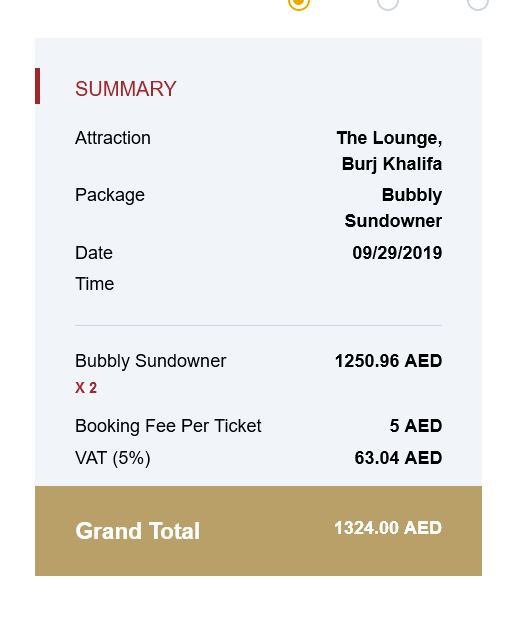
1324 AED roughly translates into 325 Euros. Not exactly cheap but… one also needs to get there.

Good thing I haven’t bought the tickets for the Lounge yet… I must reschedule…

On the other hand, does any of this make any sense for any of you?

Five hours of traveling over the clouds at almost 1000 kms per hour costs the same as spending an hour and half in a bar half a mile up in the sky? OK, Wizz Air is a low cost company, you have to pay extra if you fancy any refreshments… but still….

I’m not at all sure this trip would do anything good to my depression.

Let me put my feet back on the ground first!