Pe vremea lui Ceasca erau cate unii care sustineau sus si tare ca:

– el nu era chiar atat de rau, coana Leana ar fi fost cea responsabila de toate porcariile care ni se intamplau si ca

– oricum el nu stia tot ce se intampla cu adevarat pentru ca cei din jurul lui ii ascundeau realitatea si il invatau ‘la prostii’.

Dupa ce, spre stupoarea imensei majoritati a ‘analistilor’, Iohannis a fost ales presedinte al Romaniei a inceput sa circule teza ca nu Ponta ar fi fost de vina pentru ‘infrangerea’ suferita ci strategii sai de campanie impreuna cu consilierii pe care acesta i-a avut la dispozitie.

Cei care sustin acest mod de a vedea lucrurile comit o dubla eroare.

In primul rand alegerile nu se castiga si nici nu se pierd. Cel mai potrivit, sau mai bine spus cel despre care majoritatea alegatorilor cred ca este cel mai potrivit dintre toti candidatii, este ales sa indeplineasca o functie pentru urmatoarea perioada de timp. A interpreta alegerile in termeni de castig/pierdere denota un mod de gandire mai degraba feudal decat democratic. Alegerea intr-o functie publica poate fi inteleasa ca o oportunitate de a contribui cu ceva la bunul mers al societatii sau ca pe o ocazie de a linge de pe degete niste miere ramasa acolo atunci cand au fost impartite roadele stupului… Si totusi, parca e o oarecare diferenta intre a ‘nu lega gura boului care treiera” si ”cine-mparte, parte-si face”, nu?

In al doilea rand cine pe cine alege? Consilierii pe candidat sau candidatul pe consilieri? Iar daca este vorba despre un efort de echipa – a intregului partid, de exemplu – de ce ‘se’ incearca acum impartirea responsabilitatii?

‘We already know that, why are you bothering us?’

“labour-power can appear upon the market as a commodity, only if, and so far as, its possessor, the individual whose labour-power it is, offers it for sale, or sells it, as a commodity”

“labour is not a commodity”

OK, reconcile these two declarations… The first belongs to Marx himself while the second is an integral part of the 1944 Philadelphia Declaration made by the International Labor Organization… And if any of you has any doubts about the ILO thinking not being heavily tainted by Marxism please check this out: “the war against want requires to be carried on with unrelenting vigour within each nation, and by continuous and concerted international effort in which the representatives of workers and employers, enjoying equal status with those of governments, join with them in free discussion and democratic decision with a view to the promotion of the common welfare.” Not exactly the Communist Manifesto itself but too close to it for my comfort.

So is it or is it not?

No it isn’t. Not even Marx ever thought it was.

When Marx speaks of labor power as a commodity he only wants to demonstrate the need for the worker to be free in order for the system to function. For him this is the difference between feudalism – when the peasant (the worker of those times) was heavily dependent on the land owner – and capitalism – where the possesor of the labour power is free to sell ‘his commodity’ to the higher bider – is the existence of the free market where commodities – including ‘labour power’, which is traded as if it was a commodity – are exchanged. And the fact that the market is free also determines individual freedom of both the worker and the capitalist, seller and buyer of the labour power.

But this trading of labour power as if it was a commodity doesn’t transform it into a real commodity.

In fact labour is more a form of communication than anything else.
By labouring the worker transforms something into something else, usually in a way that is not so easily reproduced, not even for low skilled jobs. Had it been possible to automate the working process we would have used exclusively robots or morons. Do you really think a robot or a moron could flip burghers at McDonald’s? Are you sure you’d like that to happen?

Confused?
It’s not that complicated. Marx had an insight – that human history is nothing but the story of the individual man enjoing more and more autonomy – and then blew it. He took it upon himself not only to speed up the history of the mankind but also to lead us (even against our will) where he thought that we should finally arrive (communism). Rather arrogant, don’t you thing?
In time that arrogance seems to have mellowed somewhat (or became more conceited?) but it is still very much alive: ‘the war against want requires to be carried…to the promotion of the common welfare’….

What is that ‘the common welfare’? Can something like that ever be determined? Even in a ‘democratic’ way?!?

Had Marx refrained himself at studying the effects of increased individual autonomy on the workings of the human society he would have been considered the undisputed thinker of the second millennium and we’d have been sparred from witnessing (or experiencing) the horrors of communism…  I know, I know, counter-factual history is not acceptable… just saying…

Quite a popular mantra nowadays, don’t you think?

Whenever somebody tosses you a problem without also giving you the tools to fix it and you dare ask for instructions about how to fulfill your new task, you’ll inevitably get this very helpful ‘advice’… And most often it’s your boss who does this, right?

So?

Ever tried Google-ing it?  Wikipedia has, of course, an extensive entry about this notion. Lifehack.org has a decent list of 11 to do-s on this topic, only many of them are things you’d better do in advance…

But what can a man do in a hurry?

First of all stop searching desperately for a solution.
Most of us entertain the idea that the human brain is a well honed tool that only needs to be pointed at the target, fed the pertinent information and, presto, it will provide a solution if pressed/enticed hard enough.
The problem is that something inside that tool (part of our subconscious) has been conditioned during our formative years to stay inside a set of limitations/comfort zone. Don’t do this, don’t touch that, don’t lie…

While staying inside the rules is, usually, a very helpful rule of thumb – specially when it comes to survival situations where you don’t have time to consider the matter – sometimes you really need to do exactly the opposite. Drinking your own piss, for instance.

Whoa! Another quack… I’m out of here!
Hold your horses and keep on reading. Or, even better, click on the highlighted link and find out about how a guy saved himself by simultaneously braking two taboos. Not only the one about drinking your own urine but also the one about ‘not hurting yourself’.

And by reading that article you’ll also understand a lot about the inner workings of the human mind.

So, what do we have there?
A guy wants to convince us that drinking pee is wrong for us. To do this he needs to grab our attention so he brings in Aaron Ralston, a well know character who had his hand pinned down by a fallen boulder, waited awhile to be saved, drunk his own urine during some of that time and, finally, when he got tired of the entire situation, cut himself free, leaving behind his right palm.
Do I still have your attention? My post is about thinking out of the box and I’m trying to illustrate my point by using an article about how bad it is to drink urine, which uses as an attention grabber the story of a guy who did drink his own piss and cut his hand in order to free himself…

A box in a box which lies inside another box… Yep. that’s it, you got it.

The first thing you need to do when having a hard time trying to find a solution is to understand that no matter what you think about your current situation you ARE in a box. In fact not in only one box but deep inside the bowels of a regular Matryoshka.

matryoshka

Feeling desperate? That’s OK. Now that you don’t have anything more to loose than your shackles you’ll have an easier time.

Being ‘inside’ a box is not that bad. The point is that you need to be aware of this fact and to choose yourself which box is the right one for you instead of allowing some ‘strangers’ to box you where ever they want you to be.

So all that is left to be done is to look around, identify the walls of the box you are currently in, the limitations imposed upon you by those walls and how those limitations might prevent you from solving your problem. Finally, look for a way to accede into the wider box. Don’t be afraid nor dream that you’ll ever get out into the open, the walls I’m speaking about are constantly being build by our very own minds.

And this is good. Out there there is no order we can speak of. It’s the Unknown and we are rightfully afraid of it. That’s why we conquer any new ground piece by piece, precisely by building a wall immediately after we have a glimpse of understanding about something.  Usually this process takes place unnoticed by our consciousness. We have a moment of grace, the old wall becomes transparent, we see something behind it and we imediately build another wall a little further. Both to protect the new acquired knowledge and to defend the realm of the familiar from the dark forces of the unknown.

The problem with this process is that most of the time the walls are opaque. Not only the exterior one, most of the interior ones stay opaque for most of us even after they have been breached numerous times. And much of their opaqueness come from nothing else but our own fright.

The Ancient Greeks divided the world in two parts. The Cosmos, which had a certain structure and was governed by rules, and the Chaos, the  frightful rest. The separation between these two places, Cosmos and Chaos, was nothing but one of the walls I keep mentioning and the Greeks never dared look behind it so they didn’t have to face any of the monsters created by their own imagination and set free to roam the Chaos. We, despite our modern belief in science, are no better than they were. Still afraid we wait, wriggling our hands, behind the protection walls we have erected to protect our inquisitive minds from straying into the unknown.

So, next time you feel like taking an exploratory trip into the unknown, start by identifying the walls around you. Both to understand what you have to overcome and to find out where your fall back positions are.

I came across this extremely interesting article about Hitler being a socialist.

After making his point, impeccably, Daniel Hannan – the author – ends up with: “My beef with many (not all) Leftists is a simpler one. By refusing to return the compliment, by assuming a moral superiority, they make political dialogue almost impossible. Using the soubriquet “Right-wing” to mean “something undesirable” is a small but important example.”

To me this article is nothing but another reminder that the the only reasonable alternative to any extremism is the living center, not the dead opposite extremism.

Every time that the functional equilibrium between the content (because of their affluence, carelessness or both) and the strugglers (people who are on a constant quest for new solutions, irrespective of their motivation) has been breached things tended to become rather ugly before coming back towards normalcy.
Just compare how people around the Mediterranean sea used to live during the four centuries straddling AD 1 with what happened during the next millennium, otherwise known as the Dark Ages.
Why? Just because the Roman emperors used ‘panem et circensis’ as their main political concept and the population obliged. Until things went so far that the whole empire failed abysmally…
Same things happened before the French Revolution and before Lenin and Hitler came to power in Russia and Germany, respectively. Nowadays it is currently happening in Russia and the huge gap between the oligarchs and the modern muzhiks is the sole explanation I need for how come Putin has such a stronghold on the Russian people – he is keeping both categories happy by feeding their imagination with dreams about the Greater Russia and their bellies full with the money he gets from selling oil and natural gas.
For people on both sides of the political spectrum to restart a real dialogue all of them need to understand that the other side has legitimate concerns too.
Nowadays most on the left insist on ‘equality’ while most on the right speak of nothing but ‘individual freedom’. And both of them blame the state. The left accuses the government for not doing enough to promote the sacrosanct ‘equality’ while the right blames the state for infringing on the individual’s right to do whatever it wants…  As if equality (of chances) is in anyway different from individual freedom… As if authoritarianism could exist without the guys at the top enjoying a lot  more freedom than those at the bottom of the social ladder… As if functional social order could be maintained without people cooperating among themselves based on mutual respect, said cooperation  having evolved through time and currently reaching the modern form known as “the democratic state”…
I agree with concerned people on the both sides of the divide that the state could, and has indeed in more than one occasions, represent an extremely powerful repression tool in the hands of callous political operators but the answer to this is to make sure that the democratic mechanisms work smoothly, not to thoroughly dismantle the state itself….  Precisely because a skeleton state is a lot more easily highjacked by the ‘political thugs’ than one which has respected and balanced (hence functional) institutions in the right places.
Now please allow me to end my post by extending the invitation made by Daniel Hannan and urge you, all of you, to stop assuming ‘moral superiority’ based exclusively on ideological motives. Ideology is fine but we should never forget that it is nothing but a tool and it is us who do things and are responsible for both our deeds and our fate.
If ideology is diverse enough as to help us see how complex the world really is then we are better off because of it. If, instead, we use our diverse ideologies as filters to shun whatever ‘the others’ are trying to tell us… then it’s curtains for all of us, together at last… but not in the right place.
PS
To read the article – it is brilliant – you can either click on the yellow highlight near the top of my post or here: http://blogs.telegraph.co.uk/news/danielhannan/100260720/whenever-you-mention-fascisms-socialist-roots-left-wingers-become-incandescent-why/.

Sometimes things (thoughts) happen ‘under the radar’.
There is a lot of talk about people not being as rational as they think they are. Soon we’ll learn to accept that we are not even as conscious of our thinking process as we presume to be.
The same kind of mental ‘ingrained’ habits are responsible for many men (and women) not accepting, deep in their hearts/minds, that men and women are ‘equal’ (I’d rather use equivalent instead of equal but this is another matter)

http://www.chookooloonks.com/blog/affected

Am cautat ceva pe goagal si prima pagina ‘sugerata’ a fost una de pe Jurnalul.ro
Am terminat de citit despre subiectul care ma interesa si mi-a sarit in ochi: “Dupa ce vazi asta nu mai pui niciodata gura pe o saorma”

“Ia ma, ce-or mai fi descoperit astia?!?”

“Șaorma, cu de toate, visul oricărui român înfometat, prea grăbit sau cu prea puțin bani în buzunar pentru a-și permite o masă adevărată la restaurant. Condițiile de igienă din momentul preparării celui mai popular fel de mâncare al românilor, nu-s întotdeauna punctul forte al celor care o vând. Dar mai contează asta? Poate că imaginile de mai jos vă vor convinge totuși că șaorma nu e chiar o mâncare atât de sănătoasă, mai ales având în vedere cu cine au parte de a împărți această plăcere!”

Ce intelegeti de aici? Ca foarte multi romani infometati, grabiti si/sau saraci mananca saorma-le numai ca acestea nu sunt preparate intotdeauna in conditii igienice, nu? Si ca lucrurile astea se petrec aici, in Romania, corect?

Ca suport pentru asertiunile facute in articol a fost atasat un clip video: un soarece ‘agitandu-se in extaz’ pe o ‘halca’ de carne care isi astepta clientii ‘infipta’ intr-o ‘masina de saorma’. Extrem de scarbos, nu?

O singura problema. Clipul este luat de pe Youtube si nu exista nici un fel de motiv sa credem ca ar fi fost filmat in filmat in Romania….

Cu alte cuvinte ‘noi astia care am scris articolul, credem ca o mare parte dintre voi, cititorii nostri, sunteti atat de tampiti incat sa nu mai mancati vreodata saorma si asta doar pentru ca ati aflat din ziarul nostru ca undeva pe glob un soarece ‘s-a ratacit’ intr-un aparat de facut saorma.
E bine de stiut…

Iar partea cea mai hazlie abia acum incepe! Sub articolul cu saorma-ua era un teaser intitulat “Desperado dupa Like-uri, Fabuloasa poveste a romanului Tony Poptamas …” Curios fiind sa aflu care e treaba cu vestitul Tony m-am apucat de citit. Dupa doar cateva randuri mi-a sarit in ochi ca cel care l-a scris este extrem de invidios pe notorietatea de care se bucura Poptamas si, in acelasi timp, ca nu a reusit sa inteleaga diferenta dintre ce publica Poptamas pe Facebook – subiecte ‘umane’, cateodata facile dar niciodata de prost gust – si presa tabloida care nu se da in laturi de la nimic pentru a momi cititorii sa dea click pe cate o pagina. Iar cuvantul cheie din aceasta fraza este ‘laturi’.

Oare ziarele de genul asta nu au ‘proprietari’? Care sa inteleaga odata ca ‘foile’ de soarta carora se ocupa devin din ce in ce mai irelevante?

layered smoke screens

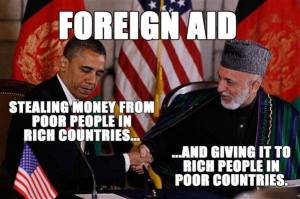
This post is not about Foreign aid per se but rather about how a generous idea becomes thwarted in the hands of some callous people who are left to their own devices by the public’s initial lassitude.
This is also about how the public’s justified frustration (after they had realized what was going on behind their backs) is misguided by the same kind of callous people like the ones who orchestrated the shenanigans in the first place.

“România încheie epoca Băsescu cu un PIB dublu în termeni nominali şi cu 25% mai mare în termeni reali şi cu 430 de kilometri de autostradă în plus”

Eu unul nu mai inteleg nimic.
Din textul articolului rezulta ca ‘e de bine’. O serie intreaga de laude insotite si de cateva ‘bemoluri’, ca sa nu poata spune ‘rauvoitorii’ (adica eu, rasete in surdina) ca textul ar fi prea laudativ.

Pe de alta parte titlul spune totul. 43 de km de autostrada pe an !!! si 25% crestere in termeni reali a PIB-ului in aceiasi perioada. Pai si daca faceam un depozit la banca tot ieseam mai bine!

Sau poate ca toata chestia o fi la misto?

“… am fost uimiţi când am citit lista posibililor dumneavoastră colaboratori. Până acum nu aţi dat nici o dezminţire în privinţa lor.”

Deci o gasca de intelectuali ‘furiosi” se aduna si protesteaza, ‘proletar’ si vehement, pentru ca cineva nu dezminte, suficient de repede pentru gustul lor, o lista care nici macar nu a fost publicata de persoana in cauza.

Aha!

Sincer sa fiu n-am citit lista aia asa ca nu ma pot pronunta ‘pe fond’. Si totusi… Deplangem modul in care informatii cateodata extrem de personale sunt sifonate ‘pe surse’ din dosare aflate pe birourile procurorilor… stilul extrem de bulevardier folosit de un numar poate prea mare de jurnalisti… si dupa aceea ne apucam sa publicam scrisori deschise pentru ca cineva – OK, CINEVA – nu dezminte suficient de repede un zvon si pentru ca numele soptite pe la colturi nu sunt pe placul nostru?

N-ar fi fost cazul ca inainte de a publica scrisoarea sa i-o fi trimis, discret, persoanei in cauza, insotita de o lista cu candidati care mai de care mai potriviti pentru functia de consilier si care sa-si fi luat angajamentul ca vor ramane acolo cel putin 2 ani cu toate ca salariile sunt destul de mici? Si mai ales ca nu-si vor folosi eventualele pozitii pentru a … ? (Nu ma refer aici la primii 10, consilieri prezidentiali si de stat, ci la restul, la ‘furnicute’. De fapt, daca stau bine sa ma gandesc, nici consilierii prezidentiali nu sunt platiti chiar atat de extraordinar, 5400 de lei pe luna nu e o suma mare pentru cineva aflat intr-o asemenea pozitie)

Iar eventualele manifestari publice de indignare sa fi venit abia dupa aparitia unor informatii certe?

Istoria este facuta, in mod evident, de oameni.
Nu doar scrisa de oameni, de supravietuitorii evenimentelor, ci chiar ‘decisa’ de ei.

In cea mai mare parte a timpului istoria unei colectivitati este suma ‘vectoriala’ a deciziilor luate de fiecare dintre membrii respectivei comunitati. Si asta chiar daca in cartile de istorie ni se prezinta cu precadere vietile ‘personalitatilor istorice’.
Daca nu ma credeti ganditi-va la faptul ca avem animale domestice doar pentru ca nenumarate generatii de fermieri le-au domesticit si au contribuit la ameliorarea rasele… Sau la modul in care au fost perfectionate, in timp, arta olaritului, navigatia cu vele sau prelucrarea prin aschiere a metalelor…
De cele mai multe ori am avut de a face cu o evolutie relativ lenta, in care fiecare dintre cei in cauza au schimbat cate putin din ceea ce era deja cunoscut, chiar daca unele dintre schimbari au avut efecte dramatice. De exemplu Newton. Merele au tot cazut din copac si fara sa stie de gravitatie iar oamenii le-au tot cules de pe jos fara sa se intrebe de ce cad…
Un alt exemplu extrem de ilustrativ pentru ce vreau sa spun este George Stephenson. Da, va aduceti bine aminte, cel prezentat in cartile de istorie ca fiind marele inventator al locomotivei cu aburi. O fi fost el mare numai ca a fost doar unul dintr-un lung sir de oameni care si-au adus contributia la dezvoltarea ‘drumului de fier’. Dati un click pe numele lui si puteti afla mai multe amanunte.

Ce vreau sa spun este ca datorita activitatii inaintasilor de foarte multe ori suntem pusi in fata unor alternative destul de clare si de obicei destul de stranse. Trebuie doar un pic de prezenta de spirit, de harnicie si de cooperare din partea celor din jur. Doar cat sa ne ajutam unii pe altii in ceea ce avem de facut cat si sa nu ne lasam unii pe altii sa o luam brambura pe campii atunci cand ‘ne ia cu căpuțul’.

Si totusi… Au fost in istoria multor popoare, sau chiar a omenirii intregi, momente cu adevarat critice in care cel aflat, intamplator sau nu, in punctul cheie a avut cu adevarat ‘controlul macazului’.
Un exemplu ar fi lt.col Stanislav Petrov, rusul care a salvat omenirea de la dezastrul nuclear ce ar fi urmat sa se intample doar pentru ca o masinarie nu fusese bine reglata…

Ultimul moment de genul asta din istoria Romaniei a fost Revolutia din Decembrie ’89.
In momentul acela Ion Iliescu a avut la dispozitia sa increderea a 87% din electorat. Ar fi putut duce Romania oriunde. Ce a ales sa faca … stim cu totii… Uite asa au ajuns unii sa fie cinstiti – si din cauza asta saraci – iar altii – multi dintre ei crescuti la ‘poalele stejarului’ – sa faca naveta intre puscarie si palatele lor imbracate in marmura.

Un alt personaj, de-a dreptul tragic, care a contribuit decisiv la conturarea acelui moment istoric, a fost Corneliu Coposu. Tot respectul pentru viata sa si pentru tot ce a fost nevoit sa indure. Nu-mi pot totusi opri gandurile… ce ar fi fost oare daca acest OM ar fi ales sa nu reinventeze PNȚ-ul? Daca ar fi infiintat un partid crestin democrat curat, fara istoria – tragica dar nu fara de pata – pe care taranistii o aveau in carca din perioada interbelica? Si daca ar fi fost putin mai selectiv cu privire la cei pe care i-a primit in partid, inca din primele zile… Apropo, voi mai tineti minte vre-un taranist din anii 1990-2000? Emil Constantinescu? A venit din Alianta Civica, nu din PNȚ.
Iar dupa ce a fost ales a fost parasit de toti si lasat sa indeplineasca de unul singur toate promisiunile electorale ale intregii Conventii Democratice in timp ce membrii ei ‘de rand’ erau ocupati sa se scuipe unul pe celalalt atunci cand nu se bateau pe ciolan…

Cum ar fi aratat oare viata politica romaneasca contemporana daca Iliescu nu ar fi avut impotriva cui sa asmuta haitele de falsi mineri si daca un partid curat ar fi avut printre membrii sai fondatori o personalitate cu verticalitatea lui Corneliu Coposu? Dar poate ca verticalitatea, si nici abilitatea politica dusa pana in apropierea prestidigitatiei de care a dat dovada Iliescu, nu sunt suficiente in momente din astea…

Poate rigoarea germana? Cuplata cu maturizarea alegatorilor, intervenita intre timp si care a dus la o cu totul si cu totul alta alegere decat cea facuta in 1990?

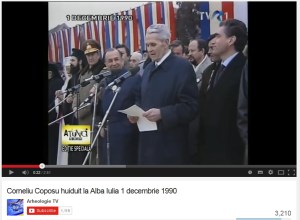
coposu huiduit la alba iulia

Efectiv mi s-a facut rau urmarind acesta marturie a acelor timpuri. Mi s-a strans stomacul ghem.
Si apoi mi-am dat seama ca oamenii aceia nu il huiduiau pe omul Corneliu Coposu ci simbolul PNȚ-ului.
“La fel ca  toata istoria interbelica, acest partid a fost “idealizat”  mult mai mult decat a fost justificat, istoric vorbind. Martiriul membrilor acestui partid, in frunte cu Iuliu Maniu şi Ion Mihalache,  care îşi vor găsi sfârşitul in închisorile comuniste, justifica poate aceasta “amintire istorica”, politic vorbind au daunat uneori intereselor tarii  si poporului roman. Din nefericire,  putini cercetatori romani s-au “aplecat” asupra documentelor din arhivele aliatilor occidentali pentru a trage aceasta concluzie.

….In perioada interbelica, PNŢ-ul a fost caracterizat prin lipsa de viziune a unor lideri ai partidului, politicianism dur, care a daunat grav intereselor Romaniei si in special acele scindarile si lupta intestina a unor grupuri de interese care au pus deseori partidul pe “butuci.”

Nu asta ar fi trebuit sa fie treaba unor lideri cu viziune? Sa inteleaga ca nu se poate incepe o viata politica cu adevarat noua noua in siajul unor hoarde de batausi ‘camuflati’ cu praf de carbune si nici incercand sa reincalzesti o ciorba despre care atat oamenii obisnuiti cat si cei cu ceva ‘constiinta istorica’ oricum nu aveau o amintire prea buna?