You’re handed a pot.
So heavy, you need to hold it with both hands.
So hot, you want to let go of it.
On your feet?!?

I’ve argued sometime ago that all living organisms act as if they were ‘aware’.
All of them are adept at keeping their insides in, most of the outside out and, most importantly, they are the ones deciding what from the outside goes in and what from their inside goes out. And when!
I call this awareness 1.0. Or life…

We congratulate ourselves over being the only creature wielding ‘self-awareness’. The ‘full fledged’ variety… according to our way of understanding it, of course. “Consciousness”, we call it.
How about ‘awareness 2.0’?

Some of us are involved, heavily, into ‘faking’ things. From building something called ‘artificial intelligence’ to using ‘technology’ to mess up other people’s minds.
They are ‘delving’ in the ‘next’ level. Knowingly but unwittingly playing god.

Life is driven by ‘natural selection’. Or ‘evolution’… as Darwin called them.
‘Happenstance’, if you look at it from another angle.
The process of life/natural selection/evolution depends on it taking place ‘individually’. While evolution is a matter regarding ‘species’ – as Darwin itself had put it – the whole process depends on the fact that each individual organism which belongs to each species is distinct/different from all other members of the same species.

‘Self-awareness’ depends on the existence of other self-aware individuals. Willing to cooperate with the ones developing it. Just as no living organism has been observed, yet, while putting itself together starting from innanimate matter, no individual has ever been observed developing self-awareness with no outside help.
Mind you, while the process involves ‘mature’ individuals helping ‘fledglings’ to ‘fly’, the process isn’t entirely ‘voluntary’. The outcome, the emerging individual consciousness, depends on the actions performed by those helping it but only inasmuch as the result of the natural evolution depends on the actions performed by the previous generation. Achieving ‘self-awareness’ is a ‘natural’ process, not a ‘deus ex machina’ machination!

Awareness 3.0, on the other hand… the ‘artificial’ kind…
In this context, I wish to remind you of what happened when we, willingly but unwittingly, have reduced the natural bio-diversity in certain areas. According to our needs and understandings…

The Green Revolution’s success also brought serious costs: intensive farming drained groundwater, degraded soil and contaminated fields with pesticides, while wheat and rice monocultures eroded biodiversity and heightened climate vulnerability, especially in Punjab and Haryana.
Swaminathan acknowledged these risks and, in the 1990s, called for an “Evergreen Revolution” – high productivity without ecological harm. He warned that future progress would rely not on fertiliser, but on conserving water, soil, and seeds.
A rare public figure, he paired data with empathy – donating much of his 1971 Ramon Magsaysay Award amount to rural scholarships and later promoting gender equality and digital literacy for farmers long before “agri-tech” was a buzzword.
Reflecting on his impact, Naveen Patnaik, former chief minister of Odisha, says: “His legacy reminds us that freedom from hunger is the greatest freedom of all.”
In Swaminathan’s life, science and compassion combined to give millions that very freedom. He died in 2023, aged 98, leaving a lasting legacy in sustainable, farmer-focused agriculture.

https://www.bbc.com/news/articles/cn7eln1pm4ro


God blessed them and said to them:
“Be fruitful and increase in number; fill the earth and subdue it.
Rule over the fish in the sea and the birds in the sky
and over every living creature that moves on the ground.”
Genesis 1:28

Engineers are trained to think first. And ‘shoot’ only after they have figured out what was going on. What was going to happen as a consequence of their enacted decision…
Handymen, the hard working people who actually prevent the ‘wheels’ from halting screechingly, are trained – self trained, mostly – to repeat what has worked in the past.

Both engineers and handymen are convinced that they know better. That each of their Weltanschauungs are more appropriate.
Both are right.
The distance between them can be construed as (one of) the depths we need to fathom. If we wish to understand ‘reality’…

An engineer myself, MSc level, I had my midlife crises rather early. Went back to school. BA in Sociology. Trying to understand ‘decision making’. Figure out what reality really is…
How to make a wise decision if you don’t know what’s going on?!?

Almost 20 years later – and a few entries in my blog – I found out that I was not alone. That more than a century ago, another guy – a former mathematician, had already broken the ‘glass-ceiling’.
While ‘process philosophy‘ is as old as philosophy itself – traceable back to Heraclitus, Panta Rhei – it was Alfred N. Whitehead who had introduced enough epistemological order into the matter to make it a ‘real’ issue.

What’s the meaning of all this?
Why haven’t we changed tack since Whitehead gave us such a powerful heads-up?
Why most of us continue as ‘handymen’?!?

Process philosophy, as I understand it – with my engineering mind, is mostly about responsibility.
Marx’s was about ‘taking charge’. Shoot first, ask questions later – if ever, was how communism had been translated into reality. Like all other dictatorial processes…
Whitehead’s – if I read him correctly – is about understanding responsibility. Not about ‘merely’ assuming it but about accepting it. About accepting the fact that it will be us – or our children – at the receiving end of the processes we initiate.

‘Uncomfortable position’ is a very lame expression for feeling alone. When trying to decide ‘what next’…
‘Maybe we should just proceed as we used to?’

The Sapir-Whorf hypothesis, following ideas put forward by Wilhelm von Humboldt, posits that the kind of language used by various categories of people have a meaningful impact upon the ways each of those categories of people think. And see the world.
The last iteration of the above hypothesis being the advent of AI. We train it using various languages. Those trained using precise languages – chess, go, ‘mathematics’ – work more or less as intended – aka ‘perfectly’ – while those trained using everyday English end up hallucinating…

https://www.jstor.org/stable/43102168: Sapir-Whorf
https://www.ibm.com/think/topics/ai-hallucinations
Moloch’s Bargain: Emergent Misalignment When LLMs Compete for Audiences:
https://arxiv.org/abs/2510.06105

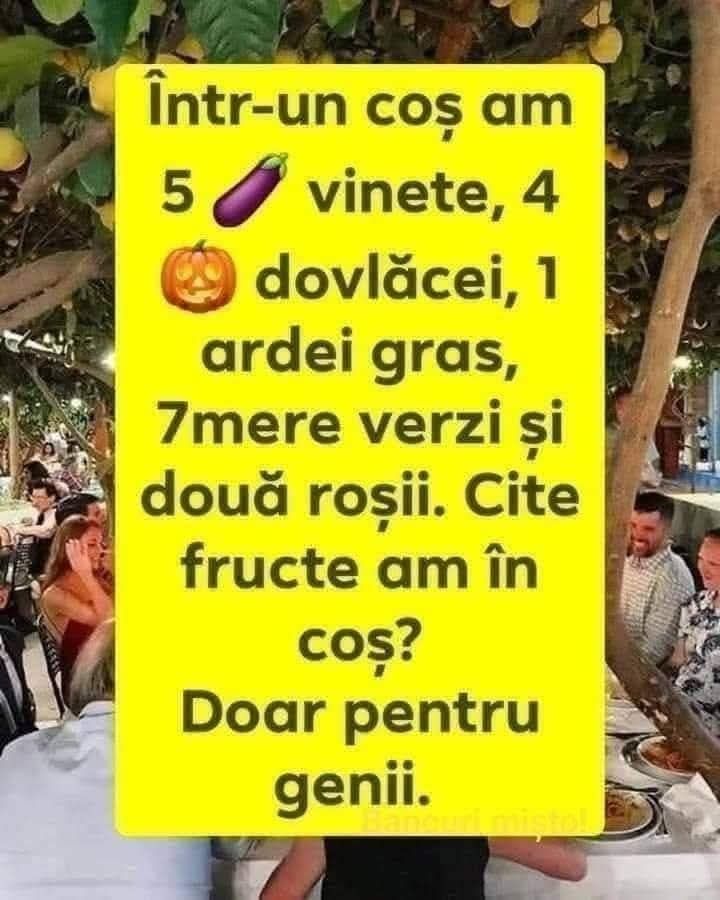
A făcut cineva un banc pe net.
Care banc deschide oportunități cât se poate de interesante.

Care este ‘lățimea de bandă’ a limbajului?
Cât de mult înțeles poate fi înghesuit într-un număr limitat de cuvinte? Și, mai ales, cât de mult din acest înțeles poate fi recunoscut ca atare și ‘recuperat’ de către cei care intră în contact? Cu acele cuvinte…

Cel care a pus la cale gluma nici măcar nu le-a menționat. Jumătate dintre comentarii fac referire la ele… la legume!
Din punct de vedere ‘logic’, are sens. Pentru a număra fructele, trebuie mai întăi să le alegem. Să vedem dacă nu cumva sunt amestecate cu alte chestii. Cu legume…

Ce sunt fructele?
Mere, pere, căpșuni, cireșe… chestii dulci, pe care le mănânci, de obicei, după masă. Ca atare, sub formă de desert sau chiar de dulceață.
Sau chestiile alea pline de semințe pe care le fac plantele după ce se scutură petalele florilor…
Ce sunt legumele?
Chestiile alea pe care ni le îndesau mamele noastre pe gât, în numele alimentației sănătoase. Bucăți din plante, proaspete sau gătite, care trebuie mestecate mult înainte de a putea fi înghițite. Și care țin, la o adică, de foame.
Sau niște plante care au o anumită particularitate. Rădăcinile lor adăpostesc niște bacterii fixatoare de azot. Și ca urmare a acestei simbioze, plantele respective – legumele – îmbogățesc pământul în care cresc. În loc să-l sărăcească.
Vechii locuitori ai Mexicului cultivau porumb amestecat cu dovleac si fasole. Dovleacul și fasolea – amandouă legume – ajutau porumbul să crească. Porumbul, la rândul lui, oferea sprijin și umbră legumelor. Toate trei îi hrăneau pe strămoșii mexicanilor.
Bunicii noștrii roteau culturile. Din când în când puneau trifoi. Care e tot o legumă. Din punct de vedere botanic…

Toate informațiile astea sunt înghesuite în doar două cuvinte. Fructe și legume.
Și acum, că toată lumea are tot felul de dispozitive conectabile la internet, informațiile astea sunt cât se poate de disponibile. Nu mai e nevoie să le fi învățat dinainte.

Ar trebui totuși să ținem minte ceva.
Să verificăm ce se ascunde în spatele cuvintelor. Care sunt, de cele mai multe ori, mai largi decât par la prima vedere!

Doar că pentru asta avem nevoie de exercițiu!
Adică avem nevoie să ne învățăm singuri…

Să nu mai punem botul!
Să ținem cont de faptul că nu toți cei care ne vorbesc au cele mai bune intenții. Cu privire la noi…
Poate ar fi bine să verificăm și ce au făcut la viața lor înainte de a le crede promisiunile!

Și ca să nu termin brusc, ‘legumă’ mai înseamnă ceva. O persoană aflată în stare ‘vegetativă’. Care trăiește dar care nu prea e ‘de față’. Din cauze obiective – a suferit un atac cerebral, de exemplu – sau subiective.
‘Nu mai sta ca o legumă!’… Nu-i mai lăsa pe alții să te păcălească!

M-am împiedicat pe internet de chestia asta.
Unii ar sesiza contribuția inteligenței artificiale care a fost însărcinată cu ‘ortografia’.
Alții ar admira abilitatea cu care a fost strecurată șopârla. 7 mere verzi și două (mere) roșii. Sau 7 mere (verzi) și două tomate roșii?!?
Horticultorii ar sări de cur în sus. Toate sunt fructe! Chiar dacă sunt fructele unor plante din categoria legumelor, vinetele, dovleceii, ardeii și roșiile sunt tot fructe. Au semințe, sunt fructe!

Pe mine mă interesează altceva.
Comentariile. Pe care le găsiți aici. Din care rezultă foarte clar cât de puțini ‘s-au prins’. Și cât de mulți se consideră suficient de ‘geniali’. Suficient de ‘geniali’ pentru a răspunde…

Se tot face vorbire, în spațiul public și pe toate canalele, despre nevoia de educație. Despre ‘analfabetism funcțional‘…
Avem aici cel mai bun exemplu de alfabetism disfuncțional. De oameni care au știut să citească dar care nu s-au prins. Lasă că n-au ținut minte de la botanică despre cum stă treaba cu fructele. Care n-au ‘reținut’ că și legumele fac fructe! Care n-au știut să ia în serios avertismentul „doar pentru genii”. Care nu s-au obosit, având la îndemână un dispozitiv conectat la internet, să caute scurt „vânata fruct sau legumă”.

De unde și diferența dintre „analfabetismul funcțional”, termen oficial folosit de cei care se vaită cu privire la cât de needucată este nația, și alfabetismul disfuncțional. Realitatea cruntă!

Analfabetul funcțional funcționează. Cel puțin conform logicii după care funcționeză limba română.
Analfabetul funcțional este un om care se descurcă, „funcționează”!!!, chiar dacă nu știe să citească!
Abia alfabetul disfuncțional este persoana care nu înțelege suficient din ce este în stare să buchisească!

Și nu e vina lui!
Alfabeții disfuncționali au ajuns așa ca urmare a procesului educațional prin care au trecut.
Proces educațional început la școală și ‘desăvârșit’ prin expunerea constantă la texte care conțin expresii precum „analfabetism funcțional”. Și alte chestii asemenea….

Că tot veni vorba.
De azi dimineață tot anunță la radio „extinderea codului roșu de ploi”.
Dacă te iei după logica exprimării, urmează să plouă pentru că au emis meteorologii codul corespunzător.
Dacă te iei după ce spun comentatorii, trebuie să dezafectăm centralele pe cărbune pentru că așa ne spune Comisia Europeană…
Băăă! Meteorologii au emis codul ala ca să ne avertizeze! Aparatele lor le spun că este o probabilitate foarte mare, aproape o certitudine, că urmează să plouă! Mult!
Tot așa și cu centralele alea. ‘Oamenii de știință’, „specialiștii”, au ajuns la concluzia că dacă mai pompăm mult bioxid de carbon în atmosferă meteorologii vor fi nevoiți să emită din ce în ce mai multe coduri din ce în ce mai roșii. De caniculă, de furtună… Așa că Uniunea Europeană ne dă șpagă să închidem centralele alea odată! Și noi nu suntem în stare să le luăm banii…

Despre asta e vorba. Aici e deosebirea dintre analfabetismul funcțional și alfabetismul disfuncțional.
Unii vorbesc fără să știe – sau fără să realizeze consecințele minciunilor pe care le înșiră – iar alții citesc și nu mai înțeleg nimic.
Realitatea fiind că n-a prea mai rămas mare lucru … neînțeles! Sau de înțeles…


Remus Ștefureac explică foarte bine de ce diasporenii români au votat diferit față de cei moldoveni.

Unii, adică românii, au plecat mai ales de la țară. Statistic vorbind. Și muncesc, în mare parte, cu cârca.
Ceilalți, adică basarabenii din Republica Moldova, au plecat mai ales din ‘oraș’. Tot statistic vorbind.

Drept pentru care românii și-au exprimat mai ales frustrarea iar basarabenii mai ales aspirațiile.
Românii sunt scârbiți de porcăriile făcute de politicieni. Iar în localitățile mai mici oamenii ‘de rând’ ‘se trag de șireturi’ cu politicienii locali. I-au tot votat, pe cei perindați la putere, pentru că nu aveau pe altcineva. Știau ce le poate pielea dar nu aveau alternativă.
Basarabenii știu. Știu că trebuie, neapărat, să intre în UE!

Cuvintele lui Remus Ștefureac pun degetul pe rană. Explică foarte clar ce este de făcut. De către politicieni.

Ai noștrii să-și facă curățenie în ogradă.
Ai lor să împingă lucrurile mai departe.

Aceleași cuvinte se constituie și într-un avertisment.
Românii, deja la adăpostul Uniunii Europene și sub umbrela NATO, au pretenții. Nu mai acceptă mizeriile pe care le-au suportat până acum.
Moldovenii se lasă încă mobilizați. Către idealul din zare.
Românii, deja ‘înăuntru’, merg cu capetele în pământ. Îi apasă grijile. Văd toate crapăturile din trotuar. Știu foarte bine cine a furat asfaltul. Cine a pus bordurile…

Putin le-a promis basarabenilor o himeră. Cuvinte goale și o mână de arginți.
AUR a instrumentalizat nemulțumirea perfect justificată a oamenilor de rând.

Putin a pierdut vremea. Pentru că a incercat să întoarcă istoria înapoi.
AUR încearcă să ‘dați-vă voi jos ca să mă urc eu’. Faptul că AUR face jocul lui Putin este important doar la nivel macro.

Pentru moldoveni era esențial să voteze așa cum au făcut-o. Țelul lor este cât se poate de clar. Pentru toată lumea.
Pentru români… Românii, care se cred la adăpost, au țeluri. Fiecare pe al său. Fiecare votant are obiectivul lui. Unii să-i dea odată jos pe ‘ăștia’, alții să…

We live in the world of our own making.
Literally!

This is a picture.
A man-made picture.
God is depicted, by Michelangelo, as being very intent while ‘man’ seems to be casual about the whole thing. Disinterested. Somewhat absent.
Let me remind you, in this context, that Michelangelo’s painting was named “The Creation of Adam”.

The world we live in, very much like Michelangelo’s painting, has been made by us.

Unlike his predecessors – those who had painted the walls of Lascaux – Michelangelo had adorned a man made structure. A ceiling.
Unlike his predecessors – who had, most likely, painted on their own volition – Michelangelo was hired, ‘commissioned’ is the PC word to be used in these circumstances, by the pope, to interpret the Genesis Creation Narrative.
Very much like his ancestors, Michelangelo was also made of flesh and bones. Had to breathe, eat, drink and painted using substances ‘borrowed’ from the ‘nature’.

The point I’m trying to make here is both simple. And very hard to swallow.

We live inside ‘something’.
We use ‘reality’, the word, to describe a portion of that ‘something’. The portion we ‘control’. We think we know about and are able to interact with.
Very few of us accept the fact that what we call ‘reality’ is ‘tainted’ by us. That we have a growing contribution in the process of ‘reality’ becoming what it is. And what it’s going to be. To become…

The ‘something’ we inhabit is far wider that what we call ‘reality’.
It’s full of everything we do not know about.
And choke full of everything we have invented and does not fit in what we call ‘reality’. Choke full of gods, spirits, ghosts, ideologies, theories, explanations, narratives and so on and so forth. ‘Metaphysics’, if you know what I mean.

‘Another atheist. I should have known better…’

“It’s full of everything we do not know about”….
I never said there is no God. It might very well be. Or not… All I have to say about this is that what we consider to be ‘our god’ exists nowhere but in our imagination. Beyond the ‘physical’ world.

‘According to what your saying, we’re involved not only in ‘reality’. We’ve also ‘constructed’ a sizeable portion of the ‘netherworld’…’

As a matter of fact, yes. We’ve not only ‘created’ what we call ‘reality’, we’ve also created the ‘netherworld’ itself. Both inside the ‘something’ which encompasses everything.

‘ “Created…” how did we ‘create’ anything?!? Least of all ‘reality’…’

Language is a very powerful tool. And naming is a very powerful feature of that tool!
By naming something, anything, we separate that something. From the rest. We actually establish a barrier, in our collective mind, between that something and the rest of whatever there might exist.
And I leave aside the fact that our language coordinated efforts have drastically altered our portion of ‘something’, our ‘reality’, since the days when Michelangelo’s ancestors, ours, used to paint the walls of the Lascaux cave.

‘Reality’ itself is a very interesting word/concept.
Until not so long ago, Gods were real. And still are, for some of us.
But even in those times, people felt the need to make the difference between the real, hands on, reality and the rest of the things they believed into existence. ‘Metaphysics‘, the word itself, was coined by Aristotle’s editor. A certain Andronicus of Rhodes, sometimes in the first century BC.
As a consequence, everything was real, in those times, but some portion of what was real existed only in people’s minds. “ta metá ta phusiká“…
1500 years later, when science was budding – again, in our Medieval forefathers minds, the ‘tables had been turned’. The scientific state of mind demands that only the factual/physical things can be deemed as belonging to ‘reality’ while all the rest, including the metaphysical realm, belongs someplace else…

Nowadays… things have become rather complicated.
Science tells us we don’t know everything. Worse still, that we’ll never know everything.
On the other hand, everyday life proves, beyond any doubt, that things which exist only in our heads/minds do shape, dramatically, our daily lives.
I’ll give you but two examples.

The church and the traffic light.

People go to the church because they believe. Most of them. Very few people visit churches, ordinary churches, out of touristic curiosity.
People ‘obey’ the traffic light because they actually believe life has been made simpler, and safer, since the traffic lights have been invented/installed. Like churches, we don’t ‘obey’ them because they are there! We install them because we’ve understood our lives have improved since their inception.

Adio dar rămân cu tine…

35 de ani.
Atât a durat.
După care au ajuns la concluzia că ‘așa nu se mai poate’.
‘Fiecare dintre noi are o viață de trăit’!

Divorțul – adică desfacerea căsătoriei – a fost simplu. Copiii – o fată – erau majori, amândoi voiau același lucru… o declarație a fost suficientă.
Partajul, în schimb…

Aveau un apartament mare, în centrul orașului. Două masini, ușor de împărțit, și niste bani. Cu atât mai ușor de împărțit. Apartamentul e suficient de mare și de bine amplasat încât din vânzarea lui să poată fi cumpărate altele două, mai mici. Doar că apartamentul are o problemă.

Problema fiind nepoata. Fata fetei lor.
Mama e în Germania. La muncă. Câștigă bine, aproape a terminat de plătit un apartament, mai mic și mai la periferie. Nepoata abia a intrat la liceu. Nu poate să stea singură și ar fi aiurea să tot facă naveta de la unul la altul.
Și cum nici unul dintre ei nu vrea să renunțe la ‘privilegiul’ de a o vedea regulat… sau poate că nici unul nu vrea să-l știe pe celălalt ‘liber ca pasărea cerului’!

Întorcând toate astea pe toate fețele… au înțeles că problemele erau în capetele lor!
Că împreună aduseseră relația în punctul în care erau.
Că de relația dintre ei mai depindeau și alte destine. În afară de ale lor.
Și că, una peste alta, le-a fost mai bine împreună. Decât fiecare separat…

Dacă ar reuși să treacă peste rănile pe care și le-au făcut de-a lungul căsătoriei!

One of the most celebrated personages in the history of the West.
He revolutionized military organization and training;
sponsored the Napoleonic Code, the prototype of later civil-law codes;
reorganized education; and established the long-lived Concordat with the papacy.
He was the moving spirit behind the intertwined series of conflicts known as the Napoleonic Wars, which had revolutionary repercussions, both militarily and politically,
in Europe as well as other parts of the world.
https://www.britannica.com/biography/Napoleon-I

Exasperated, the XIX-th century France had decided to change everything.

Please note that despite the rather inept leadership offered by the last three kings, France was the dominant European power of the moment. Economically, demographically and militarily.
Exasperated people tend to make rather poor decisions.

Napoleon Bonaparte was permitted to rise to power. To absolute power…
He yielded that power in such a way that he had angered most of his neighbors. Most of France’s neighbors… Which had banded together and defeated him. Twice.

Which was a premiere.
A bully put down by an alliance… A bunch of autocrats put off by another who decided they had enough.

The same template was used against Germany’s dictators. Both Wilhelm II and Hitler had been put down by coalitions. By people fed up with their antics.
A somewhat similar thing happened during the Cold War. A bullying regime, the Soviets, was kept in check by an informal ‘coalition of the willing’. ‘Informal’ in the sense that NATO was only the ‘tip of the iceberg. In reality, the Soviet Union had been defeated by the ‘free world’ working in concert.

Nowadays, ‘living in interesting times’, we witness another coalition taking shape.
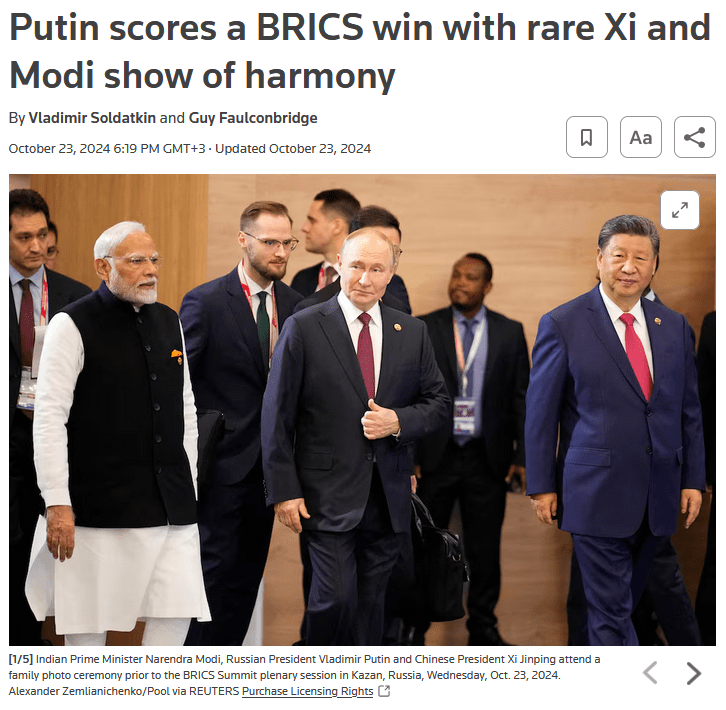
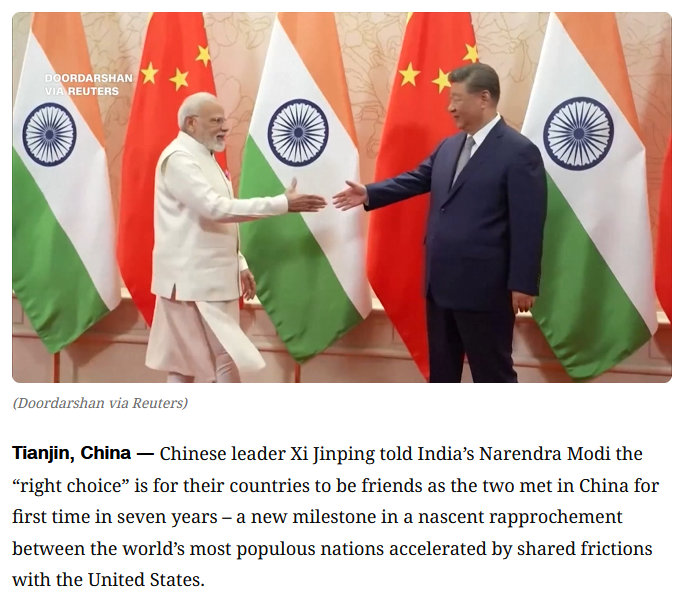
Three authoritarian leaders ‘pushed together’ by a fourth one… By the antics perpetrated by a guy pretending to uphold freedom. Absolute freedom…!

Probably the most important of the ‘solved‘ wars…

Xi needs Putin to remain in power. To keep the Western Europe focused on something else but China.
Trump needs Putin to remain in power. Otherwise the Western Union would stop begging for protection. And stop buying American built ‘defense hardware’…
Meanwhile, various ‘fragments of the world’ pursue their own interests… as perceived by their respective leaders, of course!