Archives for category: Intent

SARS-CoV 2 lock-downs have intensified the already heated discussion about ‘rights’. About “our rights”. Which have to be defended “at all costs”.

The way I see it, rights can be evaluated from two directions.
As ‘gifts’. Either gifted to us by ‘higher authorities’ or conquered for us by our ancestors.
Or as ‘procedures’. Elaborated in time by society and coined into law by our wise predecessors. Who had duly noticed that societies which respect certain rights work way better than those who don’t.

After all, societies are nothing but meta-organisms. Which, like all other organisms, function for only as long as the components interact according to certain, and very specific, rules. The ‘better’ the rules, the better the organism works.

In this sense, ‘rights’ are the code we use when interacting among ourselves. The rules we use when cooperating towards the well being of the society.

You don’t care about the society? Only about ‘your rights’?

OK, but if the society, as a whole, doesn’t work properly, who’s going to respect ‘your rights’?
Who’s going to help you when a bully will try to snatch ‘your rights’ away from you?
And bullies trying to separate you from ‘your rights’ are the most certain occurrence whenever societies cease to function properly.
Whenever the individual members of a society no longer respect each-other enough to collectively uphold their rights. Their rights.

Our rights.

Knowledge is being constantly (re)generated by us.

Everything we know, individually and collectively, has been first felt, then interpreted and finally communicated by us.

For something which has happened inside our sensorial sphere to become a piece of information we have to first notice it, then evaluate it and, finally, deem it important enough to remember. To codify it as information.

For something to make sense – whatever that means, the information we have about that something has to fit in to the rest of information we already have.

These three premises, which I hold to be self evident, lead me to the conclusion that:

Individual human beings will always have but a limited knowledge/understanding about/of the world.
A group of people are able to develop an aggregate understanding of the world which might be wider than those belonging to the individual members.
In time, a community of people will cobble together an even more complex weltanschauung. But still an incomplete one. For no other reason than the fact that the sum of a finite number of finite quantities will always be finite.

Consequences.

Since our understanding of the world is finite, determinism doesn’t make sense.
This being the reason for all authoritarian regimes/monopolistic arrangements caving in sooner rather than later. For the simple reason that those regimes/monopolies use but the brain power of those in power and waste the rest.
Our understanding of the world being finite, there is no way to demonstrate or refute God.

Which God is, anyway, nothing but a figment of our imagination.
Because of the very reasons I mentioned above.
Even if God itself would appear right now in a public square and on all the TV monitors in the world, the impression/understanding of him we would be left with after the experience would be of our own making.

Incomplete and inexact. Heavily dependent on everything else we already know.

“Friedrich Engels in a thinker’s pose
The four-meter-tall bronze sculpture of the other philosopher of communism, Friedrich Engels, is a bit smaller than the planned Marx statue in Trier. This Engels monument in his hometown, Wuppertal, was also made by a Chinese artist and offered by the government of China in 2014.”

I grew up under communist rule.
We studied marxism in school.
At some point, I was about 16, the teacher asked us about the relative merits of the different brands of materialism he had mentioned during his classes.
My answer was ‘dialectic materialism is better than all others because those who apply it into practice constantly gouge the consequences of their (political) decisions and fine tune policies accordingly’.
Some 15 years later the communist lager had imploded simply because those who were supposed to act in a dialectic manner had failed to put the principle in practice.
Coming back to the original question, ‘was Marx a determinist’, the answer is yes.
Marx’s dialectics is only a procedure. Meant to help the communists exercise the dictatorship mandated by Marx in the name of the proletariat. And dictatorships are determinist by definition.
Why mandate one if you are not convinced that things can be ruled?
For the long run and in a comprehensive manner?

Most of us consider corpses as being inert.
And those individuals who are in deeper stages of coma.

Living organisms, on the other hand, are considered as being reactive.
They drink when thirsty, eat when hungry, run when in danger…

As for behaving in a pro-active manner… things are no longer so simple.
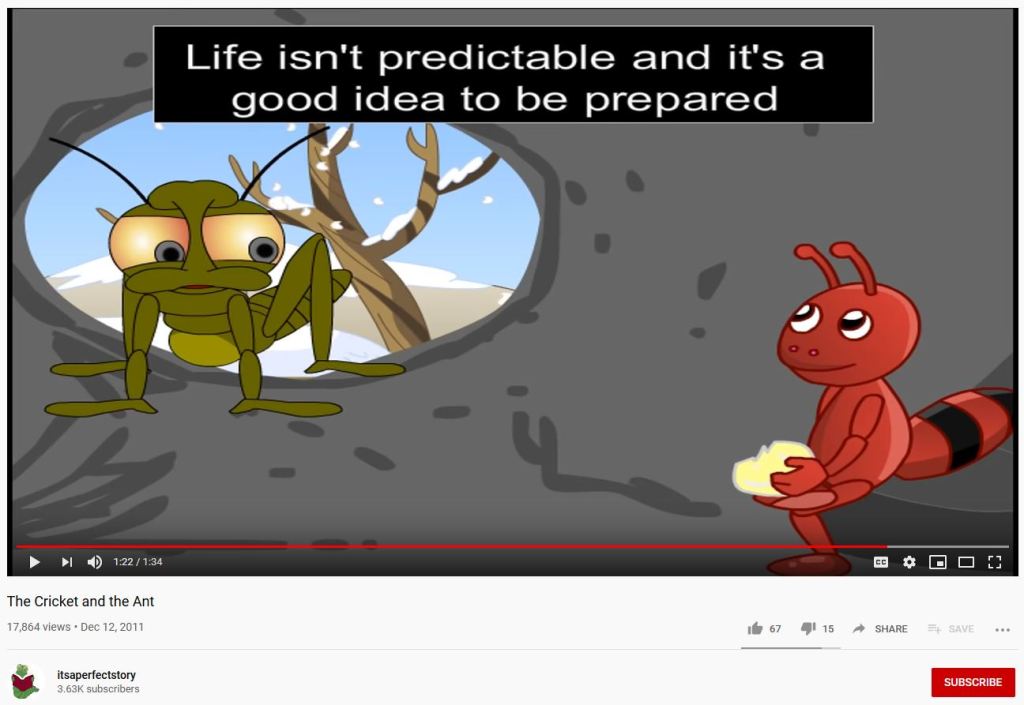
Ants, for example, are constantly praised for their behavior.

While crickets are disparaged for their recklessness …

But what about the dung beetle?
Also proactive?

They dig shelters and provide them with food for the next generation.
If this isn’t proactive behavior… I don’t know what else would qualify.

‘But … really?!? Can a beetle be ‘accused’ of behaving in a pro-active manner? An insect? Are you nuts?’

I’ll make a small break now. And point your attention to something I find very interesting.
“Life isn’t predictable and it’s a good idea to be prepared”.
Prepared for what?!? For God’s sake… remember? ‘Life isn’t predictable’!
Hello!!! The ant is hoarding food during the summer exactly because she doesn’t want to starve during the winter. She absolutely knows that winter is coming. She prepares herself because she knows what’s going to happen! Duh…

Coming back to the beetle, no, I ain’t nuts. I’m only trying to suggest that species act as if being proactive. Individual organisms do not necessarily behave in a proactive manner but species always do. Those who don’t… disappear soon enough.

Nothing existed before we came around. To notice.

They were there, alright. But didn’t existed, yet.

Most dictionaries do not discriminate between ‘being’ and ‘existing’.
But I still recall, vividly, those moments when – as a teenager, I tried to make myself remarked by the girl I fancied at that moment. More often than I’d like to remember, it was as if I didn’t existed at all.
I was standing there, making a fool of myself, yet I didn’t existed at all.

Simply because I wasn’t noticed.
By the significant one.

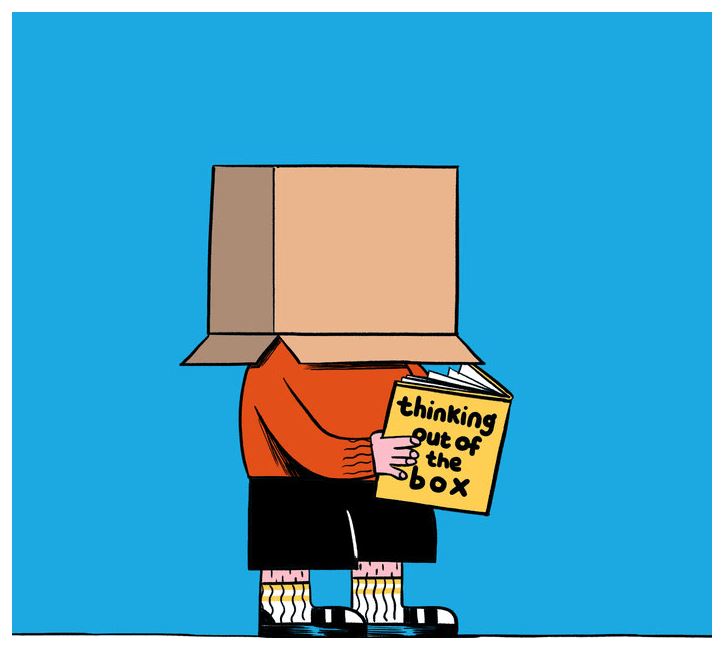
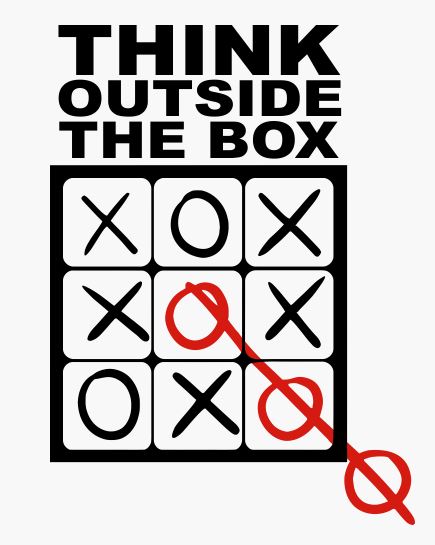
There are a lot of people who prod us to ‘think out of the box’.
And a few who dare to warn us about the perils of pushing it too far…

I’m gonna invite you to the next level.
Instead of sending your imagination to think outside the box – while the rest of you remains comfortably inside, let’s step outside ‘in person’.

Classic thinking outside the box does nothing but enlarges the box. Brings inside a portion of the outside. Moves the walls.
Bringing in a lot of additional clutter in the process.

By stepping outside, physically, you have the opportunity to actually see the problem as an ‘independent’ box. Separated from you and separated from the environment.

How about this for a change in perspective?

This way it will be easier for you to notice, and carefully examine, the links which exist between you and the problem. Between ‘the’ problem and the rest of the problems. Between the problems and the environment. The place where you have to cope with the problems.

The place where you live.

And that, my friend, is your biggest problem.
How to step out of your own life.
In order to make it better.

Covid-19 is a good eye opener.

While socially distancing to save our asses, we have the opportunity to use our brains.
And understand how many people contribute, ‘under the radar’, to our well being. To us leading a civilized life.
As civilized as we, as a community, have been able to put together.

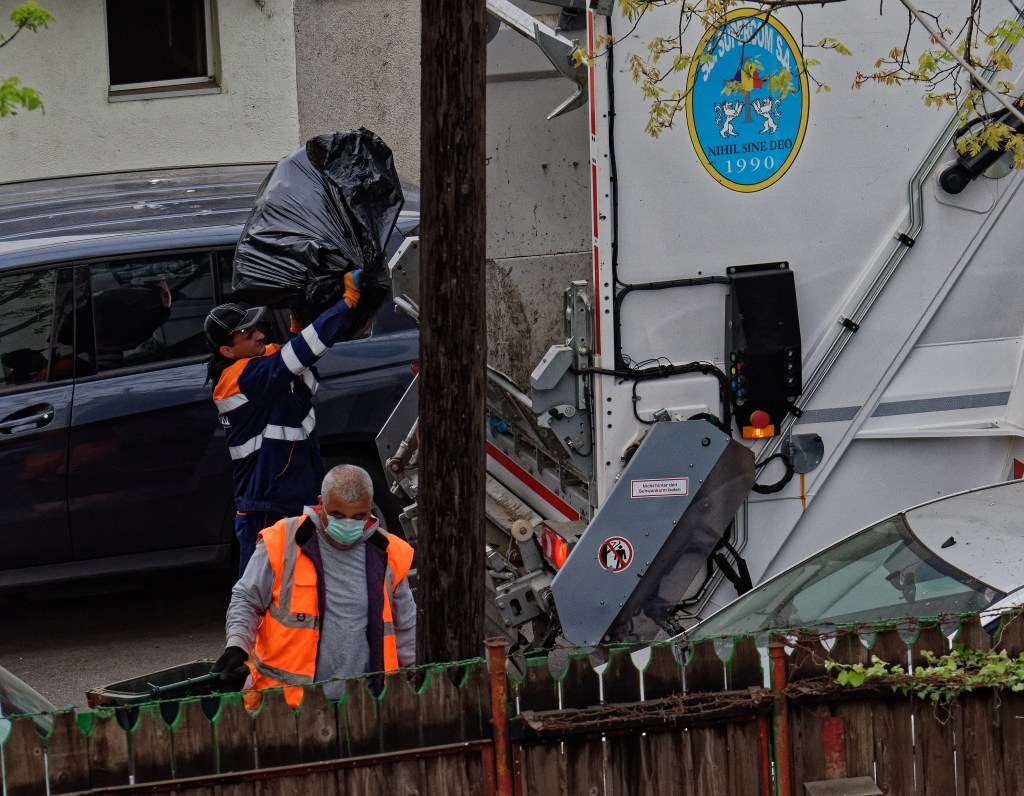
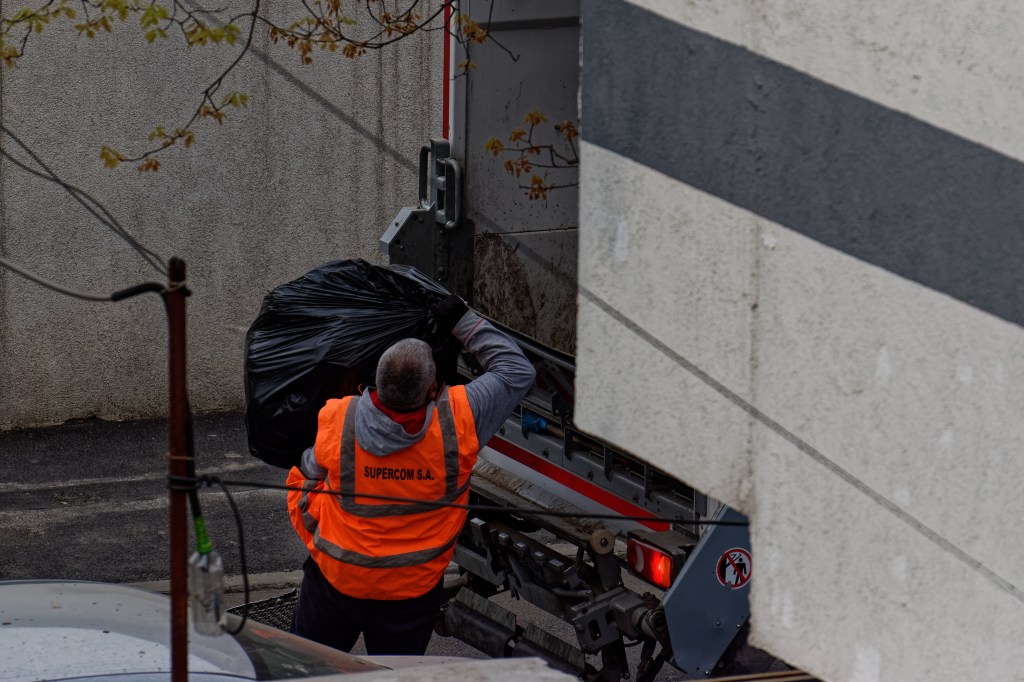
This morning I realized how much we owe to the garbage collectors.
To those who clean up our cities.
To the people who make it so that we, the socially distanced, may continue to entertain the illusion of leading a normal life.

When I was admitted to the Bucharest Polytechnic, I learned that engineers and dogs have a few things in common. An intelligent gaze and the inability to use words when trying to express themselves.
When I started daubing in photography I discovered ‘there’s more than meets the eye’.
When studying to become a mediator I learned, as if it was still necessary, that ‘truth is somewhere in the middle’.

Nowadays, we all expect Science to come forward.
To find the answer.
To break, once again, the barrier which separates us from of the unknown. To take us by the hand and deliver us from evil.

But wasn’t Art the one supposed to provide for our metaphysical needs?!?
Even though it had been Archimedes who was the first to advertise his ‘physical’ breakthrough by shouting ‘Eureka’? While running naked up and down the streets of ancient Syracuse …
It had been the artists who used to trample their boots in the sludge at the bottom of our ordinary lives in order to open our windows towards new horizons…
The ones we expect to transform mud into statues.
To morph suffering into hope!

But is there such a great difference between science and art?

‘The man in the street’ might indeed entertain the notion that art is based on inspiration while science is defined by discipline.
Only this is nothing but yet another proof that it’s high time for us to learn how much inspiration one needs when trying to find a new cure.
And how much discipline must be observed by anybody who attempts to turn their inspiration into something to be traded with another soul.

Addressing the issue from another angle, “can spring be furloughed”?

A friend of mine answered ‘yes’. ‘If there’s no one to notice it …’
Another friend said ‘no’. ‘Spring coming no matter what is the only thing which keeps my mind, and soul, whole.’
Let’s enjoy spring. Together, as it unfolds us.

Let’s not allow it to shed its petals in vain.

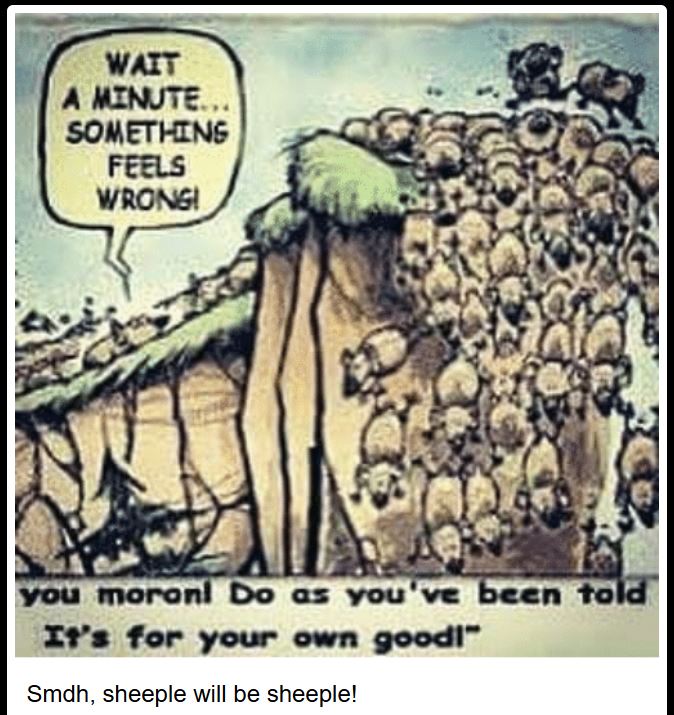
Some see here a herd of sheeple being led to disaster by:

The Democrats
The Republicans
The Government, in general
Any other con artists of their choice.

I see at least one guy who just figured out what was happening.
And who tries to share what they’ve learned!

All outcome depends on inputs.
When humans are involved, ‘intent’ can be found among inputs.

What do we want, in the present situation?

Basically, to survive! Right?

For as long as possible… as individuals…

The fact that the sum of our individual survivals results in the survival of our species/cultures is a truism. And, maybe, not so important for some of those struggling to survive as individuals.

The point I’m trying to make here being that how we attempt to survive will decisively influence the general outcome.

We might try to survive against the others.
Or we might try to survive with the others. In close – even if ‘distant’, cooperation with the other members of our community/culture/species.

And while surviving we might try to amass whatever we want. Of whatever we’ve always wanted. Doesn’t matter what ‘that’ is. Money, power, prestige… you name it.

Or we might learn something. We might turn Maslow’s Pyramid on its head.
We might use this crises as an opportunity to understand that we’re stronger together.
That cooperation among autonomous individuals generates a lot more chances of survival than attempting to pass through as individuals.
As a lonely individual or as an individual hiding in the middle of a crowd, doesn’t matter.

And we should bear in mind that surviving the crises will be only the first step.
How we do it will shape the stepping stone for how we’ll rebuild our livelihoods.