Archives for category: collective identity

The common sense definition for an inflationary situation is ‘when too much money chase an inherently limited amount of goods and services’.

The ‘limited amount of goods and services’ part is easy. We live on a finite planet, we have a limited capacity to transform whatever resources we are able to identify into usable goods and services … so…
OK, we can always identify new resources and build new capacity but we cannot do any of this ‘on the spot’. We need time. And, even more importantly, we need to put ourselves to it!

Then ‘who does the chasing’?
After all, money is ‘inert’. It doesn’t do anything if let alone in a drawer. On under the mattress…
In reality, we – buyers and investors, are the true ‘inflationary agents’.
‘But it would be completely stupid to sit on a pile of money when inflation rages! You have to buy something otherwise you’ll loose a lot of value! At least, you need to invest that money…’
This is one of the best examples of a self-fulfilling prophecy!
Indeed. Buying or investing during an inflationary bout is the reasonable thing to do! Yet we need to understand that our actions will, temporarily, exacerbate the very inflation we are trying to ‘tame’.

But where does the excess money come from?!?

Until not so long ago, the sovereign was the only one person who could bring new money to the market.
And their ability to do that was severely curtailed by the amount of bullion available for this task.
In fact, the first major inflationary episode in the second millennium had been fueled by the gold brought back to Europe by the Spanish conquistadors. Which bout of inflation brought about the first major change in the European economic thinking.
“To inspect the country’s soil with the greatest care, and not to leave the agricultural possibilities of a single corner or clod of earth unconsidered… All commodities found in a country, which cannot be used in their natural state, should be worked up within the country… Attention should be given to the population, that it may be as large as the country can support… gold and silver once in the country are under no circumstances to be taken out for any purpose… The inhabitants should make every effort to get along with their domestic products… [Foreign commodities] should be obtained not for gold or silver, but in exchange for other domestic wares… and should be imported in unfinished form, and worked up within the country… Opportunities should be sought night and day for selling the country’s superfluous goods to these foreigners in manufactured form… No importation should be allowed under any circumstances of which there is a sufficient supply of suitable quality at home.” Philip von Hornigk, 1684.

After a while, economy had become ‘complicated’ enough to demand ‘paper money’.
The amount of goods and services produced had become so large – and insufficient bullion was added to the money pool, that prices would have had to shrink if the balance was to be maintained.
Unsustainable! Nobody would have bought anything and everybody would have jealously guarded their precious money while waiting for the prices to fall further. This process is known as ‘deflation’ and is considered even more malign than a decent amount of inflation.
We have to note at this point that ‘paper money’ had been made possible by the advent of the ‘nation’.
This is a rather complicated discussion, for the present purpose it’s enough for me to mention that ‘paper money’ being accepted as ‘tender’ means that the general population has enough trust in the issuer of the bills. That the individual user of the paper money trusts/believes he is part of ‘something bigger’.
In those times, it was the issuer of paper money who practically controlled the amount of money which existed on the market.

Which brings us to the present times.

I’m sure all of you are aware of how “fractional reserve banking” works.

‘Yeah, the banks create money out of nothing!’

Wrong!
For banks to be able to ‘create’ new money, they have to extent credit!
For new money to be created in this way, somebody must walk into a bank with a business proposition.
That somebody might want to buy a house, a car or whatever else. Or that somebody might want to start a business. If that somebody convinces the bank that they is solvent or that their idea is worthy enough, then and only then new money is created!
Money doesn’t appear out of the blue! It is born out of trust. That somebody not only trusts themselves but they are convincing enough to determine the banker to extend that much needed credit!

But wait!
We’ve developed yet another mechanism which churns out money.
The stock market.
After developing the business started with the loaned money, the somebody we’ve been talking about above decides to make an IPO. To sell part of his business to investors. To monetize his initial investment.
Depending on the moment chosen for the IPO – and the economic data in the prospect, the IPO can be a huge success. For ‘somebody’ and for the early buyers. You see, each time the price of the stock goes higher, new money is created. Based more on the ‘market’s expectations’ than anything else…

‘But people who put their money on the financial markets are rational agents! They are experts in their field…’

Yeah, right…
You’re talking about the experts who had put together the collateralized debt obligations debacle…
And many others. Too many others…
Also, you’re talking about the experts who had bought those papers! Who had trusted the expertise of the first batch of ‘specialists’!

Thinkers, from Freud to Kahneman and Ariely, have proven than humans are very good at rationalizing and less so at being truly rational.
That for a market to behave in a reasonable manner, it must preserve its freedom.
That it must be free from ‘bullies’ – individual agents who muster a lot of ‘clout’, and free from any mania.

The 1637 Dutch Tulip Mania is a very good example of what might happen when a market gets obsessed with something.
When too many people – not even a majority, forget about the fact that economy (oikonomia) is about making ends meet and that getting rich may be a nice consequence but is a terrible goal.

‘OK, nice try. But what about inflation?’

We have an inherently limited amount of goods and services.
A relentless mechanism which churns out money.
Meanwhile, some of us obsess about their need to conserve the money denominated portion of their stashed away fortunes.

Inflation is nothing but another mechanism.
Which re-balances the market.
Piece-meal – adjusting for daily changes, in normal times. When things evolve ‘freely’.
Suddenly when the market – the people who ‘man’ the market, find out about ‘the dark side of the moon’.

Regardless of their ‘ignorance’, these dudes had somehow managed to put together a constitution which served well for more than 250 years.
It was under the guidance of this Constitution that the “huddled masses yearning to breathe free” have been welcomed.
It was under the guidance of this Constitution that the “homeless, tempest-tost” have found the inspiration to learn about atoms, to heal disease, to unearth – and understand, dinosaurs, to master the light-bulb witchcraft… and to build machine guns!

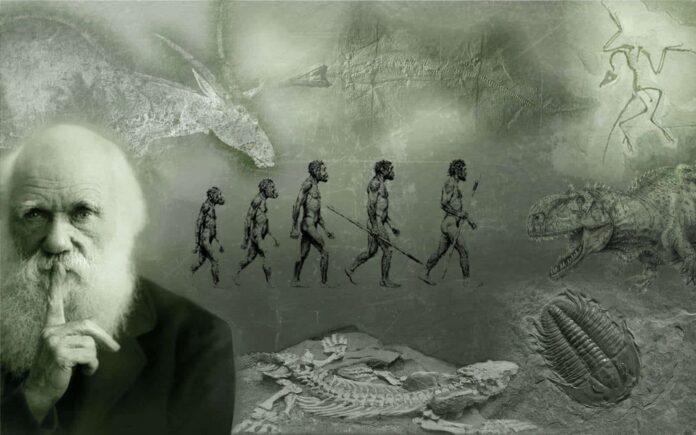
Darwin was also a ‘rich dude’. He didn’t have to ‘work’ to make ends meet. It would have been enough for him to follow in his father’s footsteps and he would have led a plentiful life.
He had chosen instead to embark in a lifelong quest for knowledge…

OK, his theory was far from perfect!
Yet his breakthrough did put us on the right track!

I could go on for ever.
There are innumerable examples of instances when people have punched above their weight. And came out with wonderful results. Not only for them but mostly for us!

For us, to stand on their shoulders.

Are we up to the task?

Are we able to appreciate the US Constitution for its true value?
Are we able to understand, once and for all, that Darwin’s “On the Origin of Species” is about way more than ‘the survival of the fittest’?

According to Ernst Mayr, evolution is about the ‘demise of the unfit‘. Which is a way more ‘inclusive’ reading of Darwin’s theory than that which ‘promotes’ the ‘survival of the fittest’.

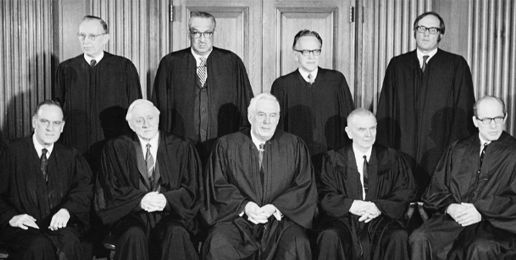
Thurgood Marshall’s ancestors had been slaves. That was how the US constitution was read in those times.
And I’m sure that at least some of his fellow Justices’ ancestors had been slave owners.

Yet under the US Constitution the members of the 1973 Scotus had found it in them to sit together and read the principles minted by the Founding Fathers in a manner wide enough to encompass the women’s right to decide about their bodies. And every individual’s right to privacy. To a privacy ‘wider’ than that expressly formulated in the Constitution and in the XIV-th Amendment.

Fast forward to 2022. To when ‘survival of the fittest’ has almost been replaced by ‘the winner takes it all’.
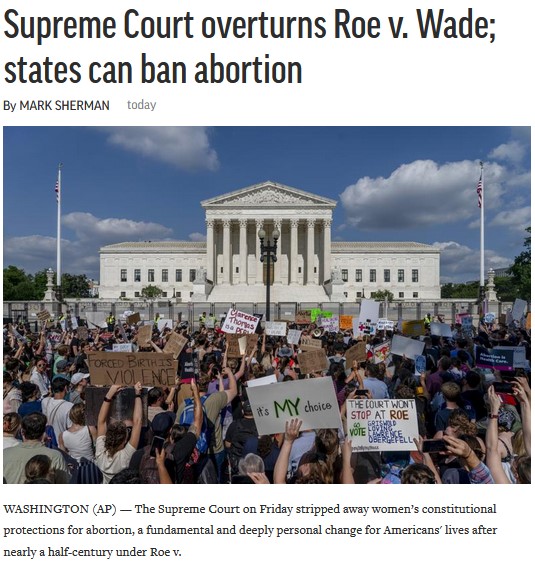
To when a far more inclusive Scotus has determined that abortion is something which should be legislated by each state. That a woman’s right to determine what happens to/with her body can be influenced by somebody else’s opinion.

Are we going backwards?
Darwin gave us Evolution. We use his theory as a theoretical justification for why some people are ‘more equal’ than the others.
The ‘rich dudes’ had given us the Constitution. As a protection against abuse. As a shield for us to use whenever the momentarily powerful attempt to rule our lives. And some of our contemporaries use it as a Trojan horse. To open the door for very oppressive pieces of legislation.

How was this possible?!?

Both sides of the ‘divide’ have lost their ‘perspective’. Their focus.
The Constitution, which used to be the mortar which has given coherence to the entire building, has become a ‘bone of contention’.
Evolution – which made us what we are today, has become a cuss.

How wise is this?

Both are equally real.

And, if you pay enough attention, the cartoon capitalists represent nothing but the reprehensible side of real life capitalism.

The ‘fat man smoking a cigar in a greasy suit while counting $$$ peeled of the sweated back of his workers’ checks on all counts. On all counts defining ‘real-life capitalism’…

Besides all which have already been said about them, they is also an entrepreneur, risking their money, working crazy hours to build their version of a business, providing work for others – at a price, helping their team – whichever that might be…

And, of course, they do make an impact!

Click here if you want to learn more about ‘depth of field‘.

2017

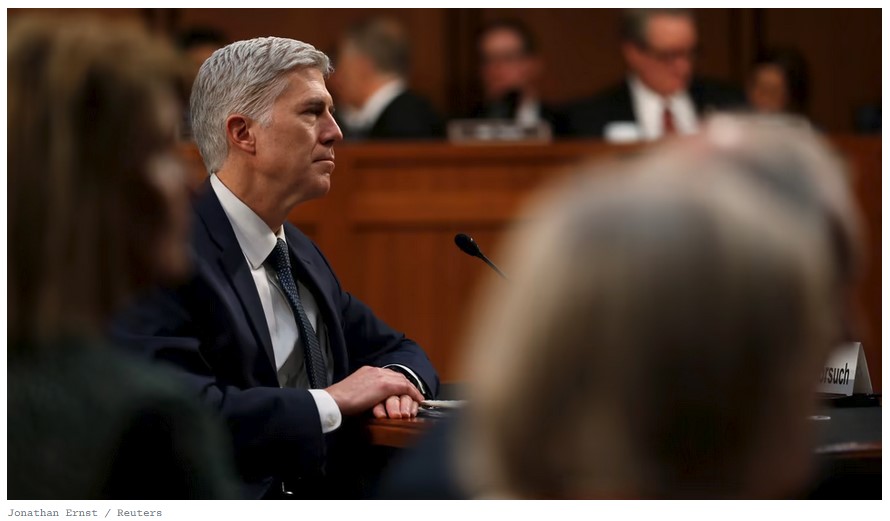
““How could you square that statement with legal abortion?” Durbin asked him. “Senator, as the book explains, the Supreme Court of the United States has held in Roe v. Wade that a fetus is not a person for purposes of the Fourteenth Amendment, and the book explains that,” Gorsuch replied.

“Do you accept that?” Durbin asked. “That’s the law of the land,” Gorsuch answered. “I accept the law of the land, senator, yes.””

2022

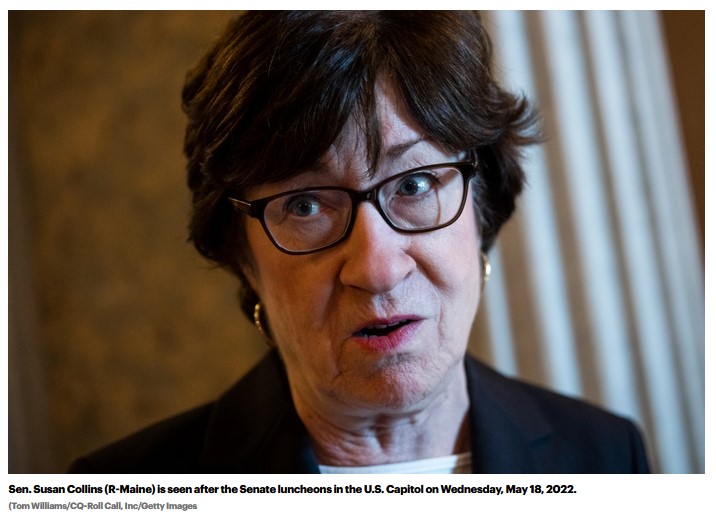
“In a statement following the Supreme Court’s decision to overturn Roe v. Wade, Sen. Collins expressed her dismay that Justices Neil Gorsuch and Brett Kavanaugh misrepresented their alleged respect for precedent and private conversations with her and in their confirmation hearings. “This decision is inconsistent with what Justices Gorsuch and Kavanaugh said in their testimony and their meetings with me, where they both were insistent on the importance of supporting long-standing precedents,” she wrote.

Rolling Stone reported last month that Collins was deliberately manipulated by Trump officials into voting for Kavanaugh despite his judicial history indicating a liability to strike down Roe. The White House correctly predicted that as long as they “let the Susan Collins-es of the world think what they needed to think and hear what they needed to hear,” as one ex-official put it, the fence-sitters would fall in line and vote to confirm Trump’s nominee.”

2016

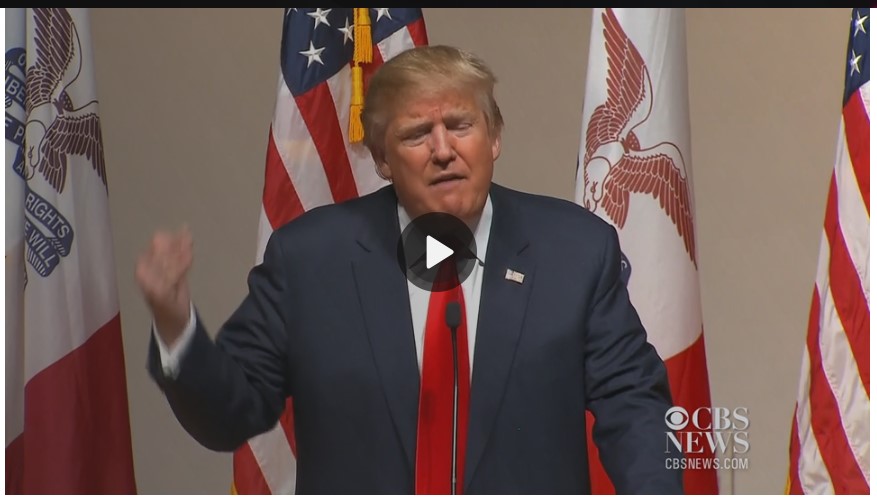
“My people are so smart — and you know what else they say about my people? The polls?” Trump asked a crowd at a Sioux Center, Iowa, rally Saturday. “I have the most loyal people — did you ever see that?”

“I could stand in the middle of Fifth Avenue and shoot somebody, and I wouldn’t lose any voters, OK?” he said, referring to the major street in New York City that cuts through Manhattan’s large commercial district. “It’s, like, incredible.”

2022

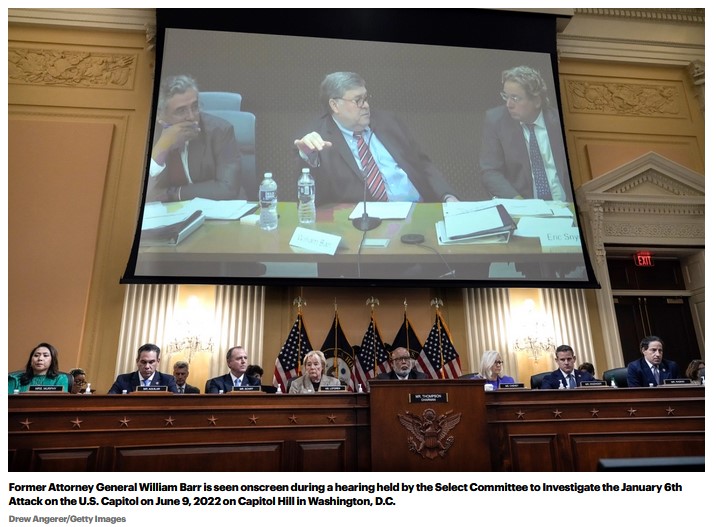
“In its first hearing, the Jan. 6 committee last week played a clip of former Attorney General Bill Barr testifying that he told former President Trump that claims the 2020 election was stolen were “bullshit.” In its second hearing, the committee on Monday played several additional minutes of Barr’s testimony, during which he described unsuccessful effort to convince Trump that the election was legitimate.”

“Barr met with Trump again on Dec. 14. “He went off on a monologue saying there was now definitive evidence of fraud through the Dominion machines,” Barr said of a Dec. 14 meeting with Trump, noting that he gave Barr a report he said proves that the election was stolen and that he would have a second term in office. Barr said the report looked “amateurish” with no real evidence to support its claims that voting machines were rigged. Barr said he was “demoralized” after looking at the report. “I thought, boy, if he really believes this stuff, he has lost contact with — he’s become detached from reality,” Barr said.”

2022-06-24

“In voters, lack of expertise would be lamentable but perhaps not so worrisome if people had some sense of how imperfect their civic knowledge is. If they did, they could repair it. But the Dunning-Kruger Effect suggests something different. It suggests that some voters, especially those facing significant distress in their life, might like some of what they hear from Trump, but they do not know enough to hold him accountable for the serious gaffes he makes. They fail to recognize those gaffes as missteps.”

“Again, the key to the Dunning-Kruger Effect is not that unknowledgeable voters are uninformed; it is that they are often misinformed—their heads filled with false data, facts and theories that can lead to misguided conclusions held with tenacious confidence and extreme partisanship, perhaps some that make them nod in agreement with Trump at his rallies.”

“….. himself also exemplifies this exact pattern, showing how the Dunning-Kruger Effect can lead to what seems an indomitable sense of certainty. All it takes is not knowing the point at which the proper application of a sensible idea turns into malpractice.”

I have no way of knowing what the creator of the meme actually wanted to convey through it.
All I know is what I make of it.

The ‘Austrian’ will eventually fall. Not only that nobody can stay in the saddle for ever but the guy uses only one hand to steer his bike. And the fact that he doesn’t use a helmet is the second proof that he doesn’t care much for safety. For his safety… At his age, he should have known better!

Hard to argue with Mises – the quintessential Austrian economist, if I remember right.
Specially since I grew up under a communist regime. Where laissez faire was absent and where the government was inept and immoral. Which regime, like all other authoritarian/totalitarian regimes in history, had crumpled under it’s own weight.

But wait!
Countries which use laissez faire had long ago invented the necessary mitigation mechanisms.
The unlucky entrepreneurs can declare bankruptcy and start all over.
The fraudulent entrepreneurs – well, many of them, go to prison.
While the inept and immoral governments get booted. Democratically!

My point being that laissez faire works better if there’s a safety net in place.
And that people should trust their government. But also keep it on a very short leash!

Wishful thinking!

Conspiracy theorists are absolutely convinced that they are the true critical thinkers…

That their critique of how things works on the face of the Earth is the only reasonable one!

Then what?
Sheeple and conspiracy theorists are nothing but the very same thing? Each of them on the other ‘side’ of the dividing mirror? The surface on which the conspiracy theory dew has been craftily etched? To blurr the vision of all those attempting to look through?

After all, what’s the difference between sheeple – those who follow the official narrative and consider the ‘alternative’ to be wrong, and the conspiracy theorists? Those who consider theirs to be the true version and the ‘official version’ a misleading lie?

Each of them exercise their right and ability to doubt. To look for alternatives. And to discard the alternatives they deem to be implausible!

Most conspiracy theories have already been proven as having been bogus?
With the current ones waiting in line?

This, I’m afraid, is the moment for me to remind you that science is wrong by definition. That all scientific theories are, by definition, falsifiable. That the scientific community is convinced that all knowledge is maybe not completely wrong but definitely incomplete!
Hence there’s a lot of room out there for conspiracy theories to thrive!

‘OK.
I can follow your arguments.
Or, more exactly, I can follow your logic….
But I still believe you’re wrong.
Conspiracy theories ARE bogus!’

Let me put it differently.
Both the official narratives and the conspiracy theories are fueled by the same human need.
By our need for consistency!
Human mind has a hard time processing cognitive dissonances. Pieces of information which contradict each-other. Hence we need a ‘script’. A meta explanation for ‘everything’. A way to discharge the tensions produced by the conflicting pieces of information which assault our attention.

‘And why some people choose to become sheeple – to buy into the official version of things, while others remain conspiracy theorists for life?’

You’ve just set aside the vast majority.
Those people who are explicitly or implicitly aware that both the official version and the conspiracy theories are at least incomplete. And sometimes promoted by people with ‘ulterior motives’.
People who have a deeper creed. Many times of a religious nature but not necessarily.
People who have too many on their heads, mostly worries, so are no longer ‘available’ for ‘petty things’.
As for conspiracy theories being bogus…
I just mentioned how science works. Whenever a theory is judged to be plausible by the peers involved, it becomes the official narrative. All other competing theories become bogus. But all those earnestly involved in the process are convinced that sooner or later the official narrative will be proven if not wrong, then at least incomplete!

‘Then what about ‘critical thinking’? Is it good or not?
And you haven’t answered my question!’

Critical thinking is a tool!
And as all other tools, it becomes good or bad only in the hands of the person who yields it!

The most important thing about critical thinking is that we must remain critical relative to our own opinions!
Open to whatever new evidence happens to cross our path!
Sometimes the evidence which comes first might be misleading. Or false. We might reach the wrong conclusion. If we cling to the already reached conclusion we might be wrong. It is absolutely understandable – admitting an error is hard, but still wrong. That’s why some people remain sheeple while others cling to their beloved conspiracy theories.

You see, the true definition for sheeple is not ‘those who believe the official version’. Far from it!
The real sheeple continue to pay lip service to the official version long after fresh evidence prove the official version has been ‘incomplete’!

Whence comes nihilism, the uncanniest of all quests?
by Lou Keep

Friedrich Nietzsche was most famously concerned with the problem of nihilism. All societies, in his view, rely on implicit value judgments. If the foundations of these are lost, he predicts terrible consequences: widespread apathy or violent, fanatical attempts to reclaim a sense of purpose, or perhaps both. We talk about values a lot, and we know they do something, but we have little idea how. Compounding this is uncertainty over their loss. Nihilism is not a choice or intellectual commitment, but a thing that comes upon you. As Nietzsche put it in 1885: ‘Nihilism stands at the door. Whence comes this uncanniest of all guests?’

Part of the answer comes from understanding how values connect to knowledge and action. In Seeing Like a State (1998), the political scientist James C Scott classifies knowledge in two ways: epistemic knowledge, which can be quantified, theorised and transmitted in abstract, and metis (from the classical Greek), which concerns knowledge gained from practical experience, such as personal relationships, traditions, habits and psychological states. Metis governs local experience: farming the family’s land, for example, rather than agronomic study. We all recognise it; it’s why we hire for experience. For instance, Jane and Martha have identical diplomas, but if Jane’s first shift was on Tuesday and Martha’s was in 1970, then Martha will have certain tricks and habits to expedite her work. Still, it’s not easy to quantify just what that is: Martha has metis, and metis can’t easily be reproduced. If it were trainable, it would have been in Jane’s training.

Scott’s genius is to compare metis to local traditions. Over a long enough time, habits and behaviours are selected for and passed down, just as evolution selects helpful traits. A successful group will institutionalise an irreducibly complex set of cultural tools that relate to its environment. Since these are metis, and not epistemic, they won’t always be obvious or quantifiable. Scott recounts dozens of examples of customs that might appear backwards, confused, unscientific – yet when they’re banned or discouraged, productivity collapses. He calls this the problem of ‘legibility’.

Epistemic theories rely on isolated, abstracted environments capable of taxonomy, but these are far removed from the dynamic, interconnected systems of nature and human culture. Metis, by contrast, develops within complex, ‘illegible’ environments, and thus works with them. But that also means its application is limited to a specific act, rather than a broader theory. Outsiders want to know why something works, but locals will explain it in a language unintelligible to them.

These practices and traditions are, of course, more than work experience. They’re used to efficiently solve political problems. In The Righteous Mind (2012), the social psychologist Jonathan Haidt describes Balinese rice farmers who needed to coordinate irrigation along a river. Since they were politically divided into small familial units – called subaks – they needed to rely on means older than governance to ensure cooperation:

The ingenious religious solution to this problem of social engineering was to place a small temple at every fork in the irrigation system. The god in each such temple united all the subaks that were downstream from it into a community that worshipped that god, thereby helping the subaks to resolve their disputes more amicably. This arrangement minimised the cheating and deception that would otherwise flourish in a zero-sum division of water. The system made it possible for thousands of farmers, spread over hundreds of square kilometres, to cooperate without the need for central government, inspectors and courts.

This still occurs. A 2017 paper by the economists Nathan Nunn of Harvard University and Raul Sanchez de la Sierra of the University of California, Berkeley mentions gri-gri, a magical powder that witchdoctors manufacture. In 2012, following a period of widespread banditry and state insecurity in the Democratic Republic of the Congo, gri-gri came to a village elder in a dream. Applying this powder made the user bulletproof, and it worked so well that neighbouring communities swiftly adopted it. The reason was simple: groups fight better than individuals, and more people will dare to fight if they believe they are bulletproof. Hence, a village using gri-gri was more likely to survive.

Gri-gri and water temples are kinds of metis, but they require belief in larger structures: respectively, magic and gods. However these structures first developed, it’s critical that they rest on more than mere faith or tradition. Shared values provide conviction for greater actions, but those values are certified by the success of those actions. Gri-gri’s success is an empirical testament to magic, and its utility inclines one towards trusting more activities by witchdoctors. Nunn and Sanchez de la Sierra point out that

many of [the spells] appear to provide individuals with a greater sense of security and confidence, which could serve to … reduce their anxiety and thus improve their performance. For example, most of the spells provide protection, whether it be from drought, disease, attacks on the village or even to harm potential thieves – and thieves also believe in their efficacy, which acts as a deterrent.

In other words: these practices and institutions serve several different roles, all bound up in one another. This intermingling exacerbates the problem of legibility.

When we discuss changing values, we often think top-down: a new and persuasive ideology that took hold for intellectual reasons. What Scott and the adoption of gri-gri suggest is the opposite: the motive force of values requires a degree of certainty that is dependent on action. It was gri-gri’s empirical demonstration that allowed it spread it to neighbouring villages, not its poetry. The inverse to this is also important: we can improve on a specific task, but other roles need time to sediment and evolve. Trade the temples for a government, and you have zero-sum bickering. Explain the game theory behind gri-gri, and no one will fight with it. The utility of a cultural institution first allows adoption, but its maintenance allows metis ample time to tinker and perfect.

If we’ve lost faith in certain values, then I doubt this was because of academic debates. The 20th century profoundly changed labour, technology and social organisation in the Western world. It’s hard to imagine that this didn’t change metis, or render older forms of metis irrelevant. While the values of metis might still be desired – or even identified with – they lack the same certainty they once had. Nothing can prove them and thus justify the higher claims. ‘Faith without works is dead,’ as the Bible said, but faith without metis is unbelievable.

A top-down view of value implies that we can simply create new reasons for living, that the ideology itself is its own proof. But if values come bottom-up, then man’s quest for meaning cannot be separated from his labour. They are the same.

[object Object]

This article was originally published at Aeon and has been republished under Creative Commons.

https://aeon.co/ideas/whence-comes-nihilism-the-uncanniest-of-all-guests

“legible” versus “illegilbe”…

After all, metis remains – for now, illegible simply because we haven’t yet found a way to ‘read’ it.

And to write it back in a teachable form!

Or, to put it in a more concise manner, we haven’t got, yet, to the bottom of it!

The key word here being we.
WE haven’t got to the…
It all boils down, again, to the limited nature of our consciousness!

This is the first time that I’ve read anything written by Daniel Kowalski. Here’s what I learned, about Kowalski, while reading his his essay about Marx.

I’m not sure that Kowalski had actually read the communist manifesto. And I’m sure that he didn’t understand much of it.

The point being that Marx described society as being composed of the ruling class – those who owned things and gave orders, the ‘doers’ – the qualified/skilled workers, those we currently describe as ‘middle class’, and the ‘underdogs’ – the lumpen-proletariat.

And if Marx hated anybody more than he hated the rulers… those people were the lumpen-proletariat! Because the lumpen-proletariat were so poor that they did everything the rulers asked them to do.

Let’s get to the ‘visionary’ part. Read carefully, the manifesto is crystal clear. Communism was not supposed to ‘dawn’ while Marx was still alive. For communism to become viable, the middle-class had to became poor. To loose their perks. To be reduced to ‘lumpen’ status. But since the middle class already had ‘conscience’ – was aware of its ‘value’, they were supposed to understand what was happening to them. And to revolt against those who were benefiting from the process.

In Marx’s vision, the impoverished middle class was supposed to become aware of its predicament, and only then to let itself be led into the new era of ‘eternal bliss’ by the “the most advanced and resolute section of the working-class parties of every country, that section which pushes forward all others; on the other hand, theoretically, they have over the great mass of the proletariat the advantage of clearly understanding the line of march, the conditions, and the ultimate general results of the proletarian movement.” Also known as ‘communists’.

I’ll end up my comment drawing your attention to the growing wave of anti-capitalist propaganda which is being ‘vented’ over the internet.

The fact that Marx’s remedy for what he saw as the scourge of capitalism – inequality, was an absolute idiocy – the “workers’ dictatorship”, doesn’t erase the fact that Marx the prophet was right after all. The middle class is being squeezed out.

The communism has failed. Because it was based on dictatorship.

The current flavor of capitalism – increasingly monopolistic, will soon follow suit. Not because its capitalist nature but because of its monopolistic – aka dictatorial, dimension.

In my book – I have experimented both communism and democratic(ish) capitalism, there’s no real difference between the communist ‘one ideology solves all problems’ and the ‘greed is good’ mantra.
In practice, all we have is a single, uni-dimensional, idea forcefully being imposed upon all the people who happen to live in a place at the given moment. ‘Money/capital is bad’, hence it has to be abolished, versus ‘money/capital is everything’, hence it has to be enshrined.
I’m not a christian but I’m fully aware that ‘you shall not make yourself an idol’ is a very wise teaching. Specially when that idol is golden.

If you really need to read the rest of the story, click on the picture above.

If you’re ready for the ‘next level’, consider this perspective:

We, the human species, have been ‘eating away’ the Earth, our home, ever since …
Now, that we’ve finally figured out we’re ‘trapped’ on a finite planet, we’re making analogies!
Conjuring the next generation to behave responsibly.

Why is this happening to me?

Because you’re alive, because of the previously made decisions and because of ‘hazard’.

You notice what’s happening around you – not necessarily to you, because you’re alive. A sensitive animal. And you try to make something out of it – to find meaning, because you are conscious. A conscious human being.

Everything around you – assuming you live in the civilized world, is man-made. The consequence of previously made decisions. The consequence of culture – string of accrued decisions, and the consequence of culturally influenced present day decisions. Decisions which are being made, by us, as we speak.

Your life, and everything in it, has been shaped by hazard.
You could have been born a slave somewhere a few centuries ago or you could have been born as the only child of Kim Il Sun.
You could have been born healthy – I hope you were, or you could have been the victim of a rare genetic abnormality.

We can’t, none of us, do anything about ‘hazard’.
We can’t change culture. But we can reinterpret it. Learn more from it than blindly following rules.
We can make better decisions.

And, for starters, we may decide to stop killing each-other. To stop hurting each-other. To stop bullying each-other.
NB. ‘Stop killing’ doesn’t mean give up defending ourselves. ‘Stop hurting’ doesn’t mean giving up.
‘Stop bullying’ doesn’t mean the bully has stopped bullying because the victim caved in.

What we really need to do is to stop all forms of aggression.