1. Sow doubt. 2. Drop a loud fact. Or two… This will simultaneously ‘water’ the previously planted seed and act as a ‘foot in the door’ for your next move. 3. ‘Miss-interpret’ another fact. 4. Mention an universal human emotion, inviting your audience to identify itself with the ‘victim’. 5. Squarely state what you want your audience to believe.
1. ‘The Soviet Union didn’t crumple under its own weight. It was dissolved by Yeltsin so that Gorbachev’s position would disappear. Leaving Yeltsin as the top dog of the day. Even if at the helm of a little smaller empire…’
2. ‘After the Cold War had ended, the West should have treated the ‘defeated’ as Germany, Italy and Japan had been treated after WWII. The West should have helped the Soviet Union to overcome the transition hurdles by extending to it an equivalent of the Marshall Plan. Instead of that, the Americans had come up with the Wolfowitz – later Bush, Doctrine.’
3. ‘Gorbatchev was told by James Baker that NATO will not move an inch eastward’
4. “…1998, Yeltsin, late Yeltsin: ‘you promised not to do this! So, how do we trust you, if you make a promise?’ “
5.1. Vladimir Putin has been created by the United States. 5.2. The so called free media in general – and New York Times in particular, cannot be trusted to provide honest information.
Pozner’s discourse is far more ‘byzantine’ than the ‘stream-lined’ version I used to illustrate what skillful propaganda looks like. Skillful maskirovka, more likely?
This post has become long enough. Let me wrap it up.
The main question here being ‘did he actually say it? Did Baker actually promised Gorbachev that “NATO will not move an inch eastward” ‘?
The Soviet Union is long gone, all the states which have been admitted into NATO are ‘in’ because they had asked themselves to join – and are now extremely glad to be protected by the famous 5th article – … while the only (frustrated) ‘agent’ who ever cried foul was Putin. Not only cried foul but eventualy acted out his frustrations!
There’s managing your resources – on your own, while trying to outsmart – out, in the open, your opponent.
And there’s team-work. An attempt to make the most of what lady-luck had put on the table by exchanging information. With your partner and in the presence of the competing team. This time only the conversation is out in the open, the resources themselves remain hidden. During the initial phase of the competition and, partially, during the end game.
Until WWI, war was more like chess than anything else. Resources were, more or less, out in the open. The soldiers had no other role but to do and die. The whole responsibility belonged to the guys who called the shots. One for each side…
WWI had ended indecisively. Hence WWII.
Each of the winning parties – there had been two victors, had learned something different from the experience. The Western allies had learned the value of cooperation while the Eastern ‘block’ had reached the conclusion that brute force trumps everything.
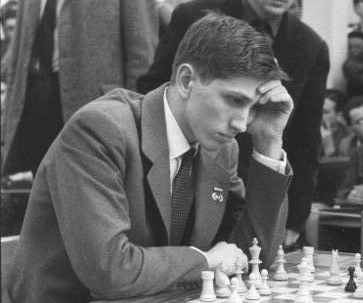
The Americans had started playing bridge with the Brits and taught the game to the rest of the world. The Russians had honed their skills at playing chess. Something they were already very good at. For a while, the Americans have tried to compete with the Russians. Remember a guy named Fischer? Bobby Fischer?
Soon, too soon, the Americans had given up. After building a computer smart enough to outsmart all human chess players…
The even worse part was that the Americans had given up bridge too! And forgot the most important lesson of WWI and WWII. That the victor needs to take care of the vanquished if they want to enjoy peace. To actually win the peace process after they had already won the war.
Which brings us to the end of the Cold War.
Communism – and practically all communist states, had crumpled under its own weight. The westerners assumed it was something they had done themselves. Declared victory. And the end of history…
Having already given up bridge, they forgot to take care of the vanquished… and allowed Russia – the party who had taken most of the blame over their shoulders, for reasons to be discussed some other time, to slide down the slope inaugurated by post WWI Germany. Did I mention that Russia was still fond of chess? Very much in love with brute force? And not very fond of respectful cooperation?
Now, that we all try to peek into the future – attempting to figure out how the current aggression ordered by Putin will end up, we need some people to learn about bridge.
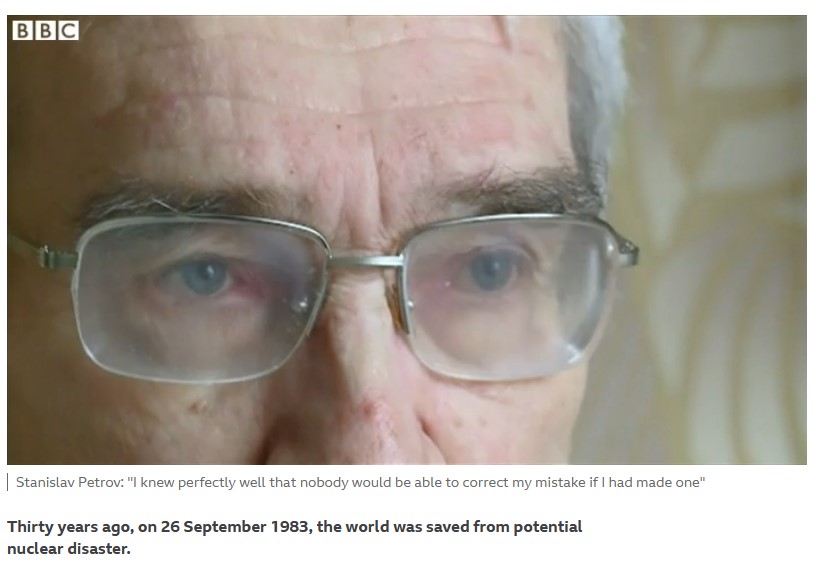
Putin cannot launch by himself the nuclear missiles he had been brandishing lately.
Now, can those around him reset the chess board on which they are but pawns into a bridge table? And invite the rest of the world into the game?
Will the rest of us understand the invitation? If, and when, it will come?
Quite a lot of people around the Internet are considering that ‘Ukraine is of little interest for the US’. Even some of the Europeans are considering that isolating Putin’s Russia from ‘SWIFT’ is a too steep price to be paid, by them, for Ukraine’s independence.
I remind them, all of them, of what Martin Niemoeller had to say on this subject.
I’ve trained to be an engineer. And practiced being one. Then I felt the need to understand. And studied sociology. That’s how I learned, the hard way, the difference between ‘hard’ science and ‘soft’ science. Between ‘bona fide’ science and ‘bogus’ science…
Those of us still convinced that soft science is bogus have yet to grasp the whole meaning of ‘science’. A collection of ‘special’ data, a ‘special’ method of gathering data and a ‘special’ state of mind.
We all know what ‘scientific data’ and ‘scientific method’ mean. But there is almost no talk about ‘scientific state of mind’. Most people consider that ‘scientific thinking’ is solelly about applying the scientific method when dealing with the ‘reality’. With what happens ‘outside’ of us. Outside of our individual consciences…
Historically, science – the concept of science, had sprung up in the minds of people concerned primarily with physics and chemistry. Hence the subsidiary concept of ‘consistency’. Data can be considered to be scientific only if it had been gathered in a ‘consistent’ manner. If by applying the same method, in the same circumstances, the end results will be the same – regardless of who had happened to be at the helm of the experiment. And a method can be considered to be scientific only if it produces the same data whenever it is applyed, in the same circumstances, by no matter whom.
I’m sure that, by now, at least some of you have figured out what I’m driving at. The main difference between ‘hard’ and ‘soft’ science is, of course, related to the relative inconsistency of the data yielded by the ‘soft’ sciences. This being the reason for which some people cannot even accept the ‘scientific’ nature of the soft sciences…
Hence the need to discuss about the ‘scientific’ ‘state of mind’… Let me start by pointing out the fact that we, people, are rationalizers. We pretend to be rational, true, but in reality we are nothing but very astute rationalizers. So astute that we are not even aware of the fact. We are so convinced of our rational nature that we are fooling ourselves.
Accepting that we are deep enough into rationalization that we need to pay special attention when trying to be objective is the first step towards attaining a scientific state of mind. The second, and just as important, step being the respect we need to extend towards our peers. Towards our fellow experimenters.
Changing tack – and approaching ‘scientific state of mind’ from another angle, I might try to describe it as a ‘work in progress’. A never ending attempt at self improvement made by someone fully aware of the fact that they’ll never get there. Yet still striving towards that goal. A never ending attempt made by somebody who knows they’ll never get ‘there’ yet they continue to encourage others to go further and further up that road. A never ending attempt made by people who know they’ll never get there yet they respectfully help each-other towards their common goal.
And now, that I’ve done my best to explain what I mean by ‘scientific state of mind’ let me delve in the main subject. The real difference between soft and hard science.
By their very nature, hard sciences are defined by the fact that an explanation constitutes a very good prediction. If you are capable of explaining the Earth rotation around the Sun you are also able to compute where the Earth will be 10 seconds from now. As well as ten centuries from now… If you are capable of explaining radio-activity you are also able to build an atomic bomb. By understanding how DNA works we have been able to come up with a mRNA vaccine against the SarsCOV-2 virus. https://www.cdc.gov/coronavirus/2019-ncov/vaccines/different-vaccines/mrna.html
The problem with soft sciences being that in their case, explanations – no matter how precise, cannot predict much. We know why a maniac behaves like one – because …, but we don’t know what a maniac will actually do. Nor when… We know that a free market works better than a monopoly but we cannot agree upon how free a market should be. Nor can we agree upon what a ‘free market’ really looks like… We know what will eventually happen to an empire – it will fall, because of ‘negative selection’, but we never know exactly when and how that will happen… nor what will occur between the establishment of the empire and its eventual demise.
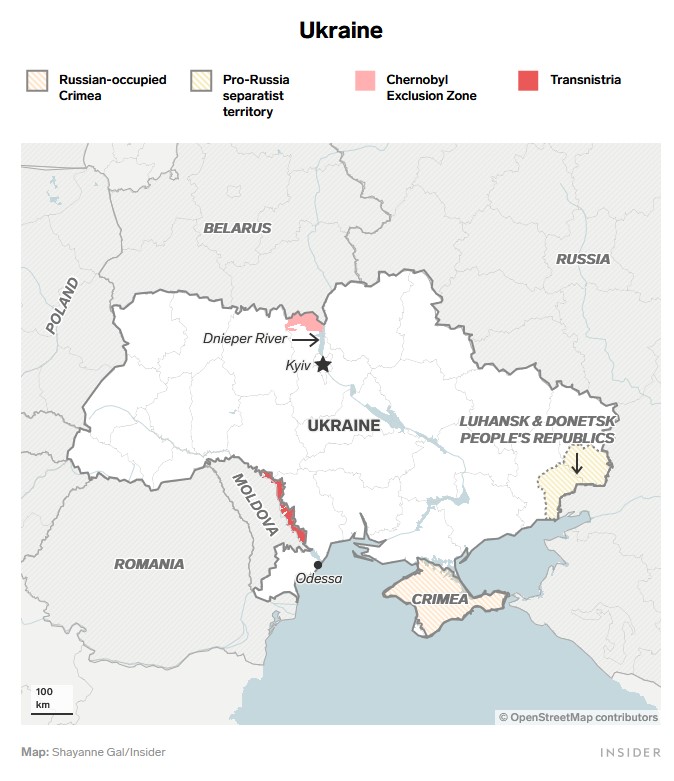
Now, that Putin had recognized Donetsk and Luhansk as independent states, I keep hearing that ‘if NATO hadn’t integrated the former socialist states in the Eastern Europe, Russia wouldn’t have occupied Crimea nor encouraged the ‘freedom fighters’ in Luhansk and Donetsk’.
NATO, and UE, are not perfect. Far from it. Yet the former USSR had been even less perfect.
What drove me to this conclusion? Well, both NATO and the EU are thriving. People and countries flock to join in. The very present conflict in and around Ukraine had been sparked by Putin’s ‘unhappiness’ with the Ukrainian people insisting in joining both NATO and the EU. Meanwhile, the USSR is no longer with us. Had collapsed, under its own weight, some 30 years ago.
The second difference between these supranational entities – NATO and the EU on one side and USSR on the other, is the ‘small’ matter of how a member got to join the club.
In NATO’s case – valid also for the EU, a prospective member state has to ask for it first and then wait to be accepted. The USSR had been organized under the ‘invitation only’ principle. If you were invited, you had to join. Regardless…
CSI, the Community of ‘Independent’ States, is organized under the same principle!
Btw 1. Did I mention that the USSR had crumbled under its own weight? By allowing self serving callous political operators to grab too much power? Too much power for their own selves as well for their country’s well being?
Could we attribute the demise of the USSR on the fact that the bolsheviks were ‘house broken’ into ‘toeing the line’ while here, in the West, some people still dare to speak up their minds?
True enough. Good people don’t need laws to tell them how to behave while the ‘cunningly willful’ amongst us will indeed, time and time again, try to circumvent the consequences of bypassing the law.
Then why? Two and a half millennia after Plato had dispensed this piece of wisdom we still have laws. Is there a possible explanation for this apparent aberration? Are we that thick-headed or there’s something else?
To settle this question – to start attempting to settle it, actually, we must first agree upon the difference between good and bad.
Ooops!
‘Everybody knows what good and bad is’ doesn’t really work, right?
In principle… maybe, but when it comes to putting principles into practice… we need guidelines! Just as ‘good fences make good neighbors‘, a clear understanding among the good about where the realm of the bad starts in earnest makes life a lot simpler. For all of us. And the more visible that line is, the simpler our life becomes.
Only this is but half of the actual explanation. Laws do make our life simpler, indeed. Unfortunately, ‘simpler’ doesn’t necessarily mean ‘better’.
As some of you already know, I’ve spent half my life under communist rule. Does ‘Ceausescu’ ring any bells with you?
Under communism, life was a lot simpler than it is now. Presumably, life was a lot simpler under any of the many flavors of authoritarian rules experienced by humanity during its history. This being the reason for no matter how horrible a dictatorial regime had been, there were always some who had regretted when that regime had fallen.
‘OK, so what’s your point? That laws, in general, might be good but the laws which impose an authoritarian regime are bad? You know that you’ve just opened a fresh can of worms, right?’
How do you determine the difference between a good law and a bad one?
There’s no such thing. No law is above good and bad. For the simple reason that we call laws are made by us. We are fallible human beings and everything we make, including our laws, is, and should continue to be, constantly improved.
‘Then you’re nothing more than a ‘closet progressive‘! I knew it! ‘Constant improvement’… yuck! Not to mention the fact that the most important Law comes from God, not from Man!’
I’ve already disclosed that I’m an agnostic. That I have no idea whether a(ny) god had anything to do with what’s happening around/with us. All I know is that all laws, including the Bible – and all other Holy Books, had been written by people. By Humans, that is.
And I also know that there are two kinds of law. ‘Natural’ – as in noticed by us, and ‘synthetic’.
While all laws are ‘artificial’ – ‘written’ by us, the natural ones had been first noticed and only then put on paper. While all laws had been written on purpose – each ‘writer’ had their own reason for doing it, the ‘synthetic’ ones had been put together with a specific goal.
While observing – and when necessary improving, the natural laws benefits all, the ‘synthetic’ ones serve only those who make it their business to impose those laws upon the rest of the community.
While observing – and, when necessary, imposing them upon SOME, improves the prospects of the entire community, designing and imposing ‘synthetic’ laws upon a community will always bring a huge amount of disturbance. Sometimes fatal for that community. Always fatal for the regime attempting it!
‘How about some examples?’
I’ll give you two natural laws and a ‘synthetic’ one.
The law of gravity. Also known as Newton’s Law of Universal Gravitation. This law didn’t need Newton to notice it. The Earth had already been orbiting the Sun for a while before Newton told us why.
‘Do not kill’. A subset of the Golden Rule, ‘Do no harm, if you can help it’. Also ‘natural’ but a lot more ‘fluid’. And, strangely enough, noticed and ‘put on paper’ way before the law of the falling objects… Just think of it! The ‘law makers’ have noticed long, long ago that the communities which follow the Golden Rule fare much better than those whose members treat each-other like dirt. Yet only a few short centuries ago somebody ‘noticed’ that things fall according to a constant rule… and bothered to make it into a law. Was ‘gravity’ too obvious? Inescapable, so why bother? While the Golden Rule worked better when enforced? When the formal rule mandated that even the rulers themselves had to obey the rule?
It’s easy to notice that the first two, the ‘natural’ ones, produce consequences regardless of people observing them or not. Meanwhile, ‘synthetic’ laws are, entirely, the figment of somebody’s imagination. And produce consequences only when/if enough people are ‘seduced’ by the perspectives of those laws being put into practice. Communist rule, for instance, could be put into practice only when enough people had been seduced by Marx’s ideal that all property should belong to the state and be managed by a ‘select’ few. Only then, after those ‘select’ few had, somehow, convinced enough followers, could Marx’s ideas be transformed into laws. And put in practice. With the already obvious consequences…
‘OK, but I still don’t get it! Is there a way to tell whether a law is good or bad before-hand? Before its consequences had become manifest?’
That’s a tall order. And you know that!
Actually, no! There’s no fire-proof method of ascertaining anything before-hand, let alone something made by us.
But there is a next best thing. The ‘natural’ laws are natural because they had been first observed. Only then written into law. And because of things proceeding in this order, whenever something changed those who had noticed the change had adapted the wording of the law to the new reality. Simply because those who had to make do with the consequences of the law being put into practice could not wait too long whenever they had noticed that there was a better way.
People have dreamed of flying since god only knows when but they had learned how to do it only after they had been told that everything is pulled to the center of the Earth. ‘An eye for an eye and a tooth for a tooth’ had been very useful. For a while… Now we use the same principle – do no harm, but we implement it in a more nuanced manner.
People have also dreamed of a fair society. And, frankly, ours is a lot fairer than that of our grand-parents. Because we have constantly improved our ‘manners’. We have not only observed ourselves while living but we’ve also done something when anything went wrong. The problem is – and it’s only one problem here, that not all things can be reversed. Some mistakes can be fully redressed, other compensated … but we’ll have to take with us the consequences of those mistakes. And the longer a mistake is allowed to happen, the more important the consequences. So. ‘Synthetic’ rules are bad not because they have been dreamed up by us. They are bad because those who promote them cannot accept the idea they might have been wrong. The really bad ‘synthetic’ rules were those who could not be changed from within!
Whenever a law maintains that things cannot happen, ever, but in the manner prescribed by that very law, that text is no longer a law. It’s a dictate! It’s dictates that we can do without, not laws. And it’s our job to make out the difference. One way or another.
Disclosure. You haven’t ‘heard’ this from me. I’ve only ’embellished’ some ideas I’ve stolen from Popper, inasmuch as I’ve understood anything from them.
Some of you will agree and some will say I’ve lost it.
First things first.
Socialism does take away liberties. One by one. Under various pretexts. I’ve learned this on my own skin.
Spending the first 30 years of your life under a communist regime teaches you a thing or two…
On the other hand, the meme above does have a certain ‘appeal’. A significant number of people had their pensions slashed, watched their savings disappear and their jobs being exported. Health care and education have become exorbitant. Racism, xenophobia and hate have again risen their ugly heads and more and more people die at the wrong end of a gun. Of a gun ‘manhandled’ by ’emotionally distressed’ persons…
What’s going on here? Why so many people’s lives are so badly ruined?
You see, “capitalism” stealing anything is a lie. A blatant lie!
Capitalism cannot steal anything!
Socialism can rob you of your rights because it actually says it will do it. Given the slightest chance, those who promote socialism will use the doctrine to ‘discipline’ their followers into a herd.
Capitalism doesn’t promote stealing! Stealing is not condoned by any capitalist ideology while concentrating all decision making in the hands of the ruling coterie is the cornerstone of socialism.
‘If capitalism doesn’t condone stealing then why an increasing number of people end up penniless while so much money gets concentrated in such a small number of hands?!?’
Why are we living in such fugazi times?
Replace “capitalism” with ‘some (fake) capitalists’ and the text above will make so much more sense!
You see, what we have here is the perfect illustration of fugazi. We are in a fucked up situation! And instead of trying to solve it, some of us attempt to ‘fake it’! And consequently make it worse…
Socialism won’t bring any respite!
Solving the current untenable situation starts with acknowledging its causes! Its real causes…
Blaming the socialists for the errors committed because too much greed had been ‘expressed’ at ‘very high levels’ doesn’t solve anything. Promising that socialism will making things right is just as malignant as blaming the socialists for the mistakes made by the greedy who have brought us where we currently are.
Only when we’ll stop faking it we’ll be able to look for solutions. For workable solutions…
Oh, I almost forgot! Don’t allow the ‘con-artists’ to convince you that social democracy is equivalent to socialism. This is a thesis put forward by the same people who maintain that “republic” is good while “democracy” is bad. And don’t allow the ‘other’ ‘con-artists’ to convince you that all wealthy people are bad and that (forced) “equality” will solve everything.
As much as I love writing, I do have to eat. And to provide for my family. Earning money takes time. If you’d like me to write more, and on a more regular basis, hit the button. Your contribution will be appreciated! Another very efficient way to help would be to share my posts.
As much as I love writing, I do have to eat. And to provide for my family. Earning money takes time. If you’d like me to write more, and on a more regular basis, hit the button. Your contribution will be appreciated!
As much as I love writing, I do have to eat. And to provide for my family. Earning money takes time. If you’d like me to write more, and on a more regular basis, hit the button. Your contribution will be appreciated!
Don’t you dare to tell me how to take care of my body! Or that I should wear those face diapers of yours and that I should accept to be immunized! According to my book, my individual right to be the sole master of my body trumps your collective right to survive a pandemic. And, by the way, this whole Covid thing is a fraud.
On the other hand, the same book I’ve already mentioned gives me the right to deny all women their right to determine what happens to their own wombs. I infer from reading that book that an unborn fetus is a person – even before it had overcome the viability threshold and despite Roe vs. Wade. The way I see it, my simple declaration – that an unborn fetus is a full blown person, is reason enough for me to consider that anybody performing an abortion – or aiding a woman to have an abortion, is committing a crime. And being witness to a crime is detrimental to my well being. To my spiritual well being, in particular. Hence whenever I learn that an abortion has happened, I’m entitled to receive damages.
“Today, our fellow citizens, our way of life, our very freedom came under attack in a series of deliberate and deadly terrorist acts.” “We will make no distinction between the terrorists who committed these acts and those who harbor them.”
Is it possible to wage war upon a concept? Is it possible to win a war against a concept?
So what are we going to do? Cave in? Only because we cannot win a war against a concept?!?
How about redefining the problem?
How about choosing an achievable goal? After all, we’ve been reasonably good at beating the terrorists themselves. And those harboring them…
Only if we had made some difference between these two! Between the terrorists and those in the middle of whom they were hiding. And continue to hide…
Let’s get back to square one.
How does terrorism work?
Some ‘agents’ determine that what they want cannot be achieved in normal ways. And choose instead to use terrorism as their tool ‘of choice’.
What do they need?
Man power, material resources, pertinent knowledge, time to organize the ‘heist’, a place to put it all together and a practical method to apply the ‘pressure’.
There are some things which are hard to control. Not impossible but hard. Material resources, for instance. A knife, or even a cutter blade, can be used for terrorist purposes. Money are also a very fungible resource.
Place is also a tricky thing. A remote ‘hamlet’ is easy to find. But transporting a terrorist ‘solution’ from a remote hamlet to a place where that ‘solution’ might produce the intended result is not so simple.
Time. The longer it takes to design a ‘solution’ and to implement it, the easier for the general public to find out what’s going on.
Pertinent knowledge. The more sophisticated the solution, the more pertinent knowledge is needed. Which knowledge comes comes attached to the man-power involved.
So. What drives a knowledgeable person to use their skills towards producing terror? Hard to say. And hard to change the mind of a person who has already become a terrorist. Either a person who had spent years descending into the ‘mood’ or somebody who had been convinced on the spur of the moment to ‘participate’ as a suicidal driver. Explosive vest wearer. Or knife wielder.
The above mentioned motives make it hard, almost impossibly hard, to prevent terrorist acts committed by deranged persons, specially when they act alone. Or as a very small ‘team’.
But when we the ‘solution’ has a certain degree of sophistication – terrorist plots, that is, there are many kinds of people involved. Initiators/backers, operatives, facilitators and ‘neighbors’.
It’s hard, almost impossible to change the minds of a determined ‘initiator’. Or of some of the ‘operatives’. The initiators tend to be sociopaths while many of the operators, specially those committing suicide, must be ‘hopeless persons’. Not only clinically depressed but outright hopeless.
But the rest?
Why would anybody back a terrorist plot if there’s another way of achieving a goal? There’s always the sociopathic explanation but not all ‘backers’ are sociopaths. Not in an obvious manner, anyway…
Which brings us to the facilitators and the neighbors.
We have, broadly, two situations. When the terrorists want to inflict pain in the middle of the enemy territory or when the terrorists want to gain control over a territory.
In 2015 ten terrorists have killed some 130 people in Paris. Wounded a couple of hundreds. And wrecked the lives of many others. Nine of them had been killed by the law enforcement agencies. On the spot or during the next few days. Only one of the assailants has survived and had been apprehended later. The process has just begun. Besides the surviving shooter there are other 19 other people against which have been brought charges. “some are accused of helping the gang without necessarily knowing the extent of the conspiracy.“ Many of the accused, including some of the assailants, have lived – at least for a while, in Molenbeek, Belgium. A suburban commune where quite a high percentage of the population feel ‘there’s no way out’.
Are you familiar with the studies which maintain that both people and mice prefer social interaction to using drugs? Statistically speaking, of course. A very few individuals get hooked and cannot give up while the vast majority stop using drugs when conditions return to normal. When the American soldiers had come back from the VietNam war, for instance.
Same thing is valid with ‘terrorism’. Along with other kinds of fundamentalism.
When too many members of a community become despondent some can be ‘converted’, many others will help – even if not engage directly, while the majority will turn a blind eye to what’s happening in their middle.
That’s why the terrorists who had wreaked havoc in Paris had been able to organize themselves in Molenbeek without the police finding out what was going on. That’s why the Americans had not been able to wipe out the Taliban. And why the Taliban have grabbed back power so quickly once the Americans had decided to pull back. Because not enough of those living there – in both Molenbeek and Afghanistan, were hopeful about their future.
Because not enough of the Afghani hearts and minds have been won over.
I’m afraid that making “no distinction between the terrorists who committed these acts and those who harbor them” wasn’t helpful. On the contrary…
And please, please, click the first picture and read the article.









 nicichiarasa