Archives for category: 1989

„Abrutizați de muncă.”
„Lipsiți de spirit critic.”
„E important și când votezi din scârbă
să nu te îndrepți spre un pericol potențial.”

Comentariile de mai sus au fost adunate, de mine, din media. Radio, internet…
Reprezintă părerea celor care nu se simt confortabil după ce Călin Georgescu a ieșit pe primul loc.

Acuma … cine este Călin Georgescu – sau, mai exact, care este imaginea lui publică – vă puteți lămuri, măcar parțial, vizionând clipul oferit de Recorder. N-am de gând să intru în amanunte.

De unde au aflat cei care au votat cu el că există un Călin Georgescu? În condițiile în care ascensiunea lui în intențiile de vot nu a fost sesizată, nu la adevărata valoare, de institutele de cercetare a opiniei publice? Nici măcar de cele serioase?

‘Adică vrei să spui că Tik-Tok e de vină pentru notorietatea lui Călin Georgescu? Care notorietate a crescut mai abitir decât faimosul Făt-Frumos?’

Vreau să spun că e mult mai ușor să dai vina pe altul.
Dacă guvernanții ar fi obținut alte rezultate – adică dacă populația ar fi fost cât de cât mulțumită de consecințele muncii lor – atunci n-ar mai fi fost atâția oameni care să voteze din scârbă.
Lăturile vehiculate în social media aproape că n-ar mai fi fost luate în considerare. Statistic vorbind.

Acesta fiind momentul să explic diferența dintre a vota ‘din scârbă’ și a vota ‘cu scârbă’.
Am votat și eu odată cu scârbă. Am făcut singura alegere raționala posibilă în acel moment – tot un tur doi al unor alegeri prezidențiale – și am pus ștampila unde n-aș fi pus-o nici în ruptul capului dacă situația ar fi fost normală. Dar nu m-am dus niciodată la vot motivat de scârbă. Întotdeauna de speranță!
Pe lumea asta sunt și oameni care nu prea votează. Nu-și pun problema, n-au timp/chef, își spun că votul lor nu contează… Dar câteodată… când le ajunge și lor cuțitul nemulțumirii la osul psihologic… se duc în cabina de vot să-și verse și ei, undeva, furia produsă de scârbă. Ajung să voteze din scârbă!
Și, cum furia nu a fost niciodată un sfetnic bun, pun și ei ștampila pe prima față cât de cât spălată care li se prezintă a nu fi fost mânjită cu politică. Nu mai au răbdare să asculte ce le spune fața aia… e suficient să vorbească calm și așezat!

Poate că a venit momentul să căutăm mai degrabă explicații pentru cum am ajuns aici. Noi, toți. Decât să dăm vina unul pe celălalt.
Pănă la urmă, situația actuală a început în 1990… au fost nu știu câte runde de alegeri de atunci încoace… la care am luat parte cu toții…
Dacă înțelegem cum am ajuns aici, avem o șansă să mergem mai departe. Dacă ne tot certăm între noi, facem jocul celui care ne vrea dezbinați. Și rămânem în continuare la statutul de pradă!

Ce este sociologia?
Și de unde a ieșit Georgescu ăsta?

Aud din toate direcțiile, ideologic vorbind, „Eu nu mă uit la televizor. Manipulează.”
20,085 de oameni au votat cu Orban. Adică au pus ștampila în pătratul din dreptul lui Ludovic Orban. Cu toate că acesta, în direct și la o oră de maximă audiență, a anunțat că se retrage din cursă și că îi va face campanie Elenei Lasconi.

Sociologia este știința care ne crează cadrul în care putem înțelege, chiar și după ce se întâmplă lucrurile, cum. Cum am ajuns ‘în găleată’.
Acu’ vreo doua zile – la RFI, „Tânăr în Europa” – un profesor – universitar, cred că de comunicare – vorbea despre un stagiu de pregătire adresat studenților. Câțiva urmează să fie specializați în training anti-fake news. Adică trăinuiți să-i învețe pe alții cum. Și trimiși în licee să le deschidă mintea elevilor de acolo.
Discuția s-a dus și către ce parere au tinerii despre lucruri. Proastă. În principal profesorul vorbea despre faptul că tinerii se simt nebăgați în seamă. ‘Neascultați’.
Soluția și vinovații?
Partidele și guvernanții. Că nu comunică destul și pe limba tinerilor.
Eu, în calitate de Gică Contra, și de inginer, am sărit în sus!

Tinerii se simt neascultați. NU se simt nemințiți!

Ce-ar fi să-i ascultați întâi?!? Înainte de a încerca să-i ‘convingeți’?

Asta au facut alde Georgescu. Au ascultat cu atenție. Ce îi roade. Pe tineri, pe bătrani, pe toți cei care au un telefon și se uită la Tik-Tok. Pe toți cei convinși deja să nu se mai uite la ‘tembelizor’. Convinși și din cauza calității execrabile a marii majorități a ‘divertismentului’ distribuit pe această cale!
După care au făurit niște mesaje în care au amestecat tot felul de adevăruri – dintre cele ‘ascultate’ – cu tot felul de ‘mângâieri’ pe cap și pe suflet. ‘O să fie pace’, ‘O să am eu grijă de voi’, lugu-lugu…
Fără adevărurile alea ascultate cu atenție și picurate înapoi cu mare cu grijă, nimeni n-ar fi dat vreo atenție părții cu lugu-lugu. Fără multă nadă de calitate nu prea poți prinde pește…
Dar cum politicienii noștri și comunicatorii lor le știu ei pe toate… cine să mai stea să asculte? Și de ce?!?

Din câte citesc eu în vorbele oamenilor de lângă mine, foarte mulți dintre cei care au votat cu Georgescu ăsta au făcut-o din scârbă. Nu din convingere! Oamenii n-au votat ideile lui Georgescu, doar s-au lăsat seduși de cântecul sirenei. Era prea mult adevăr în clipurilea alea. Adevăruri greu de ignorat, cu atât mai mult atunci când nu mai ai încredere în ‘sistem’.
E foarte interesant cum au votat Moldovenii de peste Prut. Suficient de mulți dintre cei din țară și copleșitor de mulți dintre cei din diaspora.
Diasporenii noștri au votat, aparent, ‘cu rușii’. Eu nu cred că toți oamenii ăia sunt tâmpiți!
Scârbiți – atât de scârbiți încât să se lase păcăliți, o parte dintre ei – da. Dar nu tâmpiți. Nu toți, în orice caz!

Care e cioaca cu rezultatele din Drancy?
În Drancy, o comună aflată la 10 km de Paris, a fost un lagăr de tranzit. Un loc în care naziștii au adunat evrei din toată Franța, în timpul războiului, înainte de a-i duce la exterminare. Înainte de a-i duce la gazare. Pur și simplu nu pot să cred că 610 dintre conaționalii mei au putut vota, în cunoștință de cauză, cu cineva care ridică în slăvi Garda de Fier chiar pe locul unde au fost adunați evrei pentru a fi duși la moarte!

Ce facem în continuare?
Are vreo șansă Elena Lasconi sau ar fi fost mai bine cu Marcel Ciolacu?

În primul rând, nu este vorba despre șansele Elenei Lasconi.
E vorba despre ce ne facem noi!

Vrem în Europa? Așa nasol cum ne e aici? Deocamdată încă înauntru.
Și cu banii curgând gărlă!
Ăsta fiind și motivul pentru care au dat la pace PSD-ul cu PNL-ul… Ca să-și împartă plăcinta!

Deocamdată, gloanțele doar au pornit.
Primul ne va ajunge duminica viitoare.
Votăm cu capul, motivați de scârbă dar procedând în mod rațional – vezi conceptul de vot util, promovat de Navalnîi, ne trece pe la ureche.
Al doilea vine peste două săptămâni. Poate ne găsește puțin mai înțelepți!

Și încă ceva. Moldova a câștigat alegerile și pentru că ea a fost cea care le-a organizat.
Georgienii au pierdut alegerile tocmai pentru ca nu au mai fost ei cei care au numărat voturile.
Aviz amatorilor!


“If you’re an academic (like me),
Epstein has a particularly uncomfortable example
of how people in a perfectly comfortable profession like mine
can be happy and yet still itch with ressentiment about others
whose talents seem more valued than our own.
“Why does some ignorant lawyer have enough money to buy a villa in Tuscany
when one knows so much more about the art of the Italian Renaissance?
What kind of society permits this state of things to exist?
A seriously unjust one, that’s what kind.””
Our worst enemy..., Tom Nichols

Aaron Mostofsky, the guy pictured above, “has worked as an assistant architect in New York“.
Which means he must have at least some idea about the ‘art of the Italian Renaissance’, right?
And now I wonder. His ressentiment had been seeded in his soul during college? Earlier?

Popper, Karl Raymund, had witnessed the entire XX-the century. Both WWs and their aftermath. The advent of the USSR, that of the III-rd Reich and that of the Red China. And the defeat of the imperialistic Japan. Him insisting that collectivism – as put in practice by the fascists and by the communists – leads to a very dark cul-de-sac is spot on and perfectly aligned with what history teaches us.
But who has enough time to read nowadays … we glance at the internet, catch a meme … interpret it according to our own weltanschauung… and then storm the Capitol!
Because the individual is above the state. “An end in itself”…

The teachers/parents should have done a better job? At explaining what Popper had in mind? At teaching the next generation that you don’t ransack the Capitol whenever you don’t like the outcome of an election?

Which teachers?
Which parents?

WE?!?

https://www.amazon.com/Our-Own-Worst-Enemy-Democracy/dp/0197518877

https://www.routledge.com/After-The-Open-Society-Selected-Social-and-Political-Writings/Popper-Turner-Shearmur/p/book/9780415610230

A marginal benefit is the additional benefit received by a consumer, producer, or society
due to the consumption or production of an additional unit of a product.

When do you stop cleaning something? How do you determine it is clean enough?

When do you stop cleaning the living room? When there’s no more visible dirt, right?
When do you stop cleaning an operating room? You follow the procedure and you check using the appropriate methods and apparati, right?
When do you stop cleaning the operating room where your child will have their life-saving surgery? I’m afraid the surgeon will have to drive you out of the room. You’ll never declare it clean enough….

My point being that we’re rational only as far as there’s nothing personal involved in the choice we have to make.

And as soon as we’re personally invested in the whole thing, we suddenly start to rationalize.
To find rational arguments which favor the position we’ve already adopted. The decision we’ve already made.

My child deserves the best!

Which is true, of course. For as long as we really know what’s good for them…

What capitalism has to do with any of this?!?

Well, most of the ‘hoarders’ rationalize their habit by ‘blaming it’ on their children.
“I have to take care of their future”.
In their attempt to control the future, the hoarders convince themselves that amassing capital will shield them, and their children, from insecurity.

Which is partially true. If the hoarded capital is sustainable…

“I am 82 years old, I have 4 children, 11 grandchildren, 2 great-grandchildren and a room of 12 square meters.
I no longer have a home or expensive things, but I have someone who will clean my room, prepare food and change my bedding, measure my blood pressure and weigh me.
I no longer have the laughter of my grandchildren, I don’t see them growing, hugging and arguing. Some come to me every 15 days, some every three or four months, and some never.
I don’t bake cakes, I don’t dig up the garden. I still have hobbies and I like to read, but my eyes quickly hurt.
I don’t know how much longer, but I have to get used to this loneliness.”
“Author unknown”

Every time I read something like this over the internet – more and more often – I remember that it was us.
We have raised our children into what they are today.

We have amassed vast amounts of financial capital – fiat money – believing that our children will be grateful.
We had not been there when they were growing up. We had not been there when they were learning things.
And now we are the ones who don’t understand why there are no more bonds between us. Between us and our children. Why our children see the world differently from how we do it…

Is it to late?

Ego is like dust in the eyes.
Without clearing the dust, we can’t see anything clearly.
So clear the ego and see the world.

Is this a wise thing to do?
To ride a motorcycle without any eye protection? Whatsoever?

We’re constantly being modeled by everything which happens to us. By what we do and by what is being done to us.
We are what our past has made of us.
Our ego is the intersection between ‘what we could have been’ and ‘what the circumstances allowed us to become’.
Which intersection, no matter how wide or narrow, is inhabited by our I-s. By each of us.

Those intersections, where are crammed all the pasts that have already happened to us, are the only places in the world over which we, each of us, will ever be in command.

In each successive moment of our life, in what we call ‘the present’, we have the freedom to choose where we want to be, inside the place where we can be. Inside the intersection I was speaking about just now.
Inside those intersections there’s nobody but each of us and each of our pasts.

Are we comfortable with our past?

Have we digested our past? Have we learned from it?
Have we cleared it?
Have we made it transparent enough? To see the future through it?

Are we comfortable enough with our past?
Comfortable enough to bring it, with us, into the future?

“I mean by a “fact” something which is there, whether anybody thinks so or not.“
“Facts are what make statements true or false.”

Bertrand Russell

What do you see here?
A ‘fact’ or ‘gravity in action’?
Bertrand Russell? Isaac Newton?

Or both?
After all, Earth pulling down yet another apple is (nothing but) a fact.

Yeah, but ‘Earth pulling down apples’ had become a fact only after Newton had figured it out.
And received this name, “fact”, only after Russell had coined the concept.

My point being that some things happen in the special place we call ‘conscious mind’.

“When in the Course of human events, it becomes necessary for one people to dissolve the political bands which have connected them with another, and to assume among the powers of the earth, the separate and equal station to which the Laws of Nature and of Nature’s God entitle them, a decent respect to the opinions of mankind requires that they should declare the causes which impel them to the separation.
We hold these truths to be self-evident:”

The United States, currently the most powerful country on Earth, exists because some people had put it in their minds to make it.
Gravity exists, as we know it, because Isaac Newton had noticed it and described it to us.
Facts exist, as we think of them, because Bertrand Russell had introduced them into our thinking process.

‘Do you imply that apples did not fall down before Newton noticed the process? That people didn’t think before Russell told them how? That the US would have remained a colony if not for the Boston Tea Party?’

I believe you’re fully aware that the question above had sprung up in a mind before being put down on paper… before being tapped on a keyboard, actually…

Of course gravity existed before Newton had described it. Of course people had been thinking for a while before Russell let us in on his thoughts on this subject. And of course I have no idea about what would have happened if those guys in Boston had brewed the tea instead of throwing it in the harbor.

But it is very clear for me, “self-evident” as the Founding Fathers had put it, that some things do happen in a certain manner.
That not all of us think in the same way – god forbid, that would be against our very nature – but all of us think according to some ‘rules’. Hence the results of our thinking are not exactly ‘haphazard’.

The point of today’s post being that my method is ‘thinking’.
I use my ‘conscious mind’ as an instrument. As a scalpel-cum-microscope with which I attempt to study how my mind works.

Being fully aware (?!?) that this process takes place ‘inside my head’. Inside my ‘limited’ head. Limited in both space and time.
That ‘that’ head is made of the same matter – atoms – as the rest of the Universe. Hence some of its limitations.
And that ‘that’ head works ‘inside’ the cultural universe created by the aggregated effort of every human that has ever lived on Earth. Hence another set of limitations.

He was my friend. We trusted each-other.

He was huge. 150 pounds of muscle. Pitch black.
Some people feared him. Specially when seeing him for the first time.

He had earned the respect of many. Canine friends in the park. People who had come in contact with him.

Respect is a tricky thing.

Fear is simple. Not that different from love. Somewhat contrary…
Trust is simplish. After enough time spent together, you learn whether you can trust the other.
Respect, on the other hand….

You cannot respect something/somebody which/whom you find repulsive.

You can ‘trust’ a bully to make your life miserable but you cannot respect them.

Do you fear a bully?
Not necessarily. You don’t need fear to avoid a danger. You only need to understand what’s going on.

Then what is ‘respect’?
Something you learn about. While trust is something you learn to.
Trust is something to be rather felt while respect is something you experience with your mind. First and foremost.

Furthermore, nobody fakes trust. Unless presented as ‘respect’.

Why have I chosen an animal to illustrate this post?
Because ‘fear’ is what drives awareness. Fuels conscience. And, as far as evidence suggests, it is widely felt in the animal kingdom.
Our family. Our only home in this world!

Adorno and Heidegger explores the conflictual history
of two important traditions of twentieth-century European thought:
the critical theory of Theodor W. Adorno and the ontology of Martin Heidegger.
As is well known, there has been little productive engagement between these two schools of thought,
in large measure due to Adorno’s sustained and unanswered critique of Heidegger.”

“Doubt everything” instead of ‘trust the scientist until proven wrong’.
‘Illiberal democracy’, whatever that might mean…
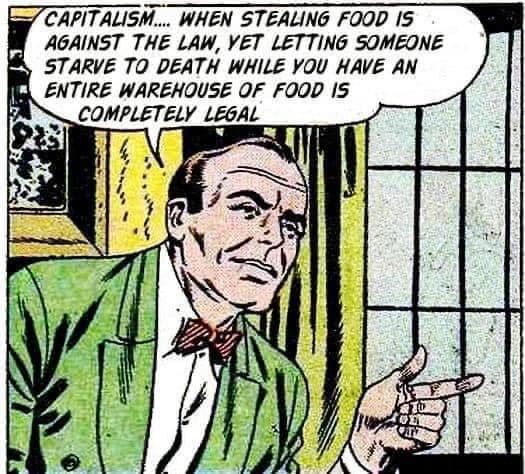
“Abolish capitalism”. As if there was any viable alternative!

What’s going on here?!?

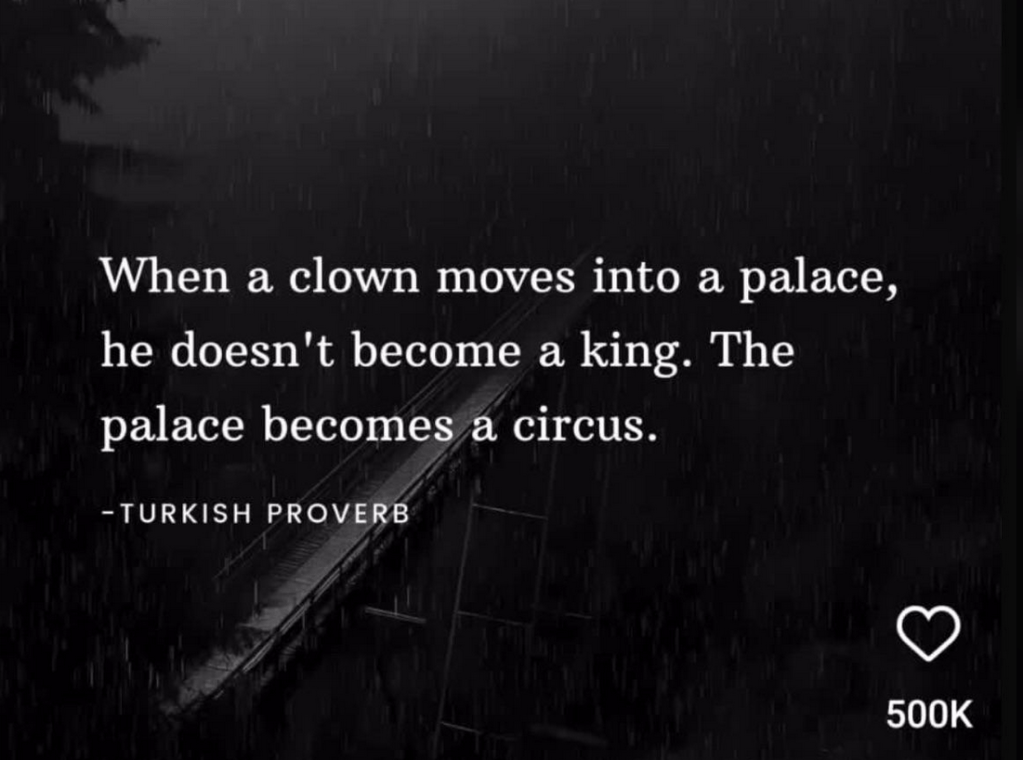
Indeed, but only a clown has enough gumption to tell the king that ‘he’s got no clothes on’!

Furthermore, every respectable palace has both a king and a jester.
The jester overpowering the king doesn’t change the palace into a circus. Only refocuses the attention of those paying attention…

Abstract:

While there has been a plethora of analysis on diverse subjects within Holocaust studies,
there remains some reluctance to engage with women’s unique experiences,
which were largely subsumed under those of men in the decades following World War II.
This article examines how women’s specific experiences, both biological and social, are often denied
or suppressed in research and literature on the Holocaust, even in survivors’ own testimonies,
despite the fact that these are often clearly gendered experiences.
By revisiting key themes from the testimonies of female survivors,
such gendered analyses contribute to a fuller picture of the unprecedented
and relentless killing that the Final Solution’s anti-Semitism entailed.

Nicole Ephgrave
Journal of Women’s History Johns Hopkins University Press
Volume 28, Number 2, Summer 2016 pp. 12-32
10.1353/jowh.2016.0014

Those who had ordered what had happened at Auschwitz and many of those who had actually perpetrated the crimes considered themselves to be free. They did it on their own will.
Their freedom was intact!
And they had chosen, freely, not only to diminish the liberty of other people but to actually defile them…

Individual freedom is something which depends, largely, on each of us. On how each of us ‘digests’ their previous experiences and chooses to operationalize what they have learned.
Social freedom, on the other hand, depends on how we, as a group/community, aggregate our individual choices.

In this sense, the latter one, freedom becomes a space.
A place – THE place, actually – where each of us can put in practice our own individually free choices.

Now, places have rules.
Each place being defined by the rules governing that place. Some of those rules are specific for each space while others come from the ‘previous’ spaces.
For example, we – humans – are both animals and something ‘higher’. As such, we ‘obey’ both the rules governing the biological realm and the laws of each of the countries we happen to live in.
One of the most fundamental rules evident to man is “no good deed goes unpunished”. Otherwise known as the law of the consequence. “Do not be deceived… A man reaps as he sows” Gal 6:7

Everything we do leaves a trace. Influences the future. Creates karma.
How we, each of us, chooses to exert their freedom creates the circumstances in which we, and our children, will have to exercise theirs. Their freedom!
The manner in which the ‘free nazi’ had chosen to exert their freedom – to kill other people – has shaped the future of Europe. And of much of that of the world!

The manner in which we choose to ‘digest’, to interpret, what had happened shapes our future.

Which brings us back to ‘dehumanization’.

Many of us consider that the victims have been dehumanized. Made less human.
Had their humanness obliterated!
By the abusers. By those who had abused both their freedom and their power!
By those who had transformed other humans into victims….

I beg you to reconsider this:
Who had undergone the process of dehumanization?
The victims or the bullies?!?

We, as free thinkers, have the ability to poke fun at whatever happens to us.
To relativize our experiences.
Hence ‘no good deed goes unpunished’. When the utmost importance of the subject begged for a way more formal wording…
Poking fun at things we cannot control is a survival gimmick. By doing this we can, individually, survive in dire circumstances. Specially in situations where our inner values are questioned. When we have to quell what psychologists call ‘cognitive dissonance’. When we are forced – by ‘external factors’ – to do something we would not have done in ‘normal’ circumstances.

In this sense we can better understand the process of dehumanization.
The defiler actually needs to dehumanize the victim. To consider the victim something else but a human being. Otherwise, the defiler would no longer be able to defile the victim.
But what happens when a human being does not recognize (some of) their fellow humans as being their peers?

Who ceases to be human?