
I’ve been talking about complementarity, equality and freedom.
The implication being that unless people treat each other fairly – as in consider the others as being equal, and equal with themselves – none will be actually free. Free to fully complement each-other. Free to ‘boldly go where no one has yet been’. Together.
What’s keeping us from doing it?
To figure that out, we need first to understand how we got here.
‘I’ve been talking about…’
To talk about something means the talker is aware about the existence of that something. They may not fully understand what’s going on but they have already noticed that something’s afoot.
Furthermore, for a human to attempt to communicate about something means that that human considers there’s at least a small chance that others will understand the message. That others understand the language used and that those others already have a modicum of interest in that matter.
In other words, any attempt to communicate means that those involved are not only aware that something’s afoot but also have reached a certain degree of consciousness. That they are not only aware of something being there but also aware that they, together, can/should/must do something about it.
They key word here being “together”.
Why bother talking about it when/if you’re able to deal with it on your own?
Which brings us to ‘war’!
How many do we need to be in order to ‘deal’ with this ‘thing’?
How many of us will be able to ‘feed’ themselves after this ‘thing’ will be dealt with?
How much will each of us have contributed to the whole process?
How will the spoils be distributed among ourselves?
How will we deal with the ‘loose cannons’ among ourselves?
How will we know who will do what?
Who will lead? Who will be responsible for the whole thing?
This is the moment when I’ll remind you that this is a blog about the consequences of our limited consciousness. A blog where I gather my attempts to understand the limits of our ability to make decisions – as individuals, and the manner in which different societies have come up with different methods to mitigate the consequences of those limits.
Happy reading, every one.
War
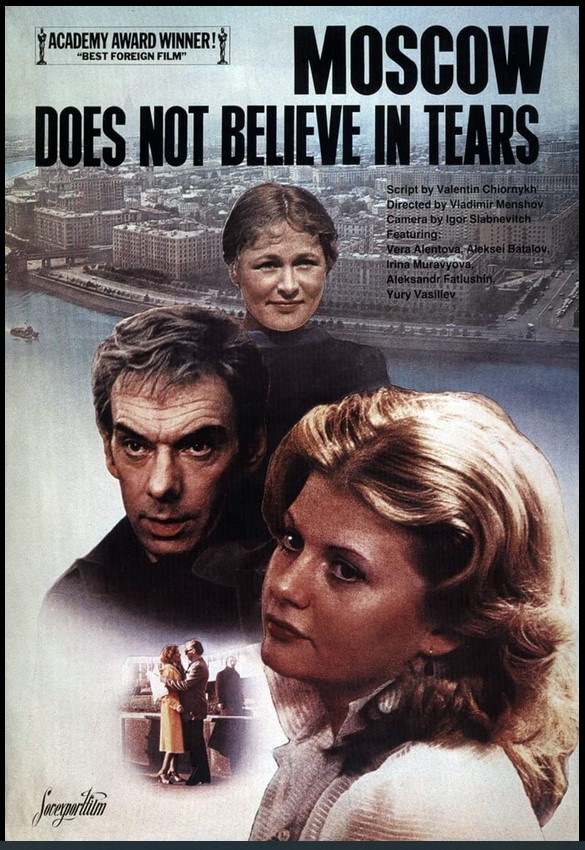
I grew up in a communist country, Romania.
Russian films were ‘readily’ available.
Some of them were good. Really good.
Besides going to the movies, I was an avid reader.
I must confess that the ‘great Russian classics’ didn’t impress me. No special reason.
But I did read a lot of Russian literature. About the partizans fighting the Nazis during WWII, about the communists fighting for freedom – for their version of freedom, in the early ‘920-ies, some Sci-Fi novels about the happy lives the Russians were going to live in the next millennium.
This morning I was listening to the radio.
The news bulletin was, of course, about what’s going on in Ukraine.
A refugee, a woman who had fled accompanied by her young daughter – her husband and her son remained at home to fight, was speaking in her native language.
I know that Ukrainian is different from Russian. But for my ears they sound very much the same.
Imagine what I felt.
I grew up associating the Russian language with the struggle for freedom. With the promise of a better world.
As I learned things… my understanding of history had become more ‘nuanced’.
The Soviet Union had collapsed after Afghanistan. The regime finally got what was coming to it.
As Putin crushed Chechnya, killed Litvinenko, ‘peacefully’ occupied Crimea … things were no longer ‘nuanced’…
But this!
They say that an image is worth a thousand words… I’m no longer sure about that!
There is so much violence paraded in front of our yes that our ‘retina’ has become calloused.
Hearing that brave woman trying to convey her tragedy in a language I associated in my childhood with the promise of liberty really did it for me.
This time the oppressor itself was speaking Russian.
Russian soldiers were doing the very same thing the Russian people had experienced during the WWII. And they were doing it to their ‘brothers’.
Russian soldiers were turning Kyiv into rubble!
Kyiv, the birth place of the Rus-ian people…
All this conveyed in a language which, for me, sounds very much the same as the language I had associated in my childhood with the quest for freedom.
I wept.
Hoping the Kremlin will learn to understand tears.
Maybe not the present ruler but at least the stony walls…

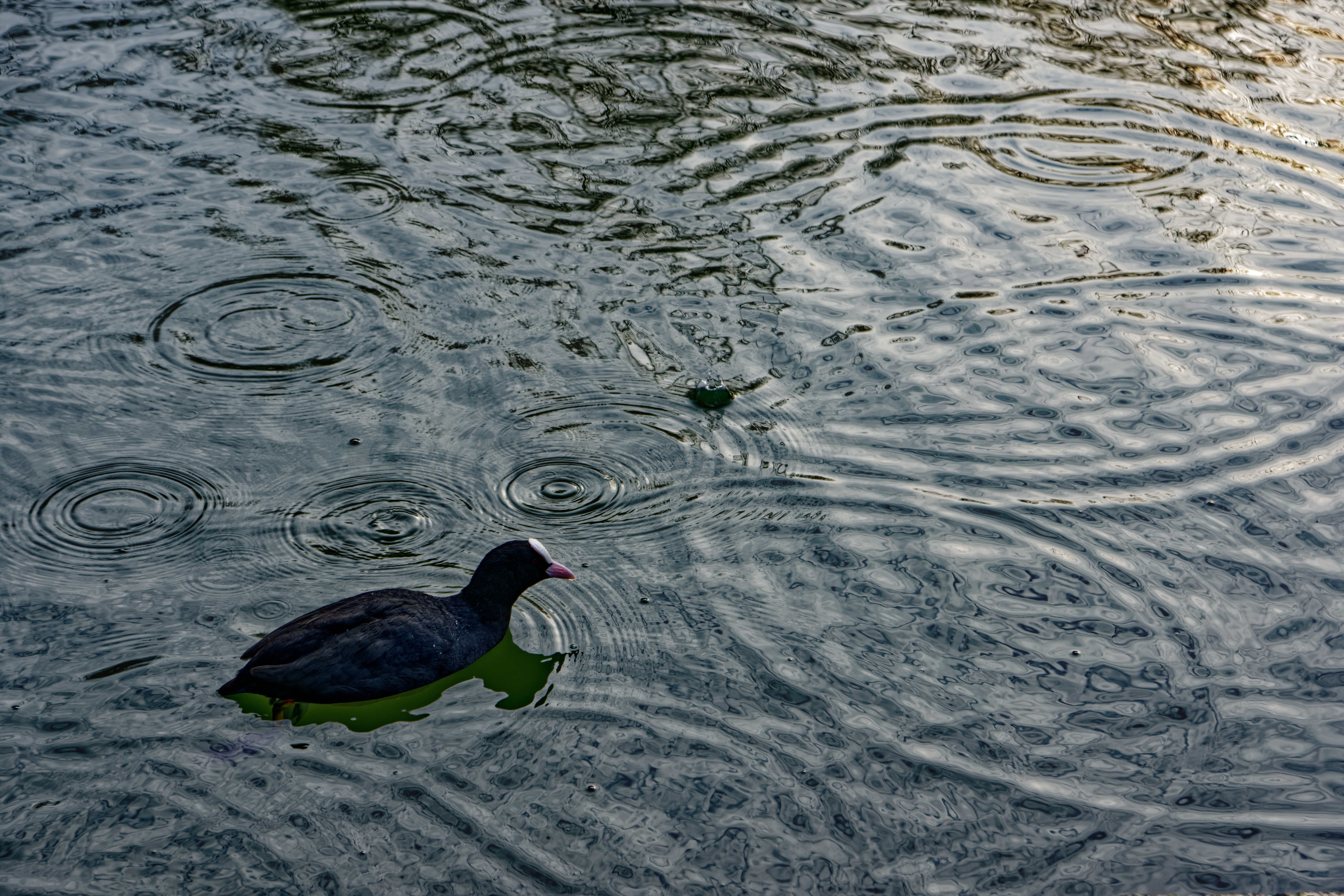
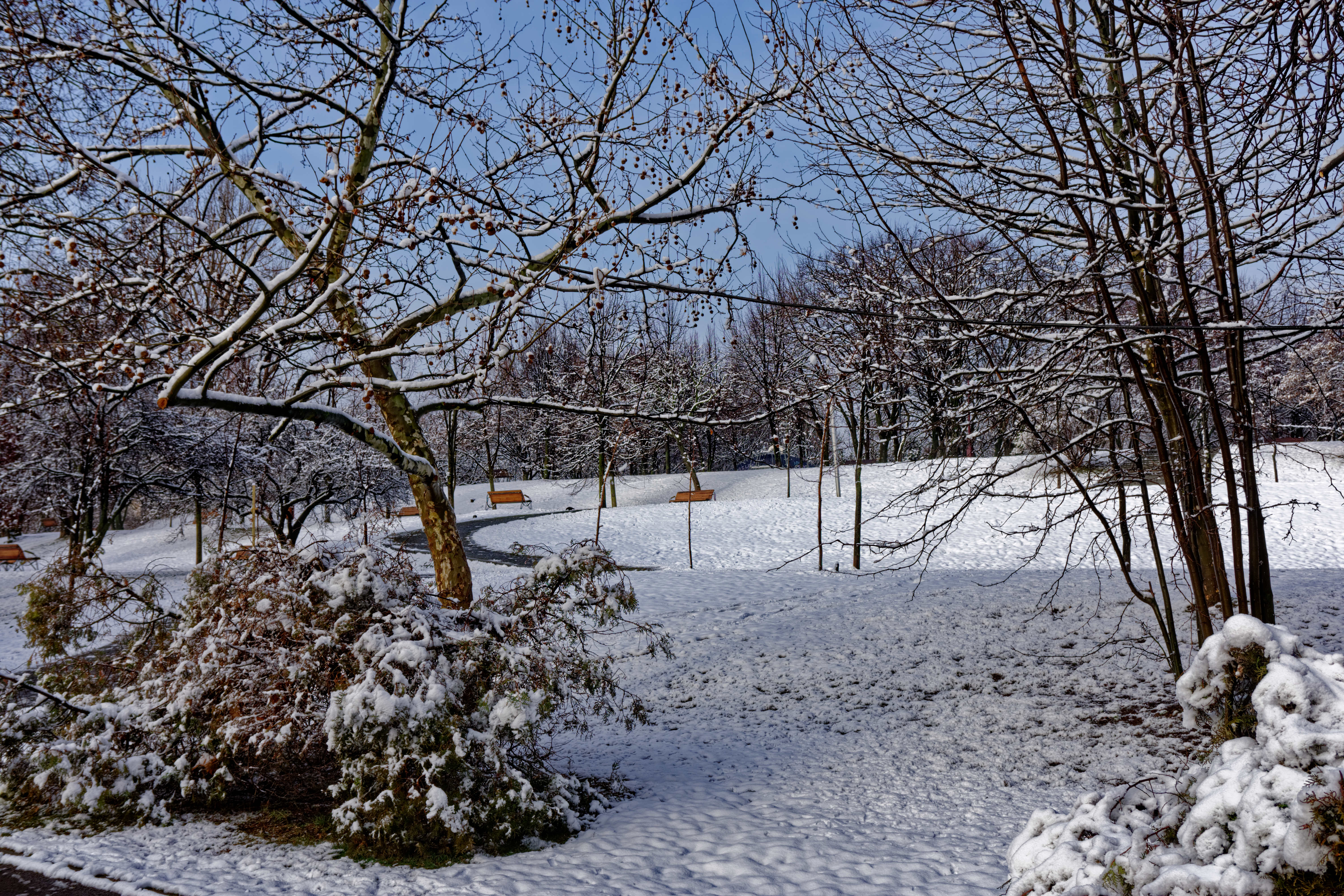


This beautiful – but almost empty, park is in Bucharest.
In Bucharest, Romania.
By the look of it, by how empty it is, it could have been anywhere in Ukraine.
Which reminds me of Churchill’s words.
Never in the field of human conflict was so much owed by so many to so few.
Currently, the Ukrainian people defend not only their freedom but that of the entire Europe.
And that of the Russian people!
Who now have the opportunity to conquer theirs!

Get a vaccine, wear a mask…
“You can’t deprive others of their liberty without forfeiting your own. Liberty is lost with every person seeking to control others for their comfort and sentiment.”
Getting a vaccine and wearing a mask are sensible things to do, right?
Establishing a free environment, where all individuals might enjoy their liberties, is also a sensible thing!
For the simple reason that even a casual examination of history provides ample proof that freer societies fare far better than those which curtail individual freedoms.
Simpler said than done…
Mention the mandatory mask and the imperative advice to get vaccinated to those passionate about individual liberty and you have a hornets’ nest on your hands.
Or maybe this is an excellent occasion to discuss the ‘gap’ we constantly need to bridge between individual freedoms and a free society?
Can you have a free society composed of slaves?
The answer depends on who gives it to you.
I’d spent the first 30 years of my life under communist rule.
My country, Romania, was declared, by those who were ruling it at that time, as being free. Both domestically and internationally.
The only free individual was the ruler. Nicolae Ceausescu. He was the only guy who could do as he pleased. And only for a while… Until 25 December 1989…
In the end, the regime had crumbled and the only ‘free’ individual had met with the consequences of how he had chosen to use his freedom.
So no, you cannot have a free society when one individual, or a group of individuals, impose their will on everybody else.
‘Your liberty to swing your fist ends where my nose begins’
Otherwise put, if you refuse to get vaccinated/wear a mask you might be instrumental in getting me sick. Or dead.
‘Might’! It’s the ‘might’ part which troubles you!
Why should you shoulder a minimal risk/discomfort for my safety? Specially when you’re not convinced that my safety is in danger… Or, maybe, you’re thinking ‘let him take whatever precautionary measures he considers to be necessary!’
Because of India, that’s why!
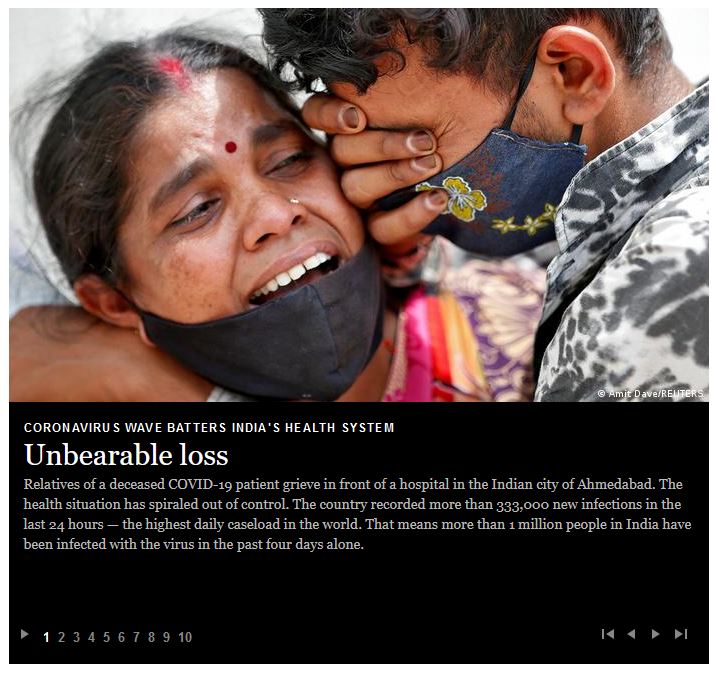
Do you consider present day India to be a free society?
Do you consider that people currently living in India are truly enjoying their freedom? Today?!?
And no, I’m not going to contrast what’s going on in India with what the Chinese government had done.
First pretend nothing had happened then lock up the entire population.
No!
I’m going to contrast what’s going on in India with how the ‘other’ China had reacted to the Covid pandemic. Or with the South Korean response.
Different economic realities… Different cultures…
Maybe!
But also different levels of economic and social disruption!
Don’t tell me that what’s going on in today’s India won’t have repercussions!
There’s a seemingly unending debate about what “my liberty ends where yours begins” really means.
The initial saying was a little longer, “Your right to swing your arm leaves off where my right not to have my nose struck begins.”, and had been coined during the disputes between those who tried to impose the Prohibition and those who opposed it.
In that context, it made sense.
‘How close to my house – a teetotaler, should you be allowed to open a bar and why should I be able to tell you what to drink/serve in your house.’
In a wider setting – individual rights, for instance … not so much!
‘Your right to swing your arm leaves off where my right not to have my nose struck begins’ only if at least one of the following is true:
– My arms are as long as yours AND I’m willing/able to defend my nose.
– You are a civilized person.
– We, the entire community, have reached the conclusion that we are better off, together, if we observe – and enforce, this rule.
The first sentence describes a situation of generalized conflict. Not necessarily ‘hot’ but, nevertheless, always ‘waiting to happen’.
In the second situation, ‘one side’ depends, decisively, on the ‘other side’ behaving ‘properly’. Nice and commendable but what happens when one of them goes berserk?
The third describes the de facto functioning of any civilized nation. Which nation, any nation, is composed of individual people. ‘Endowed’ with ‘free will’ and not always ‘well behaved’.
Hence the danger of narrowly defining freedom as a collection of individual spaces where each of us might do as they please – as long as the consequences of their actions remain inside that space.
Which spaces would have to be constantly defended.
Or could be extended, whenever any of the neighbors wasn’t on the lookout.
How about ‘our mutually respected individual liberty is the well deserved consequence of our collective effort to enlarge OUR freedom’?
Indeed!
Only there are a few hurdles which will have to be negotiated first.
Which ‘truth’?
Mine?
Which will set me free?
Theirs?
Which will set them free?
Or ours?
Which will set us free?
What is Truth in the first place?
What I believe in?
What we believe in?
Something which is out there and we learn about incrementally? In a collective manner but individually driven?
How can we find it? If ever, of course….
Agree to something which has worked until now?
Listen to what those around us have to say about the/any matter?
Do your ‘own homework’?
All of the above, in a respectful manner?
Freedom is too bothersome?!?
Have you considered the alternatives?
 nicichiarasa