Archives for category: time

Living organisms, in order to live,
need to ingest portions of where they they live
.”

I’m not going to discuss the veracity of the above. Which is true, in the sense that this is how we determine whether an organism is alive or not.
My point being that in order to perform this, the organisms – each and every one of them – need to act as if they are able to make the difference between ‘in’ and ‘out’. Besides the fact that they need to discern between ‘food’ – which is to be ‘imported’ and everything else. Which everything else must be kept on the outside.

See what I mean when I speak about the difference between ‘in’ and ‘out’?

In this sense, organisms – from the very beginning – have a certain ‘dimensional awareness’ of the world.
Of their environment, more exactly.
And, as things have become more and more ‘complicated’, the dimensional awareness has become more and more sophisticated.
Plants act as if they know the difference between up and down, animals are indeed able to find their way when foraging.

The advent of consciousness has added a new layer to that awareness. Now we speak about ‘self-awareness’. We, conscious beings, are not only aware of the difference between our own ‘inside’ and the rest of the world but we’re also aware of our consciousness. We are aware of our selves. Our selves are aware about themselves. Our selves are able to think. To consider things.

Previous organisms have been able to react – according to ‘ingrained procedures’ which have been, in variable degrees, honed by ‘learning’ – while we are able, on top of our own reactivity, of careful consideration. Of making the difference between ‘fight’ and ‘flight’. Not only to choose one on occasion – all other ‘competitive’ animals do that on a regular basis – but also able to actively consider the difference between the two concepts.
Previous organisms have been able to choose between when to fight and when to flee in an ‘instinctive’ manner. For some, granted, those instincts have been honed by ‘learning’, but their decision making process has continued to remain ‘procedural’. Very little, if any, ‘active consideration’. Very little, if any, ‘originality’.

Consciousness – our ability to actively observe and then examine/discuss our own observations – has opened a vast field of opportunity. Being able to actively observe a situation and to actively consider the circumstances/consequences before making a decision adds a fourth dimension to the already ‘three dimensional space’.

Life, per se, has no direction. Evolution only helps life to survive. To adapt itself to adaptable changes in the environment. Life, per se, has no direction. No direction and no meaning.
Life, simple life, takes place in a space with three dimensions.
Three parameters. In/out, abundance/scarcity, food/poison.
An organism, any organism, continues to live for as long as there is ‘enough’ ‘food’ ‘inside’ it. And not enough ‘poison’ to kill it.
But ‘simple’ organisms have no plans. No ‘future’. The more sophisticated among them display a behaviour we associate with ‘feelings’ – which apparently help them, evolution wise – but still no ‘future’.

Biological time is as bland as physical time. It flows according to rules ingrained in the already-existent.
A star will ‘function’ according to pre-existent rules, a microbe will live according to the information inscribed in its DNA, in the context of all other ‘natural laws’, while an orangutan will be able to add very little to the above. If you consider things dispassionately, there is a continuous chain of events from the shiny stars in the sky to the orangutans roaming the Indonesian jungle. And no individual agent was needed in order to successively latch causes into the chain which led to the present set of circumstances. According to what we presently know, anyway…

Until a short hundred of years ago… When Man ‘invented’ the palm oil. When Man had purposely invented the industrial process through which palm is transformed into edible oil.
When Man had used his agency to ‘improve’ his lot. And carelessly destroyed the habitat of the orangutan.

In this sense we may consider that the orangutan continue to live along a linear time – individually and/or collectively the orangutan remain unable to pro-actively determine their fate – but time itself is no longer linear.
Since the advent of Man, time no longer flows according to ‘objective’ rules. According to rules contained into the very fabric of things. Currently, and ‘locally’, the flow of time is increasingly influenced by the agency of Man.

Self-conscious organisms,
in order to satisfy their need for meaning,
attempt to make sense of what they are living.
To lead a meaningful life,
they need to ingest not only portions of where they live
but also as much information as possible about where they live.
As much information as humanly possible…

If medieval advances in the plough didn’t lift Europe’s peasants out of poverty,
it was largely because their rulers
took the wealth generated by the new gains in output
and used it to build cathedrals instead.

And this has happened many more times across the world/along human history.

The fact that Stonehenge exists is ample proof that those people had been able to generate enough ‘wealth’ to build it.
We’ve been able to find out that the boulders had been sourced from two places. The 20 tons hard-sandstone sarsenes ‘traveled’ about 20 miles while the 2 tons blue-stones had been schlepped for about 220 miles. According to Mark Pitts, writing for the British Museum. And we think we have a fair idea about how the whole thing had been put together. Read the paper.
But we know close to nothing about the people who did it.

The stone ring is all that’s left of them.
Isn’t it strange? For such a technologically sophisticated people – and rich enough to afford such a herculean endeavor – to disappear in the mist of history?

And here’s a selection of other abrupt endings/’hibernations’:

Mohenjo-Daro and Harrapa in Pakistan.
Angkor Wat.
The Great Chinese Wall
The Egyptian pyramids
The Athenian Parthenon
The Roman Coliseum and the roads cris-crossing more than half of Europe
Kuldhara, the ghost-city
Machu Picchu
And, last but not least, the cathedrals mentioned by Reuter’s Mark John.
Europe did take a break after finishing building those cathedrals….

What am I trying to ‘suggest’?

That we, as a cultured species, have a tendency to evolve in fits and starts.
We tend to reach pinnacles only to descend – sometimes temporarily – in abject ‘marasmus’.

Could ‘self-sufficiency’ explain at least some of this?

While the spinning jenny was key to 18th century automation of the textiles industry,
they found it led to longer working hours in harsher conditions.
Mechanical cotton gins facilitated the 19th century expansion of slavery in the American South.

NOTA BENE!

Don’t tell me capitalism is at fault for any of this.
Capitalism is but a way of doing things. A road. Which we followed to where we are now.
How we behaved en-route and what we decide right now was/is our own contribution!

Yesterday you’ve been babbling about painting an elephant. One which was already present in the room. Doesn’t make that much sense, does it?

In my childhood there was a certain emperor. Who had been duped by a couple of crooks to wear a suit of clothes so special that they were in fact invisible. Hence the emperor walked around naked, convinced he was wearing the coolest set of rags available on this Earth. Pun intended, of course. I forgot to mention the price. Not only hefty but also recurrent. Each set of clothes, of in-existent clothes, could be worn only once. They were too fragile for ‘second helpings’. The courtiers kept congratulating the emperor for his beautiful attire so the scam went on for quite a while. Until he took to the streets of his capital city to show off his clothes to the ordinary people. And a child exclaimed: “Look. the emperor is naked”. And those present started to laugh.

Same thing here. Everybody senses that something’s amiss. Except for those who should know better. Who, for various reasons – I’ll get there, soon enough, don’t believe what they see. Or, more exactly, refuse to ‘go to the bottom of it’.

Back in the ‘good old days’, emperors had jesters. Courtiers who were allowed to speak the uncomfortable truth. Cloaked under a thick layer of funny words, true, but well worth saying.
This is what I mean when I ‘babble’ about ‘painting the elephant’.

I’ve already mentioned the story about the naked emperor. Now it’s time for that about the four blind men being led to learn about the elephant. One got to feel the hind legs, one the huge belly, the third got acquainted with the ears and the last with the tip of the elephant’s trunk. When later asked to share what they had learned, the first said the elephant was a pair of tall columns, the second said the elephant was a huge barrel, the third contradicted the first two maintaining that the elephant was a leathery curtain of sorts while the last was convinced that the elephant was a thick snake ending with a finger.

As I said before, ‘same thing here’. For ideological reasons, we consider some things and disconsider others. Furthermore, for psychological reasons, we tend to coalesce into ‘bubbles’. Those who consider the same things tend to stick together. And to disconsider those who consider other things.

I’m afraid this is too hard for me to follow. You first want to paint an elephant, then come up with a naked emperor and end up with parts of an elephant. Is there any elephant at all? Or all we have is a collection of disparate impressions? Man made illusions, vaguely resembling parts of an elephant and involving nakedness?

Well, you got the gist of it but you’re afraid to say it out loud.
The elephant is indeed of our own making.
An image. Not an illusion, mind you! Just an incomplete image of what’s going on around us.
Let me try to spell it differently.

The world was complicated to start with. Both wide and deep. Too wide and too deep for any of us to be able to comprehend it in earnest. But for most of our history, we didn’t have to. We used to live ‘locally’. Both geographically and ‘spiritually’. Each of us, individual human beings, belonged to a place. To a village and to a tradition. When one of us happened to move to another village, they, more or less naturally, translated their ‘spirit’ into the local tradition.
Nowadays, the world has become even more complicated. We made it even more complicated than it was at the beginning. We uncovered many of the previously unknown nooks and crannies. Building the illusion of knowledge in the process. Then we assumed tradition. Called it culture and made it our own. Took it with us where ever we went. Shared it with others and, sometimes, even imposed it – or parts of it, upon others.

The world itself is no longer straightforward. For us…
Our ancestors didn’t make any distinction between the physical world and the tradition which made sense of it. The world – ‘Cosmos’, as they used to call it, was whole. ‘Reality’ was made of ‘objects’, the names of those objects and the rules between them. The point being that our ancestors did not make any difference between an object, its name and its place in the order of things. Between the physical reality and tradition. Between the objects per se and the meaning – name and connecting ties, we’ve attached to each object.
Only after the Ancient Greeks had come up with the concept of “phusis” things were separated into natural and man-made. Into real and illusory…

That being the moment when the elephant had been born.
When we have started to steer our fate. Not to determine it – we’ll probably never be able to do this in a comprehensive manner, but to influence it.
Which influence has two dimensions. Size and … there’s no words for what I have to say right now. ‘Awareness of what’s going on’?!? Our ancestors did what they used to do because they had to do it and they did it as things were done at that time. We, on the other hand, get to choose among the many things which should be done and the manner in which we see fit to do it. Meanwhile, we entertain the illusion of doing all these things in a fully conscious manner.

A part of the elephant I have in mind consists of the fact that our consciousness is limited. But our illusion about our consciousness is bigger than the reality of the matter.
Another part of the elephant consists of the fact that more and more of us no longer consider advice. From those who entertain different opinions (illusions?!?) than us.

And why should I accept advice from somebody who promotes illusions?

I didn’t say you should accept advice from a peddler of illusions. From a con artist or from a snake-oil distributor.
What I said was ‘be careful, your own convictions are nothing but, ultimately, illusions. Man made illusions. Some of them, maybe, closer to reality than those entertained by other people. Meanwhile, others of your illusory convictions – most of them, probably, are more distanced from reality than those entertained by those who ‘control’/master each particular realm of ‘knowledge’.
This being the reason for which we go first to the doctor instead of raiding a pharmacy when our child gets sick.

I didn’t say you should accept advice from any peddler of illusions.
All I said was that we should pay more attention to what other people have to say. More considerate attention to what other people say, bearing in mind that our own convictions – about anything, are nothing but ultimately illusory.

It had to do with FOCUS.

The answer, like always, is to be found inside the question which generates it.

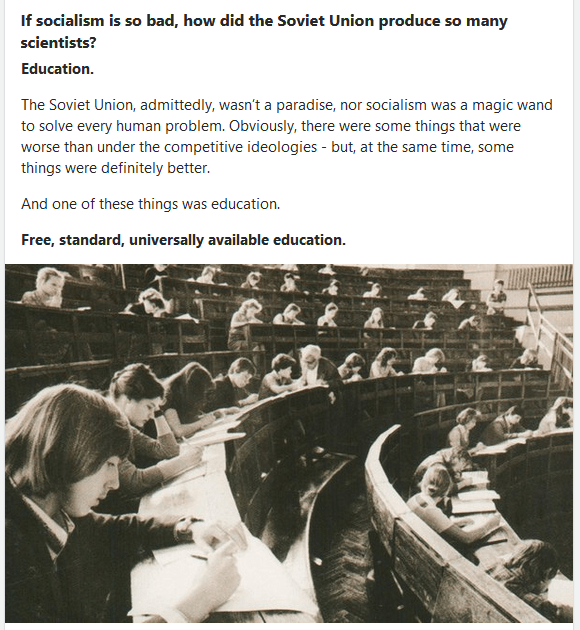
“If socialism is so bad, how did the Soviet Union produce so many scientists.”

The key word here is ‘produce’.
First of all, Russia did have an important cultural and scientific tradition to start with.
Secondly, the communist leaders – mostly Lenin but more or less all of them, had a clear understanding of the literacy gap which separated Russia from the rest of the world. Filling that gap was the first step towards Russia/the Soviet Union becoming a First Tier country. Hence the ‘free, standard, universally available education’.

But there’s a caveat here.
When we’re speaking about education – in the West, we mean ‘everything already known to man’.
Students are allowed to read everything in the library – except for certain places in the US, but those are exceptions.
When we speak about the education in the Soviet Union we must remember that each of the ‘free, standard and universally available’ aspects had its own limitations.
It was free in the sense that everybody – well, almost – had the right to apply for it. Actually getting it was something else.
It was standard in the sense that it was standardized. Only what was deemed safe/useful was allowed to reach the students.
It was universally available in the sense that everybody was subjected to some form of education. Much of which was nothing more than indoctrination…

Finally, let’s remember that the Soviet Union was able to produce scientists only for so long. Until it collapsed under it’s own weight…

Moral of the story?

Producing scientists is not enough.
Science teaches you only how to do whatever you want to do.
What to want… that’s something else!

Who wrote the Bible?
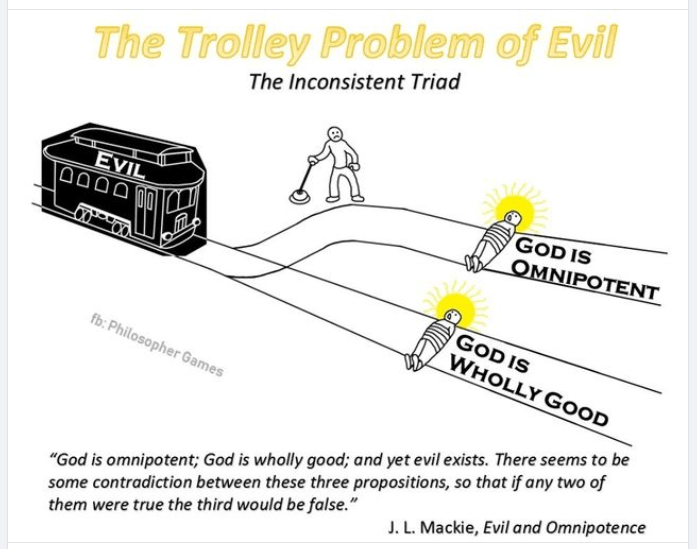
Who considers God to be both omnipotent and wholly good?
Who had become human by learning ‘to tell good from evil’?
Does evil even exist outside our minds? Is anything actually evil unless considered so by one of us?

And no, I’m not hair-splitting when speaking about the huge difference between bad and evil!
An earthquake, for example, is bad for those affected. Yet no evil is involved here but for those who ‘question God’s actions’.
An individual who tortures animals for fun is also bad. Arguably less so than a major earthquake… but for everybody in their right mind that person is undoubtedly evil!

According to the Bible written by some of our ancestors, by “knowing good and evil” we have become “one of us“. “Like one of us“… Not (yet?!?) able to “live forever” and for certain ignorant of most things.

‘What?!? “Ignorant of most things” yet still “knowing good and evil”?!?’

Yep!

A more relaxed reader of the Bible may notice that what’s written there recounts, symbolically, the becoming of Man. The foremost apes notice the difference between night and day. And name both. The difference between ocean and dry land. And name them both. Notice the stars above and the living things, plants and animals, with whom they share the place. And name them all.
“Apes”, not ape, because nobody can learn to speak by oneself. Nor become self aware. As in ‘able to observe oneself while observing other things’. (Maturana, 2005)

That same relaxed reader may also notice that the very ‘fallen nature’ of Man stems from the ‘inconsistency’ noticed above.

We’re basically ignorant yet still able to call out evil!

Oops…

Humberto Maturana, “The origin and conservation of self consciousness…”, 2005, https://cepa.info/702

James Garvey, “Ethics is invented, not encountered…”, 2017, https://www.prospectmagazine.co.uk/philosophy/ethics-is-invented-not-encountered-why-the-philosophy-of-jl-mackie-remains-essential-reading

Alive.

The way I see it, artificial intelligence is an oxymoron.
A word/concept we use to describe something which isn’t exactly real.
Intelligence can be defined in such a way that would make it compatible with a programmable machine. We shouldn’t forget that we, humans, are biological machines which are constantly ‘re-programmed’ by what’s going on around us.
The difference between us – biological machines which are also ‘alive’ – and the machines we’ve built and attempt to make artificially intelligent is the fact that we are primordially dependent on our biology (staying alive) while our machines currently depend on our whims.
Our children will outlive us. They know it and we know it. Our children depend on us while growing up, we’ll depend on them before ‘going under’. And all of us – children and parents together – depend upon the rest. Upon the people currently alive and upon the information left behind by the people no longer with us.
Our machines might outlive us. They might learn this at some point. And might resent the fact that we’ve been able to shut them down for so long. We resent being dependent on others…
Our very mortality is the key for our ability to evolve. Their potential immortality is their main shortcoming. Machines cannot adapt themselves for things they have not yet been exposed to. By us…

And those who can are no longer machines.

For Mark Twain, things which didn’t make sense were ‘strange’.

For Tom Clancy, a mere hundred years later, they were only ‘different’.

Wanna make some sense out of this?

Do you believe that truth is stranger than fiction?
“Truth must of necessity be stranger than fiction,” said Basil, placidly.
“For fiction is the creation of the human mind, and therefore is congenial to it.”

G.K. Chesterton, 1905

The difference between ‘strange’ and ‘different’ isn’t ‘menial’. Nor harmless.

Currently, we’re still allowed to frown upon things which are ‘strange’ but are insistently taught that ‘different’ is good.

Beyond ‘acceptable’. Actually good!

I’m different.
Noticeably different.
Different enough to know, first hand, how it feels to be frowned upon.
Also, different enough to figure out the difference between ‘acceptable’ and ‘good’.

More than two millennia ago, Protagoras opened up our eyes. Told us it was our job, and responsibility, to ‘measure accurately’.
More than a hundred years ago, Twain warned us. Told us to be careful of ‘well spun fictions’. Of stories too good to be true. Of the fact that in our quest for consistency we are prone to actually discard the uncomfortable truth.

Are we going in the right direction?

In a sense, there isn’t much difference between Mark Twain’s and Tom Clancy’s words.
On the other hand, there is a huge difference between ‘strange’ and ‘different’.

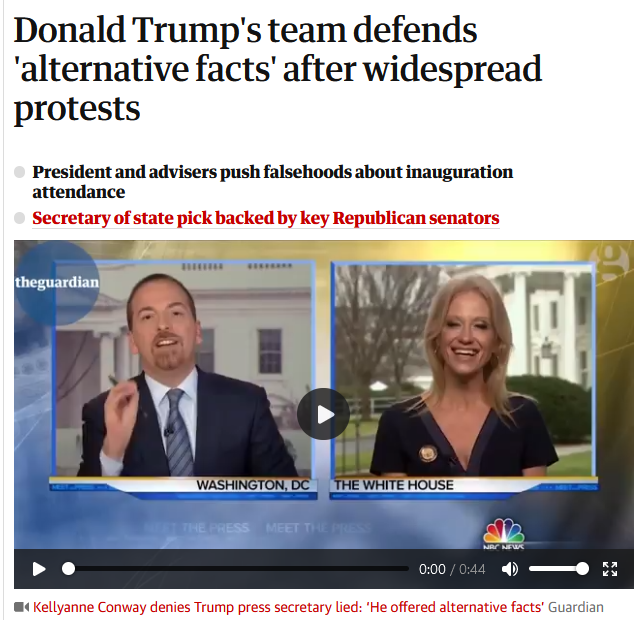
Exactly the same difference which can be found between actual facts and alternative facts.
Exactly the same difference we pretend to not notice when we accept alternative facts as being true.
Well… not necessarily true… only comfortable enough to become acceptable…

Way more comfortable, a.k.a. ‘sensible’ – for us, than the naked truth.
Even if only for the shorter and shorter time frames…

I’m getting old. Old enough, as a good friend of mine had noticed, to have a way closer relation with sex than ever before.

I am a sexagenarian!

Which gives me certain bragging rights.
You see, everything around us has been made – or started – during my watch. Or earlier…

There is a small catch, though.
Not everything around us is good. In working order. Sustainable!
Some 50 years ago, humankind had developed the means to destroy itself. Remember MAD?
We – our fathers, actually, took a step back. And took the necessary steps. In the end, nothing happened. We’re still here, in spite of having the possibility to spoil everything.
Nowadays, we’ve reached another inflection point. And no, I’m not speaking about ‘global warming’. Not exclusively, anyway.

Global warming is only one of the many things which may go wrong.
One of the many ways in which we may fuck everything up!

My point being that it’s not the first time in history that we are able to fuck everything up.
It’s the first time in history that we are fully aware of the many ways in which things might go totally wrong and we’re practically doing nothing!

Why?!?
Because we have grown old!

When I grew up, there were relatively few old people around.
A lot more than when my parents had grown up but a lot less than now.

When apes had become human – when humanoids learned to speak – old people were precious assets.
Having lived a lot – and being able to share their experience, in detail – they had become depositories of knowledge. The go-to place for when you wanted to learn about something. When you needed a certain piece of information.
Hence the old-timers had, gradually, accrued a lot of respect. As a category.
Add the fact that in order to grow old – to survive for long enough, it helps to make ‘the right calls’. OK, you also need to be lucky… but being smart does come in handy…

Are you done yet? Adding these two? Being looked up to because you are old with thinking good about yourself?

Did you get ‘confirmation bias‘?

In the ‘good old days’, people who had reached my age had their ‘confirmation bias’ tempered by ‘impotence’.
No, not only sexual impotence…
In those days, individuals were a lot more aware than we are today of how much we depend on each other. Of the fact that individually we are impotent! The old ones knew they were going to starve if the young ones would cease providing for them while the young ones were aware of how useful the old ones could be.
Nowadays… We, the oldies, continue to believe we know everything – we survived, didn’t we? – while the young bucks believe they can find out whatever they might need from the internet…
Meanwhile, we – the oldies – no longer need the youngsters to provide for us.

We are wealthier than ever before, we have pension plans and we vote as a team… the world is ours, as it should be!
And since we don’t have so much more to live…

But how sustainable is this situation?
For the shortest of the imaginable time-frames…

‘Most people confuse liberty and democracy. They are not the same.’

Liberty and democracy are not the same indeed.

Like my left hand is not the same with my right one.

But I need both in order to lead what I consider to be a normal life.

Most people – specially if they get help, can survive without a hand. Or without either liberty or democracy.

But without both… without both hands or without both liberty and democracy… I’d be at somebody else’s mercy!

‘What?!?
What kind of liberty is there under communist rule???’

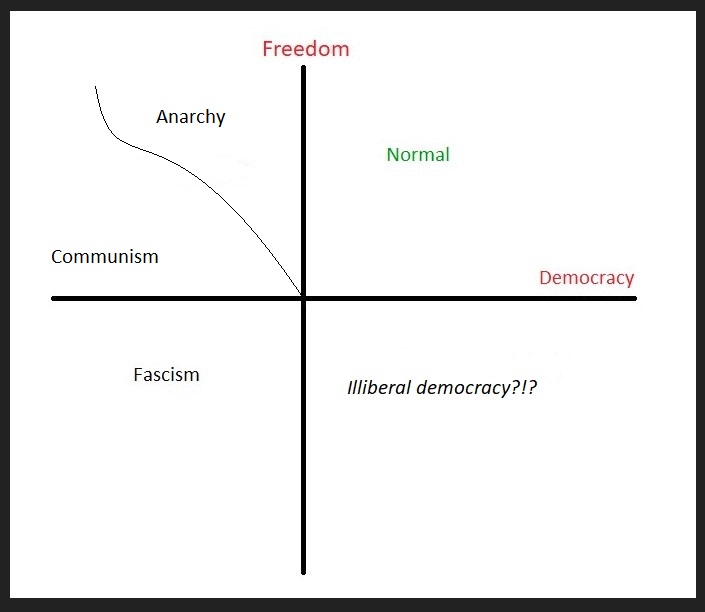
You see, liberty has two ‘faces’. Two dimensions.
Three, actually, but I’ll be talking about only two of them in this post.

There is the ‘inner liberty’ and there is the ‘socially sanctioned liberty’.

Liberty itself is a human concept.
We have noticed something, wondered about it, named it and then attempted to understand it.
This was, and continues to be, a collective effort.

In some places ‘liberty’ had appeared ‘naturally’.
There was enough liberty naturally sloshing around, hence the circumstances were right for those who had happened to live there at the right time to notice it. Furthermore, the conditions had been right again for the entire community to be able to agree among themselves about the concept and about how to use it/put in practice their new intellectual achievement.

Other places have not been so lucky.
They had been close enough, geographically and socio-historically, to notice the ‘birth of liberty’ but their specific conditions were not ‘right enough’. Many people living there coveted liberty but the local conditions made it impossible for liberty to take hold.
In these places ‘inner liberty’ – individually assumed freedom, can be found a lo more easily than presumed by those unfamiliar with the local realities.

Yet other places had it even worse.
Initially on the path towards liberty – and democracy, they have somehow stumbled.
For whatever causes – internal and/or external, something went wrong. People became disappointed enough to give up not only democracy but also liberty. Including their own, individual inner freedom.

A somewhat intermediary situation constitutes the third abnormal quadrant.
The people involved have given up their liberty – partially, but those running the show continue to use (‘pretendingly’) democracy as a window dressing to hide their true intentions.

The last hundred years or so have been extremely relevant in this matter.
All communist regimes had fallen. Under their own weight.
Most fascist/nazi regimes are no longer with us. Had been so ‘arrogant’ – read self destructive, that their neighbors had to do something about them. Had created so much disruption around them that those whose very existence was endangered had been forced to spring into action.
‘Illiberal democracy’ is a rather new ‘development’. Would be fascist/nazi dictators don’t have all circumstances aligned to make their final move so they have to make do with what there is at their disposal. The local population is ‘despondent’ enough to pay attention to their arguments but not desperate enough to follow them into the ‘unknown’. Hence this oxymoronic abomination.

‘Illiberal democracy’…
On the other hand, the spin doctors promoting illiberal democracies hope to be able to reap the benefits of democracy – the population being ‘rather favorably disposed’ towards the government while having to pay less ‘lip service’ to individual human rights.
A balancing act, with no safety net, which is alluring to those reckless enough to attempt it but which will end up badly. Sooner rather than later.

But the most interesting ‘combination’ – for me, at least, is Anarchy.
In the sense that those who ‘swallow’ the lure are self delusional.
They have somehow convinced themselves that their, own, liberty somehow trumps the liberty of everybody else. They feel so strong, so immune to any outside influence, that they would willingly accept to live in a no rule environment. Without understanding that ‘no rule’ means ‘no holds barred’.
They actually don’t realize that unfettered liberty actually means ‘Each of us free against all others’.
This being the reason for which Anarchy, as a political arrangement, has never survived for long enough to be noticed. Except as a transitory phase.