Archives for category: teleology

Exploring the consequences of our limited consciences

A truth is, first and foremost, an expression.
A message, formulated by an observer, describing a portion of what the person expressing themselves considers to be a ‘portion’ of ‘reality’. Being a message, any truth is formulated by means of a language.

Does anybody know everything about any subject? About anything, actually?
No, nobody knows everything about anything. Hence there is no such thing as a complete truth.

Furthermore, being expressed by means of a language, a truth – any expression, actually – will never be able to convey to the person receiving the message everything the transmitter intended to say. The transmitter is never able to cram ‘everything’ inside an inherently limited message, no language is absolutely ‘precise’ and no receiver will ever interpret any message the way the transmitter intended it to mean. Hence even if anybody will ever learn everything about anything, that person will never be able to convey that knowledge to anybody else. Let alone to everybody else…

What next?
‘Never ever believe anything? Anymore?!?’

Is it possible for us, humans living in concert, to cooperate in this manner?
Knowing that nothing which is being said, one way or another, is ‘true’? Completely true?

Well, we did get this far, didn’t we?
We’ve been expressing ourselves, in the imperfect manner I described above, since we’ve learned to use language. Since we’ve learned to speak…

70 000 years ago, give or take a few millennia, is when some scientists believe we’ve started to communicate more or less like we do now. The people living then had the same genes we have now and the bones they have left us to dig up and stare at are similar to ours. Hence the only thing which differentiates us from our ancestors is our culture. A treasure of knowledge which has been noticed – bit by bit, formulated using language – message by message, and remembered, one way or another. Hence the only difference between us and our ancestors is a collection of incomplete – and imperfectly interpreted – pieces of truth.

Then again, is it possible for us – humans living in concert – to cooperate by means of incomplete and ‘misinterpreted’ pieces of truth?
Well, we came this far going (up?) this way, didn’t we?
It seems that as long as we do it ‘in good faith’ things will, eventually, ‘mesh up’ just fine!

Which leads us to ‘the truth’. ‘The’ as different from ‘A’ truth.

While a truth is a message, the truth is a state of mind.
The understanding of the fact that what we call ‘reality’ can be learned only ‘in concert’.
Only as long as we help each-other along the process. Only as long as each time we formulate ‘a message’ we do our best to ‘speak the truth’.

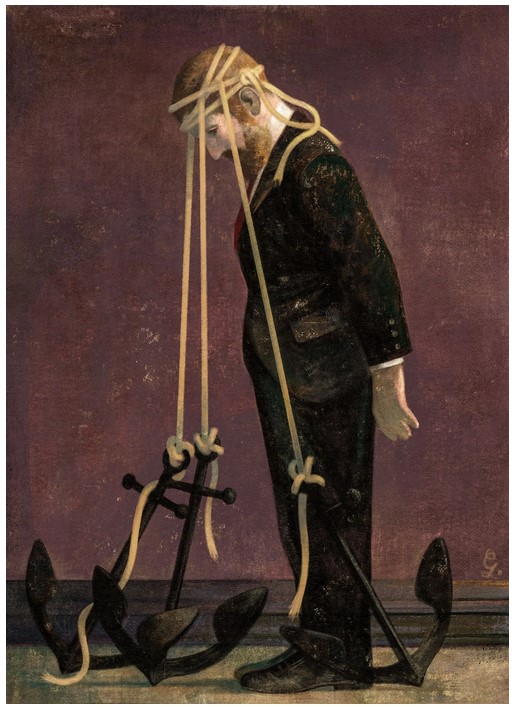
https://www.ontology.co/heidegger-aletheia.htm

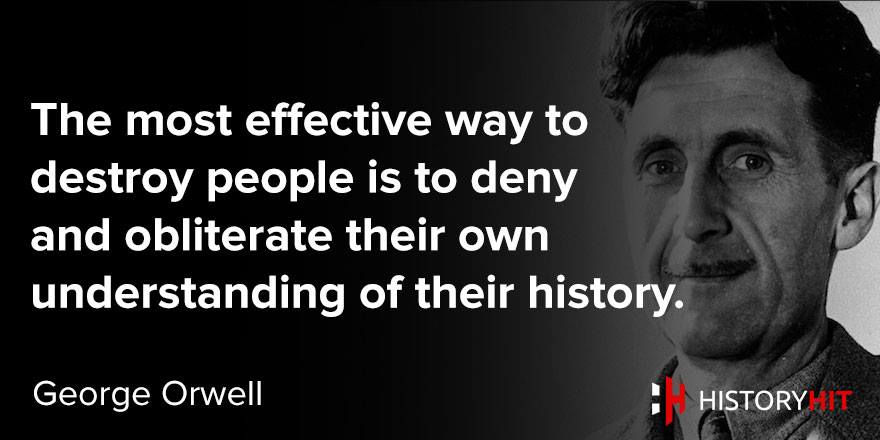
“The most effective way to destroy people is to deny and obliterate
their own understanding of their history.”

George Orwell

I have spent the first 30 years of my life under communist rule.
Under a communist yoke, actually.

I have witnessed Trump being elected President of the United States.
Thrown out by popular vote.
Then I watched Mike Pence being spirited away by the Secret Service. Some of those convinced by Trump’s Big Lie were chasing the Vice President inside the Capitol in an attempt to…

The US Supreme Court reversed Roe vs Wade.

Prigozhin, also known as Putin’s chef – and lately the mastermind behind PMC Wagner – had become so pissed that organized a field trip. Then turned his troops around and went to Belarus.

What’s going on here?!?

The world has become a battle-field.
A political battle-field where ‘right’ and ‘left’ fight for control.

Both sides oblivious to the fact that politics is, or more exactly ‘should be’, about solving people’s problems.

Given my experience – half a life spent under communist yoke – people expect me to root for the right side of the political spectrum. Which I do.
But I’m also fully aware that the left would have had no chance, absolutely no chance at all, if those on the right had been just a tad more considerate.

And here’s the catch.
There’s no such thing as a good left but there are a good right and a bad right.

The bad thing about the left – about the entire left – is the fact they ‘know better’. All of them. The left is choke full of solutions. Whenever somebody says ‘I noticed there’s a problem with… What are your thoughts about this subject?’ somebody from the left will surely grab the opportunity: ‘we’ve already told you that this and that had to be done a long time ago in order to solve this thing before it even happened’!
The bad thing about the right, the militant portion of the modern right, is that they’ve become just like their sworn enemies. They’ve somehow convinced themselves that ‘if you can’t beat them, join them’ and that’s what they did. They joined the left in battle. Using the very tools they have borrowed from the left and adopting the very same attitude.

The bad kind of right are also convinced that ‘they know better’. That you have to be a moron in order to be a ‘liberal’. Or, at least, a ‘greenhorn’. “If You Are Not a Liberal When You Are Young, You Have No Heart, and If You Are Not a Conservative When Old, You Have No Brain”.

In fact, it’s exactly this infatuation with their own ‘brains’ which is the worst thing about the left. And about the bad right.
I see no difference between Marx’s “The philosophers have only interpreted the world, in various ways. The point, however, is to change it.” and Trump’s ‘truthful hyperbole’.

You see, Trump isn’t a self made man, as he pretends to be.
He would have never become what he is today if Tony Schwartz, a liberal, hadn’t ghostwritten the Art of the Deal.

When Schwartz began writing “The Art of the Deal,” he realized that he needed to put an acceptable face on Trump’s loose relationship with the truth. So he concocted an artful euphemism. Writing in Trump’s voice, he explained to the reader, “I play to people’s fantasies. . . . People want to believe that something is the biggest and the greatest and the most spectacular. I call it truthful hyperbole. It’s an innocent form of exaggeration—and it’s a very effective form of promotion.” Schwartz now disavows the passage. “Deceit,” he told me, is never “innocent.” He added, “ ‘Truthful hyperbole’ is a contradiction in terms. It’s a way of saying, ‘It’s a lie, but who cares?’ ” Trump, he said, loved the phrase.

Furthermore, Trump would have never become the 45th President of the United States of America without the support of the ‘activist republicans’. The ones convinced that Roe vs Wade must be reversed. At all costs.
The ones convinced, just like the ‘liberals’ are, that they ‘know better’.

And, by the way, this is a fake.
Something that Orwell would have agreed upon but was never actually written by him.

The sentiment is one that Orwell, who knew plenty about the historical iconoclasm of the Soviet Union, might well have endorsed, but it seems he never wrote those words – certainly not in 1984 and, as far as anyone can discover, not in any other of his works.

As a man thinks, so he is; as he continues to think, so he remains.”
James Allen

Sometime ago – more than 45 years, when food was still plentiful in communist Romania – I heard for the first time that ‘many people dig their graves with their teeth’.
I was too young to understand the deeper meaning of this. That sooner or later each of us will meet the consequences of our previous decisions.

15 years ago I read a book written when I was a toddler. Almost 60 years ago.
The Social Construction of Reality by Berger and Luckmann.

In it, they argued that society is created by humans and human interaction, which they call habitualization. Habitualization describes how “any action that is repeated frequently becomes cast into a pattern, which can then be … performed again in the future in the same manner and with the same economical effort” (Berger and Luckmann 1966). Not only do we construct our own society but we also accept it as it is because others have created it before us. Society is, in fact, “habit.”

Nowadays, the social media is full of messages stating that the posters actually don’t care about what other people think of them.

What happened to “society is, in fact, habit”?

Have we become self-sufficient enough to live, each of us, on their own?
Really?

Do we really think like this?
Cocky enough to give the finger to everybody else?
Don’t we realize that we’re building a new pattern here? A new habit?

Will our children say that we’ve built the hell they’ll be living in by carelessly talking about it?

After all, the most dangerous enemy is that who worms its way from within.
Conceit cannot be survived!

“Propaganda machines give too much power to symbols;
they tell you the confederate flag is offensive!”

“Today, the Confederate flag is regularly weaponized by neo-Nazis and far-right extremists as they seek to intimidate African Americans. The flag can also be used to target Jewish Americans, as it was when it was tied to the front doors of the Museum of Jewish Heritage in January 2021.”

The fact that propaganda machines give too much power to symbols doesn’t mitigate the fact that some people find that flying the confederate flag is intended as an offense.

On the contrary, actually!

All people, men and women alike, are born, nursed and initially educated by their mothers.
By their mothers, inexorably women!

Some of the feminists, mostly women, act as if they want to exact revenge over their former ‘masters’.
Over men. Whom they perceive as oppressors.
Most of the feminists, from both genders, believe that women should be equal to men. That they are not yet so and that this is the most important problem which has to be solved in order for mankind (?!?) to go forward.

Being raised under communist rule – where women had been put to work, hence granted a lot of ‘equal rights’ – by a very ‘progressive’ pair of women – mom and grandmother – I grew up having the impression that men and women considered themselves partners. That being how my father and mother treated each-other.

I used scare-marks around progressive because neither my mother nor my maternal grand-mother considered themselves as such. Only behaved in that manner. Which I grew up considering to be normal.

Illusions, like always, end up being shredded.
Very soon I learned that not all people had been born equal.

And that I had been dealt ‘the better hand’…
So I didn’t waste any more time/energy to consider the matter!
For 40 or so years…

This is not the good moment to delve into details.
Enough for me to say that my quest – to understand as many as possible of the consequences ‘inflicted’ by the limited nature of our consciousness – led me to feminism. To ‘feminism’ seen as a social phenomenon.

Already convinced – since early childhood, conviction beefed up by the relation built in concert with my wife, that men and women are equal partners in the adventure called life, I was confronted by a huge dilemma:


Why on Earth so many women raise their children – both future men and future women – in the conviction that men are entitled to be served and women are meant to indulge their wishes?!?

Is it an attitude imposed by the overbearing men?
Hence easy to unlearn?

Or is it an evolutionary thing?
Hence harder to leave behind…

I continue to be under the impression that my most important break-trough to-date is that each individual conscience is primordially concerned with its own survival. Not as much with its ‘physical’ survival as with the conservation of the good impression it has about itself. With maintaining its self-esteem!
For instance, this is the reason for so many of us having such a hard time when trying to ditch a bad habit! Because we have to admit first, before ourselves, that we’ve been wrong for so long! That we’ve been acting foolishly since adopting that habit.

Coming back to the main subject, who would like to be?
The proud mother of a highly successful man or the mother of a below average Joe?
Small wonder then that in the current cultural environment we continue to raise highly assertive men. And, sometimes, women.
On the other hand, if you’ve been a submissive woman all your life, how do you feel in the presence of assertive women? Uncomfortably? Even more so if the assertive woman happens to be your daughter?

So, could it be possible that we are stuck in the present situation because we’ve conditioned ourselves to over-value the glitzy part of what we call ‘success’?
And because we’ve not yet learned to forgive ourselves for past mistakes?

Ernst Mayr, an evolutionist, put it this way:
‘Evolution is no way about the survival of the fittest.
“Fittest” to what ?!? since evolution is about being able to cope with change…
In reality, evolution is about the demise of the unfit!’

Same here.

We can fight ourselves into the ground, chasing ‘success’.

Or we can thrive together.
As equal partners, complementing each = other.

“Better to be a dog in times of tranquility than a human in times of chaos.”
The true version of the Chinese ‘curse’
too many times translated in English as
“May you live in interesting times”

Not so long ago, a presidential candidate told his audience “People… my people are so smart!….And loyal! you know, I could shoot someone on the 5th Avenue and not loose votes!”

As things happened, he was right. His people did vote for him.
He, a guy who had previously bragged about ‘grabbing women by the pu$$y’.

Four years later, the People changed their mind. And voted to send him back to Mar-a-lago…
He told ‘his’ people the vote had been rigged.
The ‘smart ones’ believed Trump to the tune of eventually chasing Vice-president Pence all over the Capitol in an attempt to convince him to ditch the result of the vote. Against all evidence, as certified by all pertinent authorities.

Currently, there is an increasing number of people floating the idea that ‘democracy’ isn’t for everybody.
The notion isn’t exactly new – see the ‘debate’ pitting ‘republic’ against ‘democracy’ – but lately its promoters have become even more brazen. They posit that since people are not equally endowed – intellectually, mostly – they should be tested before being allowed to vote.
Nothing new under the sun? The whole thing is nothing more than a rehash of the notion put forward by Robert Heinlein in Starship Troopers?

Not exactly!
Heinlein proposed that full citizenship – including the right to vote – should be extended exclusively to those willing to put their life on the line. ‘If you want to decide the future, you need to commit yourself to defending the present. With your life, if necessary’.
Quite a difference from ‘I’m not OK with how you may vote so I’m going to look for ways to disenfranchise you, under various pretenses.’

The way I see this, we’re confronted by two things.
An increasing lack of trust amongst us. And an burgeoning amount of intellectual dishonesty.


A well regulated Militia, being necessary to the security of a free State, the right of the people to keep and bear Arms, shall not be infringed.

As per the United States Constitution, Arms are supposed to be kept and borne with the main goal of protecting the free State. Which State was supposed to be governed by a government “of the people, by the people, for the people“.
Nowadays, under the pretext that ‘the government is more often the problem than the solution’, the defenders of the Second Amendment “as it was written” maintain that Arms are necessary so that the people may defend itself against an overbearing government.

Otherwise put, whenever I don’t like the outcome of an election, I need to be able to start a(n) (un)civil war. An attitude born out of a complete distrust in our fellow citizens’ ability to vote ‘right’.

And a simpler version.
I don’t trust all my fellow citizens’ ability to vote reasonably but I trust all my fellow citizens enough to let them walk around armed to their teeth. Unconditionally, in some states.

Coming back to Marcus Aurelius’ pronouncement, who is the one smart enough to determine whether those 10 000 actually have no idea about the subject at hand?
Not to mention the fact that Marcus Aurelius never actually said it…. Wrote it, more precisely.

And why do I choose to believe this guy Sadler instead of trusting the bloke who had created the meme? Because Sadler makes sense. And because Sadler had put his name forward – remember Heinlein? – instead of cloaking himself in the shadows of the internet.

Holidays are very good opportunities to reconsider,
And to learn new things.

These days I learned that while having nothing makes you feel ‘uncomfortable’, having too much can be very limiting.

If you have just enough, you can go forward. Explore new venues. Learn new things.
Enjoy life!

If you have too much, you spend too much time and energy protecting what you already have. Trying to get more…
The venues open for you to explore are suddenly reduced to one! Only one… You become the guardian of your fortune!
Can you enjoy such a life?
Are you sure? Have you examined the alternatives? In earnest?

‘Are you implying that all wealthy people are unhappy?
Unable to enjoy their lives?!?’

On the contrary, my dear Watson!
I’m only saying that being wealthy is complicated.
“Just enough” is a matter of individual ability to cope.
That enjoying wealth needs a lot of skill.
And that being wealthy comes with a lot of responsibility!
Towards yourself in the first place!

And towards your kids, family and the rest of the gang…

The vaunted human capacity for reason may have more to do with winning arguments
than with thinking straight
“.
Elizabeth Kolbert, Why Facts Don’t Change Our Minds

I love that. Just love it.
“The … human capacity to reason”!

Other thinkers hail reason as the thing which sets us apart from the rest of the animals…

The way I see it, reason is nothing but just another tool.

The thing which sets us apart from the rest of the animals being our ability to observe ourselves while interacting with the rest of the universe. Otherwise known as consciousness.

Basically, reasoning is nothing more than a ‘dialogue with myself’.
When I ‘consider a thing’ in my mind, consciously, I practically put my brain to work.
I order my memory to summon up all the data it has on the subject and I ask my frontal lobe to process that data and to reach a conclusion. In theory…
In the real world, my amygdala – the piece of the brain where emotions are processed – already has an opinion about everything which crosses my mind. The more familiar the thing, the stronger the opinion. The more often my mind – meaning I, had expressed itself regarding a subject, and the more recently, the stronger the opinion my amygdala already has about the matter.
If the matter is considered for the first time, and has no connection with anything else I had already ‘conclusioned’ about, only then my amygdala might keep its opinion for itself. The key word here being ‘might’…

Since this is nothing more than a blog post, I’m not going to prove my opinion. To discuss the importance of the fight-flight mechanism and to mention that this mechanism had done more – evolutionary wise, than reason for our survival. For us having the opportunity to develop this vaunted capacity for reason…

I’ll just end it abruptly.
Mentioning that our individual consciousnesses use reason as a tool. To arrange facts in such a manner as to confirm the already reached conclusionary opinions put forward by our amydalae. “To win arguments”, if you will, including when debating with ourselves.
Only when the facts – the harsh reality, contradict in a flagrant manner the already held convictions we might change our minds.
The more immediate the danger we put ourselves into by sticking to our convictions, the more likely we are to cave in to the facts.

To the facts as we perceive them… Which is yet another story!

Tough times create tough men. Tough men create easy times.
Easy times create weak men. Weak men create tough times.

American proverb
Wealth lasts only for three generations: one to make it, one to keep it, one to squander it
Chinese proverb
If you raise your children, you get to spoil your grandchildren.
If you spoil your children, you get to raise your grandchildren.

Popular word of mouth

There’s no denying that, on average, each generation fares better than its predecessor.

Then why some people end up worse than their parents?
Is it a social thing?
Is it in their upbringing?
Is it the consequence of bad personal choices?

The easy way out would be to consider that legislation, material status, the culture one was born into and even the upbringing offered by the parents are nothing but circumstances. And, ultimately, it’s the individual who makes the call. And bears the consequences…
But the above mentioned individual doesn’t rise from and into a complete void… so I need to go deeper!

An equally true but somewhat more useful observation would be that we’re dealing here with something more important than mere wealth.

‘There’s no such thing! Nothing is more important than Wealth!’

Yeah, right… Individual people keep squandering the personal wealth accumulated by their forefathers, the humankind keeps going forward and you tell me personal wealth is the most important thing here…

But you do make a good point. Your insistence, obsessive even, about wealth being the crux of everything is very relevant.
Since I agree with you that wealth is important, indeed, then maybe it’s the ‘insistence’ which is causing the problem…

First of all, allow me to make a simple distinction.

There is wealth – structured opportunity, I’ll discuss this notion in another post, and there is personal wealth. Opportunity which belongs to somebody.
When an individual squanders the wealth inherited from their parents – or even that which they had managed to put together themselves, the wealth itself – the accrued opportunity – doesn’t disappear from the face of the earth. It just passes from one hand to another. Most of it, anyway. For the simple reason that most of today’s wealth is expressed in money. Which is fungible.

‘OK. So individual people squandering their inherited wealth do not represent such a big problem. The total wealth already present ‘on the face of the Earth’ remains (more or less) the same, no matter who owns it. And since new wealth is created everyday, the humankind, on aggregate, goes forward.’

That’s how things used to be. That’s how things had evolved for the last ten millennia or so. Ever since our forefathers had invented agriculture. Agriculture and money… Land and money cannot be destroyed. Buildings and almost everything else which carries value can. Be destroyed. Land and money also, actually, but it’s a lot harder to do it.

But there’s a catch here.

For wealth to do its trick – to function as an opportunity, people have to have access to it.
That’s why, for example, people do not keep their money under the mattress. When deposited in a bank, money will end up being used. The bank will lend them to somebody who needs it and that somebody will put that money to work, In no matter what shape or form. Kept under a mattress, money becomes mostly useless. At least for the time being…
And this is where ‘insistence’ – our obsessive insistence – that money is the only worthwhile goal for any respectable person becomes counterproductive.

‘Are you a communist?!?’

On the contrary, my dear Watson!

In fact, Marx had been just as infatuated with money as Milton Friedman was going to be a century later. With more or less similar results…
Friedman taught us that greed is good. Profit uber alles. That getting money trumps everything else. That getting money is not only good for the individual itself but also commendable. That everybody should make it their goal to become rich!
Marx, on the other hand – please remember that the ‘other’ hand is nothing but similar to its twin – advocated for all wealth to be stripped from its rightful owners.
See what I mean? Both Marx and Friedman had been thinking only about ownership. Who owns that wealth!

On average, we deal with the same situation.
According to Friedman – pushing his advice to the very limit, there’s no problem if someone owns all the money in the world. If it so happened, so be it.
According to Marx, nobody should own anything.
On average, the wealth corresponding to each living human in both situations would be the same.

We already know the consequences of Marx’s teachings. When all the wealth present in one country is managed by a very small number of people, the whole situation goes south. Fast. Very fast!
We also know what happens when the market is cornered. Becomes suffocated by a monopoly. The whole situation goes south. That’s why we cherish the freedom of the market!

Doesn’t make much sense?
To insist that the market must be free and simultaneously maintain that ‘greed is good’?

Yep! My point exactly…

The vaunted human capacity for reason may have more to do with winning arguments than with thinking straight.
Illustration by Gérard DuBois
Why Facts Don’t Change Our Minds
New discoveries about the human mind show the limitations of reason.
By Elizabeth Kolbert February 19, 2017
https://www.newyorker.com/contributors/elizabeth-kolbert

For some reason, there still exists a considerable number of people not yet convinced that what had been experienced in the Soviet Union was “a true socialist/communist form of government”

The sad reality is that the Russian Revolution did establish a true socialist form of government!
As per Marx’s teachings.
The communists had been in charge of things, and the things failed to become better.
In fact, they had become worse.
Eventually, the Soviet Union – along with all other socialist attempts, had crumbled under their own weight.

Those who want to find better alternatives to democratic capitalism – good luck with that – need to find another word but socialism to describe their goal.
Or wait a few generations before attempting to give it a new meaning. The current one had been wasted by the likes of Marx, Lenin, Stalin, Mao, Kim, Ceausescu…