Archives for category: teleology

‘From virus? What?!? And from which one?’

From none in particular.
From all of them, since all viruses are nothing but information!

‘Huh???’

Most biologists consider viruses to be something ‘in between’. Not exactly ‘life’, since they cannot replicate themselves, but something more than mere matter.

Only this approach sets very straight limits to how we understand life itself.
Or should I rather use ‘narrow’ instead of ‘straight’?
‘Narrow’ as in ‘not wide enough’ minded?

“Information which perpetuates itself”.

Does this sound right for you?

We. humans, are individual human beings. ‘Social’, indeed, but, nevertheless, individual. It’s our individual-ness which sets us apart from our nearest cousins. Chimps and bonobos.
It’s our individual-ness which sets the parameters of our world-view. That being the reason for our attempt to define life as a characteristic of the individual organisms which happen to be alive.

This being the moment when I feel the urge to direct your attention upon a seminal book.

Hmmm… the Origin of Species…

If evolution is about ‘Species’, then what about life itself being more about species than about individuals?

What about life being more about the process through which information is passed along from one generation to another than about an individual organism being alive or not?

In this sense, ‘virus’ would belong to the realm of the living, right?

I challenge you to try an experiment.
Click the illustration bellow, copy the link and post it to your favorite social media.
Then observe the likes you’ll get. I wasn’t surprised to notice that many people on the right side of the political divide were quite fond of it’s spirit…

‘Yeah, only MLK hadn’t been “formally affiliated with either political party“…”

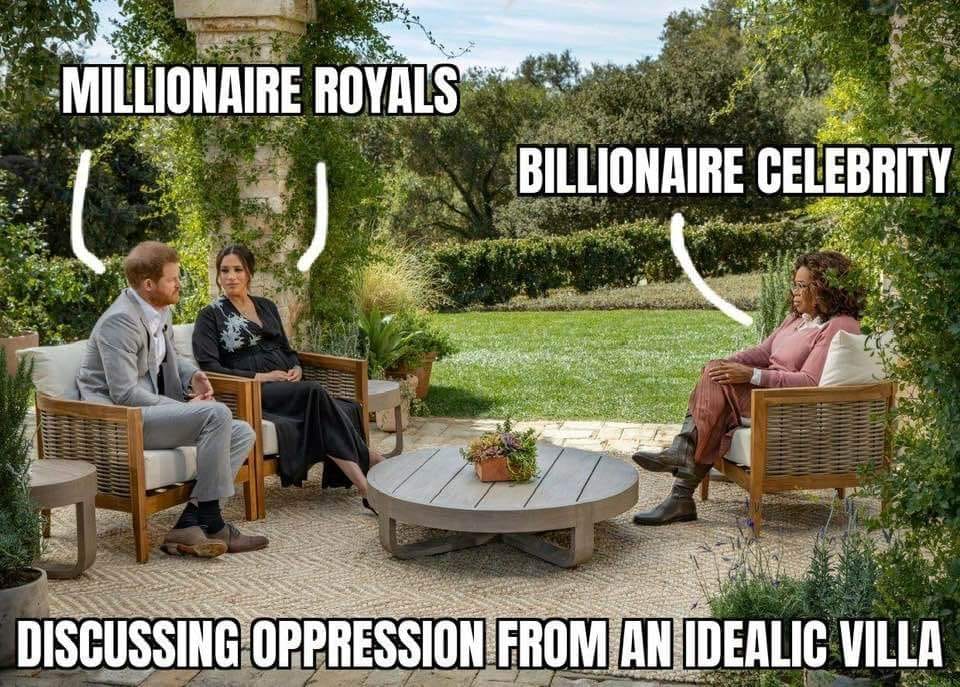
Well… how about this one?

‘OK, and your point is…?’

That there’s not much real difference between the radicals. Between the radical members of both parties.
Both are so convinced that they ‘know better’ that neither have any qualms trying to impose their vision upon everybody else.
Both are so convinced that they are right that they ‘hate’ all other authority but their own. And they hate each-other’s guts… only that comes with the territory…

Let me start with the beginning.

I grew up under a communist regime. Drowning in propaganda. The education system was finely tuned to raise us, children, as ‘the New Man’. All cultural effort – culture was ‘sponsored’ by the communist state and heavily censored, was meant to achieve the same goal. Immediately after the communist regime had grabbed the absolute political power, the legislation had been altered to reflect the ‘new reality’. And then used to convince the people to change their behavior according to the new rules.
According to whatever the new masters had in mind …
So that they could control everything. That nobody else could have exerted any authority. That nobody else could have had any real influence over anything.

And, as you might know, the communist regime – most of them, anyway, had eventually crumbled. Under its own weight.

Which teaches us two things.

That whenever a system is run in an authoritarian manner, mistakes keep piling. One on top of the previous one. Constituting the dead-weight which will eventually sink the ship.
That no artificial ‘New Man’ will ever survive for long. Yes, you may ‘legislate behavior’ – even against the true wishes of the general population, only the ‘new’ arrangement will not last for long. For a ‘legislation’ to be able to survive for any substantial amount of time it has to reflect the ‘true heart’ of those called to put it into practice. To ‘follow the rules’. That you ‘can restrain the heartless’ but for only as long as the ‘heartless’ remain a small minority.

Want to ‘change’ something? Then open people’s eyes first. Only that way they’ll eventually open up their hearts.

‘What about the spat between AOC and Ted Cruise? Where’s the link between what happened with GameStop and MLK’s attempt to regulate behavior?’

Both AOC and Ted Cruise hate the fact that there are independent agents. Besides them, of course. That there still are people who call their own shots. Private companies they cannot control, media venues, independent authorities… The ‘AOC’-s and the ‘Ted Cruise’-s of this world hate each-others guts but have more or less the same convictions.

That they are right – and everybody else is wrong.
And that there must be a way!
That there must be a way, a ‘rational’ way, in which their righteousness may be imposed upon the rest of the world.

That ‘rational’ way implying two things.
Control over the ‘material’ resources and control over people’s minds.

That’s why the communists had ‘abolished’ private property. That’s why the (no longer free market) contemporary capitalists are OK with extreme wealth polarization. As long as they on the right side of the ‘in-equation’, of course…
That’s why education has become such a hot subject.
That’s why control over the legislative process has become so important.
Why controlling the markets – controlling them, not preserving their freedom, is paramount…

The only bright thing in this whole mess being that the two sides still hate each-other’s guts.
Which gives us some more lee-way.

Time to understand that for progress to be possible we need to take care of our roots. To ‘conserve’ them!
Time to remember that ‘pruning’ needs to be done carefully.

That we have to ‘cut’ only what’s ‘wrong’, not everything we don’t like.

How to tell those two apart?
‘Humility’ comes very handy in these moments….
Freedom isn’t for free. Nobody is free by itself, only together.
Those who really want to be free must start by respecting each-other.
That’s how mistakes are avoided. By asking for a second-opinion. By listening to what others have to say on the matter.
That’s how normalcy is being defined. And preserved.
How we learn what’s ‘wrong’. How to tell what works from what needs to be pruned.

I cannot wrap this up before giving you a fine example of how ‘propaganda’ works.
It starts with cutting up the truth. By actually pruning it to fit the purpose. Then let’s our already primed brains to do the rest.

See what I mean?

I don’t know anything.
I don’t know everything hence, logically, I cannot pretend to know anything.

Seems odd, since I obviously know something… to type, for instance!

Indeed, only the key word here is ‘logically’.
From a logical point of view, you either know something or you just don’t.

Not very reasonable… This line of thinking leads up, fast, into a dead end!

As soon as I realize I know ‘nothing’, I must stop!
I can no longer ‘do’ anything.
Because I cannot control – in an absolute manner, each and every consequence of any of my actions.
Further more, there is no justification for me to continue thinking.
Again, because I will never be able to achieve ‘knowledge’.

Yet so many things are being done around me…
From the sun rising in the morning to the ant helping its mates to dig a nest.
From the electron ‘flying’ around the nucleus of a Hydrogen atom to a man developing a computer application.
How can all these actions be performed when nobody, not even the ‘performers’ themselves, is able to determine the ultimate consequence of what’s going on?
How can so many thoughts be ‘spun’, and books published, when the ‘thinkers’ themselves – well… some of them, actually, are fully aware of their intellectual limits?

What drives this frenzy?

And, if I may allow myself a thought, why ‘logic’?
How can such a ‘paralyzing habit’ survive?

“The most common name this group is given is Gen Z; I call them Generation K, after Katniss Everdeen, the determined heroine of the Hunger Games. Like Katniss, they feel the world they inhabit is one of perpetual struggle – dystopian, unequal and harsh.”

Each successive generation has to make do with the situation they had inherited from the old one.
And whatever it ‘builds’ on top of that will constitute the starting point for the next one.

We – those born between the early 50-ies and the middle 70-ies, and who constitute the vast majority of today’s significant decision makers, have had a ‘once in the entire history’ opportunity. The fall of the communist regimes almost all over the world had lifted many of the ‘practical’ hurdles left around from the previous generations. We had been freed from all limitations but those we’ve imposed – willingly and/or unwittingly, upon ourselves. So much so that Francis Fukuyama had described the situation as ‘the end of history’.

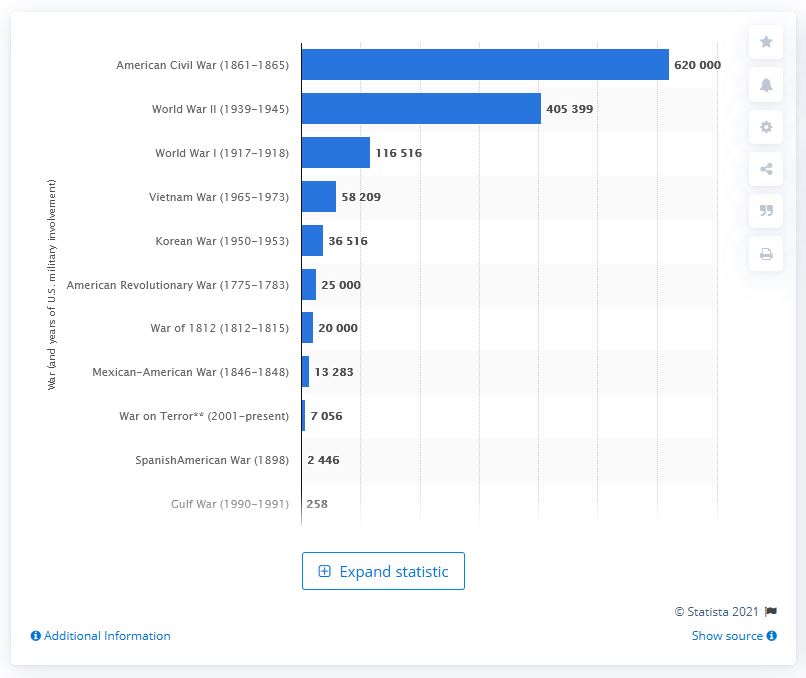
We’ve been, indeed, the first generation in modern history – or ‘contemporary’?!?, which didn’t start a ‘wholesale’ war… if we discard the ‘war on terror’! Or that ‘on drugs’…

The point being that we’ve failed. To use the huge opportunity presented to us.
By Lady Luck… our fathers had done nothing but continued the traditions imposed upon them by their fathers…

We, on our turn, don’t have that excuse.
We didn’t have had to continue anything… Conditions had been perfect for a fresh start!
Yet we had ‘preferred’ to ‘carry on’… As if we had learned nothing from what had just happened!

Fukuyama himself, after having been lionized by his peers and then contradicted by Clio, had ‘relapsed’.
After prophesying that ‘liberalism uber alles’ he had recently attempted to explain away his failure using ‘the need for recognition‘.

In fact, he wasn’t exactly wrong in 1989 – we did have a chance to move in that direction, nor is he totally off the mark now. ‘The need for recognition’ did play a role in our failure.
Fukuyama – along with the rest of us, had made the capital error of over-trusting his own intellect.
Of convincing himself that ‘the world’ can be understood.

Hence predicted.

And who has to make do in the present situation?
To deal with our failure?

As always, the next generation!
Our children…

For the first time in 100 years, Britons are dying earlier.

40 years ago, the car manual was about how to adjust the carburetor.
Nowadays it starts with a stark warning. “Don’t drink the cooling liquid!”
Then it teaches us how to use the infotainment system and how to adjust the electric seats…

In those times, most of us – regardless of what country we lived in, had nothing fancier than a washing machine. And a TV set capable of receiving no more than 12 channels. But we had a lot of time to spend with our friends and relatives.
Nowadays, our houses are choke full of appliances designed to make our lives easier… So we break our backs working to pay for this paraphernalia! And we get so tired in the process that when we finally get back home, late at night, we’re so exhausted that we cannot do anything else but watch one of the 200+ channels our cable feeds into the huge TV which dwarfs everything else in the living room.

Meaning that we wrap up most of our days watching yet another mind numbing news-bulletin… which informs us about how bad tomorrow will be… unless we follow whatever advice that channel is determined to ‘sell’ to us!

“How absurd to imagine that something we can make could actually deliver us from problems we could not free ourselves from!”
Dr. Allen Ross, Dead Idols or the Living God

According to Abraham Maslow, people’s lives are ‘staged’.
During the first four, each individual ‘must’ – ‘inside’ whatever circumstances Mother Luck had granted them, provide for their ‘needs’.
Only after they had reached the fifth stage, individuals have the opportunity – but no ‘obligation’ other than that each of them impose upon themselves, to ‘reinvent’ their own personae. Maslow had used ‘self-actualization’ to describe the process.

In religious terms, the whole thing is known as ‘coming to peace with oneself’.

No more ‘absurdity’ here!
There’s so much each of us can do in order to move ‘forward’…

‘And where is this famous ‘forward’?!? How are we, individually and/or collectively, to determine which is the ‘good’ direction?!?’

Is our ‘imagination’ good enough to come up with a solution for the “problems we could not free ourselves from”?

The carpenter measures with a line

    and makes an outline with a marker;

he roughs it out with chisels

    and marks it with compasses.

He shapes it in human form,

    human form in all its glory,

    that it may dwell in a shrine.

He cut down cedars,

    or perhaps took a cypress or oak.

He let it grow among the trees of the forest,

    or planted a pine, and the rain made it grow.

 It is used as fuel for burning;

    some of it he takes and warms himself,

    he kindles a fire and bakes bread.

But he also fashions a god and worships it;

    he makes an idol and bows down to it.

Half of the wood he burns in the fire;

    over it he prepares his meal,

    he roasts his meat and eats his fill.

He also warms himself and says,

    “Ah! I am warm; I see the fire.”

From the rest he makes a god, his idol;

    he bows down to it and worships.

He prays to it and says,

    “Save me! You are my god!”

Is ‘induction’ a comprehensive enough solution?
Or ‘too much of a good thing’ will never fail to become ‘bad for you’?

Confused?

Let me put it another way.

‘One size fits all’.
How many times have you been really satisfied by such a ‘solution’?
Do you really think an ‘idol’ fashioned by a carpenter – by the most talented carpenter, even, will ever satisfy the needs of at least one blacksmith?

‘But how about the idols fashioned by Plato’s king-priests?’

To answer this question – this excellent question, if I may say so myself, we must turn back to Dr. Allen Ross’ Dead Idols. To the difference between the Dead Idols and the Living God, to be more precise.

‘Criterion for what?’

If you pay close enough attention to what’s written above, you’ll notice that not passing the falsifiability test doesn’t mean than an assertion is false! Far from it, actually!
Not passing the falsifiability test – ‘if a claim is compatible with all and any states of affairs’, only means that that claim is both ‘true’ and unscientific! Simultaneously true and not scientific!

‘And what has any of these to do with God?!? With the Living God or with any of the Dead Idols humankind has built for itself? And later discarded?’

I’m afraid you’ll have to come back for the answers.
Or, to put it differently, I’ll gladly welcome you back!

According to Alan Hayek – the guy who claims the copyright for the relevant entry into the Stanford Encyclopedia of Philosophy, the wager doesn’t make any sense unless you consider that God is, however remotely, possible.

Now, that I grabbed your attention, let me point it to the subject du jour.

The face mask!

To wear or not to wear one…

Strangely enough, many of those who believe in God are adamantly refusing to wear a mask.
They don’t actually see God yet they find the world as THE argument for His existence.
And, at the same time, they refuse to acknowledge the seriousness of the Covid 19 pandemic. Which had already killed, or hastened the death of, more than 1.2 million people worldwide.

OK, almost no mask – specially the ones worn by us, civilians, is 100% fool-proof.
But wearing one is far better than none at all…
OK, most of us would weather the infection with relative ease.
But some would die!
Then why spread it around?

For that, if you didn’t already know, is more than half of what the masks do!
They make it harder for those of us who already have it – but don’t know it yet, to spread it around.

Help prevent the spread of COVID-19 by protecting yourself and others. Keep in mind that you may have the virus even if you don’t have symptoms.

You still consider it to be a muzzle?

Why? Only because it is mandated by the government?
And you don’t trust your own government? While living in a democratic country?

But since when do you rely on your government to tell you which is the sensible thing to do?

My father uttering this, again, convinced me to share with you the interim conclusion of my informal study. “The consequences of our limited conscience”

Consciousness is a ‘phase of matter‘ which has an intrinsic characteristic.
One which closely resembles inertia.
The prevalent tendency of consciousness is to preserve itself, even if this means putting the individual hosting it in mortal danger.

Doesn’t make much sense?

How many of you still smoke? Or did smoke? Had an occasional ‘one drink too many?’ Carry around a couple of ‘extra pounds’? Used drugs?
All these knowing too well that ‘it’s bad for you’?

I challenge you to remember the arguments you used to quell your worries.
More precisely, the arguments used by your conscience to quell its worries…
‘I’ll give them up ‘sometimes’.’
‘One cannot hurt me.’ Much…
‘My grandad lived for almost a century and smoked to his last day.’

See what I mean?
Our consciousness is more concerned about keeping itself ‘together’ rather than preserving the well being of the host it inhabits. On which it depends. For its dear life…
It actually prefers to lie to itself rather than face the reality.
Until the shit hits the fan…

And sometimes no amount of ‘wake-up calls’ can do the trick. I know a few people with cirrhosis of the liver who continue to drink – ‘I’m already dead, why bother?’ and a few people who cough their lungs out in the morning and go on smoking.

Same thing in politics.
After an individual had made up his mind…. it is very hard for him to change his opinion. It would mean to accept that last time he had been wrong. That he had been duped.
So he keeps looking for the flimsiest reason to continue on the old path …

Or, if the guy/party he had chosen doesn’t have any chance… he prefers to stay at home, rather than to vote for a looser. Which would mean he had knowingly placed himself on the loosing side. Unacceptable.

I’m sure you’ve already figured out what I want to convey.

It is rational to consider that one cigarette won’t kill you. But it’s unreasonable to smoke. Period.
It is rational to consider that one glass won’t kill you. If you don’t drink and drive, of course…. But it’s unreasonable to drink yourself to death!
It’s rational to stay at home if ‘your team’ has no chance to accede to power.
But your staying home doesn’t spell the whole truth. By staying home you transmit the message that you don’t care. That you are satisfied with what’s going on around you. Or too ‘tired’ to care…

Which practically gives carte blanche to whomever gets elected!
‘If so many of them do not care about their own well being, why should I? Let me take care of my own people and to hell with the rest’.

See what I mean? Not everything our consciousness feels good about is actually good for us.
We really need to get our heads out of our asses if we want to look forward.

Division of work was the first milestone we had passed in our quest to reach humanhood.

If not convinced, compare the effectiveness – in any situation, of a team composed of identically educated and similarly skilled people versus one comprising individuals with various skills and diverse exposure to the world – a.k.a. education.
In other words, compare a bunch of ‘robots’ to a gang of people who complement each-other.

Historically, societies – when and where enough resources had been present, have become increasingly complex. While those composing them have become more and more specialized. And more and more dependent on the rest of the society. On the smooth functioning of said society.
In Adam Smith’s words: the baker, the butcher and the brewer depend on each-other to feed their respective families.

In fact, all of us depend on the smooth functioning of the market. Those of us who had experienced communism had learned this on our own skin.
Same thing is valid for all totalitarian societies. Any attempt to run complex systems from above – in a centralized manner, will – sooner rather than later, end up in failure.
For no other reason than the fact that nobody – individually or in a small team, is above error. No matter how smart or well intended, all of us make mistakes. If the system allows for those present to point out errors – and to demand those errors to be fixed, things may continue.

But, by definition, a totalitarian – a.k.a. centrally planned, system has no feed-back loop. The planners have ‘no’ information about the consequences of their decision making. Well, my experience suggests a combination. Those at ‘the bottom’ gradually loose their appetite for sending information topside – because those at the top had the habit of ‘killing’ the bearers of bad news, while those at the ‘top’ gradually loose any interest in what goes on at the bottom.

Working democracies are organized around the principle of ‘separation of powers’. Another form of ‘division of work’. Each ‘power’ does what it’s supposed to do and, together, balance the whole system.

Nothing ‘fancy’.
For as long as those involved pay due respect to the principle instead of lip service to the form…

Nassim Taleb had coined an interesting concept.
Intellectual yet Idiot.
Any individual conceited enough to believe he’s always right and arrogant enough to try to impose his worldview on those around him.

Or, in Karl Marx’s terms, an individual who has convinced himself that the world needs to be changed according to his own precepts.

‘What?!?
Are you implying that Marx was the first ‘intellectual yet idiot’?’

No, only the second…
Remember Plato’s ‘king priests’?
What’s the difference between those who, according to Plato’s advice, were to be groomed to govern and those who had been conditioned by various totalitarian parties and sent out to ‘spread the word’?
What’s the difference between Plato, Marx and, say, Alfred Beumler and Alfred Rosenberg?

Plato had been inspired by what Pericles – a dictator, had managed to achieve and his most prominent ‘product’ had been Aristotle. Who, in his turn, had educated Alexander the Great. Supposedly one of the greatest generals and statesmen in human history. According to European historiography, anyway…
If you ask to those of his contemporaries who had happened to be in Alexander’s path to glory… you might get a different opinion!
And what’s so glorious in being the immediate cause of death for so many people across three continents only to die of alcoholic poisoning?

Marx had come up with a brilliant explanation for what went wrong in early capitalism and with an abysmal solution for the problems he had identified.
The worst thing being that he didn’t stop at proposing aberrant solutions.
He was actually instrumental in several attempts to put them in practice.

Alfred Beumler and Alfred Rosenberg. Is there any need for me to comment on them? On their absolute arrogance?
How else to call their willingness to declare that some people are to go on living while others should be disposed off?

This being the moment I’ll be pointing the finger to what Plato, Marx and Beumler/Rosenberg have in common.
All of them share the willingness to divide people into ‘deserving’ and ‘undeserving’. The arrogance to put forward criteria which are to be followed by the rest of us.
The arrogance to consider the world should follow their teachings.

Division of work had done it’s job.
Invented by nobody in particular, used by most of us – and many of our ancestors, it had brought us to where we are now. When so many of us have time to think.
Technology – maybe the most evident consequence of ‘division of work’, is proficient enough to feed us all. If we use it right.
Or to kill us all. If we use it wrong.

What will it be?
Are we going to remember what, time and time again, our forefathers have figured out? That ‘together’ we can ‘move mountains’? That diversity is the key to survival? To finding new paths into the future?
Or are we going to fall pray – not for the first but, certainly, for the last time, to those who teach us to despise our neighbor? To stay separate? To consider some people – mainly ‘us’, as being above the rest?

In a free-enterprise, private-property system, a corporate executive is an employee of the owners of the business. He has direct responsibility to his employers. That responsibility is to conduct the business in accordance with their desires, which generally will be to make as much money as possible while conforming to their basic rules of the society, both those embodied in law and those embodied in ethical custom.” Milton Friedman, 1970

Between 1776 and 1970 the world had leaped forward. Technologically, economically and socially. Not only that we’ve managed to learn so much about the world and to produce immense wealth but we’ve somehow managed to ‘spread around’ the results. The proportion of people who had improved their fortunes had grown constantly during the entire period.

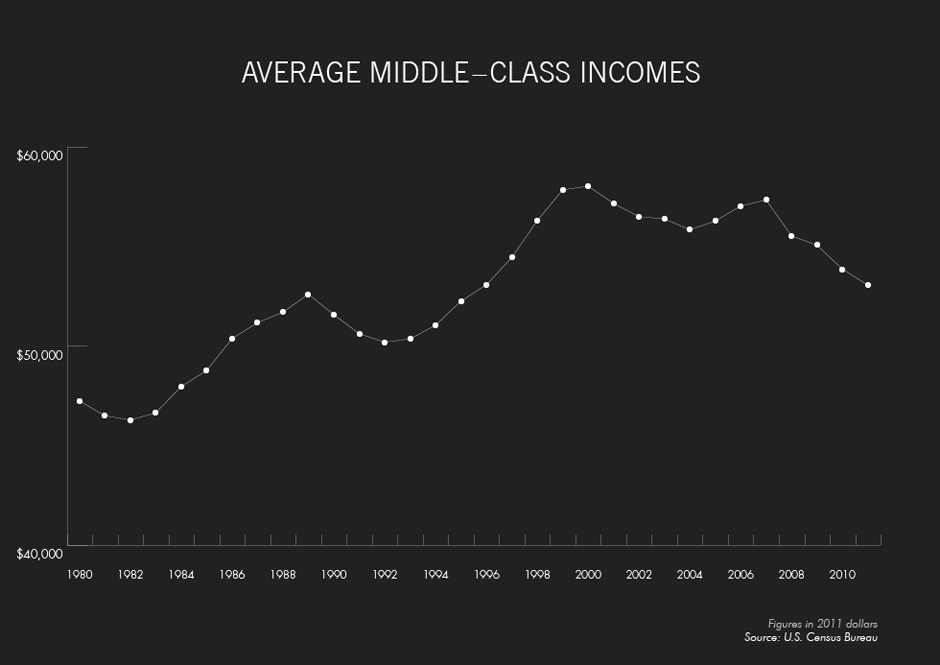
The majority of Americans share in economic growth through the wages they receive for their labor, rather than through investment income. Unfortunately, many of these workers have fared poorly in recent decades. Since the early 1970s, the hourly inflation-adjusted wages received by the typical worker have barely risen, growing only 0.2% per year. In other words, though the economy has been growing, the primary way most people benefit from that growth has almost completely stalled.” Jay Shambaugh, Ryan Nunn, HBR

Isaac Newton hadn’t invented gravitation. He only ‘noticed’ it. Put it in words.
Adam Smith hadn’t invented the free market. He had noticed how it used to work and opened our eyes about it.
For what ever reasons, enough of us had chosen to close those eyes back. And have reached the conclusion that ‘greed is good’.

Milton Friedman was both horribly wrong and exactly right.

He was right in the sense that he had gouged correctly what the ‘general public’ wanted/was ready to accept. “in accordance with their desires, which generally will be to make as much money as possible

He was horribly wrong in the sense that he had perpetuated Marx’s error. Karl’s, not Groucho’s.

Money isn’t everything. Life beats it to the post.
Profit is, indeed, essential. Only it is nothing but an indicator. About how efficient a corporation is.
Meanwhile the role of a corporation is to accomplish – as Friedman himself had dully noted, the will of the shareholders.

The problem arises from the fact that ‘near mindedness’ blinds.
If/when both shareholders and management have nothing but ‘money’ in their scopes the market actually looses its freedom.

Economic agents no longer converge towards the market to solve each-others problems – like Smith had noticed, but to ‘make money’.

Not the same thing. Not by a long shot.