Archives for category: Psychology

“Friedrich Engels in a thinker’s pose
The four-meter-tall bronze sculpture of the other philosopher of communism, Friedrich Engels, is a bit smaller than the planned Marx statue in Trier. This Engels monument in his hometown, Wuppertal, was also made by a Chinese artist and offered by the government of China in 2014.”

I grew up under communist rule.
We studied marxism in school.
At some point, I was about 16, the teacher asked us about the relative merits of the different brands of materialism he had mentioned during his classes.
My answer was ‘dialectic materialism is better than all others because those who apply it into practice constantly gouge the consequences of their (political) decisions and fine tune policies accordingly’.
Some 15 years later the communist lager had imploded simply because those who were supposed to act in a dialectic manner had failed to put the principle in practice.
Coming back to the original question, ‘was Marx a determinist’, the answer is yes.
Marx’s dialectics is only a procedure. Meant to help the communists exercise the dictatorship mandated by Marx in the name of the proletariat. And dictatorships are determinist by definition.
Why mandate one if you are not convinced that things can be ruled?
For the long run and in a comprehensive manner?
Most of us consider corpses as being inert.
And those individuals who are in deeper stages of coma.

Living organisms, on the other hand, are considered as being reactive.
They drink when thirsty, eat when hungry, run when in danger…

As for behaving in a pro-active manner… things are no longer so simple.
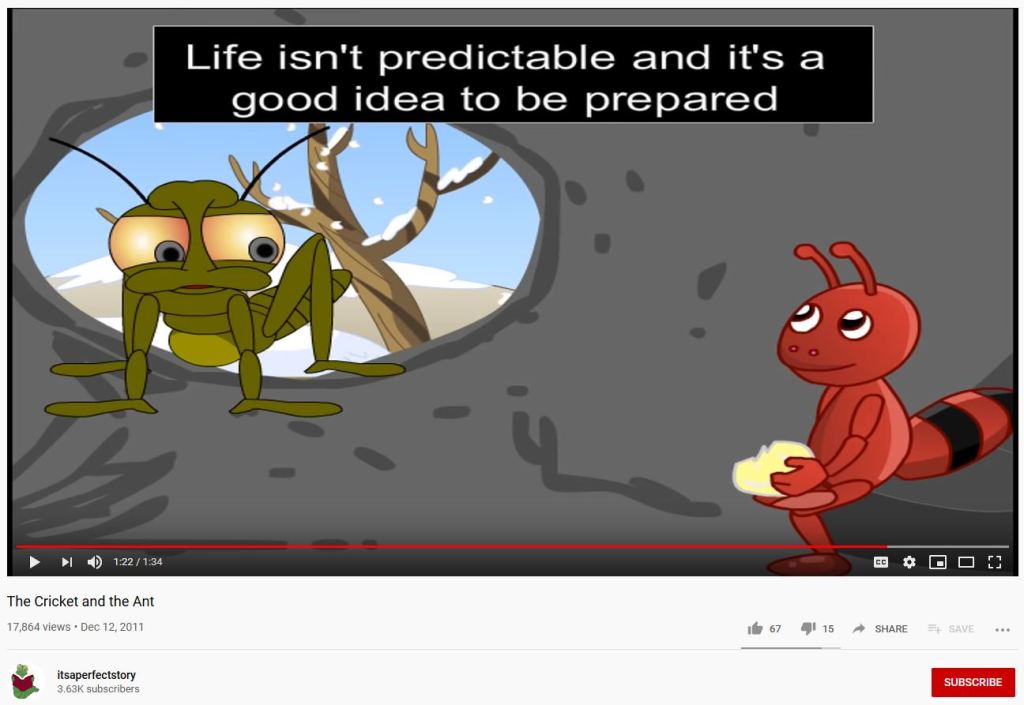
Ants, for example, are constantly praised for their behavior.

While crickets are disparaged for their recklessness …

But what about the dung beetle?
Also proactive?

They dig shelters and provide them with food for the next generation.
If this isn’t proactive behavior… I don’t know what else would qualify.

‘But … really?!? Can a beetle be ‘accused’ of behaving in a pro-active manner? An insect? Are you nuts?’

I’ll make a small break now. And point your attention to something I find very interesting.
“Life isn’t predictable and it’s a good idea to be prepared”.
Prepared for what?!? For God’s sake… remember? ‘Life isn’t predictable’!
Hello!!! The ant is hoarding food during the summer exactly because she doesn’t want to starve during the winter. She absolutely knows that winter is coming. She prepares herself because she knows what’s going to happen! Duh…

Coming back to the beetle, no, I ain’t nuts. I’m only trying to suggest that species act as if being proactive. Individual organisms do not necessarily behave in a proactive manner but species always do. Those who don’t… disappear soon enough.

Nothing existed before we came around. To notice.

They were there, alright. But didn’t existed, yet.

Most dictionaries do not discriminate between ‘being’ and ‘existing’.
But I still recall, vividly, those moments when – as a teenager, I tried to make myself remarked by the girl I fancied at that moment. More often than I’d like to remember, it was as if I didn’t existed at all.
I was standing there, making a fool of myself, yet I didn’t existed at all.

Simply because I wasn’t noticed.
By the significant one.

Everything which has a temporal dimension – movement, transformation or both, incurs costs and produces consequences.

From a rock sliding down a slope to me writing this.

The difference between these two being the simple fact that no rock has ever had any goal.

You see, the rock looses some energy and mass while sliding down. It accelerates at first but since no rock has ever slidden for ever.
Only rocks never do anything on their own. Something has to happen to them first.
They do bear the costs – they wear down, break, etc., yet they don’t mind. For they are not, at all, aware of what’s going on. And, anyway, completely unable to do anything about it. Hence not at all ‘responsible’ about any of the consequences produced by whatever they had been involved in. Happened to them, actually.

Fast forward to me. I’m not only alive – hence reactive to whatever happens to me, but also aware. Aware of my own awareness even.
I notice the costs I have to pay. Hence I try to minimize them.

And here’s the gist of the matter.
My awareness drives me to minimize the costs I incur during my life AND to be very careful about the consequences of my endeavors.

Theoretically, at least…

Nothing will ever happen unless:

– There’s enough, and suitable, space.
– There are enough, and suitable resources. In that place, of course.
– Something starts it.

Trivial?

Good!
What you’ve just read being trivial for you only means you’ve already figured this out.
That you cannot master anything
– which happens outside your consciousness,
– you don’t really understand,
– you haven’t set your mind on.

I need you to pretend a few things.

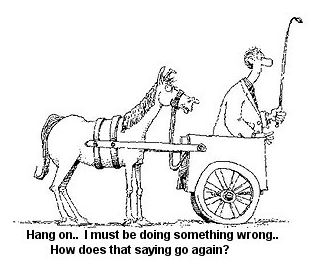
That you don’t know what a cart is. Or a horse.
That you are a logical machine.
That you are told a cart is something laden with merchandise, that the horse is what moves the cart and that the purpose of the whole endeavor is to transport the merchandise from A to B.
Then you will be asked to stack the three elements according to their importance.

How likely are you to arrange them in this order:
Merchandise, cart, horse?

It would be perfectly logical, right?

Remember that you don’t know anything else but what you’ve just been instructed.
That the ‘action’ is ‘transport merchandise M, laden in cart C – moved by the horse H, from A to B’.

Mere logic convinces you that the most important thing here is M. Simply because the whole brouhaha revolves around M. Followed by C – closest to M, and only then by H. Right?

Only mere logic is seldom enough… Each of those three has its own merits and their relative importance depends on many things.

On what the owner thinks about each of them. If all three belong to the same person.
On the relationship between the person asked to determine their relative importance and each of those elements.
The owner of the merchandise will certainly consider his property to be more important than either horse or carriage. But will consider the horse more important than the cart if the merchandise has to arrive sooner rather than whenever. Or the carriage more important than the horse if the merchandise is fragile…
The owner of a single horse will try to protect the animal. Simply because he will also need it tomorrow.
The owner of the trucking company will ask the drivers to drive the horses to their limits. Simply because he has so many of them.
And so on.

My point being that logic is almost never enough.
We must also understand what’s going on there before passing judgement on something.

Otherwise we’ll end up scratching our heads.


Click the drawing above and read what tborash has to say about the whole thing. He’s right too, you know.

Well, you don’t.

You just don’t do such a thing.

For the very simple reason that by attempting it you validate the concept.

Let me start it anew.

Both the communists and the nazis had attempted to ‘bring about’ people’s minds. To create a ‘new’ man. One who was meant to behave as their creators saw fit.

We all know the consequences.

“Do unto others as you would have them do unto you”.

Isn’t this a better way than ‘making’ somebody do as you think they should?

‘But won’t we end up like Bishop Myriel? Doing good deeds and hoping that all villains will ‘turn around’ like Jean Valjean did? After all, how many Jean Valjean-s have you met in your life?’

First of all, Myriel was a fictional character. Victor Hugo might had been inspired by a real bishop when he had created Myriel but this doesn’t alter its fictional nature.
Secondly, wouldn’t this world be a far better place if those who have the chance to encounter the likes of Jean Valjean would be wise enough to act like Bishop Myriel?

‘You still don’t make much sense. And what if the guy I meet isn’t Jean Valjean? Or if I’m not wise enough to recognize his Jean Valjean-ness, whatever that might be… What should I do then? Treat him like I’d like to be treated if I was in his place? Allow him to rob me?!?’

I guess you just answered your own question. No thief would allow another to steal from him, would he? Why would you?

But all people appreciate when treated respectfully!
So why don’t we do it, on a regular basis?

Why are so many of us who consider they know better how others should behave? What others should do?
And who consider themselves above the fray…
Remember the doctor who told you to quit smoking? While having a pack of cigarettes in the breast pocket of his white coat?
The journalist who writes for ratings rather than to inform you?
The politician who…

The voter who allows himself to be fooled? Knowing very well he had voted a conman? Only because he had made all the right noises?

There are facts which need to be checked.
And facts which are ‘somewhat’ obvious.

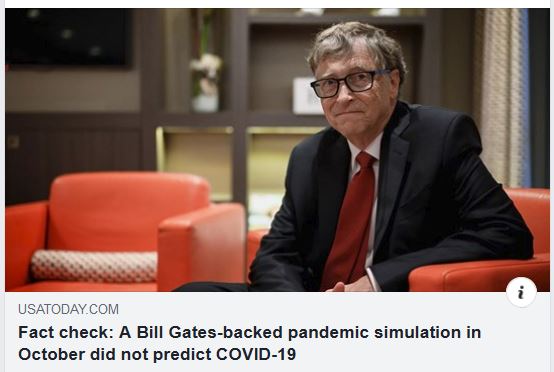
USAToday felt the need to fact check whether Bill Gates sponsoring a ‘pandemic simulation’ didn’t predict COVID-19…

What next?
Fact checking whether a fire crew exercising fire fighting didn’t predict the next … fire?!?

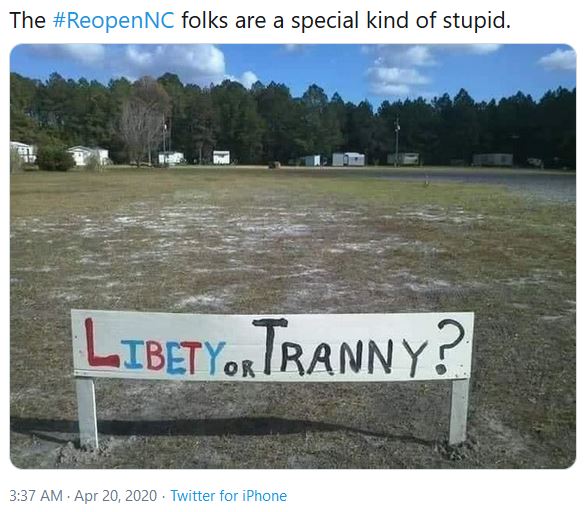
Let’s face it, in the present circumstances the picture above might mean a lot of things.

It can be a prank – somebody might have made the whole thing up just for the fun of it.
It can also express the frustration of somebody who isn’t such a good speller. Or of somebody who suffers from dyslexia?

What really interests me is how we, the ‘intellectual’ public, react to things like these.
Do we understand the frustration which lies at the bottom of this?
Do we even try to?

Or we just dismiss it as being a manifestation of stupid?

No, I don’t consider the economy as being more important than life preservation. Some very sound arguments can be found here.

But I’m absolutely convinced that treating the ‘others’ with disdain is what brought us here in the first place.

You don’t like the manner in which the likes of Trump treat those who don’t agree with them?
Then why are you doing the very same thing?

You consider yourself to be better than Trump?

Prove it.
Be nicer than him, not worse.

Humberto Maturana teaches us that human consciousness can be understood as our ability to ‘observe ourselves observing‘.
In other words, consciousness might be reduced to self-awareness.

I’m afraid it’s not enough.
While no individual can be described as conscious if not commanding a certain degree of self-awareness, being able to observe their own observations doesn’t elevate an observer to fully conscious status.

How many of us have ‘enjoyed’ messing up ants or other insects just for the fun of it? When we were teenagers, of course.
OK, we continue to squish the cockroaches we happen to see and to spray our gardens against mosquitoes and other pests.
Only we no longer do it for fun. We employ a ‘healthy’ rationale to justify our actions – cockroaches/mosquitoes are ‘bad for us’.
And we try to do it in a reasonable manner. We don’t soak the entire garden with the most potent insecticide available. Simply because we’ve understood, the hard way, that bees are also important for us.

Otherwise put, it’s not enough for us to be able to keep tabs on what we do, we must also take responsibility for our actions.

After all, we’ve been able to notice that bison ‘engineer’ their own environment.

“Herds of bison milling through Yellowstone National Park may seem aimless to the average visitor, but a new study reveals the animals are hard at work engineering their ecosystem. By rigorously mowing and fertilizing their own patches of grassland, the big herbivores essentially delay spring until late summer.”

Maybe the time is ripe for us to understand that we, humans, have done the very same thing for quite a while now.
The world we live in is, to a certain – but rapidly growing – extent, the consequence of our own decision making.

The faster we learn to accept that, the higher the chances we won’t repeat past mistakes.