Libraries, book shops – new and second hand, used to be my home away from home.
Communism crumbling under it’s own weight in my home country, Romania, widened even more my already special relationship with the written word. Books nobody would even had dared to dream about got translated into Romanian. Or even got imported in original.
As borders became more and more open, I’ve also ‘imported’ some myself.
The honeymoon lasted for a while. Only at some point I was no longer ‘comfortable’ in most bookshops. If anything, there was ‘too much of it’. Too much of the good stuff, to much ‘noise’… Not enough time to read everything I would have liked to… so I gave up. I gave up compulsively visiting book shops, not reading…
The really special thing about it? There was no ‘noise’ in there! None of the books I’d found on its shelves ever seemed ‘out of place’. Most of them, of course, were of little – if any at all, interest for me. Yet they seemed worthwhile, if you understand what I mean.
The good thing lasted for almost 10 years.
At some point I found a ‘closing soon’ placard hanging on the door. I didn’t even enter that day. Too sad.
I can’t say I’d given up visiting book shops. Only that I had stopped doing it with gusto. And, certainly, that I had given up perusing book store shelves.
I’d started to rely of friends ‘telling’ me what to read. Real life friends, Facebook friends… you name it.
And I continued to do it. Only my scope had become nearer and nearer. Without even realizing what was going on….
Until a good friend of mine – a real life friend, told me – on Facebook, that Anthony Frost was alive and kicking!
Hiding behind a different name, a few hundreds meters from the old place, but the very same thing. A rather small location full to the brink with the good stuff!
Visiting it, and perusing its shelves, I realized – with a shudder, that my intellectual bubble had shrunk. Became ‘deeper’ – debatable, but certainly narrower!
Go find your own books!
Anthony Frost, in Bucharest, is a good place to start! Or to rekindle your love affair with the printed word.
“The Texas educational system inundates the children with the almost mythical stories of Sam Houston, Stephen F. Austin, and other Texan heroes. This perpetuates the feeling that Texans are superior to others. Social Identity Theory claims that in-group biases are a direct need to feel superior to another group. By reinforcing such ideals of Texas history at an early age, they are indirectly making Texans feel superior to other states.”
In fact, Texans are so proud of their state, and so confident in themselves, that their power grid, run by ERCOT – Electric Reliability Council of Texas, has no connections linking it to the outside world. Yes, your eyes are OK. Texas – most of it, anyway, cannot import electric energy. No matter what!
For those who know anything about power management, this is insane. For the rest of the people, this sounds like gibberish.
Who cares where the power comes from?!?
Until it stops coming… exactly when you need it most!
‘OK. But surely, there are also other systems which are independent. And isolated. What about Hawai’i? It’s too far away to connect itself with anybody else and it’s doing just fine.’
True enough. And I can name a few more, easily. Only most of them are independent because they are isolated, not by design. And, exactly because they are isolated, they are run with utmost care. More precautions are taken than in ‘normal’ situations.
‘Precaution’ meaning, in this case, spare capacity. The responsible people running those systems make sure that, when push comes to shove, somebody is there to deliver the goods. The megawatts of power.
Maybe we need to reconsider our infatuation with ‘just in time management’. While ‘just in time management’ maximizes profits by streamlining inventory, it works its magic only when everything goes according to plan. And the stricter the streamlining, the harsher the consequences of anything not going according to plan!
And no, I’m not making fun of the ordinary people who suffer the consequences! This being the moment when I feel the need to remind you that the author of this blog – that’s me, tries to asses the consequences of our limited consciousness. Of the fact that none of us knows much. And, furthermore, that very few of us admit that! Which consequences might be – as too often are, tragic.
Specially when those who are not aware that their knowledge is limited happen to be invested with critical decision power.
‘Are you nuts? or something? Isn’t exactly this what the Europeans had been doing all over the world? For the last five centuries? And you attempt to ‘nuance’ it? Aren’t you ashamed of yourself?!?’
Ashamed of what some of my predecessors have done, yes! Also ashamed of what some of my contemporaries are doing. Right now, as opposed to back then.
And since there’s nothing to be done about the past, but to learn from it, and everything to be done about the future, right now, I’d rather have at least some of those statues still standing.
In public squares! Maybe not in the same places, maybe not in the same settings. But still in public! Hiding them in museums would mean taking them out of the limelight. Out of public scrutiny! If we are to learn anything from past mistakes we must focus on them. Putting those statues aside because we feel too strongly about them would only serve those who don’t want to admit mistakes had been perpetrated. Who actually don’t want to own our past.
Those who had promoted Jim Crow legislation had erected the confederate statues as a symbol of their regained public influence. Obliterating the statues won’t make anything suddenly right. The consequences of Jim Crow won’t disappear, as if by magic, along with the statues. They didn’t disappear when the legislation had been abolished and they won’t disappear now. If we want to put the past behind us, we must accomplish what has to be accomplished. We need to make things right, not hide away the prickliest pieces of evidence.
Demolishing statues won’t help any of those living in still segregated neighborhoods. Won’t help the children going to heavily underfunded schools. And so on… Demolishing statues will only help those who will certainly ask, in a few short years, if nothing changes in our hearts and minds:
‘Handicap’ has become a dirty word… Somewhat strange, given the breadth of its meaning. Horses get handicapped in order to even their chances to win a race. Yachts get handicapped so that different makes might participate in the same race… In these situations, its an ‘honor’ to be handicapped…
Then why has this concept, ‘political correctness’, become so ‘popular’?
You might already be familiar with the ‘upfront’ explanation.
“political correctness has reset the standards for civility and respect in people’s day-to-day interactions.”
I’m convinced there was something more. Civility and respect haven’t been invented yesterday. We’ve been polite for quite a while now.
Yeah, only politeness had been invented, and polished, when society was way more hierarchical than in is now. In those times, when a ‘superior’ told somebody ‘you idiot’ that somebody paused to think. The ‘idiot’ could not dismiss what the ‘superior’ had just told him. The ‘idiot’ really had to make amends. He was so busy trying to correct himself that he couldn’t allow himself to feel offended. If anything, he was grateful. The ‘superior’ had made the effort to help the ‘idiot’ improve himself instead of dispatching him altogether. In modern times, even before PC had become fashionable, calling someone’s attention about how idiotic he was behaving only made him angry. Hence dismissive and unresponsive. In an era when all people had become peers, a new ‘manner of speaking’ had to be invented in order for ‘information’ to be made ‘palatable’.
The process had been successful. So successful that the same approach had been used when dealing with other ‘hot’ subjects. Race, gender… ‘inclusion’ in general…
In fact, the process had become too successful for its own good!
Some of the ‘enthusiasts’ have reached the conclusion that ‘everything’ is open for reconsideration. That ‘everything’ should be closely reexamined. According to the ideological lenses worn by the examiners, of course…
Unfortunately, the end result is rather messy.
Instead of facilitating the dialog, the stiffer and stiffer set of ‘appropriate’ ‘rules of engagement’ has almost stifled any transfer of meaningful information.
“Despite this obvious progress, the authors’ research has shown that political correctness is a double-edged sword. While it has helped many employees feel unlimited by their race, gender, or religion, the PC rule book can hinder people’s ability to develop effective relationships across race, gender, and religious lines.”
Ibid.
Not only that people find it harder and harder to understand each-other, ‘things’ themselves become blurry.
Now, do the statues of these two people stand for the same thing? And no, I’m not trying to discern between two villains!
Each of them had done an immense amount of harm and had produced endless suffering. People are still smarting to this day because of what both of them had done. Only there are some differences between them. One had also done some good in his life. While the other had been used, after his death and without his consent, as a symbol. After he had, directly, kept people in slavery he had also been used to further the sufferings of black people.
Are we capable of seeing any of these differences? Or are we too angry to differentiate?
Do you remember why we had invented political correctness in the first place?
“The popularity of authors like Deutsch, Sandbrook and Foote – men of very different calibre in many different ways, but all wordsmiths who form history into desirably unchallenging packages for certain kinds of audience – is undeniable. It points to a conclusion that the wider historical profession, from schoolteachers to internationally renowned critical scholars, struggles to overcome. People, and specially people from priviledged groups, do not want historians to tell them bad things about their tresured identities. They will, indeed, forcefully react against such challenges, when given the political rallying-calls that allow them to do so. In that sense, it must be said, they do not want history. They want what they are increasingly getting: a cosy blanket of half remembering and convenient forgetting that is cushioning their slide down the slope to full-blown cultural dementia.”
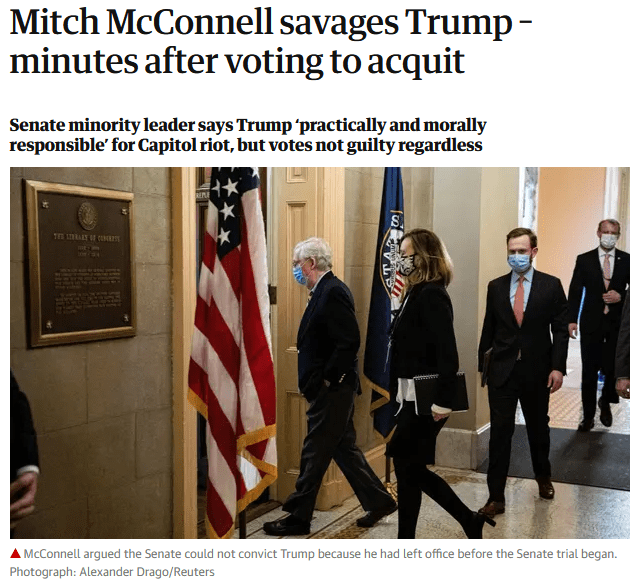
As for the fact finding mission… I wonder! Given the amount of loyalty extended to Trump by Kevin McCarthy, how many years might pass before the facts will be ‘found’?
5?!? And who would be fingered for ‘starting the whole thing’?
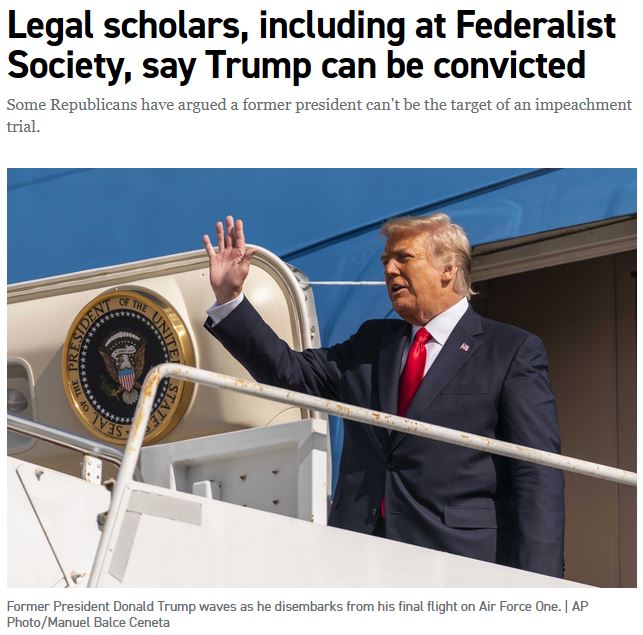
Now, will ‘they’ find a constitutional way to set a precedent? That a guy who had so horribly – and tragically, misused the sacred notion of “freedom of expression” has no place in such a powerful position? Or, by failing to do so – for whatever reasons, will ‘they’ leave open the ‘opportunity’ for an even more callous ‘political animal’ to climb into the Oval Office?
Imagine an ‘outside observer’. From, say, Sirius. Who had just arrived. Didn’t have enough time to become familiar with what’s going on here.
Thailand. Ballots had been cast in November. A party had lost. And pretends, without proof, that the elections had been rigged.
“In his first public comments after the coup, Gen Hlaing sought to justify the takeover, saying the military was on the side of the people and would form a “true and disciplined democracy”.” GETTY IMAGES
When the parliament was about to be convened, and the electoral results formally confirmed, the backers of the loosing party – which had happened to be the army, declared martial law and annulled the electoral results. The leading general announced in public that the measure had been adopted in pursuit of a ‘real and disciplined democracy’.
The US. Ballots had been cast in November. The looser pretended, without proof, that the elections had been rigged.
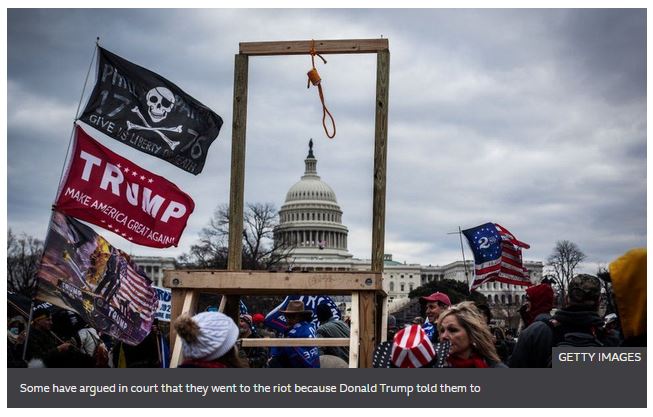
When the parliament was convened to certify the results, a mob had stormed the House of the Parliament, at the bidding of the loosing President. Order was finally restored and the dully elected President installed into office.
What would the ‘outside observer’ think about our planet? About us…
What if their job is to asses whether we should be allowed to roam the Galaxy? To be entrusted with some very powerful technological ‘secrets’. Which would help us solve some of our very stringent problems. Feel free to name a few…
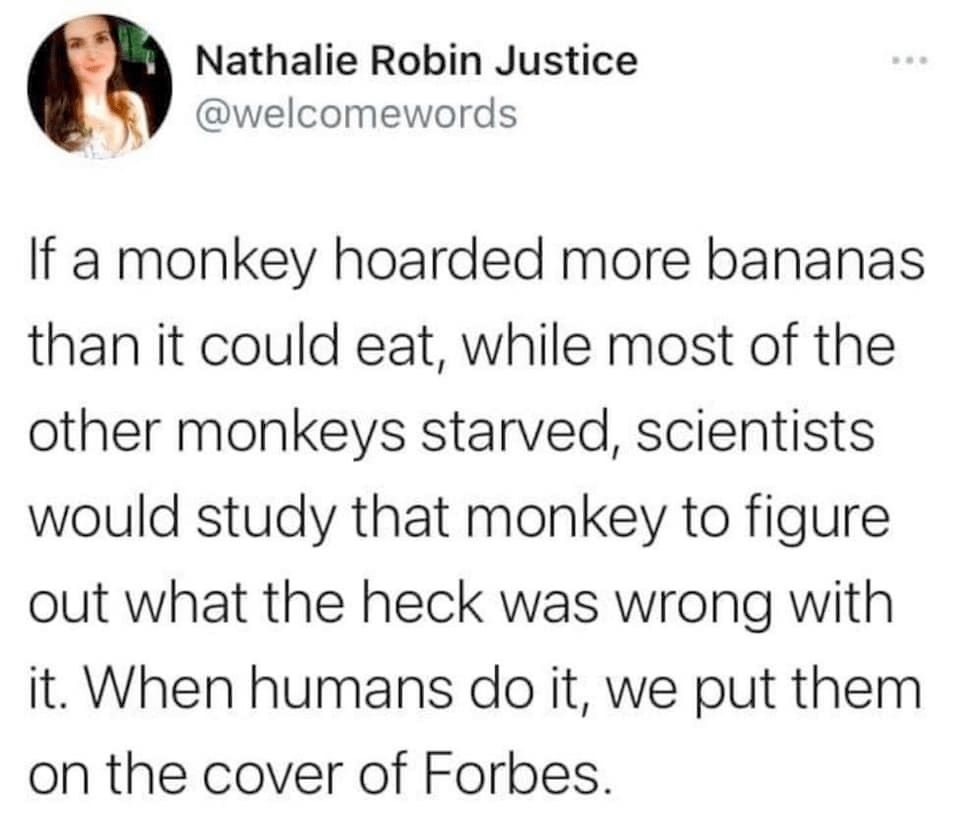
Well… Money doesn’t get spoiled as easily as bananas do…
On further consideration, money can be understood as a tool with many uses. Hoarding, for instance. Bananas, among other things …
And, as with all other tools, the responsibility for its use falls squarely on the user, not on on the tool itself. Tinkering with the tool won’t change that, ever.
My point being that monkeys would also hoard bananas if bananas were hoard-able. There’s nothing wrong with that. For as long as the hoard is meant to feed the hoarder till the next crop, of course.
Hoarding is bad only when done for its own sake.
And this is something for philosophers to study, not for scientists. The teachings of the Chicago School of Economics had been very scientific yet following them was what brought us where we are now. Into a very uncomfortable cul-de-sac…
Blindly following them… mislead precisely because of their scientific nature!
From none in particular. From all of them, since all viruses are nothing but information!
‘Huh???’
Most biologists consider viruses to be something ‘in between’. Not exactly ‘life’, since they cannot replicate themselves, but something more than mere matter.
Only this approach sets very straight limits to how we understand life itself. Or should I rather use ‘narrow’ instead of ‘straight’? ‘Narrow’ as in ‘not wide enough’ minded?
“Information which perpetuates itself”.
Does this sound right for you?
We. humans, are individual human beings. ‘Social’, indeed, but, nevertheless, individual. It’s our individual-ness which sets us apart from our nearest cousins. Chimps and bonobos. It’s our individual-ness which sets the parameters of our world-view. That being the reason for our attempt to define life as a characteristic of the individual organisms which happen to be alive.
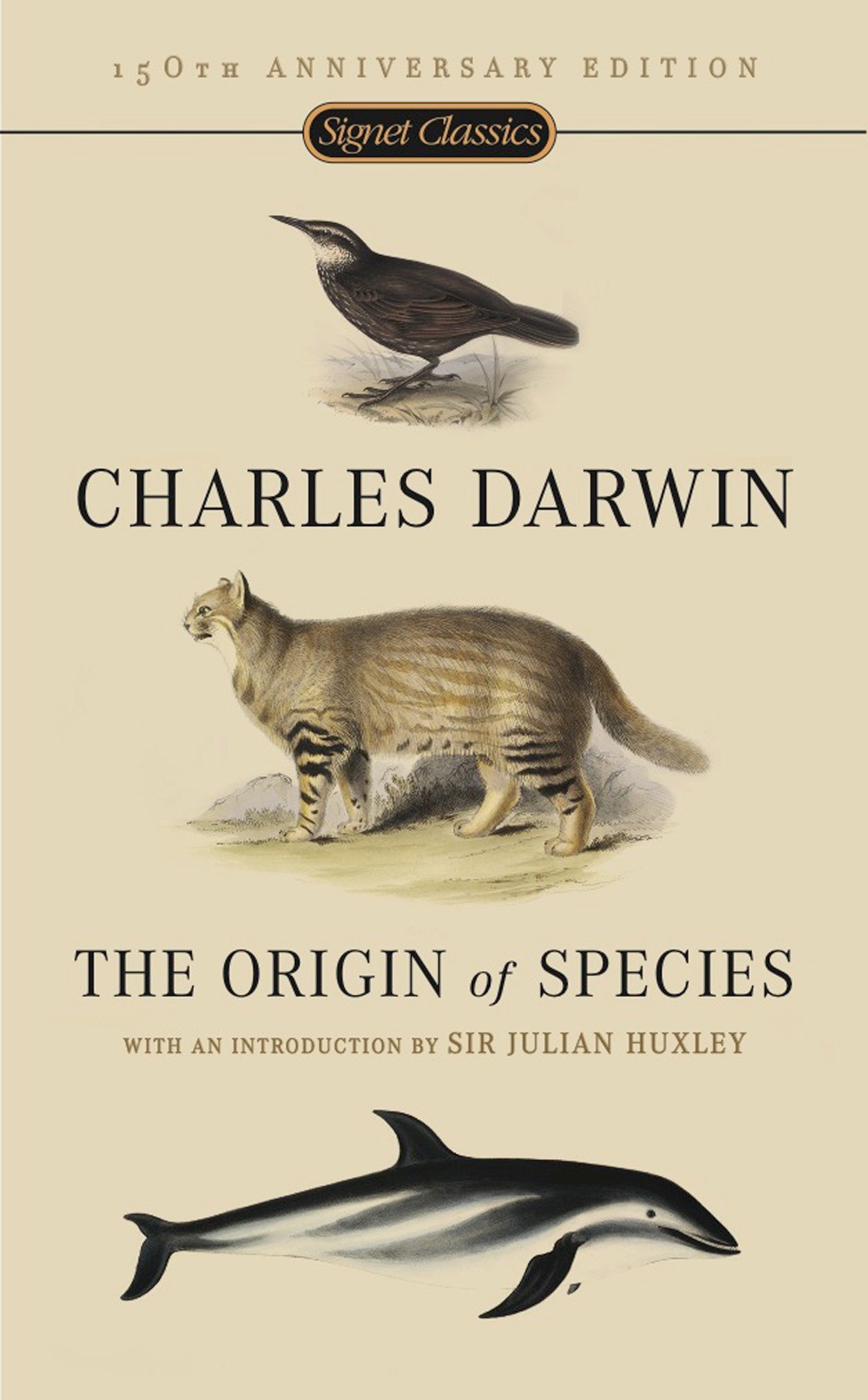
This being the moment when I feel the urge to direct your attention upon a seminal book.
Hmmm… the Origin of Species…
If evolution is about ‘Species’, then what about life itself being more about species than about individuals?
What about life being more about the process through which information is passed along from one generation to another than about an individual organism being alive or not?
In this sense, ‘virus’ would belong to the realm of the living, right?