Archives for category: authoritarianism

661211-_uy447_ss447_


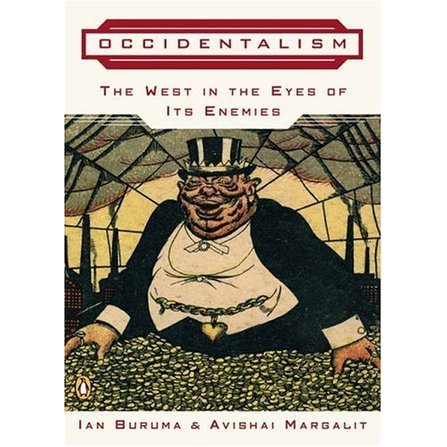
Just finished reading about the West as an object of hate.

Next in line is a book about the Orient as an object of study.

51k6n6ma-nl

Bearing in mind the fact that the Occident is still very much hated by a significant number of people residing in the Eastern part of the World it seems that we, the Westerners, have  been rather poor students of the Orient.

Or that some of us don’t give a damn about the long term consequences of their actions?

“To understand is not to excuse, just as to forgive is not to forget, but without understanding those who hate the West, we cannot hope to stop them from destroying humanity.”

I’d say these are very wise words which constitute an excellent starting point.
Towards the end of their book Ian Buruma and Avishai Margalit argue that “despite Christian fundamentalists speaking of a crusade, the West is not at war with Islam. In fact the fiercest battles will be fought inside the Islamic World.” (translation belongs to me, I have a Romanian version of the book)
How about us, in the West, helping the ‘right’ side in an innovative way?
By giving them an example.
By mending our own ways, before telling others to mend theirs!

It depends on the meanings we attach to these two concepts.

Yanis Varoufakis, Greece’s ex finance minister, is convinced that ‘Capitalism will eat democracy – unless we speak up.

Since he has some experience in this matter I’ll follow his line of thinking – for a while.

His point being that you can have successful capitalism in undemocratic societies – like Singapore and China – and that effective power has slowly shifted from the political sphere of the society to the economic one – which is undemocratic by definition.

Can’t say he’s entirely wrong, can we?

But we can say he’s somewhat confused…
So, he mentions Lee Kuan Yew’s Singapore and China as capitalistic success stories and then says that  the political sphere is gradually falling  under the yoke of the economic one… Well, last time I looked, in China the state was still in full control of everything that moved and the state was firmly in the hands of the politicians. Same thing was happenning during Yew’s tenure as Singapore’s good willed dictator.

Unfortunately there is some truth in his words when we look at what’s going on on the both sides of the Atlantic and that’s why I’m going to examine whether we have the same kind of capitalism in both situations.

By Google-ing the word I got two definitions for the concept.

The first definition that was offered by the search engine came from Oxford Dictionaries, “An economic and political system in which a country’s trade and industry are controlled by private owners for profit, rather than by the state” and the second one came from Merriam Webster: capitalism is “an economic system characterized by private or corporate ownership of capital goods, by investments that are determined by private decision, and by prices, production, and the distribution of goods that are determined mainly by competition in a free market“.

Putting them together we have private ownership, private decision, free market and profit as a goal.

Are these enough to describe a reasonably well functioning economic system?
I’m afraid not.

Let me give you some examples.
The French state has a controlling interest in Renault and the land of Bavaria quite a sizeable one in VW. Renault is in good shape and VW was too, until very recently. So private ownership is not an absolute necessity.
In the US we had quite an interesting situation. Two out of the three big car manufacturers  had to be bailed out by the state. All three were privately owned so we must look somewhere else: the Ford family still has a powerful word in the management of the single one which didn’t had to be bailed out. In Europe the best run auto company seems to be BMW – again controlled by a single family, the Quandt’s. It seems that it helps a lot if those who call the shots have a long time interest in the well being of the company versus the situation in which the top management has (short time) profit as the single/obsessive target.
Coming back to Renault and VW, they can be compared to Singapore, China and, maybe, Spain. Singapore was able to develop a ‘capitalistic’ economy despite it being an authoritarian society simply because Lee Kuan Yew was a very special kind of ‘dictator’ – one that not only cared sincerely for the greater good of his people but also didn’t loose his head during his long stage at the helm. A similar thing happened in Spain – Franco was the sole dictator who had made preparations for a democratic evolution after his demise, while China had to wait for another good-willed dictator to grab the power – Deng Xiao Ping – before it could steer towards the present course. No other authoritarian regimes but these two have ever managed to replicate this feat – we still have to wait a little before pronouncing Vietnam as the third, and very few other publicly owned companies fare so good as Renault does.

So, we have rather strong evidence suggesting that ‘skin in the game‘ trumps blind insistence on short time profit and that a free, democratic, society offers greater chances for economic development than a authoritarian one. In fact the politicians that need periodic confirmation from the people they govern do have some skin in the game while the authoritarians are in a position that is somehow equivalent to that of the CEO’s of the huge corporations whose stock owners are so disspersed that practically don’t count much – the members of the board practically slap each-other on the back and are able to do practically what they want with the companies. Look what happened at GM, Chrysler and, for example, ENRON.

But how free should be that society in order for capitalism to thrive?

Could it be so free that a guy could come from the street and claim your house as being his own? No?

So we need a free but orderly society. One where private property changes hands only when its owner says so – or has previously entered into a contract which stipulates that in certain conditions that transfer has to take place.

Meaning that in order to have a functioning capitalist society we need not only private ownership but also private owners who have enough trust in each other to start making business together.

You see, the feudal lords of the Dark Ages did have a lot of private property but capitalism couldn’t take hold in earnest as long as the (absolute) monarch could strip a man of his property and give it to somebody else. They couldn’t enter into (longish time) contracts because the era was dominated by huge uncertainties regarding various aspects of the social and economic life.

In fact it is exactly this well tempered freedom that is the crux of functional capitalism. Enough freedom so that everybody could feel confident that he is his own master but tempered by rules enforced in a pwerfully enough manner to give everybody sufficient trust that most contracts will be executed faithfully.

In this sense for capitalism to work properly we need to have a market that is free in more dimensions that one.

It has to be free from political intrusion in the sense that the government should leave it alone as a rule of thumb but also that the same government should keep it free from becoming cornered by a single group of interests.
In fact there is no difference from a market that is run by a governmental agency or by a monopolistic corporation – no matter if the latter is private. As soon as decision making becomes concentrated in too few hands mistakes starts happening. And their effect accumulate until the system finally collapse. Or is dismantled by some ‘exasperated’ more powerful agency – as Standard Oil and  ‘Ma Bell’ were dismantled by the US government. Which, by doing so, created the premises for  the huge development of those two respective markets – oil and communications.

Only this freedom of the markets can seldom be preserved by an authoritarian regime. Yew’s Singapore and contemporary China are exceptions, not the rule. Most authoritarian regimes cannot resist temptation and start meddling in the economic life of their countries. By doing so, they introduce a lot of ‘noise’ into the system. Eventually, this noise drowns the useful signals and ‘blinds’ the decision makers.

Same thing happens – and here Varoufakis has a valid point – when economic agents become so powerful that they can dominate the policy makers. The politicians can no longer preserve a balanced stance towards the economy and give in to ‘special interests’. This way the markets loose their freedom, with all the malign consequences that come with this situation. Among them, the lack of trust that slowly creeps in the souls of those who have to do business in the no longer free markets. Which lack of trust is very bad for all those involved.

And another thing about which Varoufakis is absolutely right. A lot of money are not being moved through the ‘front doors’. Not that they are not invested at all but because they are kept somewhat hidden they do not contribute as much to the well being of the world economy as they could/should.

2.1 $ trillion have been accumulated, as of  October 2015, in off shore accounts by the top 500 American companies in order to avoid taxes and
Between $21 an $32 trillion have been hiding in 2012 in various offshore jurisdictions.

Why is that? Simply because those who are called to decide about these money do not ‘trust’ that by bringing these money home and by investing them there, after paying the taxes, will be able to generate profits equivalent to those produced by leaving them off shore?

So what should we do? Tell them ‘democratically’, by electing somebody who is crazy enough to implement such a measure, to bring them home? Or even  confiscate them, one way or another?

I’m afraid that here I part again ways with Mr. Varoufakis. And with Aristotle: the way I see it democracy is not ‘the constitution in which the free and the poor, being in majority, control government‘. That would be ‘mob rule’.
A truly democratic process starts before the vote. When every stakeholder can make its point known to those who are going to cast a ballot so they’ll be able to do that having a reasonably clear understanding about what’s going on.

Frankly I’d rather rephrase Varoufakis’ message. ‘Corporatism has a tendency to disembowel democracy and transform it into ‘mob rule’ – the situation where the poor are no longer that free simply because they are convinced through ‘unholy’ methods to vote one way or another.

What can be done? Explain, loud and clear, that if jobs disappear the same thing will happen with the aggregate demand?
Explain that by giving their workers as little money as they can in reality the results are way worse than if the wages were as high as the companies could afford?
Ford didn’t give his workers more money because he loved them but simply because he had understood that in the long run he would be better off himself by doing this, you know!

Read the comments to any article that deals with the European Community and you’ll certainly find something to this tune:
“This is the end of the EU”

That might happen anytime, of course, but I’d still like very much to know why so many contemplate this possibility with so much glee? And I’m not talking here about those who think they have something to gain from a weaker Europe. Putin, for instance. Or Erdogan.

Why so many ordinary Europeans are so angry towards the very idea of a closely knit European Union?

How about reading the entire history of this continent as a long story of individuals striving hard to become more and more autonomous?

Some would say that Europe was about individuals becoming free, and I can agree with that. Only that freedom had strings attached.

“My freedom stops where your freedom begins”.

Meaning that none of us is really free unless each of us respects the liberty of all the others. That our individual liberties depend on each-other. Well, that’s the definition of autonomy, not that of ‘absolute freedom’ but let’s not be bogged down by words.

In fact what helped Europe become what it is today is an unique combination of ever growing individual freedom made possible by an ever stricter respect for the rule of law.

This was not at all a smooth process.

From time to time some individuals garnered a lot of liberty for themselves precisely by depriving all other of theirs and sometime even succeeded in writing this into law. For instance, until 1848 it was still lawful to own slaves in France.

Another type of ‘garnered’ freedom is what happens in a dictatorship. The dictator and his henchmen are freer than the rest of the people, but none of them as free as the people living in a truly free country. And Europe had witnessed a considerable number of dictatorships.

Which all eventually failed.

But something lingered in the collective memory of the Europeans. Their disdain for being told what to do. Their mistrust for rules imposed from above, for regulations that did not have the opportunity to become evident, through the passage of enough time, for those called to follow them.

This is why the ‘enthusiasm’ with which “l’aquis communautaire” was peddled by the Brussels bureaucrats to the new entrants has been met with such reticence.
This is why the measures being practically imposed by the more powerful members of the Union to the rest of the gathering are met with such scorn.

Very little real consideration is being given to the manner in which these measures are adopted and then communicated ‘from above’  and, simultaneously, very little attention is paid, by those called to put them in practice, to what their real effect would be – if they’d be applied in earnest.

And, unfortunately, there is no real shortage of callous political mavericks who eagerly try, and sometimes succeed, to capitalize on these misgivings.

As if we didn’t know any better.


trump torture

As a young adult I understood that there was no real difference between Hitler and Stalin. It didn’t matter that one of them was considered to come from the left while the other was depicted (by the communists but not exclusively) as a paragon of the right. Both of them had in common the absolute disrespect for everybody else. Each of them was convinced that only their opinions mattered and that all others were absolute morons.

That was when I started to have an inkling about what ‘the elders’ wanted to convey to us, green-horns bucking under the communist rule – which was crippling Romania at that time, when whispering:

‘there isn’t much difference between USSR and America. Their leaders want to rule as much of the world as they can grab while the ordinary people, in both countries, don’t have a clue about what’s going on’.

As I’ve become older I’ve started to figure out that the real difference between various activism-s has nothing to do with the ‘hue’ displayed on their banners. All that counts is the intensity of the sentiment that fuels them and the manner in which the activists relate to the other participants in the game.

At first glance the very notion of ‘conservative activist’ would be an oxymoron, given the fact that (most of the) conservatives define themselves as defenders of the existing order.
Who simply react, within the boundaries of the law and using the tenets of the Constitution, to whatever follies the progressive ‘liberal activists’ are trying to bring upon our heads:

“Like the American people I have watched this process for a number of years, and I fear this empathy standards is another step down the road to a liberal activist, results-oriented and relativistic world where — laws lose their fixed meaning, unelected judges set policy; Americans are seen as members of separate groups rather than simply Americans, and where the constitutional limits on government power are ignored when politicians want to buy out private companies… Call it empathy, call it prejudice, but whatever it is, it is not law. In truth, it is more akin to politics. And politics has no place in the courtroom.” (Senator Jeff Sessions (R-AL), speaking at Sonia Sotomayor’s confirmation hearings)

As usual, practice trumps theory. Regardless of whatever the theory says – and some of the pundits pretend, everybody has an agenda and everybody who has an agenda is actually an activist.

Now that we’ve successfully climbed down to the practical level let’s see what’s the real meaning of Trump backing down from his trumped up stance on torture:

trump defending torture

Hey, wait a minute! So he actually said that ‘we should go tougher than waterboarding’ and he still has such a strong following among the ‘law abiding defenders of the Constitution’?

Well, I’m afraid things are more complicated than that.
Here’s what he says about those who trust him:

trump shooting people

“The people, my people, are so smart…
And you know what else? they say about my people? the polls?
They say I have the most loyal people! Did you ever see that?
Where I could stand in the middle of Fifth Avenue and shoot somebody and I wouldn’t lose any voters.”

Well, if this isn’t ‘activism’ then I don’t know what else is.

But what kind of activism is it?
I’m not asking about where it should be placed in the political spectrum! I’m just wondering how are his proponents, Trump’s people, going to relate with their fellow citizens?
Or with the rest of the world…

And what’s the true meaning of the conservative activists coming out of the closet and assuming such an active stance? So active, in fact, that – as I said before – it is now way outside the realms of typical conservative behavior.

The explanation – as I see it – has little to do with Trump itself and everything with the present situation of the American society as a whole.

First things first.
Trump is nothing but an opportunistic bug, the real problem being how come the American Conservatives have not seen him for what he is and have not thrown him out yet.
I’ll concentrate on this from now on.

The American Conservatives, and not only those ‘loyal’ to Trump, behave as if they have been under a two thronged siege.
‘ The liberals are destroying America from within, the enemies from the outside are growing stronger and stronger yet the American Political Establishment does nothing meaningful about any of these, not even the ‘entrenched’ conservative ‘figureheads’.’

This didn’t start yesterday.

“Whenever you get a group of people together who share certain basic assumptions, there’s a natural tendency for the group to gravitate toward the most uncompromising, extreme, strident, fundamentalist, hard-core positions. Social psychologists call this tendency group polarization. It happens on juries with some regularity. It explains why the Tea Party became so insane, so deeply out of touch with the needs and views of the average American voter. And it explains why the Bush Administration invaded Iraq without an exit strategy (they stopped inviting people who disagreed with their assumptions—people like Colin Powell—to the planning meetings).” (John Faithful Hamer, From Here (2016))

But because of the internet things have gotten even worse:

“These days, any simpleminded partisan with a political ax to grind can find an online community of like-minded whack-jobs who’ll be happy to provide him with plenty of ideological ammunition (e.g., bogus stats, pre-fab arguments, etc.).” John Faithful Hamer, From Here (2016)

“Worse” not because of the ease with which these communities can grow but because too many of the members of these communities tend to give in to the apparent comfort and safety of single-mindedness.

Arguments are no longer able to penetrate the boundaries of this kind of communities.
Walls are erected to keep the odd man out. Then defended fiercely.

And this is why any attempt to cross those walls, be it aggressively or even in good faith, is too often perceived as a mortal threat by those within.

This is the mechanism through which the likes of Hitler and Stalin have managed to dominate for so long their hapless followers, by convincing them that all outsiders, all aliens, are conspiring to destroy ‘Das Vaterland’.

Fortunately the Internet works both ways. It’s true that the members of those communities can chose not to read anything else but the ideas promoted by their insiders but, just as easily, any of them can find out everything that ‘the others’ have to say about the matter.

But what if things are not (yet) as bleak as some of the media venues present them to be?
Not that all the media wants to scare the shit out of us or that all of them are politically biased. No. This happens simply because all of them want to make better ratings and because very few of them understand that ‘he who saws the wind will reap the whirlwind’. (Well, some of them might actually do it on purpose and that’s exactly what activism means but my post is more about those who let themselves be sucked into the whirlwind than about the tempest sowers).

A very short search of the Internet produced two extremely interesting ‘snapshots’.
The first, that the CPAC straw poll placed Trump no higher than the third place, should not surprise us very much. After all most of the participants are either GOP officials or young wannabees and for them Trump is akin to a ragging bull.
The second, though, is rather mind boggling.

gallup, candidates popularity, february 2016

Gallup, daily tracking

Four out of the six still running candidates nomination are perceived more or less unfavorably by the American public?

So what is this? A contest for ‘the least un-liked presidential candidate’ title? (The answer to this question might also explain why Trump has backed down on torture. He figured out that that was too much, even for him. And for ‘his people’.)

We couldn’t blame this on ‘activism’, as such – the remaining two candidates are also ‘active’, but shouldn’t we be asking ourselves about what kind of activism deserves our encouragement?

In any way, shape or form?

Well, before answering this we must consider another issue.
What brought us to the present situation, where both sides of the Political Establishment – and not only in America – are acting as if they want to tear everything apart instead of doing their best to make it all work together?

Lincoln activism

“Abraham Lincoln represented the entire nation, and his most serious actions were aimed at improving the lives of the oppressed and the poor. Lincoln’s values and actions still rank as the greatest period of social activism in the United States. Lincoln’s goal was to create a more perfect union by extending dignity to all — to once and for all end a diabolical, brutal, and oppressive system in which humans were property, mere production instruments.

In other words, Lincoln’s policies were designed for all of the people, not the just the wealthy, the privileged, or vested-interested lobbies.”

Later Edit

‘Conservative activism’ hasn’t been invented yesterday.
Nor by Trump’s supporters!

https://www.everand.com/article/357205089/Surviving-Koch-Nancy-Mac-Lean-Wants-You-To-Ignore-Donald-Trump

https://independentaustralia.net/business/business-display/murdoch-propaganda-machine-catastrophic-for-democracy,18117

iqvl1s8v8lzmbki8xjyy

“Administrators at the Success Academy—a network of high-performing charter schools in the New York area—are standing behind what they call a model teacher, who was caught on camera ripping up homework and berating a first grade student for answering a math problem incorrectly.”


I totally disagree with this kind of behaviour.
Having said that let me offer you a glimpse of what’s going on in the minds of those who accept or even promote it:
Shouldn’t we be working at both ends of the problem?
Educate the educators about how to motivate the children to learn without crippling their souls AND educate the employers and their agents (managers) about how treating your work force with due respect would yield way better results than using mockery/belittlement as a motivation tool?
And shouldn’t we also be educating ourselves about the fine difference between spoiling a child and helping him/her into becoming a fully-fledged adult (a ‘man’ in the un-gendered meaning of the word)?

p03j0k3f

“Saudi women need to ‘think like men’

Gender segregation in Saudi Arabia has sometimes led to “immaturity”, a Saudi businesswoman and member of Jeddah’s municipal council has told BBC HARDtalk.”


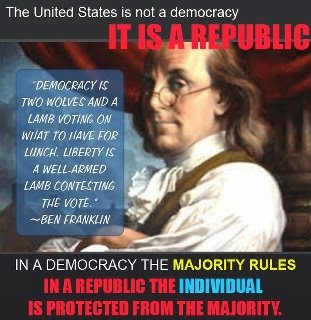
not2bdemocracy

Enter a caption

Our nation did not become great because our form of government was created as a socialist, communist, or any form of democracy; it was specifically created as a constitutional republic.

I’ve been trying for some time now to figure out the origin of this huge confusion.

Yesterday, during an exchange on this subject, a FB friend of mine used this link to prove her argument:

An Important Distinction: Democracy versus Republic


And there it was, laying in plain sight, THE explanation I was too blind to find it by myself.

It is important to keep in mind the difference between a Democracy and a Republic, as dissimilar forms of government.

Come again?!?

Since when democracy has become a “form” of government?
If you want to discuss about forms of government you have basically two: republican and monarchic. In a republic the head of state is changed from time to time, sometimes in a more or less democratic manner, while in a monarchy it is customary for that head of state to be replaced only after his death and by a person which has already been known for quite a while.

That was not what you had in mind? You meant what kind of interaction exists between the governed and the government?
‘Cause only in this realm we may speak about the difference between democracy – where the population has a say about its fate – and dictatorship – where the rulers don’t give a damn about the wishes of those who allow themselves to be ruled from above.

Don’t believe me?
Then please consider the British Empire. It is headed – nominally – by a monarch who has had no power for the last two hundred years or so and has NO – absolutely NO – constitution. Yet its democratic traditions can be traced down to the Magna Carta – a ‘compact’ signed in 1215 between the King (John of England) and his ‘free subjects’.

I used ‘ ‘ around ‘free subjects’ to highlight the fact that this is an oxymoron AND that the basic function of Magna Carta was to solve that oxymoron.
It actually doesn’t matter much what was written in that compact. The very fact that the King – erstwhile considered an almost divine person who until then had absolute power over his subjects and the land under his control – sat down at the same table with some of his erstwhile subjects and by his own signature conceded that they were “free” (‘all free men have a right to justice and a fair trial‘) signifies the dawn of a new kind of interaction between those at the no longer opposed ends of the society.

OK, things didn’t evolve smoothly. The Magna Carta wasn’t enforced in earnest until a lot later but still, the bird was out of the cage.

My point being that until we understand that the difference between ‘republic’ and ‘democracy’ is the same as the one between apples and oranges – and that we should stop comparing them – we are stuck.

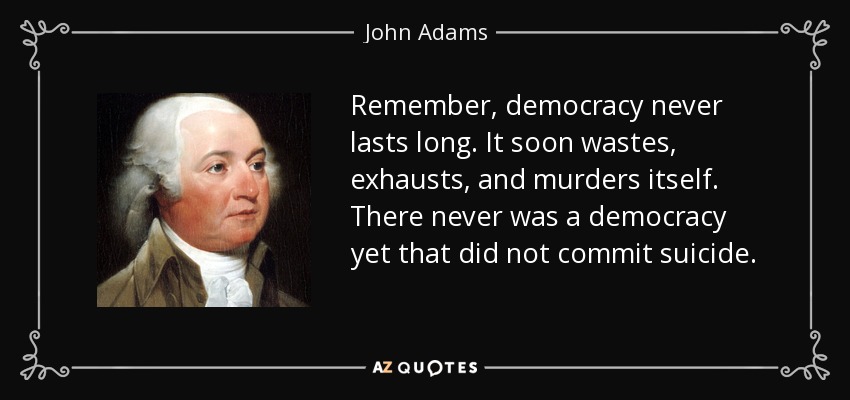
So, am I somewhat implying that John Adams was wrong?

quote-remember-democracy-never-lasts-long-it-soon-wastes-exhausts-and-murders-itself-there-john-adams-0-19-42

Not at all. All I’m saying is that he used a poetic license and that the quote is not only incomplete but also used in a misleading way.

“I do not say that democracy has been more pernicious on the whole, and in the long run, than monarchy or aristocracy. Democracy has never been and never can be so durable as aristocracy or monarchy; but while it lasts, it is more bloody than either. … Remember, democracy never lasts long. It soon wastes, exhausts, and murders itself. There never was a democracy yet that did not commit suicide. It is in vain to say that democracy is less vain, less proud, less selfish, less ambitious, or less avaricious than aristocracy or monarchy. It is not true, in fact, and nowhere appears in history. Those passions are the same in all men, under all forms of simple government, and when unchecked, produce the same effects of fraud, violence, and cruelty. When clear prospects are opened before vanity, pride, avarice, or ambition, for their easy gratification, it is hard for the most considerate philosophers and the most conscientious moralists to resist the temptation. Individuals have conquered themselves. Nations and large bodies of men, never.”

OK, he made the same confusion between ‘forms’ of government and social relationships between the people and those in power, only this is an understandable mistake. But, to his merit, he made it amply clear that it is the very “passions” of the people that “when unchecked, produce the same effects of fraud, violence, and cruelty”!

This is precisely the job that every constitution – not only the republican ones – is called to fulfill. Or a powerful enough tradition – please remember that the British ‘Empire’ has no constitution to this day.

Coming back to the notion of democracy I must add that it might not work properly, no matter how well written the constitution that presides over the process, unless the people who uses this form of collective decision making entertains the proper mental and moral attitude.
If the entire society isn’t permeated by enough mutual respect among its members then what Adams had warned us against is about to happen – regardless of any constitution. Or even under the cloak of the existing one.

You see, proper democracy works because it creates a frame where all those interested in the matter – all stake-holders – have the opportunity to express their grievances. This way the society is able to find out what doesn’t work properly and to take the appropriate measures.
But if there is not enough mutual respect going on around, things may become ugly, eventually. Just as Adams told us. When mutual respect weans out we stop caring about anything else but our own personae and ‘passions’ are no longer ‘checked’.
Society no longer acts like an organism and people become divided into smaller ‘mobs’ whose leaders fight each-other – sometimes under a democratic disguise – for followers.

That’s when democracy ceases to be a venue for a civilized debate about ideas and become an arena for the bloodiest sport of them all. Politician-ism.

That’s when some people start thinking like this.
democracy, bikes

Or even like this:
jbs_3

Let me tell you something.
I’ve been living under a republican regime for all my life. Only for the first 30 years that republic was a communist one. It even had a constitution – and at the first glance it wasn’t such a bad one. But believe me, you don’t want to experience that kind of republic.

What you really want is true democracy, the one where people respect each-other. It doesn’t matter if that happens in a republic or in a kingdom. It is enough that it works, and for that to happen it is enough for the people to ‘check their passions’.

And mind you!  Whenever 51% of the voters band together to confiscate the bikes that the others have acquired through honest means, that’s no longer democracy but mob rule. Something that could very easily degenerate into communism. That’s what you want to avoid, not bona fide democracy.

S

Somebody shared a video – where two senior citizens swing their golf clubs at some rather idiotic pranksters – on FB

golf prank

and captioned it “Don’t mess with old dudes and their balls…”

This made me wonder ‘what on Earth are we doing to ourselves?’ As a species, I mean.
OK, those kids did a rather stupid thing, indeed.
But let’s not forget that they have been raised by people not so very different from those golf players – statistically speaking, of course.
And where is the difference between what those two kids have done and the ‘practical jokes’ that are aired ad nauseam by most TV stations? Owned and run by individuals very much like those two annoyed ‘senior citizens. Who were enraged enough to swing their ‘irons’ at the pranksters, risking serious injuries…

How much lower can we get?

devil prank

PS.
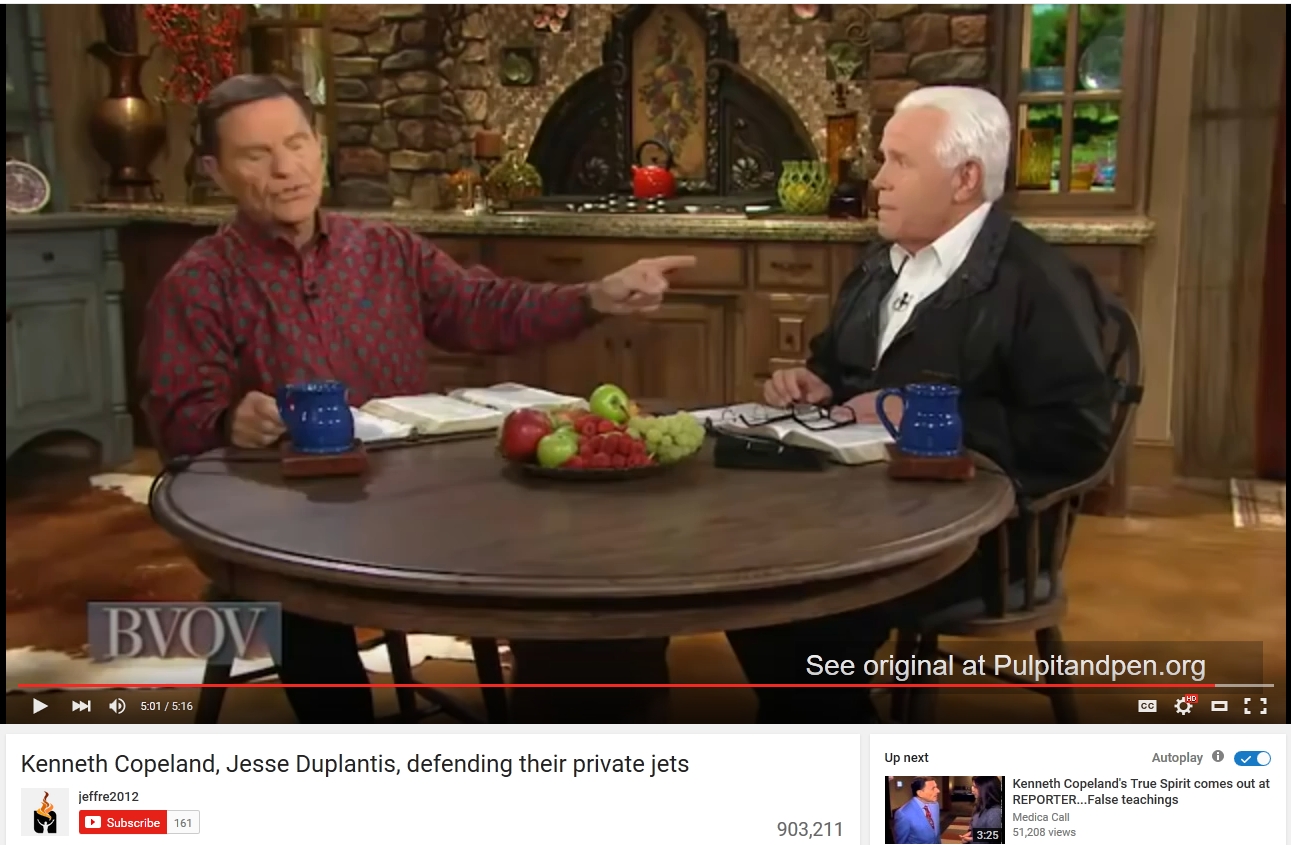
Somebody pointed me to this. You might say there is no connection between these two private-jet loving ministers and the pranksters but don’t think they all display the same level of callousness towards the rest of the people?

private jet loving ministers

050c31042a04e93467298c7458c219af4cbcc6-wm

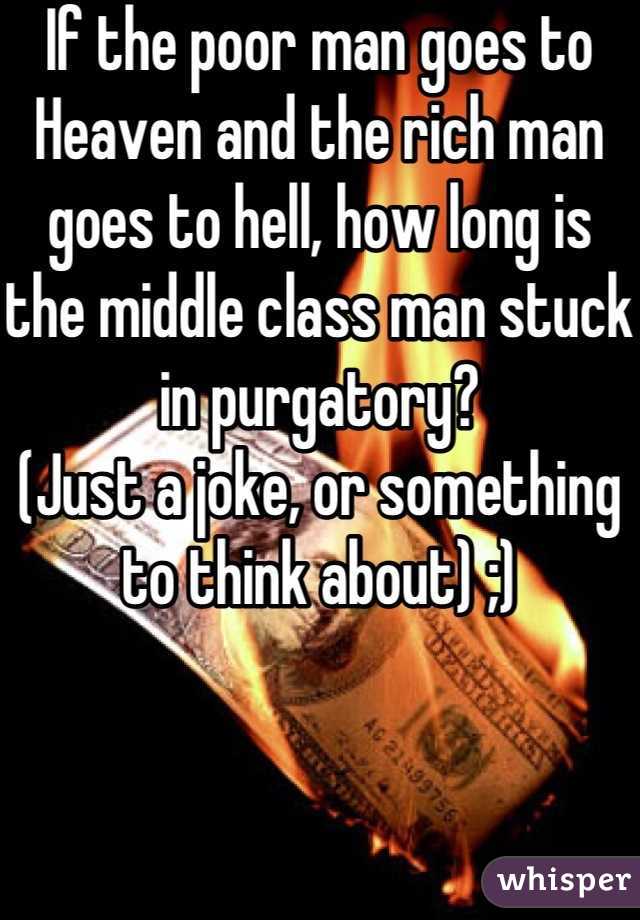
For some time now I’ve been wondering how come so many people who define themselves as being Christians – “Again I tell you, it is easier for a camel to go through the eye of a needle than for a rich person to enter the kingdom of God.“, Matt 19:24 – are so passionately defending the very concept of (private)”property”.

Could it be that Marx was right after all: “Private property is the result of alienated labor.” ?!? And so many of us have been wrong for so long?

“The right to private property is the social-political principle that adult human beings may not be prohibited or prevented by anyone from acquiring, holding and trading (with willing parties) valued items not already owned by others. Such a right is, thus, unalienable and, if in fact justified, is supposed to enjoy respect and legal protection in a just human community.”

Trying to understand the source of this dichotomy I adopted a two pronged strategy. First I looked up the word itself and then I tried to deepen my understanding of the entire concept.

It’s absolutely obvious that ‘property’ comes from ‘proper’.
‘Proper’, in its turn, has two basic meanings: ‘fit for use‘ and ‘pertaining to one individual‘. The first one has evolved into ‘propriety’, “the state or quality of being correct and proper” while the second has become ‘property’, “thing owned“.

So, do all these etymological arguments make it any easier for us to accept that respecting each others’ right to private property is what introduced a certain degree of functionality in the human society?

‘But aren’t you contradicting yourself?
At the beginning of your post you suggested that ‘property’ might not be as good as advertised and now you say that the ‘right to private property’ is ‘good for you’?
Will you make up your mind, for Christ’s sake?’

Now, that I’ve reached the conceptual stage of my analyses, I must bring to your attention the fact that a right is nothing but an opportunity while each (piece of) property is a thing – even those  which are not of a ‘substantial’ nature. ‘Intellectual property’, for instance, is a ‘measurable thing’ even if you cannot put your finger on it while the ‘right to intellectual (or any other kind of) property’ is (an infinite) something which patiently waits for (a rightful) somebody to make (proper) use of it.

Maybe this is what Christ tried to tell us in the first place. That it’s not property itself that stands between us and our salvation but our (improper) attitude towards it. That it’s not the object of our property that is the problem but how we make use of our right to private property.
After all Christ told the “young rich man” “If you would be perfect, go, sell what you possess and give to the poor, and you will have treasure in heaven; and come, follow me.” (Matt 19:21). ‘Go sell, give and THEN follow me’, not ‘come help me ABOLISH the very right to private property’, as Marx used to preach to his followers.

To understand the difference between what Christ and Marx said about this subject let’s see how these two relate to the notion of ‘Man’.

In Christ’s book God took a lump of dirt and ‘made Man in His own image’ while in Marx’s narrow materialistic vision “it is not the consciousness of men that determines their existence, but, on the contrary, their social existence that determines their consciousness.”

Basically both of them start with the same ‘materiel’ – the mundane ‘star dust’ that Mendeleev distributed throughout his table – but what a difference at the end of the ‘assembly line’!

adamevebefore

Being made ‘in His Own image’ not only means that all Men (and Women) are created equal but also that each of them shares in His Divine Nature. Hence the origin of our free will, of our ability (‘right’, opportunity) to be saved. Compare this to how Marx described the human society:

“The Communists, therefore, are on the one hand, practically, the most advanced and resolute section of the working-class parties of every country, that section which pushes forward all others; on the other hand, theoretically, they have over the great mass of the proletariat the advantage of clearly understanding the line of march, the conditions, and the ultimate general results of the proletarian movement.

The immediate aim of the Communists is the same as that of all other proletarian parties: formation of the proletariat into a class, overthrow of the bourgeois supremacy, conquest of political power by the proletariat.

The theoretical conclusions of the Communists are in no way based on ideas or principles that have been invented, or discovered, by this or that would-be universal reformer.

They merely express, in general terms, actual relations springing from an existing class struggle, from a historical movement going on under our very eyes. The abolition of existing property relations is not at all a distinctive feature of communism.”

articlefiles-mv003370610000-96750_bd

As somebody who has lived for 30 years under communist rule let me translate this from ‘Newspeak‘ into plain English:
‘History suggests that those who figure out the inner workings of this world  have, from time to time, the opportunity to take over the show. Now is one of those moments. The ‘fat cats’ have been so greedy lately that the regular people are growling under the very heavy yoke that has been placed on their shoulders.  That’s why we have the opportunity to unsettle the ‘old’ from their positions and to plant our fat asses in their comfortable chairs.
And the first thing we must do in order to achieve that goal is to abolish the right to private property. People are so fed up with what was going on lately that they’ll go along. They have grown to hate so much the ‘greedy plutocrats’ that most of them won’t notice that in the (revolutionary) process they’ll lose the very last shrouds of personal autonomy they still have. Without the right to dispose of the results of their own labor they’ll be at our mercy’.

Who was right between the two?

Well… Both, unfortunately.

The communists did run the show, at least for a while. And we all know to which results.
On the other hand it seems that in the longer run miss-using the right to private property is indeed a powerful drawback. The already too long sequence of economic crises caused, ultimately, by nothing else but our own greed has indeed given birth to a generalized state of psychological malaise.

I don’t know about what’s gonna happen in the next world – or if it exists at all – but I’m sure that if we don’t learn, fast, how to use, properly, the right to private property things will become too hot for our own good in this one.

The only one we are sure about.

Further reading.
During my research for this post I found this very interesting take on the same subject:

“Zwolinksi argues that libertarians are right to support private property, but also that private property is more complicated than we sometimes think.”

lashes1-copy-300x210
If we want to understand what’s going on there we have realize that we are dealing with a absolute dictatorship which uses Islam as a crutch, exactly as the soviet style dictators in the so called ‘popular democracies’ were using ‘scientific materialism’ – their term for the communist doctrine.
The job of the Saudi ‘justices’ is to maintain ‘the order’ as they see fit – the kingdom as it is and the Saudi family in power, not at all to dispense justice as we know it.
In order to do that they use, ‘creativelly’, the most powerfull tool they have at their disposal: the faith shared by the majority of the inhabitants of the kindom.
It even doesn’t matter for them that in the process they are ruining any chance of a decent life for the majority of their conationals.
At first their only goal was to retain the graces of the ruling family – just as minions everywhere behave in the presence of a powerfull figure.
In time things have evolved in a malignant manner. I’m afraid that nowadays the House of Saud itself has become the prisoner of the erstwhile minions, just as every dictator eventually becomes the prisoner of his guards.

forgiveness

Some say that God created the world, a long time ago, and that’s why he is the only one who can forgive.
Some others remember how the elders taught them that keeping a grudge is far worse than having an ulcer. It will eat you alive, like a cancer.

I, personally, don’t know anything about God creating the world. I wasn’t there at that time so…
What I do know is that playing God is extremely dangerous. Not only for the impersonator but mostly for those around him. Exactly those who were amused at first by his performance – enough so that they encouraged him to continue, only to find out later how annoying the show will soon become AND that the exit door had been paddled shut behind their back, while they were happily clapping after the first gigs.
At the very end, after the impersonator had left the scene – by his own will or simply carried out, he will end up shouldering the whole blame – as he should, of course.
But I can’t stop wondering how much suffering could have been avoided if the crowd were just a tad more circumspect?

Not making very much sense, do I?

OK, first take a look at this:

No mercy

Then watch this:

go hard

Do you really think this is funny? Well… more than 38 000 of the almost two and a half million who watched this say they enjoyed it and only two and a half thousand became worried enough to express their feelings.

Most of you have not experienced how it is to live under dictatorship so I’ll use another metaphor.

You are probably quite familiar with this guy:

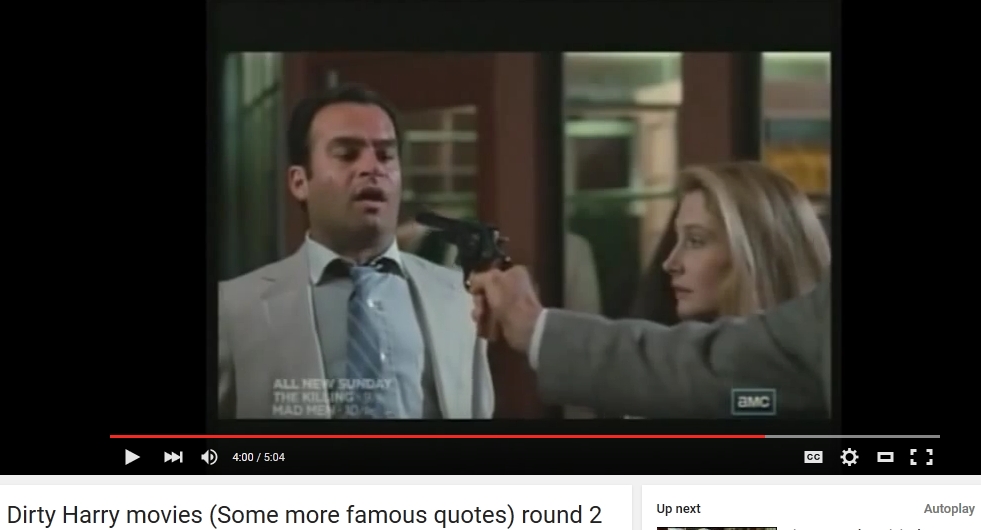
dirty harry

He was lionized during the ’70’s and the ’80’s for impersonating a no-nonsense cop who cut through the red tape and got things done.

Mostly by shooting the bad guys.

Don’t get me wrong.

They didn’t get anything else than they actually deserved.

What I find really troublesome about Dirty Harry is the casualness with which he killed people. And his over-reliance on guns. On brute force, that is. “Go ahead, make my day.”

It is true that at that time people were exasperated with the daily occurrence of violent crime and were desperate for a way out of that situation. I’m not going to offer you statistics or stuff, you can look them up yourself. I’ll just tell you that the Romanian television was having an almost daily news bulletin presenting the latest violent acts committed Stateside. It was all part of the propaganda, of course, but the facts were real. And plenty enough to make me wonder, I was a teenager at that time, what on Earth is going on there?

That wave of violence has subsided, as we all know. Some say it happened because of ‘broken windows policing’, some ‘freakin’ others ‘blame’ ‘Roe vs Wade’ for it while I suspect that all of the above had something to do with it but that the main ‘culprit’ was the economic upsurge that followed the ‘stagflation’ period.

Nowadays we find ourselves in another economic and psychological down-turn. With a twist though.
The recent economic troubles were brewed at home while then it started with the Oil Crisis. Much of the violence no longer starts as a robbery but has a psychological motivation – disgruntled and socially disconnected young people commit multiple acts of homicide, either by indiscriminately shooting their victims or by blowing themselves up, along with a huge amount of explosives, in densely populated areas.

And how do we respond to this fresh wave of violence?
By turning a blind eye to heavy policing? By digging fresh trenches that further divide our already highly polarized society? By another wave of over reliance on guns?

“I said it was only me and, hands still raised, slowly descended the stairs, focused on one officer’s eyes and on his pistol. I had never looked down the barrel of a gun or at the face of a man with a loaded weapon pointed at me. In his eyes, I saw fear and anger. I had no idea what was happening, but I saw how it would end: I would be dead in the stairwell outside my apartment, because something about me — a 5-foot-7, 125-pound black woman — frightened this man with a gun. I sat down, trying to look even less threatening, trying to de-escalate. I again asked what was going on.”

Go ahead, click on that quote and read the entire article. My post won’t go anywhere.

What’s the connection between what happened to Kyle Monk, the Dirty Harry movies and Putin?

For starters all those involved were …human individuals.
Kyle’s neighbor who called the police and who, when asked by Kyle ‘why did you do it’, chose to end up the conversation with “I’m an attorney, so you can go f— yourself.”
All of the nineteen policemen who played a role in this drama – and who treated a 125 pound, scantily clad, woman as if she were an armed and dangerous criminal were also human individuals.
The heads of the public administration, those who adopt and enforce policing policies are also human individuals.
The financial wizards who engineered the recent crisis belong to the same species as we do.

We, the guys who admired Dirty Harry for his toughness, are the parents of the hapless generation who blows itself up or mindlessly shoot their colleagues in campuses.

We are also the guys who are amused when bored magazine writers attribute to Putin such silly quotes as ‘it’s my job to send them to Him’.

And it’s us who applaud the Putins of this world. Only to find out, on our own skin but too late to be able to do anything about it, that the ‘hug of the bear’ is not that comfortable as it seemed from a distance.

you're Callahan