After you get used to it, being hanged becomes bearable.
Let me give you some context.
I live in Romania. You know, that country which shot its dictator, Nicolae Ceausescu, on the Christmas Day 1989.
I was drafted to the army in October 1980. When I left home, you could still find food to buy. Soap, chocolate, washing powder, toilet paper… you name it. Nothing fancy but life was ‘normal’. Nine months later, in July 1981, food was already scarce.
In 1985, things were already bad. You had to queue up for anything you needed. For all of the above mentioned items.
By 1988, things had become even worse. On top of what I had already mentioned, rolling blackouts were common. Those of us who lived in apartments connected to central heating were ‘enjoying’ running hot water for only a few hours a day/a few days a week. And shivered during the entire winter.
I’m telling you all these because in December 1989 most of us were hugely surprised when communism had fallen. With a bang.
We’d become so accustomed with what was happening to us that we were convinced our lives were ‘normal’.
Compare that to what you see below. Oh, I forgot to tell you that we had only 1 (one) TV channel. Which was on for 2 hours each working day from Monday to Saturday and 12 hours on Sunday. And 80% of what was churned out was pure propaganda.
1. Sow doubt. 2. Drop a loud fact. Or two… This will simultaneously ‘water’ the previously planted seed and act as a ‘foot in the door’ for your next move. 3. ‘Miss-interpret’ another fact. 4. Mention an universal human emotion, inviting your audience to identify itself with the ‘victim’. 5. Squarely state what you want your audience to believe.
1. ‘The Soviet Union didn’t crumple under its own weight. It was dissolved by Yeltsin so that Gorbachev’s position would disappear. Leaving Yeltsin as the top dog of the day. Even if at the helm of a little smaller empire…’
2. ‘After the Cold War had ended, the West should have treated the ‘defeated’ as Germany, Italy and Japan had been treated after WWII. The West should have helped the Soviet Union to overcome the transition hurdles by extending to it an equivalent of the Marshall Plan. Instead of that, the Americans had come up with the Wolfowitz – later Bush, Doctrine.’
3. ‘Gorbatchev was told by James Baker that NATO will not move an inch eastward’
4. “…1998, Yeltsin, late Yeltsin: ‘you promised not to do this! So, how do we trust you, if you make a promise?’ “
5.1. Vladimir Putin has been created by the United States. 5.2. The so called free media in general – and New York Times in particular, cannot be trusted to provide honest information.
Pozner’s discourse is far more ‘byzantine’ than the ‘stream-lined’ version I used to illustrate what skillful propaganda looks like. Skillful maskirovka, more likely?
This post has become long enough. Let me wrap it up.
The main question here being ‘did he actually say it? Did Baker actually promised Gorbachev that “NATO will not move an inch eastward” ‘?
The Soviet Union is long gone, all the states which have been admitted into NATO are ‘in’ because they had asked themselves to join – and are now extremely glad to be protected by the famous 5th article – … while the only (frustrated) ‘agent’ who ever cried foul was Putin. Not only cried foul but eventualy acted out his frustrations!
There’s managing your resources – on your own, while trying to outsmart – out, in the open, your opponent.
And there’s team-work. An attempt to make the most of what lady-luck had put on the table by exchanging information. With your partner and in the presence of the competing team. This time only the conversation is out in the open, the resources themselves remain hidden. During the initial phase of the competition and, partially, during the end game.
Until WWI, war was more like chess than anything else. Resources were, more or less, out in the open. The soldiers had no other role but to do and die. The whole responsibility belonged to the guys who called the shots. One for each side…
WWI had ended indecisively. Hence WWII.
Each of the winning parties – there had been two victors, had learned something different from the experience. The Western allies had learned the value of cooperation while the Eastern ‘block’ had reached the conclusion that brute force trumps everything.
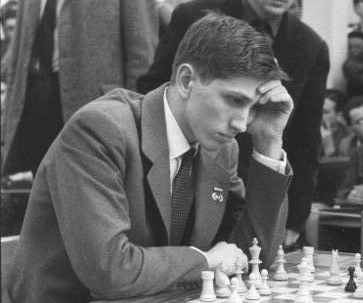
The Americans had started playing bridge with the Brits and taught the game to the rest of the world. The Russians had honed their skills at playing chess. Something they were already very good at. For a while, the Americans have tried to compete with the Russians. Remember a guy named Fischer? Bobby Fischer?
Soon, too soon, the Americans had given up. After building a computer smart enough to outsmart all human chess players…
The even worse part was that the Americans had given up bridge too! And forgot the most important lesson of WWI and WWII. That the victor needs to take care of the vanquished if they want to enjoy peace. To actually win the peace process after they had already won the war.
Which brings us to the end of the Cold War.
Communism – and practically all communist states, had crumpled under its own weight. The westerners assumed it was something they had done themselves. Declared victory. And the end of history…
Having already given up bridge, they forgot to take care of the vanquished… and allowed Russia – the party who had taken most of the blame over their shoulders, for reasons to be discussed some other time, to slide down the slope inaugurated by post WWI Germany. Did I mention that Russia was still fond of chess? Very much in love with brute force? And not very fond of respectful cooperation?
Now, that we all try to peek into the future – attempting to figure out how the current aggression ordered by Putin will end up, we need some people to learn about bridge.
Putin cannot launch by himself the nuclear missiles he had been brandishing lately.
Now, can those around him reset the chess board on which they are but pawns into a bridge table? And invite the rest of the world into the game?
Will the rest of us understand the invitation? If, and when, it will come?
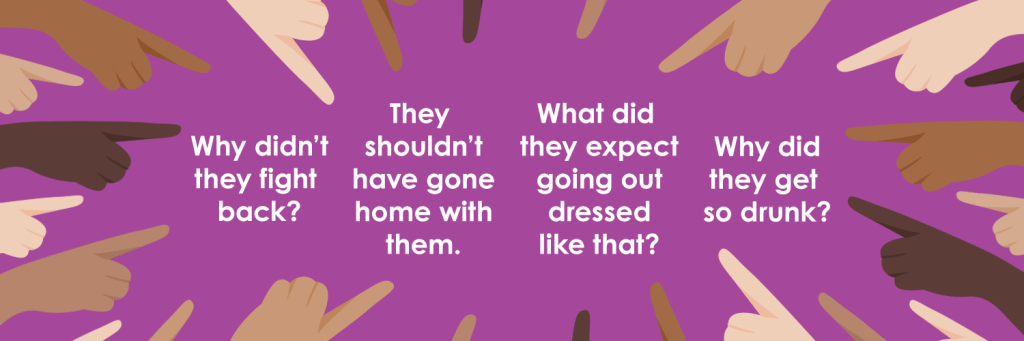
Victim blaming is a fact. As in ‘exists even if it doesn’t make much sense’. As in ‘still exists despite our intense efforts to make it disappear.’
Shouldn’t we try to understand it? Before blaming those who blame the victims?
What’s going on is that our minds are biased. And one of the two most powerful biases is our need to make sense of the word. We actually need to perceive the world as being rational. We need to have causes, to identify causes, for everything which happens around us. The other one being our need for relevance. We not only need to make sense of the world, we also need to control it. Hence we do our best to understand the world as controllable. Controllable by us! By us, the purveyors of the explanations. By us, those who understand it as a rational succession of causes and effects.
Let involve ourselves in a small thought experiment.
We’ve just had a few drinks. Not enough to get stoned but each of us is a little ‘merrier’ than usual. A tad dis-inhibited. In this condition, one of us has sex with an under-age person and the other has a car accident.
In which of these two cases, ‘being under influence’ would be seen as a mitigating circumstance? Why?
See what I mean?
Socially, it is unacceptable to DUI. Because you are far more likely to cause an accident. Socially, it is more than acceptable to have a couple of drinks at a party. Because you are going to be a far more ‘pleasant’ person that way. Well, most of us are…
It’s actually reasonable to expect a driver to be sober and a party-goer to be ‘tipsy’-ish. Simply because it’s a lot more unnatural to drive than to have social intercourse. Hence we need a lot more ‘self-control’ when driving than when talking to someone. Even if that person is very attractive. We, statistically speaking, have a gut feeling which tells us it’s harder to drive than to behave. Hence the biases.
‘OK, but has any of this anything to do with victim blaming?!?’
Victim blaming is the ‘easy way out’ for both would-be victims and would-be aggressors.
Remember what I said about our need to make sense of the world as a controllable environment? As a place where we, each of us, is in charge? With the known – and already agreed upon, limitations…
For those who see themselves as potential victims, doing the ‘right thing’ – or not doing the wrong one, is something which puts us in a safe place. We’ve done everything (in our power) so we’re safe. Or as safe as we could be… If we become a victim even after we’ve done everything in our power to avoid it, then it’s exclusively the fault of the aggressor. There was nothing more we could have done to avoid it. Hence there’s no self-guilt falling on our own shoulders. And if we have reached ‘this’ conclusion – that ‘this’ is the right behavior, then each of the ‘trespassers’ do nothing but ‘contradict’ our ‘good judgement’. Hence our ‘need’ to ‘educate’ them.
For those of us who conceivably might become or had ever been – directly or indirectly, as in ‘one of our relatives had done it and we didn’t see it coming’, – an aggressor, the logic follows the same path. The victim should have taken every precaution, we are naturally ‘limited’ individuals who cannot ‘resist’ when ‘pushed over certain limits’.
‘OK, and your point is? That it’s OK to blame the victim?!?’
Let me bring your attention back to the title.
‘Causing’ circumstances.
Who transforms a certain set of circumstances into a cause? Who sees a certain set of circumstances as an opportunity to do something or as an opportunity to do the very opposite? Or to simply stay put? To directly cave in to something which ‘might’ be seen as a provocation or to ask for permission first? And to accept ‘no’ for an answer, in no matter what circumstances …
Who bears the responsibility for choosing one way or another?
I’ve trained to be an engineer. And practiced being one. Then I felt the need to understand. And studied sociology. That’s how I learned, the hard way, the difference between ‘hard’ science and ‘soft’ science. Between ‘bona fide’ science and ‘bogus’ science…
Those of us still convinced that soft science is bogus have yet to grasp the whole meaning of ‘science’. A collection of ‘special’ data, a ‘special’ method of gathering data and a ‘special’ state of mind.
We all know what ‘scientific data’ and ‘scientific method’ mean. But there is almost no talk about ‘scientific state of mind’. Most people consider that ‘scientific thinking’ is solelly about applying the scientific method when dealing with the ‘reality’. With what happens ‘outside’ of us. Outside of our individual consciences…
Historically, science – the concept of science, had sprung up in the minds of people concerned primarily with physics and chemistry. Hence the subsidiary concept of ‘consistency’. Data can be considered to be scientific only if it had been gathered in a ‘consistent’ manner. If by applying the same method, in the same circumstances, the end results will be the same – regardless of who had happened to be at the helm of the experiment. And a method can be considered to be scientific only if it produces the same data whenever it is applyed, in the same circumstances, by no matter whom.
I’m sure that, by now, at least some of you have figured out what I’m driving at. The main difference between ‘hard’ and ‘soft’ science is, of course, related to the relative inconsistency of the data yielded by the ‘soft’ sciences. This being the reason for which some people cannot even accept the ‘scientific’ nature of the soft sciences…
Hence the need to discuss about the ‘scientific’ ‘state of mind’… Let me start by pointing out the fact that we, people, are rationalizers. We pretend to be rational, true, but in reality we are nothing but very astute rationalizers. So astute that we are not even aware of the fact. We are so convinced of our rational nature that we are fooling ourselves.
Accepting that we are deep enough into rationalization that we need to pay special attention when trying to be objective is the first step towards attaining a scientific state of mind. The second, and just as important, step being the respect we need to extend towards our peers. Towards our fellow experimenters.
Changing tack – and approaching ‘scientific state of mind’ from another angle, I might try to describe it as a ‘work in progress’. A never ending attempt at self improvement made by someone fully aware of the fact that they’ll never get there. Yet still striving towards that goal. A never ending attempt made by somebody who knows they’ll never get ‘there’ yet they continue to encourage others to go further and further up that road. A never ending attempt made by people who know they’ll never get there yet they respectfully help each-other towards their common goal.
And now, that I’ve done my best to explain what I mean by ‘scientific state of mind’ let me delve in the main subject. The real difference between soft and hard science.
By their very nature, hard sciences are defined by the fact that an explanation constitutes a very good prediction. If you are capable of explaining the Earth rotation around the Sun you are also able to compute where the Earth will be 10 seconds from now. As well as ten centuries from now… If you are capable of explaining radio-activity you are also able to build an atomic bomb. By understanding how DNA works we have been able to come up with a mRNA vaccine against the SarsCOV-2 virus. https://www.cdc.gov/coronavirus/2019-ncov/vaccines/different-vaccines/mrna.html
The problem with soft sciences being that in their case, explanations – no matter how precise, cannot predict much. We know why a maniac behaves like one – because …, but we don’t know what a maniac will actually do. Nor when… We know that a free market works better than a monopoly but we cannot agree upon how free a market should be. Nor can we agree upon what a ‘free market’ really looks like… We know what will eventually happen to an empire – it will fall, because of ‘negative selection’, but we never know exactly when and how that will happen… nor what will occur between the establishment of the empire and its eventual demise.
Karl Popper had described science as a (virtual) place where things happen like this:
Some guy has an inkling. Studies it and gathers a lot of information on the subject. Based on that information, develops a hypothesis. Then attempts to prove it. After being satisfied with how much proof they had found, the hypothesis is declared a theory. And published as such. Along with all pertinent evidence. For all those interested to see.
So that all those interested to be able to replicate the experience. To be able to retrace the proving process. To certify its validity.
And for all those interested to be able to find any proof to the contrary! So that, as soon as that proof had been found – and declared acceptable, the theory to be considered false. Or, at least, incomplete.
The first example which comes to my mind being that the simple existence of Einstein’s Relativity had proven that Newton’s Physics was incomplete….
Fast forward to our days. To our raging Covid-19 pandemic.
When vaccines are already available and where there are people who refuse to be vaccinated.
The vaccine was supposed to protect us. From becoming infected. From needing to go to the hospital. From dying. From ending up suffocating alone…
But people continue be infected. Even after receiving the vaccine. People continue to be admitted to the hospital. And people continue to die. Even after receiving the vaccine.
Wouldn’t all these evidence strongly suggest, scientifically speaking, that the vaccine is useless? ‘Useless’, to say the least?
Wouldn’t it be actually rational to frame the situation in these terms?
Well, according to Popper’s reasoning, the first vaccinated individual becoming ill had been ample enough proof of the fact that the vaccine was not 100 % foolproof. That it isn’t fail-proof! The first vaccinated individual being admitted to the hospital had been ample enough proof that the vaccine is no absolute shield against any of us who has been infected will ever have to go to the hospital. The first vaccinated person who had died with Covid-19 had been ample enough proof that the vaccine will not protect all of us from dying after becoming infected with this virus.
And the fact that so many of us continue to refuse to be vaccinated is ample proof of the fact that reasonable should trump rational. Yet it still doesn’t…. Of the fact that too many of us continue to consider that their short term/self serving interests are more important than other people’s lives. And of the fact that too many of us continue to ignore how vaccines work.
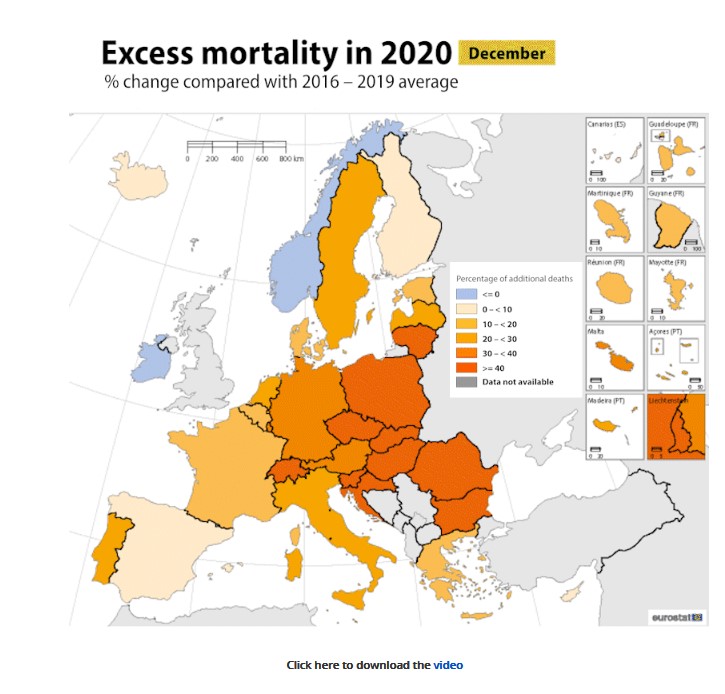
The key aspect here being the last! People continue to ignore how vaccines work simply because of the huge amount of disinformation which is being peddled on the internet right now. It’s not the ‘refuseniks’ who put their short term/self serving interests in front and above the lives of innocent people! It’s those who have initiated, and continue to drive, the fake-news process who will be eventually determined as having been the root-cause of the excess mortality we’re currently experiencing.
When? Hopefully, after a reasonable amount of time. If enough of us start behaving rationally… In a comprehensively rational manner…
Someone asked me a few months ago: ‘These guys who spread misleading information on the internet, whether out of sheer stupidity or out of personal interest, will at some point understand how many people they have killed. Directly or indirectly. How will they feel? In that moment…’
Until then, none of my vaccinated acquaintances have kicked the bucket. Nor seen the inside of any hospital… after being infected with Covid. Among those who have not been vaccinated… the situation is somewhat different… Although the unvaccinated are, among the people I’m personally acquainted to, about 4 times less frequent than the others, 8 of them are missing already. All 8 of them are no longer with us after having been diagnosed with Covid.
I hope you’ll have a ‘light’ conscience when we’ll arrive at the end of this mess.
In the sense that for that person, ratings – a.k.a. ‘money’ – are far more important than presenting an as accurate as possible version of reality…
Hence the public belief that ‘media are not to be trusted’.
A reality created by the greed with which we, as a cultured species, attempt to transform everything into money…., power…, or any other kind of ‘influence’/relevance we happen to covet….
A. A proposition is ‘true’ if what’s being said there is in perfect correspondence with reality. B. A proposition is ‘true’ if the proposition encompasses everything the ‘communicator’ knows about the subject at hand.
‘OK, you promised us a discourse about science and here you are babbling about truth…’
Impatient as always! How do you determine whether something being said, a proposition, is in (perfect) correspondence with the reality of the fact described there?
To be able to do that, you need first to determine the reality itself. You know what’s being said – more about that later, and, if you are to determine whether what’s being said is true, you now need to know the truth itself. How are you going to do that? You either know it already or you proceed to determine that particular truth.
I’ll leave aside the ‘already known truth’ and proceed towards the ‘future truth’.
A particular individual has two possible approaches towards finding out a ‘new’ truth. A piece of ‘true’ information which is new for that particular person. Consult a reliable source or investigate the reality.
‘Consulting a reliable source’ brings us back to square one. How do you determine whether a source is reliable or not…. ‘Investigate the reality’… Easier said than done!
How do you do that? How do you investigate the reality in a reliable manner? How do you determine the truth of the matter when ‘things’ are a tad more complicated than touching a stove to determine whether it’s hot or not?
You use the scientific approach? Start from the scientific data base which already exists on the subject(s) closer to your object of interest then proceed using the proven scientific method of trial and error? Emit a hypothesis, try to prove it, formulate a theory and then challenge your peers to tear apart the results of your investigation?
Results you have chased being convinced from the beginning that you’ll never reach the ‘pinnacle’? Convinced from the beginning that the ‘absolute truth’ – even about the merest subject, is out of reach? For us, mere mortals, anyway?
‘But if ‘absolute truth’ is out of reach, then how can we determine whether the simplest proposition is actually true? And why continue to bother about the whole subject, anyway?!?’
Before attempting to find an answer to your question, let me formulate another one.
Let’s consider that you have reached a conclusion about something. That you are in possession of ‘a truth’. How are you going to share it? With your brethren/peers? I must remember you at this stage of our discussion that language is beautiful but rather inexact. Are you sure that you’ll be able to communicate everything you want to say? To cover every minute aspect of the truth you have just found? So that the proposition you are about to put together will be in absolute correspondence with the piece of reality you have just discovered?
You are not going to use language at all? You’re just going to point to your discovery? And let everybody else to discover the truth for themselves? And how many are going to take you seriously? To pay attention? To what you have pointed? And how many are going to suspect that you just want to take their focus off what’s really important? To lead their attention away of what you want to keep under wraps?
I’ve got your head spinning? Then you must understand my confusion. I’m so deep in this that I have to go back and read again what I’ve been writing…
So. ‘Science’ tells us that the ultimate truth is out of our grasp, linguistics/theory of communication tells us no messenger will ever be able to be absolutely precise nor convey the entire intended meaning … what are we going to do? Settle down and wait for the end to happen to us?
OK, let me introduce you to an absolute truth.
WE ARE HERE!
Who is here? ‘Us’. We are here.
What are we doing here? ‘Are’. We are here.
Where are we? ‘Here’. We are here!
I’ve been recently reminded that mathematics, the most exact language we have at our disposal, is based on a number of postulates. On a small number of axioms – pieces of truth we consider to be self evident, which have constituted a wide enough foundation for mathematics to become what it is today. But mathematics is far more than a simple language. It is also a ‘virtual space’. A space where special rules apply. A space where our thoughts move according to certain and specific ‘instructions’. A space where we enter holding our arms around a problem we need to solve and which we exit, if successful, with a solution inside our head.
A little bit of history. Our ancestors had a problem. A class of problems, actually. How to build something – a house, a temple, a boat, and how to ‘manage’ property – arable land, in particular, but also crops and other ‘stocks’. Problems easier to formulate, and solve, using numbers. To solve this class of problems, some of our ancestors have invented ‘mathematics’. Had ‘discovered’ the self evident truths – axioms, and then ‘carved’ an entire (virtual) space using the axioms as the foundation upon which they, and those who have followed in their steps, have built – and continue to build, the scaffolding of rules which keep that space ‘open’.
Through thinking, our ancestors have carved a space in which to solve some problems they have encountered in the ‘real’ world…
‘Please stop! I don’t understand something. Do you want to say that mathematics is not real?’
To answer this question, this very good question, we need to settle what ‘real’ means. To us, at least…
Let’s examine this rock. Is it real? Why? Because you can feel it? If you close your eyes, I can make it so that you experience the same feeling by touching something else to your stretched out fingers than the original rock. In a few years, I’ll be able to produce the same sensation in your brain by inserting some electrodes in your skull and applying the ‘proper’ amount of electric current. What will ‘reality’ become then?
Forget about that rock, for a moment, and consider this table.
Is it real? Even if it’s not as natural as the rock we were analyzing before? ‘Artificial’ – as in man made, starting from natural ‘resources’, might be a good description of the difference between a table and a ‘simple’ rock. Both ‘real’ in the sense that both imply consequences. Your foot will hurt if you stumble in the dark on either of them. Regardless of the rock being natural and the table happening to be artificial…
‘But what about things which are not of a material nature? Are they real?’
Are you asking me whether ‘metaphysical’ objects – God, for instance, are real? Then how about ‘law’. Is it real? As an aside, does law belong also to the metaphysical realm? Alongside God? Who determines which thing belongs there?
Or have you glimpsed the fact that ‘truth’, the concept of truth, is a metaphysical ‘object’? Something which, like God, has a ‘real’ side but makes no sense (to us) unless we think about it? Something which we have extracted – someway, somehow, from the surrounding reality – where else from? – then ‘carved’ a virtual space around it? So that we may examine it without the distractions of the rest of the ‘real’ world?
Or have you glimpsed also that even the concept of ‘reality’ is a figment of our self-reflecting conscience?





 nicichiarasa