Because it illustrates perfectly the prevailing trend. How things change because of us. How we – collectively, change the world around us.
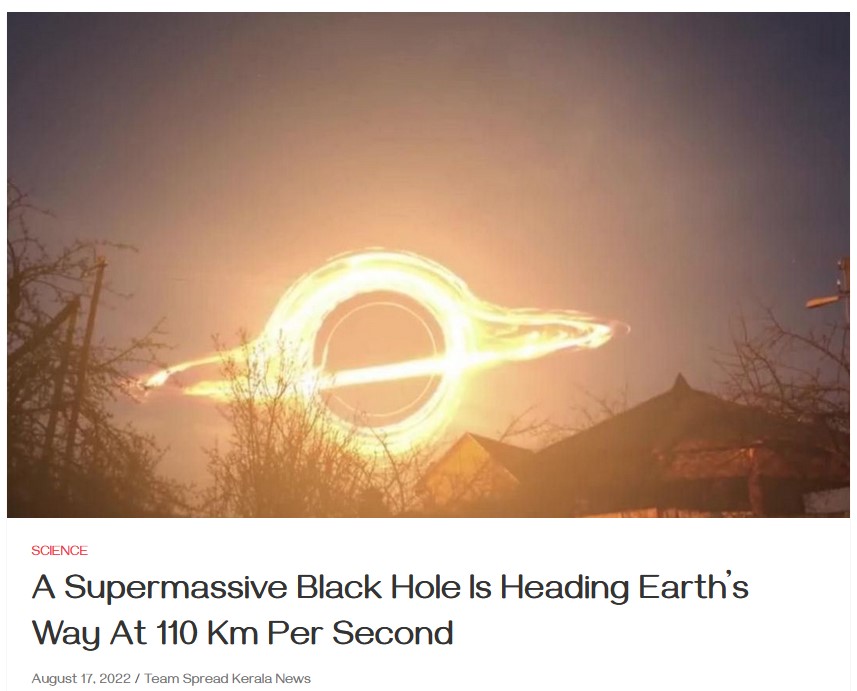
At first, click-bait had been used by ‘fraudsters’. ‘Publishers’ who used to cram completely useless information under some very ‘enticing’ titles.
Now… you may say that the information about our galaxy – the Milky Way, being on a collision course with Andromeda – our closest galactic neighbor, is also useless. Maybe… After all, that will only happen after 4 billion years had already passed… Anyway, this time, the targeted public is rather different than before. More ‘scientifically minded’… Which proves my point. That using click-bait has become a lot more acceptable.
The new normal…
Which brings me to the next question. How many of you are going to watch this?
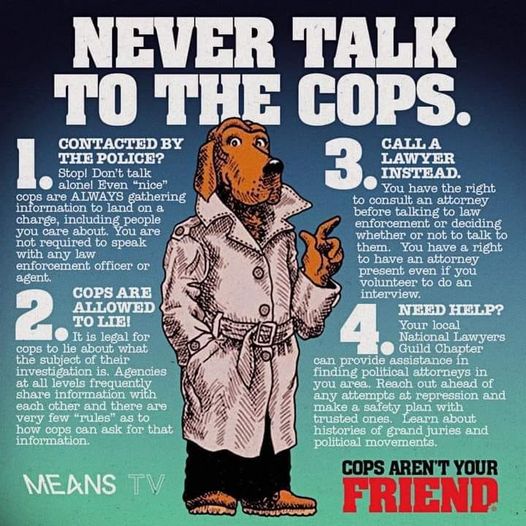
It was shared on a FB-wall and somebody had commented that “Institutionally they are not your friends.”
My ‘jerked’ comment was:
“Institutionally, cops should be your ‘last resort’ friends.
The fact that too many of them are not, and the fact that too many of us consider them, as a category, to be unfriendly, is proof of how dysfunctional our society has become.
Cops used to be ‘unfriendly’ when I grew up. In communist Romania. When the cops were used, by the communist state, to preserve their power. The communist power over the entire society.
In the free countries of today, the cops are the sole barrier separating our persona and private property from the hands of the criminals.
Without their presence…
Or, putting it the other way around, we have but the cops we deserve. Train and motivate them properly and you’ll have good cops!”
At a second glance, I had an inkling. Is it possible for the whole thing to be nothing more than a ‘marketing campaign’? Organized by the only people interested in increasing litigation?
Interested in altering the relative stability of our political establishment?
The police, by properly performing their duties – the world over, not only in the communist countries, contribute to the political stability of those respective countries. For the police to properly perform their duties, there must to exist a proper trust between the general population and the police itself. The population must see the police as their friends of last resort while the police must see the general public as both their employer and their responsibility. The population must be open in their relationship with the police while the police must treat respectfully every individual, including the suspects and the convicts.
In the communist regime I grew up, the police couldn’t fulfill its duties. Exactly between there was a ‘trust’ barrier between the general public and the police. Between the oppressed and the armed hand of the oppressor. The communist regime I grew up under, in Romania, had eventually collapsed. Exactly because of the malignant mistrust between the general public – The People, and the government. The police being nothing but a portion of the government itself.
Who is interested in the collapse of the democratic regimes? Who is mostly interested in wedging apart the government from The People?
The larger your ‘skull’ is, the more ideas – sometimes conflicting ones, you are able to ‘harbor’.
This guy, a 31 years old father of two, is looking forward for a heart transplant.
Meaning that he, and his family, trust the doctors who are going to perform the surgery. Who are going to open up his chest, take his failing heart out, sew the ‘re-cycled’ one in and patch him up again. Doctors who need to hook him up to various machines and to pump him full of chemicals in order to maintain him alive – but unconscious, during the procedure. And who are going to closely monitor him – and, again, administer him a lot of vital drugs, during the rest of his life.
Meanwhile he, and his family, don’t trust the doctors who tell him he needs to get a Covid jab first.
For knowledge to become actionable, it has to be trusted. It has to be believed as being true!
In order to cooperate with somebody, you need to trust that person.
But trusting a person is far more complicated than believing that a piece of information is true!
Evaluating a piece of knowledge is a uni-dimensional business. That piece of knowledge either corresponds with (what is considered to be) reality – it is ‘true’, or it doesn’t. Hence it is false. And it’s only after you have satisfied yourself about an information being true that you may start to ‘own’ it. To act upon it.
When it comes to trusting a person, you are confronted with a bi-dimensional endeavor. Which makes it a real problem. In order to be able to cooperate with somebody, you need to be satisfied on two accounts. That that person is qualified enough for the business at hand AND that that person ‘means well’.
Not that simple, is it?
One-Time
Monthly
Yearly
Make a one-time donation
Make a monthly donation
Make a yearly donation
Choose an amount
$5.00
$15.00
$100.00
$5.00
$15.00
$100.00
$5.00
$15.00
$100.00
Or enter a custom amount
$
As much as I love writing, I do have to eat. And to provide for my family. Earning money takes time. If you’d like me to write more, and on a more regular basis, hit the button. Your contribution will be appreciated! Another very efficient way to help would be to share my posts.
As much as I love writing, I do have to eat. And to provide for my family. Earning money takes time. If you’d like me to write more, and on a more regular basis, hit the button. Your contribution will be appreciated!
As much as I love writing, I do have to eat. And to provide for my family. Earning money takes time. If you’d like me to write more, and on a more regular basis, hit the button. Your contribution will be appreciated!
Sugar, flour, vegetable oil, gas, toilet paper, soap, pork belly… and also coal, steel, timber, cement…affordable mass produced ‘things’ you expect to be able to buy whenever you need them.
Until something happens and you are no longer able to… either you lost your job or they have disappeared from the market. For whatever reasons. It is then when you realize that many of your contemporaries consider many of them to be luxuries… And that now it’s your turn to share their experiences…
Then we have the natural ‘commodities’. Things we take for granted but which have not been produced by our fellow humans. That the sun will rise tomorrow, fresh air, clean water, fertile soil… Things we take for granted… but, again, quite a lot of people find many of those things to be rather ‘out of reach’!
Finally, but no less important, we have the ‘virtual’ commodities. Man ‘made’, again, but, this time, ‘untouchable’. Love, friendship, respect, trust…
To me, the most important of the ‘commodities’, virtual or otherwise, is trust.
Once we loose trust, we loose everything!
One-Time
Monthly
Yearly
Make a one-time donation
Make a monthly donation
Make a yearly donation
Choose an amount
$5.00
$15.00
$100.00
$5.00
$15.00
$100.00
$5.00
$15.00
$100.00
Or enter a custom amount
$
As much as I love writing, I do have to eat. And to provide for my family. Earning money takes time. If you’d like me to write more, and on a more regular basis, hit the button. Your contribution will be appreciated! Another very efficient way to help would be to share my posts.
As much as I love writing, I do have to eat. And to provide for my family. Earning money takes time. If you’d like me to write more, and on a more regular basis, hit the button. Your contribution will be appreciated!
As much as I love writing, I do have to eat. And to provide for my family. Earning money takes time. If you’d like me to write more, and on a more regular basis, hit the button. Your contribution will be appreciated!
I say this makes absolutely no sense. It’s not only insulting for the nay-sayers, it’s actually dangerous for ourselves.
For all of us. Vaccinated, unvaccinated and unvaccinables.
Let me explain. The US Army, and all other successful ones, live by ‘no one left behind’. Far more than its technological prowess, this constitutes its main strength. Each of the individuals involved feel that they belong there. That no matter what will happen in the battle field, none of them will be ‘left behind’. It is this collective sentiment which transforms a motley collection of ‘misfits’ into the most powerful army in the world. The fact that the ‘home team’ foots the bill for the most technologically advanced ‘tools of war’ only adds to that strength. That huge bill being itself a proof of the powerful bond which exists between those who ‘serve’ and the general population. ‘No one left behind’ once again.
Flash back to the nay-sayers.
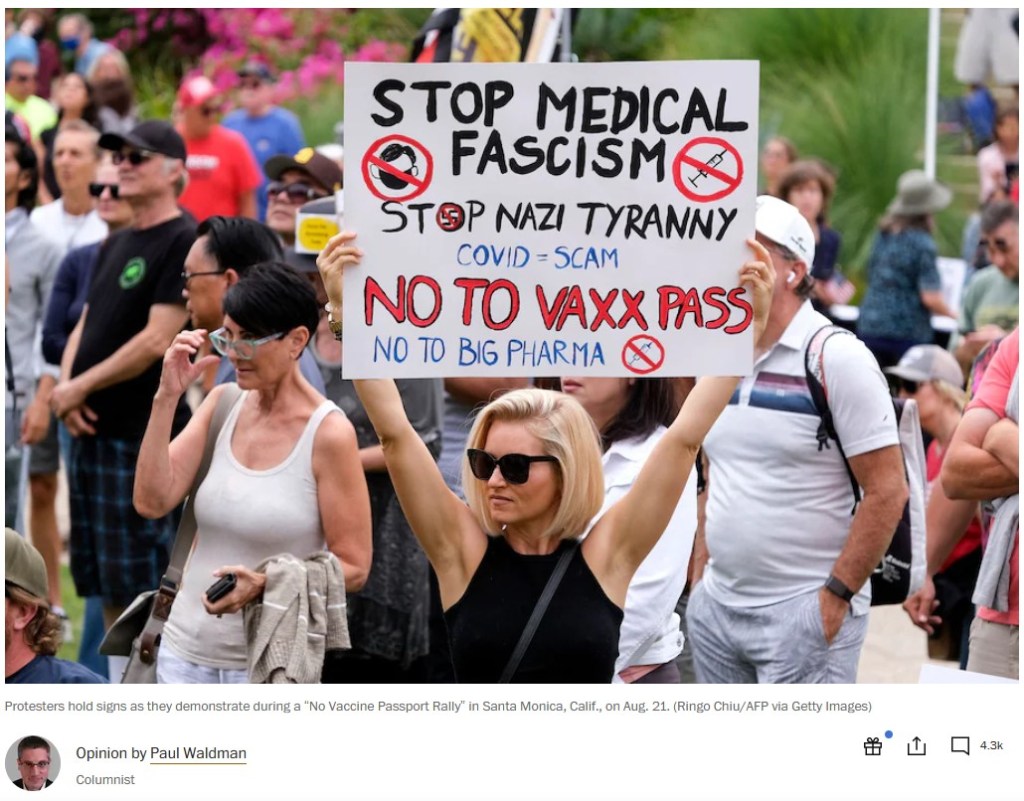
I’m convinced they’re completely mistaken. That Covid is for real, that vaccines work – even if imperfectly, that the mask is useful – and that calling it ‘face diaper’ is insulting. And I’m also convinced that we should rather hear them out than call them ‘unhinged’.
For two reasons. The first, and most obvious, being that calling them names opens up the door for them calling us names. How soon after a session of name-calling do you think we’ll regain ‘mutual recognition’? How soon after a session of name calling will we able to regain our ability to ‘speak freely’? And to listen in earnest what the others have to say? The second, and the more important one, being that it’s hugely important for us, for all of us, to understand the reasons which fuel this ‘nay-saying’. What made the nay-saying propaganda so successful.
isn’t going to bridge the growing gap which yawns our society apart.
The fact that Trump – and his minions, have been instrumental in the digging of the gap is one thing. His ‘thing’. In which direction each of us pushes – what each of us does about the present situation, is quite another thing. Our ‘thing’, this time.
As much as I love writing, I do have to eat. And to provide for my family. Earning money takes time. If you’d like me to write more, and on a more regular basis, hit the button. Your contribution will be appreciated! Another very efficient way to help would be to share my posts.
As much as I love writing, I do have to eat. And to provide for my family. Earning money takes time. If you’d like me to write more, and on a more regular basis, hit the button. Your contribution will be appreciated!
As much as I love writing, I do have to eat. And to provide for my family. Earning money takes time. If you’d like me to write more, and on a more regular basis, hit the button. Your contribution will be appreciated!
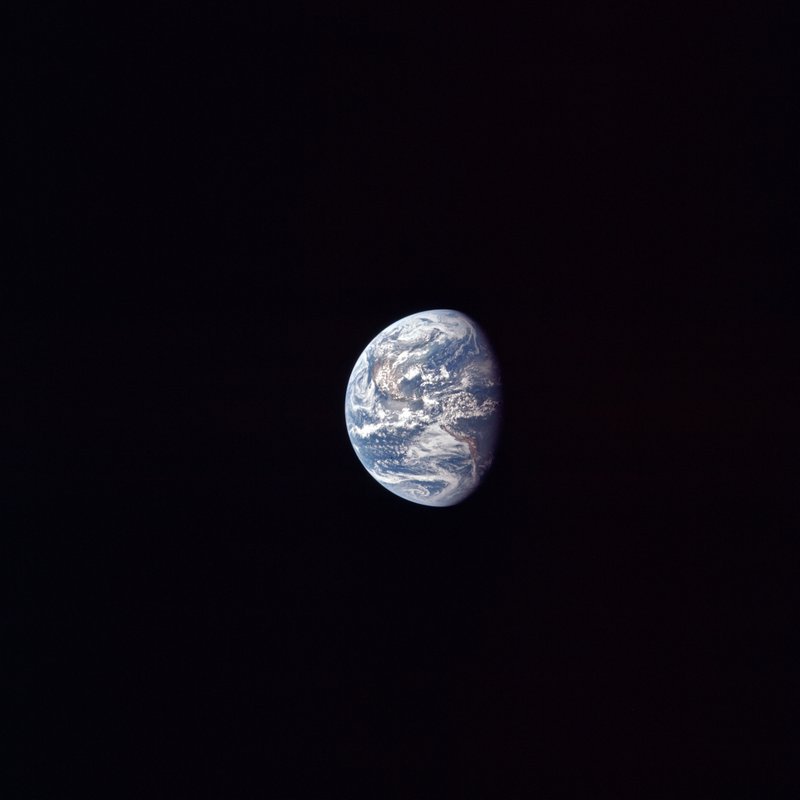
None of us had been asked for their ‘informed consent’. Yet all of us are cramped together on Space-ship Earth towards the place where ‘no man had ever gone before’.
Now that this very suggestive image has been published, what is our voyage going to morph into?
Hell on Earth, as so many apocalyptic movies/novels have advertised?
Or are we going to heed to the present ‘wake-up call’? As we already did so many times before?
We have managed to eradicate, through vaccination, the smallpox. Polio, measles, diphtheria, rabies and so many other diseases are no longer a real danger. For those of us who had been vaccinated or have access to the relevant vaccines.
Yet faced with the current challenge, COVID 19, we have ‘doubts’…
Some of us have doubts about getting the vaccine, others about making the vaccine available to the entire ‘crew’.
What’s going on in that collective brain of ours?
What’s the rationale behind making the polio vaccine available for everybody, practically for free, while that for COVID is still out of reach for most of those who need it? Given our current industrial prowess… Why is it so hard to understand that given enough time SARS Cov 2 will certainly mutate far enough from the original version to evade the current vaccine?
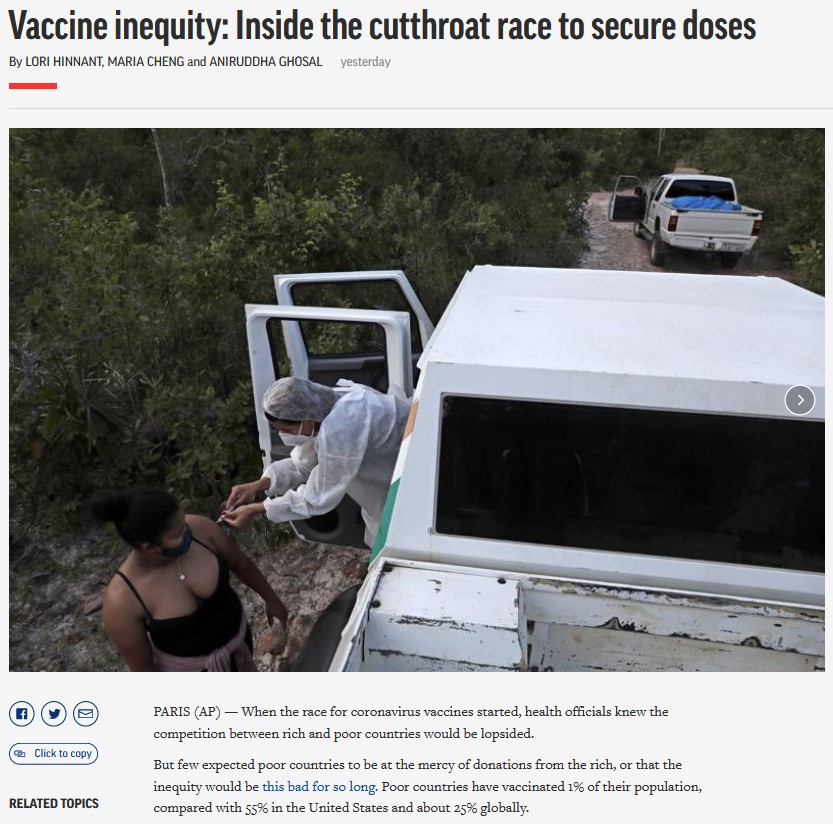
The fact that the authors above are working the equity angle speaks volumes. Equity is, indeed, very important. Only it relates more to ‘metaphysics’ than to the immediate reality.
Equity has to do with the perceived reality while people die in the immediate one. The perceived reality will end up haunting us, indeed, only we have to survive the current situation in order to get to that stage.
The real problem with the lopsided access to the Covid vaccines being that while we ‘race to secure doses’ the virus has the opportunity to mutate out of our ‘control’. Our concern with ‘equity’ somehow blinds us to the fact that ‘cutthroat’ is no longer a metaphor. The longer it takes for us to understand that the entire crew of the space-ship Earth must be immunized the longer it will take for us to get ‘out of the woods’.
Why had our parents been able to eradicate small pox and almost do the same thing to polio? While we’re still dragging our asses? And not exclusively about COVID… When we have so much information about everything?
What made the anti-vaxxers of those times less powerful than the current ones?
What makes me so sure the erstwhile anti-vaxxers had been less powerful? Small pox had been eradicated, right? I had measles. Before the vaccine had been made available. Never heard about anybody having measles until very recently.
Whoa! What’s going on here? Israel, the country, had made a huge effort to save its people from the misery caused by Covid! Why would the Ultra-Orthodox community need any extra-effort to let itself be immunized?
Why was Israel’s manner of thinking closer to that of our fathers’ than to ours? What makes us so similar, in this respect, to the Ultra-Orthodox?
Well, our fathers had to fight for their rights. And Israel for its place on the map. We, and the Ultra-Orthodox, had our rights granted to us.
Our fathers had to cooperate among themselves in order to get through. Israel had survived, and thrived, as the consequence of a coordinated effort.
We are cocooned in our bubbles. We have become spoiled brats. One way or another.
We really need to start thinking outside our respective comfort zones.
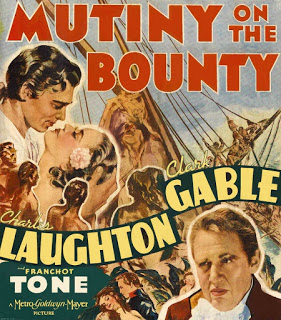
For no other reason that mutinies tend to make matters worse. It so happened that during the last 80 years no major conflict had disturbed the peace on our ship. No thanks to us. We haven’t done anything special. Being aware that a conflict between the major powers would have ended in MAD doesn’t count as ‘doing anything special’. During the last two generations we sorta lost our bearings.
Hopefully we’ll wake up to the fact that the next disturbance will no longer be a ‘top down’ event. Think about it. Ever since the French Revolution – the last bottoms up upheaval, all other ‘disturbances’ had been the consequence of somebody planning for them. Initiating them.
30 years ago, the socialist lager had crumbled. Under its own weight. Nobody had planned that event. Nobody had planned for that event! The democratic world had been stunned by the speed with which things had unfolded.
The socialist lager had crumbled for the simple reason that the people living there had become pissed of. Pissed of by the growing distance which separated them from those living in the ‘capitalist’ world.
Some of that distance has survived to this day. But it’s shrinking! Fast!
Unlike the distance between the ‘civilized’ world and the ‘developing nations’.
This ‘cutthroat race (among nations) to secure doses’ while so many ‘civilized’ people share-antivaxxer propaganda only adds insult to the injury felt by those who don’t have access to vaccines. And demonstrates how far off we have distanced ourselves from the ‘hard core’ reality.
Are we going to make anything of our present predicament?
One-Time
Monthly
Yearly
Make a one-time donation
Make a monthly donation
Make a yearly donation
Choose an amount
$5.00
$15.00
$100.00
$5.00
$15.00
$100.00
$5.00
$15.00
$100.00
Or enter a custom amount
$
As much as I love writing, I do have to eat. And to provide for my family. Earning money takes time. If you’d like me to write more, and on a more regular basis, hit the button. Your contribution will be appreciated! Another very efficient way to help would be to share my posts.
As much as I love writing, I do have to eat. And to provide for my family. Earning money takes time. If you’d like me to write more, and on a more regular basis, hit the button. Your contribution will be appreciated!
As much as I love writing, I do have to eat. And to provide for my family. Earning money takes time. If you’d like me to write more, and on a more regular basis, hit the button. Your contribution will be appreciated!
Having started with a rhetorical question, I might as well continue by offering you some ‘trivia’.
Lytton, BC, is a 249 people strong village, situated just a tad North of the 50th parallel. Which puts it almost 300 miles/450 kms closer to the North Pole… Its inhabitants had had to flee a fire during the hottest weather ever encountered in that area. In modern times, anyway…
During the last 300 years, we’ve been ‘releasing’ – ‘repurposed’? – huge amounts of energy. Solar energy ‘captured’ by plants and stored in the belly of the Earth as ‘fossil fuel’. By releasing that energy we’ve actually changed the composition of the atmosphere.
A third more of something which constitutes only 0.042 of the Earth’s atmosphere doesn’t amount for much, does it?
As already stated, this blog is about how people think. About how we, conscious people, relate to what happens around us through the use of our ‘brain’.
So here we have it. We’ve been doing something for the last 300 years. ‘Naively’ at first and in an increasingly scientific soon after the whole thing had gathered momentum. From a certain point on, an increasing number of the same people who had brain-powered the process – individuals currently known as ‘scientists’, have warned the rest of us about the potential consequences of what we were doing.
And now, that those consequences have started to manifest themselves, so many of us are still in denial. How is it possible for so many to be convinced that it’s possible to back-pedal Earth’s geological clock without having to face any consequences?!?
‘But is anything we can do to change this?’
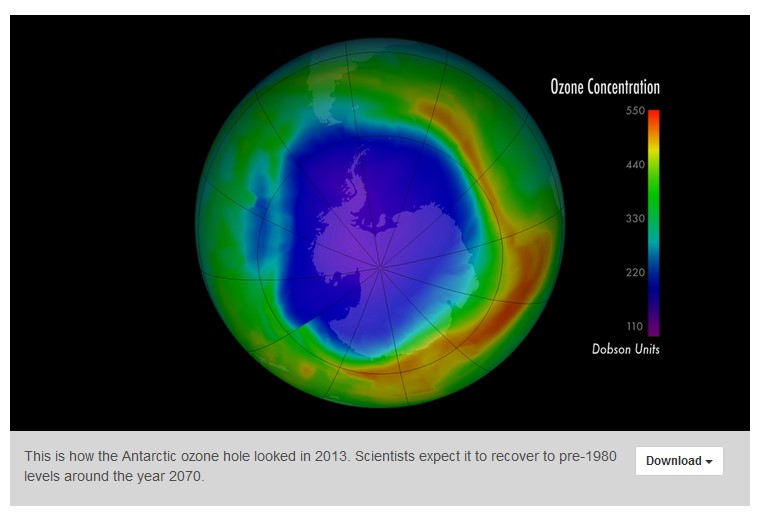
In the late 1970-ies, we – ‘our’ scientists, to be more precise – have noticed that there was a problem with the ozone layer. The ‘thing’ which shields life on Earth from being ‘burned’ out by the UV radiation coming from the Sun.
After a short while, people from the scientific community have determined that there was something that we could do about it. Stop using ‘Chlorofluorocarbon’ substances. Old style ‘Freon’. It wasn’t easy – we had to find substitutes and retool factories, but we did it! The ozone layer is in far better shape now!
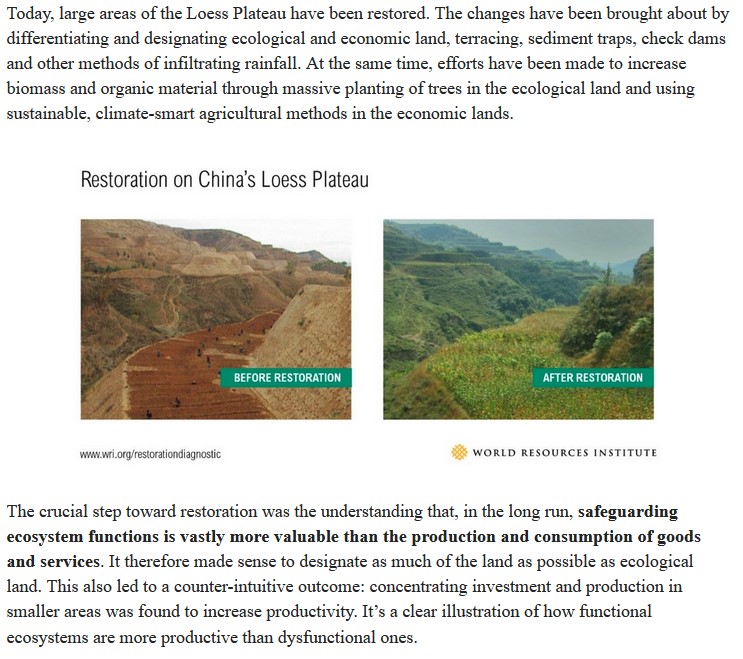
While repairing the ozone layer had been a collective effort, eroded land must be ‘patched up’ patch by patch.
‘OK, maybe there is something that we could do about ‘it’. What would that be?’
I told you already. This is a blog about how we think! Not, in any way shape or form, about what we should be thinking!
Do your own research. See what other people say about this.
And ask yourselves one thing.
We are able to ‘fly’ – by boarding a plane, of course – because ‘modern’ scientists have proven that the old ones had been wrong. But do we – as in me and you – really know how a plane works? Yet we happily board them in droves in each holiday season. We live way longer than we used to. Because scientists have told us how to build sewage and waste management systems, what pills to take when falling ill and what vaccines to use in order to prevent infectious illnesses from taking hold. We lead easier lives. Because scientists have built machines which work for us.
We’ve done all this as a collective effort. We used to trust what they were teaching us and they trusted us to support them in their endeavors.
What happened to all this? What made us so ‘alert’?
Where did all that trust vanish? Why? What will the consequences be?
One-Time
Monthly
Yearly
Make a one-time donation
Make a monthly donation
Make a yearly donation
Choose an amount
$5.00
$15.00
$100.00
$5.00
$15.00
$100.00
$5.00
$15.00
$100.00
Or enter a custom amount
$
As much as I love writing, I do have to eat. And to provide for my family. Earning money takes time. If you’d like me to write more, and on a more regular basis, hit the button. Your contribution will be appreciated! Another very efficient way to help would be to share my posts.
As much as I love writing, I do have to eat. And to provide for my family. Earning money takes time. If you’d like me to write more, and on a more regular basis, hit the button. Your contribution will be appreciated!
As much as I love writing, I do have to eat. And to provide for my family. Earning money takes time. If you’d like me to write more, and on a more regular basis, hit the button. Your contribution will be appreciated!
For instance I know that the Earth exists – I am able to walk on it and I eat things that grow out of it.
I also believe – without ever having seen it from far enough – that the Earth is round. Just as my ancestors used to believe that the Earth was flat. Both I and my ancestors were told what to believe and we did that. Because we believed in those who were offering us that particular piece of information and because the issue wasn’t of any real importance for us, personally.
I do trust that Neil Armstrong did land on the Moon. I’m not going to share with you my reasons for that here, this post is about something else. My point is that belief is casual while trust is active. I did research the matter, as I could, and I considered it carefully before reaching the conclusion that ‘Yes, I am convinced that Neil Armstrong did land on the Moon’.
As we all know ‘know’ is a verb. The corresponding noun is ‘knowledge’, information that we are aware of. And so familiar with that we don’t even remember how we have arrived to accept it as true.
Believe is also a verb. It’s corresponding noun is ‘belief’, information we are aware of and believe it to be true just because we were told so by a seemingly credible source.
Trust is both a verb and a noun. And here comes the really interesting part. While trust as a verb means more or less the same thing as believe, trust as a noun has nothing, but absolutely nothing in common with belief. Trust is a state of mind while belief is a piece of information with a ‘value’ attached to it.
In fact ‘trust’ is something you consciously choose to invest while ‘believing’ is something you are led to, sometimes even without you being aware of what is going on, by a person or even by the circumstances you happen to find yourself in.
Now it is time to introduce another notion. Faith. It exists only as a noun and that’s why I didn’t brought it up from the beginning.
It has something in common with both belief and trust. Similar to belief no proof is usually attached to faith and similar to trust faith is something that the individual has to willingly accept/profess/invest.
Coming back to knowledge we discover there are many kinds of it.
We have factual knowledge, the kind we have either witnessed or otherwise seems so evident that we’d never even dreamed of questioning. So evident that if somebody asks us to be specific and put it squarely in one of the ‘belief’, ‘trust’ or ‘faith’ drawers we’d be at a loss and protest vehemently ‘it’s plain knowledge, what’s wrong with you guys?’
Then we have our beliefs. For instance we know that we love our partners and our kids and we believe that they love us back. We also have faith in a lot of things. Some of us have faith in God, some others put their faith in politicians, market analysts or even the weather-man. For a longer or shorter period of time. When gravely ill we put our faith in doctors and in medicines. And so on.
And finally there is the trust problem. For a real trust to develop we need an actual understanding of what is going on. That’s where science and technology comes is. If we’d done something for a long enough period of time we gradually become confident in our ability to do that thing over and over again with consistent results. If the results are reproducible, if other people can obtain results similar to ours by following our methods then our endeavor is deemed scientific and, hence, trustworthy. Same goes for information gathered following scientific methods.
And here lies the pitfall. Science has to be constantly challenged in order to remain valid. If we reach that point where we start to put faith in science and scientists instead of continuously demanding proof and doing our best to understand with our own heads what is going on then we are doomed. Science morphs not in ‘religion’ – that is something else – but in hoax.
The ‘thing’ with science is that the only trustworthy aspect of it is the method, not at all the results. We’ll never be able to find the absolute truth – no result will ever be 100% accurate – but if we keep using the ‘scientific method’ – consistency and unhidden-ness – then we’ll remain on the safe side.
Only after reading (again) the Essence of Truth I started to grasp the huge mistake made by Marx and his followers.
His declared motives were ‘the emancipation of the oppressed’ and if we are to grasp his work we need to read him in this key.
Only this way I could finally understand why for him ‘capital’ means exclusively ‘trade-able wealth’, money or things easily measurable in monetary units.
Only this way I could finally understand why for him ‘capitalism’ was exclusively about personal profit and hence despicable.
All this had happened because Marx wasn’t really interested in understanding how capitalism works, what it means and how it generated a medium in which creative and hard working people could make better use of the available resources than in previous social settings.
Marx was a man of a mission (it’s not that clear for me if he considered himself a saint that was meant to free the working class, a con-man who swindled a lot of money from Engels under the pretext of helping the poor or both at the same time) and we need to accept that almost all he did write was dedicated to this mission of his, whatever that was.
On the other hand Max Weber was also a man of a mission only his was different from Marx’s.
What he set out to do was to understand the inner workings of capitalism, how it came about and what consequences it might have.
This is a brief excerpt from Weber’s “The Protestant Ethic and the Spirit of Capitalism” – retrieved, ironically, from an internet site run by “marxists”, http://www.marxists.org.
Weber is quoting here Benjamin Franklin in an attempt to make us understand what is the true spirit of capitalism.
At the first glance we might say it corresponds closely to what Marx had said about the subject – that it all boils down to money – only after further consideration it becomes apparent that while Marx had stopped there, at ‘money’, Weber and Franklin had seen way deeper than that.
Capitalism is not that much about mere money as it is about credit. Trust that is.
No one would extend credit without trust, no one would enter a contract without mutual trust and so on.
So what would it be? Which version of capitalism would you prefer?
The one in which we would strive to get hold of as much money as possible or the one in which each of us is held responsible by the others for his actions and holds those around him responsible for their actions – this being the only manner in which real trust can be established among us?
Please note that in reality these two sides of capitalism are like the two hands of a working man. For a short time one can get along with only one of them but no sane individual would prefer to live, and work, with only one hand, right?
Then how come our obsession about mere money has come to trump almost everything else?














 nicichiarasa