Archives for posts with tag: Money as goal

Your previous actions that were done in error now have consequences.
Karma.

My father has cancer. And an eye problem.
The cancer is being treated in a public hospital while the eye problem is taken care of at a private facility.
In the last couple of days we have visited them both.

Besides the obvious differences there’s a huge, and overpowering, ‘common ground’.
The money problem.

No, not the money you have to fork out if you want to be treated in a private facility.
The fact that money has been elevated to goal status.

Functionally speaking, health-care is a ‘social function’. By helping each member to remain healthy, the society – as a whole – preserves it’s overall health. It preserves it’s functionality. It’s ability to survive and to thrive.
By helping my father with his medical conditions, the society makes it possible for me and my family to remain productive. Instead of taking care of him – which we can’t do properly – we can continue to do what we’re good at.

And no, the subject of this post is not ‘who should pay for health care’.
There is no ‘free’ anything so everything has to be paid, one way or another.
The problem is the fact that money becoming the main goal has consequences.

Instead of trying to maintain the well being of the population – in an economically sensible manner – the health industry is focused on making profit.
Instead of trying to maintain the well being of the population – in an economically sensible manner – the public health system is focused on being ‘thrifty’.
The consequences are similar. Overworked doctors, crowded waiting rooms, impatient personnel, long waiting hours, irritation… And no spare capacity to cover ‘mass emergencies’!

Unfortunately, things go way deeper than this.

Do you remember what else ‘surfaced’ in the winter of 2020?
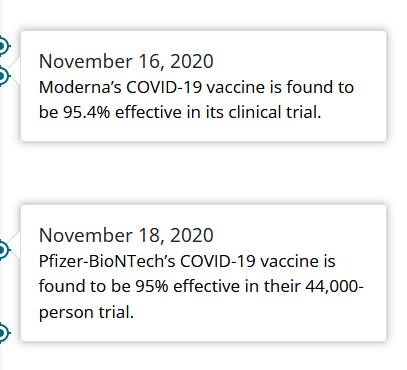
Put two and two together and it becomes a lot easier to understand how and why a huge number of people ended up believing that COVID-19 was a scam.
A scam concocted by Big Pharma to convince us to buy their products…

In retrospect, what happened doesn’t make much sense, does it?
So many people who had died because so many of us didn’t have enough trust in masks and vaccines…
So many of us were convinced that we were being played! For money…

Because it had already happened!

“These consumers were getting a raw deal. They were being exposed to Mylan’s price increases and excluded from the market forces that might cushion them. They were getting ripped off. And it’s no wonder they got angry.”

It is not from the benevolence of the butcher,
the brewer, or the baker, that we expect our dinner,
but from their regard to their own interest.
We address ourselves, not to their humanity
but to their self-love,
and never talk to them of our own necessities
but of their advantages.
Adam Smith, The Wealth of NATIONS, 1776

I’m sure you already know that Adam Smith didn’t invent capitalism. As Marx invented communism and Lenin invented bolshevism.

Adam Smith had done nothing more and nothing less but described what was going on around him. How a bunch of people acting according to their ‘moral sentiment’ took care of business. How individual needs – for meat, beer and bread – were met and how the wealth of nations was built in the process.

“To some people, Gen Z may seem salary ‘obsessed’. In some cases, say experts, it may be hard for older generations to understand why young workers have such an intense focus on pay. “At Gen Z’s age, older people worked 40 hours a week, and made enough money to buy a house and have barbecues on the weekend,” says Corey Seemiller, an educator, researcher and TEDx speaker on Gen Z. “Gen Z works 50 hours a week at their jobs, and another 20 hours a week side hustling, yet still make barely enough to cover rent.””

Do you notice any need being fulfilled, in earnest, in this, new, situation?
OK, things were not that rosy in Smith’s times either. Most people had to work hard, a lot harder than today, to make ends meet. But since Smith and until some 40 years ago things went better. Year after year.
When Smith was writing his books, Regular Joe-s used to live in crowded shacks, usually rented out from their employers. Nowadays, most of those in their 50-ies and 60-ies own the house they live in. Which house has nothing in common with the afore mentioned shack.

So, is this the new kind of progress?
A looking back in anger kind of progress?
Are you even aware of the huge number of people pondering whether capitalism is not as good as advertised – by those who have already enjoyed its spoils? For the simple reason that in the current (no longer) free (enough) market so many people can no longer enjoy the kind of economic well being their grand parents took for granted…

As someone who had experienced both communism and capitalism, the situation is clear.

What do we have an economy for?

To make ends meet? To make it easier for our needs to be met?

What do we have a banking/financial system for? To mobilize capital for the economy? To make it possible for our needs to be met easier? More efficiently?

Or just for profit to be made?

“It really is possible to do two good things at once: address the abuse of the working poor by payday-loan and check-cashing outfits while expanding the range of services provided by the USPS. Media outlets have called Warren’s proposal “radical.” That’s ludicrous. She’s simply using her position and prominence to highlight the findings of a new study by the Postal Service’s Office of the Inspector General, which notes that roughly 68 million Americans are underserved by the private banking system. “With post offices and postal workers already on the ground,” says Warren, “USPS could partner with banks to make a critical difference for millions of Americans who don’t have basic banking services because there are almost no banks or bank branches in their neighborhoods.”

This is not a new idea. From 1911 to 1967, the Postal Service maintained its own banking system, allowing citizens to open small savings accounts at local post offices—actually a better approach than “partnering” with banks. The system was so successful that after World War II, it had a balance of $3 billion, roughly $30 billion in today’s dollars. Congress did away with postal banking in the 1960s, but post offices in other countries—including Japan, Germany, China and South Korea—provide banking services. Japan Post Bank is consistently ranked as one of the world’s largest financial institutions based on assets.”

Or, to put it the other way around,
‘what profit is?’

The well deserved ‘consequence’ – considered as such by the vast majority of the stakeholders, of a well-done job?
Or a self serving benchmark to be reached at all costs? Which costs are to be ‘shouldered’ by anybody else but the profiteer himself… till reality slaps us, all of us, over our faces…

About the future, I mean!

no kids

This ‘piece of information’ keeps bouncing inside the Internet and is interpreted in various manners.

From ‘what to expect from leaders who are ‘this’ selfish’ to “I find it trashy and irrelevant. Merkel’s husband has two sons, btw.
Well… Macron’s wife also has her own children. And a few nephews.

What startled me was this reaction.
I’m under the stark realization that the most intelligent of the population have the fewest children, which might not bode well for voting statistics in the future.”

While the observation is, of course, correct, I’m afraid the interpretation attached to it is somewhat ‘confused’.

First if all, it’s not ‘intelligence’ that drives people to give birth to fewer children. Intelligence – coalesced at social level – helps a population to increase its living standard. As such, children no longer die young so parents no longer have to have so many of them. In order to have somebody help you in your older days you no longer have to give birth to more than two or three children.

If intelligence alone would have prevented people from having children Israel and the US would have been at least as ‘childless’ as Japan or most of the European Countries.
On the contrary. The US is still in a better situation than the EU, 1.8 vs 1.6, while Israel thrives at 3.1

Another way of making sense of what’s going on is to consider that people no longer make kids simply because they have reached the conclusion that ‘money’ can just as well help them cope during their older days. Since so few children live with, or at least near, their old parents this no longer seems so farfetched as it may look at first glance…

But what’s going on in Israel? They also have enough money…

The country needs soldiers to defend it’s very existence?

But, you know, Israel is a free country. Those kids could leave anytime before being drafted. As some of them do.

But most of them stay! Freely!

Then how about people giving birth having at least some connection with ‘hope’?
As in people having hope for a better tomorrow? One worth defending?

One worth making children for?