I’m afraid hating the flag doesn’t solve anything. Precisely because it’s an inanimate object!

How about making good use of the successfully defended rights and convince the others that putting the poor guy in harm’s way wasn’t a good idea in the first place?

But in order to be heard, one needs to keep the conversation going!
One needs to be perceived as caring and respectful by the intended audience…

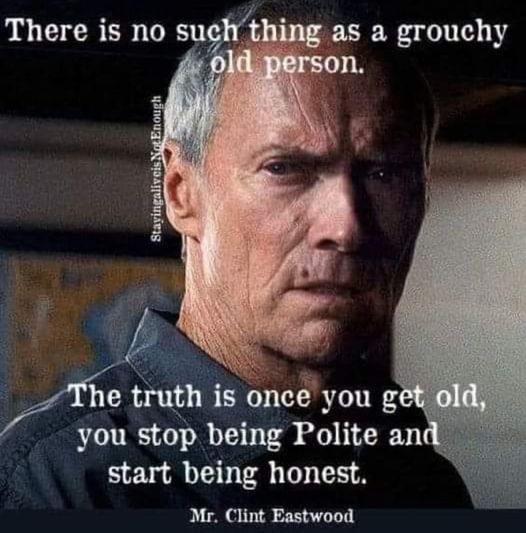
Well, from where I stand – 62 years and counting – ‘grouchy’ starts when people forget that truth – even the naked one – can be ‘exposed’ in a polite manner.

Becoming old doesn’t come with a license to stop caring about how the others feel about things.
On the contrary.
At some moment in time, each of us will reach ‘the point of no return’. After which we’ll depend on others. Totally!
For food, for water, for somebody to change our diapers…

After all, we’ve been lucky enough to reach the ‘golden age’.
How about becoming wise instead of devolving into rude punks?

‘Cause the opposite of polite is being rude. Not truthful!

Because neither has any damns to give…

They call it Cuetlaxochitl.
They used to call it that way for a very long time.
And it was they who had associated it with the Winter solstice. With the Winter solstice, not the ‘Aztec’ solstice…

We, or rather I, don’t know how they used to call the mistletoe. All I know is they used to associate it with their ‘spells’. Performed, again, during the Winter solstice.

At some point, we – or rather after the Christians got in contact them, the mistletoe first and poinsettia later – have associated both with our manner of celebrating the Winter solstice.

In fact, we have appropriated both the celebration itself and the plants associated with it!

I’m not going to discuss whether this was a good or a bad thing.
It had just happened. And we have to live with the consequences of all those things having had happened in the past.

All I’m going to discuss in this post is their association with Christmas.
With what the Christians consider to be ‘Christmas’ and celebrate it as such.

But is there anything to be discussed about the matter?!?

They have associated each of these plants to their celebrations.
We have associated both to one of ours.
What is to be discussed here?!?

Do we feel bad for what we – our ancestors, actually – have done to them?
And want to atone for what had happened? And for the consequences of what had happened? Which consequences continue to unfold to this day…

We want to make amends – and to get rid of our guilt – by giving them back their plants?!?
Really?

How will any of this benefit them?!?
‘Cause this is about them, not us… right?

How about we stop buying the drugs coming from there?
Making it possible for them to shake off the drug lords which make their lives miserable?

How about we stop patronizing them?
How about we start respecting them for being our ‘brethren’? As in equally-fledged human beings?
Instead of we acting as if they were immature children. Liable to feel hurt that we have borrowed their ‘toys’…. For the sole reason that we think that giving them back their ‘sacred’ plants will cleanse our consciences….

The world doesn’t belong to leaders.
The world belongs to Humanity.

Proper = As it should be. As expected. ‘Clean’.
Property=Something which belongs to someone.
A mutually respected arrangement among the members a certain community which establishes boundaries. Which members have the right to go ‘there’ whenever they want while all others have to ask for permission before crossing that ‘boundary’.
A convention among the members of a certain community about what is the proper thing to do in each ‘patrimonial’ situation. A convention about who has the right to do what to the things which happen to co-exist with the members of the above mentioned community.
The above mentioned ‘things’ include the place where the entire community happens to live. ‘Their’ land.

Which brings us to who owns the world.
The leaders? As many of them assume?
Or the humanity, as Dalai Lama has reportedly said?

How about neither?
My point being that we are nothing but guests in this world.
We come empty handed and we leave empty handed.

Yes, we need property while dwelling on this planet.
But only in the sense of who can do what where. And with the limitation that the ‘what’ we do has to be ‘reversible’.
Just as we leave this world with nothing – we leave even our hands here, our presence on the planet has to be ‘discrete’. Has to produce as little disturbance as possible and all that disturbance must disappear in time.

We need to keep the world a proper place.
It’s the only place we have.
No other home for our children.
No other place to spend our last days.
Properly.

“If the only tool you have is a hammer,
you tend to see every problem as a nail.”
Abraham Maslow

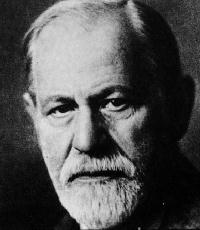
Did you recognize him?
Yes, Sigmund Freud. Dr. Sigmund Freud, as depicted on http://www.marxists.org.

“While the different religions wrangle with one another as to which of them is in possession of the truth, in our view the truth of religion may be altogether disregarded.
Religion is an attempt to get control over the sensory world, in which we are placed, by means of the wish-world, which we have developed inside us as a result of biological and psychological necessities.
But it cannot achieve its end.
Its doctrines carry with them the stamp of the times in which they originated, the ignorant childhood days of the human race. Its consolations deserve no trust. Experience teaches us that the world is not a nursery.
The ethical commands, to which religion seeks to lend its weight, require some other foundations instead, for human society cannot do without them, and it is dangerous to link up obedience to them with religious belief.
If one attempts to assign to religion its place in man’s evolution, it seems not so much to be a lasting acquisition, as a parallel to the neurosis which the civilized individual must pass through on his way from childhood to maturity.”
[Sigmund Freud, “Moses and Monotheism”, 1932]

No, I’m not going to argue with Freud.
I’m not going to compare his opinion on religion with that of Durkheim. Which makes more sense to me. You may find them here, at #e., and compare them yourself. If you wish, of course.

What I’m trying to point out in this post is that reason is over-rated.
That reason is an extremely powerful tool but, like all other tools, the consequences of yielding it depend on the yielder.
On the person using reason in order to get somewhere.
To find the intended meaning…

Which is?

The sound of one hand clapping…

While worrying is indeed a waste of time, it is also a very good pointer!
If not the only one…
The only one powerful enough to make us ‘move’!

Worry is a powerful attention grabber. Points us towards the things we feel the need to solve.

What we do after our attention has been pointed… that’s the most important thing!

Continue to worry or start doing things?
Meaningful things…
And the first meaningful thing to do while worrying is to stop.
Now, that the attention grabber had done its thing… to continue would be a waste of energy!

Știi care e diferența dintre nemți și români?

Am auzit ‘povestea’ asta undeva prin 1988.
Adică în secolul trecut și în timpul orâduirii de mult apuse. Cel puțin din punct de vedere formal…

Am tot relatat întâmplarea în diverse situații.
A venit momentul să o consemnez.
Pentru simplul motiv că e din ce în ce mai actuală!
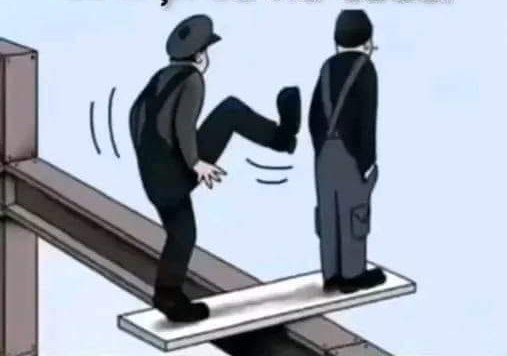
Si ca explicație pentru ilustrația de mai sus. Care a început să mișune pe internet.

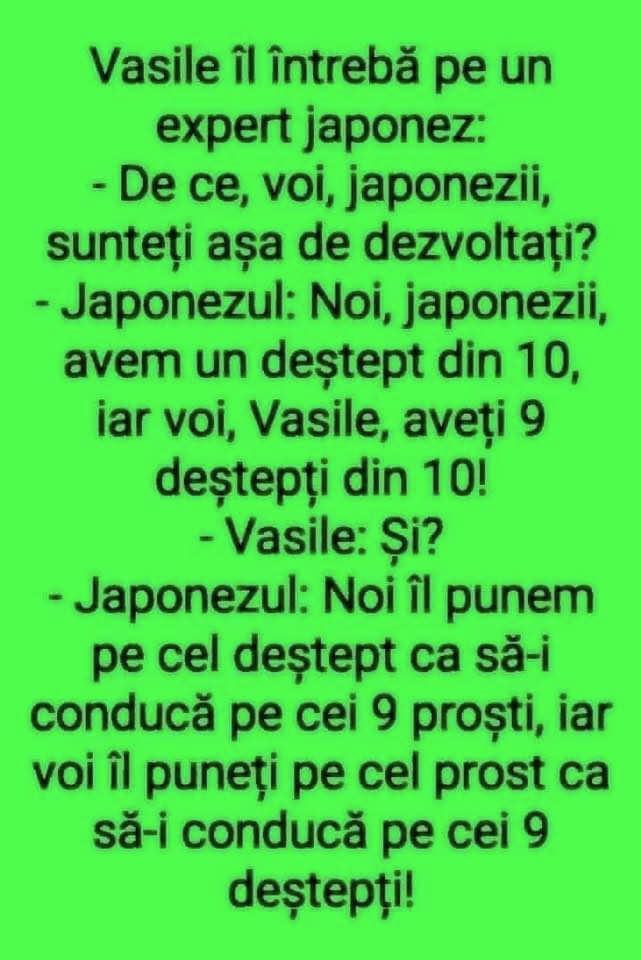
Cică un grup de nemți, atunci când văd pe cineva mai deștept decât media, se dau pe lângă el. Îl ajută să facă ce are el de făcut. Și în felul ăsta trăiesc cu toții mai bine.
În felul ăsta trăiesc cu toții din ce în ce mai bine…
Și cică un grup de români, atunci când văd pe cineva mai deștept decât media, se adună în jurul lui. Și-i dau la cap!
‘Ce mă, ăsta se crede mai deștept decât noi?!?’

De ce mi se pare încă actuală?
Cu toate că în România se trăiește mult mai bine decât se trăia pe vremea aia?
Cu toate că în multe locuri din România se trăiește aproape la fel de bine ca în multe locuri din Germania?

Păi tocmai d-aia.
Pentru că prea mulți dintre nemți ‘s-au învățat la prostii’.
OK, o parte dintre români ‘s-au deșteptat’. Mai e mult până departe dar măcar mergem în direcția bună!
Nemții, în schimb, parcă au luat-o înapoi.
Și mi-e frică să nu cumva să ne luam după ei!

You cannot learn
what you think you know.

Epictetus

How many times have you been hit by something you didn’t see coming?

Not very often… for the simple reason that these encounters use to end up badly!
Bent fenders, broken bones…
Hence we pay attention. Or get killed… end of story!

But how many times have you experienced bad consequences, really bad consequences, after misjudging a situation?
After a ‘doesn’t matter’ uttered nonchalantly?

There are no facts, only interpretations.
Friedrich Nietzsche

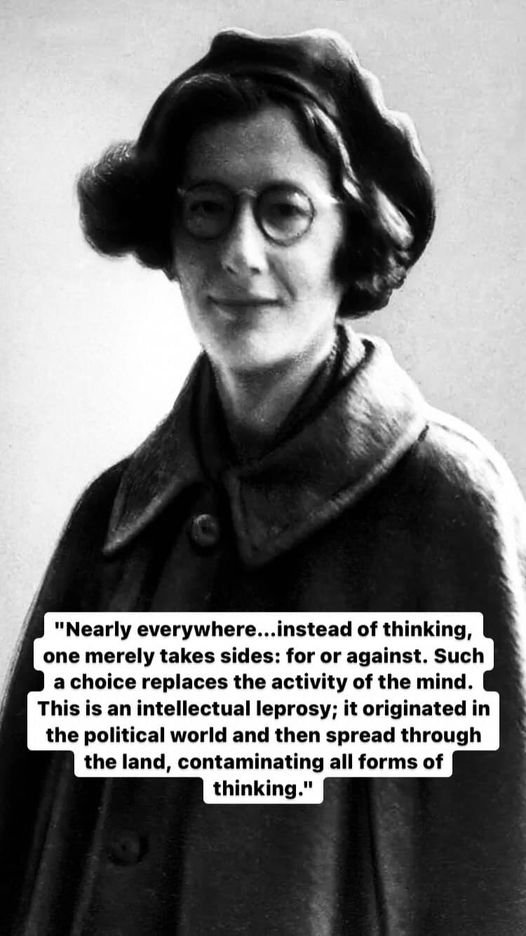
I’m afraid the political world wasn’t where this intellectual leprosy had originally came from.
The political world was only the place where this disease had become ‘viral’.
Where this manner of (not) thinking had been weaponized!

Its origin can be traced back to our intellectual arrogance.
To our conviction that ‘I can be right on my own’. Without any ‘input’ from the outside…
Even in spite of whatever information might reach me from ‘outside’, if that information doesn’t fit my already held convictions. My ideology….

In fact, this belief – ‘I’m entitled to my own convictions’ – is exactly what people on both sides of the divide have in common. Intellectually speaking!
A shared disease… a virus infecting indiscriminately…

What are the errors of Marxism?

Marxism is an ideology.
Ideologies don’t have errors, they are thought templates used to evaluate a certain situation and to determine what to do next. Ideologies are tools.
They can be used properly or improperly.
Sometimes, the best use for certain tools is to be left alone. Particularly when you understand they are useless. If you understand they are useless…
Hence it’s not Marxism which is full of errors, it’s the Marxists who are barking up the wrong tree.

If you really need to put your finger on something, if you need to point out a culprit, I give you Marx.
Yes, Karl Marx is your man.
His analysis was brilliant. His diagnostic was spot on.
Finally, in times when the class struggle nears the decisive hour, the progress of dissolution going on within the ruling class, in fact within the whole range of old society, assumes such a violent, glaring character, that a small section of the ruling class cuts itself adrift, and joins the revolutionary class, the class that holds the future in its hands. Just as, therefore, at an earlier period, a section of the nobility went over to the bourgeoisie, so now a portion of the bourgeoisie goes over to the proletariat, and in particular, a portion of the bourgeois ideologists, who have raised themselves to the level of comprehending theoretically the historical movement as a whole.
His cure – the mandate he gave to the “bourgeois ideologists who have raised themselves to the level of comprehending theoretically the historical movement as a whole”, and whom he called “communists” – was abysmal.

Which tells us Marx’s brilliant analysis wasn’t deep enough. He had noticed a series of facts but he had failed to notice the bigger picture. He had failed to see that all authoritarian regimes had failed. Under their own weight. Inevitably. And he had failed to notice that all democratic regimes had survived, and thrived, for as long as they had managed to preserve their democratic nature.

Hence the Marxist cure, communism, was stillborn.
A tool to be left alone.
The attempt to impose yet another authoritarian regime – with no matter how generous intentions – after the overwhelming experience of all other authoritarian regimes failing abysmally, is nothing but the compelling proof of social and historical blindness.

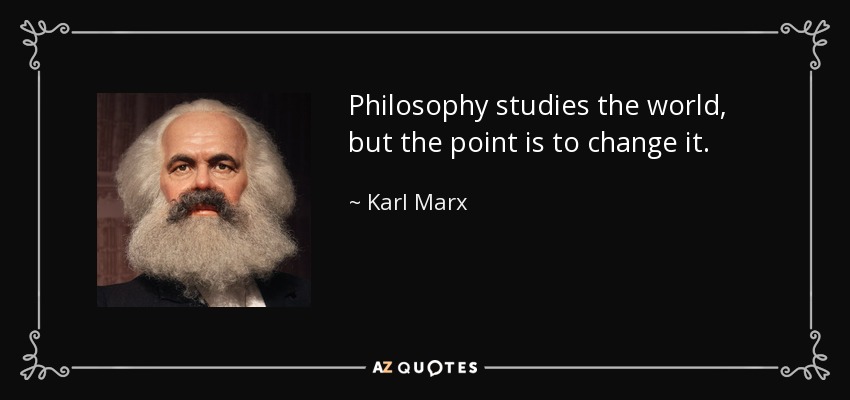
And why start this post by quoting Marx himself?
Because that quote is more than enough. More than enough proof for Marx being a bully.
It’s OK to ‘change the world’ if you own it. If it was yours…
But bearing in mind that there are other people living in the same world… wouldn’t it be nice to ask their opinion about the whole thing? About the changes you want to make? Which changes will dramatically affect the world they live in?!?
They are simpletons? Whose opinions are worthless? Because you said so yourself?

“The lower middle class, the small manufacturer, the shopkeeper, the artisan, the peasant, all these fight against the bourgeoisie, to save from extinction their existence as fractions of the middle class. They are therefore not revolutionary, but conservative. Nay more, they are reactionary, for they try to roll back the wheel of history. If by chance, they are revolutionary, they are only so in view of their impending transfer into the proletariat; they thus defend not their present, but their future interests, they desert their own standpoint to place themselves at that of the proletariat.

The “dangerous class”, [lumpenproletariat] the social scum, that passively rotting mass thrown off by the lowest layers of the old society, may, here and there, be swept into the movement by a proletarian revolution; its conditions of life, however, prepare it far more for the part of a bribed tool of reactionary intrigue.”

As I just said.
Bullly!!!