Holidays are very good opportunities to reconsider, And to learn new things.
These days I learned that while having nothing makes you feel ‘uncomfortable’, having too much can be very limiting.
If you have just enough, you can go forward. Explore new venues. Learn new things. Enjoy life!
If you have too much, you spend too much time and energy protecting what you already have. Trying to get more… The venues open for you to explore are suddenly reduced to one! Only one… You become the guardian of your fortune! Can you enjoy such a life? Are you sure? Have you examined the alternatives? In earnest?
‘Are you implying that all wealthy people are unhappy? Unable to enjoy their lives?!?’
On the contrary, my dear Watson! I’m only saying that being wealthy is complicated. “Just enough” is a matter of individual ability to cope. That enjoying wealth needs a lot of skill. And that being wealthy comes with a lot of responsibility! Towards yourself in the first place!
And towards your kids, family and the rest of the gang…
“Tough times create tough men. Tough men create easy times. Easy times create weak men. Weak men create tough times.“ American proverb “Wealth lasts only for three generations: one to make it, one to keep it, one to squander it“ Chinese proverb “If you raise your children, you get to spoil your grandchildren. If you spoil your children, you get to raise your grandchildren.“ Popular word of mouth
There’s no denying that, on average, each generation fares better than its predecessor.
Then why some people end up worse than their parents? Is it a social thing? Is it in their upbringing? Is it the consequence of bad personal choices?
The easy way out would be to consider that legislation, material status, the culture one was born into and even the upbringing offered by the parents are nothing but circumstances. And, ultimately, it’s the individual who makes the call. And bears the consequences… But the above mentioned individual doesn’t rise from and into a complete void… so I need to go deeper!
An equally true but somewhat more useful observation would be that we’re dealing here with something more important than mere wealth.
‘There’s no such thing! Nothing is more important than Wealth!’
Yeah, right… Individual people keep squandering the personal wealth accumulated by their forefathers, the humankind keeps going forward and you tell me personal wealth is the most important thing here…
But you do make a good point. Your insistence, obsessive even, about wealth being the crux of everything is very relevant. Since I agree with you that wealth is important, indeed, then maybe it’s the ‘insistence’ which is causing the problem…
First of all, allow me to make a simple distinction.
There is wealth – structured opportunity, I’ll discuss this notion in another post, and there is personal wealth. Opportunity which belongs to somebody. When an individual squanders the wealth inherited from their parents – or even that which they had managed to put together themselves, the wealth itself – the accrued opportunity – doesn’t disappear from the face of the earth. It just passes from one hand to another. Most of it, anyway. For the simple reason that most of today’s wealth is expressed in money. Which is fungible.
‘OK. So individual people squandering their inherited wealth do not represent such a big problem. The total wealth already present ‘on the face of the Earth’ remains (more or less) the same, no matter who owns it. And since new wealth is created everyday, the humankind, on aggregate, goes forward.’
That’s how things used to be. That’s how things had evolved for the last ten millennia or so. Ever since our forefathers had invented agriculture. Agriculture and money… Land and money cannot be destroyed. Buildings and almost everything else which carries value can. Be destroyed. Land and money also, actually, but it’s a lot harder to do it.
But there’s a catch here.
For wealth to do its trick – to function as an opportunity, people have to have access to it. That’s why, for example, people do not keep their money under the mattress. When deposited in a bank, money will end up being used. The bank will lend them to somebody who needs it and that somebody will put that money to work, In no matter what shape or form. Kept under a mattress, money becomes mostly useless. At least for the time being… And this is where ‘insistence’ – our obsessive insistence – that money is the only worthwhile goal for any respectable person becomes counterproductive.
‘Are you a communist?!?’
On the contrary, my dear Watson!
In fact, Marx had been just as infatuated with money as Milton Friedman was going to be a century later. With more or less similar results… Friedman taught us that greed is good. Profit uber alles. That getting money trumps everything else. That getting money is not only good for the individual itself but also commendable. That everybody should make it their goal to become rich! Marx, on the other hand – please remember that the ‘other’ hand is nothing but similar to its twin – advocated for all wealth to be stripped from its rightful owners. See what I mean? Both Marx and Friedman had been thinking only about ownership. Who owns that wealth!
On average, we deal with the same situation. According to Friedman – pushing his advice to the very limit, there’s no problem if someone owns all the money in the world. If it so happened, so be it. According to Marx, nobody should own anything. On average, the wealth corresponding to each living human in both situations would be the same.
We already know the consequences of Marx’s teachings. When all the wealth present in one country is managed by a very small number of people, the whole situation goes south. Fast. Very fast! We also know what happens when the market is cornered. Becomes suffocated by a monopoly. The whole situation goes south. That’s why we cherish the freedom of the market!
Doesn’t make much sense? To insist that the market must be free and simultaneously maintain that ‘greed is good’?
Yep! My point exactly…
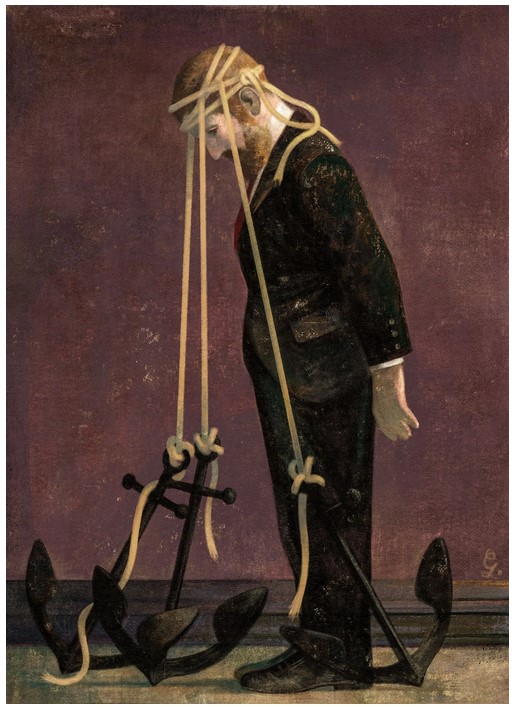
The vaunted human capacity for reason may have more to do with winning arguments than with thinking straight. Illustration by Gérard DuBois Why Facts Don’t Change Our Minds New discoveries about the human mind show the limitations of reason. By Elizabeth Kolbert February 19, 2017 https://www.newyorker.com/contributors/elizabeth-kolbert
– How did you manage to mess things up so thoroughly? – By allowing too much coherence to slip away. After we – well, some of us, already had a fair understanding about how things worked. About how we got there in the first place. – Would you care to elaborate? – Things went on more or less linearly up to when we had learned to speak. That was when it had all started. When we had realized what a start was. And that was it. Speaking to each other allowed us to access the second level of consciousness. Self awareness. Speaking to ourselves – a.k.a. ‘thinking’, gave us the illusion of ‘knowing’. ‘Knowing’ led to ‘knowing better’ and ‘knowing better’ gave birth to arrogance. For a while, this process had been kept in check by the harsh reality. People, like all living organisms, have certain needs. Basic needs. Food, shelter… During most of our evolution, getting enough food and shelter consumed most of our resources. And time. Only a very small number of people had enough spare time. And energy left for thinking. And only a very small percentage of this already small number of people used their minds to think about anything else but how to preserve their privileged status. Which status was the source of their ‘spare time’ in the first time… Slowly but surely, those having something else in their minds besides their selfish self interest have come up with a thing called ‘technology’. By carefully, and considerately, watching those who worked, the selfish thinkers have noticed that from time to time and from craftsperson to craftperson there could be noticed small differences in how things were done. Hence the concept of ‘how things are done’. With the natural sequel of ‘let’s do things in a better way’. Technology made it possible for workers to be more productive. Communities as a whole became more productive. Hence increased the possibility for more people to have spare time for thinking. Some communities made good use of this new possibility while others failed to do so. Usually for reasons depending on the ‘general conditions’ and not at all imputable to the communities themselves. Unfortunately, technology also had two less fortunate consequences. By freeing more and more people from want, it also freed them from ‘religion’. Until that moment, people who were ‘excluded’ from society – who did not partake in ‘religion’, could not survive on their own for any significant length of time. After the advent of technology, reclusion no longer meant almost instant death. Technology also produced ‘hard science’. A corpus of knowledge about how nature works. Which knowledge can be summarized as a collection of natural laws. No longer depending as much on their contemporaries and cognizant of those natural laws, some of the thinkers – whose numbers had been constantly swelled by the continuously improved technology, have reached the conclusion that through thinking a human might, given enough time and resources, understand basically everything. Some of those had become dictators. Others had become consultants. Both categories extremely confident in their own knowledge. Arrogant, even. This is how we messed things up. This bad.
Word of mouth has it that a dissatisfied customer will be more vocal than a happier one. A search over the internet yields unconvincing results. The statistical jury seems to be still out on this one.
A misspell in the search window unveiled something a lot more interesting.
Are we aware of all this? Probably not. Statistically speaking…
And this is important why?
Being able to recognize anger makes it easier for us to deal with conflict. Individuals who do it better have more chances to survive when involved in dangerous situations. Or even to turn them around. To find ways in which to use conflict in a profitable manner. Profitable for them… And only time will tell for how long! Communities adept at taming conflict into something useful have greater chances to survive than those less able to deal with it.
Now, where are we in this moment? Do we talk to each other? Are we aware of what’s going on around us? Cognizant enough to take the appropriate measures? Or do we just vent out our bile? Creating such an environment that no coherent answer will be presented when needed?
Are we, each of us, part of the solution? Or we just create more and more problem?
Trying to make sense of this this proverb, one might find handy a deeper understanding of ‘it’.
I’ll be arguing in a future post about the synthetic nature of equality. A concept we came up with, based on things found in the natural world. But the concept itself has no natural precursor. It was invented by us and exists exclusively in our minds.
On the other hand, liberty – the ‘it’ I’m writing about right now – is ‘artificial’. Another concept we’ve came up with, based on things found in the natural world. But one which has evolved from a natural precursor. It still exists exclusively in our minds – like all other concepts, but we didn’t actually invent it. We only noticed its natural precursor and built on in.
Orangutans are freer than us. They live individualistic lives, depending on no one but themselves. They are strong enough to do this and they live in such a manner and place that they don’t have to face any natural enemies. We, humans – their cousins, are the only agents powerful enough to represent a real danger for them. Gorillas are less free than us. They live in strict autarchies, where they need nothing but what already exists in their domains – the plants they feed on, and where they respect the strict discipline imposed by their strictly authoritarian male leaders. Which are the only free(ish) members of the groups. Chimpanzees and bonobos, each in their own way, are the closest to us. Some freer than others but none as free as the orangutans.
None of our cousins have the concept of liberty. As far as we know, they long for it – for freedom, that is – when they lose it. Hence they feel (for) it. But they haven’t, as far as we know it, came up with the notion of it. This being the reason for which the concept of liberty might be synthetic – like all other concepts, but liberty itself is artificial.
Our experience of liberty has a lot in common with what our cousins feel when they lose theirs. When they lose theirs to us! We being the only agents who, after synthesizing the concept of liberty, have taken the process a step further. Have started to take prisoners. And to justify our actions!
The way I see it, capitalism is an environment. A ‘place’. A ‘way’ for people to do ‘economy’. What people do in that place depends on the place itself but also on how they choose to do things. This being the reason for which the American capitalism is different from the European one. And both completely different from the Chinese version. In this sense, capitalism doesn’t actually work. Not by itself! If those dwelling in this ‘place’ act freely – as in ‘free market’ – then the whole ‘thing’ remains ‘sustainable’. Not ‘good for everybody’, not always ‘nice’ but nevertheless ‘fair’. As in ‘you have a fair chance of reaching the other end’. Not to get necessarily rich but to make the ends meet!
The alternative to capitalism… if you take your ideological blinders off, you notice that there’s none! Socialist/communist countries are/were also capitalist. The difference being that their economies are/were centrally planned. Their markets are/were anything but free! This being the reason for which communism had crumbled under its own weight. And for which in all places where the market is not free enough the ‘thing’ is not sustainable!
‘After a trip abroad, the Thinker from Cernavoda and the Sitting Woman will be available for the locals.’
What makes us think that the Thinker is thinking while the Woman is just sitting?!?
Is there any meaning in this?
Newton had only described gravity, he didn’t invent anything. Noticed it – like many others before him, thought about it – more (better?) than all those before him, and came up with a deeper meaning for the whole ‘falling thing’. Nobody cared to contradict him. Because everything, once exposed, was so obvious!
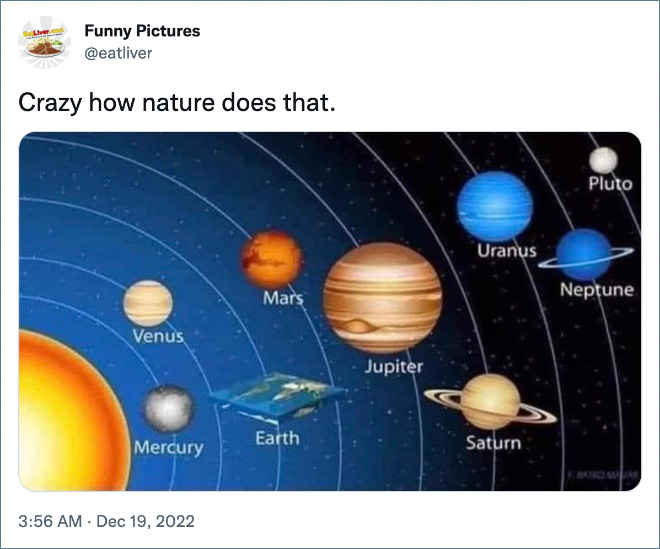
I’ll make a break here and wonder… what does the Flat Earth Society think about gravity?
Had your laugh? OK, let’s move on.
Darwin had also noticed things. Thought about them. Really hard. And put together a theory. Which continues to be considered a theory because not everybody is yet convinced… OK, things are a little harder to swallow. Specially the part with us being relatives, no matter how distanced, with Judy…
Furthermore, the evolution thing is not as obvious as the gravity thing… most of us would have to take Darwin’s word for it… something we don’t do that easily, specially if/when we dislike – for what ever reason, the outcome.
Then why do we ‘swallow’ – line, hook and sinker, however implicitly, the names affixed on those two prehistoric figurines?!? Because they are obvious? Just as obvious as gravity?
The guy must be thinking and it’s obvious that the woman is just sitting?!?
Or is it that we believe what we want to believe? We attribute meaning according to our own standards. Then stick to our opinion. Almost no matter what…
How about He nursing a hangover and She guarding him against predators?
7 years after the accord had been signed, and never implemented, Putin had ordered his army to invade, again, Ukraine. Using Lukashenko’s Belarus as a springboard.
As of now, all five people who had signed the accord had failed. In more ways than one. None of their stated goals have been achieved. The three democratically elected leaders had failed in the sense that they had not been able to prevent the escalation of the conflict. The two dictators have not, as of yet, been able to fulfill their ‘promises’.
For almost a year now, Ukraine had been able to defend itself against the Russian aggression. In the first days of the ‘special operation’, Ukraine had managed to do this alone! Only after the initial surprise had given birth to hope, the ‘west’ had started to send in meaningful assistance. Which strongly suggests that a people which is in control of its own fate – as in ‘democratically decides its own future’ – has a greater ability to fight than a people sent to the battle field at the whims of a dictator.
One by one, the democratically elected signatories of the Minsk agreement had been replaced. One way or another, all of them peaceful. Not necessarily as a consequence of this particular failure but, nevertheless, they are no longer able to make any other hugely significant mistake. The two dictators continue to dictate. To make mistakes and to defend their previous mistakes. To cause misery.
Looking at the whole thing from a distance, the situation is simple.
Unfortunately, things are even worse. Not only that power is magnetic to the corruptible but also most ‘ordinary’ people tend to have a hard time acknowledging mistake. Once committed, even by the most incorruptible person, a mistake gets a life of its own. And works hard at convincing the perpetrator to ‘hide’ it. Hence to commit even worse mistakes.
Now, why is power magnetic for the corruptible? Because power makes it possible for the ‘agent’ to ‘hide’ a lot of mistakes!
The way I see it, people have a knack for learning on the run. The shape of the learning curve and the duration of the process depends on the particulars of each situation but all people eventually get there. Those who survive to that point, of course…
What’s to be learned from all this?
The obvious, my dear Watson!
All those five powerful agents in the picture above have failed. Yet the French and the Germans fare a lot better than the Russians and the Belorussians while the Ukrainians fight better than the Russians.
What’s the main difference between those two ‘sides’?
Those who fare better change their leaders more easily and more often? Before their mistakes pile up? And become ‘too big to fail’?
‘Join them’ as in: ‘What you were doing was worthless. That being the reason for which you were not able to beat them. Hence you must turn coats and join them. In what they were doing’? Or ‘join them’ as in: ‘Regardless of who’s right or wrong, they are more powerful than you. In order to preserve yourself, you must cave in. And join them. In what they were doing and in how they were doing it!’?
There’s a third manner of putting it. ‘This is the democratic thing to do. If there are more of them than you, you must join them. There is wisdom in numbers, you know!’
I’m afraid all three ‘as in-s’ are wrong!
If you live in a democracy, you had already joined them. The very essence of a democratic arrangement is that you may keep your convictions even if the majority has made up its mind to proceed in another direction. You sometimes must follow – because you have already joined them, but you always may bring along your ‘luggage’. Provided that your luggage doesn’t endanger the community, of course. What if the community considers your luggage to be dangerous and you disagree? Then maybe the bond between you and the rest of the community isn’t that strong after all… In this case, you may have to weigh the pros and cons… Also, you must seriously consider the possibility that the relation between you and the community may not be based on ‘true love’ … it more likely belongs to the ‘friends with benefits’ category…
Do you tend to side with the powerful? Are you comfortable with delegating your ‘feel good’ to an outside agent? Are you aware that no matter what those outside agents promise, what they have in mind is their own interests? Not yours, theirs! Are you aware that ‘they’ are not your ‘servants’? That unless you live in a democracy, there’s no way to keep them accountable? ‘Stockholm syndrome’ means anything for you? How about ‘postponing the inevitable’? ‘Sweeping under the rug’?
Are you that afraid to change your mind? Under your own steam? Why ask for other incentives but those provided by mere reason? What else do you need besides arguments in order to make up your mind??
And where did this notion of ‘beating’ came from?
What are we fighting for?!?
One last thing. ‘Why me?’ is a very good question. Because there’s no one else!
No man is an island, Entire of itself. Each is a piece of the continent, A part of the main. If a clod be washed away by the sea, Europe is the less. As well as if a promontory were. As well as if a manor of thine own Or of thine friend’s were. Each man’s death diminishes me, For I am involved in mankind. Therefore, send not to know For whom the bell tolls, It tolls for thee.
Destination first. If you know where you’re going, getting there will be a lot simpler.
According to Daniel Moynihan – “you are not entitled to your own facts”, facts are obvious. So obvious that doubting their existence, their factuality, would push us beyond the realm of the reasonable. Appropriating facts – transforming them into ‘private property’, banishes the perpetrator from the community….
Hm…
Let me put it differently. Moynihan had said something. What was it? A fact? Or an opinion?
Currently, we – well, most of us – believe that freedom of opinion is the cornerstone of our Weltanschauung. When it comes to facts… We’re OK with the definition – we do use the word/concept, quite extensively – but we seem to have some problems when dealing with the actual reality. Remember the still famous ‘alternative facts’?
Let me add something personal to all this. My opinion about ‘facts’.
The current definition is somewhat incomplete. We take something for granted. To the tune of no longer mentioning it. We assume all of us see the elephant in the room and no longer talk about it.
For something to become a ‘fact’ we have to notice it. First. And then we have to agree among ourselves about its meaning!
Things used to fall down since …. We’ve been discussing the matter since… we’ve learned how to speak! But gravity had become a fact only after Newton had noticed the famous apple, wrote about it and we agreed. Gravity had become a fact, and continues to be one, only because his contemporaries had agreed with Newton on this matter. And we continue to believe Newton was right!
In this sense, alternative facts have been with us since day one. Well, something like that… God had told something to Adam and Eve, the serpent had said something else… and the rest is history! For some…
Newton had said something to us. And most of us had chosen to believe him. Or ignore his words… Darwin had said something to us. Many of us have chosen to believe him. To accept his arguments about the matter. While some others have chosen to dispute Darwin’s findings. To actively negate Darwin’s explanations about how we’ve got here.
Gravity is a fact while Evolution is still a theory. Statistically speaking, of course.
In this sense, Moynihan was wrong. For his words to ‘hold water’, we must to agree on how to separate facts from opinions. Until we agree among ourselves about how to determine ‘factualness’, we’ll keep having to deal with ‘alternative facts’.
I actually cannot wrap this up before ‘unveiling’ my litmus test for factualness. Consequences.
Does it have consequences?
Yes? It’s a fact! No? Then it’s not – not yet, at least – a ‘fact’. It did happen – otherwise we wouldn’t be speaking about it. It even does have consequences – we do speak about it, but that occurrence doesn’t yet have meaningful consequences. It is not a ‘factual’ fact.






 nicichiarasa