Archives for category: teleology

Hunters and growers.

Then fighters, doers and rulers.

Now, doers and ‘commentators’.

Some people actually do something – be it ‘fighting’, producing something or being involved in government, while other just ‘speak’. OK, their ‘speech’ does have consequences.
So we might say they also ‘do’ something… yes, true enough, only their deed is more than indirect. And no, teachers don’t belong here. Nor ‘actors’. Or even writers. All these people might do nothing but ‘speak’ only they produce something through their speech. Education, show, literature…
‘Commentators’ is very straightforward. Even more straightforward is ‘talking heads’. But ‘talking heads’ isn’t wide enough!

The philosophers have only interpreted the world, in various ways; the point is to change it. ” Karl Marx, Theses on Feuerbach

We all know the consequences of people following Marx’s advice…
But what could have gone wrong? Weren’t philosophers supposed to be the brightest amongst us?
Wasn’t Plato – the founder of Western philosophy, advocating the very same thing? That society should be run by specially trained philosopher kings?

Let’s go back to the original division of work.
Not all people have become farmers. There still are a lot of humans who survive as hunter-gatherers. Some don’t need to bother – there’s enough food to be gathered where they live , while others couldn’t possibly farm anything. The Inuits, for instance.
Among the farmers, there’s further division. Some farm plants while others farm animals. Because of the specifics of local soil, geography…
Also, farmers need tools. Hence wood workers, metal workers, weavers… etc.
The farmers need protection. Hence soldiers.
Society, as a whole, needs organizing. Hence government.

Let me pause for a moment. These arrangements work simply because they are more efficient than each individual providing everything they need for their own survival.
The soldier protects so the farmer might plow in peace. Some farmers use better plows because of the woodworkers and the metal workers who have cooperated to produce it. The farmers with the better plows produce more than those who use a rudimentary one, built by themselves. And so on. But please remember that each of these people have a first hand experience in their domain of expertise. And that their livelihood depends directly on their expertise.

Now, the next level of analysis shows us that organized societies fare better than those who lack any ‘structure’. ‘Fare better’ in no other sense than having a better chance of survival, as a social organism.
Nota Bene! While an Inuit – or an Inuit family, has a far better chance to survive in the Arctic than you and me, we, together, have a better chance at surviving – and even thriving, anywhere on the planet. Including in the Arctic. But only as long as we act as an organism. Only as long as we cooperate among us.

And whose job is to organize this cooperation?
The government and the ‘commentators’, who else…
The government to act as a referee – to prevent the rogue among us from ruining the game, and the ‘commentators’ to convince us that behaving is a lot better than mis-behaving.

Yeah… only this is nothing more than an ideal… seldom maintained for long…
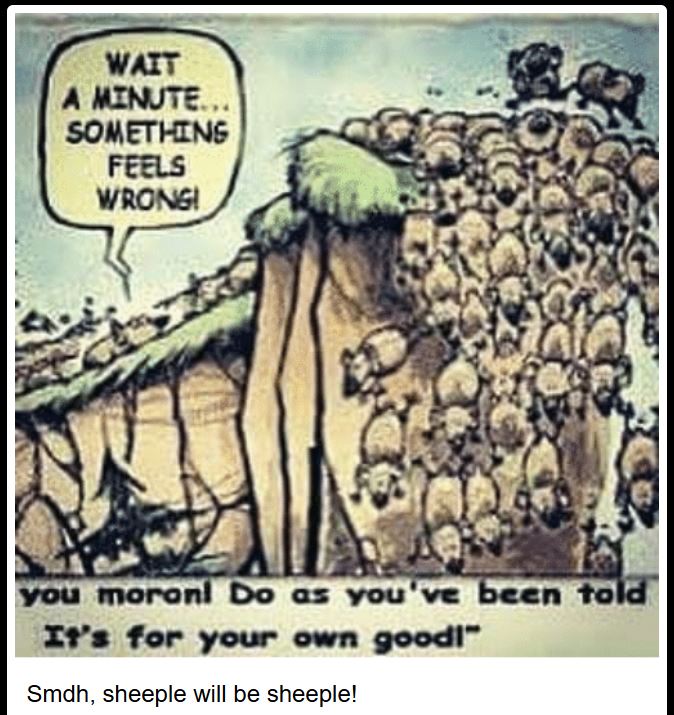
Usually, the ‘government’ becomes too powerful, the ‘commentators’ convince us – both ‘government’ and general public, that this is how it should be… tensions build up… and something snaps!

And the problem becomes even more acute when the ‘commentator’ pretends to become king. Pretends to have the ultimate truth. Pretends to be obeyed. Convinces us – this being his only skill, to obey him.

This being the moment for us to remember that the commentators have only indirect knowledge about the world. While each of the doers has at least some first hand experience about something, the commentators have nothing but second hand expertise. Everything they know, they know it because somebody has told them so. Or because they have read about it somewhere.
The commentators’ vision might be far wider than that of the doers but it is at least ‘once removed’ from the reality.

And this is the reason for which societies who have used Marx as their spiritual leader have failed. They have not respected the main principle which makes division of work function properly. Let those who know about it make it their job.
Let the doers do and let the commentators gather and aggregate knowledge.

Don’t mess up things.

Liberty is freedom from being constricted, in any way, shape or form. Period.

Liberty is more of an adjective rather than a verb. A situation more than an action.

Liberty can be attached to a space, to an agent or to both.

A free space would be a space where no constriction may occur, whatsoever.
A free agent would be an individual entity outside any constriction, whatsoever.

Mathematically, both definitions are possible.
Philosophically, both definitions are imaginable. By philosophers, of course.

Oscar Hoffman, a Teacher, kept telling us, his students, “For a proposition to be true it is not enough for it to be logically correct. It also has to make ontological sense. For those of you who don’t remember what ontological means, a true proposition must describe something which has to be at least possible”

In the real world, where there is no such thing as absolute freedom, liberty has to be first noticed/invented. And then constantly negotiated.

‘No such thing as absolute freedom?!? But liberty is a (God given) (human) right!!!’

Do you remember what Hoffman had (just) said about things which can exist in practice and things which can exist only in our minds?
Liberty might be a right – for those who enjoy it, but that doesn’t mean that everybody has it. And, even more important, that there is – or ever will be, something even close to absolute liberty.
If you don’t believe me, try to fly off a balcony without any ‘mechanical’ help. Or stop eating for a day or two. The Earth will surely ‘constrict’ you back towards its center and your stomach will certainly constrict itself for lack of food. And both Earth and stomach will constrict you back to reality.

‘OK, so no absolute freedom for individuals. How about ‘free spaces’?’
‘As in spaces where no constriction, whatsoever, may be exercised?’
‘Yes.’
‘Well, that would be possible. If a space is completely empty… no constriction might be exercised in there, right? On the other hand, as soon as something, anything, populates that space, constrictions start to appear. For instance, since no two things can simultaneously exist in the very same place, the mere existence of a speck of dust in a whole stadium induces the restriction that no other speck of dust may exist in the very same spot. Sounds trivial, true, but this is it… No absolute freedom. Not for individual agents and nor for spaces.’

‘Then why are writing a post about ‘Free market’? Doesn’t make much sense, isn’t it?’

Let me finish with liberty before going any further.
I mentioned earlier that liberty must be first noticed and then negotiated.
You see, right or no right, liberty is, above all, a concept.
We’d first observed that a flying bird is freer that a crawling worm and bam!!! We realized that some of us were freer than the others. Then that freer groups/societies fared better than the more ‘stifled’ ones.
But only where liberty was more or less spread around, not concentrated in one hand. Dictatorships – where all liberty is concentrated at the top, are way more fragile than any democracy. I’ll come back to this.
Now, for the negotiation part.
‘Your freedom to swing your fist ends where my nose begins’. And vice-versa. Only this is rather incomplete.
Let me examine the situation where you are a person who likes to swing your fist. In the air, not with any aggressive intent, of course. So you were swinging your fist, after you had determined, in good faith, that there was no nose close enough to hurt. But what if I am a ‘nosy’ guy? ‘Nosy’ enough to bring my actual nose inside your reach? You having to restrict your swings – or to go somewhere else, isn’t a limitation of your freedom? An absolutely unnatural limitation of your freedom?
Has it become a little clearer? What I mean by negotiation when it comes to individual freedom?

OK, time has come for me to go to market. To the free market!

A market is a place. Obviously, right?
A place where people trade their wares. Because they have noticed that it is easier for each of them to do what each of them do better and then trade the results of their work instead of each of them providing everything for themselves. As in everything each of them needs. Or fancy.

Initially, markets were far from being free. First of all, supply was sorely limited. Transportation means were practically nonexistent so supply varied seasonally and was severely influenced by weather, soil and other similar factors. And, maybe even more importantly, supply was influenced by the sheer will of the most powerful ‘free agent’ who happened to be around. Or, more exactly, supply was heavily influenced by the whims of the most powerful free-agent who happened to be around.
Don’t believe me? Then consider the extreme famine experienced by the Bengalis in 1943. Or by the Romanians during the last years of Ceausescu’s reign.
Slowly, people have learned that freer markets tend to be a lot more stable than the less free. ‘Freer’ markets meaning freer from both exterior and interior limitations. For a market to become free(ish) the participants need to have a big enough pool of resources at their disposal and to be wise enough to organize themselves in a ‘free’ manner.

And what happens when at least one of the two conditions remains unfulfilled?
Time has taught us that while markets tend to be limited in space and that some of the participants tent to impose themselves over the rest there is one dimension where the liberty of the market is very hard to be limited. ‘Liberty’ here meaning that things tend to evolve more in their own terms rather than ‘according to plan’. Or according to anybody’s wishes.

Whenever the available resources dry up, the participants to the market move someplace else. Or die of starvation.
Whenever a market looses too much of its freedom – as in some agent controls too much of what is going on there, the market itself no longer functions properly. Whenever too many of the participants loose their ability to determine their fate/future they slowly become ‘sitting ducks’. Not as much easy to hunt down but actually unable to feed themselves.
And since hunger is the best teacher, they either learn to fight for their freedom or… die of starvation. Pol Pot’s Cambodia would be a good example, even if somewhat extreme. The fall of most communist regimes also makes a compelling case for what I have in mind.
Even more interesting, though, is what had happened to the American Automobile Industry. General Motors and Chrysler Corporation, once the dominant stars of the market – along with Ford, had to be rescued by the government. Quasi monopolistic positions tend to be bad for the monopolists also, not only for the rest of the market. Given enough time, true enough…

Most commentators treat Maslow’s as if it were a pyramid. A succession of five receding floors constituting a structure in the three dimensional space.

Something which can exist, and function, on its own.

I see it as a mere triangle. Drawn on a two dimensional surface by Maslow’s imagination and imperfectly reproduced – according to our individual manner of seeing things, on the surface of our consciences.

My point being that each of those levels are nothing more than a set of opportunities.

The first two, which are described as ‘basic needs’ are the stages where we have the opportunity to learn how to drink, eat, manage our immediate environment and our own strength.

And so on.

Basically, it’s what we choose to do in each of those stages which determines whether we graduate to the next one.

OK, sometimes we are dealt with an ’empty set’ situation. There is no food available. Or no water. Use your own imagination.
But since in that situation there is nothing to be done except waiting for something to change – death is a form of change, that situation is of no interest for me. There’s noting to be decided so…

What we choose to do…

All that Maslow is trying to teach us is that our freedom of will might be free but will always be influenced by the situation in which we find ourselves.

When hungry, our attention – hence freedom of thought, will be necessarily drawn to finding food. We will still be relatively free to choose our individual manner of gathering/cooking it but much of our ‘bandwidth’ will be spent trying to fulfill that task.

And so on.

The really interesting stage/floor being, of course, the last one.
Where we’ll continue to feel hungry – from time to time, at least, were we’ll continue to be vulnerable to various potential aggressors, where we’ll continue to depend on friends and associates, were we’ll continue to pay attention to what other people say about us.
But where all those needs will be modulated by our manner of relating to them.
Ascending through the first four floors meant that our understanding of things was modulated by our needs. Reaching the top means that our conscience has finally learned to ‘turn the tables’. To peek on the other side. To trans-cede.

To whatever stage our precedent choices have set for us.
For us to play our freedom.

Laurie Santos – psychology and cognitive sciences professor at Yale, believes that ‘we really need to do something about it’.

And I saw just students who were, you know, so depressed it was hard for them to get up in morning. I saw cases of students who were so anxious about their summer internships that they could barely function. And I thought, this is — first of all, this is what — not what I expected of college student life. You know, I remember college back when I was there in the ’90s as being relatively happy. And so, it was kind of striking. And the class came out of a goal that I had, which is that we need to do something about this as educators. We’re kind of like — we’re not in the position to really be teaching students if they’re in the midst of this mental health crisis. I think as professors we sometimes think we can teach students, you know, Chaucer and economics and things. But if the stats are right and 40 percent of them are too depressed to function and other two-thirds are so anxious that they can — you know, that they’re having panic attacks, you know, we really needed to do something about it.

And why shouldn’t they be? Depressed and panicked, that is?

Not so long ago, universities were perceived as fountains of knowledge and dispensers of philosopher’s stones. Having a degree was one of the most coveted things in the world. And one of the most useful.

Nowadays?
Universities are described as the origin of evil.
Just as Saudi-funded Salafist religious schools have radicalized large swaths of the Islamic world, American universities are radicalizing an increasingly large share of America.  This is aided by the fact that nearly 70% of kids now go to college, where most of them are taught not to think.

That would explain the depression. But ‘panic attacks’?
Experienced by the young generation of the most civilized and affluent people in the whole world?
Well, just remember the financial burden students and their families have to shoulder…

So. Students are depressed and prone to panic attacks…
Which only proves that the die-hard ‘conservatives’ are right. Millennials and Generation Z are nothing but a bunch of sissies.

Yeah, right.
Only these two generations have grown under our watch.
They are our children. We raised them. We have built the world they have to cope with.

In fact, we are the ones who need to be depressed. And panicked.
Very soon we’ll need to retire. For no other reason than becoming too old to fend for ourselves.
We’ll actually need our arses to be wiped clean and our world to be managed by somebody else but us.

Who will step in our shoes?

Furthermore, what example are we offering the next generation?

Why would they care about us if we don’t care about them? Offering them an extremely expensive education isn’t a proper expression of our love…
Why would they care about us when we don’t care about our fellow human beings? Extremely expensive health care and unaffordable housing isn’t a proper expression of ‘love thy neighbor as you love yourself’.
Why would they care about us, their parents – after we will no longer be of any real use, when we don’t really care about our employees. About those who actually make things happen?
Amazon goes further than gig economy companies such as Uber, which insist its drivers are independent contractors with no rights as employees. By contracting instead with third-party companies, which in turn employ drivers, Amazon divorces itself from the people delivering its packages. That means when things go wrong, as they often do under the intense pressure created by Amazon’s punishing targets — when workers are abused or underpaid, when overstretched delivery companies fall into bankruptcy, or when innocent people are killed or maimed by errant drivers — the system allows Amazon to wash its hands of any responsibility.
You see, Jeff Bezos did a very good thing when maintaining that “Americans deserve an economy that allows each person to succeed through hard work and creativity and to lead a life of meaning and dignity.”
Only words without deeds… might mean that we, the eventually needy parents, might end up uncared for. Sweet-talked to the end but…

On the other hand, depression might be good. Evolutionary speaking, of course.
The depressed have less energy. Hence are unable to put in practice major mistakes. Except killing themselves, of course.
The depressed have a lot of time on their hands. Huge opportunity to think things over. To notice and understand the mistakes that led them here.

Those who will resist the urge to give up – either by actually killing themselves or by falling back into the old morass, will shape ‘tomorrow’.

Decision is the frontier between action and understanding.

All frontiers are, in fact, links.

Present decisions set the stage where future will be played, just as past decisions have built the theater.
While we, “the people”, are the building actors. The script writers. And the spectators who will eventually bear the brunt.


Trial an error (motor, muscular, directly related to actions)

Emotional

Discursive

All three depend, evidently, on memory. Different kinds – evidently, again.

This is a stub.

Science is, above all, a state of mind.
One that posits the world can be understood, one fact at a time.
Science also says that The (complete) Truth will never be fully acquired, only people tend to forget that part.

Some history, first.
Science, as an attitude, had appeared on the shores of the Medieval Mediterranean Sea. The Arabs had just discovered Ancient Greek writings about the ‘natural order of things’ while the Catholics were trying to figure out what God had in mind for the future of the mankind.

We have seen that the laws of nature depend on other laws of nature, which ultimately depend on God’s will.

Put all these together – the wish to understand God’s will, the belief that God’s will is expressed through the natural order of things and the systematic observation of nature, and, Eureka, you have ‘science’.

Which attitude had made Europe what it is today. Both the good and the bad of it.

Europeans have initiated the orderly study of everything around them.
As I said before, the initial intent wasn’t any technological improvement. Technicians and scientists were two completely different breed of people. As in ‘tinkerers’ and ‘philosophers’. Tinkering was sometimes confused with witchcraft while ‘philosophy’ was almost synonym with theology.
Well, both ‘professions’ could lead those to practiced them to a ‘funeral pyre’… whenever either of them ‘trespassed’… Many of those who are able to read are familiar with what ultimately happened to Giordano Bruno but very few of us know the fact that the ‘un-certified healers’ were seen with ‘suspicion’.

“Questioned whether she heals sick persons, answered yes Sir.
Questioned with what kind of medicines, answered by picking betony up and washing it like salad and crushing it into a mortar to get its juice and to give it to her patients for 3, 4 and 5 days, telling them that the more they drunk it, the better it was.
With these words the healer Gostanza da Libbiano, tried for witchcraft in 1594,….”
“The difference between them (healers) and physicians was the specific kind of tasks assigned to doctors: physicians, who rarely touched impurities and who regularly graduated from the university, were believed to be able to make the pain cease, whereas the healer, due to the fact that she actually touched her patients, was able both to make pain cease and to cause it”

Donatella Lippi, Witchcraft, Medicine and Society in Early Modern Europe, 2012

On the face of it, ‘science’ was, and continues to be, declared to depend exclusively on facts. Regardless of those facts being the expression of God’s will or, ultimately, of a serendipitous nature.
In fact, science is about what we, ‘scientists’, have been taught to accept as facts by our teachers and peers.

Another interesting thing.
When most scientists were still believing in God, their natural arrogance was kept in check by their belief that there was somebody who knew more than them. He.
As soon as God was declared dead, all hell broke loose.

‘Practical’ sciences continue to be kept in check by … well… practice! For any engineer, biologist, chemist, physician and all other related scientists and practitioners of science  it is obvious that Karl Popper and Werner Heisenberg were, and continue to be, right. No matter how much we will ever learn, we’ll never be able to know everything. Hence, we should proceed with utmost care.
Those who practice ‘secondary degree’ sciences – sci-Po being the most obvious example, share the belief that the world can be learned but are enjoying a far longer ‘leash’. Simply because the consequences of their actions come a lot later than those experienced by the ‘practical sciences’ practitioners. Add the fact that the ‘effects’ are harder  pinpoint to one specific cause/action…
And since God has become, at most, a personal matter… he no longer exerts the taming influence it used to…
Science has become independent. It is practiced for/in its own right, not as the only available manner of ‘divining’ God’s Will.
In fact, we use science as a manner to design our future. Independently. As each of us see fit and as allowed by those around us.
Which is good. Attempting to learn before proceeding is commendable, of course.
But proceeding with the unshakeable belief that we already know everything about what lies ahead of us is… foolish. Even more so when we speed up…  with total disregard about what other people, our colleagues/peers/fellow human beings, have to say and/or feel about the whole thing. Because we momentarily can.


We live.
Hard to deny that, no matter what we may think about it.
The very fact that there are so many of us who do live simultaneously makes it a near certainty.

Since we do live, then there must be a place where this whole charade unfolds.

That place is called, by us, ‘Reality’.
Which reality had started to exist only after we, the living things, have become aware of its existence.

‘Hey, wait a minute!  a short moment ago you were arguing that our mere existence was absolute proof for the existence of ‘reality’ and now you pretend that ‘reality’ has appeared only after we’ve  noticed it… We’d been alive for way longer than that, dude!’

Of course. Our very existence does depend on the presence of a certain place where we may exist. Only there’s no need for us to know that. Nor for us to be able to name that place. The ants don’t ‘know’ there’s a whole world around them. Nor have a word to describe it!

What we call reality and the ‘place’ where we live are two separate things.
There is an intersection, of course. What is correct of what we think we know about the ‘reality’ and the collection of things that really exist. Only we don’t exactly know what is correct of what we think we know…

And it is here that things become really interesting.
We not only think that we have meaningful information about the thing we call reality. We also act based on that information, with the deliberate purpose of fulfilling our intentions. And in so doing, we decisively change the place. In ways we fail to understand comprehensively.

My point being that we change the place we depend on, for our lives, without having a clear understanding of how the place itself really works. Nor of the changes we implement – willingly and/or unknowingly.

At least, let’s have some respect. For the place itself.
And for us, as an important component of that place.

“God created mankind in his own image, in the image of God he created them; male and female he created them.”

Hence all people, male and female, have been created equal. Simply because all of them have been cast in the same mould.
And all of them, male and female, harbor a spark of divinity. Simply because the mould into which all of them have been cast had been made “in the image of God”.

Simple logic would tell us that all people who believe mankind had been made in the image of God would behave in a certain manner.
Because of the reasons I mentioned above.
That kind of behavior had been called ‘ethical’ by well established thinkers. Plato, for instance.

“Then God said, “I give you every seed-bearing plant on the face of the whole earth and every tree that has fruit with seed in it. They will be yours for food.” “

.
.
.

“This is the account of the heavens and the earth when they were created, when the Lord God made the earth and the heavens.
Now no shrub had yet appeared on the earth and no plant had yet sprung up, for the Lord God had not sent rain on the earth and there was no one to work the ground”

Same simple logic I’ve invoked earlier tells me that God had created ‘the heavens and earth’ in two different stages. More or less like we do things.
First we think about the things we are going to do – ‘design them’ would be a more modern term, and then we put our thoughts into practice. ‘Execute’ our designs, according to the practical aspects which always limit our actions.

“Then the Lord God formed a man from the dust of the ground and breathed into his nostrils the breath of life, and the man became a living being.”

The Bible itself seems to agree with me. When God finally decided to put into practice his idea of a man, he started with something he already had at his disposal. Just like we have to do whenever we attempt to accomplish anything.
“Dust from the ground”.
Man, ‘made in the image of God’, was fashioned from already available material, not from ‘thin air’.

Could this be the origin of man’s limitations?
His ‘earthly’ nature, no matter his divine likeliness?
Could this be the reason for God going back on his words?

“The Lord God took the man and put him in the Garden of Eden to work it and take care of it. And the Lord God commanded the man, “You are free to eat from any tree in the garden; but you must not eat from the tree of the knowledge of good and evil, for when you eat from it you will certainly die.” “

What made God change his mind?
In Genesis 1 – the R&D phase?, he had planned a world where man was allowed to feed on everything under the sun while in Genesis 2 he had established rules about what Adam was allowed to eat and what not.
Furthermore, why make a ‘tree of the knowledge of good and evil’ in the first place? If you were going to forbid your favorite pet from eating its fruit, under the most drastic penalty…

No!
This is not yet another half backed attempt to deny the existence of God under the pretext that the only source describing its existence is full of inconsistencies.
Pretending that God does not exist simply because those who tried to describe him had not been able – or willing ?, to present a more coherent image of him is equivalent to pretending that God exists simply because we haven’t found, yet, an exhaustive explanation for everything.

You ‘see’, the Bible, no matter how holly we might consider it to be, is nothing but an image of God. A Man made image of God.
A Man written image of God, to be more precise.

The fact that the Bible is chock-full of wisdom can not be denied.
Which fact remains true regardless of whether it had been written ‘under guidance’ or ‘on their own’ by a group of ‘free agents’. Or, even, by a combination of both.
Unfortunately, there is another fact which seemingly contradicts the first. The Bible had been used as pretext for horrible crimes. Committed by ‘over-zealous’ believers, by ruthless ‘self serving’ operators or by a strange combination of both.

In order to encompass the simultaneous existence of both aforementioned facts each of us must take a step back-wards.
Extract ourselves from the fry.

Each of us must start thinking for ourselves.

How to do that – become ‘independent’, and yet preserve our chances to survive? As in remain connected with the day to day, hard-core reality?

Stay tuned. That will be my next subject.

According to ‘science’, life is nothing but a process through which (genetic) information is passed, with small alterations, from one generation to another and during which the environment is, however minutely, changed by whatever the living organisms do during their lifespans.

‘Individually’ – organism by organism, life takes place inside a ‘membrane’. Which you might call it ‘skin’, if you like.
That membrane separates the ‘inside’ – the living organism, from the ‘outside’ – otherwise known as the ‘environment’.
Each individual organism continues to be alive for as long as the membrane manages to keep the inside in, the outside out AND to properly regulate the exchanges between the inside and the outside.
This being the moment when we need to remember that each living organism needs to eat, to drink, to breathe and to excrete. Meaning that it needs a more or less continuous flow of certain substances from the outside and to periodically clean itself. And the moment to understand that each organism continuously changes its environment. By incorporating some of it while feeding/breathing and by ‘polluting’ it when ‘throwing out’ the by-products of its metabolism.

For all the activity above to take place, each individual organism needs to follow some ‘rules’. It’s ‘membrane’ needs to ‘know’ which substances to allow in and which to keep out. Which substances to throw out and which to keep it.
To perform all these duties, the membrane itself needs to be organized in a certain manner. For all to happen as it should, the ‘interior’ has to be organized in a certain – and specific, manner.

On the other hand, for any (set of) rule(s) to make sense, it has to be congruent to the situation it ‘attempts’ to manage. For instance, the rule about what substances are to be ‘allowed in’ has to be adapted both to the specific needs of the organism following it AND to what substances are available in the particular environment in which that organism attempts to survive/thrive.
Since the environment in which the living process attempts to take place is subjected to continuous change – both as a consequence of organisms living in it and as happenstance happening, the ‘rules of life’ cannot be ‘set in stone’.
For life to continue in a consistent manner, it has to preserve its rules while for life to survive in an ever-changing environment it has to adapt its rules to fit the changes in the environment.
This being where evolution takes charge.

That’s why the life we’re familiar with, ours, is comprised of successive generations of many individual organisms which somehow pass genetic information (rules of life) from one another. The fundamental ‘trick’ which makes everything possible being that during the ‘passing’ process the genetic information is slightly altered.
Sometimes with beneficial results – those individuals thrive and, eventually, new species appear. Other times, the results are tragic. The individuals which receive bad – read unfit, rules of life do not survive.
Equally tragic is the fate of those species, otherwise ‘successful’ until that moment, which, at some point, are confronted by so momentous changes in their environment that they are no longer able to adapt. Dinosaurs are the first examples which come to my mind but the list is so long that we’ll never learn about all of them.

A pessimist might conclude that life is all about species and that individuals are expandable.
Au contraire, mon cher ami. Since there’s no way in hell – or in heaven, for anybody to know which individual organism has that particular piece of information which will enable their successors to survive the next alteration in the environment it would be rather dense to consider any individual as being expandable. In fact, it was the ‘individualization’ of the living process that made possible the evolutionary process.

Life is about both individuals and species, simultaneously and with equal importance.