No home means ‘no sleep’. No place secure enough for you to let you guard down – no matter how shortly, and relax. Survival becomes problematic and occupies all your time. And brain power….
An uncomfortable home means ‘no dreams’. Every waken moment is occupied by ‘how do I get a bigger home’ and whatever sleep you might muster is fitful. You cannot rest properly so you cannot do much during your active hours. You’ll never reach your full potential so you’ll never be as useful/productive as you could possibly be.
Too big a home means ‘nightmare’. Difficult to maintain – for your means, impossible to ‘explore’/’exploit’, always afraid somebody would try to steal it from you. And, above all, too big a home means ‘insulation’ from the real world. You’re so far away from what’s really happening out there that you’re no longer able of proper decision making. Nightmare.
I wish you a string of very good nights and some pleasant dreams.
Someone asked me a few months ago: ‘These guys who spread misleading information on the internet, whether out of sheer stupidity or out of personal interest, will at some point understand how many people they have killed. Directly or indirectly. How will they feel? In that moment…’
Until then, none of my vaccinated acquaintances have kicked the bucket. Nor seen the inside of any hospital… after being infected with Covid. Among those who have not been vaccinated… the situation is somewhat different… Although the unvaccinated are, among the people I’m personally acquainted to, about 4 times less frequent than the others, 8 of them are missing already. All 8 of them are no longer with us after having been diagnosed with Covid.
I hope you’ll have a ‘light’ conscience when we’ll arrive at the end of this mess.
Well, at that time Rogan had just moved his podcast – from September 1, 2020, on Spotify. After receiving $100 million for a “multi-year licensing” deal.
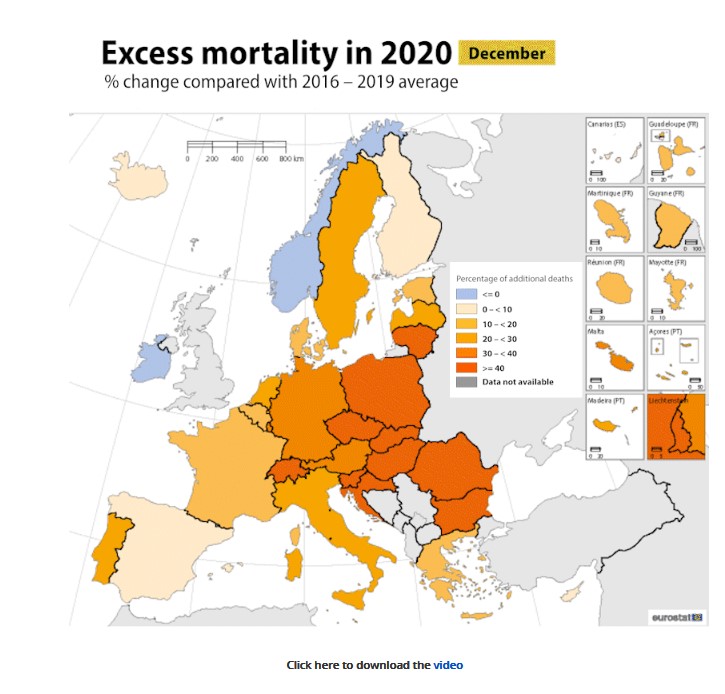
If you don’t know, we’re still in the middle of a pandemic. Caused by SARS Cov2, an airborne virus which kills people. 5,682,971 worldwide when I last checked.
Joe Rogan, the comedian, thought he had to cover the subject. So he had invited a controversial figure, Dr. Robert Malone, for an interview. The interview had become viral. But the ‘information’ being peddled by Dr.Malone had provoked the indignation of his fellow physicians.
As usual in this kind of circumstances, the netizens have taken sides. Some manifest their indignation against the capitalists who make money by spreading false information. Others manifest their indignation against the ‘cancel culture’ which limits the freedom of expression of those who contradict the opinions held by the intransigent majority.
As usual in this kind of circumstances, I try to explore alternative venues of looking at what’s going on. Let me remind those of you who are not familiar with the Romanian language that ‘Nici-chiar-asa’ means ‘not so fast’ (or ‘don’t over do it’) in my native language.
So. Why would a huge number of people – the Malone interview went “viral”, attempt to get information about a raging pandemic by watching a stand-up comedy show? Hosted by a “comedian” who recently had to issue an apology for things which he had said in one of his shows… Those people had been mesmerized by the ‘past experience’ of Dr. Malone? “Who touts himself as one of the architects of mRNA technology”…. Maybe… but those people shouldn’t have googled Dr. Malone’s name before sharing the interview? To their like minded brethren? Before making it viral? They would have learned that Dr. Malone had already been banned from Twitter for spreading misinformation…
‘Those people do not believe that media venues should restrict the freedom of people speaking up their minds’…
Then whatever preventive measure are put in place by the likes of Spotify will amount to exactly nothing!
A. A proposition is ‘true’ if what’s being said there is in perfect correspondence with reality. B. A proposition is ‘true’ if the proposition encompasses everything the ‘communicator’ knows about the subject at hand.
‘OK, you promised us a discourse about science and here you are babbling about truth…’
Impatient as always! How do you determine whether something being said, a proposition, is in (perfect) correspondence with the reality of the fact described there?
To be able to do that, you need first to determine the reality itself. You know what’s being said – more about that later, and, if you are to determine whether what’s being said is true, you now need to know the truth itself. How are you going to do that? You either know it already or you proceed to determine that particular truth.
I’ll leave aside the ‘already known truth’ and proceed towards the ‘future truth’.
A particular individual has two possible approaches towards finding out a ‘new’ truth. A piece of ‘true’ information which is new for that particular person. Consult a reliable source or investigate the reality.
‘Consulting a reliable source’ brings us back to square one. How do you determine whether a source is reliable or not…. ‘Investigate the reality’… Easier said than done!
How do you do that? How do you investigate the reality in a reliable manner? How do you determine the truth of the matter when ‘things’ are a tad more complicated than touching a stove to determine whether it’s hot or not?
You use the scientific approach? Start from the scientific data base which already exists on the subject(s) closer to your object of interest then proceed using the proven scientific method of trial and error? Emit a hypothesis, try to prove it, formulate a theory and then challenge your peers to tear apart the results of your investigation?
Results you have chased being convinced from the beginning that you’ll never reach the ‘pinnacle’? Convinced from the beginning that the ‘absolute truth’ – even about the merest subject, is out of reach? For us, mere mortals, anyway?
‘But if ‘absolute truth’ is out of reach, then how can we determine whether the simplest proposition is actually true? And why continue to bother about the whole subject, anyway?!?’
Before attempting to find an answer to your question, let me formulate another one.
Let’s consider that you have reached a conclusion about something. That you are in possession of ‘a truth’. How are you going to share it? With your brethren/peers? I must remember you at this stage of our discussion that language is beautiful but rather inexact. Are you sure that you’ll be able to communicate everything you want to say? To cover every minute aspect of the truth you have just found? So that the proposition you are about to put together will be in absolute correspondence with the piece of reality you have just discovered?
You are not going to use language at all? You’re just going to point to your discovery? And let everybody else to discover the truth for themselves? And how many are going to take you seriously? To pay attention? To what you have pointed? And how many are going to suspect that you just want to take their focus off what’s really important? To lead their attention away of what you want to keep under wraps?
I’ve got your head spinning? Then you must understand my confusion. I’m so deep in this that I have to go back and read again what I’ve been writing…
So. ‘Science’ tells us that the ultimate truth is out of our grasp, linguistics/theory of communication tells us no messenger will ever be able to be absolutely precise nor convey the entire intended meaning … what are we going to do? Settle down and wait for the end to happen to us?
OK, let me introduce you to an absolute truth.
WE ARE HERE!
Who is here? ‘Us’. We are here.
What are we doing here? ‘Are’. We are here.
Where are we? ‘Here’. We are here!
I’ve been recently reminded that mathematics, the most exact language we have at our disposal, is based on a number of postulates. On a small number of axioms – pieces of truth we consider to be self evident, which have constituted a wide enough foundation for mathematics to become what it is today. But mathematics is far more than a simple language. It is also a ‘virtual space’. A space where special rules apply. A space where our thoughts move according to certain and specific ‘instructions’. A space where we enter holding our arms around a problem we need to solve and which we exit, if successful, with a solution inside our head.
A little bit of history. Our ancestors had a problem. A class of problems, actually. How to build something – a house, a temple, a boat, and how to ‘manage’ property – arable land, in particular, but also crops and other ‘stocks’. Problems easier to formulate, and solve, using numbers. To solve this class of problems, some of our ancestors have invented ‘mathematics’. Had ‘discovered’ the self evident truths – axioms, and then ‘carved’ an entire (virtual) space using the axioms as the foundation upon which they, and those who have followed in their steps, have built – and continue to build, the scaffolding of rules which keep that space ‘open’.
Through thinking, our ancestors have carved a space in which to solve some problems they have encountered in the ‘real’ world…
‘Please stop! I don’t understand something. Do you want to say that mathematics is not real?’
To answer this question, this very good question, we need to settle what ‘real’ means. To us, at least…
Let’s examine this rock. Is it real? Why? Because you can feel it? If you close your eyes, I can make it so that you experience the same feeling by touching something else to your stretched out fingers than the original rock. In a few years, I’ll be able to produce the same sensation in your brain by inserting some electrodes in your skull and applying the ‘proper’ amount of electric current. What will ‘reality’ become then?
Forget about that rock, for a moment, and consider this table.
Is it real? Even if it’s not as natural as the rock we were analyzing before? ‘Artificial’ – as in man made, starting from natural ‘resources’, might be a good description of the difference between a table and a ‘simple’ rock. Both ‘real’ in the sense that both imply consequences. Your foot will hurt if you stumble in the dark on either of them. Regardless of the rock being natural and the table happening to be artificial…
‘But what about things which are not of a material nature? Are they real?’
Are you asking me whether ‘metaphysical’ objects – God, for instance, are real? Then how about ‘law’. Is it real? As an aside, does law belong also to the metaphysical realm? Alongside God? Who determines which thing belongs there?
Or have you glimpsed the fact that ‘truth’, the concept of truth, is a metaphysical ‘object’? Something which, like God, has a ‘real’ side but makes no sense (to us) unless we think about it? Something which we have extracted – someway, somehow, from the surrounding reality – where else from? – then ‘carved’ a virtual space around it? So that we may examine it without the distractions of the rest of the ‘real’ world?
Or have you glimpsed also that even the concept of ‘reality’ is a figment of our self-reflecting conscience?
Cassandra by Evelyn De Morgan (1898, London); Cassandra in front of the burning city of Troy
“Oh God, please make it so that my prophecies won’t come to life!” “I’m sorry Cassandra, that’s what I made Man for. Now, it’s Their job to heed to your warnings!”
I came across this over the internet. I couldn’t have said it better myself, hence I ‘borrowed’ it. Click on it and read the whole post, it’s very interesting on its own.
Below is the comment I left on the FB wall where it all happened. Don’t see any need to change anything.
“The key words here being “are recognized for”. Real mastery involves knowing your limits. Being recognized as a master by somebody else – the more ‘recognizers’, the worse, tends to annihilate any ‘master’s’ ability to own the very existence of their limits. The intellectual limits are the hardest to notice/accept. ‘Accrued’ age brings about crystal clear evidence about our physical limitations. Accrued knowledge enlarges one’s vision. Puts distance between the observers themselves and the limits of their ability to ‘observe themselves in the act of observing‘.
And if/when the above mentioned accrued knowledge becomes recognized/admired by the (naive) ‘general public’… You don’t have to trust me on this because of my white beard. I have a better argument. I’m an engineer!”
‘OK, and the point of this post is …?’
The fact that there’s no such thing as ‘personal improvement’. Any ‘improvement’ which we might ‘inflict’ upon ourselves derives from our intercourse with the others. Through ‘learning’. All change which happens to us, actually, comes from our ultimately aleatory intercourse with the environment in which we happen to live. From being taught to being ‘influenced’ by the passage of time. All that is ‘personal’ in ‘personal improvement’ is that we do it ‘willfully’.
Much of the change which happens to us goes either unnoticed – up to a point, or is merely accepted by us. ‘Personal improvement’ is chosen by us. And imposed by us upon our own selves.
To do it – ‘improve’ ourselves, that is, we follow ‘suggestions‘. We should keep in the back of our mind that it’s our call to follow – or not, those suggestions.
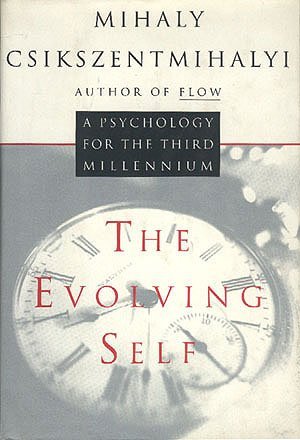
Disclaimer. I have no idea who the ‘suggested’ guy is. Just googled ‘personal improvement books’ and chosen the most visually appealing – for me, obviously, link. Just wanted to illustrate the deluge of suggestions which is constantly directed at us.
True enough. Good people don’t need laws to tell them how to behave while the ‘cunningly willful’ amongst us will indeed, time and time again, try to circumvent the consequences of bypassing the law.
Then why? Two and a half millennia after Plato had dispensed this piece of wisdom we still have laws. Is there a possible explanation for this apparent aberration? Are we that thick-headed or there’s something else?
To settle this question – to start attempting to settle it, actually, we must first agree upon the difference between good and bad.
Ooops!
‘Everybody knows what good and bad is’ doesn’t really work, right?
In principle… maybe, but when it comes to putting principles into practice… we need guidelines! Just as ‘good fences make good neighbors‘, a clear understanding among the good about where the realm of the bad starts in earnest makes life a lot simpler. For all of us. And the more visible that line is, the simpler our life becomes.
Only this is but half of the actual explanation. Laws do make our life simpler, indeed. Unfortunately, ‘simpler’ doesn’t necessarily mean ‘better’.
As some of you already know, I’ve spent half my life under communist rule. Does ‘Ceausescu’ ring any bells with you?
Under communism, life was a lot simpler than it is now. Presumably, life was a lot simpler under any of the many flavors of authoritarian rules experienced by humanity during its history. This being the reason for no matter how horrible a dictatorial regime had been, there were always some who had regretted when that regime had fallen.
‘OK, so what’s your point? That laws, in general, might be good but the laws which impose an authoritarian regime are bad? You know that you’ve just opened a fresh can of worms, right?’
How do you determine the difference between a good law and a bad one?
There’s no such thing. No law is above good and bad. For the simple reason that we call laws are made by us. We are fallible human beings and everything we make, including our laws, is, and should continue to be, constantly improved.
‘Then you’re nothing more than a ‘closet progressive‘! I knew it! ‘Constant improvement’… yuck! Not to mention the fact that the most important Law comes from God, not from Man!’
I’ve already disclosed that I’m an agnostic. That I have no idea whether a(ny) god had anything to do with what’s happening around/with us. All I know is that all laws, including the Bible – and all other Holy Books, had been written by people. By Humans, that is.
And I also know that there are two kinds of law. ‘Natural’ – as in noticed by us, and ‘synthetic’.
While all laws are ‘artificial’ – ‘written’ by us, the natural ones had been first noticed and only then put on paper. While all laws had been written on purpose – each ‘writer’ had their own reason for doing it, the ‘synthetic’ ones had been put together with a specific goal.
While observing – and when necessary improving, the natural laws benefits all, the ‘synthetic’ ones serve only those who make it their business to impose those laws upon the rest of the community.
While observing – and, when necessary, imposing them upon SOME, improves the prospects of the entire community, designing and imposing ‘synthetic’ laws upon a community will always bring a huge amount of disturbance. Sometimes fatal for that community. Always fatal for the regime attempting it!
‘How about some examples?’
I’ll give you two natural laws and a ‘synthetic’ one.
The law of gravity. Also known as Newton’s Law of Universal Gravitation. This law didn’t need Newton to notice it. The Earth had already been orbiting the Sun for a while before Newton told us why.
‘Do not kill’. A subset of the Golden Rule, ‘Do no harm, if you can help it’. Also ‘natural’ but a lot more ‘fluid’. And, strangely enough, noticed and ‘put on paper’ way before the law of the falling objects… Just think of it! The ‘law makers’ have noticed long, long ago that the communities which follow the Golden Rule fare much better than those whose members treat each-other like dirt. Yet only a few short centuries ago somebody ‘noticed’ that things fall according to a constant rule… and bothered to make it into a law. Was ‘gravity’ too obvious? Inescapable, so why bother? While the Golden Rule worked better when enforced? When the formal rule mandated that even the rulers themselves had to obey the rule?
It’s easy to notice that the first two, the ‘natural’ ones, produce consequences regardless of people observing them or not. Meanwhile, ‘synthetic’ laws are, entirely, the figment of somebody’s imagination. And produce consequences only when/if enough people are ‘seduced’ by the perspectives of those laws being put into practice. Communist rule, for instance, could be put into practice only when enough people had been seduced by Marx’s ideal that all property should belong to the state and be managed by a ‘select’ few. Only then, after those ‘select’ few had, somehow, convinced enough followers, could Marx’s ideas be transformed into laws. And put in practice. With the already obvious consequences…
‘OK, but I still don’t get it! Is there a way to tell whether a law is good or bad before-hand? Before its consequences had become manifest?’
That’s a tall order. And you know that!
Actually, no! There’s no fire-proof method of ascertaining anything before-hand, let alone something made by us.
But there is a next best thing. The ‘natural’ laws are natural because they had been first observed. Only then written into law. And because of things proceeding in this order, whenever something changed those who had noticed the change had adapted the wording of the law to the new reality. Simply because those who had to make do with the consequences of the law being put into practice could not wait too long whenever they had noticed that there was a better way.
People have dreamed of flying since god only knows when but they had learned how to do it only after they had been told that everything is pulled to the center of the Earth. ‘An eye for an eye and a tooth for a tooth’ had been very useful. For a while… Now we use the same principle – do no harm, but we implement it in a more nuanced manner.
People have also dreamed of a fair society. And, frankly, ours is a lot fairer than that of our grand-parents. Because we have constantly improved our ‘manners’. We have not only observed ourselves while living but we’ve also done something when anything went wrong. The problem is – and it’s only one problem here, that not all things can be reversed. Some mistakes can be fully redressed, other compensated … but we’ll have to take with us the consequences of those mistakes. And the longer a mistake is allowed to happen, the more important the consequences. So. ‘Synthetic’ rules are bad not because they have been dreamed up by us. They are bad because those who promote them cannot accept the idea they might have been wrong. The really bad ‘synthetic’ rules were those who could not be changed from within!
Whenever a law maintains that things cannot happen, ever, but in the manner prescribed by that very law, that text is no longer a law. It’s a dictate! It’s dictates that we can do without, not laws. And it’s our job to make out the difference. One way or another.
Disclosure. You haven’t ‘heard’ this from me. I’ve only ’embellished’ some ideas I’ve stolen from Popper, inasmuch as I’ve understood anything from them.
‘OK, and where’s the difference? The meaning’s the same…’
Not exactly! Burke was speaking about the fate of individual people while the quote attributed to him is about evil itself. According to Burke, the good people must associate in order to protect their livelihoods and their way of life while the mis-attributed quote pretends that there are circumstances in which evil might prevail.
‘I still don’t understand you! Good people loosing their cause doesn’t mean that evil has prevailed?!?’
No! Good people might loose from time to time. Being good doesn’t mean those people are perfect. People make mistakes. Some of which can’t be undone.
Evil things do happen. From time to time. Either through sheer bad luck or through good people making horrible mistakes. But evil cannot prevail. Not on the longer run!
For two reasons.
Small enough mistakes can be overcome. Either individually or collectively. Serious enough mistakes will kill you. Individually and collectively. This was the first reason.
If evil hadn’t been that bad, we wouldn’t have called it that way. If evil would have led to survival, we would have called it ‘good’.
Good people doing nothing doesn’t mean that evil will triumph. Good people doing nothing only means, as Burke had said, that those good people will fail. One by one. Bad people having it their way doesn’t mean much. Historically speaking. After they had finished vanquishing the good, the bad had always started to fight among themselves. It’s in their nature to do that.
That’s how each evil eventually dies out…
Until the next one appears? Indeed! Weeds will always spring up. Specially if the soil is rich. That’s what hoes are for! If only people knew how to make good use of them…
The way I see it, it makes more sense to tax those who don’t want to get a jab than to bribe people to accept the vaccine. The vaccinated individual enjoys the benefits, the jab is already paid for by the community… and the community, as a whole, is safer. You don’t want to be jabbed, for whatever reasons, you should pay for the privilege.
After all, this is a matter of personal choice.
There are three kinds of personal choice which impact the wider community. Regardless of who covers the financial costs of healthcare, people being sick is a burden shouldered by the entire society.
Eating too much. It can have a whole series of consequences but most of them are of a ‘personal’ nature. You can be a bad example for your kid but that’s about all you can do to negatively impact the health of others through eating too much. Except for the financial implications, of course.
Smoking. Still a personal choice. But the consequences of your bad habit directly affect those who happen to be around you when you exercise your ‘right’. Smoke travels freely…
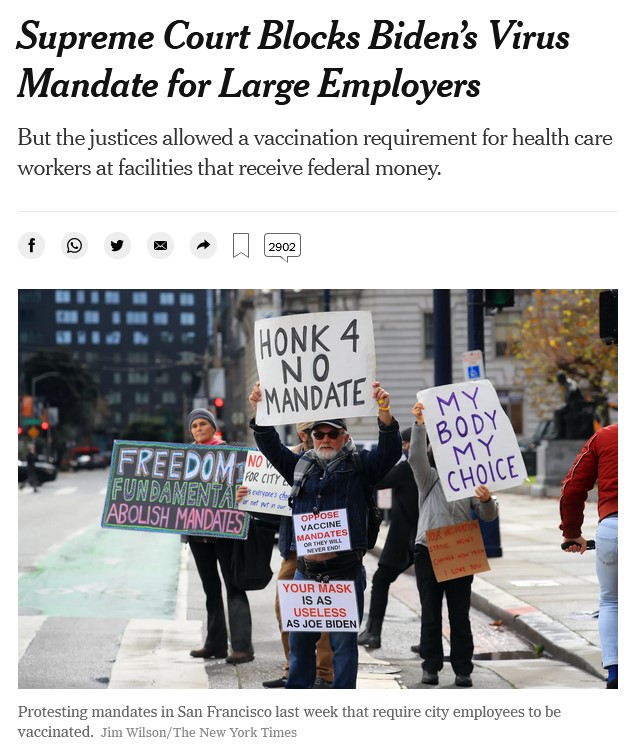
“My body, my choice.” Refusing to ‘put experimental substances into my body’ is, again, a personal choice. But getting sick with Covid has far wider consequences for the wide community than smoking. Let alone the fact that smoke is visible while the virus is not. Smoking in a plane won’t give a lung cancer to each of the passengers present but a person infected with Covid breathing inside such a cramped place can directly infect many. And god only knows how many more after the passengers reach their final destinations …
Since the above mentioned decision of the Supreme Court – that government should not tell ‘the people’ what to do with their bodies (unless federal money is involved) – things are getting murkier. Smoking seats might return on planes. Smoking tables in pubs. And who knows what else…
What I think of you and what you are in reality are two different things. But this is another kettle of fish.
A ‘different’ kettle of fish, you mean.
Have it your way. But you have to take into consideration that the kettle itself remains the same. Only the fish inside are different, one catch at a time. Even when the fish belong to the same species, are of the same size and you take the pain to add the same number of fish to the kettle. Let’s go back to Solomon splitting babies. The ‘official’ story, the one presently belonging to the “Hebrew lore” and “recorded at 1 Kings 3:16-18“, had been redacted. From what had actually happened:
As we all know, Solomon had many wives. An a few concubines. 700 and 300, respectively. In these circumstances, he rarely had a full night’s sleep. No wonder that whenever he had to make a judgment, specially early in the morning, he used to send for his trusted personal advisor. When the two women, both pretending to be the mother of the disputed child, had come to seek justice before king Solomon, he was rather sleepy. But the faithful – and very discreet, ‘coach’ was there. As always. The first woman was asked to tell her side of the story. Solomon, at some point, waived his hand. ‘Enough, you seem convincing enough. Take your baby and scram’. ‘But sir, shouldn’t you also listen what the other woman has to say? Before deciding the fate of the poor baby?’ whispered the adviser in Solomon’s ear? ‘Wait. Come back, both of you! Now, the other one, what’s your story?’ ‘….’ ‘You’re also very convincing… you have the child…’ ‘But sir, they cannot both be right! At the same time… There’s only one child…’ Solomon, suddenly awaken, turns back to face the counselor: ‘You are absolutely right too!’ And only then, after realizing that sometimes – when there’s only one child to be had, for example – two people cannot entertain two different opinions and be right at the same time, Solomon did put his mind to work. In earnest. And came up with his famous solution. “Split the child!”
Same thing here. Both J.P. Morgan and Friedrich Nietzsche had been partially right. There is a difference between ‘real’ – a.k.a. ‘golden’, and fiat money but the difference is made by us!
See, no need to split the child. Not this time, anyway. But we have to keep in mind that, no matter what any of us thinks, for money to retain their value – no matter whether those money are ‘real’ or ‘fiat’, we need to be able to make good use of those money.
A heap of gold and a suitcase of dollars are equally useless if there’s nothing to be bought!











 nicichiarasa