There’s no other meaning but that attached by men to the stories they had spun themselves. For their own use.
Children are afraid of the dark. Not of ‘darkness’ but of ‘the dark’. Children, not babies! All babies let us know when they wake up. For the simple reason that they wake up to eat. Or to have their diapers changed. With small children – babies who had developed a certain level of self awareness – things are a little more complicated. They need more than simple sustenance. They need to learn. Their budding consciences needs to fit themselves into the world. Play being the first step. But play is impossible ‘in the dark’. Specially when previous experiences, hastened by ‘well meant warnings from well wishing adults’, suggest that ‘the dark’ is full of ‘hidden’ dangers.
In fact, it’s actually fascinating to observe how self awareness transforms darkness into the dark. Sheep – who are hunted during the night by various predators – don’t go into depression at sunset. OK, sheep are never alone and their senses – other than vision – are far sharper than ours. But I’m sure you understand what I’m driving at. While the rest of the animals do not have problems related to darkness, we – humans – are not comfortable in ‘the dark’. To the tune of developing various forms of phobia. From claustrophobia to agoraphobia. Simply because conscience – our ability to observe ourselves experiencing life – realizes it can observe/control less when in ‘the dark’. When its ability to see/influence what’s going on is reduced.
The point being that it’s our consciousness which makes the difference between darkness – lack of light – and ‘the dark’. That place/situation in which the conscious agents who cannot see/intervene experience their impotence. And call it for what it is. ‘The dark’.
Yes, you who have enough spare time to read things like these and are open minded enough to continue. Who don’t worry too much about what you’re going to eat tomorrow and who would like to figure out what life’s about. What’s the meaning of all this which is going on around you.
You who have just figured out you’re different from the rest of the animals. That you’re able to think. And that you’ll never make it alone.
That no matter how smart you are, you’ll never be able to pull it on your own. That no matter how strong you are, now, you’ll always need to be helped by your brethren.
History doesn’t go anywhere. It pesters us with lessons. Until we figure out their meanings. Or until there’s no one left. No one left to be pestered! Darwin 2.0
One of the recurrent lessons history is peppered with: ‘Imperia always fail. Sooner or later, eventually all imperial social arrangements end up in abject failure. Empires as well as monopolies.’
And no, the Pharaonic empire didn’t last for 3000 years. What happened there was 30 something successive empires. Read dynasties. Whenever a dynasty lost its grip, its empire folded. Whenever a new dynasty took over, it presided over a new empire. Same thing happened in modern France. Same territory, same population, same culture, 5 republics and two empires since 1789. The fact that the last three republics have been consecutive doesn’t merge them into a single one.
Europe has been the scene of a whole host of wars. Some of them worldwide wars. Since the French Revolution, all empires which had attempted to subjugate their neighbors have failed.
Napoleon’s attempt had initiated the German ‘coming together’ and turned Russia’s attention back to Europe. Napoleon the 3rd had helped Bismark to finalize Prussia’s taking over the rest of what we currently call Germany. WWI was started by people who had no clue and put on hold by people who had no vision. Started by imperialistically thinking people who didn’t see any need to evaluate the consequences of their countries going to war and put on hold by (other) imperialistically thinking people who continued the well established tradition. Again, without any attempt to evaluate the consequences. Hence the vanquished - the only vanquished that was still standing at the end of the war, Germany – was presented with a hefty bill. And made to pay crippling war reparations. Which clumsy actions had prepared the scene for Hitler’s advent to power. WWII – or, more exactly, WWI 2.0 – was ended by far wiser decision makers. Who had chosen to integrate the vanquished rather than deepening the trenches. Although fought with ‘softer’ weapons, WWIII – also known as the Cold War – fits perfectly. It was also lost by the aggressor. Not as much won by those resisting as lost by the empire attempting to widen its grasp.
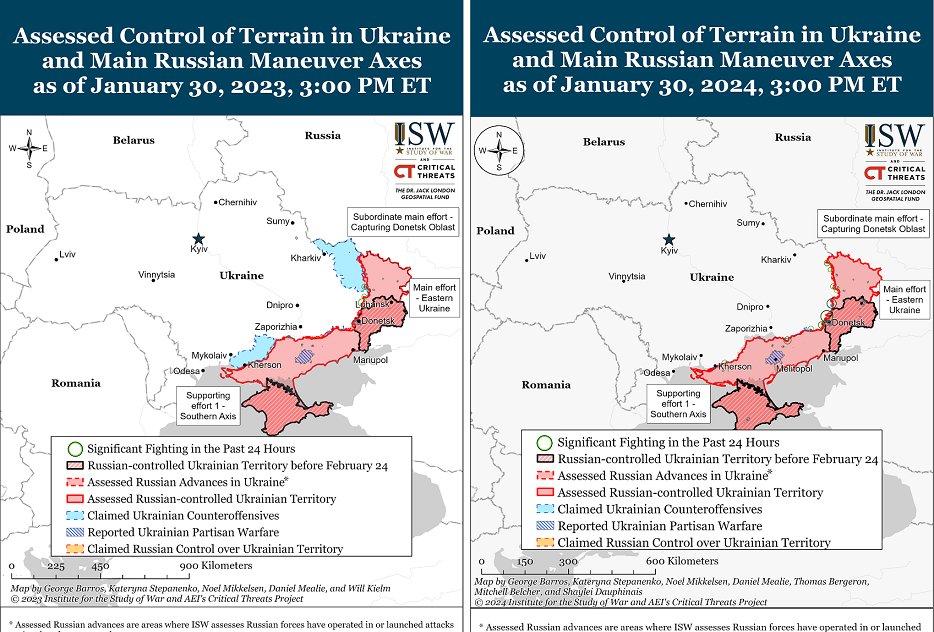
What we currently have on our hands, WWIV, is a ‘pinnacle’. Putin attempting to revive Russia’s ‘old glory’ and the reaction of the ‘free world’ are a case study. And a horrible remake. Mistakes already made since the French Revolution have been reenacted as if never happened. The aggressor failed to realize that at some point his actions will beget a reaction. That even if that reaction will be late, it will surely come about. The ‘good guys’ have forgotten – never really cared to understand? – the lessons of WWI and WWII. No real attempt to integrate post communist Russia into the democratic fold had been made. Not in an organized manner, anyway. Everybody was happy that ‘history had finally reached its end’ and Russia was left to its own devices. Even worse, it was treated as a no-man’s land. Mutatis mutandis, post-communist Russia had been treated just as South America and Africa had been treated after they had been discovered by the Europeans. Even worse, the ‘good guys’ have forgotten – or had never understood – that a bully has to be stopped early. And that the easiest way to stop a bully is to encourage his ‘sycophants’ to free themselves from his influence. And to help, in earnest, those who are bullied to overcome their plight.
Now, almost two years after the aggression organized by Putin against Ukraine has become ‘hot’, there still are people who consider Ukraine should negotiate. Should accept the inevitable. Other consider that helping Ukraine is ‘money down the drain’. That there’s no way for Ukraine to win.
The way I see this, we’re back in 1942. Nazi troops were controlling most of Europe and most of North-Africa. But the signs were already there. Russia, nor Britain, didn’t collapse under the onslaught. The nazis had been driven out from Moscow’s suburbs and Leningrad remained out of reach. From there on… Hitler kept making stupid moves. Until the Third Reich crumbled under its own weight. Helped by the Allied bombardments. And let’s not forget the huge amount of western weapons and munitions shipped by Russia’s then allies to Murmansk. Nor those hauled using the Iranian railway.
Now. Will we relearn the lessons which are readily available to us? The lessons we should have already learned? What’s keeping us? Does anybody still think Putin, or any other dictator, will ever stop? Tired of waiting? Be glad Ukraine isn’t. Be glad Ukraine isn’t tired of fighting!
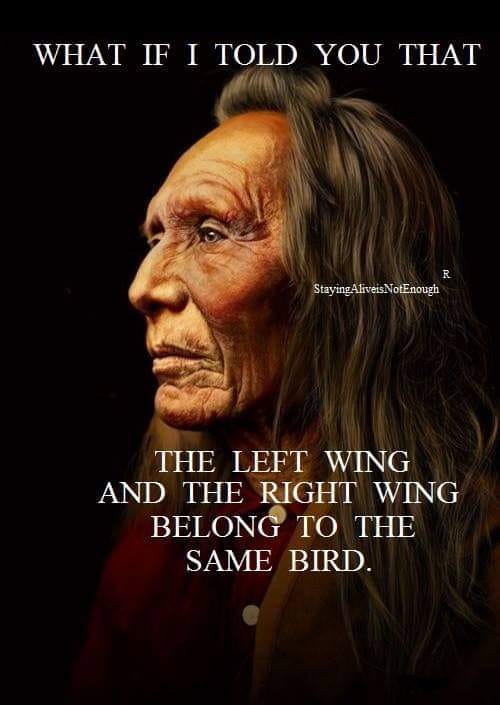
What happened to our capacity to compromise? When did life become nothing but a zero sum game?
Our capacity to compromise – in the good sense of the word – has diminished when religion – the thing which keeps us together – has been split into religions.
And it completely drained out when we’ve become too confident in our ability to think things over.
We’re so confident now that our solution/decision is not only better than any other but the only one possible that we’re no longer capable of considering a compromise.
While religion taught us to respect and trust each-other, religions have split us into factions. Our intellectual arrogance has done the rest.
Your previous actions that were done in error now have consequences. Karma.
My father has cancer. And an eye problem. The cancer is being treated in a public hospital while the eye problem is taken care of at a private facility. In the last couple of days we have visited them both.
Besides the obvious differences there’s a huge, and overpowering, ‘common ground’. The money problem.
No, not the money you have to fork out if you want to be treated in a private facility. The fact that money has been elevated to goal status.
Functionally speaking, health-care is a ‘social function’. By helping each member to remain healthy, the society – as a whole – preserves it’s overall health. It preserves it’s functionality. It’s ability to survive and to thrive. By helping my father with his medical conditions, the society makes it possible for me and my family to remain productive. Instead of taking care of him – which we can’t do properly – we can continue to do what we’re good at.
And no, the subject of this post is not ‘who should pay for health care’. There is no ‘free’ anything so everything has to be paid, one way or another. The problem is the fact that money becoming the main goal has consequences.
Instead of trying to maintain the well being of the population – in an economically sensible manner – the health industry is focused on making profit. Instead of trying to maintain the well being of the population – in an economically sensible manner – the public health system is focused on being ‘thrifty’. The consequences are similar. Overworked doctors, crowded waiting rooms, impatient personnel, long waiting hours, irritation… And no spare capacity to cover ‘mass emergencies’!
Unfortunately, things go way deeper than this.
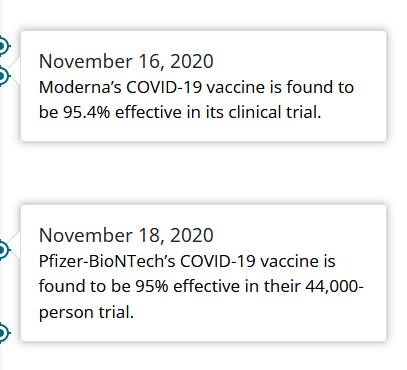
Do you remember what else ‘surfaced’ in the winter of 2020?
Put two and two together and it becomes a lot easier to understand how and why a huge number of people ended up believing that COVID-19 was a scam. A scam concocted by Big Pharma to convince us to buy their products…
In retrospect, what happened doesn’t make much sense, does it? So many people who had died because so many of us didn’t have enough trust in masks and vaccines… So many of us were convinced that we were being played! For money…
Because it had already happened!
“These consumers were getting a raw deal. They were being exposed to Mylan’s price increases and excluded from the market forces that might cushion them. They were getting ripped off. And it’s no wonder they got angry.”
And the Lord God said, Behold, the man is become as one of us, toknow good and evil. Gen 3:22
Why are we doing all this?
?!?
You heard me. ‘Why are we doing all this?’ Everything that we do.
Is anything wrong with you?
No. Not anything that I know of. Only this question which has arisen on it own. Why don’t we just stop? Stop doing everything that we do…
But doing what we do is the reason for our existence… Otherwise we would not exist. At all! The world itself would have been different. Completely different!
So what?!? Do you really care about the world? What’s in it for you? For us… What benefit do we have from the world being as it is? Or at all…
I have to start by confessing that until yesterday evening I’ve never seriously considered this possibility. Why would anyone bother?
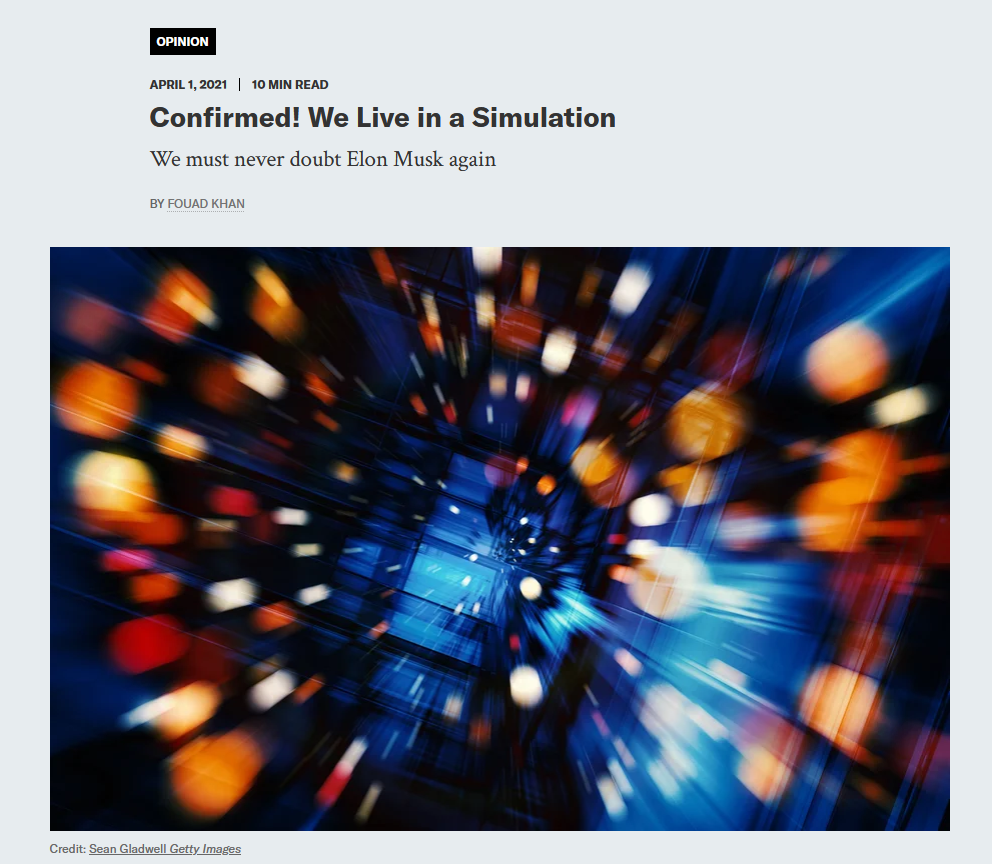
Then somebody – thank you, Jeffrey Mercer – introduced a whole new twist into this conundrum. ‘What if this whole (computer) simulation thing is nothing but yet another attempt to make sense of the Universe? To attribute sense to the Universe? Which whole thing, if anything, is the epitome of anthropomorphism…’ I took the liberty to rephrase Jeffrey Mercer’s words. To make them more ‘suitable’. To fit better my preexisting answer. Yet another ‘anthropomorphic’ thing….
My immediate answer was ‘our world is indeed a simulation. Or maybe not as much a simulation as an artifact.’
Before delving into the matter, I’m going to formulate two questions. Hence ‘the furcula’. If we live in a simulation, what kind of world does the simulator live in? Why would anyone bother? To study us responding to its simulating our senses/minds? Why doesn’t it study itself? Its own self/persona?
Coming back to my initial answer, I have to point out that the key word here is ‘our’. We’re speaking here about ‘our world’. The world we live in. Our reality!
We, the ones trying to make sense of this world/reality, have a few characteristics. We’re made of matter and we have, each of us, a conscience. Having a material nature introduces certain limitations and being conscious widens those limitations. Us being conscious widens those limitations, by introducing a ‘new dimension’, but this doesn’t mean those limitations disappear. A bucket is ‘wider’ than the circle at its base – the bucket has height, hence volume, while the circle is ‘flat’ – but the bucket itself continues to have limits.
Let’s examine the consequences of us being conscious agents of a material nature. Limited conscious agents of a material nature…
Us being conscious means us being aware of our material nature. Of our limits. Having a material nature means the most powerful instinct we have is our ‘need to survive’. Both as a biological organism – a.k.a. animal – and as a conscious agent.
Our consciences – I’m speaking about the individual ones here – are very crafty ‘devils’. They can accept our individual material fate – death – but have a problem accepting their own dependency on the ‘bodies/brains’ they need to inhabit. Hence ‘the soul’.
Which ‘soul’ has been invented – by our conscious selves – as the first step towards building a sense for this world. For the reality we inhabit. Which soul is the building block for all religion. For all religion known/built to/by man.
Are you still here? I have to make a pause here. And to mention the fact that I’ve already cut a few corners… A lot of corners… What I say is probably rather hard to follow. Mostly because I don’t have time/space to explain myself. Not now but certainly in due time.
And yes, what we call ‘religion’ is of our own doing. The Bible itself has been written by us, regardless of the origin of the ideas mentioned there. It doesn’t matter whether we have been the interface between (a) God and ‘the world’, we are the ones who have written the Bible. And all other sacred texts. We have written them, we have believed in them and we have shaped the reality we live in.
We have done all that according to how we have interpreted the teachings we have inherited from our forefathers. And we continue to. Even those of us who consider themselves to be ‘free of religion’. We might not believe but we continue to act as if. Believers and nonbelievers alike hold the same things as being valid. Don’t kill, don’t steal, respect the values which keep society together…
What about where we started from? What about the ‘original’ simulation?
One moment please, I haven’t yet finished with ‘God’. If (a) God made us who/what we are, then who made God?
If someone took the trouble to build the simulation we consider to be ‘home’, what about the ‘real’ world? What about the reality harboring the simulating agent?
There’s no need for an outside agent? The world we live in, our world, is the world we have built for ourselves? Using the things which were at our disposal and the information we have gleaned about how things work? Maybe not always fully aware of what we were doing?
You got it! That’s exactly what I was trying to say!
4,000 years ago. An alien probe examines the Earth and determines there are two ‘species of interest’ on the planet. ‘Interesting’ in the sense that both had already discovered ‘exploitation’. Ants farming aphids and humans farming sheep.
4.0 seconds ago. The same alien probe checks back and determines that both ants and humans continue their respective farming activities. The only difference between now and then being the scale of the respective operations. And the consequences to the environment…
The probe is a robot. Which robot has no feelings. Doesn’t care. Does what it has been instructed to do and that’s it. The data is being transmitted to those who had commissioned the robot.
‘The ants are practically the same. Individuals transported through time would fit perfectly in either situation. The humans have evolved in a certain manner. They live longer – on average. They have thoroughly transformed much of their environment. But they have maintained the ability to survive in either situation. To thrive, even, if the individuals are transported through time very soon after birth – and if they are well taken care off at the receiving end of the journey’.
The received data is deemed ‘baffling’ by the agents whose job is to make sense of it. To analyze it. To determine whether each planet checked by the probe was inhabited by a potentially autonomous species. In which case the planet was deemed ‘off limits’. Or not, hence open for colonization.
The procedure to determine the outcome is simple. Is there at least a species which evolves faster than the rest? Is there at least a species concerned with the well being of the environment it depends upon? If only the first condition is met, the planet is scheduled to be checked again later. If both conditions are met, the planet is considered off limits. If none are met, the planet is considered ‘open for business’.
The present situation is unprecedented. During their entire recorded history, this is the first time the analyzing agents have come across such an occurrence. An intelligent species who has achieved so much yet still remain driven by desire. By emotion.
A species perfectly capable of thinking yet still prone to judging. A species comprised of individuals who consider perfectly acceptable to rationalize their own wishes while entertaining a low opinion on others who do the very same thing. Find excuses for indulging.
This find generates an ontological storm among the analyzing agents. Being the first time when they no longer have a complete grasp on what’s going on, this whole thing compels them to reconsider.
I’ve been struggling for a while to understand why God is still relevant for us. Why so many of us continue to believe in him and why so many of us struggle to demonstrate he doesn’t exist. Why so many of those convinced he doesn’t exist blame him for so many of our own follies…
Because we’re ‘escape artists’!
So many of us continue to smoke. Since not everybody who smokes develops a cancer or dies of COPD – Chronic Obstrusive Pulmonary Disease, those addicted to nicotine find ways to rationalize their habit. For it’s simpler for them to hope they are among the lucky ones than to accept the fact that they’ve acted foolishly for so long. I know what I’m talking about, I’m one of these people.
Similarly, it’s a lot simpler to use God as a scapegoat than to accept full responsibility for your destiny. The less control/resources you have, the simpler it is to ask for God’s help. To lay your fate in his hands.
‘He must have had his reasons. The fact that I don’t know what they are doesn’t change anything. He’s in charge, I can do nothing but accept my fate!’
Same thing for the disbelievers. It’s simpler to blame (a) God, or (a) religion for aberrant/abhorrent behavior than to accept that human beings can be manipulated – in certain conditions – into such behavior. Into such inhuman behavior.
‘If they could have been manipulated in such a manner then I might be manipulated in the same manner. This is not acceptable. It’s their God/religion which is at fault. Something like this cannot happen to me. I don’t belong to any religion – or to a different one, so I’m immune to all this.’





 nicichiarasa