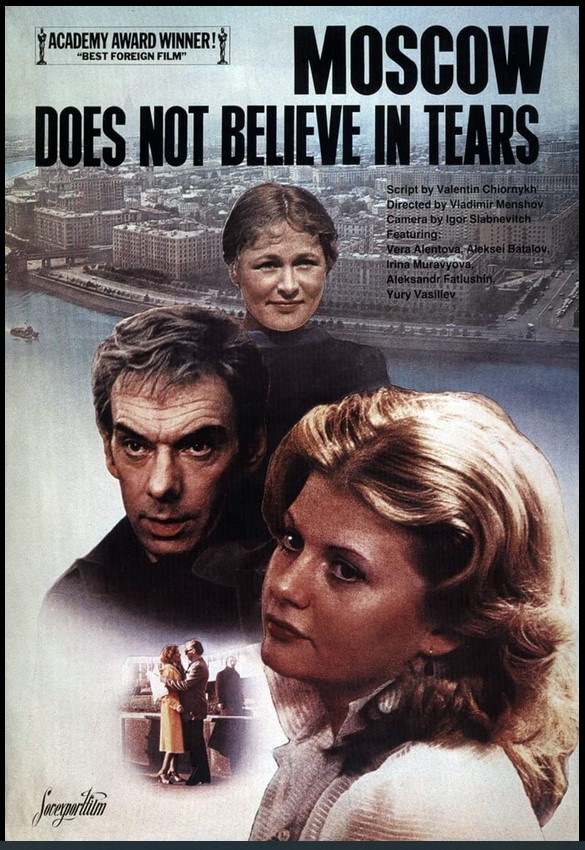
Russian films were ‘readily’ available. Some of them were good. Really good.
Besides going to the movies, I was an avid reader. I must confess that the ‘great Russian classics’ didn’t impress me. No special reason. But I did read a lot of Russian literature. About the partizans fighting the Nazis during WWII, about the communists fighting for freedom – for their version of freedom, in the early ‘920-ies, some Sci-Fi novels about the happy lives the Russians were going to live in the next millennium.
This morning I was listening to the radio. The news bulletin was, of course, about what’s going on in Ukraine.
A refugee, a woman who had fled accompanied by her young daughter – her husband and her son remained at home to fight, was speaking in her native language. I know that Ukrainian is different from Russian. But for my ears they sound very much the same.
Imagine what I felt.
I grew up associating the Russian language with the struggle for freedom. With the promise of a better world.
As I learned things… my understanding of history had become more ‘nuanced’. The Soviet Union had collapsed after Afghanistan. The regime finally got what was coming to it. As Putin crushed Chechnya, killed Litvinenko, ‘peacefully’ occupied Crimea … things were no longer ‘nuanced’…
But this!
They say that an image is worth a thousand words… I’m no longer sure about that!
There is so much violence paraded in front of our yes that our ‘retina’ has become calloused.
Hearing that brave woman trying to convey her tragedy in a language I associated in my childhood with the promise of liberty really did it for me.
This time the oppressor itself was speaking Russian. Russian soldiers were doing the very same thing the Russian people had experienced during the WWII. And they were doing it to their ‘brothers’.
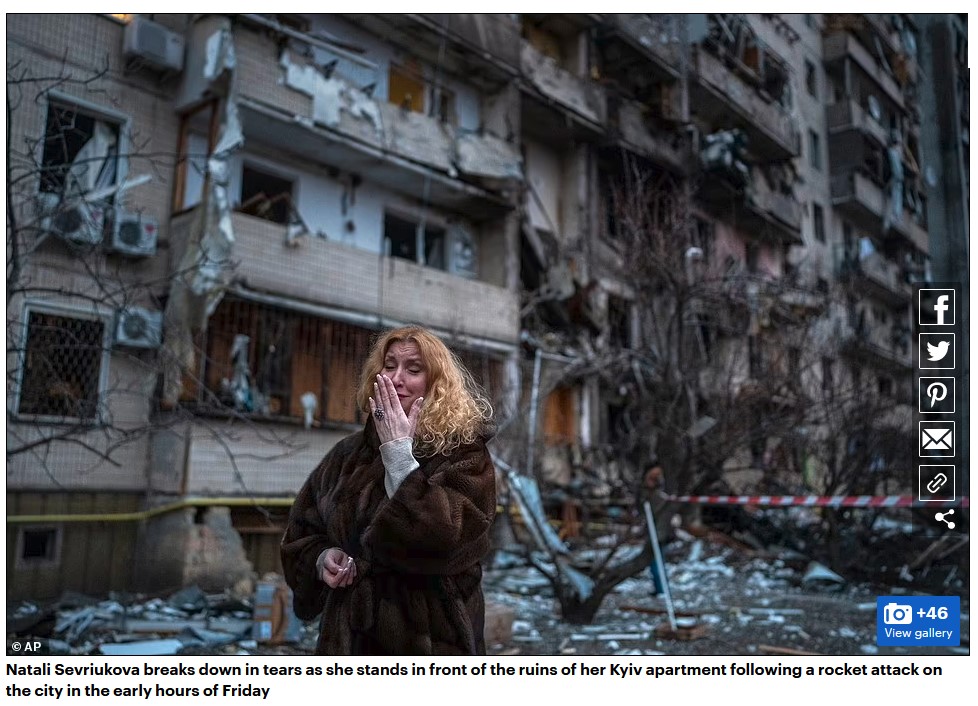
Russian soldiers were turning Kyiv into rubble! Kyiv, the birth place of the Rus-ian people…
All this conveyed in a language which, for me, sounds very much the same as the language I had associated in my childhood with the quest for freedom.
I wept.
Hoping the Kremlin will learn to understand tears. Maybe not the present ruler but at least the stony walls…
Ever since Putin had ordered his army to invade Ukraine, I keep hearing about what drove Putin to do it. About his dreams of rebuilding the old Russian Glory. About his drive to become the most important Russian personality. About NATO ‘pushing itself’ closer and closer to Russia’s borders. About…
The map above is the last argument I came by. And the last straw… The person who posted the map doesn’t agree with Putin. Not at all. But cannot ‘forget’ the fact that at one time Kiev did belong to Russia.
Well… I’ll be blunt about it!
This person, along with many others, tries to explain what is going on in a rational manner. They attempt to find an objective reason for a subjective decision.
Putin is flattening out Ukraine because he is afraid.
The Soviet Union had survived 1956 Hungary, 1968 Prague, and 1980 Solidarnosc. All of these ‘movements’ had been, somehow, quashed. Dealt with.
The Soviet Union had, finally, crumbled under its own weight after Afghanistan. After a people didn’t cave in. After a people, an entire people, found it in themselves how to resist. How to say no!
Putin had successfully quashed Yeltsin’s oligarchs, the Chechen rebellion, the first Orange revolution, dealt with Saakashvili, helped Lukashenko save his throne and put a lid upon the recent Kazahstani attempt at making a small step towards democracy. And was contemplating the Western Europe planing to give up burning gas and oil.
‘His’ gas and oil…
He had to do something. Otherwise ‘his’ people were going to throw him out.
If Ukraine was allowed to continue on the self determination path, who was going to stop the Russians from following suit?
So yes, the circumstances described by that map are valid. But it is Putin who bears the entire responsibility for what’s going on. And for creating the circumstances in which ‘next’ is going to happen.
Can you imagine what’s going on in these children’s souls?
882. Oleg the Prophet captures Kyiv and moves the capital of the Viking kingdom from Novgorod to Kyiv. Thus the Rus becomes Kievan.
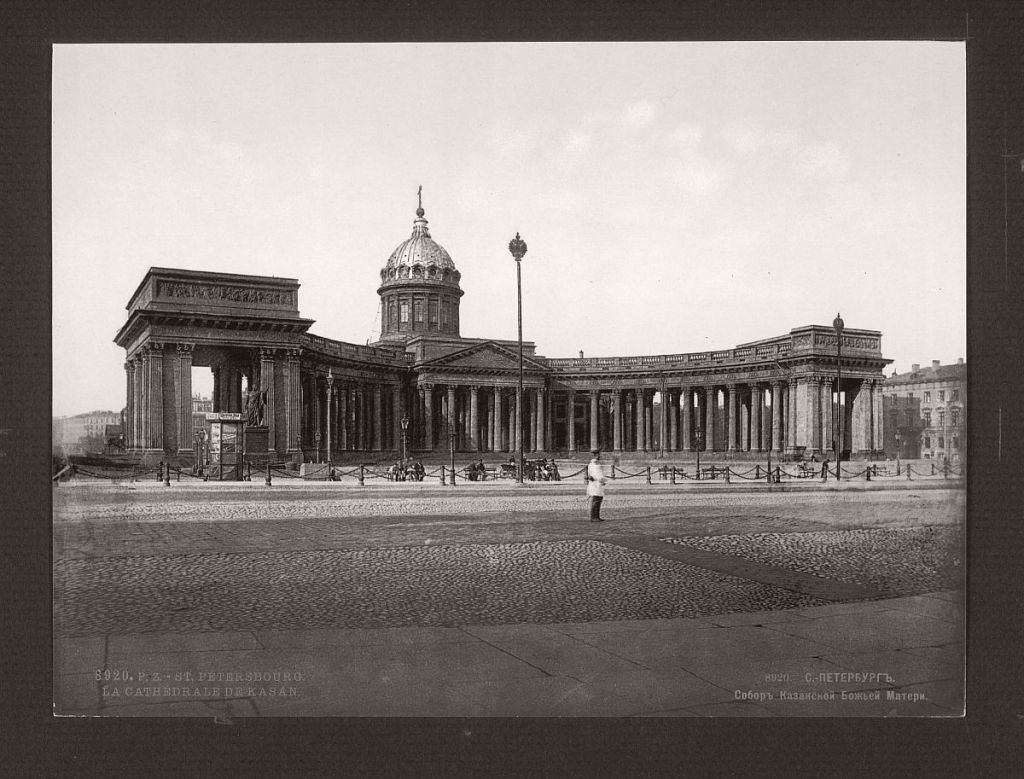
1703. Peter the Great of Rus-sia established Sank Petersburg as a bulwark against the Swedish Kingdom. The city served as Russia’s capital from 1712 to 1918
Kyiv hasn’t been besieged yet but has already been under heavy bombardment.
I’m Romanian. Romanians don’t have very fond memories of what had happened to their country whenever the Russian soldiers had come by to ‘visit’. As a teenager I read The 900 Days The Siege of Leningrad, 1968, by Harrison Salisbury
And wept.
Now, an already old man, I check out, on the Internet, what’s going out in Kyiv – the former capital of the Kievan Rus.
After you get used to it, being hanged becomes bearable.
Let me give you some context.
I live in Romania. You know, that country which shot its dictator, Nicolae Ceausescu, on the Christmas Day 1989.
I was drafted to the army in October 1980. When I left home, you could still find food to buy. Soap, chocolate, washing powder, toilet paper… you name it. Nothing fancy but life was ‘normal’. Nine months later, in July 1981, food was already scarce.
In 1985, things were already bad. You had to queue up for anything you needed. For all of the above mentioned items.
By 1988, things had become even worse. On top of what I had already mentioned, rolling blackouts were common. Those of us who lived in apartments connected to central heating were ‘enjoying’ running hot water for only a few hours a day/a few days a week. And shivered during the entire winter.
I’m telling you all these because in December 1989 most of us were hugely surprised when communism had fallen. With a bang.
We’d become so accustomed with what was happening to us that we were convinced our lives were ‘normal’.
Compare that to what you see below. Oh, I forgot to tell you that we had only 1 (one) TV channel. Which was on for 2 hours each working day from Monday to Saturday and 12 hours on Sunday. And 80% of what was churned out was pure propaganda.
1. Sow doubt. 2. Drop a loud fact. Or two… This will simultaneously ‘water’ the previously planted seed and act as a ‘foot in the door’ for your next move. 3. ‘Miss-interpret’ another fact. 4. Mention an universal human emotion, inviting your audience to identify itself with the ‘victim’. 5. Squarely state what you want your audience to believe.
1. ‘The Soviet Union didn’t crumple under its own weight. It was dissolved by Yeltsin so that Gorbachev’s position would disappear. Leaving Yeltsin as the top dog of the day. Even if at the helm of a little smaller empire…’
2. ‘After the Cold War had ended, the West should have treated the ‘defeated’ as Germany, Italy and Japan had been treated after WWII. The West should have helped the Soviet Union to overcome the transition hurdles by extending to it an equivalent of the Marshall Plan. Instead of that, the Americans had come up with the Wolfowitz – later Bush, Doctrine.’
3. ‘Gorbatchev was told by James Baker that NATO will not move an inch eastward’
4. “…1998, Yeltsin, late Yeltsin: ‘you promised not to do this! So, how do we trust you, if you make a promise?’ “
5.1. Vladimir Putin has been created by the United States. 5.2. The so called free media in general – and New York Times in particular, cannot be trusted to provide honest information.
Pozner’s discourse is far more ‘byzantine’ than the ‘stream-lined’ version I used to illustrate what skillful propaganda looks like. Skillful maskirovka, more likely?
This post has become long enough. Let me wrap it up.
The main question here being ‘did he actually say it? Did Baker actually promised Gorbachev that “NATO will not move an inch eastward” ‘?
The Soviet Union is long gone, all the states which have been admitted into NATO are ‘in’ because they had asked themselves to join – and are now extremely glad to be protected by the famous 5th article – … while the only (frustrated) ‘agent’ who ever cried foul was Putin. Not only cried foul but eventualy acted out his frustrations!
There’s managing your resources – on your own, while trying to outsmart – out, in the open, your opponent.
And there’s team-work. An attempt to make the most of what lady-luck had put on the table by exchanging information. With your partner and in the presence of the competing team. This time only the conversation is out in the open, the resources themselves remain hidden. During the initial phase of the competition and, partially, during the end game.
Until WWI, war was more like chess than anything else. Resources were, more or less, out in the open. The soldiers had no other role but to do and die. The whole responsibility belonged to the guys who called the shots. One for each side…
WWI had ended indecisively. Hence WWII.
Each of the winning parties – there had been two victors, had learned something different from the experience. The Western allies had learned the value of cooperation while the Eastern ‘block’ had reached the conclusion that brute force trumps everything.
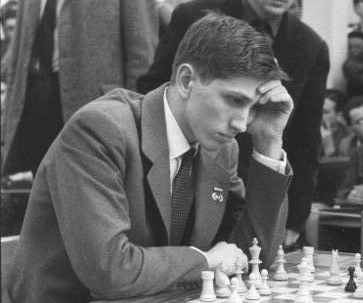
The Americans had started playing bridge with the Brits and taught the game to the rest of the world. The Russians had honed their skills at playing chess. Something they were already very good at. For a while, the Americans have tried to compete with the Russians. Remember a guy named Fischer? Bobby Fischer?
Soon, too soon, the Americans had given up. After building a computer smart enough to outsmart all human chess players…
The even worse part was that the Americans had given up bridge too! And forgot the most important lesson of WWI and WWII. That the victor needs to take care of the vanquished if they want to enjoy peace. To actually win the peace process after they had already won the war.
Which brings us to the end of the Cold War.
Communism – and practically all communist states, had crumpled under its own weight. The westerners assumed it was something they had done themselves. Declared victory. And the end of history…
Having already given up bridge, they forgot to take care of the vanquished… and allowed Russia – the party who had taken most of the blame over their shoulders, for reasons to be discussed some other time, to slide down the slope inaugurated by post WWI Germany. Did I mention that Russia was still fond of chess? Very much in love with brute force? And not very fond of respectful cooperation?
Now, that we all try to peek into the future – attempting to figure out how the current aggression ordered by Putin will end up, we need some people to learn about bridge.
Putin cannot launch by himself the nuclear missiles he had been brandishing lately.
Now, can those around him reset the chess board on which they are but pawns into a bridge table? And invite the rest of the world into the game?
Will the rest of us understand the invitation? If, and when, it will come?
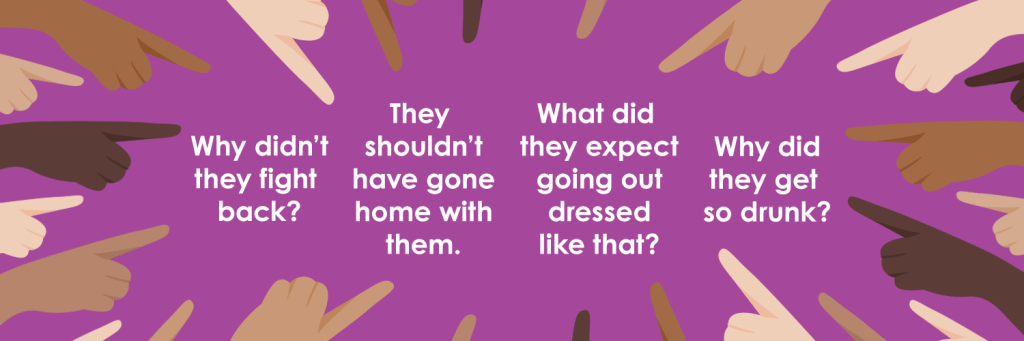
Victim blaming is a fact. As in ‘exists even if it doesn’t make much sense’. As in ‘still exists despite our intense efforts to make it disappear.’
Shouldn’t we try to understand it? Before blaming those who blame the victims?
What’s going on is that our minds are biased. And one of the two most powerful biases is our need to make sense of the word. We actually need to perceive the world as being rational. We need to have causes, to identify causes, for everything which happens around us. The other one being our need for relevance. We not only need to make sense of the world, we also need to control it. Hence we do our best to understand the world as controllable. Controllable by us! By us, the purveyors of the explanations. By us, those who understand it as a rational succession of causes and effects.
Let involve ourselves in a small thought experiment.
We’ve just had a few drinks. Not enough to get stoned but each of us is a little ‘merrier’ than usual. A tad dis-inhibited. In this condition, one of us has sex with an under-age person and the other has a car accident.
In which of these two cases, ‘being under influence’ would be seen as a mitigating circumstance? Why?
See what I mean?
Socially, it is unacceptable to DUI. Because you are far more likely to cause an accident. Socially, it is more than acceptable to have a couple of drinks at a party. Because you are going to be a far more ‘pleasant’ person that way. Well, most of us are…
It’s actually reasonable to expect a driver to be sober and a party-goer to be ‘tipsy’-ish. Simply because it’s a lot more unnatural to drive than to have social intercourse. Hence we need a lot more ‘self-control’ when driving than when talking to someone. Even if that person is very attractive. We, statistically speaking, have a gut feeling which tells us it’s harder to drive than to behave. Hence the biases.
‘OK, but has any of this anything to do with victim blaming?!?’
Victim blaming is the ‘easy way out’ for both would-be victims and would-be aggressors.
Remember what I said about our need to make sense of the world as a controllable environment? As a place where we, each of us, is in charge? With the known – and already agreed upon, limitations…
For those who see themselves as potential victims, doing the ‘right thing’ – or not doing the wrong one, is something which puts us in a safe place. We’ve done everything (in our power) so we’re safe. Or as safe as we could be… If we become a victim even after we’ve done everything in our power to avoid it, then it’s exclusively the fault of the aggressor. There was nothing more we could have done to avoid it. Hence there’s no self-guilt falling on our own shoulders. And if we have reached ‘this’ conclusion – that ‘this’ is the right behavior, then each of the ‘trespassers’ do nothing but ‘contradict’ our ‘good judgement’. Hence our ‘need’ to ‘educate’ them.
For those of us who conceivably might become or had ever been – directly or indirectly, as in ‘one of our relatives had done it and we didn’t see it coming’, – an aggressor, the logic follows the same path. The victim should have taken every precaution, we are naturally ‘limited’ individuals who cannot ‘resist’ when ‘pushed over certain limits’.
‘OK, and your point is? That it’s OK to blame the victim?!?’
Let me bring your attention back to the title.
‘Causing’ circumstances.
Who transforms a certain set of circumstances into a cause? Who sees a certain set of circumstances as an opportunity to do something or as an opportunity to do the very opposite? Or to simply stay put? To directly cave in to something which ‘might’ be seen as a provocation or to ask for permission first? And to accept ‘no’ for an answer, in no matter what circumstances …
Who bears the responsibility for choosing one way or another?
History teaches us that each and every empire has collapsed. Usually under it’s own weight. Pareto has given us a valid explanation – each structure which doesn’t have to ‘refresh’ itself tends to become clogged with self serving individuals, near-sighted enough to ‘forget’ that none of them (none of us, actually) is able to survive ‘outside’. Yet each ’emperor’ allows themselves to believe that this time is different. I’m better than all my predecessors. And their followers allow this to happen, just as Pareto had taught us.
‘They is a rational operator hence they must have a reasonable objective’. That’s how people raised/educated in a reasonable environment think/interpret the actions of other people. This being the reason for democratically groomed leaders having such a hard time when they need to understand how dictators operate. This being the reason for democratically groomed political operators having such a hard time when it comes to identify skillful would be dictators.