Apa caldă – pentru spălat – este o realitate 1,0. Simțită de noi. Nu atât ‘organoleptic’ cât în ceea ce privește evoluția noastră.
Având apă caldă pentru spălat, am reușit să ducem la maturitate un procentaj mult mai mare dintre copii noștri. Mult mai mulți dintre adulții spălați la fund au reușit să ajungă la senectute… Apa caldă pentru spălat a schimbat, profund, demografia.
Apa caldă o fi fost ‘imaginată’ de noi dar a fost, și a rămas, o realitate palpabilă.
Luxul, așa cum este el definit de marketeri și înțeles/acceptat de marele public, aduce beneficii doar celor care vând produse și servicii ‘de lux’.
Abia când cei care se ocupă cu ‘sensul vieții’ vor fi fost în stare să ne explice în ce lux ne scăldăm, atunci când ne spălăm cu apă caldă… abia atunci vom deveni capabili să înțelegem, cu toții, care este adevărata semnificație a acestui generos cuvânt!
“It is not from the benevolence of the butcher, the brewer, or the baker, that we expect our dinner, but from their regard to their own interest. We address ourselves, not to their humanity but to their self-love, and never talk to them of our own necessities but of their advantages.“ Adam Smith, The Wealth of NATIONS, 1776
I’m sure you already know that Adam Smith didn’t invent capitalism. As Marx invented communism and Lenin invented bolshevism.
Adam Smith had done nothing more and nothing less but described what was going on around him. How a bunch of people acting according to their ‘moral sentiment’ took care of business. How individual needs – for meat, beer and bread – were met and how the wealth of nations was built in the process.
Do you notice any need being fulfilled, in earnest, in this, new, situation? OK, things were not that rosy in Smith’s times either. Most people had to work hard, a lot harder than today, to make ends meet. But since Smith and until some 40 years ago things went better. Year after year. When Smith was writing his books, Regular Joe-s used to live in crowded shacks, usually rented out from their employers. Nowadays, most of those in their 50-ies and 60-ies own the house they live in. Which house has nothing in common with the afore mentioned shack.
So, is this the new kind of progress? A looking back in anger kind of progress? Are you even aware of the huge number of people pondering whether capitalism is not as good as advertised – by those who have already enjoyed its spoils? For the simple reason that in the current (no longer) free (enough) market so many people can no longer enjoy the kind of economic well being their grand parents took for granted…
As someone who had experienced both communism and capitalism, the situation is clear.
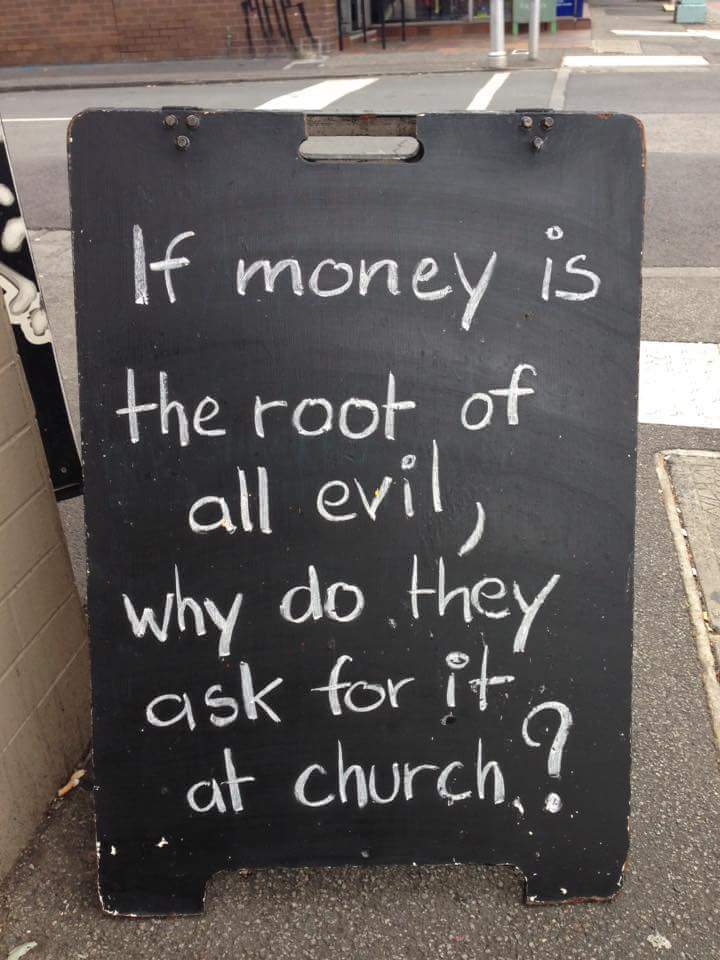
Then Jesus entered the temple and drove out all who were selling and buying in the temple, and he overturned the tables of the money changers and the seats of those who sold doves. He said to them,
A first glance, it doesn’t make much sense to put an oilman in charge of a COP conference. Nothing more than setting a wolf to guard sheep, right?
On the other hand, shepherd dogs are nothing but ‘converted’ wolves. Wolves who had somehow figured out that it’s more sustainable to live with the humans than in the wild. Former wolves who had somehow figured out that’s far more sustainable – for them, to protect the sheep than to prey on them.
OK, the agent driving the process had been human. But the facts remain. Dogs have evolved from wolves.
What are we waiting for? If the descendants of the wolves had been able to ‘cross over’, why so many reasonable people continue to believe that the ‘Global Warming’ is a hoax? After all, we’re the ones supposed to be reasonable… And the way I see it, it’s unreasonable to believe that burning fossil fuel accumulated during millions of years can be ‘sustainable’. Forget about ‘peak oil’ and ‘peak gas’ and remember how hot the Earth was when the first drop of fossil fuel had been set aside by Mother Nature.
If you read carefully Marx’s communist manifesto, you’ll realize that it doesn’t. Work. Not even on paper! According to Marx, communism will come to be when enough people formerly belonging to the middle class will have become poor. As a consequence of their wealth having been siphoned away from them. Becoming poor will make those former middle class people open to communist ideas. And will convince them to follow the already ‘enlightened communists’ into revolution. For a while – again, according to Marx, the society will have to be led by the successful revolutionaries. In a dictatorial manner, because not all people will have risen to the communists’ level of understanding. So. ‘Communism’ will be instated by some disgruntled people using dictatorial methods. How auspicious is this? Let me go even further.
Why were those people disgruntled in the first place? Because capitalism! Not so fast. The Adam Smith kind of capitalism worked just fine. Only after it had been warped by greed it had started to sputter. Specially after Milton Freedman had enshrined greed… This being the moment when I need to remind you that Adam Smith’s first book on this subject was “The Theory of Moral Sentiments”…
‘Those’ people had become disgruntled after too many in that society had been convinced, at least for a while, that ‘greed was good’. And what was Marx’s proposed solution for that disgruntlement? That all ‘means of production’ – meaning all property/wealth, to be taken away from individual people. And entrusted to ‘the people’. Since ‘the people’ were going to be led by the “communists”, in practice the communist revolution meant that all wealth was going to be confiscated from those who happened to own it and entrusted to a very small number of people. Who happened to own the secular power in that moment. As the main consequence of the communist revolution. Apud Karl Marx’s Communist Manifesto…
Let me revisit now Milton Friedman’s words. ‘Greed is good’. According to this line of thinking, wealth becoming as concentrated as possible is a good thing. Since greed is already good, concentrated wealth is but a logical consequence…
Then Marx’s Communist Manifesto was nothing but an avant-la-lettre short-cut for an easier implementation of Milton Friedman’s greed hailing ideology!
See what I mean?
Karl Marx communism did not and cannot work. Because it leads into a vicious circle. It creates a monopolistic situation which cannot be avoided. Time and time again, history has proven that ‘this time is different’ is nothing but wishful thinking. Whenever too much decision power is concentrated in a too small number of hands, the situation becomes untenable. The more concentrated the decision power, the faster – and more dramatic – the eventual collapse.
How about a ‘different’ kind of communism? The only sustainable kind of anything – ‘social arrangements’ included, had been ‘natural’. Had appeared in an evolutionary manner. In contrast, all revolutionary developments have produced counter-revolutions. In many instances even more destructive than the revolutions themselves. What will come after democratic capitalism? I don’t know! But it better be better than what we have now.
And come in quietly!
Otherwise…
How about a return to bona fide democratic capitalism? To Adam Smith’s kind of capitalism? The one whose entrepreneurs used to put ‘moral sentiments’ above greed!
Wishful thinking? Maybe! But is there any other way to achieve anything? Other than to start by wishing that something? And since Smith’s brand of capitalism did work, communism always failed and a viable alternative has yet to appear…
“Tough times create tough men. Tough men create easy times. Easy times create weak men. Weak men create tough times.“ American proverb “Wealth lasts only for three generations: one to make it, one to keep it, one to squander it“ Chinese proverb “If you raise your children, you get to spoil your grandchildren. If you spoil your children, you get to raise your grandchildren.“ Popular word of mouth
There’s no denying that, on average, each generation fares better than its predecessor.
Then why some people end up worse than their parents? Is it a social thing? Is it in their upbringing? Is it the consequence of bad personal choices?
The easy way out would be to consider that legislation, material status, the culture one was born into and even the upbringing offered by the parents are nothing but circumstances. And, ultimately, it’s the individual who makes the call. And bears the consequences… But the above mentioned individual doesn’t rise from and into a complete void… so I need to go deeper!
An equally true but somewhat more useful observation would be that we’re dealing here with something more important than mere wealth.
‘There’s no such thing! Nothing is more important than Wealth!’
Yeah, right… Individual people keep squandering the personal wealth accumulated by their forefathers, the humankind keeps going forward and you tell me personal wealth is the most important thing here…
But you do make a good point. Your insistence, obsessive even, about wealth being the crux of everything is very relevant. Since I agree with you that wealth is important, indeed, then maybe it’s the ‘insistence’ which is causing the problem…
First of all, allow me to make a simple distinction.
There is wealth – structured opportunity, I’ll discuss this notion in another post, and there is personal wealth. Opportunity which belongs to somebody. When an individual squanders the wealth inherited from their parents – or even that which they had managed to put together themselves, the wealth itself – the accrued opportunity – doesn’t disappear from the face of the earth. It just passes from one hand to another. Most of it, anyway. For the simple reason that most of today’s wealth is expressed in money. Which is fungible.
‘OK. So individual people squandering their inherited wealth do not represent such a big problem. The total wealth already present ‘on the face of the Earth’ remains (more or less) the same, no matter who owns it. And since new wealth is created everyday, the humankind, on aggregate, goes forward.’
That’s how things used to be. That’s how things had evolved for the last ten millennia or so. Ever since our forefathers had invented agriculture. Agriculture and money… Land and money cannot be destroyed. Buildings and almost everything else which carries value can. Be destroyed. Land and money also, actually, but it’s a lot harder to do it.
But there’s a catch here.
For wealth to do its trick – to function as an opportunity, people have to have access to it. That’s why, for example, people do not keep their money under the mattress. When deposited in a bank, money will end up being used. The bank will lend them to somebody who needs it and that somebody will put that money to work, In no matter what shape or form. Kept under a mattress, money becomes mostly useless. At least for the time being… And this is where ‘insistence’ – our obsessive insistence – that money is the only worthwhile goal for any respectable person becomes counterproductive.
‘Are you a communist?!?’
On the contrary, my dear Watson!
In fact, Marx had been just as infatuated with money as Milton Friedman was going to be a century later. With more or less similar results… Friedman taught us that greed is good. Profit uber alles. That getting money trumps everything else. That getting money is not only good for the individual itself but also commendable. That everybody should make it their goal to become rich! Marx, on the other hand – please remember that the ‘other’ hand is nothing but similar to its twin – advocated for all wealth to be stripped from its rightful owners. See what I mean? Both Marx and Friedman had been thinking only about ownership. Who owns that wealth!
On average, we deal with the same situation. According to Friedman – pushing his advice to the very limit, there’s no problem if someone owns all the money in the world. If it so happened, so be it. According to Marx, nobody should own anything. On average, the wealth corresponding to each living human in both situations would be the same.
We already know the consequences of Marx’s teachings. When all the wealth present in one country is managed by a very small number of people, the whole situation goes south. Fast. Very fast! We also know what happens when the market is cornered. Becomes suffocated by a monopoly. The whole situation goes south. That’s why we cherish the freedom of the market!
Doesn’t make much sense? To insist that the market must be free and simultaneously maintain that ‘greed is good’?
Yep! My point exactly…
The vaunted human capacity for reason may have more to do with winning arguments than with thinking straight. Illustration by Gérard DuBois Why Facts Don’t Change Our Minds New discoveries about the human mind show the limitations of reason. By Elizabeth Kolbert February 19, 2017 https://www.newyorker.com/contributors/elizabeth-kolbert
Socialism implies a lot more centralization than capitalism. The answer is, like always, included in the question. While socialism is to be ‘implemented’ – by a ‘central figure’, capitalism is an environment. A place where the deciding agents – the entrepreneurs, ‘make it happen’.
Hence socialism – which is a ‘thing’, to be implemented, not an environment for entrepreneurs to roam ‘free’ – will eventually fail. No matter how well intended the implementor, nor how hard it tries to make it happen.
In capitalism, only the entrepreneurs might fail. When the market is no longer free – oligo or mono poly, the situation closely resembles a socialist one. Things go south. Because the decision making agents are too few and far apart – no longer able to cover all corners, just as their socialist counterparts.
Comparing socialism with capitalism is like pitting an apple against agriculture.
An apple, all apples, will eventually become rotten. No matter how hard one might try to preserve it. Agriculture, on the other hand, will yield according to the available resources and the effort put in by those involved in it.
The way I see it, capitalism is an environment. A ‘place’. A ‘way’ for people to do ‘economy’. What people do in that place depends on the place itself but also on how they choose to do things. This being the reason for which the American capitalism is different from the European one. And both completely different from the Chinese version. In this sense, capitalism doesn’t actually work. Not by itself! If those dwelling in this ‘place’ act freely – as in ‘free market’ – then the whole ‘thing’ remains ‘sustainable’. Not ‘good for everybody’, not always ‘nice’ but nevertheless ‘fair’. As in ‘you have a fair chance of reaching the other end’. Not to get necessarily rich but to make the ends meet!
The alternative to capitalism… if you take your ideological blinders off, you notice that there’s none! Socialist/communist countries are/were also capitalist. The difference being that their economies are/were centrally planned. Their markets are/were anything but free! This being the reason for which communism had crumbled under its own weight. And for which in all places where the market is not free enough the ‘thing’ is not sustainable!
The common sense definition for an inflationary situation is ‘when too much money chase an inherently limited amount of goods and services’.
The ‘limited amount of goods and services’ part is easy. We live on a finite planet, we have a limited capacity to transform whatever resources we are able to identify into usable goods and services … so… OK, we can always identify new resources and build new capacity but we cannot do any of this ‘on the spot’. We need time. And, even more importantly, we need to put ourselves to it!
Then ‘who does the chasing’? After all, money is ‘inert’. It doesn’t do anything if let alone in a drawer. On under the mattress… In reality, we – buyers and investors, are the true ‘inflationary agents’. ‘But it would be completely stupid to sit on a pile of money when inflation rages! You have to buy something otherwise you’ll loose a lot of value! At least, you need to invest that money…’ This is one of the best examples of a self-fulfilling prophecy! Indeed. Buying or investing during an inflationary bout is the reasonable thing to do! Yet we need to understand that our actions will, temporarily, exacerbate the very inflation we are trying to ‘tame’.
After a while, economy had become ‘complicated’ enough to demand ‘paper money’. The amount of goods and services produced had become so large – and insufficient bullion was added to the money pool, that prices would have had to shrink if the balance was to be maintained. Unsustainable! Nobody would have bought anything and everybody would have jealously guarded their precious money while waiting for the prices to fall further. This process is known as ‘deflation’ and is considered even more malign than a decent amount of inflation. We have to note at this point that ‘paper money’ had been made possible by the advent of the ‘nation’. This is a rather complicated discussion, for the present purpose it’s enough for me to mention that ‘paper money’ being accepted as ‘tender’ means that the general population has enough trust in the issuer of the bills. That the individual user of the paper money trusts/believes he is part of ‘something bigger’. In those times, it was the issuer of paper money who practically controlled the amount of money which existed on the market.
Wrong! For banks to be able to ‘create’ new money, they have to extent credit! For new money to be created in this way, somebody must walk into a bank with a business proposition. That somebody might want to buy a house, a car or whatever else. Or that somebody might want to start a business. If that somebody convinces the bank that they is solvent or that their idea is worthy enough, then and only then new money is created! Money doesn’t appear out of the blue! It is born out of trust. That somebody not only trusts themselves but they are convincing enough to determine the banker to extend that much needed credit!
But wait! We’ve developed yet another mechanism which churns out money. The stock market. After developing the business started with the loaned money, the somebody we’ve been talking about above decides to make an IPO. To sell part of his business to investors. To monetize his initial investment. Depending on the moment chosen for the IPO – and the economic data in the prospect, the IPO can be a huge success. For ‘somebody’ and for the early buyers. You see, each time the price of the stock goes higher, new money is created. Based more on the ‘market’s expectations’ than anything else…
‘But people who put their money on the financial markets are rational agents! They are experts in their field…’
Yeah, right… You’re talking about the experts who had put together the collateralized debt obligations debacle… And many others. Too many others… Also, you’re talking about the experts who had bought those papers! Who had trusted the expertise of the first batch of ‘specialists’!
Thinkers, from Freud to Kahneman and Ariely, have proven than humans are very good at rationalizing and less so at being truly rational. That for a market to behave in a reasonable manner, it must preserve its freedom. That it must be free from ‘bullies’ – individual agents who muster a lot of ‘clout’, and free from any mania.
The 1637 Dutch Tulip Mania is a very good example of what might happen when a market gets obsessed with something. When too many people – not even a majority, forget about the fact that economy (oikonomia) is about making ends meet and that getting rich may be a nice consequence but is a terrible goal.
‘OK, nice try. But what about inflation?’
We have an inherently limited amount of goods and services. A relentless mechanism which churns out money. Meanwhile, some of us obsess about their need to conserve the money denominated portion of their stashed away fortunes.
Inflation is nothing but another mechanism. Which re-balances the market. Piece-meal – adjusting for daily changes, in normal times. When things evolve ‘freely’. Suddenly when the market – the people who ‘man’ the market, find out about ‘the dark side of the moon’.
And, if you pay enough attention, the cartoon capitalists represent nothing but the reprehensible side of real life capitalism.
The ‘fat man smoking a cigar in a greasy suit while counting $$$ peeled of the sweated back of his workers’ checks on all counts. On all counts defining ‘real-life capitalism’…
Besides all which have already been said about them, they is also an entrepreneur, risking their money, working crazy hours to build their version of a business, providing work for others – at a price, helping their team – whichever that might be…






 nicichiarasa