And the LORD God said, Behold, the man is become as one of us, to know good and evil:
We live in a world of our own making. We build it by talking ourselves into shaping it one way or another. If not careful, we end up building a lie!
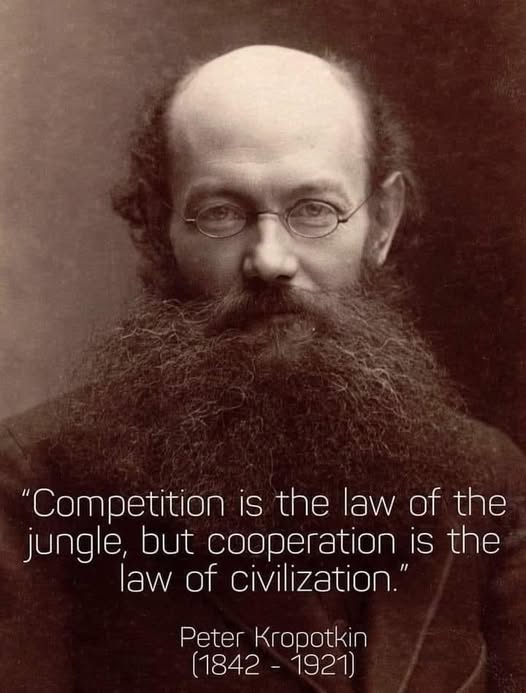
Competition has nothing to do with what’s going on in the jungle!
The jungle is about eat or be eaten! Competition is about rules. Follow the rule or you’re kicked out before you get to the end! The competition stops being true the moment you break the rule and your co-competitors do not throw you out. By not throwing you out, those in attendance have just transformed that particular pitch into a jungle!
“Cooperation is the law of the civilization!“ This part is true. But incomplete! As I explained before, to compete implies to cooperate. Those involved in a competition want to know who amongst them is better in a particular field. And COOPERATE in order to find that answer. By doing that they also build what we currently call ‘civilization’.
Kropotkin might be forgiven for what he had said. He didn’t get to witness the Chinese Cultural Revolution. That was the true pinnacle of ‘cooperation’! Not civilized by any measure…
We really need to be more careful with words. With what we say and with what we end up holding to be true!
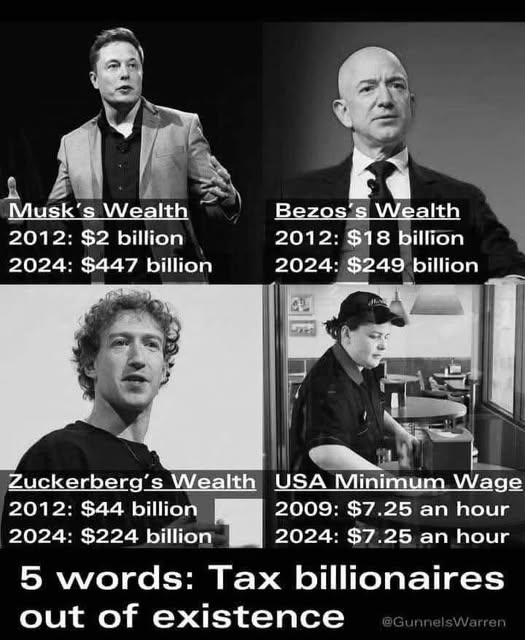
Nope! Trickle down is an idiocy. It doesn’t work. Just like ‘taxing billionaires out of existence’. It has been experimented, you know… It was called communism by those promoting this brilliant idea. So brilliant that it burnt down every society which had tried it. I lived under communist rule. I know. There isn’t much difference between all money being controlled by the state/government and too much money being controlled by a handful of billionaires! Meaningful decisions are still being made by a too small number of people…
Yes, taxes are useful. Besides gathering money to be used, by the government, for the common good. My point being that taxes are an expression of how a society sees money.
That’s what’s needed. Decision makers who do not put money over everything else! Any attempt to ‘tax billionaires out of existence’ is already an abuse of power. Doing it before the society changes its understanding of the matter would be worse than a crime. It would be a horrible mistake.
High marginal taxes accomplish two things. If no loopholes are allowed. Balance the budget and change the minds of the decision makers. ‘CEO’s’ as well as shareholders. Convince them to reinvest a bigger share of the profit. Which makes it possible for the company to become more efficient. Which makes it possible for the company to increase wages. Balancing the budget with money brought in by taxing the high earners makes it possible for the politicians to lower the taxes paid by the Regular Joes. Which would improve their status, their self esteem and their buying power!
Blaming a section of the society for something which needs to be dealt with in concert, by all the members of a society, is counterproductive. To say the least. It does nothing to solve the real problems and it deepens the already existing rifts.
Blaming the billionaires for what’s going on – for everybody being obsessed with money – is in no way different from blaming the immigrants for most of the people being unsure about tomorrow.
Billionaires, as well as the immigrants, should be ‘exploited’ rather than driven into disappearance. Each of them are very good at what each of them are doing. The difference between them consists in the fact that the billionaires set their own wages.
Wages, all wages, are paid by us. By the consumers. Hence it is us who should determine how much each people should get. We, not some of those getting our hard earned money! How are we going to accomplish that? Making sure that the market remains free. Functionally free as opposed to controlled by a small number of people. No matter where they come from. The Government, as in communism, or a collection of monopolies. As in oligarchic capitalism.
Free market works for only as long as it remains free!
Which is the problem.
Before meddling with the free-market, we need to agree first about freedom. About what we mean when we think/speak about freedom.
Freedom for all versus freedom for only those who happen to fit a certain set of criteria. To be wealthy, in this case.
Functional freedom – as in the kind of freedom which preserves, which remains sustainable over the long run – versus ‘absolute’ freedom. The kind of freedom which leads to anarchy. Which anarchy, necessarily and very shortly, becomes a rigid hierarchy. Then ends up in shambles…
Free market works for only as long as it remains functionally free. Free enough to do its thing. To provide enough for enough of those contributing to the collective effort to make ends meet.
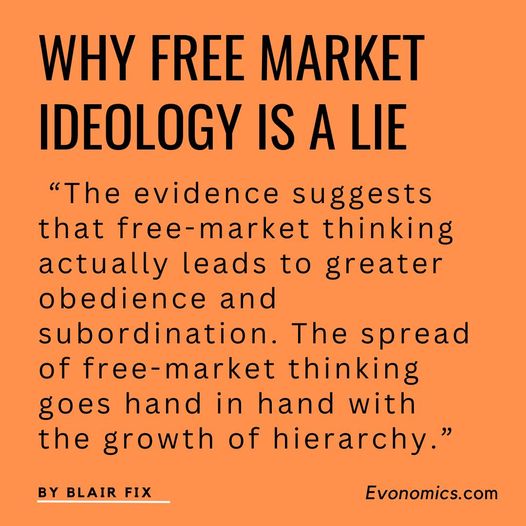
To understand what Blair Fix has to say, we need to identify the key words in his speech. “It appears” and “I argue”. In fact, he tries to convince us to see ‘the world’ as he sees it. He tries to convince us to be ‘on his side’.
He divides ‘the problem’ and then takes sides… which only contributes to the world/market losing its freedom.
As for what ‘evidence suggests’… It suggests two things. That yes, the ‘free market’ has, indeed, become an ideology. There are too many people who consider the market should be left to the mercy of the powerful. Who don’t understand how freedom actually works… The second thing being an evidence. Not a suggestion. All other markets but the free one work worse.
On the other hand, we must keep in mind that fakes are also facts. They exist, don’t they? Even more so, fake facts do engender consequences! In fact, it’s these very consequences which impart fact-hood to ‘successful’ fakes.
Also, it is high time for us to understand that this undermining might occur ‘naturally’. Due to our attention being distracted rather than ‘intentionally misguided’.
How many times have you been hit by something you didn’t see coming?
Not very often… for the simple reason that these encounters use to end up badly! Bent fenders, broken bones… Hence we pay attention. Or get killed… end of story!
But how many times have you experienced bad consequences, really bad consequences, after misjudging a situation? After a ‘doesn’t matter’ uttered nonchalantly?
Well, we are indeed in the presence of a miracle. In the presence of a wonderful miracle! In spite of the entrenched obstinacy of some ‘infallible’ and very powerful agents – who had Giordano Bruno burned in a public square for maintaining exactly the same thing – we have finally accepted this as a fact.
Sometime ago – more than 45 years, when food was still plentiful in communist Romania – I heard for the first time that ‘many people dig their graves with their teeth’. I was too young to understand the deeper meaning of this. That sooner or later each of us will meet the consequences of our previous decisions.
15 years ago I read a book written when I was a toddler. Almost 60 years ago. The Social Construction of Reality by Berger and Luckmann.
“Tough times create tough men. Tough men create easy times. Easy times create weak men. Weak men create tough times.“ American proverb “Wealth lasts only for three generations: one to make it, one to keep it, one to squander it“ Chinese proverb “If you raise your children, you get to spoil your grandchildren. If you spoil your children, you get to raise your grandchildren.“ Popular word of mouth
There’s no denying that, on average, each generation fares better than its predecessor.
Then why some people end up worse than their parents? Is it a social thing? Is it in their upbringing? Is it the consequence of bad personal choices?
The easy way out would be to consider that legislation, material status, the culture one was born into and even the upbringing offered by the parents are nothing but circumstances. And, ultimately, it’s the individual who makes the call. And bears the consequences… But the above mentioned individual doesn’t rise from and into a complete void… so I need to go deeper!
An equally true but somewhat more useful observation would be that we’re dealing here with something more important than mere wealth.
‘There’s no such thing! Nothing is more important than Wealth!’
Yeah, right… Individual people keep squandering the personal wealth accumulated by their forefathers, the humankind keeps going forward and you tell me personal wealth is the most important thing here…
But you do make a good point. Your insistence, obsessive even, about wealth being the crux of everything is very relevant. Since I agree with you that wealth is important, indeed, then maybe it’s the ‘insistence’ which is causing the problem…
First of all, allow me to make a simple distinction.
There is wealth – structured opportunity, I’ll discuss this notion in another post, and there is personal wealth. Opportunity which belongs to somebody. When an individual squanders the wealth inherited from their parents – or even that which they had managed to put together themselves, the wealth itself – the accrued opportunity – doesn’t disappear from the face of the earth. It just passes from one hand to another. Most of it, anyway. For the simple reason that most of today’s wealth is expressed in money. Which is fungible.
‘OK. So individual people squandering their inherited wealth do not represent such a big problem. The total wealth already present ‘on the face of the Earth’ remains (more or less) the same, no matter who owns it. And since new wealth is created everyday, the humankind, on aggregate, goes forward.’
That’s how things used to be. That’s how things had evolved for the last ten millennia or so. Ever since our forefathers had invented agriculture. Agriculture and money… Land and money cannot be destroyed. Buildings and almost everything else which carries value can. Be destroyed. Land and money also, actually, but it’s a lot harder to do it.
But there’s a catch here.
For wealth to do its trick – to function as an opportunity, people have to have access to it. That’s why, for example, people do not keep their money under the mattress. When deposited in a bank, money will end up being used. The bank will lend them to somebody who needs it and that somebody will put that money to work, In no matter what shape or form. Kept under a mattress, money becomes mostly useless. At least for the time being… And this is where ‘insistence’ – our obsessive insistence – that money is the only worthwhile goal for any respectable person becomes counterproductive.
‘Are you a communist?!?’
On the contrary, my dear Watson!
In fact, Marx had been just as infatuated with money as Milton Friedman was going to be a century later. With more or less similar results… Friedman taught us that greed is good. Profit uber alles. That getting money trumps everything else. That getting money is not only good for the individual itself but also commendable. That everybody should make it their goal to become rich! Marx, on the other hand – please remember that the ‘other’ hand is nothing but similar to its twin – advocated for all wealth to be stripped from its rightful owners. See what I mean? Both Marx and Friedman had been thinking only about ownership. Who owns that wealth!
On average, we deal with the same situation. According to Friedman – pushing his advice to the very limit, there’s no problem if someone owns all the money in the world. If it so happened, so be it. According to Marx, nobody should own anything. On average, the wealth corresponding to each living human in both situations would be the same.
We already know the consequences of Marx’s teachings. When all the wealth present in one country is managed by a very small number of people, the whole situation goes south. Fast. Very fast! We also know what happens when the market is cornered. Becomes suffocated by a monopoly. The whole situation goes south. That’s why we cherish the freedom of the market!
Doesn’t make much sense? To insist that the market must be free and simultaneously maintain that ‘greed is good’?
Yep! My point exactly…
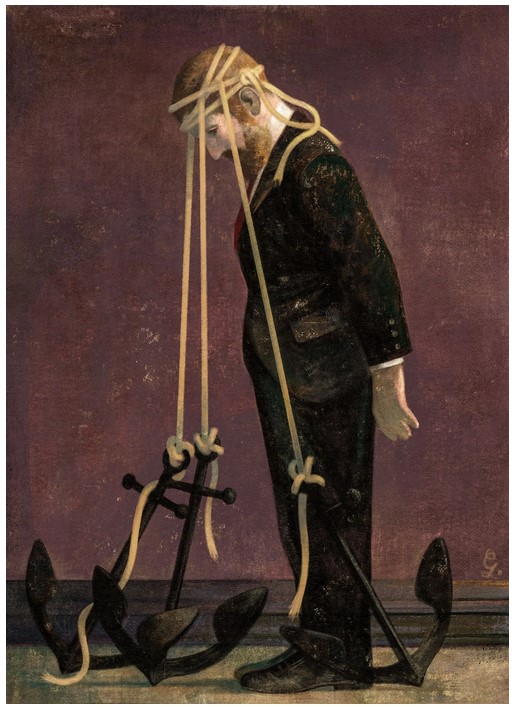
The vaunted human capacity for reason may have more to do with winning arguments than with thinking straight. Illustration by Gérard DuBois Why Facts Don’t Change Our Minds New discoveries about the human mind show the limitations of reason. By Elizabeth Kolbert February 19, 2017 https://www.newyorker.com/contributors/elizabeth-kolbert
For some reason, there still exists a considerable number of people not yet convinced that what had been experienced in the Soviet Union was “a true socialist/communist form of government”
The sad reality is that the Russian Revolution did establish a true socialist form of government! As per Marx’s teachings. The communists had been in charge of things, and the things failed to become better. In fact, they had become worse. Eventually, the Soviet Union – along with all other socialist attempts, had crumbled under their own weight.
Those who want to find better alternatives to democratic capitalism – good luck with that – need to find another word but socialism to describe their goal. Or wait a few generations before attempting to give it a new meaning. The current one had been wasted by the likes of Marx, Lenin, Stalin, Mao, Kim, Ceausescu…






 nicichiarasa