Archives for category: evolution

Chapter 1. Explaining prediction.

I’ve trained to be an engineer. And practiced being one.
Then I felt the need to understand. And studied sociology.
That’s how I learned, the hard way, the difference between ‘hard’ science and ‘soft’ science.
Between ‘bona fide’ science and ‘bogus’ science…

Those of us still convinced that soft science is bogus have yet to grasp the whole meaning of ‘science’.
A collection of ‘special’ data, a ‘special’ method of gathering data and a ‘special’ state of mind.

We all know what ‘scientific data’ and ‘scientific method’ mean.
But there is almost no talk about ‘scientific state of mind’.
Most people consider that ‘scientific thinking’ is solelly about applying the scientific method when dealing with the ‘reality’. With what happens ‘outside’ of us.
Outside of our individual consciences…

Historically, science – the concept of science, had sprung up in the minds of people concerned primarily with physics and chemistry.
Hence the subsidiary concept of ‘consistency’.
Data can be considered to be scientific only if it had been gathered in a ‘consistent’ manner.
If by applying the same method, in the same circumstances, the end results will be the same – regardless of who had happened to be at the helm of the experiment.
And a method can be considered to be scientific only if it produces the same data whenever it is applyed, in the same circumstances, by no matter whom.

I’m sure that, by now, at least some of you have figured out what I’m driving at.
The main difference between ‘hard’ and ‘soft’ science is, of course, related to the relative inconsistency of the data yielded by the ‘soft’ sciences. This being the reason for which some people cannot even accept the ‘scientific’ nature of the soft sciences…

Hence the need to discuss about the ‘scientific’ ‘state of mind’…
Let me start by pointing out the fact that we, people, are rationalizers.
We pretend to be rational, true, but in reality we are nothing but very astute rationalizers.
So astute that we are not even aware of the fact.
We are so convinced of our rational nature that we are fooling ourselves.

Please read about this subject by hitting the link below if you are not familiar with the concept of rationalization before proceeding.
https://cushmanlab.fas.harvard.edu/docs/rationalization_is_rational.pdf

Accepting that we are deep enough into rationalization that we need to pay special attention when trying to be objective is the first step towards attaining a scientific state of mind.
The second, and just as important, step being the respect we need to extend towards our peers. Towards our fellow experimenters.

Changing tack – and approaching ‘scientific state of mind’ from another angle, I might try to describe it as a ‘work in progress’.
A never ending attempt at self improvement made by someone fully aware of the fact that they’ll never get there. Yet still striving towards that goal.
A never ending attempt made by somebody who knows they’ll never get ‘there’ yet they continue to encourage others to go further and further up that road.
A never ending attempt made by people who know they’ll never get there yet they respectfully help each-other towards their common goal.

And now, that I’ve done my best to explain what I mean by ‘scientific state of mind’ let me delve in the main subject.
The real difference between soft and hard science.

By their very nature, hard sciences are defined by the fact that an explanation constitutes a very good prediction.
If you are capable of explaining the Earth rotation around the Sun you are also able to compute where the Earth will be 10 seconds from now. As well as ten centuries from now…
If you are capable of explaining radio-activity you are also able to build an atomic bomb.
By understanding how DNA works we have been able to come up with a mRNA vaccine against the SarsCOV-2 virus.
https://www.cdc.gov/coronavirus/2019-ncov/vaccines/different-vaccines/mrna.html

The problem with soft sciences being that in their case, explanations – no matter how precise, cannot predict much.
We know why a maniac behaves like one – because …, but we don’t know what a maniac will actually do. Nor when…
We know that a free market works better than a monopoly but we cannot agree upon how free a market should be. Nor can we agree upon what a ‘free market’ really looks like…
We know what will eventually happen to an empire – it will fall, because of ‘negative selection’, but we never know exactly when and how that will happen… nor what will occur between the establishment of the empire and its eventual demise.

Savvy?
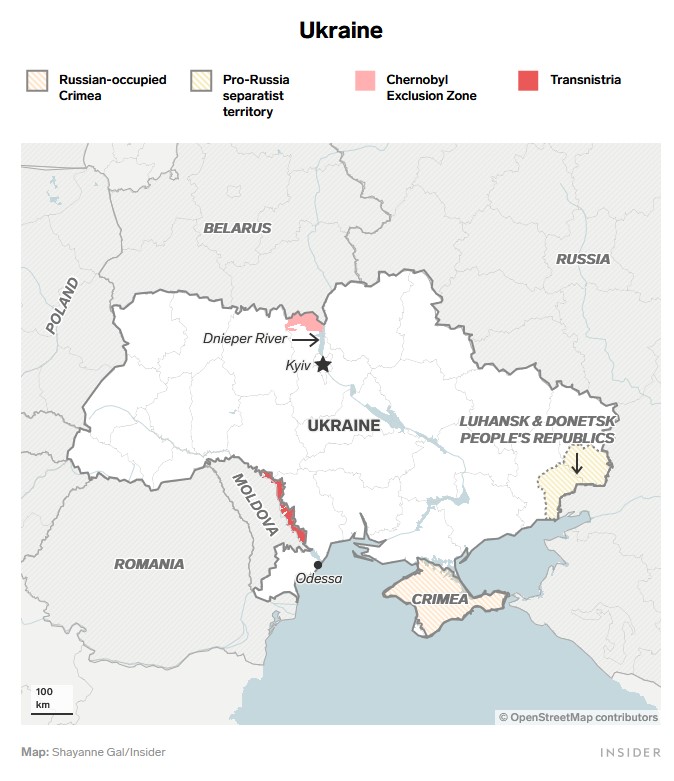
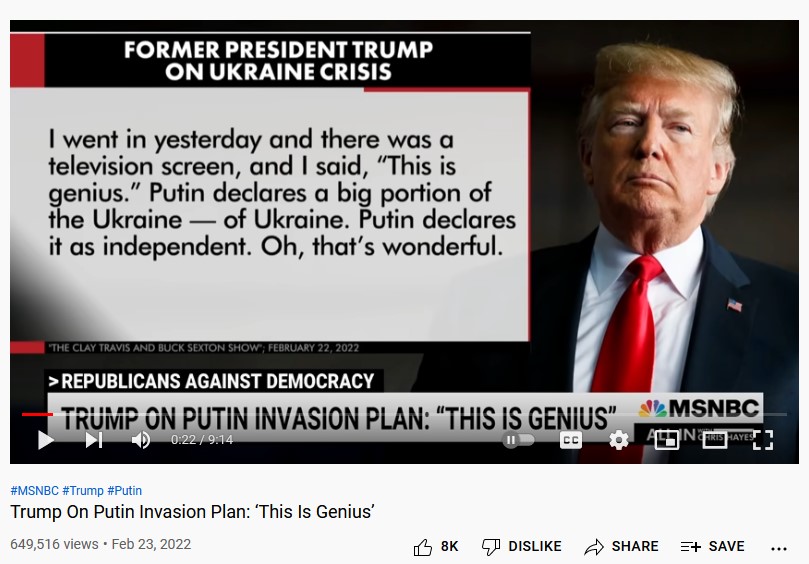
Now, that Putin had recognized Donetsk and Luhansk as independent states, I keep hearing that ‘if NATO hadn’t integrated the former socialist states in the Eastern Europe, Russia wouldn’t have occupied Crimea nor encouraged the ‘freedom fighters’ in Luhansk and Donetsk’.

NATO, and UE, are not perfect. Far from it.
Yet the former USSR had been even less perfect.

What drove me to this conclusion?
Well, both NATO and the EU are thriving. People and countries flock to join in. The very present conflict in and around Ukraine had been sparked by Putin’s ‘unhappiness’ with the Ukrainian people insisting in joining both NATO and the EU.
Meanwhile, the USSR is no longer with us. Had collapsed, under its own weight, some 30 years ago.

The second difference between these supranational entities – NATO and the EU on one side and USSR on the other, is the ‘small’ matter of how a member got to join the club.

In NATO’s case – valid also for the EU, a prospective member state has to ask for it first and then wait to be accepted.
The USSR had been organized under the ‘invitation only’ principle. If you were invited, you had to join. Regardless…

CSI, the Community of ‘Independent’ States, is organized under the same principle!


Btw 1.
Did I mention that the USSR had crumbled under its own weight?
By allowing self serving callous political operators to grab too much power?
Too much power for their own selves as well for their country’s well being?

Could we attribute the demise of the USSR on the fact that the bolsheviks were ‘house broken’ into ‘toeing the line’ while here, in the West, some people still dare to speak up their minds?

Rep. Liz Cheney, R-Wyo., a Trump critic who he is targeting for defeat this fall, responded Tuesday: “Former President Trump’s adulation of Putin today — including calling him a ‘genius’ — aids our enemies. Trump’s interests don’t seem to align with the interests of the United States of America.”

Btw 2.

No home means ‘no sleep’.
No place secure enough for you to let you guard down – no matter how shortly, and relax.
Survival becomes problematic and occupies all your time. And brain power….

An uncomfortable home means ‘no dreams’.
Every waken moment is occupied by ‘how do I get a bigger home’ and whatever sleep you might muster is fitful.
You cannot rest properly so you cannot do much during your active hours. You’ll never reach your full potential so you’ll never be as useful/productive as you could possibly be.

Too big a home means ‘nightmare’.
Difficult to maintain – for your means, impossible to ‘explore’/’exploit’, always afraid somebody would try to steal it from you.
And, above all, too big a home means ‘insulation’ from the real world. You’re so far away from what’s really happening out there that you’re no longer able of proper decision making.
Nightmare.

I wish you a string of very good nights and some pleasant dreams.

Karl Popper had described science as a (virtual) place where things happen like this:

Some guy has an inkling. Studies it and gathers a lot of information on the subject.
Based on that information, develops a hypothesis. Then attempts to prove it.
After being satisfied with how much proof they had found, the hypothesis is declared a theory. And published as such. Along with all pertinent evidence. For all those interested to see.

So that all those interested to be able to replicate the experience.
To be able to retrace the proving process. To certify its validity.

And for all those interested to be able to find any proof to the contrary!
So that, as soon as that proof had been found – and declared acceptable, the theory to be considered false. Or, at least, incomplete.

The first example which comes to my mind being that the simple existence of Einstein’s Relativity had proven that Newton’s Physics was incomplete….

Fast forward to our days.
To our raging Covid-19 pandemic.

When vaccines are already available and where there are people who refuse to be vaccinated.

The vaccine was supposed to protect us.
From becoming infected.
From needing to go to the hospital.
From dying. From ending up suffocating alone…

But people continue be infected. Even after receiving the vaccine.
People continue to be admitted to the hospital.
And people continue to die. Even after receiving the vaccine.

Wouldn’t all these evidence strongly suggest, scientifically speaking, that the vaccine is useless?
‘Useless’, to say the least?

Wouldn’t it be actually rational to frame the situation in these terms?

Well, according to Popper’s reasoning, the first vaccinated individual becoming ill had been ample enough proof of the fact that the vaccine was not 100 % foolproof. That it isn’t fail-proof!
The first vaccinated individual being admitted to the hospital had been ample enough proof that the vaccine is no absolute shield against any of us who has been infected will ever have to go to the hospital.
The first vaccinated person who had died with Covid-19 had been ample enough proof that the vaccine will not protect all of us from dying after becoming infected with this virus.

And the fact that so many of us continue to refuse to be vaccinated is ample proof of the fact that reasonable should trump rational. Yet it still doesn’t….
Of the fact that too many of us continue to consider that their short term/self serving interests are more important than other people’s lives.
And of the fact that too many of us continue to ignore how vaccines work.

The key aspect here being the last!
People continue to ignore how vaccines work simply because of the huge amount of disinformation which is being peddled on the internet right now.
It’s not the ‘refuseniks’ who put their short term/self serving interests in front and above the lives of innocent people!
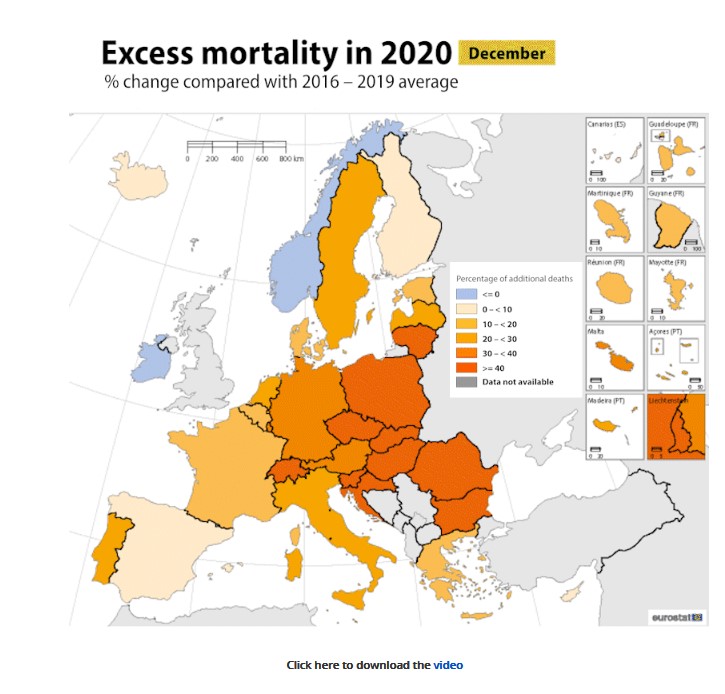
It’s those who have initiated, and continue to drive, the fake-news process who will be eventually determined as having been the root-cause of the excess mortality we’re currently experiencing.

When?
Hopefully, after a reasonable amount of time.
If enough of us start behaving rationally… In a comprehensively rational manner…

In a truly scientific manner!

https://plato.stanford.edu/entries/popper/

Someone asked me a few months ago:
‘These guys who spread misleading information on the internet, whether out of sheer stupidity or out of personal interest, will at some point understand how many people they have killed. Directly or indirectly.
How will they feel? In that moment…’

Until then, none of my vaccinated acquaintances have kicked the bucket.
Nor seen the inside of any hospital… after being infected with Covid.
Among those who have not been vaccinated… the situation is somewhat different… Although the unvaccinated are, among the people I’m personally acquainted to, about 4 times less frequent than the others, 8 of them are missing already. All 8 of them are no longer with us after having been diagnosed with Covid.

I hope you’ll have a ‘light’ conscience when we’ll arrive at the end of this mess.

The title is misleading enough to become an abomination!

What Leschziner said during the interview was:

what we term reality is entirely a construct of our nervous system.”

Guy Leschziner is right.

And the guy who wrote the title is an a$$hole!

In the sense that for that person, ratings – a.k.a. ‘money’ – are far more important than presenting an as accurate as possible version of reality…

Hence the public belief that ‘media are not to be trusted’.

A reality created by the greed with which we, as a cultured species, attempt to transform everything into money…., power…, or any other kind of ‘influence’/relevance we happen to covet….

https://www.theguardian.com/science/2022/feb/06/guy-leschziner-reality-is-entirely-a-construct-of-our-nervous-system

http://perflensburg.se/Berger%20social-construction-of-reality.pdf

Three truths about what ‘science’ means.
First part, We.

According to Heidegger, there are two kinds of truths.

A. A proposition is ‘true’ if what’s being said there is in perfect correspondence with reality.
B. A proposition is ‘true’ if the proposition encompasses everything the ‘communicator’ knows about the subject at hand.

‘OK, you promised us a discourse about science and here you are babbling about truth…’

Impatient as always!
How do you determine whether something being said, a proposition, is in (perfect) correspondence with the reality of the fact described there?

To be able to do that, you need first to determine the reality itself.
You know what’s being said – more about that later, and, if you are to determine whether what’s being said is true, you now need to know the truth itself.
How are you going to do that?
You either know it already or you proceed to determine that particular truth.

I’ll leave aside the ‘already known truth’ and proceed towards the ‘future truth’.

A particular individual has two possible approaches towards finding out a ‘new’ truth. A piece of ‘true’ information which is new for that particular person.
Consult a reliable source or investigate the reality.

‘Consulting a reliable source’ brings us back to square one. How do you determine whether a source is reliable or not….
‘Investigate the reality’… Easier said than done!

How do you do that? How do you investigate the reality in a reliable manner? How do you determine the truth of the matter when ‘things’ are a tad more complicated than touching a stove to determine whether it’s hot or not?

You use the scientific approach?
Start from the scientific data base which already exists on the subject(s) closer to your object of interest then proceed using the proven scientific method of trial and error? Emit a hypothesis, try to prove it, formulate a theory and then challenge your peers to tear apart the results of your investigation?

Results you have chased being convinced from the beginning that you’ll never reach the ‘pinnacle’?
Convinced from the beginning that the ‘absolute truth’ – even about the merest subject, is out of reach?
For us, mere mortals, anyway?

‘But if ‘absolute truth’ is out of reach, then how can we determine whether the simplest proposition is actually true?
And why continue to bother about the whole subject, anyway?!?’

Before attempting to find an answer to your question, let me formulate another one.

Let’s consider that you have reached a conclusion about something. That you are in possession of ‘a truth’. How are you going to share it? With your brethren/peers?
I must remember you at this stage of our discussion that language is beautiful but rather inexact. Are you sure that you’ll be able to communicate everything you want to say? To cover every minute aspect of the truth you have just found?
So that the proposition you are about to put together will be in absolute correspondence with the piece of reality you have just discovered?

You are not going to use language at all?
You’re just going to point to your discovery? And let everybody else to discover the truth for themselves?
And how many are going to take you seriously? To pay attention? To what you have pointed?
And how many are going to suspect that you just want to take their focus off what’s really important? To lead their attention away of what you want to keep under wraps?

I’ve got your head spinning?
Then you must understand my confusion. I’m so deep in this that I have to go back and read again what I’ve been writing…

So.
‘Science’ tells us that the ultimate truth is out of our grasp, linguistics/theory of communication tells us no messenger will ever be able to be absolutely precise nor convey the entire intended meaning … what are we going to do?
Settle down and wait for the end to happen to us?

OK, let me introduce you to an absolute truth.

WE ARE HERE!

Who is here?
‘Us’. We are here.

What are we doing here?
‘Are’. We are here.

Where are we?
‘Here’. We are here!

I’ve been recently reminded that mathematics, the most exact language we have at our disposal, is based on a number of postulates. On a small number of axioms – pieces of truth we consider to be self evident, which have constituted a wide enough foundation for mathematics to become what it is today.
But mathematics is far more than a simple language. It is also a ‘virtual space’. A space where special rules apply. A space where our thoughts move according to certain and specific ‘instructions’. A space where we enter holding our arms around a problem we need to solve and which we exit, if successful, with a solution inside our head.

A little bit of history.
Our ancestors had a problem. A class of problems, actually.
How to build something – a house, a temple, a boat, and how to ‘manage’ property – arable land, in particular, but also crops and other ‘stocks’. Problems easier to formulate, and solve, using numbers.
To solve this class of problems, some of our ancestors have invented ‘mathematics’. Had ‘discovered’ the self evident truths – axioms, and then ‘carved’ an entire (virtual) space using the axioms as the foundation upon which they, and those who have followed in their steps, have built – and continue to build, the scaffolding of rules which keep that space ‘open’.

Through thinking, our ancestors have carved a space in which to solve some problems they have encountered in the ‘real’ world…

‘Please stop!
I don’t understand something.
Do you want to say that mathematics is not real?’

To answer this question, this very good question, we need to settle what ‘real’ means.
To us, at least…

Let’s examine this rock. Is it real?
Why? Because you can feel it? If you close your eyes, I can make it so that you experience the same feeling by touching something else to your stretched out fingers than the original rock. In a few years, I’ll be able to produce the same sensation in your brain by inserting some electrodes in your skull and applying the ‘proper’ amount of electric current. What will ‘reality’ become then?

Forget about that rock, for a moment, and consider this table.

Is it real? Even if it’s not as natural as the rock we were analyzing before?
‘Artificial’ – as in man made, starting from natural ‘resources’, might be a good description of the difference between a table and a ‘simple’ rock. Both ‘real’ in the sense that both imply consequences. Your foot will hurt if you stumble in the dark on either of them. Regardless of the rock being natural and the table happening to be artificial…

‘But what about things which are not of a material nature?
Are they real?’

Are you asking me whether ‘metaphysical’ objects – God, for instance, are real?
Then how about ‘law’. Is it real? As an aside, does law belong also to the metaphysical realm? Alongside God? Who determines which thing belongs there?

Or have you glimpsed the fact that ‘truth’, the concept of truth, is a metaphysical ‘object’?
Something which, like God, has a ‘real’ side but makes no sense (to us) unless we think about it?
Something which we have extracted – someway, somehow, from the surrounding reality – where else from? – then ‘carved’ a virtual space around it? So that we may examine it without the distractions of the rest of the ‘real’ world?

Or have you glimpsed also that even the concept of ‘reality’ is a figment of our self-reflecting conscience?

… to cover up for our goals!

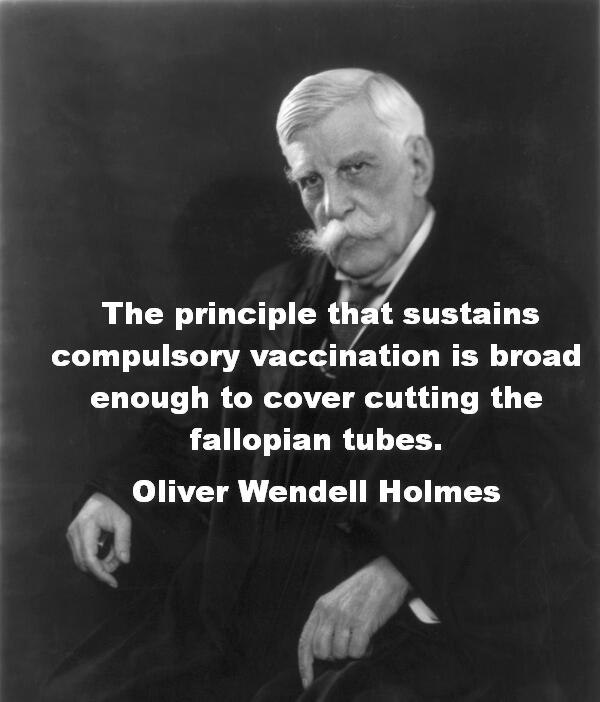
Having no previous intel about this guy, my ‘jerked’ reaction was simple.

‘Leaving aside any principle, a society which cuts ‘fallopian’ tubes will have a lower birth rate while that which vaccinates its children will notice a decrease in healthcare costs. And a lower mortality across the entire age spectrum!’

OK, let’s calm down and google. To find out who was this Oliver Wendell Holmes, after all.

“In that long span of (30) years on the Supreme Court he became acknowledged as one of the most notable jurists of the age—in the opinion of many the foremost. Often he has been called The Great Dissenter because of the brilliance of his dissenting opinions, but the phrase gives a falsely negative emphasis, and his penetration and originality are seen as fully in the opinions in which he expressed or concurred in the majority view of the court as in those in which he was in dissent.”

https://www.britannica.com/biography/Oliver-Wendell-Holmes-Jr

“Perhaps his best-known phrase is from Schenck v. United States, where he introduced the ‘clear-and-present-danger’ test as a means of limiting the power of the state to restrict speech and illustrated it by reference to a person’s ‘falsely shouting fire in a theater.’ His later development of this test, coupled with his emphasis on a basically unregulated ‘marketplace of ideas,’ was seminal for the development of modern free-speech law.
His retirement in 1932 was a national event, and he has remained, along with John Marshall, among the best known of all those who have served on the Supreme Court.”

https://www.history.com/topics/us-government/oliver-wendell-holmes-jr

“Few American jurists are as revered as Oliver Wendell Holmes Jr. A United States Supreme Court justice for close to 30 years, Holmes wrote seminal opinions that were clear and clever and elegantly phrased. It was Holmes who defined the limits of free speech in 1919 by noting that the law did not protect someone “falsely shouting fire in a theater.” And it was Holmes who thoughtfully amended those words a decade later by writing that nothing in the Constitution was more sacred than “the principle of free thought — not free thought for those who agree with us but freedom for the thought that we hate.” By most accounts, Holmes, an upper-crust Bostonian, served the nobler instincts of America’s privileged classes. That is why his reckless majority opinion supporting forced sterilization in a 1927 case remains an enigma. Was it an isolated misstep or something more: an indictment of Justice Holmes and the Progressive movement he appeared to embrace?”

https://www.nytimes.com/2016/03/20/books/review/imbeciles-and-illiberal-reformers.html

“We have seen more than once that the public welfare may call upon the best citizens for their lives. It would be strange if it could not call upon those who already sap the strength of the State for these lesser sacrifices, often not felt to be such by those concerned, in order to prevent our being swamped with incompetence. It is better for all the world if, instead of waiting to execute degenerate offspring for crime or to let them starve for their imbecility, society can prevent those who are manifestly unfit from continuing their kind. The principle that sustains compulsory vaccination is broad enough to cover cutting the Fallopian tubes. Three generations of imbeciles are enough.
.
.
.

Perhaps worst of all, Carrie Buck was not an imbecile. Both she and her mother were deemed “social undesirables” due to a perception of promiscuity which, in Carrie’s case, partially resulted from an illegitimate child who was the product of incestuous rape. This was fairly typical. The linked article describes how “people as young as 10 in North Carolina were sterilized for not getting along with schoolmates, being promiscuous or running afoul of local social workers or doctors.”

In all, more than 60,000 people—including 7,600 in North Carolina—were forcibly sterilized in the United States in the name of “progress.” Progressives of the time lauded the decision in Buck. Individual rights, they firmly believed, should not be allowed to stand in the way of collective progress. Justice Brandeis called Buck an example of properly allowing states the freedom to “meet modern conditions by regulations which a century ago, or even half a century ago, probably would have been rejected as arbitrary and oppressive.””

https://www.cato.org/blog/one-generation-oliver-wendell-holmes-jr-enough

So.
Who was the ‘real’ Oliver Wendell Holmes?
That one whose teachings we choose to put forward, of course! Exactly as Justice Holmes had done himself.
And why is it our responsibility to choose?
Simple. It’s us, and our children, who will bear the consequences. Who will have to live in the environment shaped by those choices.

Cassandra by Evelyn De Morgan (1898, London); Cassandra in front of the burning city of Troy

“Oh God, please make it so that my prophecies won’t come to life!”
“I’m sorry Cassandra, that’s what I made Man for. Now, it’s Their job to heed to your warnings!”

“And the LORD God said, Behold, the man is become as one of us, to know good and evil: and now, lest he put forth his hand, and take also of the tree of life, and eat, and live for ever:
Therefore the LORD God sent him forth from the garden of Eden, to till the ground from whence he was taken.
So he drove out the man; and he placed at the east of the garden of Eden Cherubims, and a flaming sword which turned every way, to keep the way of the tree of life.”

The larger your ‘skull’ is, the more ideas – sometimes conflicting ones, you are able to ‘harbor’.

This guy, a 31 years old father of two, is looking forward for a heart transplant.

Meaning that he, and his family, trust the doctors who are going to perform the surgery.
Who are going to open up his chest, take his failing heart out, sew the ‘re-cycled’ one in and patch him up again.
Doctors who need to hook him up to various machines and to pump him full of chemicals in order to maintain him alive – but unconscious, during the procedure. And who are going to closely monitor him – and, again, administer him a lot of vital drugs, during the rest of his life.

Meanwhile he, and his family, don’t trust the doctors who tell him he needs to get a Covid jab first.

David Ferguson, D.J. father, “said the Covid vaccine goes against his son’s “basic principles, he doesn’t believe in it”.”

“We are literally in a corner right now. This is extremely time sensitive,” the family said in its fundraising appeal, which has raised tens of thousands of dollars. “This is not just a political issue. People need to have a choice!”
D.J.’s mother, Tracey Ferguson, insists that her son isn’t against vaccinations, noting he’s had other immunizations in the past. But the trained nurse said Wednesday that he’s been diagnosed with atrial fibrillation — an irregular and often rapid heart rhythm — and that he has concerns about the side effects of the COVID-19 vaccine.
“D.J. is an informed patient,” Tracey Ferguson said in a brief interview at her home in Mendon, about 30 miles (48 kilometers) southwest of Boston. “He wants to be assured by his doctors that his condition would not be worse or fatal with this COVID vaccine.”

Hospital patient without COVID shot denied heart transplant.

Unvaccinated man denied heart transplant by Boston hospital.