When Mario de Andrade found out that he had but one life, he had set for himself a certain goal. To live his second life in a certain way. In the way he considered worthwhile.
We’re about to find out that we have but one planet.
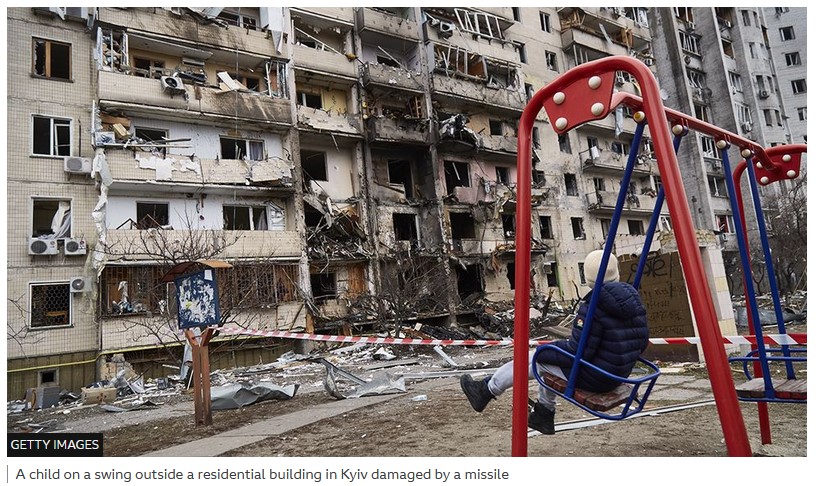
Homo Sapiens Sapiens is a species of cultured animals simultaneously capable to place a highly sophisticated IR telescope on an orbit around their native planet, the Earth, and to reduce a country to a pile of rubble.
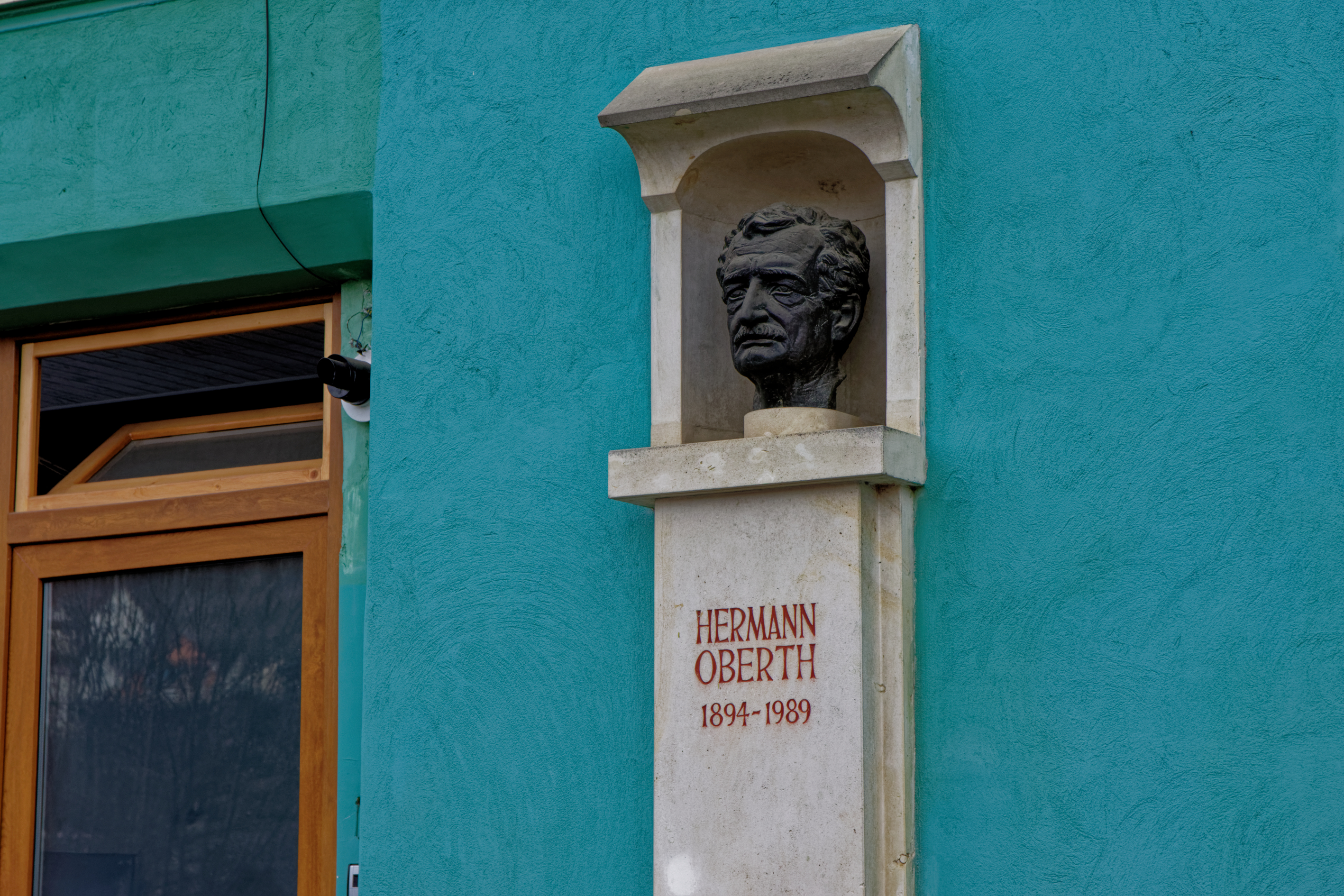
Interestingly enough, the technology used to accomplish both, the rocket, has been imagined a little more than a century ago. By, among others, Herman Oberth.
He had built his first rocket as a school project, when he was 14. About then he also came up with the concept of a multistaged rocket. Lack of resources convinced him to study medicine. After only two years he was drafted into the German Imperial Army to serve during WWI. Initially as a foot soldier and then moved to a medical unit. In that period he found enough “spare time” to conduct experiments which had later enabled him to present “designs of a missile using liquid propellant with a range of 290 km to Hermann von Stein, the Prussian Minister of War.“ During WWII he had worked at Peenemunde, were he was awarded a decoration for bravery during an aerial attack, and then at the German WASAG organization developing solid fueled anti-aircraft rockets.
Between the wars he had contributed to a series of experiments in Germany. For one of which he was helped by an 18 years student. Werner von Braun.
Humans, as a species, have harbored the same ‘amount’ of brain for the last 200 000 years. That was when the Homo Sapiens had arrived. But that brain had produced something only about 70 000 years ago. That’s why the second Sapiens was added, by us, to the name of those living since that time. To underline the fact that humans had become ‘fully’ conscious only ‘recently’. That having a big brain was not enough. That becoming fully human also implied self awareness. Wisdom…
Apparently that’s not enough. After experiencing, first hand, the horrors of WWI such a creative mind as Herman Oberth’s was still capable of building offensive weapons for Hitler. After experiencing, first hand, the horrors of WWII such a creative mind as Herman Oberth’s was still able of joining an extreme right political party…
After experiencing, first hand, the horrors of WWII at the hands of the nazi, the modern day, post communist, Russia is capable of inflicting the same kind of horrors to their close cousins, the Ukrainians.
When are we going to become Sapiens enough to stop this insanity? To concentrate our creativity exclusively towards ‘elevating’ purposes?
Being an agnostic, somewhat simplifies things. For me. At the emotional level, I prefer the second interpretation. At the rational level, I appreciate the effort made by the first interpretation towards finding a logical explanation for the whole thing. Which explanation might actually be true. In the sense that the evangelists, all four of them, might have indeed tried to lessen the Roman responsibility for Christ’s death.
What bothers me is why so many of the readers have accepted the story as plausible? A crowd to send a bandit to freedom and an innocent to death? How likely is this?
But what if the crowd was biased?
Well, not the crowd, since the episode was most likely invented. The individuals who had a message to convey to their readers. To us.
Let’s start with the beginning. The Old Testament. According to this writing, the covenants were made between God and the people of Israel. Which gave the people of Israel a special place. They were His people. The chosen ones. The New Testament changes all this. Jesus died for all of those who accept his sacrifice. The Jews are no longer the only chosen ones.
The way I see it, the ordinary Jews have no problem with this. I have no knowledge of Jews discriminating against Christians. Except for the claims made by the anti-Semites… I’m not so sure though about the likes of Caiaphas… “a member of the council when he gave his opinion that Jesus should be put to death “for the people, and that the whole nation perish not”“ After all, Caiaphas – and all those in the same position, were the only ones who had anything to lose as a consequence of Jesus’s teachings. As a consequence of all people, not only those who followed the likes of Caiaphas, being able to consider themselves as being children of the same God. Only the likes of Caiaphas had anything to lose from all followers of Christ considering themselves equal among themselves.
Not at all different from what had happened after Luther had nailed his famous theses to the door of the Wittenberg church. The established hierarchy felt it’s throne was becoming wobbly and reacted forcefully…
What if the real meaning of the whole Barrabas story is for us, the readers of the Gospels, to be extra careful when we evaluate the ‘recommendations’ given to us by the ‘authorities’ of the moment? Specially when those ‘authorities’ are about to loose their clout…
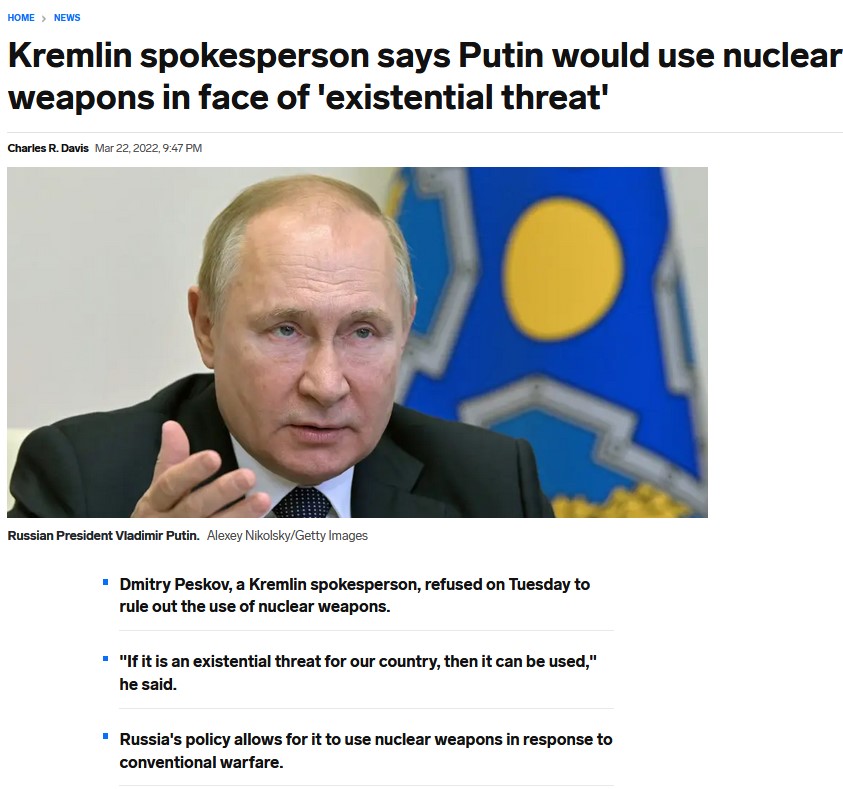
No, Putin’s henchmen executing a nuclear attack isn’t the worst case scenario.
This is.
People around the world asking themselves ‘how is it possible for an army belonging to a civilized country – one currently holding the right to veto any UN Security Council decision, might behave in such a horrible manner’?!? How is it possible for a civilized people, the Russian people, to allow something like this to happen?
After the Cold War had been lost by the Soviet Union, the world over was under the impression that the liberal-democratic and capitalist model had ‘won’. That nobody could any longer advocate for an alternative. Nine years later, Russia was on the verge of collapse. After following – ineptly, the capitalist mantra – greed is good, the Russian people was almost dying of hunger. That’s how the Russians had fallen under Putin’s spell. He had turned around the Russian economy and earned the gratitude of the ordinary Russian people.
But he had done nothing but reigning in Yeltsin’s oligarchs… and got filthy rich in the process!
Yes, but the ordinary Russians had enjoyed, for some 15 years, a life they had never thought possible. A life of relative abundance. At a relatively low cost. At a cost they were already accustomed with.
The Russian people has been been accustomed, since always, to keep its mouth shut. That’s so deeply ingrained into their minds that most of them never even dream of speaking up….
OK, OK… but what is the link between your ‘worst case scenario’ and the Russian people being unable to ‘speak up’?!?
Putin is able to do what he is currently doing because nobody is challenging his decisions. Nobody inside Russia…
Because nobody inside Russia is challenging his decisions – and a ‘handful’ of ‘dimwits’ actually executes those decisions, the rest of the world is under the impression that the Russian people is OK with what’s going on in Ukraine.
And who are you to tell us that ‘regular Ivan’ would challenge Putin’s decisions if he had any opportunity?!?
I didn’t say that! If you are under that impression, I’m afraid I haven’t made my point yet.
You see, what we really need to do is to ‘fold’ the Russian people into our ‘Weltanschauung’. To welcome them into our social and cultural space.
The current war will end. One way or another. Putin will die. Sooner or later. But until the Russian people will learn that with us is far better that against us… we – all of us, will live on a ‘tight-rope’.
My impression, watching the horrors committed by the Russian army, is that those horrors have been ordered by Putin for one reason. And one reason only.
To convince us, the rest of the world, that the Russian people is nothing but a bunch of savages. That they deserve no compassion.
That their leader – Putin, must be offered an easy way out – at the expense of the Ukrainians, and that the Russian people must be left to rot at his disposal. That the Russian people deserves nothing. Nothing but to be left at the mercy of their ruthless and mind-twisting sheep-master.
That is the worst case scenario. Us accepting that another people, any people, is worthless.
Putin’s followers – Le Pen and Orban being but the most obvious examples, are eagerly waiting for that to happen.
What if there are only individual reasons for each of the experiences each of us passes through?
Many of those reasons belonging to the ‘experimenters’ themselves and all reasons – even if the individuals who provide the actual causes are not aware of all the consequences, belong to us. To us, humans.
I have no way of determining whether there is any ‘supreme being’ but what I understand of this world has led me to the conclusion that this ‘aspect’ is irrelevant. For us. For those of us who are currently alive.
That supreme being, if it exists, has done nothing more than to provide a set of opportunities. The world in which our ancestors – some 1500 generations ago, have become conscious human beings. The rest is of our own doing.
Influenced a lot by the specific circumstances in which each culture has been developed – by those having to make do in those specific circumstances, but still ultimately ours.
This ‘conclusion’ is the sole solution I had been able to come up with to the conundrum which opposes the notions of ‘free will’ and karma/fate/you name it.
Putin advisers ‘too afraid to tell him the truth’ on Ukraine: US official “Putin didn’t even know his military was using and losing conscripts in Ukraine, showing a clear breakdown in the flow of accurate information to the Russian president,” the official said.
There are two ‘things’ which collide here.
Dictators tend to drive away really competent people and those remaining tend to put the entire blame on the ‘guy on top’.
As many of you already know, I grew up in the communist Romania. Ruled by Nicolae Ceausescu, the dictator who ended up being shot on Christmas Day, 1989.
At 28, I was already familiar with the notion of ‘yes-people’. Decision makers who ruled our daily lives were surrounded by people who provided the ‘right’ answers, effectively isolating the decision makers from the reality. This ‘development’ being the fundamental explanation for how all dictatorial regimes, including the communist ones, ended up in abject failure. For ‘how’, not for ‘why’ – but this is another issue.
After Ceausescu was toppled, I was absolutely flabbergasted when I first heard
‘He didn’t know what was going on. Had his close advisers kept him in touch with the real situation, he would have taken the proper decisions to rectify things’
Really?!?
Who had selected his ‘close advisers’?!?
Who prevented him from asking ‘a second opinion’? From stepping out of his office and ….
Who, step by step, had ‘created’ the ‘atmosphere’ which had driven all those unwilling to lick where ‘he’ had spat to flee, living ‘him’ surrounded by sycophants?
Sycophants attempting, after Ceausescu had been toppled, to pile all the blame on his shoulders…
I’m afraid we are witnessing a replay, with Putin as the lead character.
When I was six, my father took me to a German kinder-garden.
He was learning German, at 35, and thought I should start earlier. In the end, I didn’t exactly learn the language but during the process I met a lot of nice German speaking people.
At 16 I read
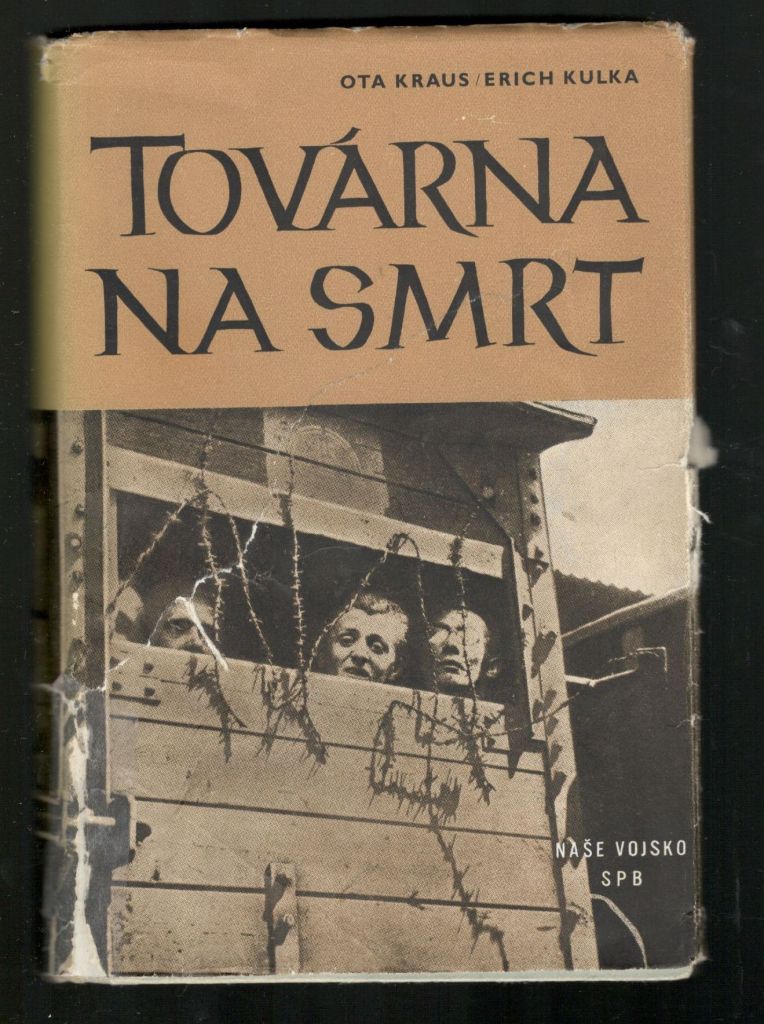
The Death Factory, a book about the Auschwitz concentration camp
Well, actually it was translated in Romanian but the original cover is far more suggestive for non-Romanians.
That was when I learned to distinguish between a people as a whole and the atrocities committed by a minority.
As I grew up, under communist rule, I noticed the ‘little compromises’ my parents had to make in order to provide a better life for me. The small bribes offered whenever ‘necessary’, not speaking up their minds in ‘official settings’, allowing stupid, but powerful, individuals to boss them around… As a young adult, I understood how those small compromises, made by almost all of us, added up and eventually caused the entire regime to collapse. Eaten up, from inside, by institutionalized corruption.
As a no longer young adult, after the regime change, I noticed that ‘compromise’ was so entrenched in our habit that it had been carried over into the new regime. As if the new found liberty had been interpreted as the freedom to accept ‘un-earned benefits’ from whoever offered them. In exchange for things which were not ours to give… The same was happening in other ex-communist countries. The closer to Moscow, the more intense the phenomenon.
That was when I learned to dissociate corruption from any particular political regimen.
Soon after that I learned the international dimension of the whole thing.
That was when I learned that democracy alone is not enough to cure corruption. That democracy can also be eaten from the inside by this worm. If ‘the people’ do not pay enough attention!
This morning, on top of the already ‘normal’ news from the Ukrainian front, I learned that
That was when I understood that ‘what goes around, comes around’ is driven by our bad choices. By our unwillingness to make good what we have already learned from past mistakes.
Should have learned from past mistakes…
Really guys? The Red Army had spilled its blood to free the people herded to be killed at Auschwitz and a survivor from Auschwitz is killed by a Russian bomb attempting to ‘denazify’ Ukraine?!? Which Ukraine wanted nothing but to join the EU and NATO? But couldn’t! Crimea was occupied while Donetsk and Luhansk have rebelled against the central government… and NATO – like all other clear headed alliances do not admit new members which are already involved in ‘border disputes’.
So. Putin, spooked by a NATO who doesn’t dare to violate the ‘founding act’ – not even after Russia had occupied Crimea, orders the Russian Army to demilitarize and denazify a country whose independence and integrity was guaranteed by the Budapest Memorandum.
And, caught in the middle, a man whose life had been saved – some 75 years ago, by the Red Army ends up being killed by the Russian one…
Simply because we didn’t pay attention. And allowed what went around to come back!
Boris Romantschenko of Ukraine, along with five other former prisoners, renews the oath of Buchenwald, from April 19, 1945, at the Buchenwald Concentration Camp Memorial, in Weimar, Germany, April 12, 2015. Picture taken April 12, 2015. Michael Reichel – Buchenwald and Mittelbau-Dora Memorials Foundation/Handout via REUTERS/File Photo
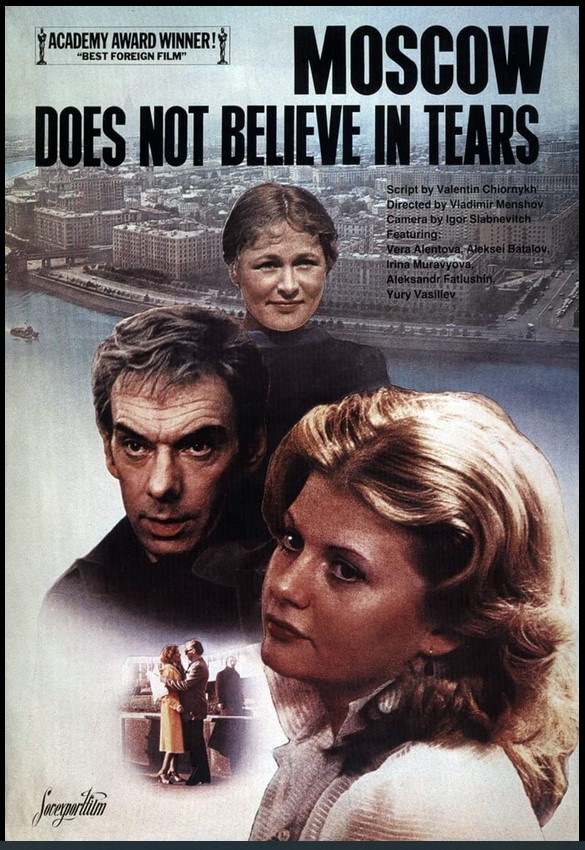
Russian films were ‘readily’ available. Some of them were good. Really good.
Besides going to the movies, I was an avid reader. I must confess that the ‘great Russian classics’ didn’t impress me. No special reason. But I did read a lot of Russian literature. About the partizans fighting the Nazis during WWII, about the communists fighting for freedom – for their version of freedom, in the early ‘920-ies, some Sci-Fi novels about the happy lives the Russians were going to live in the next millennium.
This morning I was listening to the radio. The news bulletin was, of course, about what’s going on in Ukraine.
A refugee, a woman who had fled accompanied by her young daughter – her husband and her son remained at home to fight, was speaking in her native language. I know that Ukrainian is different from Russian. But for my ears they sound very much the same.
Imagine what I felt.
I grew up associating the Russian language with the struggle for freedom. With the promise of a better world.
As I learned things… my understanding of history had become more ‘nuanced’. The Soviet Union had collapsed after Afghanistan. The regime finally got what was coming to it. As Putin crushed Chechnya, killed Litvinenko, ‘peacefully’ occupied Crimea … things were no longer ‘nuanced’…
But this!
They say that an image is worth a thousand words… I’m no longer sure about that!
There is so much violence paraded in front of our yes that our ‘retina’ has become calloused.
Hearing that brave woman trying to convey her tragedy in a language I associated in my childhood with the promise of liberty really did it for me.
This time the oppressor itself was speaking Russian. Russian soldiers were doing the very same thing the Russian people had experienced during the WWII. And they were doing it to their ‘brothers’.
Russian soldiers were turning Kyiv into rubble! Kyiv, the birth place of the Rus-ian people…
All this conveyed in a language which, for me, sounds very much the same as the language I had associated in my childhood with the quest for freedom.
I wept.
Hoping the Kremlin will learn to understand tears. Maybe not the present ruler but at least the stony walls…
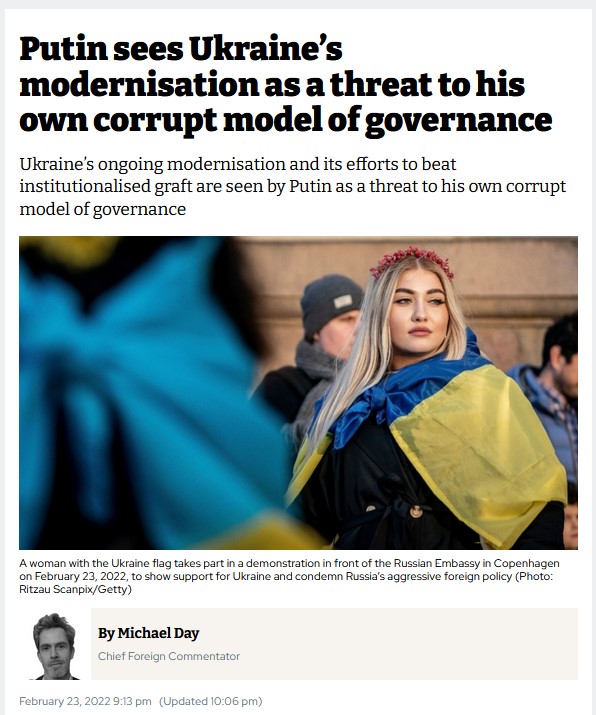
Nothing special inside but it illustrates well enough the point I’m trying to make.
At first, Putin’s words are summarized and then proven ‘wrong’. Misleading. Or plain false. In the next section of the article, the author – Paul Kirby, like many more before him, attempts to divine what Putin will do. Starting from the same words which have just been proven false and/or misleading.
?!?
No, the author is not ‘dense’. He simply does what he was trained to do.
We, here in the land of democracy, understand language as a medium for negotiation. And negotiation as an exchange where we let our needs be known, in earnest. As an exchange where we ‘trade’ information with the goal of finding the best mutually acceptable solution for whatever problem we attempt to solve. In this sense, a negotiation is a form of cooperation. And compromise is something which both sides find beneficial.
For people conversant in ‘dictatorian’, ‘compromise’ is something to be shoved down the throat of the weaker side. The bigger the power differential, the harder to swallow becomes the ‘compromise’.
Doesn’t make much sense? To us, democrats? Because we know that shoving things down the throat of now weaker people doesn’t work on the longer time frame?
‘Assuming’ is the worst thing a negotiator may make.
We keep assuming that dictators are rational. Even worse, that they follow the same ‘ratio’ as we do. That we – as in we and them, see the same world and have ‘slightly’ different goals. And express those different goals in the same manner. Using the same kind of language.
We are wrong.
We, the democratically minded, are trained – conditioned is a truer word, to consider ‘the other’ as being equivalent to us. At least some of the others, but that’s another discussion. We actually ‘know’, in our bones, that we cannot ‘do’ anything by ourselves. That we exist only in cooperation with those around us. That everything we have ever accomplished was the result of a common effort.
People conditioned in dictatorial regimes see things rather differently. They don’t cooperate, they just obey. Their existence does not stem from the common effort but from following orders. Language is not at all a medium where information is being passed between equivalent agents but a two way conduit. Orders are flowing from top to bottom and acknowledgments crawl from bottom to the top.
‘And what about ‘information’?!? How does it travel among those people?’
Piecemeal. Exclusively on a ‘need to know’ basis. Nobody ‘volunteers’ any information unless expressly asked about it by a superior.
This is why dictatorships end up crumbling under their own weight.
That’s why we don’t understand, for real, what Putin attempts to communicate. That’s why he is extremely annoyed right know.
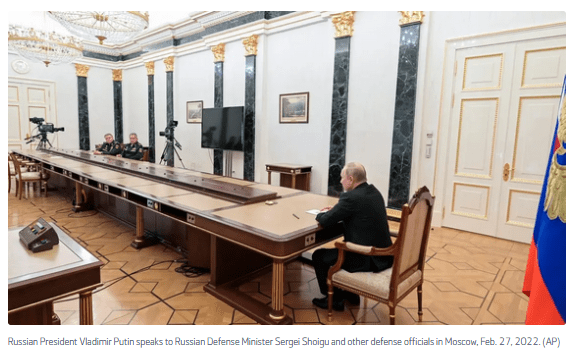
Putin no longer understands what’s going on. Let aside the fact that nobody around him dares to volunteer any information – which would be contrary to what Putin wants to hear. My point being that Putin had been accustomed to having his way.
I’m not going to enumerate all the things he had done. Things we should have reacted against… As in ‘reacted’, not meowed meekly. As a consequence, he had grown accustomed to shoving things down our throats…
Suddenly, we have stopped swallowing! Without giving him a ‘reasonable’ reason… A reason he could understand!
Do you remember what I’ve told you? A few moments ago? That dictators don’t care about those who are weaker? Nor about the long term consequences of their decisions? That dictators are concerned exclusively with their own survival?













 nicichiarasa