Archives for category: cooperation

We are constantly being told that we’re living in the best possible world.

I agree with that.
Of course it’s the best possible one… specially since there’s no other!

On this side of the Styx, anyway…

Let’s get real now.

This is the Century when we’ve managed to open up all corners of our round Planet. We’ve ‘conquered’ the most remote and inhospitable places – both poles, all mountain tops and most of the ocean floor, including that beneath the Arctic Ice Sheet, and, way more important, made most of the Earth solid surface accessible for almost everybody. By car, by train, by plane, by bike, by ferry …
We’ve managed to populate all the ‘cubicles’ designed by Mendeleev and we found uses for most of them.
We’ve managed to identify a vast array of natural resources. We’ve developed matching technologies to exploit each of them, to transform and combine them into what we thought it would fit our fancies and to distribute the results to whomever wished to receive them.
We’ve continued to develop already invented means of communication and we transformed them into something totally different. Practically, we’ve restored the world to it’s ‘Golden Age’. We now live in the Global Village.

Which is not that much different from the old one…

Now, with the world watching Aleppo burn, Daraya fall, and Idlib and other Syrian cities suffer so brutally, Pope Francis’s description of Syria as “abandoned and beloved” rings chillingly accurate. After Bosnia, I was sure the international community would never again stand by and watch in silence as hundreds of thousands of people were bombed relentlessly, starved, beaten, traumatized, and denied the most basic human rights, including education and medical facilities. During the height of the worst years in Sarajevo, from 1992 to 1994, you could chart the ebb and flow of the city’s hope, like the steady flow of the Mijacka River, whose shelled bridges we had to run across to avoid getting hit by snipers. Food supplies ran out; soldiers were getting slaughtered on the fronts; the hospitals’ generators went down.

Janine Di Giovanni, From Sarajevo to Aleppo, Lessons on Surviving a Siege,
The Atlantic, October 12, 2016

What happened with “only a fool learns from his own mistakes, the wise man learns from the mistakes of others“?

OK, back to square one…

1918 had seen the end of the First World War.
Which was the first ‘mixed’ war and the one which should have been the last…

‘The last’ part is obvious, let me elaborate on ‘the first mixed’ one.

Basically, people are both lazy and easily frightened. Their natural tendency is to ‘give in’, a.k.a. ‘trade in’ rather than ‘fight for it’ ‘to the ultimate consequence’.
Which actually makes a lot of sense. Just imagine what would have happened if we were just a tad more combative than we used to…

Need a clue? Click on the picture below.

sex bonobos chimps

Welcome back.

The proposition “Laziness and congeniality is our default mode (mood?)” is valid but from a ‘statistical point of view’.
On a ‘case by case approach’, the manner in which each of us reacts in specific circumstances depends both on those circumstances and on our own interpretation of what’s going on. In fact, it’s our individual consciousness which makes things even more complicated than the situation described in the video above.

During most of our history, human social arrangements have closely resembled those of the chimpanzees. Alpha males have somehow managed to climb to the top of the food chain while the ‘laziness’ of the rest kicked in and allowed the alpha males to do more or less what they pleased.
Which had included a lot of unwarranted aggression.

Up to WWI, most wars had been started by aggressive rulers who had somehow convinced their followers to attack one or more of the neighbors. Which neighbors were also organized more or less like a chimpanzee troupe – ‘lazy and congenial people’ ruled by which ever alpha male was aggressive/cunning enough to remain in power.
These social arrangements had a very interesting consequence.
All conflict was between rulers and all wars were ‘turf wars’.
The belligerents were not attempting to out-kill each-other but to establish hierarchies. More prosaically, war was nothing but ‘protection racket’. The loser had to pay a certain amount of money to the winner – ‘war reparations’, surrender a piece of the ‘turf’ or both at the same time.

In time – due to particular circumstances, some of what are currently known as ‘nations’ have learned that ‘chimpanzee social order’ leads to unnecessary suffering and have (re)invented an alternative. A.k.a. democracy.

WW1 was the first major war which pitted authoritarian regimes against democratic ones.
Yes, humankind had already witnessed some wars which had been started by more or less democratically run countries – the British Empire had attacked the Boer Republics in South Africa, for example, only this is but a blog post, not a 500 page dissertation…
Unfortunately, the democracies which had won the WWI had behaved totally inappropriately… with dire consequences. For them, as well as for the rest of the world.

The Treaty of Versailles imposed a huge amount of war reparations upon the main loser. Germany.
Two consequences have arisen from here.

The obvious one was WWII. And almost nobody disputes this.
The less obvious one was that those war reparations had transformed war itself.

A democratically run coalition imposing war reparations upon a defeated and leaderless/dispirited population had transformed war from a dispute between rulers into a dispute between nations.

This was the ‘accelerant’ used by Hitler to start the second funeral pyre which had engulfed Europe…

Democratically run nations behaving inconsiderately towards other nations also established an immensely dangerous precedent.

The first example of which had occurred less than 20 years later in Spain.
 

What we call reality exists.
Regardless of us being able to faithfully express whatever we know about it.
Regardless of how much of what we know we are willing to share with others.
Regardless of some of us using their knowledge to impose themselves upon the less knowledgeable.

The irrefutable proof about reality being a fact is not that we have chosen to call it so. Or even to call it at all.

The irrefutable proof that reality is factual is, duh, another fact.
That nobody, no matter how knowledgeable, powerful or both at the same time, has ever been able to impose their will upon the said reality for any significant length of time.

No dictator has ever been able to consistently subdue a people. To kill it, yes. To consistently subdue it, NO. Lately, most of them have also lost an erstwhile relatively common ability… that of bequeathing their power to their intended successor.
No scientist has ever been able to pretend they really knew what they were talking about. No genuine scientist, that is… That they have a clue… yes. Of course!
A fair understanding of what’s going on… that is increasingly plausible.

That at least one of the above possesses the ultimate knowledge/power about even the minutest portion of reality…

According to Protagoras, we are here for but one reason. To determine whether anything which happens around us makes any sense.
Mind you, we are not supposed to knit fancy stories and to skillfully include in them everything we perceive! A.k.a ‘narratives’.
Just ‘measure’ things and call them out for what we think they are.

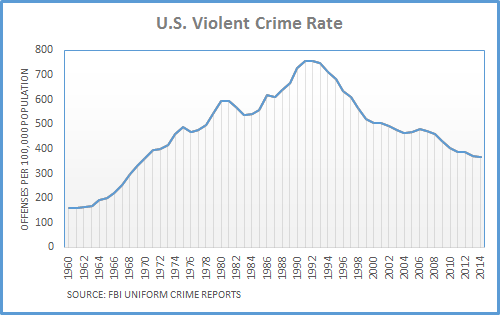
I’m going to enumerate a series of facts and let you figure them out.

“A well regulated Militia, being necessary to the security of a free State, the right of the people to keep and bear Arms, shall not be infringed.”

Violent-Crime-Rate-Chart1

Murder-Rate-Chart


guns in circulation per household

So, if people are less likely to be killed, in any manner, why a shrinking number of them buy an increasing number of guns?

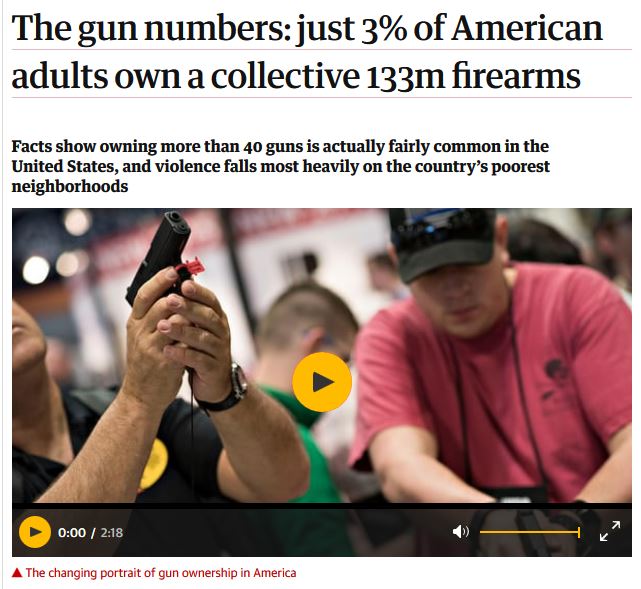
3% gun owners

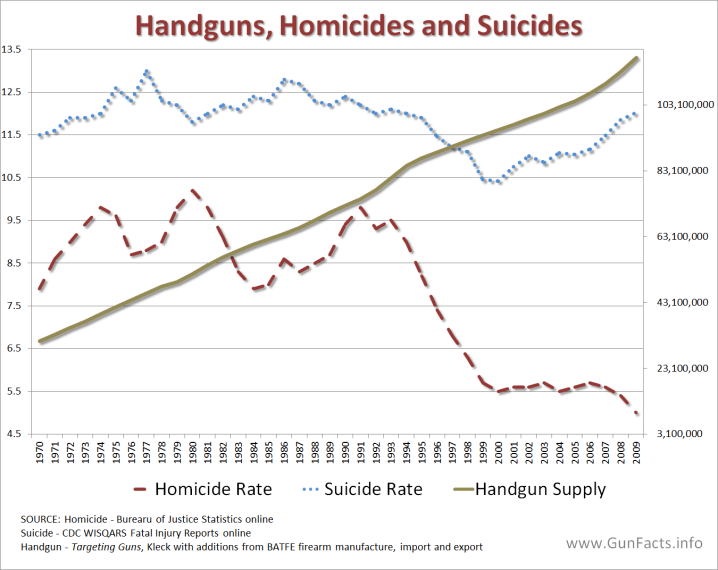
AVAILABILITY-OF-GUNS-Handgun-Supply-and-Homicies-Suicide-Rates

suicide versus mass shootings


murders by type of gun

Then why are people so focused on ‘assault rifles’? Only because they tend to be used in mass murders? Is this a good enough reason to try to remove them from the eco-system?
And why is there so little fuss about the huge number of suicides?
Bzw, can ‘mass murders’ be considered a form of suicide? After all, very few of the perpetrators ever managed to leave the scene… And even fewer have never been identified.

number_of_nfa_firearms_processed_by_fy

According to the ATF, people in the USA buy an ever increasing number of guns each year yet since 2012 (Sandy Hook) Cerberus Capital Management has not been able to find a buyer for Remington Outdoor – the weapons manufacturer who produces, among other ‘things’, “the most popular version of the “modern sporting rifle” sold in the US.
People in the US are interested to invest in weapons per se but not in weapons manufacturers?

Considering that, according to Bloomberg, Cerberus Capital had eventually handed over Remington Outdoor to “Wall Street Creditors”…

Blackstone Group, which offers asset management services, has been reducing its weapons exposure for years. This weekend, it verified that no gun investments remained in its portfolios, according to the Wall Street Journal. The investment giant BlackRock Inc. said it, too, was exploring ways to cull gun companies from the portfolios of clients who no longer wish to invest in them.

Some of us loose our patience when in close contact with age related ‘peculiar behaviors’.

There are a few ‘real’ facts about this phenomenon and I’m going to list them before letting you in on what I feel about this whole thing.

We live way longer than our parents and grand parents. Statistically, of course.
Which means that everybody gets a fair chance at reaching well into their 80-ies, something which was ‘available’ only to those smart enough to navigate around the perils of life, rich enough to hover over them or both at the same time.
Most of the run-of-the-mill-s and the outright dumb-asses used to die long before that.

Brain is both an organ and a muscle. Like any other organ, it deteriorates with age. Like any other muscle, if trained properly, it keeps for longer.

People are lazy. Most of them don’t like to compete on their own. And, even more importantly, most of them stop training after reaching the top. Even a relative one.

Simplistically, one could say age is an opportunity each of us has to demonstrate their true nature.
Both the quality of our ‘natural endowment’ and how well each of us has treated/trained theirs.

A more comprehensive approach suggests that age might be something a little more complicated than that.

The present is a combination between whatever resources were at the disposal of our ancestors and the accumulated ‘consequences’ of our ancestors living in those conditions. Basically, a combination between nature and human decision making.

We live today in the world we inherited from our parents and our children will live in the world we’ll bequest upon them.

Yep, only living longer also means having to retire at some point.
It means having to give up calling the shots.

And this is the real litmus test.
How one behaves after they realize they can no longer call the shots but are not yet ready to die and how one behaves after being called to call the shots yet still having to care for the former ‘bosses’.

This is when people have to face the consequences of how they trained their brains during their life times.
This is the moment when people meet the real results of how they had interacted. Among themselves and with their children.
This is the moment when people meet the consequences of their former choices.

And, also, this is the moment when the children have the opportunity to prove themselves.

In a nutshell, one may say that humankind is like wine.
Both depend very much on terroir, are the results of collective efforts and age demonstrates their true nature.

Or, one could say that age is more of a social disease than a mental illness.

Remember Midas, the character who, after being granted a wish by a grateful Dionysus, “asked that everything he touched would turn into gold“?
And who was happy as a pig in mud after his wish was fulfilled … only to find out that he was going to die of hunger since everything he touched did turn into gold? Including his beloved daughter who had enthusiastically embraced her father upon his return from the fateful meeting with Dionysus?

Under the Violent Crime Control and Law Enforcement Act of 1994, the “Three Strikes” statute provides for mandatory life imprisonment if a convicted felon: (1) has been convicted in federal court of a “serious violent felony”; and (2) has two or more previous convictions in federal or state courts, at least one of which is a “serious violent felony” (the other offense may be a serious drug offense). The sentencing enhancements in this law can have a significant impact on a criminal defendant.

Now wait a minute! What has this got to do with anything?

Well, more than two and a half millennia after Midas had driven himself into a tight corner we continue to ignore his lesson. As a species…

And the key words here are ‘continue to’.

The axe.

Very soon after our flint knapping ancestors discovered that a shaped stone is very useful at chopping wood they tied it to a shaft and started bashing the heads of their neighbors with it.

stone axe

‘Corrupting’ tools into offensive weapons, strike one.


Articulated language.

Soon after learning to fight our fellow humans, we started to speak to each-other.
It might have started while hunters tried to coordinate their efforts or when strangers tried to barter things… Does it really matter?
For me, it’s enough that very soon after we learned to speak we were masters in the art of lying.

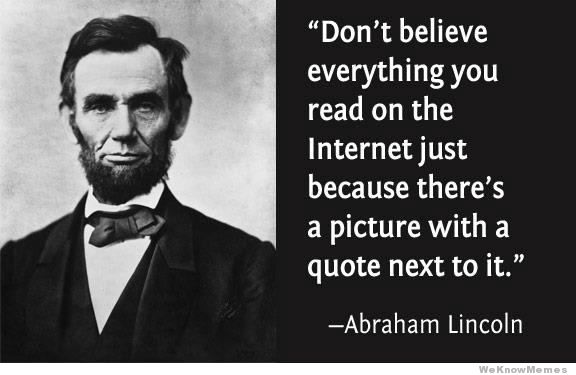
internet lies lincoln

Corrupting words into lies, strike two

Money.

At some point in our more recent history, we discovered that it was easier for each of us to learn a particular skill and to exchange goods among rather than each of us providing for all his (family’s) needs. Eventually we invented money and replaced barter with proper trading.
Soon after, some of us forgot that money was meant to facilitate trade and started to hoard it.

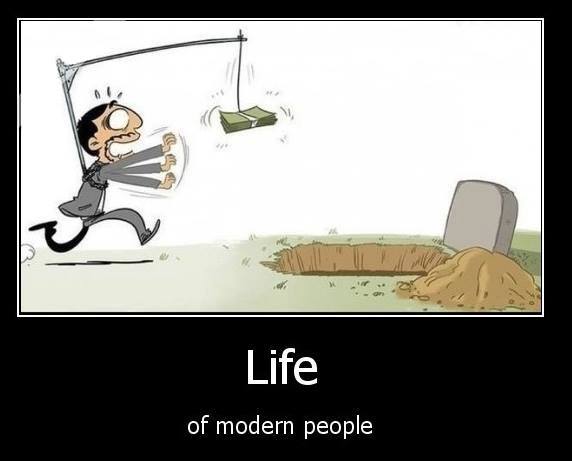
follow the money

Elevating money to stardom against all historical advice, strike three.


Are you wondering whether I’ve lost it entirely?
Neah… just came home from the movies…

All the money in the world

Since the movie ended on the bright(-ish) side, I’m going to remind you that Midas also found a way out of his predicament.
The ‘golden’ King begged Dionysus to lift the cursed blessing bestowed upon his head, was instructed to wash his hands and everything else he wanted turned back to its original state in the Pactolus River – in present day Turkey, and presto, everything was fine again.

There’s only one small problem left.
Where are we going to wash our hands…. or should we cleanse our minds first?

Hopefully, before experiencing the hunger pangs which had driven Midas to wisdom…


The early believers were convinced that God’s ‘real’ name could not be uttered by their ‘mortal’ lips.

Their logic was simple. Using a single word to ‘differentiate’ something from everything else is somewhat arrogant. It implies that the ‘god-father’ knows all that there is to be known about that something – or at least enough to give credence to that naming.

As faith became stronger, so did the self confidence of those involved in the process.
When writing about their beliefs, some of them circumvented the initial shyness by using multiple names to describe the object of their adoration – hoping that in this manner they’ll get close enough to the real thing.
“To begin with, God is referred to by a number of names in the Bible—not just a single name. By some counts there are more than 20 different names for God mentioned in the Bible. And each of these names has great significance. Each one tells us something important about God—His character and how He relates to us.”
Others still stick to the ‘no name’ policy, refer to their God using a title, Allah – the ‘One and Only Who Deserves to Be Worshiped’ – instead of a ‘proper’ (?!?) name, and use a number of attributes to describe him. Such a large number of attributes as to make it evidently clear that stringing attributes is in no way enough to ‘exhaust’ the inner nature of any god. Of anything, really.
“”If We had sent down this Quran upon a mountain, you would have seen it humble itself and shatter out of fear of God.  Such are the parables which We put forward to mankind that they may reflect. He is Allah, there is no deity but He.  He is the Knower of the unseen and the seen.  He is ar-Rahman (Most Compassionate), ar-Raheem (Most Merciful).  He is Allah besides Whom there is no deity.  He is al-Malik (Sovereign), al-Quddus (Most Pure), as-Salaam (Giver of peace), al-Mumin (Giver of security), al-Muhaiman (Vigilant), al-Aziz (Migthy), al-Jabbar (Overpowering), al-Mutakabbir (Glorious).  He is pure from whatever they ascribe to Him.  He is Allah, al-Khaliq (Creator), al-Bari (Perfect Maker), al-Musawwir (Fashioner); to Him belong the most beautiful names.  Whatever is in the heavens and the earth glorifies Him.  He is al-Aziz (Mighty), al-Hakeem (Wise).” (Quran 59:21-24)”

After writing for long enough about their beliefs, the worshipers had become emboldened enough to transform their convictions into precepts. To be not only followed by the believers themselves but also imposed upon others.

And this is how various groups of people have traveled from “The Truth Shall Make You Free” to defining heresy as being the most heinous crime… so heinous that the congregations felt the need to punish it in the most eloquent manner.
Does it seem logical that heretics were burned alive, with their mental faculties intact, to give them one last chance to repent before being sent into the “eternal fire”? Could it be that burning an individual at the stake was seen as a merciful death, as a means of giving that person one last chance to save his or her soul before final damnation??? I have read that “burning at the stake was believed by some medieval authorities and scholars to liberate the sinner from his or her formerly damned state and offer some hope of salvation to the now ‘cleansed’ soul”.

After some of us have somehow survived that era, a few parts of the world have become ‘the lands of the free’.
The countries where a majority of the inhabitants believe that “your right to swing your arm leaves off where my right not to have my nose struck begins.”

It’s here that things get really interesting.

The quote defining freedom as stemming from the relation between your fist and my nose logically leads us to observe that those who define liberty in this manner are a bunch of tired, and maybe wised up, fist-fighters.
Who have finally reached the understanding that it’s better to negotiate it rather than fight over it.

‘Negotiate? What is here to be negotiated?’
‘The distance between our noses? How close am I allowed to bring mine to yours before you becoming allowed to defend your intimacy?
After all, if my nose is so far away that you’ll never be able to touch it, this particular definition of liberty ceases to make any sense while if you’re never allowed to punch mine then I’ll be able to use it to crowd you out of your own life.
And vice-versa.
Capisci?’

Which points out the cruel reality that we cannot negotiate everything.

To start any negotiation we must first have something in common.
A common language would be fine indeed but I have something else in mind.
Both sides involved in any negotiation need to share the same attitude.

This is the hardest thing to convey.
To convince the other side that you’re going to keep your end of the bargain.
Only after both sides have reached this ‘belief’, they will feel free enough to discuss the real issues.
This is where ‘religion’ comes in handy. It teaches us that all people are to be treated equally – all of them have been molded in a single cast, and that they share a spark from the same divine fire.
God created mankind in his own image, in the image of God he created them“.

“I am astonished that you are so quickly deserting the one who called you to live in the grace of Christ and are turning to a different gospel, which is really no gospel at all. Evidently some people are throwing you into confusion and are trying to pervert the gospel of Christ. But even if we or an angel from heaven should preach a gospel other than the one we preached to you, let them be under God’s curse! As we have already said, so now I say again: If anybody is preaching to you a gospel other than what you accepted, let them be under God’s curse!

Am I now trying to win the approval of human beings, or of God? Or am I trying to please people? If I were still trying to please people, I would not be a servant of Christ.” (Galatians, 1:6-10)

 Which brings us back to the original question.

Is any liberty possible, outside the one we continuously build ourselves, through constant negotiation?
Is any bona-fide negotiation possible without a healthy dose of mutual respect among all those involved in it?
Why do we, grown-ups, still need our father to constantly remind us to stop bickering?

a-mans-ethical-behavior


(http://www.bibleinfo.com/en/questions/names-of-god)

https://www.islamreligion.com/articles/10827/chapter-59-verses-21-24/

http://biblelight.net/burn-heretics.htm

https://quoteinvestigator.com/2011/10/15/liberty-fist-nose/

http://biblehub.com/niv/galatians/1.htm


“Try” implies intent, right?
Towards the professed goal… otherwise it makes no sense…

Which begets yet another question:
‘But how do we determine intention?’
‘The ‘perpetrator’ must have wished for it, given what they’ve done/said!’ ?!?

Let me give you something to chew on…


Jordan Peterson, (12 Rules for Life, 2018) is a smart guy who has just published a rather controversial book – read ‘all about it’ here.
Cathy Newman, a “presenter for Channel 4 News” has recently become “a minor Internet phenomenon, thanks to the journalist’s extraordinary interviewing style.”
The excerpt above belongs to that interview but, unfortunately, proves that there is nothing extraordinary about this interviewer’s style. Oversimplification has become a pattern rather than an exception.

But why?
What’s going on here?
Why would seemingly sensible people, in pursuit of commendable goals, put themselves in such untenable positions? “A British broadcaster doggedly tried to put words into the academic’s mouth.” A rather harsh commentary, specially when published by the Atlantic, a magazine promoting more or less the same ideas as those ‘defended’ so passionately by Newman.

The “invisible gorilla” to the rescue.

Not familiar with the concept? Click on the link.

I won’t bother you with the details of this very modern experiment but I’m gone quote a ‘classic’ Romanian proverb
‘As soon as people gaze long/deep enough into a single spot/subject, their knowledge horizon becomes ‘their’ point of view’.
At this point, I have a confession to make. I don’t know how classic it is, nor whether it is actually a proverb. I was introduced to it by my 7-th grade history teacher, Mr. Bucataru. More than 40 years ago, at least 20 before the ‘invisible gorilla’ strolled across the basket ball court, ‘blissfully’ unnoticed by half of the people ‘present’ for the occasion.

So.
Was Newman really trying to sound dumb? As in ‘assuming the perceived dumbness as a cost towards a more valuable goal’?

Or was she so absorbed by the ‘more valuable goal’ – which ever that might be, I cannot pretend to know what she was after, that she wasn’t even aware that her very behavior was detrimental to whatever she attempted to achieve?

Could it be that sometimes we concentrate so much on whatever we consider to be  ‘the occasion’ that we fail to actually be there?

Why Can’t People Hear What Jordan Peterson Is Saying?”

Conor Friedersdorf, the Atlantic, Jan 22, 2018

If this book has a blind spot, it’s largely a function of the fact that Peterson is a professor. If you’re an academic, especially a Canadian academic, living in a real city, you rarely (if ever) meet right-wing crazies. But you’re exposed to left-wing crazies on a fairly regular basis. This tends to skew and distort your conception of where the crazies are to be found mightily….
.
.
I share Peterson’s deep discomfort with any mode of analysis that reduces individuals to the status of group representatives. But to say that this pernicious mode of analysis is solely a function of “Marxism” or “postmodernism” is a gross oversimplification. Among other things, it makes it seem like this is a uniquely left-wing problem—when clearly it’s not. Right-wing reactionary racists regularly reduce individuals to the status of group representatives. And they’re doing pretty well politically lately.

John Faithful Hamer, Commiting Sociology, Feb 2, 2018.

“So you’re saying … we should live like lobsters?” or: Why does politics make us stupid?

Pascal Boyer, Blog, Cognition and Culture, Feb 1, 2018

PS. I’ve just realized that the ‘Romanian proverb’ I mentioned above is somewhat related to Nietzsche’s: “Beware that, when fighting monsters, you yourself do not become a monster… for when you gaze long into the abyss the abyss gazes also into you.”
And since ‘becoming a monster’ basically means loosing the ability/willingness to fit into the society where you have been born,  the logical conclusion of Nietzsche’s advice is ‘never attempt to fight monsters by yourself’. It’s easier to retain your humanity when belonging to a team and even more so when the teams involved in any competition behave fairly and respectfully to each other.

“If you say that an idea or action goes against the grain, you mean that it is very difficult for you to accept it or do it, because it conflicts with your previous ideas, beliefs, or principles.”

In other words, going ‘against the grain’ – if you do it sensibly, of course, is a better survival strategy than ‘going with the flow’.

Simply because going against the grain will prod you to discover a solution for the next challenge while going with the flow will hone your expertise in solving the last problem you have encountered.

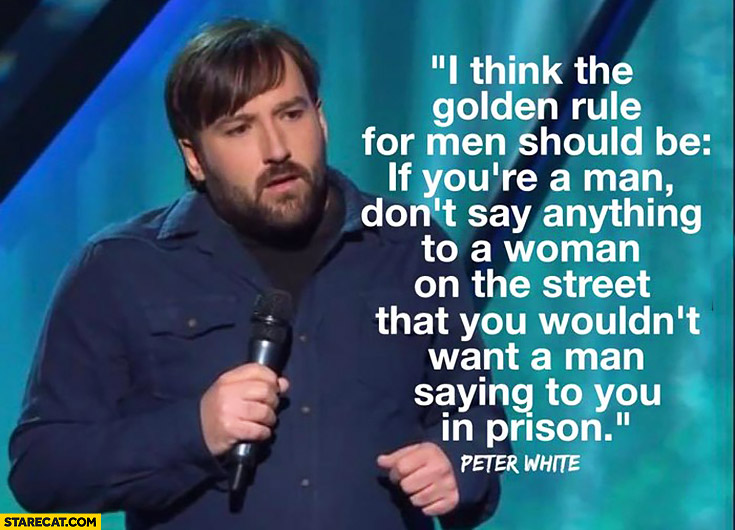
prison gender
I get the hang of it, and I fully agree with it, but I’m afraid this has to be rephrased.
Actually, I’m not at all sure that being incarcerated would automatically change my ‘gender’.
And while I fully support gender equality in the work place, I have this deep feeling that there’s something more involved here.
Functionally, which excludes any attempt to establish an hierarchy, men and women are simultaneously complementary and equal.
I’m not talking exclusively about making/raising kids here.
Otherwise we wouldn’t have been so different.
And the differences wouldn’t have been so complementary.
Insisting on any of ‘equal’ or ‘complementary’ would be worse than wrong.
It would be either neutering or disempowering.
As in counterproductive. A.k.a. dysfunctional.

Autumn of 2008.
The Bucharest Stock Exchange assembled a conference for the investors where some relatively junior guys working for the ‘Global Banking Establishment’ tried to uplift our mood by outlining their bosses’ envisioned reaction to the crises. Something which would later be known as  ‘quantitative easing’.
I asked one of them:
‘The current crises is the straight consequence of money having been used improperly. Are you sure that throwing a fresh amount of it on the market would make things any better?’.
‘Well, nobody has come yet with a better idea…’

Almost ten years later, it seems that ‘throwing fresh money at it’ did revive the market.
Dow Jones has climbed through the clouds, unemployment is low, inflation is low, interest rates are also low…

Some 120 economies, accounting for three quarters of world GDP, have seen a pickup in growth in year-on-year terms in 2017, the broadest synchronized global growth upsurge since 2010.“, according to the IMF.

Only the very same words could have been used to describe the 1990’s…

But there is something that at least some of us have noticed.

income-inequality-08

©Elliot Wave International (www.elliotwave.com)

Both major economic crises which have scarred us in less than a century have been closely predated by spikes in ‘income inequality’.

To make things worse, we are confronted by yet another fast moving development which pushes us towards uncharted waters.
Large scale replacement of ‘human capital’ by industrial robots, some of them driven by ‘artificial intelligence’.

Reaction has been mixed.

Some of the very rich have pledged to make available to charity important chunks of their estates while other ‘concerned parties’ promote  heavier involvement of the government – ‘guaranteed universal income’, etc., etc…
All these in the name of an illusive ‘equality’.

‘On the other side of the isle’, where inequality is seen as being not only natural but also harmless, people are happy with what’s going on and see no problem in everything continuing to march to the same beat.

I argued earlier that ‘heavy involvement of the government’ has already been experimented. And failed. Check the fate of every communist dictatorship.
Actually, check the fate of all dictatorships.
You’ll find that whenever a society becomes too centralized, that thing alone considerably diminishes its survival chances.
Same outcome whenever people in a group/community evaluate things using a single yardstick/from a single perspective.
To make things worse, the speed of the degenerative process becomes catastrophic when decision making becomes centralized while the reduced number of decision makers are partially blinded by too many of them using a single yardstick to do their job.

We are fast approaching that situation.

Extreme wealth polarization means that economic resources become concentrated in very few hands. Hence economic decision making.
And since policies cannot be put in place without resources…

The funny thing is that this concentration of power/decision making take place regardless of property remaining private or communism taking over.
As long as those who control the whole system are too few, ‘who owns it’ makes no difference.
Absolute monarchies faltered in the very same way as their communist successors.

It doesn’t matter whether an universal basic income would be supported by a tax exacting government or by a small coterie of ‘concerned investors’, sooner or later any such arrangement would become sour.

One other thing.
Claims for equality might become so deafening as to impede clear thinking.

Just as money is a very good tool/servant but a lousy goal/master, equality is a commendable goal but a lousy tool.
Human beings ‘work best’ as autonomous individuals who cooperate freely inside what has been described as ‘free market’.
Whenever that market was cornered, either from outside – by the government, or from inside – too many of the players acting in ‘concert’/sync because they had been ‘mesmerized’, remember the ‘Tulip mania” of yore? – it had faltered. Sometimes abysmally.
Attempting to fit everybody in a ‘one size fits all’ mould would be catastrophic.
Just as catastrophic as when less and less people can develop and express their true potential. Remember that we haven’t changed, biologically, during the last 50 000 years or so. But, generation after generation, we’ve been able to do more and more things simply because each generation made it easier for the next one. Most of the times, anyway.
Let’s not change this.