Archives for category: cooperation

A process, a space and some consequences.

The process through which individual agents transmit and receive information.

The space inside which the above mentioned individuals do what ever they set their minds to do.
The stage used by each of us, according to our own goals and abilities, to perform our self assigned roles. Inside and/or outside the roles bestowed upon us by ‘fate’.

Consequences?
The shapes and content of our individual consciences.
Consciousnesses.
Culture, as the historically accrued trove of knowledge more or less accessible – through language and subjected to interpretation – to each of us.
Civilization, as the result of our cooperative effort to ‘make good’ the knowledge we have inherited and/or gleaned ourselves.

What happened to our capacity to compromise?
When did life become nothing but a zero sum game?

Our capacity to compromise – in the good sense of the word – has diminished when religion – the thing which keeps us together – has been split into religions.

And it completely drained out when we’ve become too confident in our ability to think things over.

We’re so confident now that our solution/decision is not only better than any other but the only one possible that we’re no longer capable of considering a compromise.

While religion taught us to respect and trust each-other, religions have split us into factions.
Our intellectual arrogance has done the rest.

It is not from the benevolence of the butcher,
the brewer, or the baker, that we expect our dinner,
but from their regard to their own interest.
We address ourselves, not to their humanity
but to their self-love,
and never talk to them of our own necessities
but of their advantages.
Adam Smith, The Wealth of NATIONS, 1776

I’m sure you already know that Adam Smith didn’t invent capitalism. As Marx invented communism and Lenin invented bolshevism.

Adam Smith had done nothing more and nothing less but described what was going on around him. How a bunch of people acting according to their ‘moral sentiment’ took care of business. How individual needs – for meat, beer and bread – were met and how the wealth of nations was built in the process.

“To some people, Gen Z may seem salary ‘obsessed’. In some cases, say experts, it may be hard for older generations to understand why young workers have such an intense focus on pay. “At Gen Z’s age, older people worked 40 hours a week, and made enough money to buy a house and have barbecues on the weekend,” says Corey Seemiller, an educator, researcher and TEDx speaker on Gen Z. “Gen Z works 50 hours a week at their jobs, and another 20 hours a week side hustling, yet still make barely enough to cover rent.””

Do you notice any need being fulfilled, in earnest, in this, new, situation?
OK, things were not that rosy in Smith’s times either. Most people had to work hard, a lot harder than today, to make ends meet. But since Smith and until some 40 years ago things went better. Year after year.
When Smith was writing his books, Regular Joe-s used to live in crowded shacks, usually rented out from their employers. Nowadays, most of those in their 50-ies and 60-ies own the house they live in. Which house has nothing in common with the afore mentioned shack.

So, is this the new kind of progress?
A looking back in anger kind of progress?
Are you even aware of the huge number of people pondering whether capitalism is not as good as advertised – by those who have already enjoyed its spoils? For the simple reason that in the current (no longer) free (enough) market so many people can no longer enjoy the kind of economic well being their grand parents took for granted…

As someone who had experienced both communism and capitalism, the situation is clear.


‘Self awareness’ is how we call our ability to observe ourselves while observing others.
Humberto Maturana

First and foremost, existence is a concept.
Something our forefathers had coined. A mental construct built by talking about it.

Nothing existed before we saw it AND talked about it!

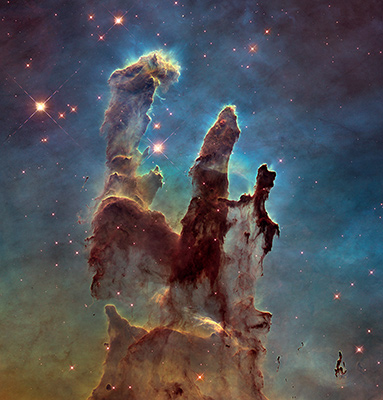
Think about the stars nobody knew about until we used Hubble to peek into the history of the Universe.

Think about the stars which ‘sit’ there and no man will ever see. Or otherwise perceive.
Think!
Do they, the stars, actually exist?

In the sense that has their being been ‘measured’ into existence by a self aware observer?
Has that observation been communicated by the observer to anybody else? Who had confirmed that that observation was anything more than a mere illusion?

You see, both actually – my rantings on your monitor – and figuratively, I don’t need to be told about the existence of the steps I have to climb up and down when I leave my bed each morning. On the other hand, I know that the Amazon exists because I’ve been told about it. Further more, I see for my self the steps in my house but I have a name for them – and I can write about them – because our forefathers had learned to speak. About the world they were discovering around themselves.

My point? We speak things into existence, not into being.

‘How about the things we talk about before we’ve ‘seen’ them? Neptune, the planet, had been ‘calculated’ before ‘seen’ and all mass manufactured things are first discussed and only then launched into production.
Which was the exact moment when each of them had started to exist?’

Good question!
I’m afraid I have no valid answer. This is a matter which will remain open for further debate!
After all, how else to justify our existence?
How else to find our own meaning? Other than by talking about it?

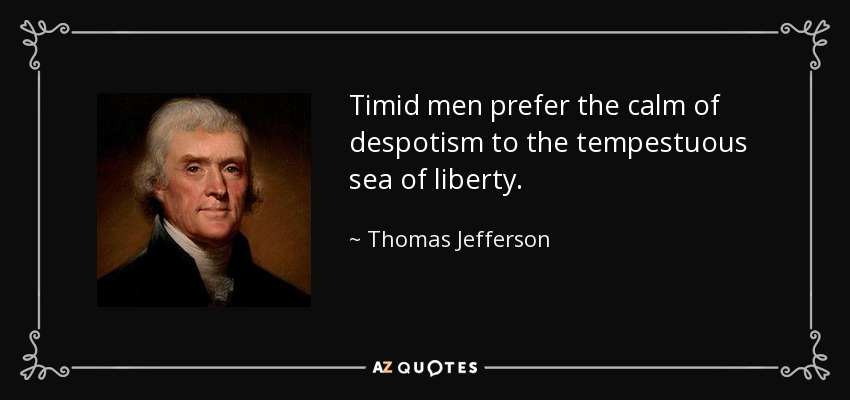
I’m not sure what ‘timid’ meant in those times.

I would have used ‘coward’.

On the other hand, it would have been politically incorrect…

And ‘somewhat’ inefficient! Being blunt, often scares your audience.

And makes them impervious to what you need to share with them.

Yesterday you’ve been babbling about painting an elephant. One which was already present in the room. Doesn’t make that much sense, does it?

In my childhood there was a certain emperor. Who had been duped by a couple of crooks to wear a suit of clothes so special that they were in fact invisible. Hence the emperor walked around naked, convinced he was wearing the coolest set of rags available on this Earth. Pun intended, of course. I forgot to mention the price. Not only hefty but also recurrent. Each set of clothes, of in-existent clothes, could be worn only once. They were too fragile for ‘second helpings’. The courtiers kept congratulating the emperor for his beautiful attire so the scam went on for quite a while. Until he took to the streets of his capital city to show off his clothes to the ordinary people. And a child exclaimed: “Look. the emperor is naked”. And those present started to laugh.

Same thing here. Everybody senses that something’s amiss. Except for those who should know better. Who, for various reasons – I’ll get there, soon enough, don’t believe what they see. Or, more exactly, refuse to ‘go to the bottom of it’.

Back in the ‘good old days’, emperors had jesters. Courtiers who were allowed to speak the uncomfortable truth. Cloaked under a thick layer of funny words, true, but well worth saying.
This is what I mean when I ‘babble’ about ‘painting the elephant’.

I’ve already mentioned the story about the naked emperor. Now it’s time for that about the four blind men being led to learn about the elephant. One got to feel the hind legs, one the huge belly, the third got acquainted with the ears and the last with the tip of the elephant’s trunk. When later asked to share what they had learned, the first said the elephant was a pair of tall columns, the second said the elephant was a huge barrel, the third contradicted the first two maintaining that the elephant was a leathery curtain of sorts while the last was convinced that the elephant was a thick snake ending with a finger.

As I said before, ‘same thing here’. For ideological reasons, we consider some things and disconsider others. Furthermore, for psychological reasons, we tend to coalesce into ‘bubbles’. Those who consider the same things tend to stick together. And to disconsider those who consider other things.

I’m afraid this is too hard for me to follow. You first want to paint an elephant, then come up with a naked emperor and end up with parts of an elephant. Is there any elephant at all? Or all we have is a collection of disparate impressions? Man made illusions, vaguely resembling parts of an elephant and involving nakedness?

Well, you got the gist of it but you’re afraid to say it out loud.
The elephant is indeed of our own making.
An image. Not an illusion, mind you! Just an incomplete image of what’s going on around us.
Let me try to spell it differently.

The world was complicated to start with. Both wide and deep. Too wide and too deep for any of us to be able to comprehend it in earnest. But for most of our history, we didn’t have to. We used to live ‘locally’. Both geographically and ‘spiritually’. Each of us, individual human beings, belonged to a place. To a village and to a tradition. When one of us happened to move to another village, they, more or less naturally, translated their ‘spirit’ into the local tradition.
Nowadays, the world has become even more complicated. We made it even more complicated than it was at the beginning. We uncovered many of the previously unknown nooks and crannies. Building the illusion of knowledge in the process. Then we assumed tradition. Called it culture and made it our own. Took it with us where ever we went. Shared it with others and, sometimes, even imposed it – or parts of it, upon others.

The world itself is no longer straightforward. For us…
Our ancestors didn’t make any distinction between the physical world and the tradition which made sense of it. The world – ‘Cosmos’, as they used to call it, was whole. ‘Reality’ was made of ‘objects’, the names of those objects and the rules between them. The point being that our ancestors did not make any difference between an object, its name and its place in the order of things. Between the physical reality and tradition. Between the objects per se and the meaning – name and connecting ties, we’ve attached to each object.
Only after the Ancient Greeks had come up with the concept of “phusis” things were separated into natural and man-made. Into real and illusory…

That being the moment when the elephant had been born.
When we have started to steer our fate. Not to determine it – we’ll probably never be able to do this in a comprehensive manner, but to influence it.
Which influence has two dimensions. Size and … there’s no words for what I have to say right now. ‘Awareness of what’s going on’?!? Our ancestors did what they used to do because they had to do it and they did it as things were done at that time. We, on the other hand, get to choose among the many things which should be done and the manner in which we see fit to do it. Meanwhile, we entertain the illusion of doing all these things in a fully conscious manner.

A part of the elephant I have in mind consists of the fact that our consciousness is limited. But our illusion about our consciousness is bigger than the reality of the matter.
Another part of the elephant consists of the fact that more and more of us no longer consider advice. From those who entertain different opinions (illusions?!?) than us.

And why should I accept advice from somebody who promotes illusions?

I didn’t say you should accept advice from a peddler of illusions. From a con artist or from a snake-oil distributor.
What I said was ‘be careful, your own convictions are nothing but, ultimately, illusions. Man made illusions. Some of them, maybe, closer to reality than those entertained by other people. Meanwhile, others of your illusory convictions – most of them, probably, are more distanced from reality than those entertained by those who ‘control’/master each particular realm of ‘knowledge’.
This being the reason for which we go first to the doctor instead of raiding a pharmacy when our child gets sick.

I didn’t say you should accept advice from any peddler of illusions.
All I said was that we should pay more attention to what other people have to say. More considerate attention to what other people say, bearing in mind that our own convictions – about anything, are nothing but ultimately illusory.

I’ve been talking about complementarity, equality and freedom.
The implication being that unless people treat each other fairly – as in consider the others as being equal, and equal with themselves – none will be actually free. Free to fully complement each-other. Free to ‘boldly go where no one has yet been’. Together.
What’s keeping us from doing it?
To figure that out, we need first to understand how we got here.
‘I’ve been talking about…’
To talk about something means the talker is aware about the existence of that something. They may not fully understand what’s going on but they have already noticed that something’s afoot.
Furthermore, for a human to attempt to communicate about something means that that human considers there’s at least a small chance that others will understand the message. That others understand the language used and that those others already have a modicum of interest in that matter.
In other words, any attempt to communicate means that those involved are not only aware that something’s afoot but also have reached a certain degree of consciousness. That they are not only aware of something being there but also aware that they, together, can/should/must do something about it.
They key word here being “together”.
Why bother talking about it when/if you’re able to deal with it on your own?
Which brings us to ‘war’!
How many do we need to be in order to ‘deal’ with this ‘thing’?
How many of us will be able to ‘feed’ themselves after this ‘thing’ will be dealt with?
How much will each of us have contributed to the whole process?
How will the spoils be distributed among ourselves?
How will we deal with the ‘loose cannons’ among ourselves?
How will we know who will do what?
Who will lead? Who will be responsible for the whole thing?
This is the moment when I’ll remind you that this is a blog about the consequences of our limited consciousness. A blog where I gather my attempts to understand the limits of our ability to make decisions – as individuals, and the manner in which different societies have come up with different methods to mitigate the consequences of those limits.
Happy reading, every one.

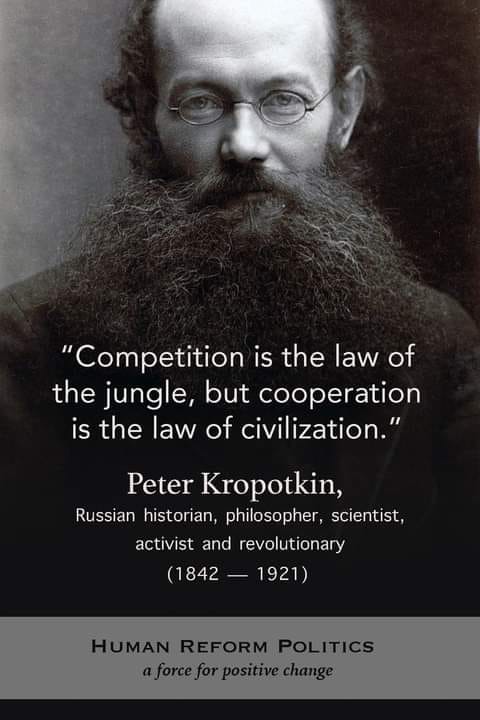
The Bolshevik Revolution had nothing to do with cooperation. Nor with civilization.
It was nothing but the famished underdog eating the bloated plutocrat.
The ensuing indigestion lasted for almost a century and resulted in a huge number of people suffering from ideological food-poisoning. Too many of the poisoned ending up dead…

Yet here we are. Again!
Trying to sort out a re-heated dish.
Which had already been proved to be unpalatable!

No wonder ‘gaslighting’ had been determined to be ‘word of the year’…

As for Kropotkin… he was a true revolutionary!
He was gaslighting his audience before the term had even been coined…

‘Jungle’ – or ‘bush’, is where evolution takes place.
Some of us might see it as a venue for cut-throat competition but it’s nothing but the opposite of it.
The fact that some of us misperceive the jungle doesn’t change the evidence.
In nature, death doesn’t happen at the whim of someone.
A lion kills only when hungry. And chooses to hunt the already weak. Leaving the rest of the herd in a better situation.

The kind of cooperation designed by Marx and put in practice by Kropotkin – the communist ‘civilization’, is the epitome of stagnation. When humans are no longer free to fine-tune competition with cooperation – and are forced to cooperate as they are told to from above, things end up in chaos.

All revolutions – 1789, 1917, 1989, have proven – time and time again, that things cannot be sustainably maintained as the rulers consider to be appropriate. That no matter how skillful the ‘designers’ consider themselves to be, society is a too complex thing for a small gang of however powerful people to be able to ‘keep afloat’.
This being the point where Marx, along with all other ideologues, had gotten it completely wrong.

The Communists, therefore, are on the one hand, practically, the most advanced and resolute section of the working-class parties of every country, that section which pushes forward all others; on the other hand, theoretically, they have over the great mass of the proletariat the advantage of clearly understanding the line of march, the conditions, and the ultimate general results of the proletarian movement.

According to Marx, it’s enough for a bunch of people to pretend they have a ‘theoretically clearer understanding of the line of march’!
In fact, this is the sole argument made by Marx when explaining why the communists were entitled to lead the proletariat.
‘Because they knew better!’

Well, we know, now, what it means to be led by people who pretend to be above all others!
By people who pretend to be better than the rest…

War and chess have a lot in common.
Most strikingly, the different manners in which both of them end.

The king is captured.
Or the other side gives up.

A tie is nothing but the prelude for an encore, not a real end.

Even the roads to the end are very similar in both cases.
While at the start of the game/’joust’ everything is ‘possible’ – nobody knows what the other side might be doing next, as the end nears each of the combatants are more and more limited in their currently available choices by the consequences of their previous decisions. By the very path they had followed since the beginning. Which path becomes more and more evident for everybody present. Opponent as well as spectators.

Finally – but not the least important, the similarities go even further. Deeper?
The king is the most ‘important’ piece but not the most powerful. In fact, the king cannot do much by itself. It can help the other pieces achieve their common goal but when left alone it is basically powerless. The only thing it can do is run. But only as far as the board allows it to go…
A pawn, if it manages to reach the eight rank, gets to be promoted. To become the new ‘right hand’ of the king. The new ‘most powerful member of the team’.

‘OK. And the real point of your post is?’

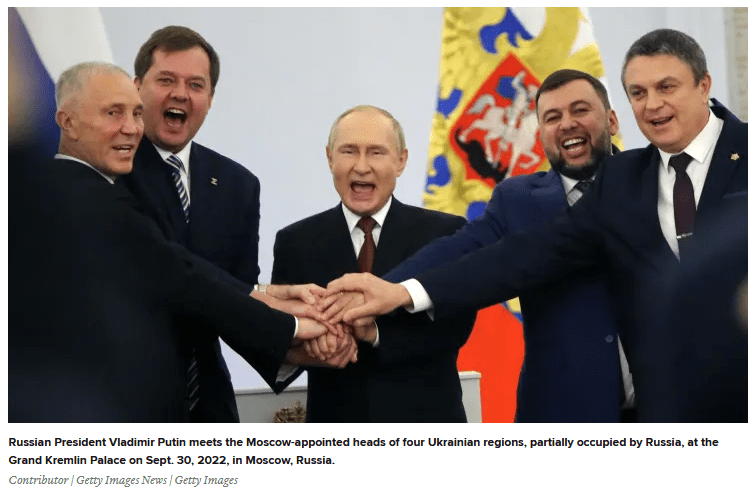
Putin cannot win this war – cause war it is, by himself.
Hence he needs to preserve the loyalty of his henchmen, to instill enough fear into his opponents to make them quit and to convince the ‘spectators’ that their efforts to help Ukraine are too expensive.

Now!
Are we smart enough to understand that we, each of us, are ‘next’? That each time a bully gets his way, all other (would be) bullies present become even more bullish?
Are we smart enough to understand that the most meaningful thing we can do in this situation is to separate Putin from his power base? From the ordinary people who see no other alternative and from those who, for various reasons, continue to support Putin’s misconstrued ‘vision about the world’?
Are we smart enough to understand that no matter how hard it is for us, the Ukrainians have it ten times harder?

Democracy is about every body having the opportunity to speak up their minds.
To speak up their minds, not to kill their neighbors under the pretext that there is a difference of opinion between them!

“We didn’t invade Ukraine,” he claimed.
“We declared a special military operation because we had absolutely no other way of explaining to the West that dragging Ukraine into Nato was a criminal act.”
“Russia is not squeaky clean. Russia is what it is. And we are not ashamed of showing who we are.”

Are you trying to figure out what’s the real meaning of Lavrov’s words?
Let me translate for you this fine example of NewSpeak.

‘We – those who are currently running Russia, will do whatever we need to do in order to preserve our power.
In order to achieve that, we first and foremost need to convince the ordinary Russians to continue to obey our orders.
In order to achieve that, we need to convince the ordinary Russians that you are the enemy and that their only chance lies with us, their current masters.
Hence each time we destroy an Ukrainian apartment block and any of you says ‘Russians are savages’ we’re one step closer to our goal. Each and every time any of you declares ‘Russia has to pay for what it has done in Ukraine’ we tell them, the ordinary Russians, ‘See? This is what they plan to do to you once we’re are gone’.

WWI had lasted until 1945.
We have the opportunity to end the Cold War now.
The war in Ukraine will reach a conclusion. Let’s make it so that after the war will have ended, Russia will fold in the family of ‘civil’ nations.

Those nations that choose to live in peace!
Not because they cannot win wars but because they have learned that winning wars it’s not enough. Those nations which have learned, the hard way, that war has but one winner while for peace to last every body must be a winner.

We need to go forward.

Going back is not an option. If back were good enough, we wouldn’t have left it in the first place.

Many people believe we’re reliving the fall of Rome.
Contemporary with that fall was the advent of Christ’s teachings. The fact that, eventually, Christianity has altered his teachings to fit the needs of the christian hierarchy doesn’t demean any of what he taught us.

That people who treat each-other respectfully fare a lot better than those who allow the exploitation of the weak.

That people who live ‘together’ fare a lot better than those who keep forgetting that ‘strong’ and ‘weak’ are both relative and temporary.

That people who are convinced that ‘survival belongs to the fittest’ will eventually make place for those who understand that evolution is solely about the demise of the unfit.

“And Jesus knew their thoughts, and said unto them, Every kingdom divided against itself is brought to desolation; and every city or house divided against itself shall not stand: And if Satan cast out Satan, he is divided against himself; how shall then his kingdom stand? And if I by Beelzebub cast out devils, by whom do your children cast them out? therefore they shall be your judges. But if I cast out devils by the Spirit of God, then the kingdom of God is come unto you. Or else how can one enter into a strong man’s house, and spoil his goods, except he first bind the strong man? and then he will spoil his house.
He that is not with me is against me; and he that gathereth not with me scattereth abroad.”

How many times have these words been invoked? By people who use them to divide? To carve a follow-ship? A follow-ship for them to lead…

How many times have these words been invoked? By individuals cocky enough to pretend they are speaking for Christ? Cocky enough to pretend they are able to fill Christ’s shoes…