
‘You can’t beat a picture like this one.’
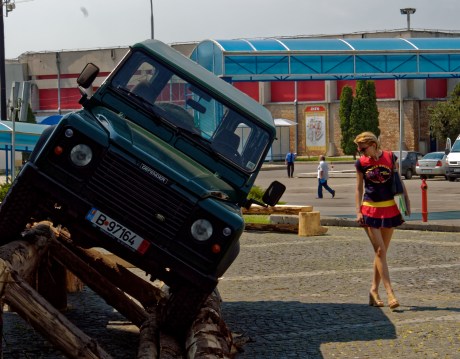
‘Yeah, right…’
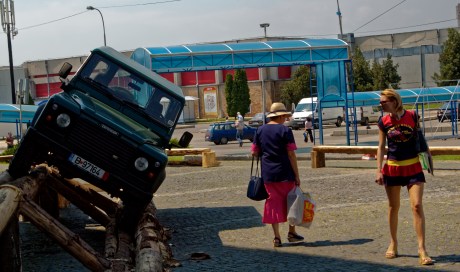
‘You can’t beat a picture like this one.’
‘Yeah, right…’
Authoritarianism, of all ‘flavors’, depends on the ‘father figure’ being absolutely convinced that he is well above the rest. And it is this height which enables him to despise the rest, to the tune of not caring, at all, about how they feel about things.
‘I’m calling the shots, because I can, and the rest of you would better suck it up!’
Democracy, on the other hand, depends on people relying on each other. Enough of them are convinced that none of them is above error. Regardless of their ideological convictions, people who are convinced that democracy works are willing to accept advice from their peers. Or, at least, they listen carefully to what their peers have to say about issues.
The key word here being ‘peers’.
Nobody pays real attention to ideas coming from below or from above. If from below, that idea has to be almost obvious to pass the filter while everything coming from above is interpreted as an order. And executed if there’s no alternative or stalled/ignored whenever possible.
Both authoritarianism and democracy have proved themselves useful.
No war has ever been won by a democratically led army and no authoritarian regime has ever resisted for long. Meanwhile no democracy has ever crumbled as long as it has retained enough of its democratic spirit.
Yes, there are many examples of democracies becoming corrupted and eventually failing. Only this had happened after the democratic spirit had vanished into the smoke of ‘politics’.
Let me remind you that Alexandre the Great, one of the most admired generals and state-men of the world, was educated by Aristotle. Who was the favorite pupil of Plato. The esteemed philosopher who had invented the concept of ‘priest-kings’ – specially educated individuals who were meant to rule the rest.
Needless to add that Plato had witnessed Pericles simultaneously building the Parthenon and burying the Athenian democracy.
While Aristotle (384-322 BC) had lived long enough to witness his pupil conquering the entire ‘civilized world’ and dying an abject drunkard.
Greece, one of the places which had nurtured an enormously important part of the human culture, never fully recovered from the consequences of Plato’s ideas being put in practice.
Are we going down the same chute?
Is this the proper manner in which to engage those ‘on the other side of the isle’?

Well, this is yet another perfect example of a sentence simultaneously true, false and indeterminable …
First of all, it is indeterminable simply because we’ll never know, let alone ‘for sure’, everything ‘under the sun’.
It is obviously false because we continuously discover things previously unknown to us. From another trench on the bottom of the ocean to a new satellite circling around Jupiter. Not to mention the huge number of materials and gadgets which have not ‘seen the light of day’ until the moment they have been invented by us. And they might have been made starting with raw materials which had previously existed… but denying their novelty would be shortsighted… to say the least.
And it is obviously true because no matter how many things we have discovered/invented, we have remained practically the same. We entertain the same passions and fears, we continue to behave in certain ways…
And the worst part is our refusal to learn from past experiences…
We’ve experienced the malignant consequences of the extreme ‘propaganda’ used by the nazis during WWII.
By the communist regimes trying to build ‘the new man’.
And we’re currently ‘repackaging’ the same king of destructive propaganda into ‘fake news‘…
Are we nuts?
Specially that we already know that what we learn actually changes our brain…
Until some two and a half centuries ago, there were two kinds of people.
Those who did, because they could, almost all that crossed their minds.
And those who had to suck it up, because that was all they could do.
OK, there had been, for a few millennia, a Middle Eastern religion whose teachings suggested that all humans had been created equal – because all of them had been made to resemble their creator,… but not very many people used to bother with this interpretation…
From that moment on, all of us have started to ‘have rights’. To express our opinions about things, to carry arms…
And we eventually made full use of those rights… by publishing porn magazines, by buying, for our own protection, AR-15s…
Some American states, Florida among them, have recently stated that people have the right to ‘stand their ground’. Or, more exactly, to defend the ground where they happen to be at any one moment. Using deadly force, if necessary. As if it that ground were their castle.
A few days ago, a guy had parked his car on a spot reserved for people with special needs. Right in front of a convenience store. He went in, accompanied by his five years old boy to buy something, leaving his woman and his other children in the car.
Another guy, apparently having ‘the right’ to park in that spot – the first one didn’t, came up and engaged the woman about the whole situation. The driver came back from the store, exchanged some words with the ‘challenger’ and then shoved him to the ground.
The challenger drew his gun and shot the offending driver, despite the fact that he wasn’t in any immediate danger – after shoving the challenger to the ground, the bully had retreated a few paces.
According to Florida statutes, what had happened was nothing more than ‘self defense’, a.k.a. ‘holding your ground’. Furthermore, the gun involved in the incident was registered and the owner had a permit to carry it around. No charges was pressed.
Which makes me wonder…
We have these “unalienable rights”… including that to ‘pursue our happiness’ … but do we really need to press them on… regardlessly?
The ‘bully’ parked where he was not supposed to because he wanted to buy an ice-cream for his toddler – I’m imagining things here, I confess.
The ‘shooter’ wanted to use his right to park there, so he confronted the woman he found in the wrongfully parked car.
The bully returned to his car and, perceiving a threat to his family, used his right to defend it.
The shooter eventually ‘stood his ground’ and walked scot-free…
You see, I not trying to make any fine point here. To contest the concept of ‘standing your ground’ or the idea of people carrying heat when shopping for groceries…
I’m just wondering… what happened to the concept of ‘rights’? Why some of us have arrived to see them as obligations?
The whole thing might have started as the deceased parked in the wrong place…. but if the shooter had chosen to call the cops instead of confronting the guy… he wouldn’t have had to shoot the ‘bully’ in front of his children….
As I mentioned before, life is about individual organisms being able to interact with their environment and species being able to evolve as a reaction to what happens in the same environment.
Interaction between environment and individual organisms is based on sensations.
The organism ‘feels’ itself and its environment and (re)acts based on the gathered information.
The (re)action ca be very basic – as in voluntarily abstaining from breathing when submerged in water, to utterly sublime. Writing a love poem or saving a toddler from a burning house.
Please note that only writing a love poem ‘demands’ a human being. Abstaining from breathing while under water comes naturally for all animals which don’t have gills while saving a toddler from a burning house can be very well ‘performed’ by a dog.
I mentioned earlier that (re)actions can be grouped in three large categories. ‘Mechanical’, ‘learned’ and ‘self-supervised’, a.k.a intentional.
The ‘mechanical’ ones being those also known as ‘instinctive’. They are practically inscribed in our DNA and constitute our default mode. None of us – plant, animal or human, needs any training whatsoever in order to ‘perform’ them.
The ‘learned’ – or ‘trained’, (re)actions are those which depend heavily on past experience. They start from the same kind of sensations as the instinctive ones but the organism takes the time to transform the sensation into a perception before (re)acting.
A very good example would be riding a bike. A child can learn to do it well before becoming able to entertain such complicated notions as ‘destination’ or ‘goal’. They are simply happy to do it. Same thing being valid for trained circus dogs or monkeys.
The really tricky (re)actions are the ‘intentional’ ones. Those which are performed under self supervision. Of which we are, at least perfunctorily, aware.
‘OK, very nice recap. You’ve already covered this ground. Get to the point!’
I’ve already reached it.
According to this ‘scheme’, given the fact that we pretend to be rational and that we all live in the same world, all of us should behave more or less in the same manner. Right?
‘Like bees? Or ants? Like a school of fish?’
Yeah, something along that line…
‘Or like Pol Pot/B.F. Skinner tried to teach their respective followers?’
You’re stretching it a little bit but yes, you could say that …
‘But this ain’t happening! Not even the most bigoted followers of any cult nor even the most disciplined soldiers will ever behave in such a manner…’
I told you we’d already reached ‘the point’! You made it yourself…
And here’s why:
Yes, we all live in the same world.
More or less…
But we shouldn’t forget the differences!
Biological ones come first.
Those which make each of us feel differently, even when all of us experience the very same conditions. Temperature, time past from the last meal, elevation from the sea level, etc., etc.
On top of those come the ‘social’ differences.
In this instance ‘social’ has a far wider meaning than in everyday life. Yes, there is a huge difference between individuals belonging to different social strata but that’s only a small part of what I have in mind.
‘Social’ differences means all differences consecutive to the ‘mere’ existence of human society.
Let’s make a thought experiment and evaluate the ‘social’ differences between a guy born in what we now call France some 20 000 years ago and another guy born in the same place 2 000 years later. What do you reckon?
OK. Now let’s consider a Frenchman born in 1920 – two years after the end of the WWI, and his son, born in 1947. Would it make any sense to compare the two sets of differences? Those between the conditions encountered by the two prehistoric guys separated by two almost inconsequential millennia and those encountered by the father and son born 27 years apart in the XX-th century?
Or we could compare a native of the Amazonian forest to a New Yorker. Both born in, say, 1999. Statistics have it that the Amazonian native might already be dead…
Small wonder then that perceptions are so different from one individual to another… given that individual perceptions depend on both our senses and our individual experiences – which, in their turn, depend heavily on where and when each of us have been born.
Right now I feel the need to insist on the difference between sensation and perception.
Sensation being, simply put, what we feel while perception is what reaches our conscious mind.
‘What?!?’
Yeah… strange, isn’t it?
Let’s return to ‘riding a bike’ for a moment.
It was a big moment when your dad removed the ‘helper’ wheels and you soloed for the first time, right? Just as big as when you walked for the first time… only you can’t remember that, do you?…
You were paying very close attention to everything you were doing… while your father kept telling you ‘relax, you’ll be fine’…
And now – if you’re still riding, of course, you do it instinctively. You pay attention only to where you’re going, without bothering about maintaining the balance or other ‘mundane’ things like that. The whole process takes place ‘behind the scene’. It was you who had learned what to do. Consciously, of course. Only once learned, the whole ‘thinking process’ was moved ‘to the attic’. Out of the way, that is.
There are a lot of things which are done in this manner. Subconsciously and not unconsciously. Riding bikes, driving cars, operating machinery… perceiving the world…
We learn how to do it – according to some rules which depend on our culture, and then we continue to do it subconsciously. For all our lives or until something happens. For instance, until we move to a country where they drive on the ‘wrong’ side of the road. And we have to learn some new rules…
Otherwise put, ‘perceiving’ means subconsciously making sense of what we feel by using some previously acquired ‘rules of thumb’. Those who specialize in this field use ‘heuristics’ to describe them.
The problem with the rules of thumb being that they can very easily become ‘cognitive biases’. A.k.a. ‘fences’ which divert us from the ‘straight and narrow’. As in the situation when some of us feel uneasy in the presence of an unknown person with a different skin color.
‘But what happens when consciousness kicks in?’
I thought you’d never ask…
It depends.
On many things. Both ‘social’ and individual.
On the education experienced by each particular individual, on their ‘brain power’ and, last but not least, on something vaguely called ‘individual character’. Something which some people are convinced it can be educated, one way or another, while others are convinced it is ‘hard wired’ into each of us.
If you ask me, both are right. In various, individual, degrees. Character has as much to do with how each of us have internalized their particular experiences as it has with how much ‘spiritual stamina’ exists into each of our souls.
On the practical side of the matter, after each perception reaches the frontier of our consciousness, each of us starts digesting it in earnest. As in attributing ‘value’ to it. Determining whether what has just happened was a consequence of an intention or a happenstance. Then whether that intention was good or bad. And, finally, the ‘judging’ consciousness establishes a plan of action. Which can vary from ‘do nothing’ to ‘no holds barred’.
Which explains why no two people will ever react in exactly the same manner when confronted with the very same set of circumstances. There are no two individuals who feel exactly the same, have been exposed to the very same cultural influences AND internalized them in exactly the similar manner. Nor have exactly similar characters and amounts of brain-power.
But what was Mathew trying to tell us?
I’m afraid we are dealing here with a badly translated metaphor.
‘Poor in spirit’ doesn’t make much sense… unless we consider it an attempt to dull our senses… which may make some sense in certain circumstances…
Only I’m more interested here to determine what Mathew tried to say rather than to interpret the intentions of those who had done the translation. And of those who had, manually, copied the many successive generations of Bibles which had been produced until Gutenberg had, for the first time, printed it in many identical copies.
So, the way I see it, Mathew was speaking of those who are able to stop their conscious mind from building far-flung ‘scenarios’ out of everything that happens to them. Or in their vicinity.
Very similar to the Buddhist concept of ‘non-attachment’?
Well… we do live in the same world, after-all… and we have been ‘made’, more or less, ‘the same’.
We might not be identical, nor having had the very same experiences during our lives… but we do have a lot in common. Despite our differences.
Being alive means being able to interact with the environment.
In various manners.
From the prosaic – ingesting food and… you know what I mean, to the sublime – what ever that means for each of us.
Including the ‘prosaic’, our reactions to whatever ‘inputs’ challenge us from our exterior, a.k.a. environment, are based on what we feel. And this is valid for all living things, no matter how simple or how complex. All of us have different manners in which we get information about what’s ‘outside’ and react to what we find out.
‘Not all reactions have been born equal’…
Plants react differently from animals, insects react differently from fish, reptiles from mammals, humans differently from all others, men differently from women…
Yet there is some order in all this complexity.
Reactions can be classified into three large categories. Mechanical, learned and intentional, a.k.a. ‘self supervised’.
All of us pull our hands when we touch a red hot iron. Or at least tend to…
All of us, grown-ups, have learned to swallow the sip of too hot coffee we have carelessly took. If in public, of course…
And, sometimes, the brave among us go, ‘barehandedly’, into a burning house in order to save those inside. Knowing that they might get hurt. Knowing that fame is short lived but a scar is forever. Knowing that any attempt to save someone’s children might end up leaving some other children without at least one of their parents.
You see, the mechanical reactions are the same all over the living world. They are inbred into our own nature/DNA and are meant to help each individual to survive and thus preserve the species to which it belongs. Furthermore, the mechanical reactions are based solely on sensations, hence their ‘mechanical’ nature. A certain input elicits one, and only one, response. A hot iron elicits a drawn hand… or, at least, a huge amount of attention.
For a reaction to become ‘learned’, ‘somebody’ has to transform a sensation into a perception. To remember a past experience, to compare it with the present and to react more or less in the same manner.
Without necessarily/actually ‘thinking’ about the matter.
In fact, no brain is even needed for this.
Credit: Audrey Dussutour (CNRS)
But, now that we’ve discovered that even some of the most simple life forms can learn – and ‘teach’, can we pretend that any of them are driven by intentions?
Or these are reserved for us, the most ‘evolved’ of the animals? The only ones not only able to ‘observe ourselves in the act of observing‘ but also able to share the observations with their peers.
The only ones able to devise both goals and ways to attain them. The only ones – or so we like to pretend, able to imagine and compare various scenarios about the future…
Then why are we still killing each-other? Hating each-other’s guts? Take advantage of our ‘peers’, whenever we see the opportunity?
What good does any of us see in this?
Don’t we ‘see’ the harm we cause in others?
Haven’t we ‘learned’ anything from our history?
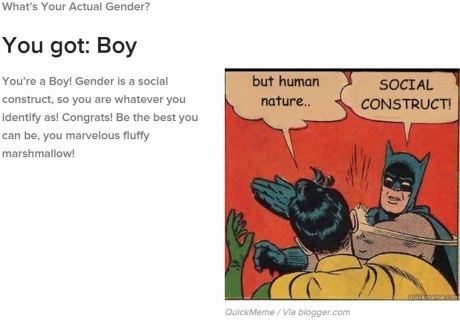
Now, that some doctors are not only able but also willing to perform sex/life changing surgery, the subject has spawned a rather hot debate.
The ‘inputs’ being ‘sex’, ‘gender’ and ‘how each of us feels about it’.
Feels about what?
Well… this is the tricky part.
The what of the matter isn’t so simple…
There are so many things that might be felt here…
How each of us feels about the sex they have been born with.
How each of us feels about the gender role assigned to their particular sex by the particular culture into which they have been born.
How each of us feels about those who have enough courage/money to assume another gender/change their sex.
Please note that while neither the society nor the individuals have anything to do with the birth sex, both the society and the individuals are instrumental in shaping all those feelings.
Since sex/gender is too ‘hot’ right now, let me take a parallel road.
Many of my friends are glad when I invite them to dinner. To a home cooked dinner.
Their appreciation has driven me to improve my cooking skills, over time.
Yet in my culture, men are not supposed to cook – if they are not professionals, of course.
Which I’m not.
Yet very few people, if any at all, see anything strange here.
That being the social construct part.
On the other hand, cooking implies certain individual characteristics. For instance, I find it harder when my nose is running. I have to do it ‘mechanically’. It also demands a lot of patience and the ability to plan in advance. Not to mention the fact that one needs both hands.
My point being that cooking, and gender, is based on a certain physical configuration – both hands, a working nose – a certain state of mind AND a lot of study/social conditioning.
My real point being that every ‘social construct’ is based on ‘nature’.
Just as no builder will ever be able to build anything without ‘bricks’, no society will ever be able to build anything out of nothing.
And just as all builders have to adapt their plans to what they have at their disposal, all social constructs will be limited by ‘human nature’ – how ever adaptable and ingenuous it might be.
Now it’s the moment to remind you that other cultures have dealt differently with this matters. Driven by different kinds of necessity.
Confused?
You’re not alone…
Every thing we may find around us can be stashed in one of these three categories.
Only the boundaries between them are not so clear as it may seem at first glance.
”Aphasic” means ‘being unable to speak, even though your ‘throat’ and your intelligence seem to be OK. By stretching the term, one can use it to describe the inability to get in sync with the ‘exterior’. To react other than in a purely ‘mechanical’ manner. Push back with an equal force, sneeze when inhaling an allergen… you get my drift.
‘Alive’ is, at least apparently, a little simpler.
There are many definitions for ‘life’ but none is considered ‘good enough’. Yet all of us are convinced they know what ‘alive’ means.
In my view, life is a multi-generational affair. For starters, Darwin’s ‘seminal’ book was “On the Origin of Species by Means of Natural Selection, or the Preservation of Favored Races in the Struggle for Life”. ‘Species’ and ‘Races’ mean genetic information transmitted over many generations. The transmission mechanism being accurate enough to preserve the species as long as nothing happens yet flexible enough to allow for evolution to proceed when the prevailing conditions allow/demand it.
‘Alert’ is even simpler.
“Quick to see, understand, and act in a particular situation“.
As I mentioned earlier, these categories only seem clear cut.
While it’s obvious that a boulder, or even a fully functional gas engine, can be safely tucked away into the ‘aphasic’ drawer, what are we going to do with somebody suffering with senile dementia? And, for good measure, well past the ‘reproductive age’…. Can that person be considered alive? Truly alive?
What about the ‘brain dead’ – literally, those who cannot do anything by themselves, but who are young enough and otherwise able to procreate?
Furthermore, it is very easy to say ‘that kid is very alert’ when describing a ‘tomboy’. Or a trader dealing on the New York Stock Exchange Floor. But can we use the same concept when describing the fly which has successfully evaded all our attempts to catch it?

 nicichiarasa