Archives for category: collective identity

There’s chess and there’s bridge.

There’s managing your resources – on your own, while trying to outsmart – out, in the open, your opponent.

And there’s team-work. An attempt to make the most of what lady-luck had put on the table by exchanging information. With your partner and in the presence of the competing team. This time only the conversation is out in the open, the resources themselves remain hidden. During the initial phase of the competition and, partially, during the end game.

Until WWI, war was more like chess than anything else. Resources were, more or less, out in the open. The soldiers had no other role but to do and die. The whole responsibility belonged to the guys who called the shots. One for each side…

WWI had ended indecisively. Hence WWII.

Each of the winning parties – there had been two victors, had learned something different from the experience.
The Western allies had learned the value of cooperation while the Eastern ‘block’ had reached the conclusion that brute force trumps everything.

The Americans had started playing bridge with the Brits and taught the game to the rest of the world.
The Russians had honed their skills at playing chess. Something they were already very good at.
For a while, the Americans have tried to compete with the Russians. Remember a guy named Fischer? Bobby Fischer?
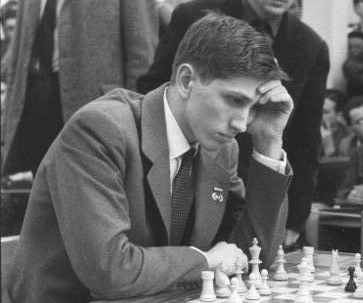
Soon, too soon, the Americans had given up.
After building a computer smart enough to outsmart all human chess players…

The even worse part was that the Americans had given up bridge too!
And forgot the most important lesson of WWI and WWII. That the victor needs to take care of the vanquished if they want to enjoy peace. To actually win the peace process after they had already won the war.

Which brings us to the end of the Cold War.

Communism – and practically all communist states, had crumpled under its own weight.
The westerners assumed it was something they had done themselves. Declared victory.
And the end of history

Having already given up bridge, they forgot to take care of the vanquished… and allowed Russia – the party who had taken most of the blame over their shoulders, for reasons to be discussed some other time, to slide down the slope inaugurated by post WWI Germany.
Did I mention that Russia was still fond of chess? Very much in love with brute force? And not very fond of respectful cooperation?

Now, that we all try to peek into the future – attempting to figure out how the current aggression ordered by Putin will end up, we need some people to learn about bridge.

Putin cannot launch by himself the nuclear missiles he had been brandishing lately.

Now, can those around him reset the chess board on which they are but pawns into a bridge table?
And invite the rest of the world into the game?
Will the rest of us understand the invitation?
If, and when, it will come?
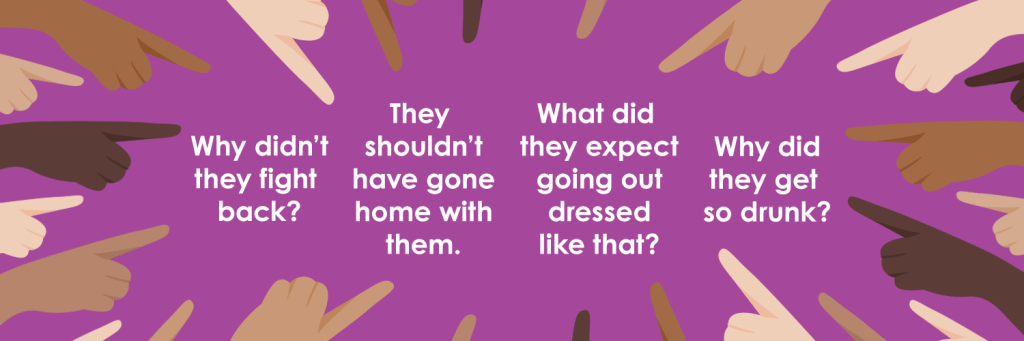
Whether it’s in day to day conversation or in the media, a common response to disclosures or mentions of sexual assault is a phenomenon called victim blaming. The term might be unfamiliar, but what it looks like in practice is all too familiar. It’s questioning people who experience violence — especially sexual violence — about their actions, and what they could have done to prevent it, or worse, invite it. It’s pointing out supposed weaknesses or differences in a person that could have made them a target. In general, it’s the common tendency for people to look for the cause of violence as something the person who experienced harm did or didn’t do to prevent it.”

Victim blaming is a fact.
As in ‘exists even if it doesn’t make much sense’. As in ‘still exists despite our intense efforts to make it disappear.’

Shouldn’t we try to understand it? Before blaming those who blame the victims?

What’s going on is that our minds are biased.
And one of the two most powerful biases is our need to make sense of the word. We actually need to perceive the world as being rational. We need to have causes, to identify causes, for everything which happens around us.
The other one being our need for relevance. We not only need to make sense of the world, we also need to control it. Hence we do our best to understand the world as controllable. Controllable by us! By us, the purveyors of the explanations. By us, those who understand it as a rational succession of causes and effects.

Let involve ourselves in a small thought experiment.

We’ve just had a few drinks. Not enough to get stoned but each of us is a little ‘merrier’ than usual. A tad dis-inhibited.
In this condition, one of us has sex with an under-age person and the other has a car accident.

In which of these two cases, ‘being under influence’ would be seen as a mitigating circumstance?
Why?

See what I mean?

Socially, it is unacceptable to DUI. Because you are far more likely to cause an accident.
Socially, it is more than acceptable to have a couple of drinks at a party. Because you are going to be a far more ‘pleasant’ person that way. Well, most of us are…

It’s actually reasonable to expect a driver to be sober and a party-goer to be ‘tipsy’-ish.
Simply because it’s a lot more unnatural to drive than to have social intercourse. Hence we need a lot more ‘self-control’ when driving than when talking to someone. Even if that person is very attractive.
We, statistically speaking, have a gut feeling which tells us it’s harder to drive than to behave. Hence the biases.

‘OK, but has any of this anything to do with victim blaming?!?’

Victim blaming is the ‘easy way out’ for both would-be victims and would-be aggressors.

Remember what I said about our need to make sense of the world as a controllable environment?
As a place where we, each of us, is in charge? With the known – and already agreed upon, limitations…

For those who see themselves as potential victims, doing the ‘right thing’ – or not doing the wrong one, is something which puts us in a safe place. We’ve done everything (in our power) so we’re safe. Or as safe as we could be… If we become a victim even after we’ve done everything in our power to avoid it, then it’s exclusively the fault of the aggressor. There was nothing more we could have done to avoid it. Hence there’s no self-guilt falling on our own shoulders.
And if we have reached ‘this’ conclusion – that ‘this’ is the right behavior, then each of the ‘trespassers’ do nothing but ‘contradict’ our ‘good judgement’. Hence our ‘need’ to ‘educate’ them.

For those of us who conceivably might become or had ever been – directly or indirectly, as in ‘one of our relatives had done it and we didn’t see it coming’, – an aggressor, the logic follows the same path. The victim should have taken every precaution, we are naturally ‘limited’ individuals who cannot ‘resist’ when ‘pushed over certain limits’.

‘OK, and your point is?
That it’s OK to blame the victim?!?’

Let me bring your attention back to the title.

‘Causing’ circumstances.

Who transforms a certain set of circumstances into a cause?
Who sees a certain set of circumstances as an opportunity to do something or as an opportunity to do the very opposite? Or to simply stay put?
To directly cave in to something which ‘might’ be seen as a provocation or to ask for permission first? And to accept ‘no’ for an answer, in no matter what circumstances …

Who bears the responsibility for choosing one way or another?

This is a stub.

Basically, this post will reinterpret the arguments used in the previous one.

This is a stub.

‘This time is different’. https://www.economist.com/media/pdf/this-time-is-different-reinhart-e.pdf

History teaches us that each and every empire has collapsed. Usually under it’s own weight. Pareto has given us a valid explanation – each structure which doesn’t have to ‘refresh’ itself tends to become clogged with self serving individuals, near-sighted enough to ‘forget’ that none of them (none of us, actually) is able to survive ‘outside’. Yet each ’emperor’ allows themselves to believe that this time is different. I’m better than all my predecessors. And their followers allow this to happen, just as Pareto had taught us.

‘They is a rational operator hence they must have a reasonable objective’.
That’s how people raised/educated in a reasonable environment think/interpret the actions of other people.
This being the reason for democratically groomed leaders having such a hard time when they need to understand how dictators operate. This being the reason for democratically groomed political operators having such a hard time when it comes to identify skillful would be dictators.

https://www.journalofdemocracy.org/articles/russias-road-to-autocracy/

This is a stub.

Using as little resources/effort as possible to get what you’ve set your mind to accomplish versus making as much profit as possible (in the given conditions)

Reversible versus ‘definitive’

Let us imagine, for a moment – or longer, than among the already innumerable objects circling the Earth is yet another surveillance satellite.
One operated by aliens…

What would they think of the current developments?

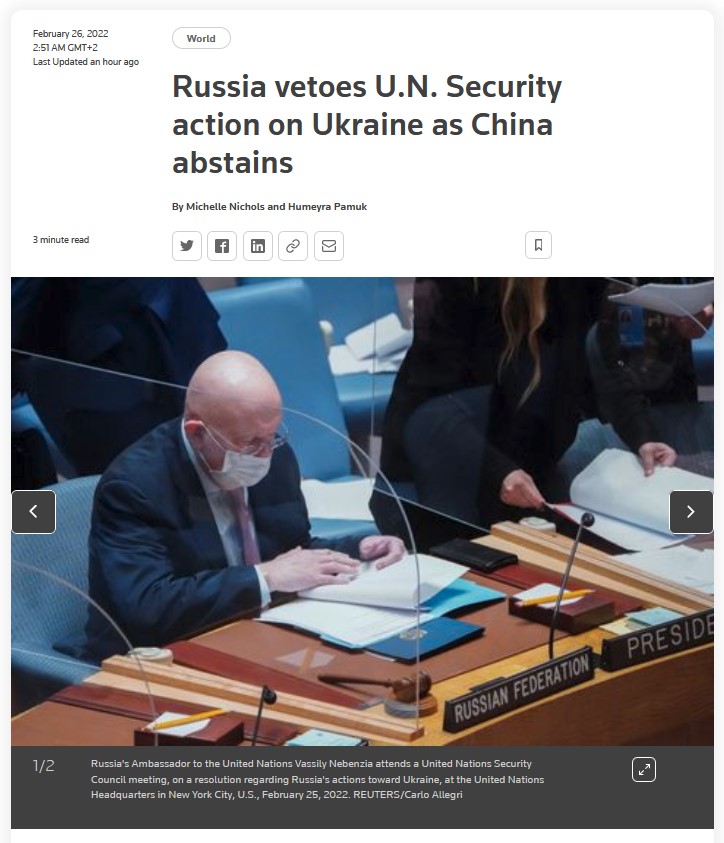
One of the five permanent members of the UN Security Council – the topmost watchdog pretending to guard the ‘normalcy’ on Earth, brazenly attacks its neighbor.
Both the aggressor and the victim are members of the organization watched over by the Security Council.
But the aggressor has veto power over the Council.
And, of course, uses that power whenever it sees fit.
Another of the “five permanent members” of the Council chooses to abstain from voting. When the Council is discussing the aggression perpetrated by one of the permanent members of the Council against another fully recognized member of the ‘international community’.

Would the alien observers be laughing their heads off?
Would they keep us isolated from the rest of the Universe? Lest we spread our suicidal behavior ‘among the stars’…?
Both at the same time?!?

‘Guided missiles and misguided people‘….

Quite a lot of people around the Internet are considering that ‘Ukraine is of little interest for the US’.
Even some of the Europeans are considering that isolating Putin’s Russia from ‘SWIFT’ is a too steep price to be paid, by them, for Ukraine’s independence.

I remind them, all of them, of what Martin Niemoeller had to say on this subject.

First they came for the Communists
And I did not speak out
Because I was not a Communist
Then they came for the Socialists
And I did not speak out
Because I was not a Socialist
Then they came for the trade unionists
And I did not speak out
Because I was not a trade unionist
Then they came for the Jews
And I did not speak out
Because I was not a Jew
Then they came for me
And there was no one left
To speak out for me.

Chapter 1. Explaining prediction.

I’ve trained to be an engineer. And practiced being one.
Then I felt the need to understand. And studied sociology.
That’s how I learned, the hard way, the difference between ‘hard’ science and ‘soft’ science.
Between ‘bona fide’ science and ‘bogus’ science…

Those of us still convinced that soft science is bogus have yet to grasp the whole meaning of ‘science’.
A collection of ‘special’ data, a ‘special’ method of gathering data and a ‘special’ state of mind.

We all know what ‘scientific data’ and ‘scientific method’ mean.
But there is almost no talk about ‘scientific state of mind’.
Most people consider that ‘scientific thinking’ is solelly about applying the scientific method when dealing with the ‘reality’. With what happens ‘outside’ of us.
Outside of our individual consciences…

Historically, science – the concept of science, had sprung up in the minds of people concerned primarily with physics and chemistry.
Hence the subsidiary concept of ‘consistency’.
Data can be considered to be scientific only if it had been gathered in a ‘consistent’ manner.
If by applying the same method, in the same circumstances, the end results will be the same – regardless of who had happened to be at the helm of the experiment.
And a method can be considered to be scientific only if it produces the same data whenever it is applyed, in the same circumstances, by no matter whom.

I’m sure that, by now, at least some of you have figured out what I’m driving at.
The main difference between ‘hard’ and ‘soft’ science is, of course, related to the relative inconsistency of the data yielded by the ‘soft’ sciences. This being the reason for which some people cannot even accept the ‘scientific’ nature of the soft sciences…

Hence the need to discuss about the ‘scientific’ ‘state of mind’…
Let me start by pointing out the fact that we, people, are rationalizers.
We pretend to be rational, true, but in reality we are nothing but very astute rationalizers.
So astute that we are not even aware of the fact.
We are so convinced of our rational nature that we are fooling ourselves.

Please read about this subject by hitting the link below if you are not familiar with the concept of rationalization before proceeding.
https://cushmanlab.fas.harvard.edu/docs/rationalization_is_rational.pdf

Accepting that we are deep enough into rationalization that we need to pay special attention when trying to be objective is the first step towards attaining a scientific state of mind.
The second, and just as important, step being the respect we need to extend towards our peers. Towards our fellow experimenters.

Changing tack – and approaching ‘scientific state of mind’ from another angle, I might try to describe it as a ‘work in progress’.
A never ending attempt at self improvement made by someone fully aware of the fact that they’ll never get there. Yet still striving towards that goal.
A never ending attempt made by somebody who knows they’ll never get ‘there’ yet they continue to encourage others to go further and further up that road.
A never ending attempt made by people who know they’ll never get there yet they respectfully help each-other towards their common goal.

And now, that I’ve done my best to explain what I mean by ‘scientific state of mind’ let me delve in the main subject.
The real difference between soft and hard science.

By their very nature, hard sciences are defined by the fact that an explanation constitutes a very good prediction.
If you are capable of explaining the Earth rotation around the Sun you are also able to compute where the Earth will be 10 seconds from now. As well as ten centuries from now…
If you are capable of explaining radio-activity you are also able to build an atomic bomb.
By understanding how DNA works we have been able to come up with a mRNA vaccine against the SarsCOV-2 virus.
https://www.cdc.gov/coronavirus/2019-ncov/vaccines/different-vaccines/mrna.html

The problem with soft sciences being that in their case, explanations – no matter how precise, cannot predict much.
We know why a maniac behaves like one – because …, but we don’t know what a maniac will actually do. Nor when…
We know that a free market works better than a monopoly but we cannot agree upon how free a market should be. Nor can we agree upon what a ‘free market’ really looks like…
We know what will eventually happen to an empire – it will fall, because of ‘negative selection’, but we never know exactly when and how that will happen… nor what will occur between the establishment of the empire and its eventual demise.

Savvy?

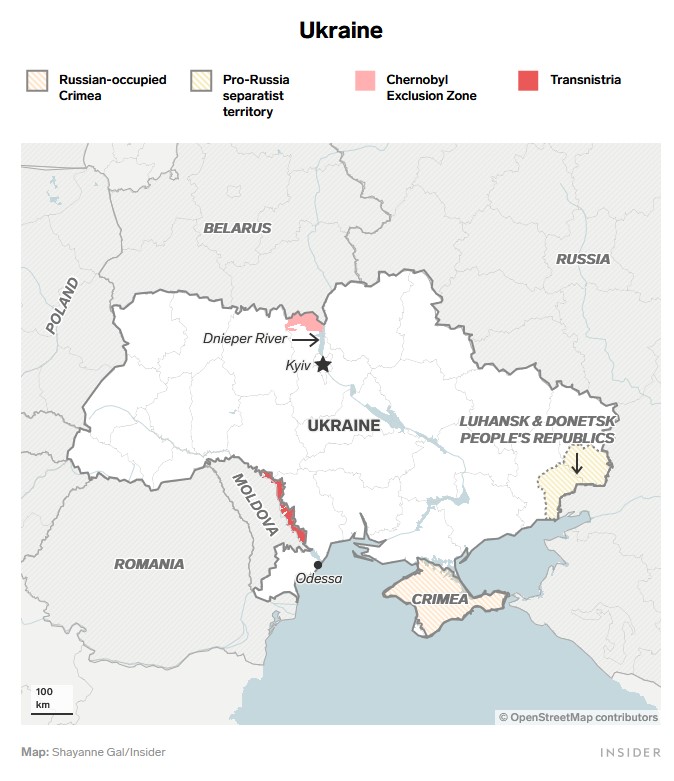
Now, that Putin had recognized Donetsk and Luhansk as independent states, I keep hearing that ‘if NATO hadn’t integrated the former socialist states in the Eastern Europe, Russia wouldn’t have occupied Crimea nor encouraged the ‘freedom fighters’ in Luhansk and Donetsk’.

NATO, and UE, are not perfect. Far from it.
Yet the former USSR had been even less perfect.

What drove me to this conclusion?
Well, both NATO and the EU are thriving. People and countries flock to join in. The very present conflict in and around Ukraine had been sparked by Putin’s ‘unhappiness’ with the Ukrainian people insisting in joining both NATO and the EU.
Meanwhile, the USSR is no longer with us. Had collapsed, under its own weight, some 30 years ago.

The second difference between these supranational entities – NATO and the EU on one side and USSR on the other, is the ‘small’ matter of how a member got to join the club.

In NATO’s case – valid also for the EU, a prospective member state has to ask for it first and then wait to be accepted.
The USSR had been organized under the ‘invitation only’ principle. If you were invited, you had to join. Regardless…

CSI, the Community of ‘Independent’ States, is organized under the same principle!


Btw 1.
Did I mention that the USSR had crumbled under its own weight?
By allowing self serving callous political operators to grab too much power?
Too much power for their own selves as well for their country’s well being?

Could we attribute the demise of the USSR on the fact that the bolsheviks were ‘house broken’ into ‘toeing the line’ while here, in the West, some people still dare to speak up their minds?

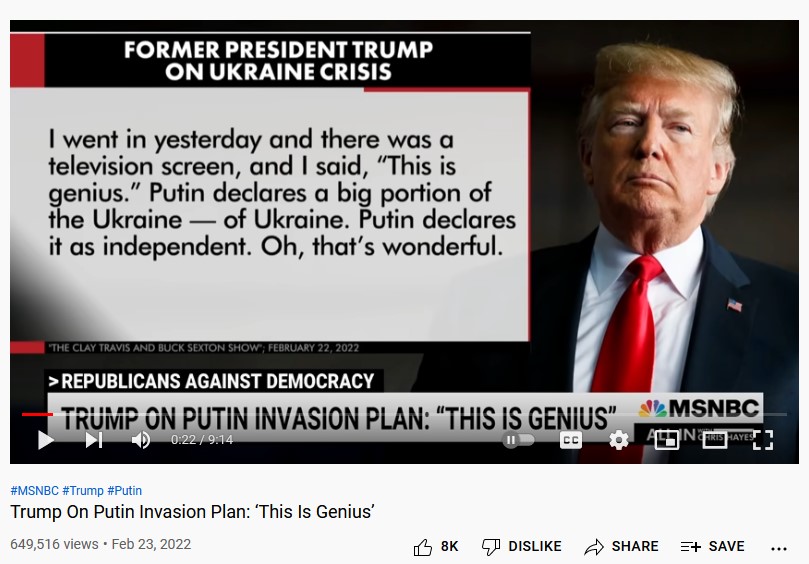
Rep. Liz Cheney, R-Wyo., a Trump critic who he is targeting for defeat this fall, responded Tuesday: “Former President Trump’s adulation of Putin today — including calling him a ‘genius’ — aids our enemies. Trump’s interests don’t seem to align with the interests of the United States of America.”

Btw 2.

Karl Popper had described science as a (virtual) place where things happen like this:

Some guy has an inkling. Studies it and gathers a lot of information on the subject.
Based on that information, develops a hypothesis. Then attempts to prove it.
After being satisfied with how much proof they had found, the hypothesis is declared a theory. And published as such. Along with all pertinent evidence. For all those interested to see.

So that all those interested to be able to replicate the experience.
To be able to retrace the proving process. To certify its validity.

And for all those interested to be able to find any proof to the contrary!
So that, as soon as that proof had been found – and declared acceptable, the theory to be considered false. Or, at least, incomplete.

The first example which comes to my mind being that the simple existence of Einstein’s Relativity had proven that Newton’s Physics was incomplete….

Fast forward to our days.
To our raging Covid-19 pandemic.

When vaccines are already available and where there are people who refuse to be vaccinated.

The vaccine was supposed to protect us.
From becoming infected.
From needing to go to the hospital.
From dying. From ending up suffocating alone…

But people continue be infected. Even after receiving the vaccine.
People continue to be admitted to the hospital.
And people continue to die. Even after receiving the vaccine.

Wouldn’t all these evidence strongly suggest, scientifically speaking, that the vaccine is useless?
‘Useless’, to say the least?

Wouldn’t it be actually rational to frame the situation in these terms?

Well, according to Popper’s reasoning, the first vaccinated individual becoming ill had been ample enough proof of the fact that the vaccine was not 100 % foolproof. That it isn’t fail-proof!
The first vaccinated individual being admitted to the hospital had been ample enough proof that the vaccine is no absolute shield against any of us who has been infected will ever have to go to the hospital.
The first vaccinated person who had died with Covid-19 had been ample enough proof that the vaccine will not protect all of us from dying after becoming infected with this virus.

And the fact that so many of us continue to refuse to be vaccinated is ample proof of the fact that reasonable should trump rational. Yet it still doesn’t….
Of the fact that too many of us continue to consider that their short term/self serving interests are more important than other people’s lives.
And of the fact that too many of us continue to ignore how vaccines work.

The key aspect here being the last!
People continue to ignore how vaccines work simply because of the huge amount of disinformation which is being peddled on the internet right now.
It’s not the ‘refuseniks’ who put their short term/self serving interests in front and above the lives of innocent people!
It’s those who have initiated, and continue to drive, the fake-news process who will be eventually determined as having been the root-cause of the excess mortality we’re currently experiencing.

When?
Hopefully, after a reasonable amount of time.
If enough of us start behaving rationally… In a comprehensively rational manner…

In a truly scientific manner!

https://plato.stanford.edu/entries/popper/