Archives for category: Choices we make

‘Most people confuse liberty and democracy. They are not the same.’
Liberty and democracy are not the same indeed.

Like my left hand is not the same with my right one.

But I need both in order to lead what I consider to be a normal life.

Most people – specially if they get help, can survive without a hand. Or without either liberty or democracy.

But without both… without both hands or without both liberty and democracy… I’d be at somebody else’s mercy!

‘What?!?
What kind of liberty is there under communist rule???’

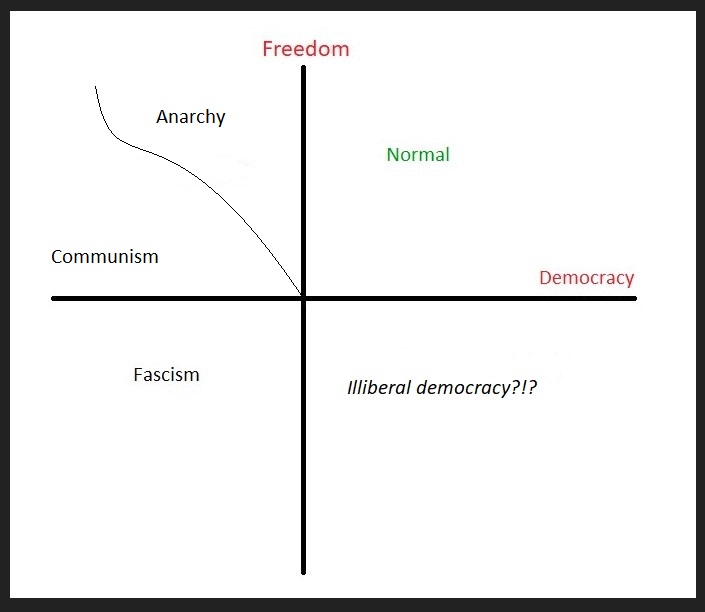
You see, liberty has two ‘faces’. Two dimensions.
Three, actually, but I’ll be talking about only two of them in this post.

There is the ‘inner liberty’ and there is the ‘socially sanctioned liberty’.

Liberty itself is a human concept.
We have noticed something, wondered about it, named it and then attempted to understand it.
This was, and continues to be, a collective effort.

In some places ‘liberty’ had appeared ‘naturally’.
There was enough liberty naturally sloshing around, hence the circumstances were right for those who had happened to live there at the right time to notice it. Furthermore, the conditions had been right again for the entire community to be able to agree among themselves about the concept and about how to use it/put in practice their new intellectual achievement.

Other places have not been so lucky.
They had been close enough, geographically and socio-historically, to notice the ‘birth of liberty’ but their specific conditions were not ‘right enough’. Many people living there coveted liberty but the local conditions made it impossible for liberty to take hold.
In these places ‘inner liberty’ – individually assumed freedom, can be found a lo more easily than presumed by those unfamiliar with the local realities.

Yet other places had it even worse.
Initially on the path towards liberty – and democracy, they have somehow stumbled.
For whatever causes – internal and/or external, something went wrong. People became disappointed enough to give up not only democracy but also liberty. Including their own, individual inner freedom.

A somewhat intermediary situation constitutes the third abnormal quadrant.
The people involved have given up their liberty – partially, but those running the show continue to use (‘pretendingly’) democracy as a window dressing to hide their true intentions.

The last hundred years or so have been extremely relevant in this matter.
All communist regimes had fallen. Under their own weight.
Most fascist/nazi regimes are no longer with us. Had been so ‘arrogant’ – read self destructive, that their neighbors had to do something about them. Had created so much disruption around them that those whose very existence was endangered had been forced to spring into action.
‘Illiberal democracy’ is a rather new ‘development’. Would be fascist/nazi dictators don’t have all circumstances aligned to make their final move so they have to make do with what there is at their disposal. The local population is ‘despondent’ enough to pay attention to their arguments but not desperate enough to follow them into the ‘unknown’. Hence this oxymoronic abomination.

‘Illiberal democracy’…
On the other hand, the spin doctors promoting illiberal democracies hope to be able to reap the benefits of democracy – the population being ‘rather favorably disposed’ towards the government while having to pay less ‘lip service’ to individual human rights.
A balancing act, with no safety net, which is alluring to those reckless enough to attempt it but which will end up badly. Sooner rather than later.

But the most interesting ‘combination’ – for me, at least, is Anarchy.
In the sense that those who ‘swallow’ the lure are self delusional.
They have somehow convinced themselves that their, own, liberty somehow trumps the liberty of everybody else. They feel so strong, so immune to any outside influence, that they would willingly accept to live in a no rule environment. Without understanding that ‘no rule’ means ‘no holds barred’.
They actually don’t realize that unfettered liberty actually means ‘Each of us free against all others’.
This being the reason for which Anarchy, as a political arrangement, has never survived for long enough to be noticed. Except as a transitory phase.

Many people interpret Darwin’s Evolution as ‘the survival of the fittest’.
Ernst Mayr, What Evolution Is, made is crystal clear that ‘evolution is not as much about the survival of the fittest as it’s about the demise of the unfit. Read the book, it’s well worth the time. https://www.scribd.com/document/358382958/Ernst-Mayr-What-Evolution-is-PDF

The meme above had been shared by somebody who was convinced that “Covid is solely a mental disease programmed into the minds of the masses to further ingratiate themselves in their loving servitude to their slave master tyrants“.

The fact that we have so many, and so conflicting, views on such a simple natural law as the law of evolution means that… we don’t know shit!

Hence Samuel Adams was right.
Since we know basically nothing, none of us should have ‘authority’ over others. Each of us should be free. To do as they please. To follow exclusively the ‘laws of nature’.

Which one of them?
Darwin’s – as some of us have chosen to interpret, or Mayr’s?

‘Survival of the fittest’ or ‘The demise of the unfit’?
‘I’m stronger than you so move over’ or ‘If you don’t agree with our commonly shared values, please find another place to live?’
‘Free against all else’ or ‘free together with everybody else’?

.

.

.

Third-World Country? No. Sorry, it’s Seattle…

There are so many of us who consider that ‘if you can’t pull your weight, you don’t deserve to live’…

On the other hand, there was a moment in time when the Brits had abolished the institution of debtor’s prison… And a second moment, no less significant, has been the Marshall Plan.

You see, for whatever reason, an individual or a business might fail. Sometimes, even a whole continent might fail…

Until recently – historically speaking, debtor’s prison was abolished in 1869 and the last war reparations had been extracted after WWI – it was a matter of ‘one strike, you’re out’. One mishap, for what ever reason – bad luck was enough – and you were practically reduced to ‘servitude’. If somebody else didn’t bail you out, your chances of getting out ‘alive’ were very slim. No matter whether you were an individual, a business or even a country.

Interestingly, the first who was allowed the protection of bankruptcy was the business sector, countries came next – but only if they were sovereign states, while individuals are not yet completely out of the woods.

Now, where would any of you prefer to live? In the XIX-th century Britain or in the XXI-st century Britain? Ceteris paribus. As in ‘conserving all other ‘variables’ ‘. Given the fact that hot water was practically absent in XIX-th century Britain, I’d prefer the present century anytime.

Was ‘bankruptcy’ the only explanation for the economic take-off which happened after the second half of the XIX-th century?
Probably not but it surely helped. Just as the present day Europe owns a lot to the Marshall Plan.

Then why aren’t we extending a more helpful hand to more of those who have ‘stumbled’?

https://www.thegazette.co.uk/all-notices/content/100938

‘On the face of it’, it makes perfect sense.

But why bother?

If I’m on the ‘right’ side, why would I make it easier for the other guy?
If on the ‘wrong’ side, why not just switch sides? Why would I bother to straighten the tree? Against the wishes of those who have a lot to lose in the process?

From the other side of the looking glass, things are a lot simpler.

‘Fiat justitia, ruat caelum’ is a warning, not a behest.

‘Make sure that justice is served, unless you want the heavens to fall on your shoulders’ is what any open minded reader of history makes of this ancient adage…

The fact that we concentrate our attention on what justice means for each of us is a measure of our individualism.
Of our nearsightedness…

Our respective individualities, each and everyone of them, have grown into what they are now in a social context.
None of us can exist for long, let alone protect and develop their individuality, in solitude.

We need the others.
We, each and everyone of us, need to belong. To a community.

To a functional community!
To a community where each individual is cherished.
Where each individual can develop its potential.

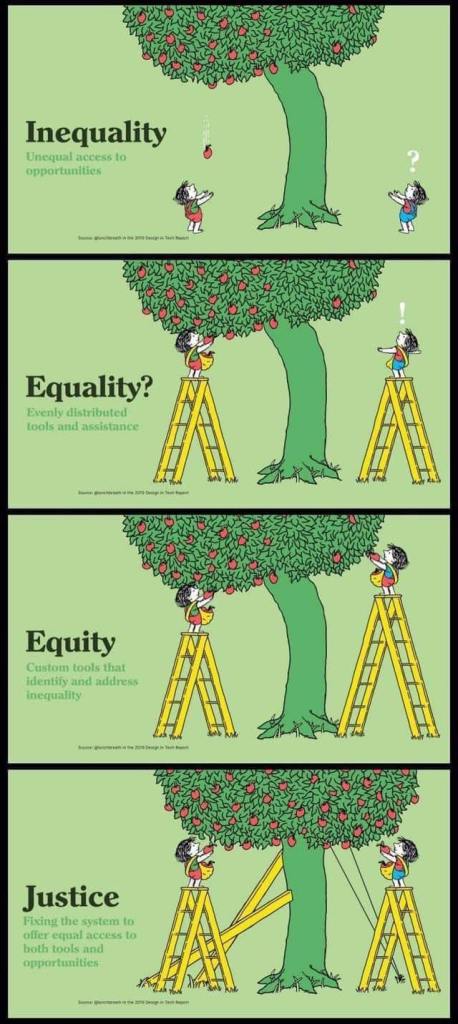
Where each individual has the opportunity and the tools to develop their potential.
For his own good, in concert with the main interest of entire community.

Survival.
Things remaining as they should be.

Us toiling here, on the surface of the Earth.
The heavens perched safely up there.

Justice must be served if things are to remain as we, each and all of us, need them to be.

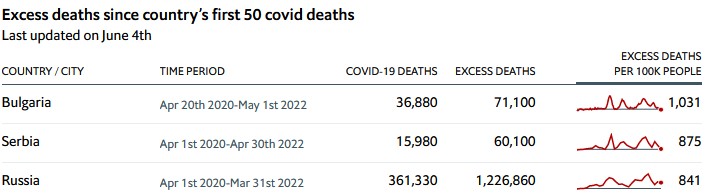
After Putin ordered the Russian army to invade Ukraine, the rest of the world ‘took sides’.

Some sided with Putin, many extended a helping hand to Ukraine – for various reasons, and others felt their lives have been ‘disturbed’.

This morning I almost blew my top.
I was listening to the radio. A usually decent station. Usually decent and, like all of us, imperfect.

The news anchor was interviewing an ‘expert’. An Ivy League Professor of International Relations and other blah-blahs. I’m not giving their names because I want them forgotten, not even more famous than they already are.

‘Is there any chance for this conflict to end in a negotiated manner?’
‘Yes, if/when both sides will find a mutually acceptable solution.
For example, if the Ukrainian side would accept a referendum in Donbass – and in Crimea, and if the Russian side would accept UN inspectors to validate the process. This would be in line with the general accepted policy of self-determination and ….’

OK, and where’s the difference between what Putin keeps saying and what I’ve just heard?!?

Two non-Ukrainians telling Ukraine what to do…

I’m going to set aside, for now, what these two – wait, three! – people are saying.
That Ukraine, the Ukrainian People, should give up a piece of their land.
My immediate interest lies in ‘who these three guys think they are’?!?

OK, only those who don’t want to see haven’t yet found out that Putin is a dictator.
But for a renowned Ivy League Professor to elaborate a scenario according to which the UN would supervise a referendum where an occupied population would have the opportunity to vote whether they want ‘their’ aggressor to maintain its control over the already occupied territory….

Would that distinguished Professor be comfortable with a referendum – equally supervised by the UN, taking place in California? Which California had already been occupied by Mexico? For which referendum, the Californians were asked where they want to live? Whether Mexico should continue its occupation or should the Mexican army retreat behind the internationally recognized border?

No, I don’t think the Professor has been paid by Putin. Or ‘compensated’ in any other way by the ‘red Satan’.
I just consider he was not paying real attention to what he was saying.
He had just opened his mouth and verbalized what his mind was churning.
The current ‘events’ have disturbed his pleasant existence to such a degree that he really needs this ‘fly in the ointment’ to ‘fly away’.

He is so ‘driven’ by his ‘need’ that he is no longer ‘patient’. He just can’t ‘stop talking’ for long enough to realize how fast Putin’s propaganda machine will make ‘good’ use of his ‘verbalizations’…

‘See, the good Professor confirms what our Beloved Leader has already done.
It’s the Ukrainians who are not reasonable!
They should first change their leadership then come back into Mother Russia’s arms.’

When are we going to understand?

Don’t tell others what to do unless you are prepared to ‘take advice’ yourself…
And, for your own good, don’t trade your future freedom for your present comfort!

– In which direction?

– I thought we were talking about a glass ceiling, not a glass bottom…

You see, we have to deal here with the difference between depth and thickness.

A ‘coat of paint’ has a certain thickness – we know where it starts and where it ends, while a sea has a certain depth. We know it’s there, we know where it starts – at the surface of the water, but we’re never exactly sure where it ends. How deep it actually is!

Another way to put this would be to compare the depth of human consciousness with the thickness of the cerebral cortex.
The depth of the reality we perceive using our brain and the thickness of the cerebral tissue where this perception takes place.
The depth of the reality we, humans, have built during our history inside the relatively shallow portion of the Earth where we feel at home.

We use a small number of phonemes to communicate among ourselves.
A relatively small number of words to convey hugely complicated concepts.
Two digits, 0 and 1, to build artificial intelligence… inside a wafer thin ‘slab’ of doped silicon.

– OK, enough introduction. How about making in clear what you really meant?
A glass ceiling or a glass bottom?

Whether it is a glass ceiling or a glass bottom is a matter of perspective.
A matter of where you are when looking at it. Above or below.
The only thing which really matters being the fact that you see it despite of it being made of glass.
Despite it being transparent.

Transparent to our eyes but not to our conscious mind.

– But if it’s already transparent, why is it such a big thing to break through it?
We already know what’s behind/above it…

Seeing is not the same thing as knowing… just as 0 and 1 scribbled on a computer chip is not enough to make an intelligent computer…

What happened:

And what various people make of it:

Two idiots go on a fishing trip.
They rent all the equipment – the reels, the rods, the wading suits, the rowboat, the car, and even a cabin in the woods.
They spend a fortune.
The first day they go fishing, but they don’t catch anything. The same thing happens on the second day, and on the third day. It goes on like this until finally, on the last day of their holiday, one of the men catches a fish.
As they’re driving home, they’re really depressed. One guy turns to the other and says
“Do you realise that this one lousy fish we caught cost us $1,500?!?”
The other guy answers
“Wow! It’s a good thing we didn’t catch any more!””

“On his evening walk Tony finds an ancient pottery bottle half buried in the silt down the river next to an old rusted-out van. Carefully examining the bottle, he notices that it still has a stopper in it, and there is some kind of writing etched around the neck of the bottle. Using his shirtsleeve, Tony gently begins to rub the mud from the bottle, to see if he can decipher the characters.
To his surprise, a thread of smoke oozes from around the stopper and the bottle begins to shake violently. With a sudden POP the stopper flies off and a genie appears before him, its arms folded in the traditional genie manner.
“Thank you for freeing me!” cries the genie. “I have been trapped in that bottle for over a thousand years!”
The genie continues “In return for releasing me, I will give you a reward of one million dollars. However, Tony, I must warn you, if you accept it, the person you loathe most in this world will get twice as much. Do you accept the reward with these terms?”
“Of course I’ll take it!” Tony replies with a smile “My family could use the money!””

“Every Friday night after work, Dave would fire up his barbeque on the shore of the lake and cook a venison steak.
All of Dave’s neighbours were Catholic and since it was Lent, they were forbidden from eating meat on a Friday.
The delicious aroma from the grilled venison steaks drifted over the neighbourhood and was causing such a problem for the Catholic faithful that they finally talked to their priest.
The Priest came to visit Dave, and suggested that he become a Catholic.
After several classes and much study, Dave attended Mass… and as the priest sprinkled holy water over him, he said “You were born a Lutheran and raised a Lutheran but now you are a Catholic”.
Dave’s neighbours were relieved, until Friday night arrived and the wonderful aroma of grilled venison filled the neighbourhood again.
The Priest was called immediately by the neighbours and he rushed over to Dave’s place clutching a rosary and was prepared to scold him, he stopped and watched in amazement.
There stood Dave, clutching a small bottle of holy water which he carefully sprinkled over the grilling meat and chanted to it:
You were born a deer, you were raised a deer, but now you are a rainbow trout“.”

“OK, I had a laugh. And your point is?”

If the first two were such idiots, where did their money come from?
If the guy who hates his family is wise enough to accept the genie’s offer, what is it that still makes the rest of us to actually kill each-other?

“And the third joke? What hidden meaning do you have for that one?”

“A turkey was chatting with a bull.
“I would love to be able to get to the top of that tree” sighed the turkey, but I haven’t got the energy”.
“Well, why don’t you nibble on my droppings?” replied the bull. “They’re packed with nutrients”.
The turkey pecked at a lump of dung and found that it gave him enough strength to reach the lowest branch of the tree. The next day, after eating some more dung, he reached the second branch. Finally, after a fourth night, there he was proudly perched at the top of the tree.
Soon he was spotted by a farmer, who shot the turkey out of the tree.
Moral of the story: Bullshit might get you to the top, but it won’t keep you there.”

Some say that history repeats itself until we figure out what it meant in the first place.
Others maintain that history’s first ‘helping’ comes as a tragedy while the second becomes a farce.

Well, I’m afraid things are a little more complicated.

For starters, history doesn’t do anything.
History is nothing but a string of events. Considered noteworthy and written down by some of those who have survived the above mentioned events.
NB, ‘winning’ is not necessary. Being able to survive – and to write, of course, is!

It is us who consider some of the events we have witnessed – or read about, to be noteworthy.
It is us who attempt to draw meaning from what we ‘hear about’.
It is us who are arrogant enough to believe we have learned anything.

Which brings me to the next step.

We live in a huge reality.
But see only a small portion of it. Understand even less than that.
But consider ourselves rational human beings. We are convinced that what we do – the decisions we reach and then put in practice, are based on reason. And good will!!!

Day to day practice tells us that individuals make mistakes.
I’ll leave ‘alone’ the actual ‘criminals’, I’m going to consider – for the scope of this post, that all of us act in good faith, all of the time.
Hence we need a mechanism to cope with the ‘honest mistakes’ made by every one of us.
No matter how low or how high in the ‘pecking order’.
No matter how feeble or how powerfull each of us is.
How much decision power each of us musters at any one moment.

We need a ‘procedure’, an ‘opening’, for each of us who sees something going amiss to be able to tell the others that ‘the emperor is naked’.

That’s what ‘democracy’ is for.

But there’s a caveat here.

Like history, democracy is a human concept. A man-made ‘tool’!

Each of the individual members of the group using this tool is ‘limited’. Has a limited knowledge and a limited ‘processing power’. By definition… Otherwise, democracy wouldn’t have been necessary in the first place. If at least one of the individuals involved would have been omniscient, they would have – somehow, climbed to the pinnacle of the hierarchy.
The fact that all imperia – all ‘arrangements’ where one individual garners a lot of power over a complex system comprising of many other people, have inevitably collapsed is a very powerful empirical proof for my assertion.
Further more, the number of individuals involved in any democratic arrangement is also limited. Also by definition. There’s no place on Earth – there are no humans living someplace else, for an infinite number of people. Hence even the ‘aggregate understanding of things’ any democracy might reach is also limited. Fallible, that is.

Thus even democracies need to follow rules. They just cannot ‘vote’ whatever their members wish to happen…

The first rule, of course, being you should not vote ‘against’ the rules of nature. You cannot, for instance, abolish Newton’s gravity by voting it ‘unlawful’…
The second rule being that the individuals comprising the democratic arrangement have be convinced that each of them is equivalent. Not equal, that’s impossible, but ‘equivalent’. That each of them should be able to vote, that each of them should have only one vote and that each of them should have the opportunity to voice their concerns. In a nutshell, that all of them have equal rights and that nobody – no individual or a smaller number of people than the entire ‘congregation’, has the right to tell anybody else what to do. Or what to refrain themselves from doing.

Now, that I have reached this point, let me go back to history.

The first ‘democratic arrangement’ known to us was the Ancient Athens.
It had evolved, for while, as an increasingly democratic form of government. During this time, the city’s fortune and influence in the region had grown almost constantly until Pericles had ‘bent’ the democratic principles so that he could yield more influence. Almost two centuries of democratic ebbing on and off followed until Philip II of Macedonia had taken over entirely. As a consequence, Athens’ influence had waned and then disappeared entirely.
The second one had dawned in Scandinavia, during the Viking era.
That democratic seed had, in time, spread in Europe, America and, gradually, in many other countries.

In the US, for example, at first only the white men were involved in the democratic process. They were the ones who voted and who were elected into office. Gradually, the democratic ‘rights’ had been extended to the female portion of the society and to the ‘members of the other races’. These successive ‘extensions’ had been parts of the general improvement of the society as a whole. During this period – not necessarily due to but certainly simultaneously with, the entire population lived better and longer lives while the country as a whole had become more and more powerful. The energy and potential of the population – of an ever increasing proportion of the population, had been put to better and better uses.

Simultaneously, individuals – an ever increasing proportion of the individual members of the society, with the criteria of sex, gender and race gradually losing the previously held power of discrimination, had enjoyed more and more power. More and more autonomy to determine their own fate.

Which brings us to the current developments in the US.

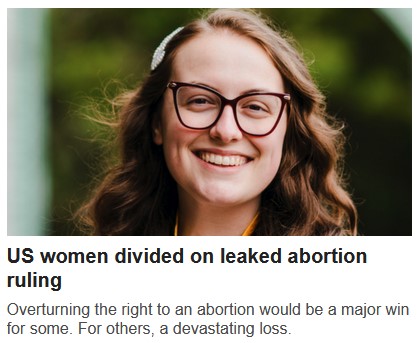
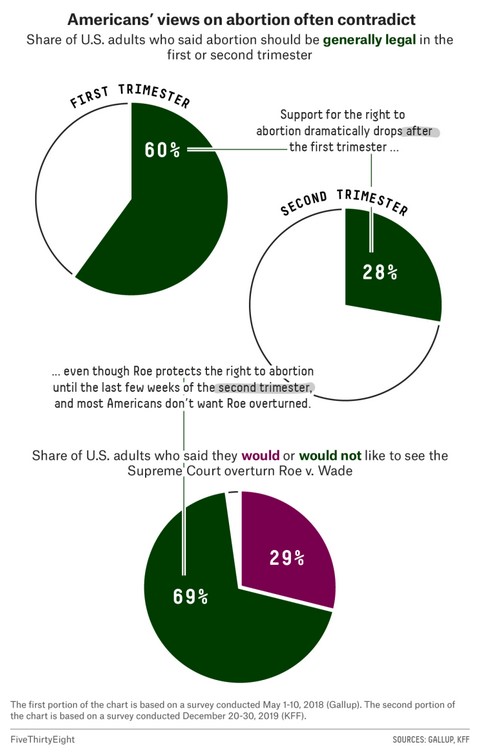
Some people, far from a majority of “The People”, would like to see the ‘other end’ of Roe v Wade.
‘These’ people seem to have somehow convinced a majority of the Justices sitting in the Supreme Court not only to hear their plea but also to ‘consider it in a favorable manner’.

In other words, a very small number of people – five out of nine, are going to restrict a previously granted right which had been enjoyed for almost 50 years by more than half of the American Population.

‘You have got it completely wrong!
Scotus isn’t going to prohibit abortion. Only the states can do that!’

Do you remember what the Civil War had been fought over?
Basically, the Confederates were claiming that individual states had the right to determine which people were to be considered ‘free’ while the ‘others’ kept maintaining that all people, regardless of their skin color, were free. That individual freedom was something which had to be determined at federal level, not by each ‘individual’ state.
Nowadays we have the very same thing. Some states claim it’s their ‘right’ to tell ‘their’ women whether, and in which circumstances, they may – or not, have an abortion.

Not a very ‘appealing’ proposition.
It opens the door for individual states claiming more and more ‘rights’ over their ‘specific subjects’.

The absolutely baffling thing about this whole development is the fact that those who want Roe v Wade to be repelled claim they do this in order to enhance individual rights (to live). I can understand that. I even sympathize with them. Ending a life, even that of an embryo, is not something to be treated easily.

But for a minority to impose their point of view – no matter how sound it might appear to some of us, to a majority… that cannot be, either, taken lightly.

After reading this interview for a second time, I asked myself: ‘Why are you paying so much attention to this guy?!? After all, he doesn’t say anything new…’

Then it hit me!

“Russia” and “we” are two different things.

Russia, the country, cannot indeed afford to “lose”. To ‘lose it’, to be more precise.
Russia will survive, no matter how many more ‘mistakes’ the morons currently running it will commit.

“We”, on the other hand, are the ones who can. And eventually will. Lose. Everything.

And the longer those “we” are allowed by Russia itself to run the Kremlin, the worse it will be.
For everybody. Us – the rest of the world, included.

‘But when will this nightmare end?’

That I don’t know.
All I know is that it will eventually do that. End.

Look at the picture above.
When have you seen anything more British than that?
OK, fake British. Make-believe British. But British nonetheless.

That was which hit me.
That during its entire history, Russia had tried to emulate Britain.
The Russian elite has for ever tried to rise itself to ‘British standards’. From Peter the Great to Putin.
All the while convincing the Russian People that the road they were trundling on was unique…

The sooner the ordinary Russians will figure out that they have been misled – and enough of the elite will understand that British-ness is good only for the Brits, they will make peace.
Among themselves.
With the their Ukrainian cousins.
And with the rest of the world!