The first ‘virtual’ tool invented by Man, language made it possible for humans to become conscious. By sharing information among them, individual human beings learned to speak to themselves. To think. To evaluate their activity. To evaluate themselves. Their own selves. Speaking to each-other, people have developed self-awareness.
The process is a work in progress.
Words are ‘stamps’. Images. ‘Commodified snapshots’ of the thing we call reality.
Which reality is simultaneously a word and the place we live in.
A word/concept into which – like in all other words – we’ve crammed everything we know about the thing itself. Which everything is nowhere near enough to actually cover the entire thing.
Reality, the word, covers everything we know about the thing but the thing itself, the thing we call reality, is far wider/deeper than that.
Hence the problem we’re stuck with.
We instinctively consider that words are apt representations for the things we attempt to describe using those words. Which, most of the time, isn’t exactly true. We – most of us, most of the time – consider that those of us we talk to understand the words we share in the same way we understand them. Which is never the case!
I’ve been watching this, on and off, for three days now. And I still can’t make up my mind. Whom to admire more.
The one who performs what he believes to be normal. And somehow manages to include, into that normalcy, the negative feedback he is been dished out by the most powerful agent in his world. Or the other one. Who pursues his side of normal. Who finds in him to investigate when he realizes the two normals don’t fit. And the courage to make amends.
Thank you Elvis Naçi for this conundrum. I’m a better person now. Now that I’ve stated my impotence.
Regardless of our individual beliefs, it would be rather naive to consider there’s nothing but the here and now. Internet wisdom
What have you done since graduating into awareness?
Worrying about tomorrow?
Welcome to being a human. And how do you assuage your fear?
Put your faith into an exterior agent? Trust your fellow humans to bail you out if necessary? Make sure you’ll never depend on anybody else but you?
Each of these three strategies presumes differently about what happens outside yourself.
The more responsibility you transfer to the outside agent – currently known as God in certain circles – the more serene your life. You don’t have to change anything except putting your faith in the outside agent of your choice. If that works for you. Only by transferring the ultimate responsibility to ‘the outside’, no matter how hard you continue to do whatever you were doing before the epiphany, you embrace the fact that your fate is determined outside of you. If you expect your mates to do ‘the right’ thing, you must prime them first. You have to behave in a manner conducive to ‘community’. You and those around you. The community itself has to behave as a community. To make sure you’ll never depend on anybody else, you need to know everything that might happen to you. In fact, you have to know everything.
Each of these three strategies, or any combination thereof, mandates that there are things happening beyond here and now. Beyond what each of us might know and control.
We make history. We write history. We read the history we wrote about the things we’ve done.
Then we keep ruminating about what we (don’t) learn from and about history…
Are we nuts?
But is there anything to be learned from history?
Yep! What happens when we fail to learn from the mistakes which keep shouting at us from the history books our ancestors had written for us. Had written to warn us…
Some people argue that ‘truth lies somewhere in between’ while others maintain that ‘truth is where it is, not somewhere in the middle’.
Well, both sides are right.
Truth is, indeed, “where it is”. The problem being that ‘that place’ is ‘out there’. Not necessarily ‘out of reach’ but definitely out of anybody’s realm. Hence finding ‘that place’ needs a collective effort. In this sense, the truth is, indeed, somewhere ‘in the middle’. In the middle of our converging efforts, if our efforts are honestly targeted.
On the other hand, truth is not ‘somewhere in the middle’. In the sense that truth is not something we can negotiate. We can indeed pursue truth individually but we cannot negotiate the results.
We can settle for a less than perfect truth, if we’re not able to reach ‘the absolute’, but it must be a workable version, not a lukewarm mean. The result of our quest, even if ‘only for a while’, must serve the goal we’ve been trying to reach! If we settle for something only because that something titillates the ego of the majority amongst us… then our efforts have been wasted!
Allow me to conclude that the truth is not somewhere between us but above us. It makes a lot of sense to thread carefully when trying to reach it – lest we stumble during our quest – but we nevertheless need to broaden our perspective. Lest the truth remains hanging just outside of where we’re looking for it.
“Denn selbst muss der Freie sich schaffen” Hence the free must define their own nature Richard Wagner, Die Walkuere
In my previous post, I related to ‘life’ as a living creature. I described life from the inside. The perception of a living organism. But what if ‘life’, as a phenomenon, is how meaning is created by the environment where the process takes place?
For an outside observer, there are three stages. Pre-biotic, self-driven and meaning-driven life.
Life, as we know it, cannot exist on the surface of the Sun. Or on the surface of any other star. But neither can life exist without the processes taking place inside the stars. Without the energy being radiated by the stars and without the atoms being ‘cooked’ inside them and spewed out during the last stages of their ‘lives’.
Having said that, the rest is simple. Where ever conditions are ‘right’, atoms get together in such a manner that ‘structures’ become ‘alive’. Those structures become organisms and display the characteristics we’ve come to associate with life. In this stage, the only ‘force’ which drives the process is what we call ‘evolution’. Species cease to exist as they are no longer able to weather changes in their environment and new species arise along with the advent of new opportunities. And, at this stage, a second ‘disturbing agent’ starts to influence the environment. Living organisms, in order to live, need to ingest portions of where they live. To excrete the by-products of their metabolism. And they leave behind ’empty carcasses’ at the moment of their death. For example, the oxygen we breathe in is the by product offered to us by the plants which live at our side. And the fertile soil those plants ‘eat’ in order to provide us – the oxygen breathing organisms – with what we need to survive, is the consequence of previously living creatures.
In the third stage, that where ‘meaning’ becomes a force to be reckoned with, the changes perpetrated to the environment cease to remain ‘natural’. As they used to be during the second, self-driven, stage. In the third stage, an increasing number of changes to the environment are driven by purpose. Are purposefully staged by agents acting according to the meaning they have found.
Individual organisms, working in concert, for a while, organize themselves in such a manner as to be able to keep the inside it, the outside out, to ingest what ever they need to survive from outside and to excrete the byproducts of their living. Also known as the by-products of their metabolism.
In order to perform the above, the individual organisms use information gathered by their ancestors and transmitted over generations. Which information has been shaped in time, through an evolutionary process, in order to remain useful for the currently surviving organisms. Which said shaping has happened through the natural culling of the individuals bearing information no longer fitting to the then existing natural circumstances.
For life to continue, individuals living at anyone time must engage in reproduction.
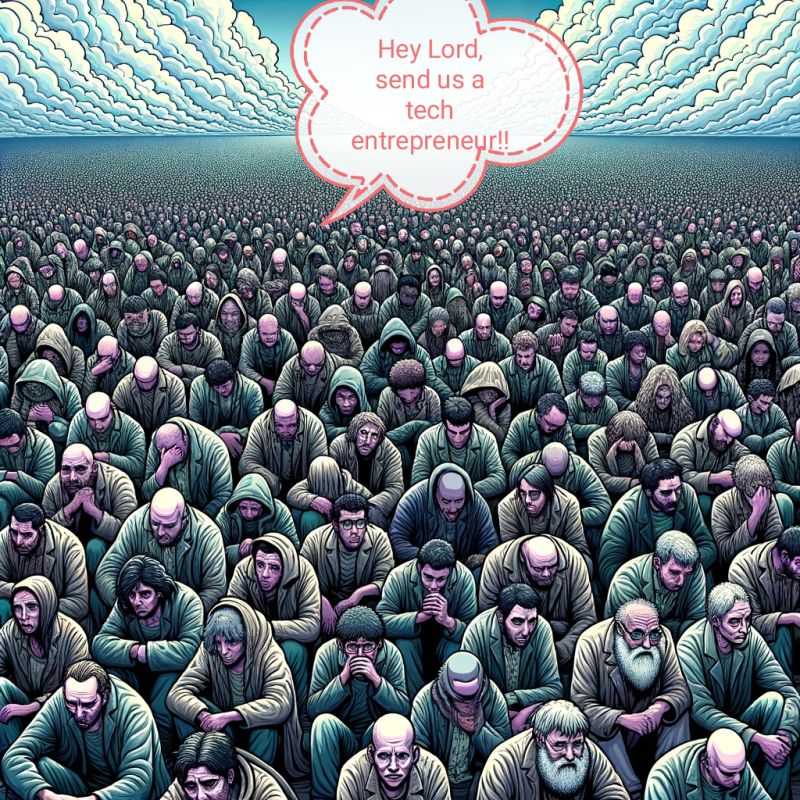
Taking and managing risk is also an acquired skill. Like riding a bike or swimming in the sea. Only nowadays the key word is safety. Safety, not safety net. We are taught to avoid risk, at all costs, instead of how to lend a helping hand towards the fallen ones. This is why we pay lip service to entrepreneurship but despise failure… as if it were possible to have one without the other.




 nicichiarasa