Archives for posts with tag: Maturana

“All governments suffer a recurring problem:
Power attracts pathological personalities.
It is not that power corrupts but that it is magnetic to the corruptible.”

Frank Herbert, Chapterhouse:Dune

How can Orson Scott Card be so bigoted, but the Ender’s Game series is about empathy and acceptance of others?

– “Circle of Empathy. If you’re inside the circle, you are worthy of empathy and it applies to you. If you’re outside the circle, you are not worthy of empathy and bigotry towards you doesn’t count because you don’t count. If you’re ever baffled by how one person can be forgiving and accepting towards one group and turn around and be rabid dogs towards another group it’s because in their emotional calculus the second group literally doesn’t count as “deserving”.
Does it make sense? No. Do humans make sense? No.
“”

Card was young when he wrote Ender’s Game and for what it’s worth I think it reflected his real views on the world at the time. He’s since spent decades of his life in a high control cult that has told him constantly that gay people are moral failures.
I think there’s a chance that Card is actually closeted from remarks he’s made on the subject and fear of discovery has made him feel he has to be even more dogmatic on the matter.
I grew up queer in fundamentalist churches. I’m always going to think of people like this as partial victims, even if it would be easier to just hate them. Brainwashing is real. It’s not just something you shrug off because you’re an adult.
I love his Ender series and think it’s beautiful. It doesn’t actually matter to me what he personally believes because his work is saying something else.

Discussion found on Reddit:
https://www.reddit.com/r/books/comments/14mmmu0how_can_orson_scott_card_be_so_bigotted_but_the/?rdt=42921

Alive in a living context.

Try to imagine a single living organism.
Forget about ‘where did it came from’. Forget about ‘what does it drink/eat/breathe’.
Now, does the existence of a single living organism mean that life is present? When attempting to answer this, pretend no observer is present…

‘Life’ is ‘wide’ word. It covers a lot.
From ‘life’ as a phenomenon. That thing studied by biology.
To ‘life’ as an ‘individual experience’. That thing cared for by medicine. Human, veterinary… By the way, how do you call a person who takes care of sick plants?

Am I making any sense here?

My point being that life is both a phenomenon and an experience.
As a phenomenon, life – as we know it – needs a certain environment. And a ‘push to start’.
According to what we presently know, life may appear, on it’s own, in certain conditions. We don’t know, yet, which are those exact conditions. Nor exactly how it happened. Only that it seems possible. And that’s enough for me.
If certain conditions are met, life – as a phenomenon – is possible.

Furthermore, if life as a phenomenon has established itself in a certain environment, life as an experience becomes certain. Each individual organism living in that environment experiences its own life. Regardless of whether a particular organism is aware of its being alive or not.

Shared Awareness

Life, as a phenomenon, is a ‘process’.

Individual organisms become alive. One way or another but always as a ‘continuation’.
Each generation of individual living organisms live by the same rules as the generation before it. Each ‘child’ generation follows in the footsteps of the ‘parent’ generation. A ‘blue print’, a genetic blue-print, is passed over from generation to generation. OK, let’s pretend we haven’t yet learned about genetic variation…
Each individual organism continues to be alive for as long as:
– It remains ‘functionally whole’. A human can continue to live, at least for a while, without any limbs. But not without its head or heart. Well, you understand what I mean.
– It continues to exchange substances with the environment in which it lives. Which means that the individual organism is the entity controlling which substances get inside and which substances are ejected from its interior. OK, we need to breathe so we inhale microorganisms and pollutants ‘on top’ of the air we need to survive – and some of them make it into our blood-stream – but it’s still our lungs which absorb oxygen, eliminate carbon dioxide from the blood and leave nitrogen alone. I’m sure you get my drift.

This ability of even the most basic/primitive individual organisms to interact with the environment – along the rules inscribed in their genetic inheritance – allows us, conscient observers of the phenomenon, to consider that individual organisms, while alive, display a certain degree of awareness. They behave as if being aware of the difference between oxygen and nitrogen. As being aware of the need to breathe. As being aware of the fact that too much carbon dioxide in your blood is something to be avoided… And so on.

Fast forward from bacteria – individual organisms which are able to extract specific nutrients from a broth to, say, chimpanzee. Who are very picky about food. When there is plenty enough to choose from…
There is a certain commonality between these two very different kind of organisms being able to feed themselves, right? And if we, humans, pretend to be aware of (some of) our our actions… how do we name this ability of our fellow living organisms? Their, our?!?, ability to choose?

Together?

“The greatest consequence of the arising of self-consciousness and self-awareness in the constitution of humanness, is that to the extent that we human beings are self-conscious beings we are aware of what we do, and of the possible consequences of what we do to ourselves and to other human and not human beings. Self-awareness and self-consciousness are manners of relational living that as they are lived constitute a relational grounding for all else that is being lived. The self-conscious person lives his or her living in a manner in which a question such as, “are you aware of what you are doing?” always makes sense. The self-conscious person lives his or her being in self-consciousness as if he or she were distinguishing him or herself as an independent entity, and operates comfortably in that way. Yet, if we seriously want to explain how is it that self-consciousness happens under the circumstances that we cannot distinguish in the experience between what we call perception and illusion, and, therefore, that we cannot make any reference to an independent reality, we cannot but Þnd out that it is not possible to do so if we do not accept that languaging is not a system of symbolic communications about entities assumed to exist independently of our distinguishing them, but it is a manner of living together in a recursive flow of co-ordinations of consensual co-ordinations of doings.”
Humberto Maturana, The origin and conservation of self-consciousness, 2005

According to Maturana, self-consciousness is somebody’s ability to observe themselves ‘in the act’. To observe themselves observing. Ability developed alongside other self-conscious ‘agents’ through the use of language.
“It is not possible to understand the nature of self-consciousness without understanding the operation of human beings as living systems that exist as emotional languaging living systems: self-consciousness is a manner of living.” Op. cit.

The way I see it, consciousness – self-awareness in Maturana’s terms – is life 2.0.

Just as there are life as a phenomenon and life as an individual experience, there are also human consciousness – a shared ability – and individual conscience.
Just as there’s no way in which a single living organism might appear ex nihilo – unless some ‘outside agent’ introduces it, there’s no way in which anybody might become aware of their own self by themself.
Life – the phenomenon, once established – opens up a huge field of opportunity. Mere chemicals, entangled, ‘cooperate’ towards maintaining the life of the individual organism inside which they happen to ‘cooperate’. Evolution, the process, makes it possible for new forms of life to appear as the environment is shaped by the formerly living organisms. Or by other naturally occurring phenomena.
Consciousness, our shared ability, opens up the next level of opportunity. The opportunity for each of us, individual self-aware agents, to show/prove our ‘true nature’.

Individually as well as collectively.
Do you really care about where your car was built?
No, but I am interested in how it works.
I need that in order to use it properly!

‘Ordinary matter’ is ‘lifeless’. Inanimate.
The rules which ‘shape’ the interactions between pieces/portions of the lifeless matter are the same ‘all over the place’. As far as we know, anyway.
The pieces/portions consisting of ordinary matter are more or less similar. There’s nothing to tell apart one proton from another. One rock from another one. One drop/bucket of water from the rest of the pond.

And there’s life.
‘Technically’, the living organisms are made from inanimate matter.
And, anyway, while ‘ordinariness’ is forever, life is temporary. Individual organisms have a limited lifespan, species evolve and life itself has appeared some time after the ordinary matter.
The rules which shape the interaction between the living organisms and their environment are species specific. Further more, individual sets of data set apart each individual belonging to each species. Which means that each species interacts in a specific manner with their environment while each individual organism does have its own particular ‘manner of doing things’. ‘Inside’ the species specific behavior but nevertheless particular.

Then there’s conscience.
Which conscience is nothing but a concept. Like everything else here.
Which concept, like all other concepts, has been coined by us. By us, conscient human beings.
The point being that we, conscient human beings, attempt to understand conscience by thinking about it.
Somewhat similar to looking inside an eye when attempting to understand sight. Or listening attempting to understand hearing.

Freud came up with the notion that studying what’s wrong, out of the ordinary, might help us to understand ‘normal’. But Freud was a psychologist…
Engineers prefer to ‘look from above’. To extricate themselves from the problem in order to see it ‘whole’. And I’m an engineer…

So, what is conscience?
An individual ability and a space/place.

There is life and there are individual living organisms.
Life goes on regardless of a number of individual organisms passing away. As long as one individual living organism continues to be alive, life itself will continue to exist.
Further more, regardless of how life might have appeared, presently it seems impossible to have life, the kind we have learned to appreciate, with only one species being alive. Let alone with only one living organism…

Same thing with conscience.
Humans become conscient through human interaction. Our ancestors had become conscient way before anybody was thinking about conscience. People who, in various circumstances, have had a limited interaction with other people struggle to develop a functional conscience. A full fledged one…

But humans are not exactly alone when it comes to being conscient.
Not exactly aware of their own selves, but still functionally ‘conscient’.

Being alive, individually speaking, means being able to:
Maintain the ‘structural identity of the organism’. As in keeping the inside in and the outside out.
Manage to breathe, eat, drink and excrete.
Life, as larger process, means successive generations of individual organisms transmitting the pertinent species specific genetic information to the next cohorts.
Maintaining the inside in, the outside out and managing to breathe, drink, eat and excrete means behaving in a conscious manner, albeit in a very limited sense.
This behavior being specific to ‘life’ and life being dependent on species specific information being passed from one generation to another means that human conscience – acceded by individual humans imbibing culturally specific information – is nothing but a particular example, maybe the most evolved one to date, of an otherwise widespread phenomenon. As a matter of fact, people who – for various reasons – are not ‘conscious’ – as in aware of themselves – continue to ‘breathe, eat, drink and excrete’. ‘Incompletely’ and only for a short while, if left unattended, but that’s another matter.

Furthermore, there is a ‘continuum of conscience’ starting from plants and culminating with the human awareness.
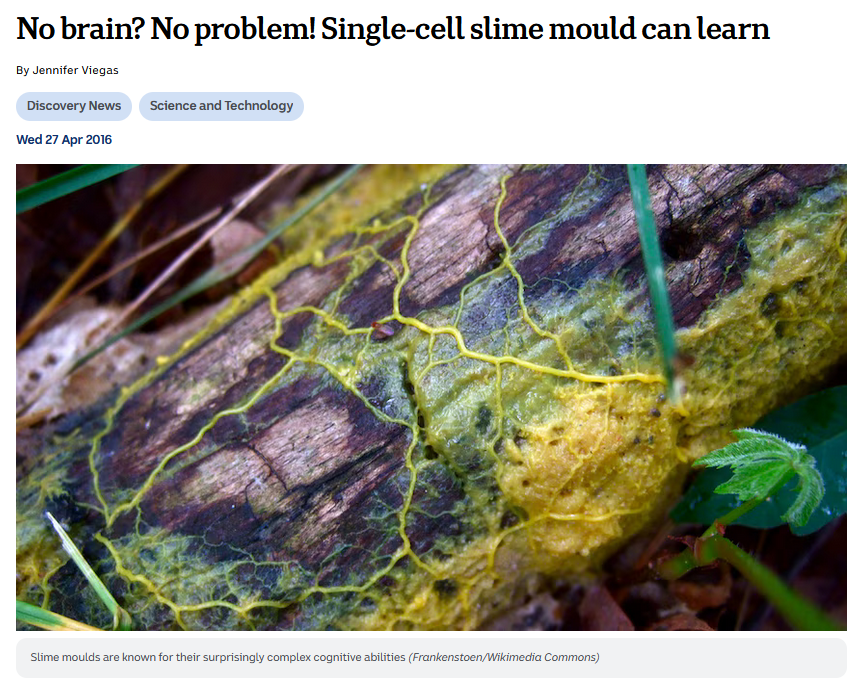
While plants and fungi manage to stay alive, animals display a widely nuanced repertoire of behavior. From the learning slime to our cousins, the apes.

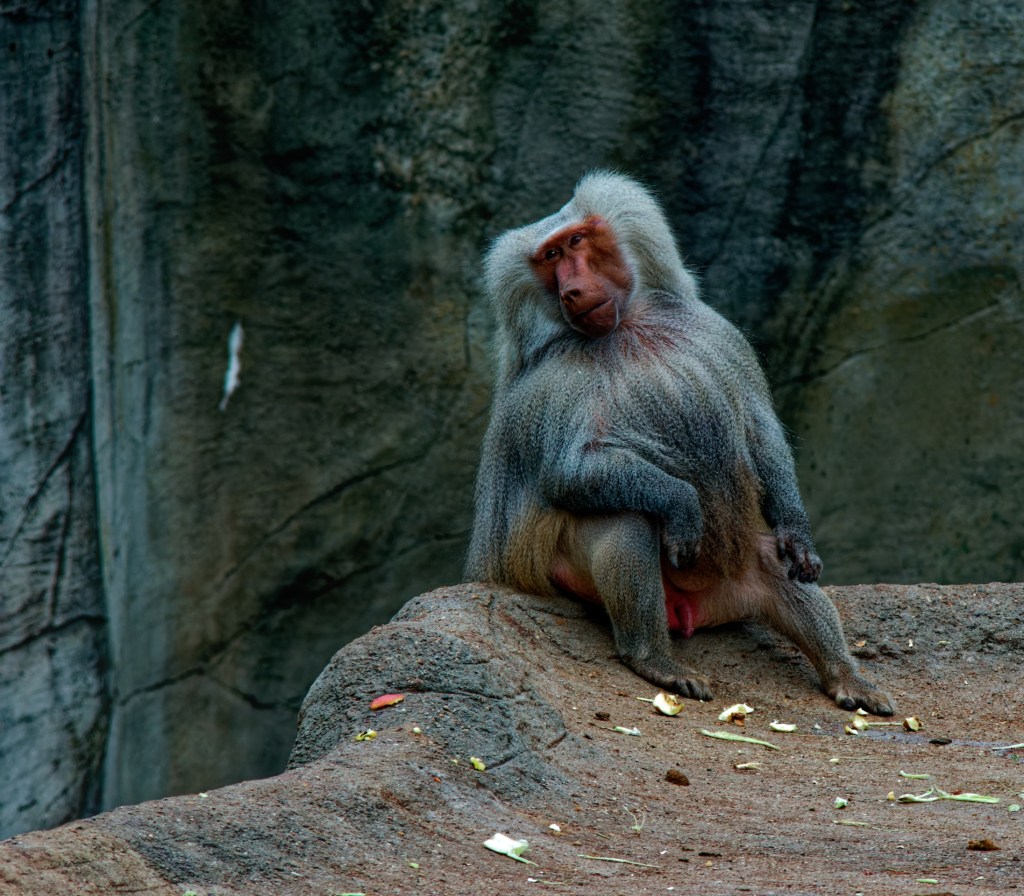
A hamadryas baboon, Hagenbeck Tierpark, 2009

https://constructivist.info/1/3/091.maturana

Who wrote the Bible?
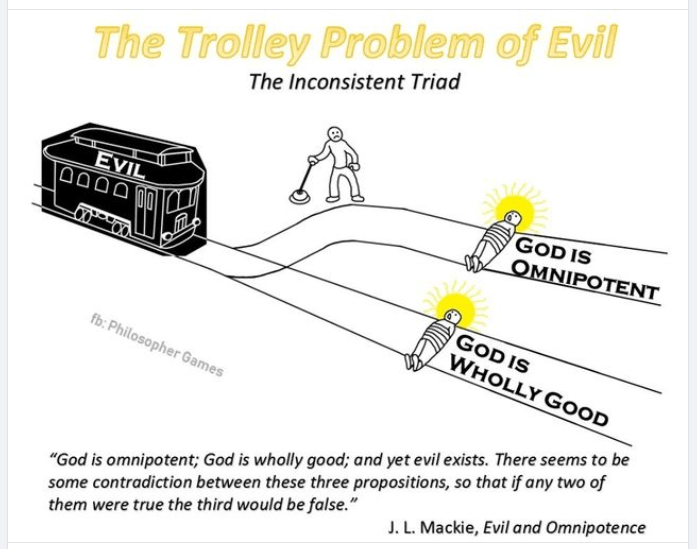
Who considers God to be both omnipotent and wholly good?
Who had become human by learning ‘to tell good from evil’?
Does evil even exist outside our minds? Is anything actually evil unless considered so by one of us?

And no, I’m not hair-splitting when speaking about the huge difference between bad and evil!
An earthquake, for example, is bad for those affected. Yet no evil is involved here but for those who ‘question God’s actions’.
An individual who tortures animals for fun is also bad. Arguably less so than a major earthquake… but for everybody in their right mind that person is undoubtedly evil!

According to the Bible written by some of our ancestors, by “knowing good and evil” we have become “one of us“. “Like one of us“… Not (yet?!?) able to “live forever” and for certain ignorant of most things.

‘What?!? “Ignorant of most things” yet still “knowing good and evil”?!?’

Yep!

A more relaxed reader of the Bible may notice that what’s written there recounts, symbolically, the becoming of Man. The foremost apes notice the difference between night and day. And name both. The difference between ocean and dry land. And name them both. Notice the stars above and the living things, plants and animals, with whom they share the place. And name them all.
“Apes”, not ape, because nobody can learn to speak by oneself. Nor become self aware. As in ‘able to observe oneself while observing other things’. (Maturana, 2005)

That same relaxed reader may also notice that the very ‘fallen nature’ of Man stems from the ‘inconsistency’ noticed above.

We’re basically ignorant yet still able to call out evil!

Oops…

Humberto Maturana, “The origin and conservation of self consciousness…”, 2005, https://cepa.info/702

James Garvey, “Ethics is invented, not encountered…”, 2017, https://www.prospectmagazine.co.uk/philosophy/ethics-is-invented-not-encountered-why-the-philosophy-of-jl-mackie-remains-essential-reading

We learn about what we call reality by
analyzing the information we acquire through our senses.

We.
We, the human people.
We, the conscious human people.
We, because nobody has ever been able to become conscious – as in aware of their own self, by their own. Alone…

Learn.
We are not the only ones who are able to learn.
Our dogs learn our ways. And we continuously learn about more and more living organisms being able to learn. And to remember what they have learned. To fine tune their behavior according to the circumstances into which they happen to live.

What we call reality.
First and fore-most, reality is a concept. We call it ‘reality’. And many other names…
Believers call it ‘god’, scientists call it ‘physical world’ and the scientists who happen to believe are convinced that by studying the reality they will eventually divine the will of the Lord.
The believers being convinced that whatever exists, is here because the Lord wished it into existence.
So, basically, the main difference between the believers and the nonbelievers is the fact that the believers are convinced that the ‘out-there’, the ‘source of it all’, has a conscience of it’s own. A will of it’s own…

By analyzing.
We have been able to build our conscience – our ability to ‘observe ourselves while observing other phenomena’ (Maturana, 2005), because we have a big enough brain, the ability to share complex and meaningful information using language and the ability to put in practice some of our wishes/thoughts through the use of our hands.
At a certain point in its evolution, human conscience has become sophisticated enough to need explanations. It was no longer satisfied with mere ‘connections’ – If… then…, it had started to wonder about why-s. ‘Why does this happen as it does?’ ‘Will it happen again tomorrow?’
Using our by then already established ability to speak up their minds, our ancestors shared among themselves these ‘anxieties’. Discussed them around the fire-place. Started to analyze. The reality. What they perceived to be real. The ‘thing’ which continuously generates the circumstances in which we – all of us, have to make do.

Information.
In order to analyze, the analyst – each and everyone of us, has to separate the meaningful information from the surrounding noise. In order to do that, we have started by coining the very concept of (useful/meaningful) information. As being different from ‘noise’. The difference consisting, obviously, in us being able to find its use and/or pinpoint its meaning.

We acquire.
Information is acquired on an individual basis. For an ‘event’ to become information, it has to be ‘noticed’ by an individual. It has not only to be sensed but also identified as useful/meaningful. Different from ‘noise’.
Which process of identification implying methods which had been agreed upon by the members of the community. Music would be a good example of how various groups of people make the difference between sublime/abhorrent and white-noise. While ‘use of language’ is a very poignant example of how people can both share information and mislead one-another.

Senses.
Everything that we know, had entered our mind through our senses.
Before setting it aside as information or discard it as noise, we have to get in contact with it as a sensation.
Or as a thought. A conjecture. A few pieces of information which put together have given birth, inside our individual mind, to new information. To ‘something else’ which passes the threshold into being information. At least according to our own mind…

Which transforms our minds into our famous sixth sense.
In the sense that our individual minds are capable of building ‘sensations’ on their own. Starting from information that has already been stashed in our memory.
Which brings us to the third reality.

We have – in the sense that we have agreed upon its existence, the surrounding reality. The things we – as in most of us, consider to be real. The mountains we climb, the air we breathe, the pebbles which happen to sneak into our shoes. The reality which is being studied by science. The reality to which we have access through our senses. Our minds and our sense enhancers – scientific instruments, included.

We also have the ‘out-there’. The things we know we’ll never be able to grasp. During our lives! The things our followers might be able to figure out…

And each of us has their own reality.
Individually built even if ‘carved’ from the same (type of) material as the reality shared by the rest of us.
Individually built even if using more or less the same (culturally accrued) methods.
Individually built even if neither of us is alone.

H.M. Romesin, 2005, The origin and conservation of self‐consciousness: Reflections on four questions by Heinz von Foerster

A planned after-thought.
Rumsfeld is both wrong and right. There are unknown unknowns but they are no longer unknown since we speak about them…
Which actually proofs the limits of our languaging.
The imprecision of the manner in which we gather, share and analyze information.

We know that smoking is bad for us yet we continue to smoke.

Because too many of us are convinced that each of us, in particular, will be fine.
That things are not that bad. Well, maybe for those who had bad luck. Or something…

You see, I’ve reached the conclusion that an individual’s conscience is more preoccupied with it’s own survival than with the ‘well being’ of it’s “host”. The conscience itself comes first, in its own ‘eyes’.

“What?!?”

Do you have a better explanation for why so many of us continue to smoke? To do drugs? To drink/eat too much? To… – feel free to fill in your favorite aberration! Your own method of self-destruction.

Please don’t quote any study about how powerful addictions are. For each of those there are many studies proving how powerful our minds are when they become determined enough.

How fast things happen after our knowledge about something becomes a belief. A belief in something…

Let me put it the other way around.

Did you get the anti-Covid jab? Why?
You haven’t made up your mind yet? Because you are not yet convinced?
You’re not going to? No matter what? Because you don’t believe in vaccines?

See what I mean?

The world is awash in information. All of us are exposed to more or less the same knowledge.
All of us know that a considerable number of people – the vast majority, actually, are convinced about the roundness of the Earth. Yet there still is a very vocal group of Flat-Earthers. Of people acting as if they actually believe that the Earth is Flat.
All of us have been told that smoking can cause cancer. And other diseases. Yet some of us continue to act as if they actually believe that nothing of that sort might happen to them.

Mind you, there is nothing inherently bad in this! On the contrary.
If people would have believed everything they had ever been told… at one time… the Earth would have remained flat, all witches would have been burned – or drowned, all ‘Jews’ would have been killed – many centuries ago…

The point of this post is to underscore the importance of self.
The huge responsibility placed upon our individual shoulders by the fact that we are the ones called to choose what to believe.

Yes, we are indeed inundated with ‘data’. From the day we are born to the day when our conscience goes dark.
Yes, some minds are sharper than others. Some of us are better at spinning thoughts than the rest of us. Some of us are indeed better at making sense of the information which happens to cross their paths.
And some of us are better at influencing others. At shining ‘light’ on ‘things’ in a manner which makes the message they want to convey more palatable for their intended targets.

Yet all this ‘trivia’ doesn’t change the reality.
We are the ones who make decisions. We are the ones who choose what to believe. We are the ones who shape our fate.

By choosing our faith!
By convincing ourselves that some things are worth doing and that some should be left undone.

https://www.univie.ac.at/constructivism/pub/hvf/papers/maturana05selfconsciousness.html

LE
If this is of any help, for any of you, I still smoke a few cigarettes each week.
And continue to drink. Alcohol.
I’m not perfect either!

One-Time
Monthly
Yearly

Make a one-time donation

Make a monthly donation

Make a yearly donation

Choose an amount

$5.00
$15.00
$100.00
$5.00
$15.00
$100.00
$5.00
$15.00
$100.00

Or enter a custom amount

$

As much as I love writing, I do have to eat.
And to provide for my family.
Earning money takes time.
If you’d like me to write more, and on a more regular basis, hit the button.
Your contribution will be appreciated!
Another very efficient way to help would be to share my posts.

As much as I love writing, I do have to eat.
And to provide for my family.
Earning money takes time.
If you’d like me to write more, and on a more regular basis, hit the button.
Your contribution will be appreciated!

As much as I love writing, I do have to eat.
And to provide for my family.
Earning money takes time.
If you’d like me to write more, and on a more regular basis, hit the button.
Your contribution will be appreciated!

DonateDonate monthlyDonate yearly

‘Survival instinct’ compels us to eat, avoid being eaten and fornicate.

To keep us on the straight and narrow, Mother Nature has invented the ‘stick and carrot principle’.

Forget to eat – or eat something ‘unbecoming’, to you or to your species, you’ll soon be in pain.
After a nice meal, you’ll feel good.

Somebody else takes a bite of you? From a tiger to a mosquito? You’ll be in pain.
Slap the mosquito, con the tiger into a trap or, the creme de la creme, gain the upper hand in a bare knuckles encounter and you’ll certainly feel good.

Orgasm? Does it ring a bell? OK.

‘Stick and carrot’ worked fine.
After all, it has been the engine of evolution.
Demise of the unfit’ made it so that only those who were able to survive in a certain environment passed their ‘comme il faut’ to the next generations.

Until consciousness came around, that is.
Consciousness as we understand it…. long discussion. Soon.

“And the LORD God said, Behold, the man is become as one of us, to know good and evil”

And what did we do with all this knowledge?

Transformed our need to eat into gluttony? Because ‘it tastes so good that I can’t stop eating it’?
Transformed our need for safety into the habit of exploiting others? From harnessing beasts to our plows to using child labor to mine the coal used during the Industrial Revolution? Simply because we could? Some of us, anyway…
Demeaned love making to prostitution? Because orgasm, like money, is fungible? Feels the same, no matter how it was obtained?

Why?
What drove us to reach such horrible pinnacles?
What made us steer in this direction after we’ve developed the ability to ‘observe ourselves observing‘?!?

What’s going on here?

“God Arraigns Adam and Eve

And they heard the voice of the LORD God walking in the garden in the cool of the day: and Adam and his wife hid themselves from the presence of the LORD God amongst the trees of the garden. And the LORD God called unto Adam, and said unto him, Where art thou? And he said, I heard thy voice in the garden, and I was afraid, because I was naked; and I hid myself. And he said, Who told thee that thou wast naked? Hast thou eaten of the tree, whereof I commanded thee that thou shouldest not eat? And the man said, The woman whom thou gavest to be with me, she gave me of the tree, and I did eat. And the LORD God said unto the woman, What is this that thou hast done? And the woman said, The serpent beguiled me, and I did eat.

And the LORD God said unto the serpent, Because thou hast done this, thou art cursed above all cattle, and above every beast of the field; upon thy belly shalt thou go, and dust shalt thou eat all the days of thy life:

And I will put enmity between thee and the woman, and between thy seed and her seed; it shall bruise thy head, and thou shalt bruise his heel.

The Punishment of Mankind

Unto the woman he said, I will greatly multiply thy sorrow and thy conception; in sorrow thou shalt bring forth children; and thy desire shall be to thy husband, and he shall rule over thee.

And unto Adam he said, Because thou hast hearkened unto the voice of thy wife, and hast eaten of the tree, of which I commanded thee, saying, Thou shalt not eat of it: cursed is the ground for thy sake; in sorrow shalt thou eat of it all the days of thy life;

Thorns also and thistles shall it bring forth to thee; and thou shalt eat the herb of the field;

In the sweat of thy face shalt thou eat bread, till thou return unto the ground; for out of it wast thou taken: for dust thou art, and unto dust shalt thou return.

And Adam called his wife’s name Eve; because she was the mother of all living.”

Let me rephrase what you’ve just read.

God, the father, learns that his creation – the man he had created in his own image, has become “one of us”.
When Adam hides his nakedness from his creator, God understands man has become aware.

Was he proud? Like most parents are when their children ‘grow up’?

OK, let’s forget about God for a minute. Let’s see what our forefather, Adam, had done when confronted with the consequences of his acts.
Does he own up? Behaves like a man? Or blames his woman?
What about Eve? Is she the real man in the house? or passes the blame along the food chain?
Good thing the serpent wasn’t asked to explain himself…

How about God? The omnipotent and omniscient God… does he own up? Omniscient as he was, he must have been fully aware of what was going to happen in the given circumstances… After all, who doesn’t know what will happen if you point something out to a ‘child’ and then tell them that something is off limits…
God – the one we wrote about in the Bible, solved the situation by blaming all involved. The serpent for doing what he was supposed to do, Eve for choosing to listen to the serpent and Adam for trusting his woman. Then, to avoid things becoming even worse, he banished Adam and Eve from Paradise.

and now, lest he put forth his hand, and take also of the tree of life, and eat, and live for ever: Therefore the LORD God sent him forth from the garden of Eden, to till the ground from whence he was taken.

‘Is there a meaning to all this?’

Yep!
All three, God, Adam and Eve – as described by those who had written the Bible, do whatever they can to protect their conscience.
Each of them had made decisions, which had proven to be… well, detrimental to their own well being, and now they need to go on. To survive their own decisions!

In this type of situation, the grown-ups take stock, maturely, then take responsibility for their acts. As the first step of the long march out of the dangerous situation into each they had led themselves. By making bad – or inappropriate, choices.

But this is possible only after the individuals have conquered fear.

I must not fear. Fear is the mind-killer. Fear is the little-death that brings total obliteration. I will face my fear. I will permit it to pass over me and through me. And when it has gone past I will turn the inner eye to see its path. Where the fear has gone there will be nothing. Only I will remain.

Frank Herbert, Dune

Fear cannot be conquered alone.
That was the Bible written for. As a walking stock.
And it served us right. By stating that ‘man had been created in the image of God’ it tells us that we are equal. And each of us is endowed with a divine spark. Hence worthy of respect!

But as any other walking stock, the Bible can take us only this far. From now on we must walk on our own.
We must assume our individual – read ‘limited’, nature, shed our fears and find our own ways.
Bearing in mind, of course, that only those who fit are meant to survive.

Our go round in circles, knocking at gates which have never been open. Or going to.

What Evolution Is, Ernst Mayr, https://www.amazon.com/What-Evolution-Science-Masters-Ernst-ebook/dp/B008724J1E
Children working in coal mines, BBC, https://www.bbc.co.uk/bitesize/clips/z73b4wx
The origin and conservation of self-consciousness, Humberto Maturana, https://www.univie.ac.at/constructivism/pub/hvf/papers/maturana05selfconsciousness.html
King James Bible, https://biblehub.com/kjv/genesis/3.htm
Dune, Frank Herbert, https://www.amazon.com/Dune-Frank-Herbert/dp/0441172717

One-Time
Monthly
Yearly

Make a one-time donation

Make a monthly donation

Make a yearly donation

Choose an amount

$5.00
$15.00
$100.00
$5.00
$15.00
$100.00
$5.00
$15.00
$100.00

Or enter a custom amount

$

As much as I love writing, I do have to eat.
And to provide for my family.
Earning money takes time.
If you’d like me to write more, and on a more regular basis, hit the button.
Your contribution will be appreciated!
Another very efficient way to help would be to share my posts.

As much as I love writing, I do have to eat.
And to provide for my family.
Earning money takes time.
If you’d like me to write more, and on a more regular basis, hit the button.
Your contribution will be appreciated!

As much as I love writing, I do have to eat.
And to provide for my family.
Earning money takes time.
If you’d like me to write more, and on a more regular basis, hit the button.
Your contribution will be appreciated!

DonateDonate monthlyDonate yearly

Weapons are nothing but repurposed tools. Sometimes ‘enhanced’ to fit the new goal.

Clubs had started as fruit harvesting utensils, then used for hunting purposes and eventually for bashing in the heads of those who had slept with the missus when the wielders weren’t looking. And so on…

As a tool, an implement is used to ‘put things together’. As a weapon, the same (kind of) implement is used to ‘set things apart’. An axe can be used to split wood in order to build a fire or to ‘split’ furniture during a fit of rage.
Generally speaking, a tool is used towards the ultimate goal of adding to/fine tuning a structure while a weapon is used to destroy/disable something which is meant to remain so.

Our ability to communicate was ‘the’ tool which actually transformed us into what we are today. Humans.
At least according to Humberto Maturana. His theory maintains that we’ve become self-aware social individuals through what he calls languaging.
In a nut-shell, he says that we’ve become humans – self conscious apes, by continuously expressing our thoughts towards the other members of the community. Hence simultaneously building an ‘agora’ and ‘walling in’ individual private spaces.

Yet the same ability to communicate can be used also as a weapon.
Instead of being used by individuals to mutually groom themselves, and ultimately adding to the overall resilience of the community, ‘weaponized’ communication is used to ‘downgrade’ susceptible individuals.
To lower the ability of certain individuals to contribute to the community to which they belong, to lower the ability of entire communities to hold together… or both at the same time.

History suggests that, in the longer run, democracy – as a manner of decision making, increases the survivability of the communities which use it. Simply by pooling the decision making resources of the entire community instead of relying on the mental prowess – and good will, of a single authoritarian leader.
Only for democracy to be fully functional, the individual members of the community have to be able to share, in earnest, their thoughts.
This is why Freedom of Speech has been enshrined in the First Amendment.
That’s why whenever the public discourse becomes increasingly dominated by ‘fake-news’ things start to go south.

That is why whenever people allow themselves to be split into warring parties – with no real communication between the sides except for the misinformation hurled across the divide, both sides eventually end up wondering at the destruction they had allowed the ‘communication warriors’ to inflict upon them.

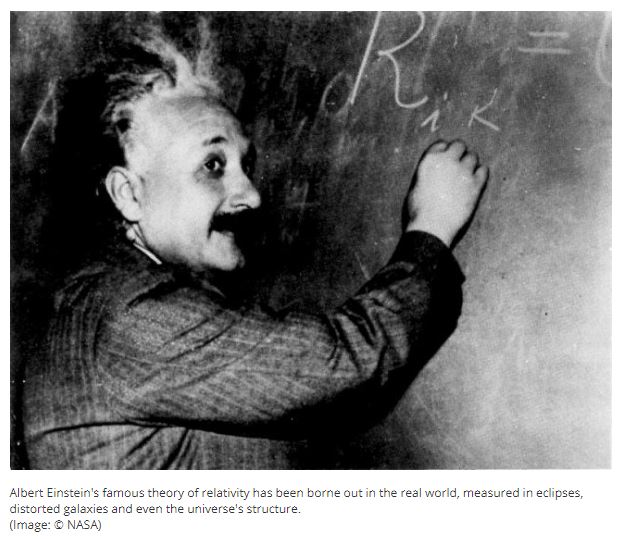
Albert Einstein, a physicist, had noticed that observations are relative to the “frame of reference” where the observer happens to make his observations.

Humberto Maturana, a biologist, has reached the conclusion that consciousness – or ‘self awareness’, as he prefers to call it, is a personal trait which is developed by individuals living in concert.

Blending Einstein’s and Maturana’s ideas, it is easy to ‘see’ that observations made by human individuals depend, simultaneously, on two referential systems. Or frames of reference, in Einstein’s terms.

On the actual, ‘geographic’, ‘place’ where the individual makes their observations.
And on the ‘cultural place’ where the conscience – inner referential system, of the observing individual had been ‘shaped’.

Otherwise put, nobody can see things which are not there. Nor ‘see’ – a.k.a. understand, things which are too ‘distant’ from what that person already ‘knows’. Accepts as being ‘normal’. Feels like being ‘right’.

To make things just a tad ‘clearer’ – ‘nature versus nurture’, we must consider the vagaries of individual ‘biology’. Some people see/hear/smell/feel differently than others. And even ‘think’ differently.

And my point is?

Maturana made it before me. The ‘other’ – the more different, the better, is a source of richness. IF we treat each-other the right way. If we help each-other by ‘concerting’ our observations about what we have in common.
The ‘place’ we observe. Einstein’s referential frame. Where we ‘happen to stand’. Together.

And there’s something else I’d like you to read.

“J.K. Rowling Writes about Her Reasons for Speaking out on Sex and Gender Issues”
https://www.jkrowling.com/opinions/j-k-rowling-writes-about-her-reasons-for-speaking-out-on-sex-and-gender-issues

Messages which are knowingly incomplete, false or both at the same time.

Why?

Because they have no alternative, want to achieve something or need to survive.

As soon as a person achieves a certain level of self-awareness – read consciousness, they realize that no ‘communication event’ will ever be complete. That nobody will ever be able to communicate everything they know, about the most insignificant subject, to anybody else.

Then what? Stop talking?
Or assume personal responsibility for everything that leaves your lips?

As soon as a person achieves a certain level of self-awareness, they realize there’s more in life than mere survival.
As soon as their consciences bloom – in concert with the accrued influence exercised by the ‘environment’, individuals set goals for themselves. Which goals become integral part of the ‘ongoing project’. Of the self-actualizing conscience. Achieving, or failing, each of those goals leaves an indelible mark on the conscience itself. On the manner in which each individual relates to their environment.
Since achieving is far more ‘satisfying’ than failing, conscience is naturally biased towards ‘achieving’. If the ‘environment’ ‘allows’ it, the bias becomes more and more ‘slanted’.
The messages used by the individuals – by their conscience, to be more precise, will increasingly serve the purpose of achieving goals rather than the purpose of ‘honest communication’.

As soon as a person achieves a certain level of self-awareness, that conscience wants to survive.
Mind you, not the person but the conscience.

‘?!?
Conscience cannot exist without the mind/body which supports it….’

OK, tell that to people who believe their souls are going places after their mortal bodies expire. Then try to demonstrate to yourself, honestly, that those people are wrong. That there’s no chance for their belief to be ‘true’.

But metaphysics are hard.
Let me give you a far lighter example.
Smoking. Or drinking. Driving fast. Eating that extra piece of chocolate…
Don’t tell me you never did anything ‘foolish’. That you never lied to yourself: ‘This cannot happen to me. Chances are so small that … Only this time….’

‘But otherwise nobody would ever be able to ‘leave their houses’. We’d be all completely paralyzed with fear…’

Yeap! That’s exactly what I mean. Conscience needs to lie to herself in order to remain functional. Otherwise she would not allow the physical body who sustains her to assume any risk.
They would both suffocate.

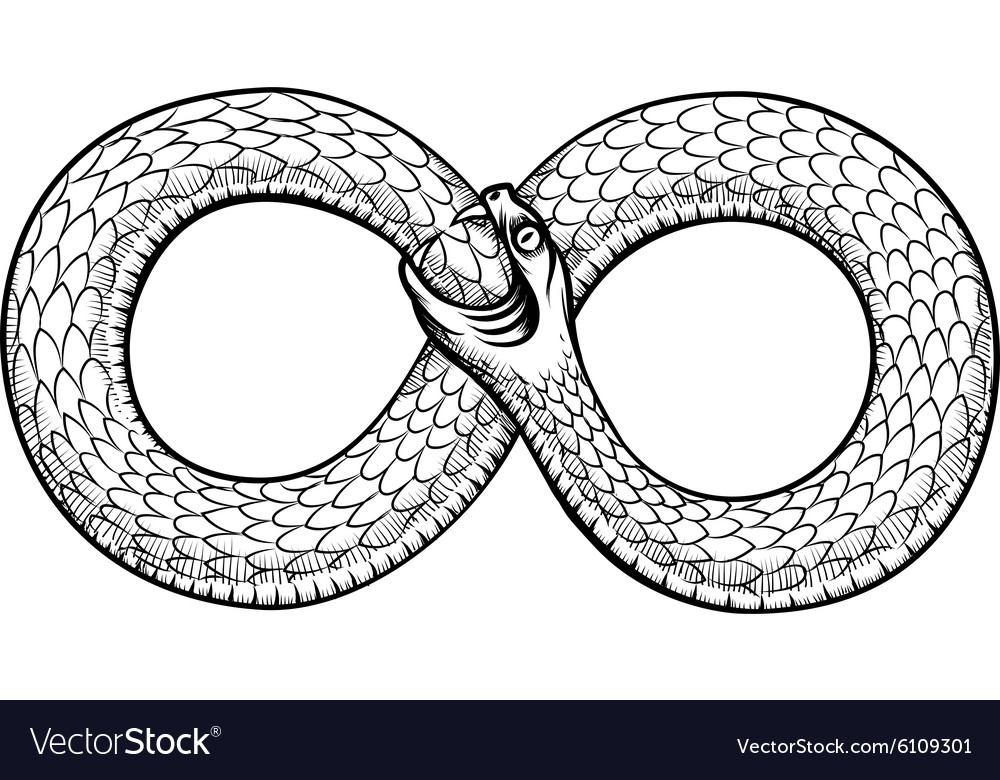
A symbol is a very powerful thing. Because it can ‘hide’ a lot of meaning. As much meaning as we can store/recognize inside it.

And the stronger the symbol, the more we can hide/store/recognize behind it.

“Why do you insist the universe is not a conscious intelligence, when it gives birth to conscious intelligences?”

This quote is attributed by Robert Lanza to Cicero. A Roman who used to think, and write, some 2000 years ago.
I have no idea who Robert Lanza is yet I’m sure most of you have already heard about Cicero.
But we now have Internet. And Google search…

Going back to Cicero’s Universe, I, for one, have never said the universe wasn’t conscious. For all I know, it may very well be.
But I’m sure it isn’t fully conscious. As God is supposed to be. Omniscient and Omnipotent.
Precisely because of the kind of ‘conscious intelligences’ it has given birth to.
Or is being born by?

Let’s assume the Universe is conscious. As in aware of its own awareness – the only kind of consciousness we’re aware of.

As far as we know – ‘know’ as opposed to ‘presume’, consciousness cannot ‘arise’ on its own. Each of our individual consciousnesses have been groomed by those around us. Children who happen to grow up outside ‘normal’ human intercourse never morph into ‘fully’ conscious human beings.
Hence Cicero’s Universe might have become conscious only along one of the following paths:

As a member of the Multi Verse club.
As an AI designed by some entity residing outside the Universe. This situation being the mother of all Oxymorons…
As a meta-consciousness. A web of individual consciousnesses who had evolved/coalesced into a wider, and ‘deeper’, range of awareness. Still limited, of course, but of a somehow different nature than that of the individual awarenesses composing it.

Which brings us back to the symbol I started with.
The Universe digesting itself repeatedly as a continuous attempt to reach its own essence.
Humankind reconsidering recurrent ideas until they actually make sense…

‘Hey, you forgot about two of your own hypotheses … the first and the second…!’

Thanks for the observation.
They slipped off my mind because both are particular cases of the third.
A Multi Verse is nothing but a bigger Universe.
And a combination between an Universe and an Outside Agent is nothing but a Duo Verse. A ‘smaller’ Multi Verse.

Tada!