Theoretically, we do have a certain understanding regarding the thing we call ‘intelligence’. After all, there are some dictionary entries discussing the matter. But when it comes to measuring the said intelligence… nothing is straightforward anymore. So we still have a lot to learn about the thing. About our ability to understand, after all… About our ability to understand, period, including our own intelligence.
Click the picture above and read the article. It is interesting. The most interesting part being what it misses.
The first really intelligent computer application put together by man was the one who defeated Garry Kasparov. Has anyone been invited to play chess by an application? Is anybody aware of any chess or go application who had any initiative? Meaningful initiative? Other than making this or that move only AFTER a human had initiated the game?
What are we discussing here? The intelligence level of any of the many, present or future, artificial intelligence applications or their ability to become aware? Aware of anything…
Furthermore, when we discuss whether AI, ANI, AGI or even ASI would erase humankind from the face of the Earth… nobody has yet mentioned us. After all, we are the ones building the applications. The computers on which we run the applications… Instead of worrying whether any of the AI versions would do anything to us, we should worry about what some of us will do after they will have laid their hands on a really powerful AI application!
În Natură există doar ‘orbite’ și coliziuni. ‘Intersecții’, adică locurile alea unde se întâlnesc drumurile și unde oamenii ‘se petrec’ după niște reguli pe care le respectă toți cei care vor să treacă pe acolo ‘nevătămați’, există – și știu că mă repet – doar în capetele noastre.
‘Există peste tot, aiuritule! Sunt pline orașele de intersecții. Și peste tot prin țară, prin locurile unde n-au ajuns încă autostrăzile… Te dai tu deștept!’
Normal că sunt deștept! Ce, tu poți să tastezi în somn?!? Sau habar n-ai de unde vine „Deșteaptă-te Române”? „Trezește-te, mă!”…
Să revenim. Orașele sunt pline de între-tăieri de drumuri! Care devin ‘intersecții’ doar atunci când cei care încearcă să treacă pe acolo respectă regulile de circulație. Atunci când doi șoferi își reped mașinile una-ntr-alta, posibila intersecție devine brusc ‘locul accidentului’! Înțelegi acum ce vreau să spun?
Individul – adică fiecare dintre noi – este o intersecție. Locul aflat la confluența dintre ‘afecte’, ‘instinctul de supraviețuire’ și ‘încercarea de a înțelege’. Societatea, adică indivizii conștienți care încearcă, împreună, să ‘treacă prin viață’, este și ea tot o intersecție. Intersecția dintre omenire și lume. ‘Lumea’, adică Universul, este – deja v-ați obișnuit, nu? – cea mai mare intersecție posibilă. Locul în care viața încearcă să se strecoare prin timp.
Iar toate aceste considerente se bat cap în cap în cea mai importantă intersecție din lume! În conștiința mea. ‘Cea mai importantă din lume’ pentru mine, evident! Exact așa cum fiecare dintre conștiințe este cea mai importantă din lume pentru sine însăși.
E clar că am loc aici doar pentru enumerare. Dar voi strecura și cel mai interesant aspect din toată tărășenia asta.
Preocuparea intrinsecă a oricărei conștiințe este supraviețuirea.
Similar faptului că masa are inerție, mișcarea are frecare și viața are ‘instinct de supraviețuire’… tot așa conștiința este preocupată de propria ei congruență.
‘Stai că nu mai înțeleg nimic! Ai spus că viața are instinct de supraviețuire. Ce nevoie mai are conștiința de încă o formă de autoprotecție?’
Foarte bună întrebarea. Habar n-am! Eu doar am constatat existența acestui fenomen. Conștiința mea a învățat la un moment dat că ‘fumatul face rău’! Atât teoretic cât și practic. M-am lăsat de fumat? L-a convins conștiința mea cea înțeleaptă pe individul Sarchis Dolmanian să lase dracului țigările? Nu! Ce înțeleg eu de aici? Pare evident faptul că a mea conștiință este preocupată mai degrabă de propria ei congruență decât de bună-starea animalului pe care îl locuiește. Bună-stare altfel esențială pentru respectiva conștiință… Care conștiință se comportă, cel puțin deocamdată, ca fiind incapabilă să rezolve disonanța cognitivă dintre ‘animalul gâfâie și tușește’ și ‘cum dracu’ să recunosc, întâi în sinea mea, cât de proastă am fost atunci când l-am lăsat să se apuce de fumat?!?’ Care recunoaștere implică o falie. O discontinuitate. O ruptura între mine – conștiința de până acum, cea care am asistat pasivă la afumarea plămânilor care oxigenează creierul în interiorul căruia sunt ocrotită eu – și conștiința cea nouă. Care nu doar înțelege o anumită necesitate ci care e dispusă să-și recunoască greșeala. Și nu doar ‘greșeala’ ci evidența că poate greși! Și că va rămâne, cât va mai rămâne, incompletă. Care conștiință acceptă că a fi conștient este doar o oportunitate și nicidecum un dat. Ceva similar cu faptul că a fi capabil să citești nu te va pune niciodata la curent cu tot ce a fost scris până acum.
Conștiința care înțelege că se află la intersecția dintre individul pe care îl animă și tot ceea ce este în exteriorul acestuia!
I challenge you to try an experiment. Click the illustration bellow, copy the link and post it to your favorite social media. Then observe the likes you’ll get. I wasn’t surprised to notice that many people on the right side of the political divide were quite fond of it’s spirit…
That there’s not much real difference between the radicals. Between the radical members of both parties. Both are so convinced that they ‘know better’ that neither have any qualms trying to impose their vision upon everybody else. Both are so convinced that they are right that they ‘hate’ all other authority but their own. And they hate each-other’s guts… only that comes with the territory…
Let me start with the beginning.
I grew up under a communist regime. Drowning in propaganda. The education system was finely tuned to raise us, children, as ‘the New Man’. All cultural effort – culture was ‘sponsored’ by the communist state and heavily censored, was meant to achieve the same goal. Immediately after the communist regime had grabbed the absolute political power, the legislation had been altered to reflect the ‘new reality’. And then used to convince the people to change their behavior according to the new rules. According to whatever the new masters had in mind … So that they could control everything. That nobody else could have exerted any authority. That nobody else could have had any real influence over anything.
And, as you might know, the communist regime – most of them, anyway, had eventually crumbled. Under its own weight.
Which teaches us two things.
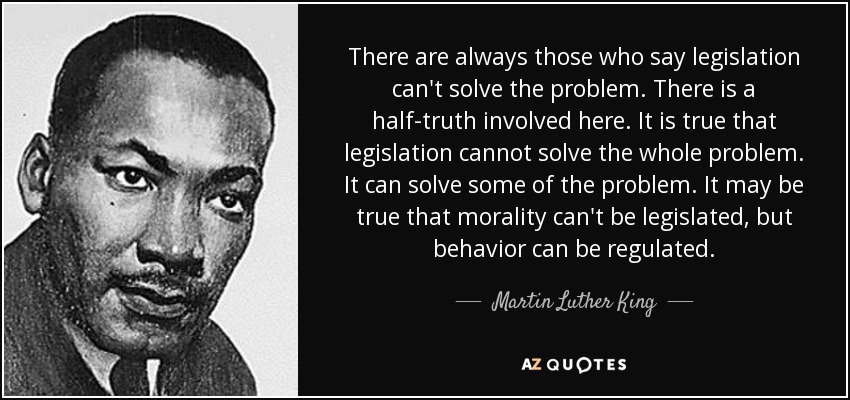
That whenever a system is run in an authoritarian manner, mistakes keep piling. One on top of the previous one. Constituting the dead-weight which will eventually sink the ship. That no artificial ‘New Man’ will ever survive for long. Yes, you may ‘legislate behavior’ – even against the true wishes of the general population, only the ‘new’ arrangement will not last for long. For a ‘legislation’ to be able to survive for any substantial amount of time it has to reflect the ‘true heart’ of those called to put it into practice. To ‘follow the rules’. That you ‘can restrain the heartless’ but for only as long as the ‘heartless’ remain a small minority.
Want to ‘change’ something? Then open people’s eyes first. Only that way they’ll eventually open up their hearts.
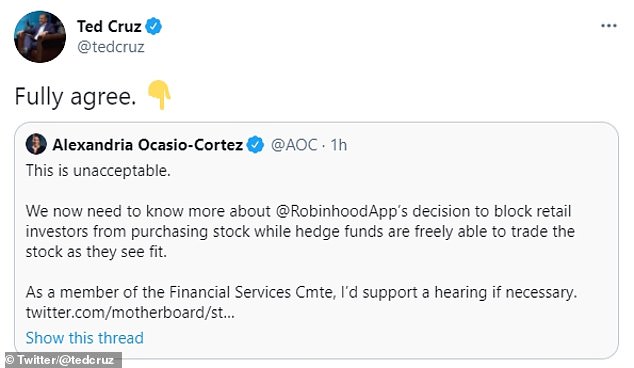
‘What about the spat between AOC and Ted Cruise? Where’s the link between what happened with GameStop and MLK’s attempt to regulate behavior?’
Both AOC and Ted Cruise hate the fact that there are independent agents. Besides them, of course. That there still are people who call their own shots. Private companies they cannot control, media venues, independent authorities… The ‘AOC’-s and the ‘Ted Cruise’-s of this world hate each-others guts but have more or less the same convictions.
That they are right – and everybody else is wrong. And that there must be a way! That there must be a way, a ‘rational’ way, in which their righteousness may be imposed upon the rest of the world.
That ‘rational’ way implying two things. Control over the ‘material’ resources and control over people’s minds.
That’s why the communists had ‘abolished’ private property. That’s why the (no longer free market) contemporary capitalists are OK with extreme wealth polarization. As long as they on the right side of the ‘in-equation’, of course… That’s why education has become such a hot subject. That’s why control over the legislative process has become so important. Why controlling the markets – controlling them, not preserving their freedom, is paramount…
The only bright thing in this whole mess being that the two sides still hate each-other’s guts. Which gives us some more lee-way.
Time to understand that for progress to be possible we need to take care of our roots. To ‘conserve’ them! Time to remember that ‘pruning’ needs to be done carefully.
That we have to ‘cut’ only what’s ‘wrong’, not everything we don’t like.
How to tell those two apart? ‘Humility’ comes very handy in these moments…. Freedom isn’t for free. Nobody is free by itself, only together. Those who really want to be free must start by respecting each-other. That’s how mistakes are avoided. By asking for a second-opinion. By listening to what others have to say on the matter. That’s how normalcy is being defined. And preserved. How we learn what’s ‘wrong’. How to tell what works from what needs to be pruned.
I cannot wrap this up before giving you a fine example of how ‘propaganda’ works. It starts with cutting up the truth. By actually pruning it to fit the purpose. Then let’s our already primed brains to do the rest.
While discussing with a FB friend the last video posted by Price Ea – you can watch it by clicking on the picture above – something hit me.
We were exchanging ideas about how much control each of us has over his own life when I realized that our very insistence on using precisely this term is what causes a lot of trouble.
The notion of control divides the world in two.
The controller and the controlled.
And since we are social animals, things become very quickly very complicated.
Being ‘animals’ means we that we have ‘animalic’ needs. Air to breathe, water to drink, food to eat, shelter from the elements… The first floors of Maslow’s pyramid, as you surely remember.
Being ‘social animals’ means that we not only depend on having access to enough physical space and resources but also on the cooperation of the people who happen to be in our vicinity.
The control hypothesis ‘leads’ us into a competition for both space and authority above those around us.
Our world becomes divided into what ever space we already control and the rest. Meaning the (yet) uncontrolled areas from where it is very possible that a challenger might spring up anytime so that the controller must somehow extent his control over those areas as well, as soon as possible.
Our neighbors become divided into our ‘slaves’ and our direct competitors. Who have to be, sooner or later, subdued into slaves – lest they do the same thing unto us.
In conclusion, the ‘control hypothesis’ sees the world as a constantly busy battlefield where each of the dwellers is in constant conflict with everybody else.
Luckily, even the most perfunctory glance down the history teaches us that human success is more about cooperation than about conflict.
Only the conspiracy theorists believe that most wars are started by business people trying to sell their wares to the warring parties. The reasonable business people know that while a certain amount of tension is good for their business – tension sells guns, among other things – an actual war exhausts both parties and destroys solvent demand.
While it is possible that some callous business people or political actors might try to foment war, for various reasons, that doesn’t mean they are behaving reasonably.
Which brings us to the alternate hypothesis.
How about we replace the concept of ‘control’ with the idea of ‘autonomy’?
How about we give up the ‘tiresome’ notion of control and replace it with the peaceful concept of cooperation?
Since we have already figured out that we depend on both those around us and on whatever resources we can identify, how about we enroll the cooperation of as many of the like minded that surround us as possible and search together for those resources?
Instead of each of us simultaneously trying to run faster than everybody else and to hold back as many as possible – the true meaning of generalized conflict?
Which brings me to the notion of ‘autonomy’.
Being autonomous means being engaged in a special kind of relationship. It means being part of a flexible structure. One that is strong enough to resist but flexible enough to allow a variable amount of leeway for each of its components.
The very concept of autonomy recognizes the mutual dependency that exists between the autonomous members of the said structure and also the fact that the very strength of the structure comes from each of the members being able to solve problems on his own.
Autonomously, that is.
Drawing resources from the structure, sometimes enrolling the negotiated cooperation of some other members but, on the whole, most of the problems get to be resolved ‘under the radar’. To the great benefit of the entire structure.
The vast majority of the structure not even noticing the huge numbers of situations that get solved this way.
Compare this situation to the one described in the first scenario, the one where everybody fights, openly or covertly, with every body else and tell me what you prefer.
“Control” or “Autonomy”?
An all out incessant war for ultimate control or a continuous process of negotiation?



 nicichiarasa