Archives for posts with tag: Cold War

There’s chess and there’s bridge.

There’s managing your resources – on your own, while trying to outsmart – out, in the open, your opponent.

And there’s team-work. An attempt to make the most of what lady-luck had put on the table by exchanging information. With your partner and in the presence of the competing team. This time only the conversation is out in the open, the resources themselves remain hidden. During the initial phase of the competition and, partially, during the end game.

Until WWI, war was more like chess than anything else. Resources were, more or less, out in the open. The soldiers had no other role but to do and die. The whole responsibility belonged to the guys who called the shots. One for each side…

WWI had ended indecisively. Hence WWII.

Each of the winning parties – there had been two victors, had learned something different from the experience.
The Western allies had learned the value of cooperation while the Eastern ‘block’ had reached the conclusion that brute force trumps everything.

The Americans had started playing bridge with the Brits and taught the game to the rest of the world.
The Russians had honed their skills at playing chess. Something they were already very good at.
For a while, the Americans have tried to compete with the Russians. Remember a guy named Fischer? Bobby Fischer?
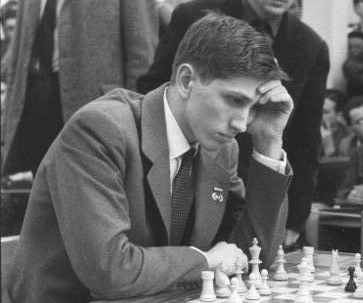
Soon, too soon, the Americans had given up.
After building a computer smart enough to outsmart all human chess players…

The even worse part was that the Americans had given up bridge too!
And forgot the most important lesson of WWI and WWII. That the victor needs to take care of the vanquished if they want to enjoy peace. To actually win the peace process after they had already won the war.

Which brings us to the end of the Cold War.

Communism – and practically all communist states, had crumpled under its own weight.
The westerners assumed it was something they had done themselves. Declared victory.
And the end of history

Having already given up bridge, they forgot to take care of the vanquished… and allowed Russia – the party who had taken most of the blame over their shoulders, for reasons to be discussed some other time, to slide down the slope inaugurated by post WWI Germany.
Did I mention that Russia was still fond of chess? Very much in love with brute force? And not very fond of respectful cooperation?

Now, that we all try to peek into the future – attempting to figure out how the current aggression ordered by Putin will end up, we need some people to learn about bridge.

Putin cannot launch by himself the nuclear missiles he had been brandishing lately.

Now, can those around him reset the chess board on which they are but pawns into a bridge table?
And invite the rest of the world into the game?
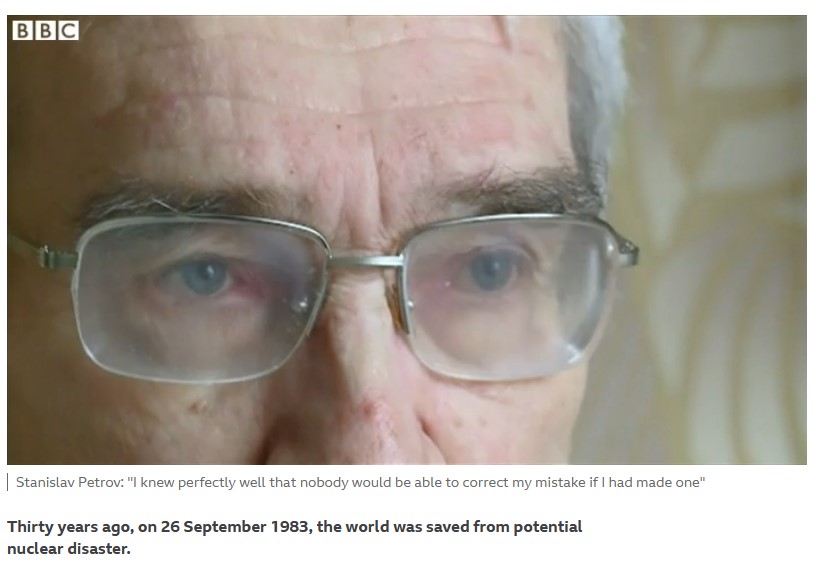
Will the rest of us understand the invitation?
If, and when, it will come?

Part II ended on the Western side of the Mediterranean sea, right before WWII.
Which, by the way, was a consequence of the WWI victors making a terrible mistake.

For the III-rd part we have to cross to the Eastern side of the aforementioned sea and to fast forward to the aftermath of WWIII. The Cold One, if you haven’t figured that out by yourselves.

I’m going to make a small detour now and bring back a subject that I’ve already mentioned.
The changing nature of war itself.
Up to the start of WWI we had war as a conflict between ethnic/imperial chieftains while from then on really important wars had been started by ethnic/imperial chieftains and won by the attacked democracies. The key word here being ‘won’.
Which is not exactly true.
Those wars had not as much been won by the victors as lost by the aggressors. All that the democracies had to do was to (actively) resist long enough for the aggressors to rot from within and crumble under their own weight.
Actually all three WWs had been lost from the first moment. Simply because the aggressors had been inflexible ‘imperiums’ – social systems where the decision making mechanisms were controlled from the top in a more or less absolute manner.

Let’s go back to Syria.
What we had here was a population who had lost patience with being mistreated by a dictator and which, somewhat encouraged by what was going on globally, had tried to ‘buck the rider’. To carve a better future for themselves.

Just as in Spain, almost a hundred years ago, things had become way more complicated than they should have been.
Opportunists of all persuasions and from almost all over the world have jumped in to the occasion. And all those who could have dragged their asses instead of doing something useful for the longer term did exactly that. Dragged their asses and done nothing.

The parallel is staggering. Unfortunately things are becoming far worse and far more complicated.

In Spain, the world had perceived the whole movement as being predominantly of a communist nature. Which, eventually, made it so. Perception wise, in this case.
In Syria, the world perceived the whole movement as being predominantly of an islamist nature. Which, eventually, made it so. Simply because only the islamists of the world became involved, while all the rest did next to nothing. On the really ‘progressive’ side, that is.

In Spain, the only ‘outside’ power which had intervened decisively was the loser of the previous WW. More precisely, the decisive intervention was carried on by the  dictatorship established over the population which had felt mistreated after WWI.
In Syria, the ‘outside’ power which intervenes decisively, helping the ‘regressives’, is the loser of the previous WW. More precisely, the most effective outside intervention is carried on by the authoritarian regime established over the population which had felt mistreated after the Cold War. In Syria’s case we also have a second intervention on the side of the ‘regressives’, carried on by yet another authoritarian regime established over yet another population which feels mistreated by some of the most powerful governments on this Planet.

Then we have the popular sentiment in the rest of the World.
In Spain, people from some 50 nations had volunteered to fight on the Republican side. Very few of them entertained any communist convictions and most of them had a place of their own where to return after the war was over. And when they did return, they were welcome to do so.
Syria has also seen her ‘fair share’ of volunteers. But there’s a marked difference here. While those who went to fight on the Republican side in Spain were animated by some romantic ideals, most of the aliens who came to fight in Syria were driven by a sort of desperate ennui and an acutely perceived lack of any perspective in their countries of origin.
While those who went to Spain did it to help the Spaniards fulfill their dream, those who went to Syria were hoping to carve a piece of land where to build theirs.
While those who went to Spain were welcomed back by their families and neighbors, those coming back from Syria are shunned by their relatives and investigated by the authorities of the states they are returning to.

And the most complicated aspect of the whole thing is ‘separatism’.

To be continued.