Archives for posts with tag: Choice

A marginal benefit is the additional benefit received by a consumer, producer, or society
due to the consumption or production of an additional unit of a product.

When do you stop cleaning something? How do you determine it is clean enough?

When do you stop cleaning the living room? When there’s no more visible dirt, right?
When do you stop cleaning an operating room? You follow the procedure and you check using the appropriate methods and apparati, right?
When do you stop cleaning the operating room where your child will have their life-saving surgery? I’m afraid the surgeon will have to drive you out of the room. You’ll never declare it clean enough….

My point being that we’re rational only as far as there’s nothing personal involved in the choice we have to make.

And as soon as we’re personally invested in the whole thing, we suddenly start to rationalize.
To find rational arguments which favor the position we’ve already adopted. The decision we’ve already made.

My child deserves the best!

Which is true, of course. For as long as we really know what’s good for them…

What capitalism has to do with any of this?!?

Well, most of the ‘hoarders’ rationalize their habit by ‘blaming it’ on their children.
“I have to take care of their future”.
In their attempt to control the future, the hoarders convince themselves that amassing capital will shield them, and their children, from insecurity.

Which is partially true. If the hoarded capital is sustainable…
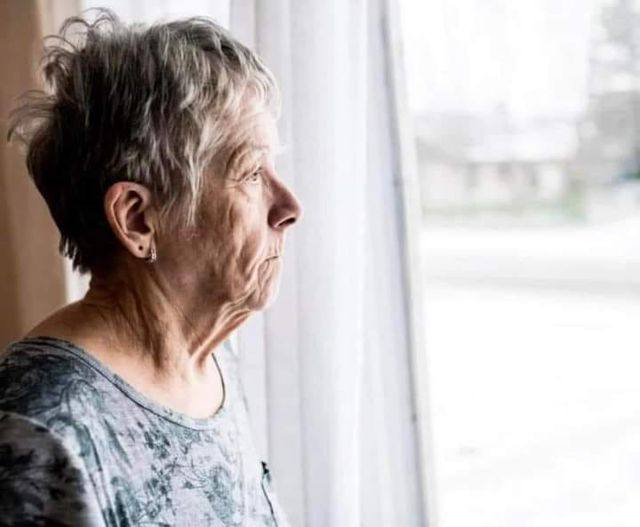
“I am 82 years old, I have 4 children, 11 grandchildren, 2 great-grandchildren and a room of 12 square meters.
I no longer have a home or expensive things, but I have someone who will clean my room, prepare food and change my bedding, measure my blood pressure and weigh me.
I no longer have the laughter of my grandchildren, I don’t see them growing, hugging and arguing. Some come to me every 15 days, some every three or four months, and some never.
I don’t bake cakes, I don’t dig up the garden. I still have hobbies and I like to read, but my eyes quickly hurt.
I don’t know how much longer, but I have to get used to this loneliness.”
“Author unknown”

Every time I read something like this over the internet – more and more often – I remember that it was us.
We have raised our children into what they are today.

We have amassed vast amounts of financial capital – fiat money – believing that our children will be grateful.
We had not been there when they were growing up. We had not been there when they were learning things.
And now we are the ones who don’t understand why there are no more bonds between us. Between us and our children. Why our children see the world differently from how we do it…

Is it to late?

Everything flows and nothing abides.

“You have to flow with the river. There is no other way. You can swim against it, and pretend not to be flowing with it. But you still flow with the river.” – Alan Watts

“Only a dead fish flows with the river”

A dead fish is ‘flowed’ by the river.
Flowing with the river is a choice!
Give me the power to change what needs to be changed, the power to accept what needs to be accepted and the wisdom to choose between them‘.

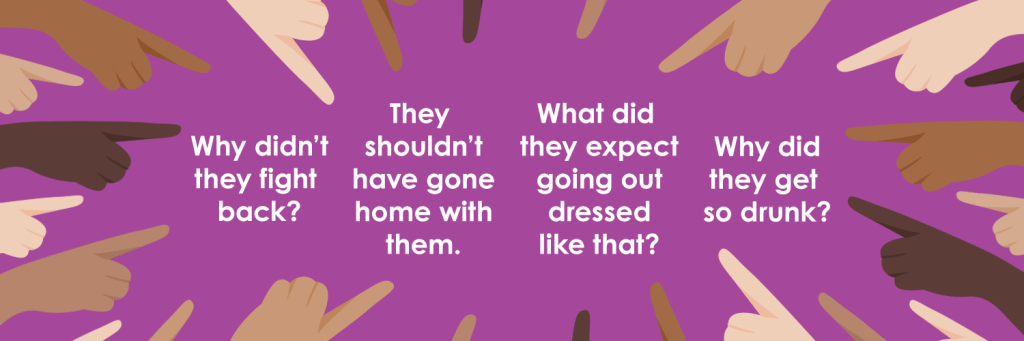
Whether it’s in day to day conversation or in the media, a common response to disclosures or mentions of sexual assault is a phenomenon called victim blaming. The term might be unfamiliar, but what it looks like in practice is all too familiar. It’s questioning people who experience violence — especially sexual violence — about their actions, and what they could have done to prevent it, or worse, invite it. It’s pointing out supposed weaknesses or differences in a person that could have made them a target. In general, it’s the common tendency for people to look for the cause of violence as something the person who experienced harm did or didn’t do to prevent it.”

Victim blaming is a fact.
As in ‘exists even if it doesn’t make much sense’. As in ‘still exists despite our intense efforts to make it disappear.’

Shouldn’t we try to understand it? Before blaming those who blame the victims?

What’s going on is that our minds are biased.
And one of the two most powerful biases is our need to make sense of the word. We actually need to perceive the world as being rational. We need to have causes, to identify causes, for everything which happens around us.
The other one being our need for relevance. We not only need to make sense of the world, we also need to control it. Hence we do our best to understand the world as controllable. Controllable by us! By us, the purveyors of the explanations. By us, those who understand it as a rational succession of causes and effects.

Let involve ourselves in a small thought experiment.

We’ve just had a few drinks. Not enough to get stoned but each of us is a little ‘merrier’ than usual. A tad dis-inhibited.
In this condition, one of us has sex with an under-age person and the other has a car accident.

In which of these two cases, ‘being under influence’ would be seen as a mitigating circumstance?
Why?

See what I mean?

Socially, it is unacceptable to DUI. Because you are far more likely to cause an accident.
Socially, it is more than acceptable to have a couple of drinks at a party. Because you are going to be a far more ‘pleasant’ person that way. Well, most of us are…

It’s actually reasonable to expect a driver to be sober and a party-goer to be ‘tipsy’-ish.
Simply because it’s a lot more unnatural to drive than to have social intercourse. Hence we need a lot more ‘self-control’ when driving than when talking to someone. Even if that person is very attractive.
We, statistically speaking, have a gut feeling which tells us it’s harder to drive than to behave. Hence the biases.

‘OK, but has any of this anything to do with victim blaming?!?’

Victim blaming is the ‘easy way out’ for both would-be victims and would-be aggressors.

Remember what I said about our need to make sense of the world as a controllable environment?
As a place where we, each of us, is in charge? With the known – and already agreed upon, limitations…

For those who see themselves as potential victims, doing the ‘right thing’ – or not doing the wrong one, is something which puts us in a safe place. We’ve done everything (in our power) so we’re safe. Or as safe as we could be… If we become a victim even after we’ve done everything in our power to avoid it, then it’s exclusively the fault of the aggressor. There was nothing more we could have done to avoid it. Hence there’s no self-guilt falling on our own shoulders.
And if we have reached ‘this’ conclusion – that ‘this’ is the right behavior, then each of the ‘trespassers’ do nothing but ‘contradict’ our ‘good judgement’. Hence our ‘need’ to ‘educate’ them.

For those of us who conceivably might become or had ever been – directly or indirectly, as in ‘one of our relatives had done it and we didn’t see it coming’, – an aggressor, the logic follows the same path. The victim should have taken every precaution, we are naturally ‘limited’ individuals who cannot ‘resist’ when ‘pushed over certain limits’.

‘OK, and your point is?
That it’s OK to blame the victim?!?’

Let me bring your attention back to the title.

‘Causing’ circumstances.

Who transforms a certain set of circumstances into a cause?
Who sees a certain set of circumstances as an opportunity to do something or as an opportunity to do the very opposite? Or to simply stay put?
To directly cave in to something which ‘might’ be seen as a provocation or to ask for permission first? And to accept ‘no’ for an answer, in no matter what circumstances …

Who bears the responsibility for choosing one way or another?

We pride ourselves for our ability to choose. Rationally!
We call that ‘liberty’ and we consider it an ‘undeniable human right’.

Yet everything, including our understanding of things, exists because of ‘chance’.
While neither chance nor choice can manifest itself/be exerted outside what we’ve learned to call ‘hard reality’.

“First you guess. Don’t laugh, this is the most important step. Then you compute the consequences. Compare the consequences to experience. If it disagrees with experience, the guess is wrong. In that simple statement is the key to science. It doesn’t matter how beautiful your guess is or how smart you are or what your name is. If it disagrees with experience, it’s wrong. That’s all there is to it.”

Attributed to Richard Feynman by
Florentin Smarandache, V. Christianto,
in Multi-Valued Logic, Neutrosophy, and Schrodinger Equation? (2006), 73