But eyes alone are not capable enough.
To see ‘right’ one has to think first about what is actually going on in front of his naked eyes!
And you should also take into consideration that all the tricks shown below have been purposefully put together by people who command intimate knowledge about how our brains work.

http://www.smash.com/10-amazing-perspective-tricks-will-mess-mind/

Pentru cei ce locuiesc pe Luna voi face un scurt rezumat.
800 de fosti si actuali elevi ai liceului au facut un grup pe Facebook, loc in care si-au varsat naduful acumulat in timpul vietii de licean. Unii dintre profesori s-au simtit jigniti de modul ‘frust’ in care au fost exprimate aceste ‘frustrari’. Ca urmare o parte dintre elevi au ‘suferit consecinte’. ‘Asistenta’ este profund dezbinata.

Unul dintre cele mai pertinente comentarii asupra subiectului, cu toate ca destul de pasional si pe alocuri partinitor, mi se pare cel facut de presedintele Consiliului National al Elevilor, Horia Onita. Iata un scurt fragment:

“Educaţia centrată pe elev, educaţia fundamentata pe principii de răspundere publică şi de reprezentativitate, aşa cum stipulează şi art. 3 din Legea Educaţiei Naţionale 1/2011 vor rămâne doar utopii până în momentul în care se va înţelege că profesorul şi elevul din România sunt parteneri ai aceluiaşi sistem, şi nu subordonaţi unul altuia.”

Acesta este un bun punct de pornire pentru a intelege ce se intampla.

Pentru ca tabloul sa devina cu adevarat inteligibil trebuie sa ‘marim cadrul’ pana cand reusim sa cuprindem si pe cel de al treilea mare actor al acestei drame. Si anume “publicul”, format in cea mai mare parte din “rude/parinti”.

Rude si parinti nu doar ale elevilor ci si ale profesorilor!

Sa vedem ce cred unii despre ceilalti.

Parerea unora dintre elevi fata de o parte dintre profesori rezulta din pozele si comentariile deja publicate in presa.

Parerea majoritara a profesorilor despre respectivii elevi rezulta din ‘sentintele’ primite de acestia.

Parerea parintilor elevilor despre profesori rezulta foarte clar din lefurile primite de profesori. Destul de indirect, intr-adevar, dar pana la urma noi, cetatenii, prin vot, suntem cei care am tot hotarat destinul acestei tari. Adica noi suntem cei care am adus la putere generatii dupa generatii de politicieni care nu au reusit sa reorganizeze invatamantul.
Tot noi, parintii, suntem cei care discutam ‘fara perdea’ despre subiectul asta. Atat in familie, in fata copiiilor, cat si in media.
“Invatamantul romanesc produce tampiti”.
“Profesorii sunt corupti”.
In conditiile astea chiar ne asteptam ca odata ajunsi elevi copiii or sa nutreasca vre-un mare respect pentru ‘cadrele didactice’?

Parerea parintilor despre proprii lor copii rezulta din toate cele de mai sus.
Daca ne-ar fi pasat cu adevarat de ei faceam in asa fel incat sa le lasam mostenire o tara in stare de functionare si nu o vaca atat slaba din cauza mulsului excesiv la care a fost supusa incat abia mai sta in picioare.
Daca ne pasa cu adevarat faceam in asa fel incat sa avem timp si pentru ei. Degeaba le luam telefoane performante cu care sa faca poze in timpul orelor si calculatoare cu care sa ‘aranjeze’ acele poze si sa le puna pe Internet daca atunci cand ajungem acasa suntem atat de sleiti de puteri incat nu ne mai pasa de nimic.

Copiii nostri au nevoie de sufletul nostru mai mult decat de banii nostri.
Copiii nostri au nevoie de educatie, nu doar de informatie bruta. Iar educatia nu poate veni nici de la parinti spetiti de munca si nici de la profesori flamanzi, rupti in spate sau preocupati mai mult de meditatii decat de orele de la scoala.

Ce parere au copii nostri despre noi?
O sa vedem peste vreo douazeci de ani cand ne va veni vremea sa iesim la pensie.
Si nu va ganditi ca veti fi strans destui bani pana atunci incat nu veti mai avea nevoie de ajutorul lor.
Degeaba toti banii din conturi daca copii nostri se vor fi dus sa-i ‘stearga la cur’ pe batranii din vestul Europei sau de aiurea.

Banii nu valoreaza nimic daca nu sunt pusi in miscare de niste oameni suficient de calificati din punct de vedere profesional incat sa poata tine o economie in carca si suficient de educati incat sa isi dea seama ca o tara corupta nu poate supravietui prea multa vreme.

http://adevarul.ro/locale/oradea/scandalul-pozelor-porno-liceul-elita-cluj-reactia-dura-consiliului-elevilor-singurii-trebuie-anchetati-caz-tocmai-profesori-1_54f2ff6f448e03c0fd1af44f/index.html#
http://adevarul.ro/locale/cluj-napoca/replica-elevului-cluj-dat-afara-postari-porno-facebook-despre-profesori-liceul-Sincai-auschwitz-Scolar-contineau-mesajele-liceenilor-1_54f0740f448e03c0fd0b002b/index.html
http://www.ziare.com/scoala/bacalaureat/scoala-noastra-chiar-scoate-tampiti-1105168
http://www.hotnews.ro/stiri-opinii-16399007-profesorii-corupti-sunt-stapanii-sau-capusele-educatiei.htm

Karl Marx. The world is crooked – there is too much exploitation imposed by the haves upon the have-not’s – so it has to be righted by those who have the right answer to the problem. And because the world doesn’t know what’s good for it, the ‘enlightened’ – the communists who are at the forefront of the class struggle – have the duty to impose the revolution by force.
The crux of the ‘solution’ being the abolition of both private property and the state. The private property because it is the tool with which the haves dominate the have-not’s and the state because it is the tool used by the haves to protect their private property from the have-not’s who continuously try to steal it.
But what tool can be best used to enforce the dissolution of the private property and to insure that the misguided and the ill intended don’t revert to the ‘old and corrupt ways of the bourgeoisie’? The state, of course. Hence we’ll have to postpone a little its dissolution, only until the first chores would have been completed, of course.

Max Weber. The world is too complicated to be understood/run by a single man, no matter how capable. That’s why the decision making process must be rationalized. Weber’s main methodological tool was the ‘ideal type’, a mental construction that is to be substituted to replace the real problem that has to be solved or the real thing that is being studied. This ideal type being stripped of the ‘unimportant’ aspects of the reality will make it a lot easier for the ruler/decision maker/scientist to understand what is going on there and to come up with the ‘correct’ decision or ‘clear’ understanding of the matter. This means that Weber was convinced that individuals are able, in certain conditions, to reach valid conclusions. Which is, of course, OK. Furthermore Weber had ‘reached the conclusion’ that if larger problems are to be solved then the efforts of single individuals are not enough and that in order to fulfill this task in a satisfactory manner many rational decision makers (which have been properly trained in their strict domains) have to be inter-connected into a well structured ‘net’. This way the big problem will be sliced into more manageable sub-problems which will be analyzed by specialists and then the final solution will be re-assembled by people specially trained for exactly this task. Nowadays this entire concept is known as ‘bureaucracy‘. In theory it sounds right, doesn’t it? What could be better than an all encompassing net comprised of rational/professional decision makers who act according to a well considered and well intended ‘ideal type’? Whose ideal type? Good question, indeed. Just as good as ‘who and how trained the ‘decision makers’?’.
(There is something we must keep in mind when discussing Weber, as a person. He died relatively young, before having a chance to reach a ‘final conclusion’, or at least one to satisfy him. That also has to be the reason for which he hasn’t published much during his lifetime.)

Plato. Society (the city, the “Republic’) should be run by a specific kind of (dedicated) people and because “those with the philosopher’s natural abilities and with outstanding natures often get corrupted by a bad education and become outstandingly bad” this ‘special kind of people’ need to receive “the proper kind of education“. Meaning that ‘a true philosopher’ has to be versed in ‘the Forms of Good’, which are amply explained in ‘The Cave Allegory’.
The gist of the matter is two layered.
1. The reality is hidden behind some ‘veils’ (or in ‘shadows’ if you prefer the original metaphor) but properly trained professionals (the philosophers) can be taught to see what Plato describes as ‘the ultimate truth’.
2. These professional truth seekers have not only the right to lead the rest of the people ‘into the light’ but the obligation to do so! Furthermore, for Plato the ‘ideal political structure’ – the Republic – would be so organized as to ‘force’ into public duty those who have been specially ‘bred and trained’ to perform such duty:
“Observe, Glaucon, that there will be no injustice in compelling our philosophers to have a care and providence of others; we shall explain to them that in other States, men of their class are not obliged to share in the toils of politics: and this is reasonable, for they grow up at their own sweet will, and the government would rather not have them. Being self-taught, they cannot be expected to show any gratitude for a culture which they have never received. But we have brought you into the world to be rulers of the hive, kings of yourselves and of the other citizens, and have educated you far better and more perfectly than they have been educated, and you are better able to share in the double duty. Wherefore each of you, when his turn comes, must go down to the general underground abode, and get the habit of seeing in the dark. When you have acquired the habit, you will see ten thousand times better than the inhabitants of the cave, and you will know what the several images are, and what they represent, because you have seen the beautiful and just and good in their truth. And thus our State which is also yours will be a reality, and not a dream only, and will be administered in a spirit unlike that of other States, in which men fight with one another about shadows only and are distracted in the struggle for power, which in their eyes is a great good. Whereas the truth is that the State in which the rulers are most reluctant to govern is always the best and most quietly governed, and the State in which they are most eager, the worst.”

I believe that by now you have grasped where I’m headed to. There is not much difference between Marx and Plato and a very close relationship between these two and Weber. Still, the fact that Weber was not yet done thinking about this matter at the moment of his untimely death makes me believe that if he had some more time at his disposal he would have understood what Laozi taught us about the concept of “nonaction”:

And isn’t it very strange that the best (short) presentation I was able to find about Laozi is hosted by a site called “Plato.Stanford.edu”?

https://www.marxists.org/archive/marx/works/1848/communist-manifesto/
http://www.academia.edu/4192854/Weber_s_methodology_understanding_concept_of_ideal_type_as_necessary_element_of_Weberian_comprehensive_sociology_Working_paper_
http://www.cf.ac.uk/socsi/undergraduate/introsoc/weber12.html

http://www.historyguide.org/intellect/allegory.html
http://plato.stanford.edu/entries/laozi/
http://izquotes.com/quotes-pictures/quote-the-wicked-leader-is-he-who-the-people-despise-the-good-leader-is-he-who-the-people-revere-the-lao-tzu-188515.jpg

This was inspired by the title of a Facebook post that shared an article from The Telegraph.
The guys ‘in charge’ of Saudi Arabia must be in a terrible situation.
Punishing the guy according to their own laws will further the perception of Islam as a ‘violent religion’ and thus make it less acceptable for the rest of the world.
Not punishing him would mean tacit acceptance of the fact that laws are made and applied by humans, not by any God, thus totally demolishing the brand of legitimacy the Saudi’s have worked hard to build for themselves.
Terrible predicament. I suggest we allow them to settle this among themselves.
Blaming ‘Islam’ indiscriminately for some horrible acts perpetrated in its name by a bunch of zealots would make things worse for everybody. So yes, let’s ‘move along’!
What we can, and definitely should do, is to insist on the ‘humanitarian’ side of the whole business.
PS Here is an interesting article about Sharia: http://www.pewforum.org/2013/04/30/the-worlds-muslims-religion-politics-society-beliefs-about-sharia/

I happened to stumble on an article about the tragic fate of Sophie Chotek.

The beautiful daughter of an impoverished aristocratic family attracts the attention and later becomes romantically involved with the heir of one of the most important European thrones of the time. Looks like a prequel for ‘Love Story’, right? … only worse, unfortunately. The reigning Monarch wasn’t happy about the whole thing and, to make things worse, ‘the law’ wouldn’t allow their union.

After huge complications that involved the intervention of Kaiser Wilhelm II, Tsar Nicholas II and Pope Leo XIII in favour of the ‘young lovers’ Emperor Franz Joseph gave in and yielded to the marriage, on condition that the children of the couple will not be able to inherit the throne and that the bride will never be treated as a queen or attend official functions at the side of her future husband.
And the worse was yet to come. After 14 years, to a day, of happy marriage both she and Franz Ferdinand, her husband, were assassinated together in Sarajevo.

Reading about the treatment she had to endure cannot but make me wonder about why would modern democracies still ‘entertain’ royal courts? Specially after what happened to Lady Di…

“The Emperor expressed his disapproval by not attending his heir’s wedding, as did Franz Ferdinand’s brothers and nearly every member of his family. The Imperial court, led by its chief overseer the Prince of Montenuovo (who was the child of a morganatic marriage himself) continued to humiliate the new “Princess of Hohenberg” at every opportunity. If for example the Imperial family were to hold a ball then Sophie would not only have to sit apart from her husband but be last in line to enter behind every other Hapsburg relation no matter how obscure. All contemporary reports state that Sophie never complained or even show displeasure at this treatment in public, earning the sympathy of many outside the court for her dignified response. Less inclined to forgiveness than his wife, Franz Ferdinand allegedly drew up a list of particularly obnoxious aristocrats for whom he intended payback when he became Emperor.”

So?

Well… It’s not so easy to dismiss the fact that some of the most successful nations, by any standards, are exactly those that have managed to balance the survival of the monarchy with ‘full blown’ democratic government. Not only in Europe.
Great Britain, Sweden, The Netherlands, Belgium, Denmark, Norway, Thailand, Japan … There must be something here!

Two things constitute the common denominator between these countries, besides being run as constitutional monarchies. They have all found their own road to democracy/rule of law and they had traveled this road in a relatively peaceful manner. Don’t be fooled by the fact that Japan had been ‘opened’ up by Matthew Perry and then defeated in the WWII. The Japanese emperor had been powerless since long before Perry and the ‘fathers’ of the Meiji Constitution might have been inspired by the German Imperial one but the transformation was instrumented by the Japanese politicians themselves, not by nor after being prodded by a ‘foreign power’. Furthermore by 1915 the Japanese Constitution was modified to include universal male suffrage.

Meanwhile the XX-th century has witnessed a very mixed performance by the rest of the democracies, with the notable exception of the US. No, I haven’t forgotten Canada, Australia or New Zealand. They are constitutional monarchies too.
Latin America. I don’t think you’re going to dispute the fact that there is no single nation inhabiting this part of the world which hasn’t ‘enjoyed’ at least a few years of dictatorship that has started with ‘free elections’.
Africa. Until very recently there wasn’t a single functional democracy on this continent.
Asia. With the notable exception of India – which has inherited strong democratic values from her imperial power and enjoys special circumstances – no other real democracy besides Thailand and Japan until very recently.
Europe, the birth place of democracy. Hitler and Mussolini were democratically elected before becoming two of the most horrendous dictators in the history of humankind. Eastern Europe countries, including Russia, were governed for many decades as ‘popular democracies’. In reality they were ruled by oligarchies which were hiding their criminal nature behind ideological smoke screens.

Any explanation for this?

http://www.dailykos.com/story/2014/06/28/1310194/–Franzi-and-Soph-the-personal-tragedy-that-sparked-WWI#
http://www.britannica.com/EBchecked/topic/373298/Meiji-Constitution

“Seeing is believing.”

Yeah, right.

So, do we really know anything?

For instance I know that the Earth exists – I am able to walk on it and I eat things that grow out of it.

I also believe – without ever having seen it from far enough – that the Earth is round. Just as my ancestors used to believe that the Earth was flat. Both I and my ancestors were told what to believe and we did that. Because we believed in those who were offering us that particular piece of information and because the issue wasn’t of any real importance for us, personally.

I do trust that Neil Armstrong did land on the Moon. I’m not going to share with you my reasons for that here, this post is about something else. My point is that belief is casual while trust is active. I did research the matter, as I could, and I considered it carefully before reaching the conclusion that ‘Yes, I am convinced that Neil Armstrong did land on the Moon’.

As we all know ‘know’ is a verb. The corresponding noun is ‘knowledge’, information that we are aware of. And so familiar with that we don’t even remember how we have arrived to accept it as true.

Believe is also a verb. It’s corresponding noun is ‘belief’, information we are aware of and believe it to be true just because we were told so by a seemingly credible source.

Trust is both a verb and a noun. And here comes the really interesting part. While trust as a verb means more or less the same thing as believe, trust as a noun has nothing, but absolutely nothing in common with belief. Trust is a state of mind while belief is a piece of information with a ‘value’ attached to it.
In fact ‘trust’ is something you consciously choose to invest while ‘believing’ is something you are led to, sometimes even without you being aware of what is going on, by a person or even by the circumstances you happen to find yourself in.

Now it is time to introduce another notion. Faith. It exists only as a noun and that’s why I didn’t brought it up from the beginning.
It has something in common with both belief and trust. Similar to belief no proof is usually attached to faith and similar to trust faith is something that the individual has to willingly accept/profess/invest.

Coming back to knowledge we discover there are many kinds of it.
We have factual knowledge, the kind we have either witnessed or otherwise seems so evident that we’d never even dreamed of questioning. So evident that if somebody asks us to be specific and put it squarely in one of the ‘belief’, ‘trust’ or ‘faith’ drawers we’d be at a loss and protest vehemently ‘it’s plain knowledge, what’s wrong with you guys?’
Then we have our beliefs. For instance we know that we love our partners and our kids and we believe that they love us back. We also have faith in a lot of things. Some of us have faith in God, some others put their faith in politicians, market analysts or even the weather-man. For a longer or shorter period of time. When gravely ill we put our faith in doctors and in medicines. And so on.
And finally there is the trust problem. For a real trust to develop we need an actual understanding of what is going on. That’s where science and technology comes is. If we’d done something for a long enough period of time we gradually become confident in our ability to do that thing over and over again with consistent results. If the results are reproducible, if other people can obtain results similar to ours by following our methods then our endeavor is deemed scientific and, hence, trustworthy. Same goes for information gathered following scientific methods.

And here lies the pitfall. Science has to be constantly challenged in order to remain valid. If we reach that point where we start to put faith in science and scientists instead of continuously demanding proof and doing our best to understand with our own heads what is going on then we are doomed. Science morphs not in ‘religion’ – that is something else – but in hoax.

The ‘thing’ with science is that the only trustworthy aspect of it is the method, not at all the results. We’ll never be able to find the absolute truth – no result will ever be 100% accurate – but if we keep using the ‘scientific method’ – consistency and unhidden-ness – then we’ll remain on the safe side.

Do you have any qualms about ‘what’s going to happen when these children grow up’?

Have you considered the fact that it was us who raised them?

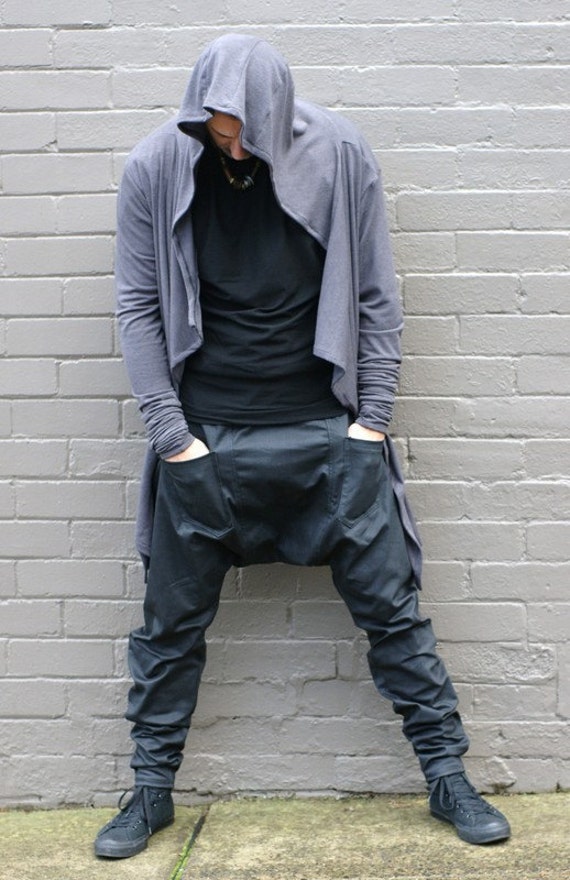
That we, their parents, presented them with clothes like these when they were young and that it was a member of our own generation who had fashioned this design and then organized manufacturing and distribution?

That we, their parents, are those who share jokes like the one I just found in my mail?

“Today be my baby girl’s 18th birthday. I be so glad that this be my last child support payment! Month after month, year after year, all those payments!
So I call my baby girl, LaKeesha, to come to my house, and when she get there, I say, “Baby girl, I want you to take this check over to yo momma house and tell her this be the last check she ever be gettin’ from me, and I want you to come back and tell me the ‘spression on yo mama’s face.”
So, my baby girl take the check over to her momma. I be anxious to hear what she say, and bout the ‘spression on her face.
Baby girl walk through the door, I say, “Now what yo momma say ’bout that?”
She say to tell you that “you ain’t my daddy” …and watch the ‘spression on yo face.”

This post is dedicated to my friends who do not yet accept that rituals still play a huge role in our lives.
No matter if we are religious or not, in the conventional sense of the word, we all feel something special when witnessing rituals being observed.

To me this is a powerful proof that we need to belong, that our need to be an accepted member of a community is ingrained somewhere deep inside us. And for good reason because none of us would be able to survive on its own for more than a very short time.
In fact this is the real meaning of ‘religion’.
“Religion (derived from the Latin religare, meaning ‘to bind’) binds people together.”

From time to time religious teachings become perverted, in most instances by precisely those who were supposed/’entrusted with the divine mission’ to preserve and pass them on to future generations. We shouldn’t allow these manipulators to destroy our livelihood.

Maybe time has come for us to understand the entire process and to rebuild religiosity/togetherness on mutual respect?

https://www.youtube.com/embed/HW3QVLlK-kE?feature=player_embedded
https://www.youtube.com/watch?v=X0W7YdKYPl0
https://www.wordnik.com/words/religare

Some of us go by ‘the winner takes it all’.
For them each ‘win’ is another step that must be climbed on the ladder towards ‘success’.

Until the inevitable failure, and a single one is enough for the kind of game this people choose to play, brings them back at the foot of the ladder.

Samuel Becket suggested and then Nicholas Nassim Taleb amply demonstrated that there is an alternative to this scenario.

Next time ‘fail better’ was how Beckett taught us to deal with life’s inevitable downs while Taleb’s notion of ‘antifragility’ is the key that unlocks the door towards the understanding that the real success is to be able to survive everything that life throws at you.

In fact that’s what we’ve done, as a species, until now. We are still here, right? Even more, we managed to overcome all hurdles and became the dominant species on  Earth.

There is one small thing though. We’ve apparently grown close to the limits of our planet. We’ve explored almost all of the land mass and we’ve discovered many of it’s natural resources. And now we have become aware of all this.

We have some obvious venues in front of us.
Start fighting among ourselves for the control of what ever resources still are out there. Depending on what kind of weapons we’ll use this scenario might lead to total destruction or to a long war of attrition that will be won by those who have the less to loose. Any of these two will lead to a lot of misery.
Or extend competitive cooperation – the kind that is currently known as ‘really free market’, no monopolies/bullying allowed – to cover up the entire planet. The demographic pressure will ease up considerably – what we currently describe as ‘advanced nations’ have a lot less children than the rest of the population – so we’ll be able to stretch out existing resources for longer. This way we’ll have a lot more time at our disposal to develop sustainable technologies that will enable us to survive on the really long run, potentially until the Sun will grow nasty on us.
And who knows what will happen until then.

But to find out what the future has in store for us we’ll have to survive til that moment. And in order to do that we’ll have to re-learn what it means to trust, respect and love our fellow human beings. All of them.

http://songmeanings.com/songs/view/4362/

https://www.facebook.com/PrinceEaHipHop/photos/a.10150198151749769.315787.71760664768/10153123610239769/?type=1&theater

broadcast to the Universe

“Professor Stephen Hawking, the Cambridge cosmologist, warned in 2010 that humans should keep as silent as possible because alien civilisations may be attracted to Earth and have the technology to travel here and exploit its resources. “If aliens visit us, the outcome would be much as when Columbus landed in America, which didn’t turn out well for the Native Americans,” he said.”

Let’s accept for the sake of the argument that an ‘imperialistic and inconsiderate’ civilization (like the western Europeans were during the time of Columbus) manages to reach the technological prowess of being able to travel at velocities higher than the speed of light – otherwise no one would bother to leave their native planet except for a real emergency since building an empire in this circumstances is impractical.
Would you think they would wait for an invitation from us? Or that they would even need one to know that the Earth is a ‘hospitable’ planet?
If ‘they’ are as belligerent as we were, and still are, the Universe would be either divided into at least two empires busily trying to bite each other’s throat or a huge one who continuously gobbles up new and new planets.
We are still free after so many eons since the galaxy has been in place so chances are that either ‘they’ are a lot more peaceful or interstellar travel is not a feasible thing. Not in any recognizable – by us – form of animal life, anyway.

What we are left with is another, and for me a lot more plausible, hypothesis.
Long range travel has indeed been mastered, in one form or another. After a prolonged interstellar war or even from the very beginning the ‘travelers’ have understood that peace is a lot more ‘profitable’/nice/cozy than generalized war so they don’t allow ‘beligerant’ civilizations to get out of their planets until the would be new-comers ‘grow up’ from their ‘waring’ pubescence.
For instance by installing monitoring stations around ‘promising’ planets and actually sabotaging their efforts at ‘conquering the space’ until they reach a comprehensively peaceful stage of social development.

I remember that one of the conditions for Romania to be accepted in both European Union and NATO was for it to have good relations/’friendship treaties’ with all its neighbors. If we were wise enough to do such thing don’t you think that a civilization that has mastered space travel should have reached the same conclusion way back in their development?

It seems that our fright about the ‘aliens’ tells more about the way we are than about anything else…