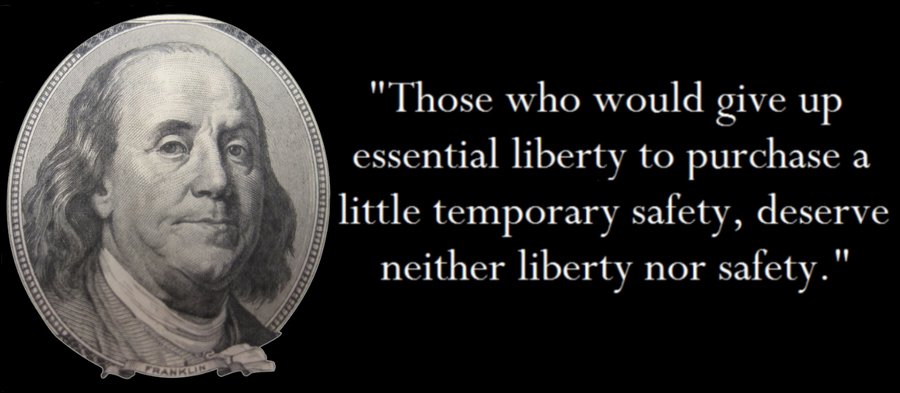
I thought the modern mantra was ‘make as much money as you can, in a legal way – if possible’….
Meanwhile the likes of Trump are lionized for their exploits yet those who are happy to nibble some crumbs from Uncle Sam’s table are treated with scorn!
Is there any real difference between Trump using eminent domain to rob people of their homes and the guys depicted above scamming the federal budget?

You may also want to check what Snopes.com has to say about the matter.

Taking the mic. Varoufakis. Yves Herman/Reuters Varoufakis in conversation with leading academics as Syriza splinters and election beckons in Greece

The strangest thing of all that happened in Greece is not that ‘the emperor has been naked for sometime already’ but the fact that this has been public knowledge.
Yet everybody still pretends everything is OK.

Click on the picture and read the article in The Conversation.
You can also check my previous post on this subject here.

The automobile has been both a huge opportunity for the humankind and a sort of a turning point in its history.

Humans have been faced with an extremely interesting provocation during their entire evolution. In order for the community to become stronger its individual members had to become simultaneously more autonomous and more involved in the communal life.

At first the automobile helped with both. It offered the individual the means to travel faster and further – hence it increased individual autonomy – and it drove people to ‘band together’ – to form the corporations that build automobiles, to build roads and bridges, etc., etc.

After some time the automobile had become a mixed blessing. Not only that a lot of people were dying in car accidents but because in his search for increased efficiency man had invented the ‘assembly line’, thus heavily limiting the erstwhile huge autonomy of the very skilled laborers who used to build the first automobiles. Skills, which usually come with an independent mind, were no longer in such high demand and have been replaced by ‘hard work’. And later by sheer automation.

But at least we were still responsible for driving the damned cars. And, for many of us, that was the only really autonomous thing that we were allowed to do without outside supervision. Except for when the missus was in the co-pilot seat, of course. Just kidding, the husbands are the more obnoxious critics when it comes to driving skills, not the wifes. But the fact remains.

Not for long. In a short while not only that we will be transported by our future self driving cars but they, the cars, will have to obey the police first and only then take us where we told them to go.

And all of this in the name of progress…

The two sides are fighting this tooth and nail.

But what are they really fighting for?

With the pro-choicers things are relatively clear. They want the mother to have the ultimate say about the fate of the pregnancy, at least during the first three months. That doesn’t necessarily mean they are condoning abortions. All reasonable human beings finds this is not a commendable method for birth control and most pro-choicers agree that it should be used only as a last resort escape out of an untenable situation.

With the pro-lifers things are a lot more nuanced. They insist that the life of the fetus is sacrosanct and must be preserved at all costs. Only those costs are going to be supported almost exclusively by the mother and/or by the child itself.

Let’s see some facts about the abortions that take place in the US

“• Half of pregnancies among American women are unintended, and about four in 10 of these end in abortion.[1]

• About half of American women will have an unintended pregnancy, [2] and nearly 3 in 10 will have an abortion, by age 45.[3]

• The overall U.S. unintended pregnancy rate increased slightly between 1994 and 2008, but unintended pregnancy increased 55% among poor women, while decreasing 24% among higher-income women.[1,6]

• Overall, the abortion rate decreased 8% between 2000 and 2008, but abortion increased 18% among poor women, while decreasing 28% among higher-income women.[3]

• Some 1.06 million abortions were performed in 2011, down from 1.21 million abortions in 2008, a decline of 13%.[4]

• The number of U.S. abortion providers declined 4% between 2008 (1,793) and 2011 (1,720). The number of clinics providing abortion services declined 1%, from 851 to 839. Eighty-nine percent of all U.S. counties lacked an abortion clinic in 2011; 38% of women live in those counties.[4]

• Nine in 10 abortions occur in the first 12 weeks of pregnancy.[5]

• A broad cross section of U.S. women have abortions:[3]

First of all 1 million abortions is a huge number but it is decreasing. A 13% decrease in 4 years is no small thing, right? How about concentrating the efforts towards the prevention of unwanted pregnancies instead of trying to outrightly ban the abortions?

What would happen if abortions were to stop tomorrow? Besides some of the women traveling abroad and others attempting empiric, and very dangerous, measures to ‘obtain’ a miscarriage?

How many of the women in their 20’s will be able to go on with their lives, even assuming they will give up for adoption their ‘unwanted’ children? How many of those who already have children will be able to afford another one? Specially those that are unmarried/not cohabiting AND economically disadvantaged? What will be the fate of these children? And of their brethren?

I find it rather strange that those who insist on saving the lives of the unborn don’t realize that at the same time they insist on ruining the lives of people who are already living.
Hence my question.
What makes one life more precious than the other and how come the pro-lifers are so sure about their beliefs that they would empower the government most of them distrust with imposing a certain belief, theirs, on somebody else?
While all the costs will be supported by, you guessed it, that very ‘somebody else’, not at all by the proponents of the imposition.

“A top GOP pollster tried to find out why people love Donald Trump – and left with his legs ‘shaking’ “.

His conclusion? Republican Leadership “need to wake up. They don’t realize how the grassroots have abandoned them. Donald Trump is punishment to a Republican elite that wasn’t listening to their grassroots.”

I can agree with that but this is only the tip of the iceberg. According to Lowell Weicker, former Republican Senator and independent Governor, there is a “total disconnect…between reality and Republican Party”.
Most civilized people believe that democracy is ‘good for you’ but only a few of them are able to differentiate between bona fide democracy – a political space where all things are discussed openly and which is dominated by a hefty dose of mutual respect among those involved – and ‘mob rule’ – where a portion of the electorate is manipulated into voting for one party/candidate or another.
Mob rule sucks. It divides the society into barricaded compounds that hardly exchange any information. Business slowly grinds to a halt because of mutual distrust and the nation dissolves itself into a collection of individuals too concerned about their private interests to notice what is going on around them.
Real democracy works. Not because more brains think better than one  – that is not necessarily true – but because all ‘brains’ make mistakes. And if the brain at the top goes around unchallenged those mistakes might have huge repercussions for the entire society. During the negotiation phase of a democratic process (otherwise known as the electoral campaign) there are huge chances that most of the potential mistakes will be pointed out and eventually purged. But that happens only if the process is really free. If not, if the public discourse is hijacked by special interests or if the public itself suffers from (temporary?) blindness  things do not go as smoothly as they are supposed to happen.
And here comes Donald Trump.
It’s very hard to say on which side of the things he really is.
Until recently he was saying that he funds his campaign with his own money so that nobody will be able to ask anything from him ‘afterwards’. Now he says he’ll accept donations, big and small.
OK, people can have second thoughts. I have no problem with that. Not even when somebody flips a lot.
I have a big problem though with the con artists who say what the people want to hear instead of honestly speaking up their minds.
In this sense both Lowell Weicker and Frank Luntz, the GOP pollster, are right. The Republican elite has primed their grass roots so hard against the ‘liberals’ that no dialogue seems possible between the two sides. And when dialogue dies out, misunderstanding promptly catches up from behind.
I’m afraid that people who are happy that Trump voices, very loudly, some topics that have either been neglected and/or mismanaged, don’t understand that he doesn’t do it with the intention of solving any of them but because he knows that this is the sure way of mesmerizing the public.
Maybe all this is for the better. The neglected subjects are out in the open and must now be addressed.
Just as important, the pundits, on both sides of the political divide, should have understood by now that it’s high time for them to clean up their act.
Or get replaced by the Trumps of this world.

Bashing ‘religion’ has become a pastime…

But did you know that it was a catholic priest that came up with the Big Bang Theory

and that Darwin was at least as interested in religion as he was in the theory of evolution? OK, in time he had become agnostic, like I am, but that doesn’t mean he wasn’t religious.

A real scientist knows that knowledge is infinite and that he has no chance of mastering it all.
A truly religious person believes that there is something ‘above’ him and that his partaking in that something produces a strong bond between those who share that belief.
The person who barely reads one book, or more, and thinks that he knows it all is a fundamentalist, not at all a religious person.
A scientist can be a religious person and a religious person can be a scientist but neither a scientist nor a truly religious person can ever become a fundamentalist.
Religion is, above all, about respecting the others. So much so as to be able to cooperate with them.
Being convinced that you are in possession of the whole truth and that (most of) the rest of the world is wrong is the dead opposite of being religious.

Nope.
That’s self imposed servitude.
Becoming an adult means reaching behind the nape of your neck and removing the collar.

I recently stumbled upon this book and devoured it.

Then something really interesting downed on me. Maslow’s Pyramid and Csikszentmihalyi’s Flow suddenly had a new meaning.

Basically all three of them say the same thing, using different words and starting from different vantage points. Looking from each of those vantage points offers the traveler a vastly improved perspective on the subject.

Maslow says that after it was able to satisfy its basic and social needs it’s up to each individual to ‘spread its wings’ and determine where it wants to go from there on – ‘self actualization’ in his own terms.

Frankl says that it’s more important to understand than to have.
“Everything can be taken from a man but one thing, the last of the human freedoms — to choose one’s attitude in any given set of circumstances, to choose one’s own way.”
No, it doesn’t contradict Maslow, it just starts from where Maslow has set his subjects free. While Maslow had taken his students up to a wide plateau and set them free to choose their own paths, Frankl – after having to endure conditions way crueler than any of those mentioned by Maslow as ‘basic and social needs’ – takes his students by the hand and leads them away from the precipice.
Maslow couldn’t conceive that anybody would go back after being shown the light, Frankl had experienced on his own skin the consequences of some idiots doing just that.

Finally Csikszentmihalyi brings forward a ‘how to’ guide, some very powerful advice about how to reach the pinnacle of our own potential.

From here it’s really up to us.

The way I see it, the God we, humans, speak so often about is our creation, not all the way around.
There might be a real one out there, of course, but there is no sure fire way of knowing that until he chooses to convince us.
If, when and by which ever method it will see fit.

The problem arises from the fact that even after we invented ourselves the concept of God, and derived from this concept some very wise precepts, we still don’t follow, consistently enough, our own advice. Just as the man says in the video.

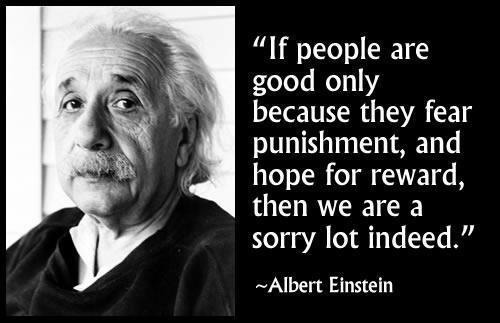
Do we really need to be under constant threat in order to behave?

Pertractarile intense care au loc in ultima vreme pe tema noului Cod Fiscal si pozitionarile diversilor actori politici si economici mi-au readus in atentie diferenta fundamentala dintre TVA si taxa pe stalp/supraacciza pe combustitbil.

Sumele colectate la buget din TVA sunt undeva la 58% din cat ar trebui sa fie pe cand taxa pe stalp si cea pe combustibil se incaseaza aproape in intregime.

De ce? Simplu. Stalpii si cantitatile de combustibil sunt foarte greu de ascuns. Si atunci taxele care li se adreseaza sunt usor de evidentiat si de perceput.

In schimb atunci cand vine vorba de TVA lucrurile pot fi complicate la nesfarsit. Nu sunt specialist in contabilitate dar nu e foarte greu sa pricepi notiunea de firma fantoma in carca careia sa pui TVA-ul neplatit dupa care sa o dizolvi. Nu poti face acelasi lucru si in cazul celorlalte doua taxe.

Si mai e o chestie. 24% e un procentaj enorm fata coeficientii de rentabilitate cu care se lucreaza acum. Iar acest lucru ofera un avantaj competitiv imens celor care reusesc sa fenteze fiscul in materie de TVA, in raport cu cei care il platesc. De voie sau de nevoie.
Haideti sa facem un experiment mental.
Sa presupunem ca avem o firma care are vanzari, nete, de 1 miliard de lei anual. Asta iseamna ca pana la sfarsitul anului ar fi trebuit sa plateasca TVA de 240 de milioane. Sa presupunem, in continuare, ca se hotaraste sa plateasca doar jumatate din suma. Ramane cu 120 de milioane. Dar are si cheltuieli suplimentare, de la contabili care sa aranjeze lucrurile pana atentii oferite celor care contribuie la bunul mers al lucrurilor. Sa presupunem ca aceste cheltuieli consuma jumatate din TVA-ul neplatit.
La sfarsitul ‘schemei’ firma respectiva tot ramane cu 60 de milioane de lei. ‘Curati’, in sensul ca nu mai trebuie sa plateasca impozit pe venit si apoi pe dividende. Asta corespunde unei eficiente economice de 6% pe an, ceea ce in conditiile actuale este excelent. Unii se chinuie sa obtina o asemenea performanta din activitatea de baza.

Concurentul acestei firme, un nou venit pe piata, are, fiind la inceput, doar 100 de milioane vanzari si inca nu si-a pus la punct schema de evaziune fiscala. Ca atare va plati tot TVA-ul.
Pentru ca este o firma mai mica si mai ‘nervoasa’ reuseste sa fie putin mai eficienta in activitatea de baza dar, per total – adica cu tot cu ce castiga prima firma neplatind tot TVA-ul, nu poate ajunge la performanta celui ‘harsit in rele’.
Oare cat va dura pana cand isi va pune la punct schema de evaziune? Cu toate ca pentru el va fi mai anevoios, tocmai pentru ca acesta din urma va avea la dispozitie doar 12 milioane de lei pentru a ‘organiza lucrurile’ – presupunand ca va actiona in aceiasi parametrii cu prima firma. Iar ipoteza de la care am plecat, ca o firma mai mica si chiar la inceputul activitatii reuseste sa fie mai eficienta decat una matura, amandoua actionand intr-un domeniu in care sunt volume mari de vanzari – aici apare tentatia mare in materie de fentare a TVA-ului – reprezinta un ideal destul de greu de atins.

Si uite asa se explica de ce in 2014 incasarile din TVA au scazut cu toate ca vanzarile au crescut. Pentru ca daca TVA-ul este suficient de mare chiar ‘merita’ sa nu il platesti.

Ce s-ar intampla daca TVA-ul ar scadea la 20%?

Pastrand premisa ca ‘intreprinzatorul’ e hotarat sa plateasca doar jumatate atunci firma cu vanzari de 1 miliard ar opri pentru ea 100 de milioane. Din care ar trebui sa ‘dea mai departe’ tot 60 de milioane, in situatii din astea nu prea poti miscora ‘contributiile’. Ar insemna sa ramana cu 40 de milioane. Tot o suma uriasa si sunt mari sanse ca cel putin un timp sa continue in aceasta maniera. Firmele mai mici, in schimb, ar fi puternic descurajate sa mai incerce sa puna pe picioare scheme de genul asta.

Am lasat pentru final o alta deosebire. Aceea ca taxa pe stalp este platita de firme din banii lor si abia dupa aceea transferata sub forma de costuri catre consumatori in timp ce TVA-ul si supraacciza sunt platite direct de consumatori si doar colectate de catre firme.