Archives for category: Trust

Observe the abnormal.
The out of ordinary.
That’s how you might figure out the regular…

Psychology 101

We live on faith.

Without faith, one cannot even raise from their bed in the morning…
‘What’s the use?’

Animals start looking for food whenever hungry.
Human beings, for as long as they remain conscious, check whether there’s any chance of finding food before attempting to find it.

Faith in what?

Living organisms are made of matter.
Atoms and molecules stacked in a certain order and interacting according to certain rules. Rules being preserved, managed and passed over from generation to generation as ‘genes’.
Individual organisms have very little influence about the whole process, except for some ‘checks and balances’. Which checks and balances work according to some rules also contained in the genes.
Species, generations and generations of individual organisms, evolve. The genetic information passed over from generation to generation becomes slightly altered as evolution forces it to fit the changes in the environment.
According to Ernst Mayr, evolution is about the demise of the unfit. Individuals need to be able to survive in the environment where they happen to have been born. If the genetic information inherited from the parents is suitable for that environment, the individual has a fighting chance. To live and to pass over the genetic information which made survival possible.
The nature of life – the existence of successive generations and the mechanisms which pass genetic information from one generation to the next one – makes it so that genetic information may be slightly altered when copied into the new organism. The alterations appear haphazardly and ‘survive’ only if they don’t jeopardize the existence of the individual organism harboring them. If the organism survives for long enough, the alteration is passed over to the new generation. If the alteration happens to be beneficial for the organism in the context of circumstances where it needs to survive, that alteration has increased the chances of survival for the organism. And its own chances to be passed over to the next generation. Please note that no agency is involved in this process. Nobody and nothing but happenstance has anything to do with what’s going on here!

Conscious organisms are made of animals plus conscience.
You need a living organism in order to have a functional conscience.
Which conscience is nothing but a set of rules learned from the other members of the ‘species’ to which the individual belongs. In fact, conscience – individually speaking, is nothing but a set of ‘cultural’ genes.
Lumps of information passed on from generation to generation which allow us to actively interact amongst us, people, and between us and the environment where we happen to live.
Each individual conscience is like a ‘cultural’ organism riding on top of a biological one.

The difference between the cultural organism and the biological one being the fact that the cultural organism is aware of itself.
Of its mortal nature!

Being an organism, conscience has only one job. To survive for as long as it can and to pass over the information it has gathered to the next generation.
Just as a biological organism is driven by a ‘vital force’ – named ‘survival instinct’ by those trying to make sense of this whole thing – conscience is driven by hope.

Biological organisms have a symbiotic relationship with their environment. They ingest substances and excrete the consequences of their metabolism. They also notice information and react to it. Individually as well as collectively.
As a consequence, the world we currently live in is the ‘byproduct’ of 3 billion years of countless biological organisms having already lived on this planet. Without this teeming life we wouldn’t be here and the planet would be barren.

Cultural organisms have deepened and accelerated the process.
Not only they have physically transformed the planet but they have also built meaning.

As I mentioned before, consciences need hope in order to survive.
In order to have hope, you need meaning.
Things have to make sense.
Out of sheer necessity, we’ve built explanatory scenarios for what’s going on around us.
My first hand experience has driven me to understand:
That ‘government’ – which is nothing but an instrument – will be hijacked whenever ‘the people’ doesn’t pay enough attention. Or has been incapacitated. One way or another.
That communism is just another pretext used by those yearning to hijack the government. And that those people would use any pretext to ‘prime’ the attention of those they want to use in their quest. In their quest to hijack the government.
That democracy – the kind that works – is not about electing the best man for the job. For the simple reason that there’s no way to determine what that person will have to do! The actual things they will be confronted with! In practice, the really useful kind of democracy is that which makes it simple for the people to remove from power/refuse those obviously unfit for the task.

For instance, what’s currently going on in Venezuela. The people tries to remove Maduro from office and the incumbent president refuses to go.

Sounds familiar?
Happened, tentatively, even where democracy was considered ‘too deep rooted to collapse’?

The third thing I understood living under a communist regime was that reproductive rights are very important. That if you want women to have more children, you have to make them ‘feel good’ about it!
That banning abortion will get you nowhere. That banning abortion – and books – will only show your true nature.

I’m vocal about these three things. Including on FB.
Exposing these ideas on FB made it so that I have friends who love Trump and friends who hate Trump.
As a matter of fact and all things considered, I’d describe myself as a Republican rather than as a Democrat. A never-Trumper Republican…

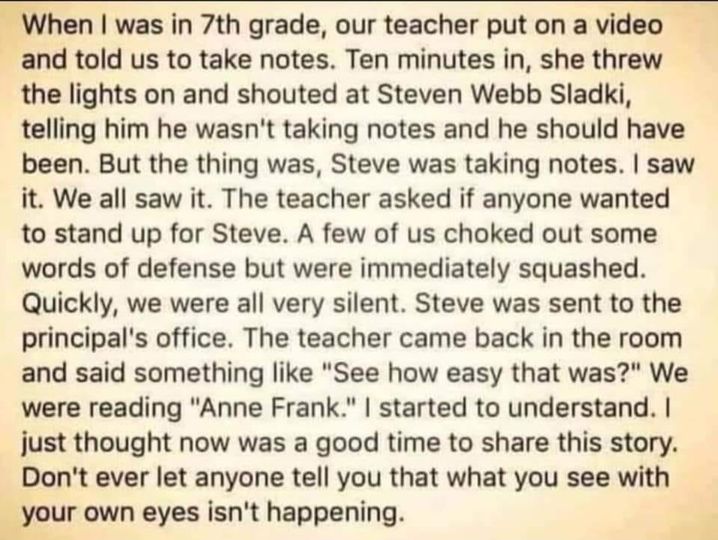
A couple of days ago, the meme above had been shared by a FB friend of mine. A Democrat.
Yesterday it was shared by a Trump die-hard.

Is this strange?

No, not really. We’re all people. Normal people concerned about the future.
The current situation is the consequence of what we’ve done.
Allowed ourselves to be divided into camps.
By those willing to do anything in order to hijack the government. Even if only temporarily.

How many of you cringe when hearing ‘X party/candidate has won the elections’?
Why do we continue to listen when the talking head/would be influencer makes such a horrible mistake?
An electoral process is about us deciding our fate, not a pageant!
Our collective fate!
We, as a community/people, are supposed to be the winners, not any of the candidates/parties…

“To use rules or laws to get what you want in an unfair but legal way”
From Longman Dictionary of Contemporary English

Having a name for ‘it’ means that we’re aware of it’s existence.
We’re still using it, though.
It is wise?

We’re not the first ones to use the method.
The HIV virus has somehow ‘learned’ to hide itself inside our immune system.
Not only to ‘bend the rules of life’ – all viruses do that for a living – but to bend the very rules of immunity!
But we are the first ones to use ‘it’ knowingly!

Not fully aware of the consequences but nevertheless on purpose!

How did we get here?

By ‘gaming’ the laws of nature!
Our ancestors believed flying was reserved for birds. By making good use of what we’ve learned about the ‘system’, we’ve been able to overcome many of our limitations.
We’ve also overcame our common sense…

We forget our planet is limited.
Vast but still limited.
We also tend to forget that our knowledge/understanding is also limited.
We’ve become so confident in our ability to game the system that we tend to ignore the two facts I’ve just mentioned.

Even worse, we’ve given up ‘the brotherhood of man’.
We’ve become humans by talking to each-other. By hunting together. By tilling the earth together.
Then we’ve started to fight. For the same earth we’ve been tilling together…
We’ve invented ‘capitalism’. A manner of doing business which relies mostly on trust. On the rational expectation that the partners will rather fulfill their respective parts of the deal than becoming known as fraudsters.
About the same time, we’ve also invented ‘democracy’. A social arrangement relying on mutual respect.

And we “saw that it was good“.
It lasted for a while…

Recently, capitalism has been gamed into a relentless hunt for profit.
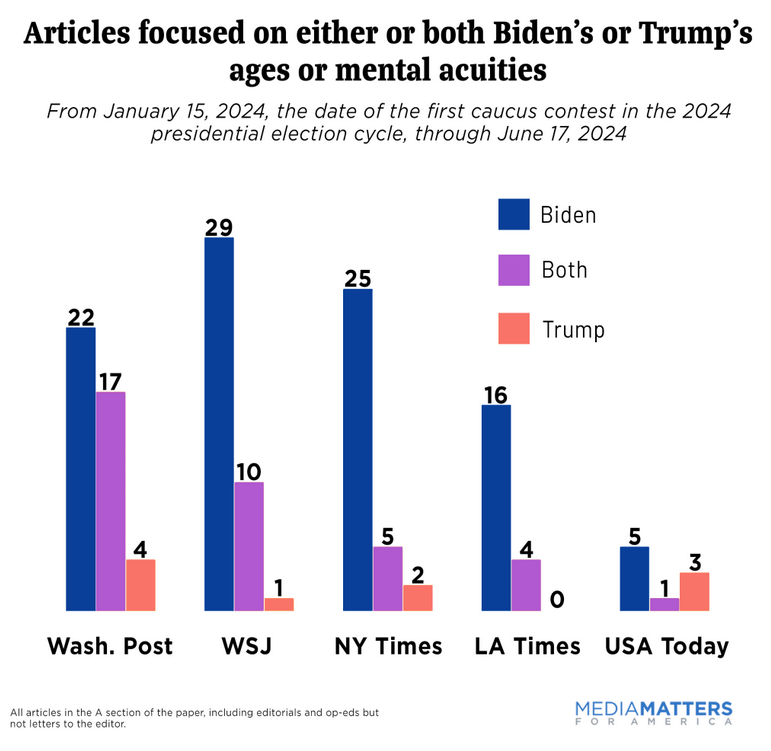
Currently, democracy is being played with alternative facts.

We’re becoming viruses!
Some of us, anyway.


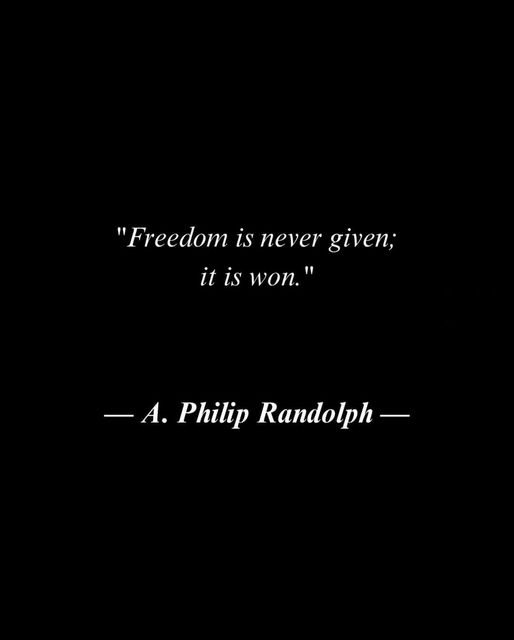
With Chandler Owen, A. Philip Randolph founded and became co-editor of The Messenger,
an African American socialist magazine, in 1917.
In 1925, Randolph established the first predominantly black labor union,
the Brotherhood of Sleeping Car Porters, to improve working conditions
for the nearly 10,000 black railroad employees.
The Brotherhood would enjoy longstanding prominence in the labor and civil rights movements.

According to the English lore, “there’s more than one way to skin a cat”.
According to the cat, ‘who cares about how I lose my coat? I’ll end up dead anyway!’
According to the fur tanners, ‘the manner of skinning the pelt is of utmost importance for the end-result of the operation’.

Whom to believe? Specially since all of them seem to be right…

Well, truth has a marked tendency for being complicated.
Hard to comprehend in its entirety and even harder to express in a concise manner.
Meanwhile we, conscious human beings, have a marked tendency to notice only what we’re interested in. To notice only what we care about…

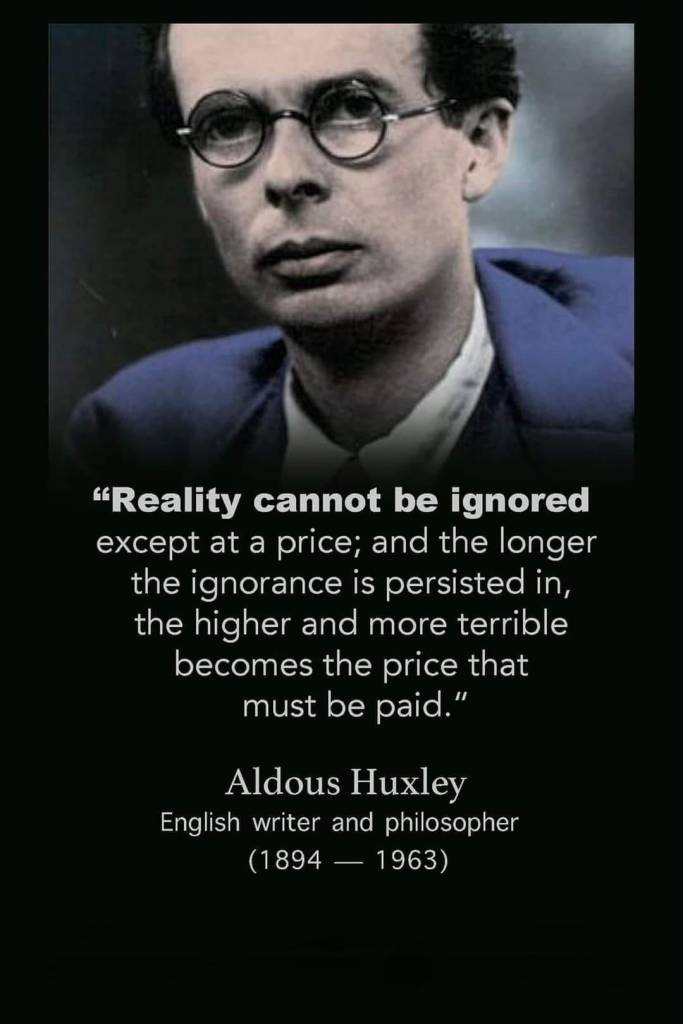
In fact, the manner in which we notice things speaks volumes about who we are. About how we relate to what we call ‘reality’.

The white colonists inhabiting a certain area in Northern America had become ‘Free Americans’ after fighting the British. Only after they had freed themselves through battle!
A. Philip Randoph had fought for his freedom. And for human rights.

All this fighting leads to a bout of pondering.
Are we free together? As in ‘all of us’ and ‘once and for all’?
Or our freedom is defined against other people? Who might try to steal our liberty from us?

What is freedom, after all?
A zero sum game? Where liberty is up for grabs but in limited supply?
Or a ‘grace’ we impart with and upon our fellow human beings?
Something to be jealously guarded or something to be collectively and cooperatively maintained and enhanced?

And one final question.
Why would anyone attempt to steal other people’s freedom?
When history gives us plenty of evidence that whenever freedom was out to be shared people were happy while whenever freedom was in short supply the entire society eventually crumbled under it’s own weight…

What is going now in China – and in Russia, for that matter –
has nothing to do with the ‘left’.
With what is understood as “left” in Europe…
Instead, it has many similarities with fascism.
‘Corporatist’ states imbued with revindicative nationalism.

Nassim Nicholas Taleb has introduced the concept of “Skin in the Game“.
In short, it is about the fact that the decisions made by people who do not directly and immediately ‘enjoy’ the consequences of their choices have a high probability of being bad. A phenomenon that is accentuated as bad decisions are not immediately sanctioned by those who suffer.

Taleb’s observation only confirms the fact that all dictatorships/authoritarian regimes have collapsed.
Without exception!
Alternatively, it is very easy to see that democracies ONLY last as for long as they manage to maintain their ‘functionality’. That is, for as long as people can – and undertake – to voice their grievances. And for as long as people listen to each other. Respectfully! In vain, some shout about being ‘hungry’ if nobody listens/cares ..

Returning to the idea of ​​’leadership’, yes, countries are led. By some who consider themselves/are considered to be ‘elite’. ‘Led’ only from the operational point of view, however…
Countries are living things, ‘natural selection’ still has the last word!
Ernst Mayr, a biologist, said that ‘evolution is not about the survival of the fittest, but about the disappearance of those who cannot find their ‘right’ place. The misfits. ‘. That’s right, countries have big problems if/when they don’t manage to take down the ‘misfits’ who happen to have clambered into power.
Why countries don’t succeed to do this in a timely manner? How did they clambered there in the first place…
Everything starts when the popular dissatisfaction reaches a critical level. Which dissatisfaction is engendered when the members of that country no longer care for each-other. When mutual respect has disappeared.

I will conclude by returning to the major difference between communism and fascism.
Both of them appeared in situations when enough dissatisfied people were ‘wandering aimlessly’ while looked down by the rest of the society.
Some low-life profiteers seized the occasion and ‘grabbed the helm’. Profiteers who have been able to operationalize the dissatisfaction festering in the society. And the lack of vision of those who hated the others. I repeat myself, both communism and fascism had appeared when various sections of the society despised, and sometimes hated, the ‘others’.
The minor difference consists in the fact that the proto-communist dissatisfied looked up without having any chance to get there, while the proto-fascist ones wanted to return to where they had once been. The Russian muzhiks dying during WWI versus the unemployed German workers who had just lost WWI.

This being where the difference appears.
The difference which makes it hard to recognize what’s going on now in Russia/China as being a form of fascism.
Both the Russians and the Chinese have a lot better lives now than they had under communist rule. Statistically and from the material point of view! Psychologically speaking…
Those who live in well-established democracies – people who respect each other – have a greater tolerance for ‘insecurity’. Each of them knows they can rely on the others. In that environment, failure is temporary. People try as many times as they need to succeed. Or that’s how it used to be…
In communism, we had learned – the hard way, that one was not allowed to make mistakes.
When Russia and China switched to ‘capitalism’ and people saw what could happen to them – to make mistakes while trying – they had become frightened!
And, at least some of them, chose to return – especially psychologically, in the past. Where they felt safe…

“An effective way to undermining something of authentic substance
is by producing versions that closely resemble the real thing
but lack genuine substance.
The skill is in knowing the difference.”

On the other hand, we must keep in mind that fakes are also facts. They exist, don’t they?
Even more so, fake facts do engender consequences!
In fact, it’s these very consequences which impart fact-hood to ‘successful’ fakes.

Also, it is high time for us to understand that this undermining might occur ‘naturally’. Due to our attention being distracted rather than ‘intentionally misguided’.

Your Liberty To Swing Your Fist Ends
Just Where My Nose Begins

Now, what would you have done if this guy had started to swing his fists? In the very proximity of your precious nose?
“Stood your ground” or gave him enough ‘space to exercise’?

You’re not exactly comfortable with the current meaning of ‘stand your ground’?

Then maybe it’s high time for us to understand that ‘stand your ground’ is the direct consequence of ‘your liberty ends where my nose begins’.

Not comfortable with the current situation?

Then maybe it’s high time for us to come up with another definition for liberty.
One which brings forward the cooperative effort which made liberty possible in the first place.
Instead of the confrontational one currently in use. Which serves perfectly the interests of those powerful enough to define evolution as “survival of the fittest”.
Which serves perfectly the interests of those powerful enough to be convinced that only those able to defend their liberty are worthy to be free.

The key word here being “their”, not “liberty”!
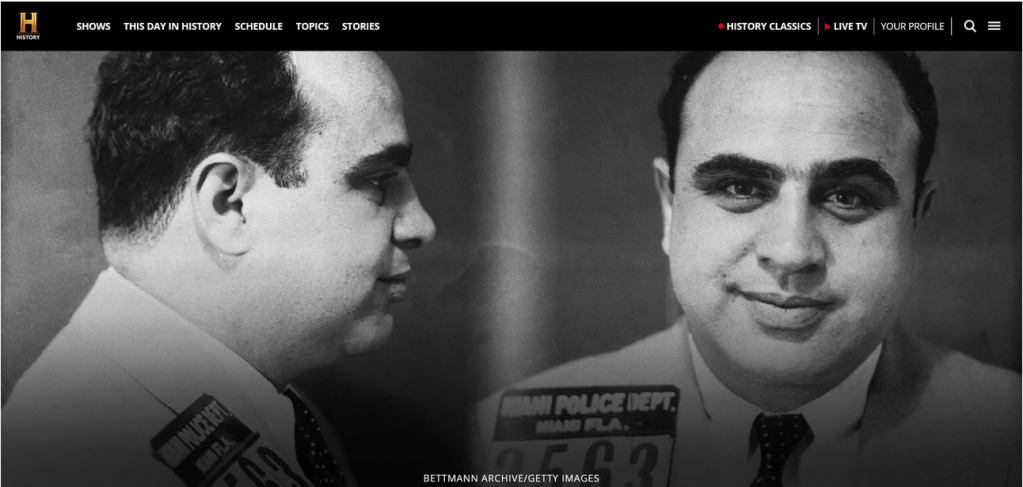
For this kind of people, for the Capones of this world, freedom – their freedom – is something to be appropriated rather than shared.

Think about it!
Do you remember the argument ‘the west has provoked the current situation’?

“Mr Farage said he had been arguing since the 1990s that “the ever eastward expansion” of the Nato military alliance and the EU was giving President Putin “a reason to [give to] his Russian people to say they’re coming for us again and to go to war”.
He added: “We provoked this war. Of course, it’s [President Putin’s] fault.””

What kind of freedom do we want?
For us and for our children?
The kind that must be constantly wrenched from the likes of Putin or one shared freely among all those present?
Built cooperatively or defended against all others?

Shaking willing hands or swinging fists?

Greeks, the Ancient ones, has been the first people which had allowed its culture to waste its civilization.

By considering their neighbors as being ‘barbaric’, the Ancient Greeks have isolated themselves from the rest of the world. From the rest of the reality.
Shutting themselves out from the exterior, they turned their attention towards their own interior. Towards themselves.
Found differences among themselves.
Ranked themselves.
And ended up fighting among themselves.

Allowed themselves to be conquered.

First by home grown tyrants. Pericles, Alexander the Great…
And then by foreign emperors. Persian, Roman, Ottoman…

Establishing a pattern.
And constituting a warning.

Every time when people become complacent, somebody will seize the opportunity.

Every time people will stop – for whatever reasons and under whatever pretexts – respecting each other in earnest, scheming con-artists will step in. Identify the situation and taking the opportunity to deepen the differences between the people into chasms. Into unbridgeable chasms which make it impossible for people to reconnect.
Unbridgeable chasms which destroy the community.
Rendering it to the mercy of tyrants.
To the mercy of tyrants who constantly lurk in what we call reality and which, under ‘normal circumstances’ – a.k.a. ‘democracy’, are kept in check. In a normal, functional, social setting. By a functional community.

The fact that all tyrannies end up badly, for all those involved, is no consolation.

And all these – social settings, democracies, tyrannies, etc, – are as real as it gets.
Only this level of reality is being created by us. By us, people.
By ‘the people’ who not only creates the reality but also has to make do with the consequences derived from the reality it has created for themselves. Knowingly or ignorantly.

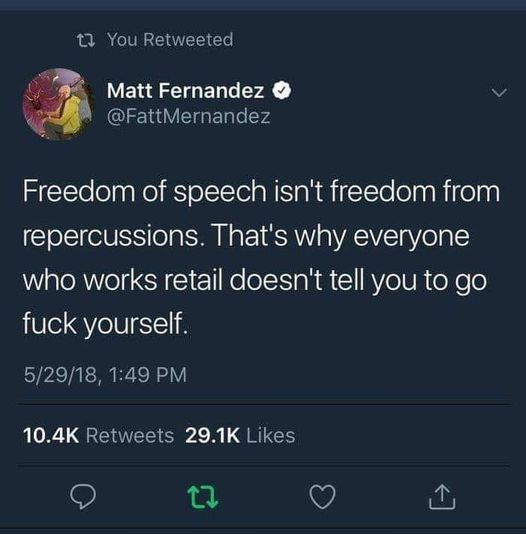
“Only freedom of speech with repercussions isn’t anything special.
That has existed throughout every dictatorship.
If we consider freedom of speech as a value,
it must be something else.”

Whenever somebody opens their mouth, they reveals things about themselves.

That’s a repercussion.

Whenever somebody acts upon information gleaned this way, those acts also have repercussions.

The repercussions belonging to the second category are the ones which ensure that, in the end, every dictatorship ends up in failure. In abject failure.

Out of fear, everybody shuts up. So nobody yells anymore ‘The emperor is naked. And about to be run over by a bus’. So the emperor, and his henchmen, end up hanged by an angry mob. Process usually called retribution. Or revolution?

““We are not extremists. We are just angry,” explains Lazar Potrebic, a 25-year-old from a Hungarian minority in Serbia who is entitled to vote.

He – and many of his peers – are worried about the future, and feel that the more traditional parties are not listening to their concerns.

“We feel like our needs are not being met. People our age are taking really important life steps. We’re getting our first jobs, thinking about starting a family…but if you look around Europe, rent prices are going through the roof – and it’s hard to get work.”

.

.

Of course the feeling of not being listened to when you’re young, of not being part of the equation, is nothing new. But many of the parties on the far right are actively courting the young vote, says Dave Sinardet, a professor of political science at the Free University of Brussels.

“The radical right channels anti-establishment feelings,” he told the BBC. “They have a bit of a rebellious vibe – especially when it comes to their anti-woke agenda – and that appeals to young people.””

What are electron spins:
Electrons are able to spin on an axis, like how the earth rotates on an axis, but much faster. Electrons can spin in either a clock-wise or counter-clock-wise direction. The spin on an electron is described by the spin quantum number (ms). The value of ms can be either +12 or -12. The +12 is called spin-up and denoted by a ↑, where the -12 is called spin-down and represented by ↓. Sometimes the spin of electrons will be described as angular momentum.
Each orbital of an atom can be occupied by up to two electrons. The two electrons will have opposite spins. This phenomenon was first described in the Pauli exclusion principle which states that each electron in an atom is described by a unique set of quantum numbers, including ms.”

Political spin, in politics, the attempt to control or influence communication in order to deliver one’s preferred message.
Spin is a pejorative term often used in the context of public relations practitioners and political communicators. It is used to refer to the sophisticated selling of a specific message that is heavily biased in favour of one’s own position and that employs maximum management of the media with the intention of maintaining or exerting control over the situation, often implying deception or manipulation.

Electrons ‘work’ in certain ways. Science has recently figured out some of those ways.
The point being that electrons keep to themselves. One spins in its direction, the other spins in the opposite direction and no more than two electrons fit in the same ‘orbital’.

People’s minds also work in ‘certain’ ways.
Not as ‘rigidly’ as the electrons but still ‘useful’ for those who know how to exploit this phenomenon.

By constantly pestering people with certain messages, you get to convince at least some of them.
You get to divide them into (political) camps.
You get them to fight among themselves instead of cooperating.
You get to lead them into battle.
And after the battle has been won, by no matter which side, you get to lead the winning party. At least for a while, but that is another subject.

And all lies, aka as ‘half truths’/alternative facts, start from something real.
Capitalism, for as long as the people remain awake, works. As advertised.
Socialism, on the other hand, doesn’t. It had failed, abysmally, whenever and wherever it had been experimented.

But there’s a caveat.

‘Capitalism’ is a rather clear-cut concept. Property belongs mainly to the individuals and individuals trust each-other enough to do business among themselves. Usually – but not always – capitalism is associated with ‘free market’ and democracy. With freedom to act – inside the confines of the law – and freedom to speak up.
I’ll say this again! For as long as the people remain awake, the market continues to be free and democracy still functions, capitalism works. Sustainably. But only for as long as the people remain awake…

‘Socialism’ is rather vague. From ‘public’ (instead of private) property associated with central planning of the entire society to softer versions which sometimes pay lip service to democracy. The central idea of ‘socialism’ being that society comes first and the individual is only a cog.
Who wants to be a cog? Those who see no alternative… Those who, once in a certain set of circumstances and exposed to a certain propaganda, succumb to the Sirens’ song.

The point being that in order to impose ‘socialism’ to a society you need to lure (enough of) the people into an ‘altered state of consciousness’. To make them believe a certain set of rules. To make them behave according to that set of rules.

The interesting part, as usual, comes at the end.
There is a ‘social arrangement’ where property remains private but where the people behave in a ‘certain’ manner. As if they have been made to believe a ‘certain’ – as in ‘forcefully unified’ – set of rules.

That social arrangement is just as fragile as ‘socialism’.
Again like socialism, it has already been experimented.
Both had failed. Abysmally. History is our witness.

The ‘other’ always failing social arrangement is usually called ‘fascism’.
In Germany, it has been known under the name of ‘NAZIonal socialismus’.